Kingsbury Creek Trail, Duluth

DSC05797

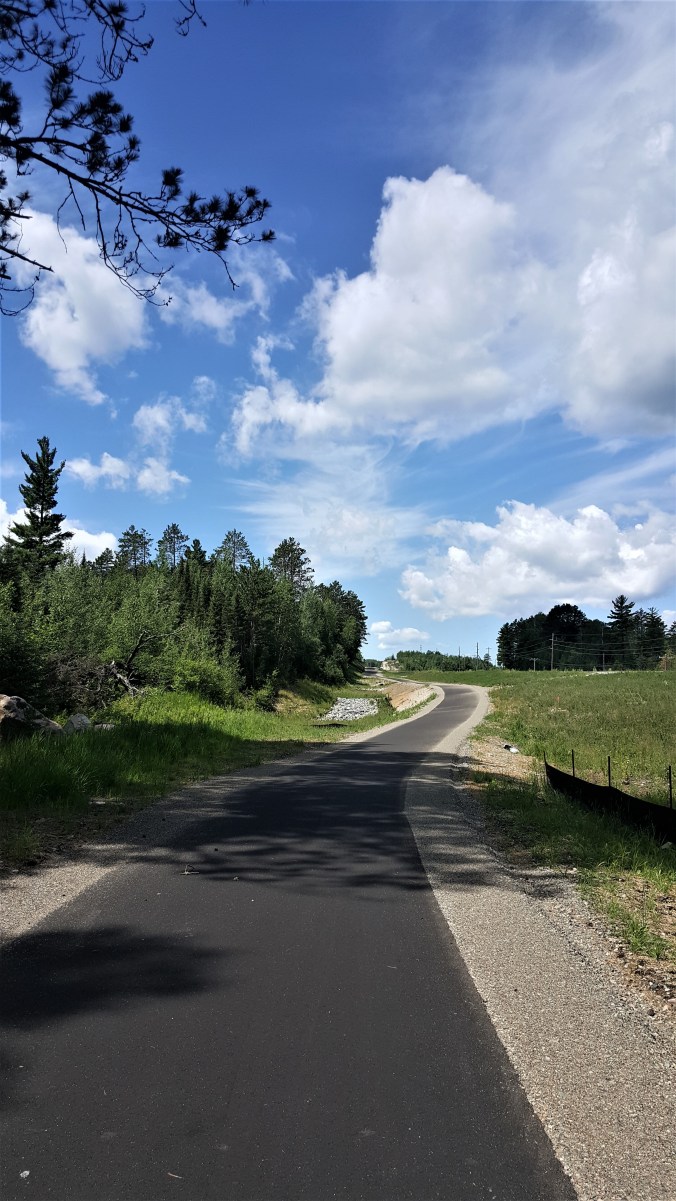
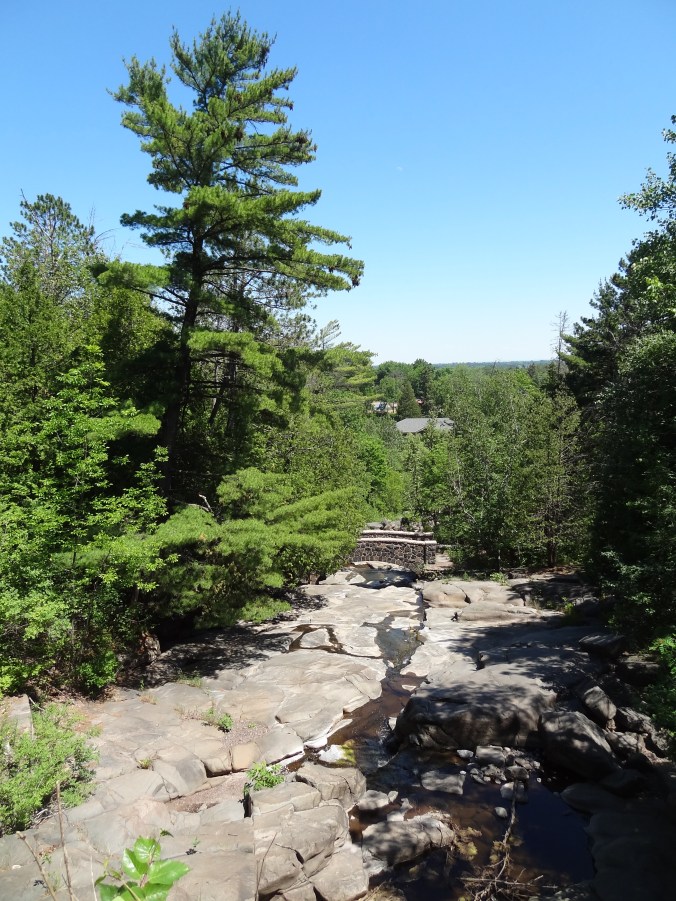
A view from the Kingsbury Creek Trail, Duluth, MN.

Prepare to be confused and impressed. Russ and I checked out the Kingsbury Creek Hiking Trail near the zoo in Duluth recently. We were confused because so many trails intersect in the area. There’s a mountain bike trail, and the Superior Hiking Trail, a gravel trail, and a footpath. We were aiming for the footpath, and think we found the right one, but since it was our first time on it, I’m not exactly sure.

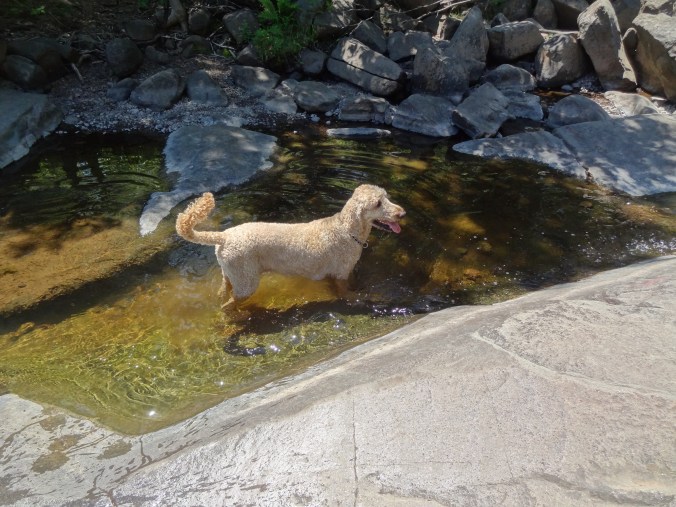
Whatever trail it was, the scenery was impressive. Quiet pools in the creek attracted Buddy the Wonderdog. Huge white pines evoked awe. If we have to be quarantined, Duluth isn’t such a bad place for it.

DSC05780

DSC05777

DSC05785

Free Horror Story: The House

brown wooden window frames on white concrete wall

Photo by Henry & Co. on Pexels.com

As you may recall, I’ve been writing an anthology of short stories about deceiving appearances. I think I’m almost done with the collection. I’m currently working on the last story, or what I intend to be the last story – but we’ll see if any more ideas strike!

One of the spookier stories in the collection was just published on the website of a local group of Halloween enthusiasts who are collecting horror stories from local authors for future publication in a ‘zine called “Twin Ports Terror.”

My story’s title is “The House.” It’s a cautionary parable about curiosity. I characterize it as a mix of speculative fiction, mild horror, and suspense. A nameless woman is the main character. She walks by a house in her neighborhood every day — a house so nondescript that it looks like it’s trying just a little to hard to fit in. Her curiosity about the place sets her on a perilous path . . . .

Read more here to find out what happens to her!

Thank you to the Haunted Duluth folks for this opportunity to share my work. Thanks also goes to my writer’s group for their help and edits.

Writers from Duluth and Superior – Haunted Duluth is looking for more stories for their ‘zine. Click on my link above to access details.

That Time I was Invited to Join Mensa

Human_brain_NIH

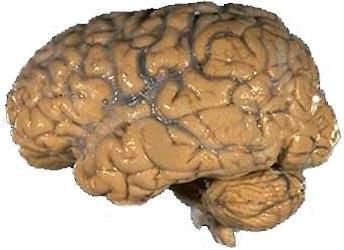
Credit: National Institutes of Health.

Back in my high school days – when cowl neck fuzzy sweaters were in, hair styles were big, and women’s shirts sported shoulder pads large enough for the wearer to participate in professional football – I took the ACT test to get into college.

I studied out of a large book, which offered practice questions and reviews of math concepts. Now, I’m sure students must be able to do this all online, but this was back in the 80s, before most people had any inkling about computers.

I’m not sure if the test is still in the same format, but back then, most of it was multiple-choice. The most useful thing I learned from studying for the ACT was how to identify incorrect answers so that I could home in on the correct ones. The hardest things about the test were figuring out its format and its unwritten rules.

All my studying paid off. I scored very high in the English section, and higher in the math section than if I hadn’t studied. My overall score was good enough that I didn’t need to worry about admission into the college of my choice. It was also elevated enough that I received a letter from Mensa in the mail one day.

Mensa International is an organization for people with high IQs. As author and comedian David Sedaris says in “Me Talk Pretty One Day” (which I just finished reading), Mensa members “come from all walks of life and get together every few weeks to take in a movie or enjoy a weenie roast. They’re like the Elks or the Masons, only they’re smart.”

Growing up in the northern hinterlands of Minnesota, I had never heard of Mensa. After opening the letter, I mentioned it to my mother, and her first, and only, response was, “Ach, you don’t want to join that!”

So I didn’t.

I was so taken aback by her reaction, I didn’t ask her why I shouldn’t join them.

Looking back over the decades, I have a twinge of regret that I so blindly followed my mother’s advice. How might my life have been different if I had surrounded myself with high-IQ people?

But I also realize my mother’s knee-jerk reaction was truly Minnesotan. It’s not part of our culture to brag or make ourselves stand out. (See more in my post about “Minnesota Nice.”)

Perhaps my mother was afraid my head would swell with self-importance were I to hang around other intelligent people. Or, maybe she figured they were all a bunch of dorks and exposure to them would increase my social awkwardness. Or she could have been threatened by having a daughter labelled as “smart.” I don’t know. My mother has passed, so it’s not like I can ask her now.

A couple of years ago, I looked into the qualifications for joining Mensa. They’ve upped them now. My ACT score is a few points short. Another way to qualify is through an IQ test. But an IQ test just seems like a lot of work to me now. I wonder if they grandfather (or in my case, grandmother) people into the organization based on the year they took their ACT?

Even if I did get in somehow, I suspect I would feel like a fraud. I am not naturally brilliant; I just know how to study, and I read a lot.

I guess I’m satisfied I was invited and could have joined Mensa if I really wanted to — but that I am just too Minnesotan to do so.

Paul Wellstone and the Chickadee

20200404_135718
Russ, Buddy the Wonderdog, and I recently nudged our way north to visit the outdoor memorial to Minnesota Senator Paul Wellstone. Wellstone, his wife Sheila, one of their daughters, and several aides died in a plane crash in 2002, along with the pilots, near the small town of Eveleth, Minn.

I never saw the senator in person, but I had contact with his staffers in the 1990s, particularly Kim Stokes. This was early in my career when I worked in public affairs for the Forest Service. Part of my job was coordinating responses to inquiries from federal congressmen and representatives who received complaints from their constituents about Forest Service activities in the Superior National Forest.

I would receive the letters, decide which Forest Service person should write a response (sometimes this was me), and then follow up, making sure the Forest Supervisor signed the letter and that it got mailed. I know, snail mail – how quaint!

I always enjoyed my discussions with Kim. She was so enthusiastic about the democratic senator, which wasn’t something I usually heard from staffers for other federal legislators. That piqued my interest, and I watched Wellstone’s career from afar.

Despite early public relations gaffes after his election in 1991, the short, feisty, and energetic senator learned from his mistakes and became an effective leader. He even explored a run for the presidency, but did not seek it due to health issues, which ended up being multiple sclerosis.

One of his well-known quotes is, “We all do better when we all do better.”
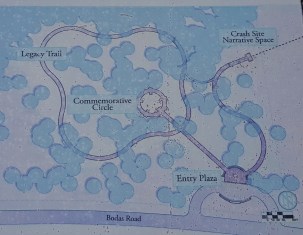
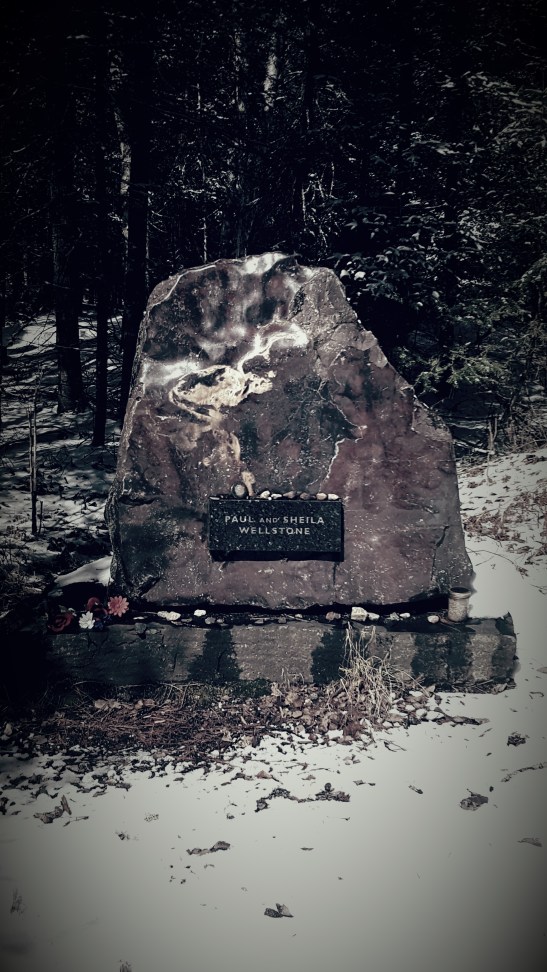
20200404_123600Russ and I had driven past the signs for the memorial off Highway 53 several times and finally had the time to stop. The first thing to greet us in the parking area was poetry. A snow-covered stone mantle sat at the entrance to the memorial. We brushed off the snow, trying to read the poem that was etched into the rock. We couldn’t do this because of the moisture, but were able to make out some of the words later, after they had time to dry.

After visiting the commemorative circle, which featured monuments made of local stone to those killed in the crash (except the pilots), we walked the surrounding legacy trail. The path was covered by about a foot of snow, and it didn’t look like anyone had been there in at least a week. Sinking through the crunchy thin snow crust every other step, we gingerly made our way, marveling at the quiet sun streaming through the skinny pines. Interpretive signs lined the route. After brushing off the snow, we read about Wellstone’s career progression.
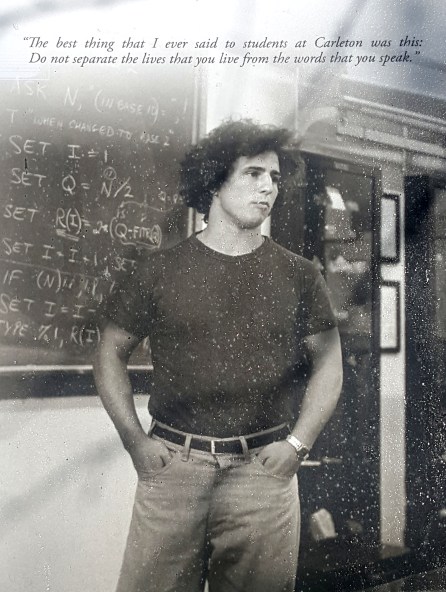
20200404_135841

An image of Wellstone from his college professor days at Carleton College in MN.

The final sign on the route was dedicated to his wife, Sheila. The feminist in me did not appreciate this. I thought her sign should have occurred earlier on the trail, perhaps after the sign about their marriage, because I’m sure Paul could not have accomplished even half of what he did without her support. Having her sign at the end seemed like an afterthought.

After coming full circle back to the poetic entry, we walked the trail to the crash site narrative. The trail ended in a viewing platform about 2,000 feet from the actual site. Signs on the platform described the lives of the people lost. Descriptions of the two pilots were notably absent, but I suppose this was because the crash was deemed their fault, combined with poor visibility.
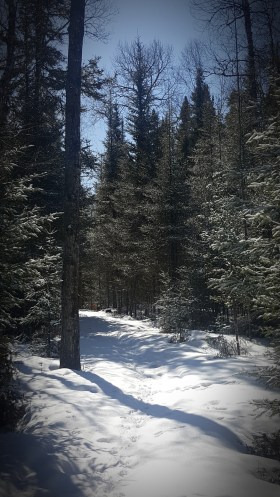
20200404_140053

Looking down the peaceful legacy trail.

As we stood, looking out into the pines, a flock of chickadees twittered among the branches. One brave, energetic bird alighted only two feet from me, calling loudly, as if berating me for intruding. I extended my gloved hand to see if the bird would land, and made a “phish, phish” sound that often works to attract birds.

This feisty little guy was too smart for that. He stayed where he was, continuing his call. Eventually, he flew away to join his friends.

The chickadee reminded me of Wellstone. I would like to think his spirit and those of the others in the crash were somehow absorbed into the forest and live on there.

Wellstone leaves a political legacy in the form of the legislation he passed and in Camp Wellstone, a training program for people interested in political action. His wife Sheila’s legacy lives on in her tireless work against domestic violence.

With Buddy leading, we made our way back to our truck, filled with appreciation for these lives well-lived and duly recognized.

Coronavirus Chronicles – The Invisible Enemy

Coronavirus CDC

The coronavirus. Image courtesy of the Centers for Disease Control.

Well, I won’t be meandering anywhere but between my house and grocery store anytime soon. Although nobody in Duluth, Minn., has tested positive for coronavirus yet, most people are limiting their travel and hunkering down at home. At work, we were told to start telecommuting last Monday, so I’ve been working at home — much to Buddy’s delight!

When Russ and I went grocery shopping earlier this week, it felt a bit like venturing into a war zone – one with an invisible enemy. Is it safe to touch this box of cereal, or are virus germs on it? Is it okay to talk to this person we know in the grocery aisle or should we stand farther away? When we bring the groceries into our home, is the virus hitchhiking along?  Wait, did I just touch my face? Aaagh! Should we wash our hands before we put the groceries away, or after? We decided to be extra careful and wash our hands twice.

Both Russ and I are in high-risk categories. Russ because he is older than me and male. Me because I am recovering from surgeries and have some lung issues due to allergies. So that’s a source of concern. Another source of concern are the things I learned when I took an epidemiology class for my master’s degree in public health journalism. I learned enough to know that this virus could be very bad. My instructor told us that the world was overdue for a pandemic. Usually, they occur every hundred years. The last one was in 1918 with the Spanish flu. Predictions were for the disease to originate in China because of the close living conditions there between people and farm animals.

Well, we made it 102 years. Not bad! But here we are, dealing with something with which few people have experience (except for these two ladies who are in their 100s.)

One of my writer friends, Lucie Amundsen, wrote an opinion piece recently for our local newspaper (“Our caring can be this crisis’s silver lining”) where she exhorted people to commit compassionate acts in the community as a way of coping with coronavirus. “Nothing combats fear and anxiety like action,” she said. “Do something. Do that thing you’re good at and share it up and down your street.”

While lying in bed this morning, I thought about what I’m good at that could be shareable. I don’t think it’s wise to share things face-to-face on my street, but I have this blog. I’d like to think of you all as my virtual neighbors. I’d also like to think I’m pretty good at writing. This thought train led me to remember a quarantine romance parable I wrote a few years ago, which is especially apropos for these times.

As with many writers, I take care not to share stories on my blog that I think could be published. (Publishers usually want stories that have not been published elsewhere, not even on personal blogs.) But, due to the nature of this story and the nature of the circumstances we find ourselves in, I am going to share my short story, “The Shower Singer,” as a serial in my blog.

The tale is set in Minneapolis. The story does not provide all the answers. It makes readers think. It’s one of a series that I’m working on for an anthology on the theme of deceiving appearances. I’ve completed five stories and am currently working on a sixth. I figure once I have seven done, I might have enough for a book.

I will start the series tomorrow. I hope it offers a fun, but relevant distraction during these trying times for you, my virtual neighbors, as we fight an invisible enemy together.

Reading for “Writers Read” and the Lake Superior Zoo

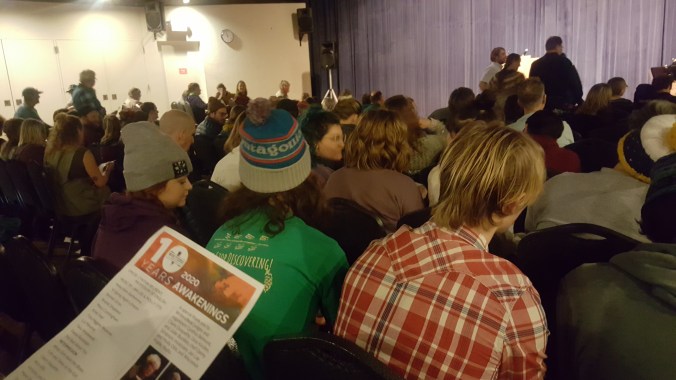
82125457_10157171657572476_4269917595030781952_oI recently had the privilege of reading a poem for Northland College’s “Writer’s Read” 10th anniversary event in Ashland, Wisconsin. This is the second time my work has been chosen for this contest. The first time was an essay I read in 2018.

The theme this year was “Awakenings.” My poem, “Solastalgia,” dealt with my awakening as an environmentalist. As with the previous contest, readings by local authors were broadcast on Wisconsin Public Radio. You can find the program on the web here. My poem airs between the 1 hr 19 min and 1 hr 22 min marks.

20200124_175156We were not offered cash for our winnings, rather the comradery of other writers, instant fame the reading provides (ha ha), and some great food! They fed us Mediterranean-style dishes prepared by a student chef, including homemade marshmallows cooked over a fireplace. Okay, the marshmallows probably weren’t Mediterranean, but they were still impressive on ‘smores.
My next event will be an animal-related reading (poetry, fiction, children’s story) and book sale for World Wildlife Day at the Lake Superior Zoo in Duluth on February 29. The event is called “Leap Into Action for Australia.” One dollar from every zoo ticket sold will be donated to an emergency wildlife fund for the Australian brush fires. Find more info here.

Three other poets will be reading during the event. We each get a half-hour, which is HUGE! Hope to see you there.

20200124_190049

The audience for Writers Read — a full house!

Snowshoeing Up North

20200120_134001Russ and I visited a northern Minnesota lake last weekend. Spent part of an afternoon snowshoeing on a frozen lake. The morning’s hoarfrost floated down from the trees, looking like snow magically falling from a clear blue sky.

Oh yeah, that’s the way to do winter!

Wowed by a Pow Wow

DSC05701I meandered just a bit south to Carlton, Minn., to attend an Ojibwe pow wow for work. More like I white-knuckled it on the drive due to a snowstorm.

I made it to the venue and ended up glad I endured the stressful drive. Why? Because pow wows are fascinating and fun! If you ever have the chance to attend one, you should.

I’ve been to a handful in various locations across the U.S. Every time, I come away impressed by their friendly vibe and the dose of a different culture.

It’s also refreshing to be in the minority for once. Being outnumbered by Native Americans for a few hours administers a dose of empathy for what they must feel most of the time in larger society. And the regalia the dancers wear is so impressive. I could tell they spent a lot of time and effort to make and choose their dress.

I attended the pow wow as part of a teacher workshop I’m doing a story about for work. The workshop offered educators from Wisconsin and Minnesota the opportunity to learn more about Ojibwe culture and their relationship to water to bring into their classroom lessons. Attending the pow wow was part of the experience for the educators.

Before the pow wow, we were given an etiquette sheet so we could avoid making clueless-white-person faux pas.

20200118_134851 (2)I thought I’d share a few of the more interesting points with you. The first is that a pow wow dancer’s clothing is called “regalia,” not a costume. The info sheet says, “Costumes are worn to present yourself as something you are not.”

The sheet does not say what regalia is, but one could assume from the definition of costume that regalia is clothing that reflects a dancer’s true identity. Think of a queen. Her ceremonial clothing wouldn’t be called a costume (unless someone who was not a queen wore it.) It reflects her regal status.

The dictionary offers three definitions of regalia. One is, “the emblems, symbols, or paraphernalia indicative of royalty.” The other is, “decorations or insignia indicative of an office or membership.” The last is, “special dress (especially finery).”

I suspect the last two definitions are the most appropriate when thinking of pow wow clothing – the dancer’s clothes reflect their membership in the tribe(s), and they are clothes not worn every day.  But I also like the idea that their clothing shows their true identity, and that identity is royal.

Another interesting guideline is not to touch a dancer’s regalia. It’s considered rude. I can see how having someone else’s hands all over something so personal could be an invasion of personal space and privacy.

The last is not to pick up an eagle feather that has fallen off someone’s regalia, or take photos of it being retrieved. The etiquette sheet states: “If you see a feather or regalia on the ground, do not touch it but do inform one of the dancers. They will take care of it properly.”

Eagle feathers are sacred to Native Americans, as is their regalia, so it makes sense they don’t want just anyone’s grubby hands on them. I also assume some ceremonies must be associated with retrieving a fallen feather.

End of lesson. Now you know few rules. Go out and find yourself a pow wow! It will be good for you.

Mountie Art Memories

Russ and I meandered over to the Tweed Museum of Art on the University of Minnesota Duluth Campus last week. Russ had never been there, so we figured it was time for him to get some “cultcha,” even if it is only a Duluthy version of culture.

The museum currently features an exhibit of Russian art (Art in Conflict), which was interesting. You don’t often see Lenin in artwork displayed in America.

D81.x333

Image courtesy of the Tweed Museum of Art.

My favorite collection in the Tweed, however, is the Canadian Mountie illustrations. My father used to get calendars from a local paper company that showed red-suited Mounties in all sorts of exciting and helpful situations, fueling my childhood imagination. There were Mounties petting sled dogs, Mounties building a snowman with native children, Mounties tracking bad guys – you get the drift.

Something I didn’t realize back then was that more than one artist drew the illustrations. The most prolific was Arnold Friberg, noted for his religious and patriotic art. But fifteen others tried their hand at it, as well.

The Mountie art came about during the Depression when the Minnesota Paper Company chose it as their advertising theme because it evoked a strong and dependable product. It was an instant success and continues until this day, although the company’s name has changed several times over the years.

D81.x348

Image courtesy of the Tweed Museum of Art.

While I suspect that real Mounties have committed their fair share of atrocities like any arm of law enforcement, I don’t want to know about it. As a child, I was totally sold on their Dudley Do-Right goodness, and, as I looked at the paintings in the Tweed, I realized I want to keep my childlike innocence where Mountie art is concerned.

If you’re ever in Duluth and want some culture, try the Tweed! Admission is free, although donations are appreciated, and there’s a box for that by the door.

The Cat Who Liked to Swim

Canoe Cat_Page_1

Inky and me, Star Lake, Minn., July 1977. Image by Dorothy Pramann.

I grew up with a black cat named Inky. She was a stray a neighbor boy brought to us because he knew we recently lost a cat. That previous cat was a calico we named Muffin. Alas, Muffin ran away when we were on a camping trip while she was under the care of a neighbor. Perhaps because of that, we took Inky along on all our camping trips.

She did not enjoy car rides – she would disappear under the driver’s seat and not emerge until we’d reached our destination – but she liked being outdoors in the campgrounds where we stayed. We’d leash her to a picnic table so we wouldn’t lose her.

One place we liked to stay for extended periods was Star Lake, a Methodist Church Campground in northern Minnesota. Because we’d stayed there several times and we didn’t need to travel the next day, we’d let Inky off her leash to come and go as she pleased, like she did at home.

We owned an old Grumman aluminum canoe that I used to paddle around the lake. One day, I got the idea of bringing Inky along.

Canoe Cat_Page_2

Inky at home, 1975.

She seemed to like the canoe ride better than a car ride. She perched on the gunwale a few feet in front of me, leaning out over the water.

With each canoe outing, she’d lean farther and farther over the side. It seemed like she wanted to go into the water. One day, I tipped the canoe slightly, giving her some “help.”

Plop! Into the water she went.

We weren’t far from the shore of our campsite – only about 30 feet — and she swam in that direction. I can’t recall if she meowed as she swam, or if she swam silently. (My memory has fuzzed during the four decades since this occurred.) She made it to shore just fine and seemed no worse for wear.

The next time I took Inky out for a canoe, as we neared our site again, she jumped out of the canoe by herself!

Could it be, she liked to swim? I’d never heard of a cat who liked to swim, but apparently, I had one. By the end of our stay, her swims from the canoe to our campsite were a regular thing.

Inky the swimming black cat lived to a ripe old age, despite getting hit by a car once, breaking her leg. I’ve had other cats since then, but none who liked to swim like she did.

I just researched swimming cats. Although most cats would rather avoid water, some do like it. (Read stories here.)

My youngest son is allergic to cats, so I have since switched to dogs. But in my home, I keep this photo my mother took of Inky and me canoeing. I think of my swimming cat whenever I pass it.

Star Lake was the only place I ever took her canoeing. I wonder what she would have thought of the Boundary Waters Canoe Area Wilderness? I bet Inky would have liked it.