Nobody Dies in Spring in Duluth

Marsh_marigolds_near_a_stream,_Lydiard_Park_-_geograph.org.uk_-_1249758

Marsh marigolds. Credit: Brian Robert Marshall [CC BY-SA 2.0 (http://creativecommons.org/licenses/by-sa/2.0)%5D, via Wikimedia Commons.

April is National Poetry Month in the U.S. I couldn’t let it pass without posting a poem. This is one I just finished, inspired by a poetry class taught by Duluth Minnesota’s Poet Laureate Jim Johnson, based on Philip Appleman’s poem, “Nobody Dies in Spring.” Try your own version! It’s a fun exercise. I hope this Spring finds you well.

Nobody Dies in Spring in Duluth

Nobody dies in Spring in Duluth.
That’s when we hold gloved hands
with total strangers on the Lakewalk.
We sing sweet nothings to our dogs,
who have been lying by the fireplace
all winter, gazing up at us
with walk-hopeful eyes.
Kids yell and splash bikes through street potholes.
High school students don shorts
when the mercury hits forty-five.
Fathers take a year’s worth of family refuse
in pickup trucks to the dump.
Pussy willows sprout gray fuzzy nubbins
for mothers to cut and bring inside.
Shy yellow marigolds beckon in marshes.
White gulls cry and fly over melting snowdrifts.
The sun reaches down with tentative warm caresses.
Nobody dies in Spring in Duluth.

©2016 Marie Zhuikov


The World’s Largest Freshwater Sandbar

Barkers & WI Point 047

Even though Wisconsin Point on Lake Superior is not truly part of “the world’s largest freshwater sandbar,” it’s still pretty.

It’s a common local point of pride in Duluth to say that Minnesota Point (a.k.a. Park Point) and Wisconsin Point form the “World’s Largest Freshwater Sandbar.” I am sorry to burst the community bubble but . . . NOT.

Way back so many years ago I can’t even find it on the Internet, Duluth sent a delegation of kayakers to Lake Baikal in Russia. They returned with tales of a sandbar or two on this freshwater lake that were even larger than MN/WI points. Maybe I was the only one who listened then because local tourism organizations and media outlets continued to refer to our sandbar as the “world’s largest.”

A couple of years ago (2014), I decided to fact-check the claim because I was editing a government report that repeated it. Lo and behold, I found a provincial park in Canada that claimed the same thing (Sandbanks Provincial Park).

I also asked several scientific types who are in the know about such things and received a response from a researcher at the University of Minnesota Duluth’s Large Lakes Observatory. Prof. Ted Ozersky did some Google Map comparisons and found that Jarki Island at the northernmost tip of Lake Baikal sports a sandbar that is 18 kilometers long. MN/WI points are 16 km long.

He also found a series of long sandbars on Proval Bay along the eastern shore of Lake Baikal that collectively stretch for 40 km.

So, in the document I was editing, I changed the wording to MN/WI points as comprising “one of the largest freshwater sandbars in the world.”

The issue arose again just last week when a fellow blogger made the “world’s largest” claim in his post. Why? Because he saw it elsewhere on the Web.

I figure it’s high time to get definitive news out on the Web that, alas, Minnesota and Wisconsin Points ARE NOT the largest freshwater sandbar in the world. Even the park in Canada has downgraded their claim to say instead that they have the “world’s largest baymouth barrier dune formation.”

In short, it’s okay to say that MN/WI points are the largest freshwater sandbar in the country, or one of the largest freshwater sandbars in the world, but not “THE largest freshwater sandbar in the world.”

Class dismissed.

Crawling out From Under my Musical Rock

truman-no-brad2

A Band Called Truman. Photo by Tanja Heckert.

Is there something your community is known for that you aren’t tuned into? It could be a sports team, an industry (like craft breweries), or some other cultural/historical thing. For me, it’s the local music scene. And now I’m making up for lost time.

For years, I’ve been squished under the rock of my responsibilities so I haven’t been able to enjoy the local music scene. I also haven’t had friends or acquaintances who were into it, so I plodded along, deaf to all the musically talented people around me. And Duluth has a lot of them. Case in point: Gaelynn Lea, who just won National Public Radio’s Tiny Desk Concert Competition. Her unique style surpassed that of 6,000 other people and wowed the judges.

Sure, I knew about the symphony and high school bands – wider community kinds of music, but not so much individual local musicians. I realized I needed to rectify this. As a writer, I appreciate the creativity involved in songwriting and singing, and I feel it is my duty to become more familiar with the local music scene. Besides, I just like it!

I’ve had the good fortune to meet several local musicians/band members (including A Band Called Truman, Teague Alexy, Michael Monroe, Mary Bue, Georganne Hunter, and Jerree Small) and others I’ve managed to see play live or I’ve plucked them out of the “local music” CD section in the library. These include the Hobo Nephews of Uncle Frank, Cloud Cult, Low, Charlie Parr, Bill and Kate Isles, Ryan Lane, Rachael Kilgour, Sara Thomsen, Woodblind, and Jamie Kallestad.

I don’t know what I would do without the library’s help in catching up on twenty-something years of missed local music. Thank god for libraries! I know I’m missing many local musicians in this list, but I’m only halfway through the alphabet in the library section. 🙂

The thing is, I didn’t even know what I was missing until a series of chance encounters, life changes, and opportunities arose. It’s been a fun ‘research project,’ and the experiences will no doubt find their way into my fiction writing.

Is there something in your life that you don’t even know is missing? Something available in your community that’s being wasted on you? Here’s hoping someday you have the ability to take advantage of this food for the soul.

A Lake Superior Cruise

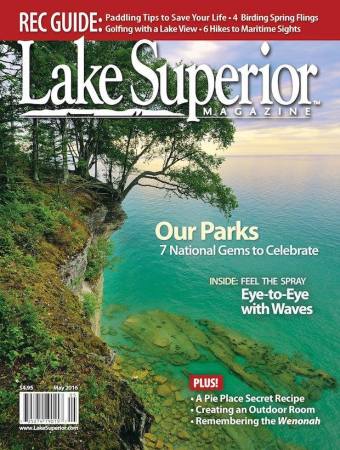
I stopped freelance writing a few years ago, choosing instead to focus on writing fiction and poetry. (And this blog!) I was tired of hiring out my brain for somebody else’s use, since that’s what I do all day at work already. Thankfully, I also no longer had a financialLSMagazineMay16 need to freelance, so I made the conscious decision to stop.

That worked well until about a year ago, when I took a cruise on Lake Superior aboard the Wenonah, the ship that took me on my first trip across the lake.

The cruise dredged up old memories. I considered blogging about them, but once I started writing, I realized I had a story I could sell, dang it!

Alas, I succumbed to freelancing, but at least the story was one I truly wanted to write. I know, poor me. It’s a good problem to have.

My story was recently published in Lake Superior Magazine. It’s a superb magazine — pick up a copy and check it out! (Page 14.)

They also published a couple of my photos. But I have gobs of other photos I took that day, which I thought I would share with you. Please enjoy this virtual cruise along Lake Superior’s North Shore.

DSC02270

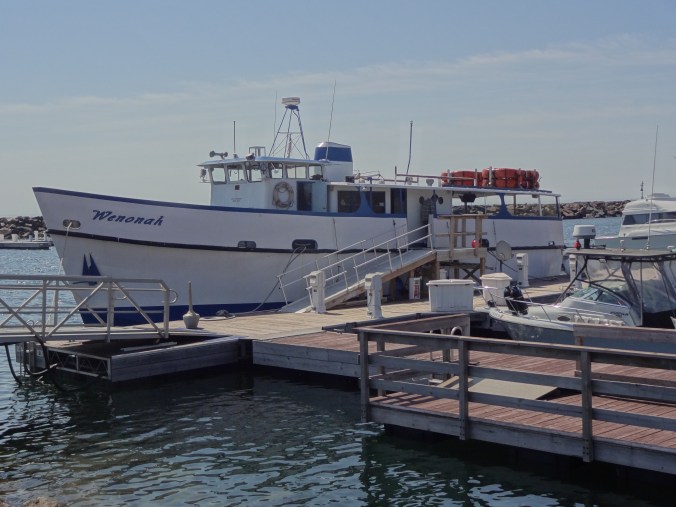
The Wenonah at Silver Bay Marina.


DSC02290

The tip of Gold Rock, site of a shipwreck in 1905 that claimed a life.

DSC02298

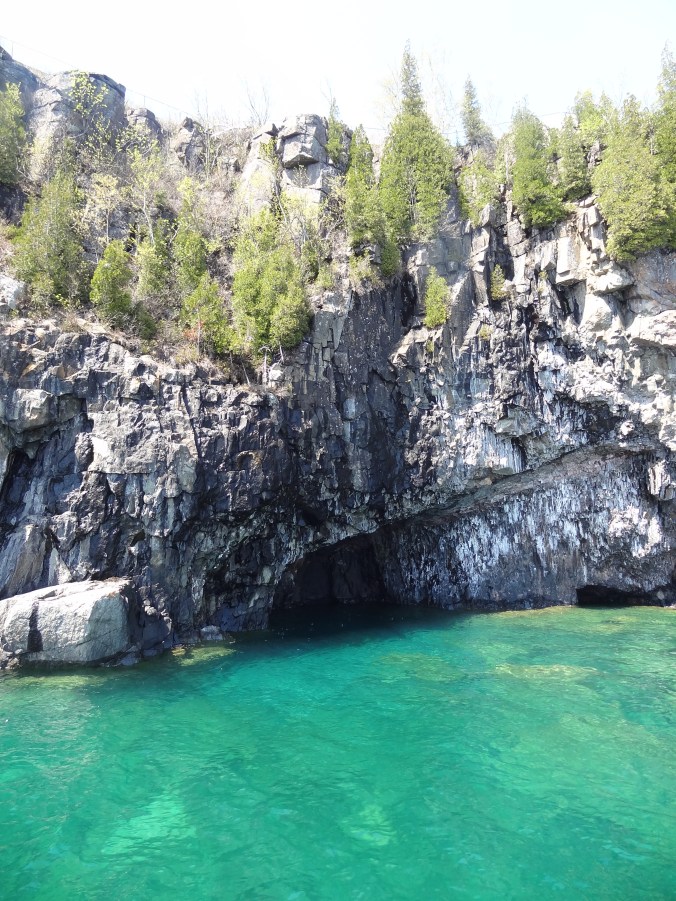
That turquoise water looks like the Caribbean, doesn’t it? I wouldn’t jump in though. It’s a bit nippy.

DSC02303

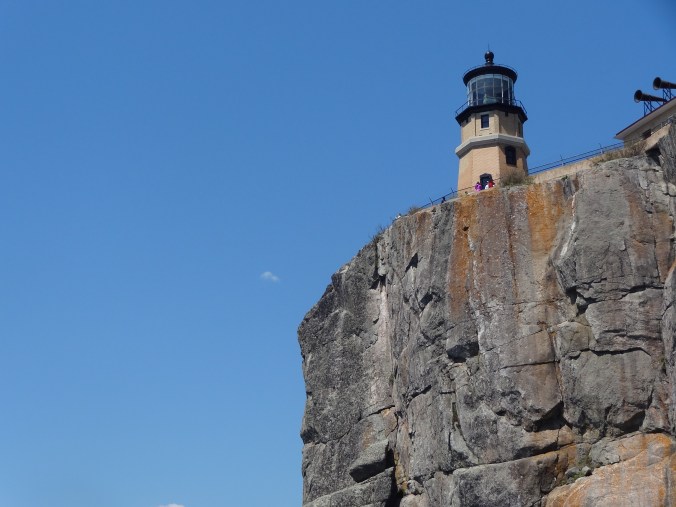
Coming around Split Rock Lighthouse. Not many people get to see the lighthouse from a mariner’s view.

DSC02310

A more classic view of the lighthouse.

DSC02322

People frolicing with gulls on an island off Silver Bay.

DSC02327

Piles of taconite pellets waiting to be shipped south to be made into steel.

DSC02333

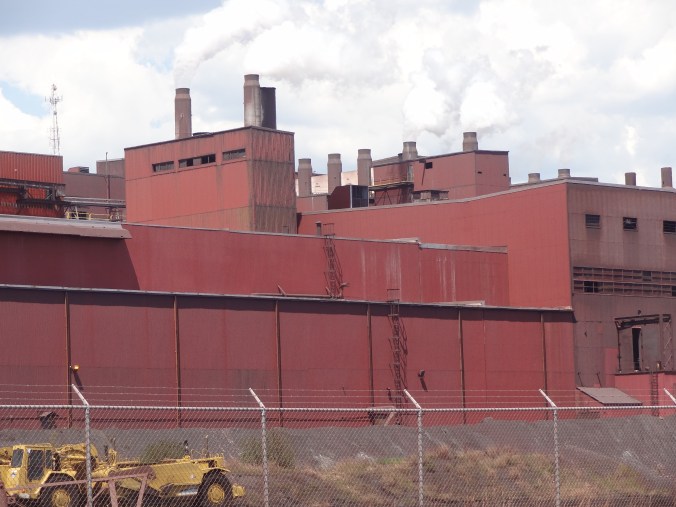
The taconite plant in Silver Bay, although it looks more like a cloud factory. Perhaps it’s not beautiful, but it’s part of the cultural landscape of this area.

DSC02275

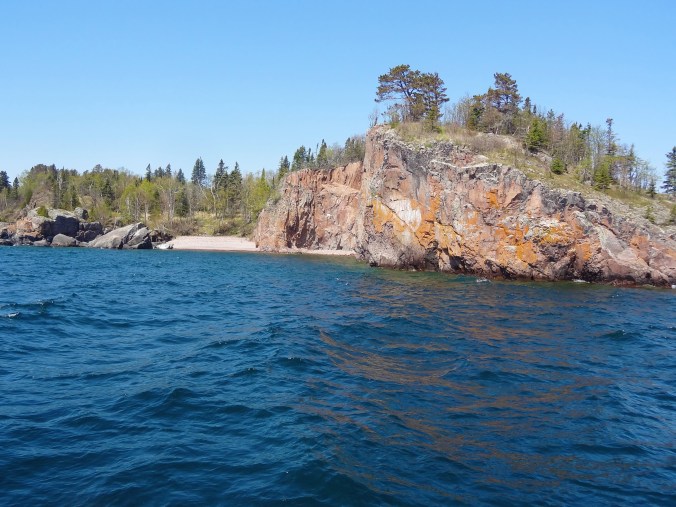
The rugged coastline of Lake Superior’s North Shore.


My Recent Embarrassment with White Culture

NativeWhite

Nothing says Native American better than a white girl in a headdress.

Native Americans are the largest non-white population in my northern Minnesota county, coming in at just over two percent. Even though they are the largest “minority” population, in my experience, the “majority” community still struggles to remember to represent Native Americans on decision-making and natural resource committees. But I recently participated in two events where natives were remembered and asked to take part. However, the events reflected poorly on us white folks.

The first event was a journalism panel for a project (One River, Many Stories) that’s trying to bring journalists together to write about a major river that flows through our community. The river, which has been a dumping ground, is being cleaned up and is the focus of major restoration and community planning efforts.

The three journalists on the panel were speaking about collaboration for this project. One was Native American and the others were white. Granted, getting media types — who have been trained to compete with each other — to cooperate is a tall order to begin with, but as the discussion and Q&A session progressed, I felt increasingly chagrined. The native journalist was giving the audience tips on how to find story sources through old records and by talking to people. The white journalists were spouting the corporate line and jumping on chances for exclusive stories. Hello. The whole point of the discussion was collaboration, which the white journalists just didn’t seem to grasp.

Even the audience (mostly white from what I could tell) ended up grand-standing and sniping about which media outlet was the better storyteller. I left the event embarrassed by the blatant blindness to the benefits of collaboration by the white folks.

The second instance was an open mic poetry/prose reading last night at a local coffee house. Although anyone is welcome to read at these sessions, each features an established writer who is given extra time to showcase their work. The featured reader last night was a Native American. His reading concluded with a song he sung in Ojibway. Once done, he invited a lady on stage to read, who also looked native.

Their poems were moving and heartfelt, raw and sentimental. They worked for me. What didn’t work was the lady who read last. She was a blonde older woman who ended her set with a song from a play she wrote. She said she decided to sing in appreciation of the featured reader. But as she belted out several times that she was a “full-blooded Indian” and had endured repression as a native, I began to squirm.

Now, I know that Native Americans come in all colors, but this lady was definitely not native. And I understand that she was trying to honor the culture in an artistic fasion. But I don’t think she realized how farcical it is for a native to see a white person trying to “be” native. It made about as much sense as a Nigerian singing onstage about being Swedish, even if that Nigerian really digs and honors Swedish culture.

I’m sensitized to this issue from recently reading Alexie Sherman’s “The Absolutely True Diary of a Part-Time Indian,” but also because over the years I’ve spent time on reservations around the country, in kiva ceremonies and at pow wows, and with Native American medicine men. Besides, don’t forget that I am a whopping 0.4 percent Native American myself (smirk).

I realize I’ve opened a can of worms with this post. I guess what I am trying to say with it is, please, please, please white people – there are better ways to honor Native American culture than by trying to pass yourself off as something you are not. And please learn how to collaborate, a trait that seems to come so much easier to native peoples. I worry about white culture’s ability to survive on several levels unless we do so.

A good blog post about Native American cultural appropriation can be found here.

As I left the coffee house last night, the two native poets happened to walk out behind me. I casually held the door open for them. It was the least I could do.

A Random Act of Decorating Kindness

Decorating Kindness 016Red

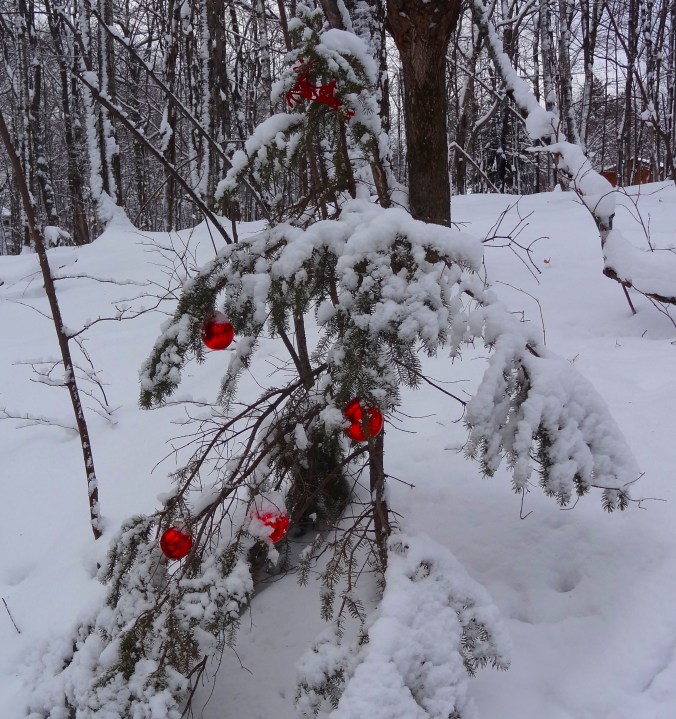
Buddy and I came across this tree on our forest hike yesterday. I didn’t have my camera then to capture this random act of decorating kindness, but today I was ready. A couple of inches of snow fell though, and the tree looks wilted compared to yesterday, but it doesn’t obscure the magic. A deer ornament graces the top of the tree.

Merry Ho Ho! (As my oldest son used to say.)

Decorating Kindness 012

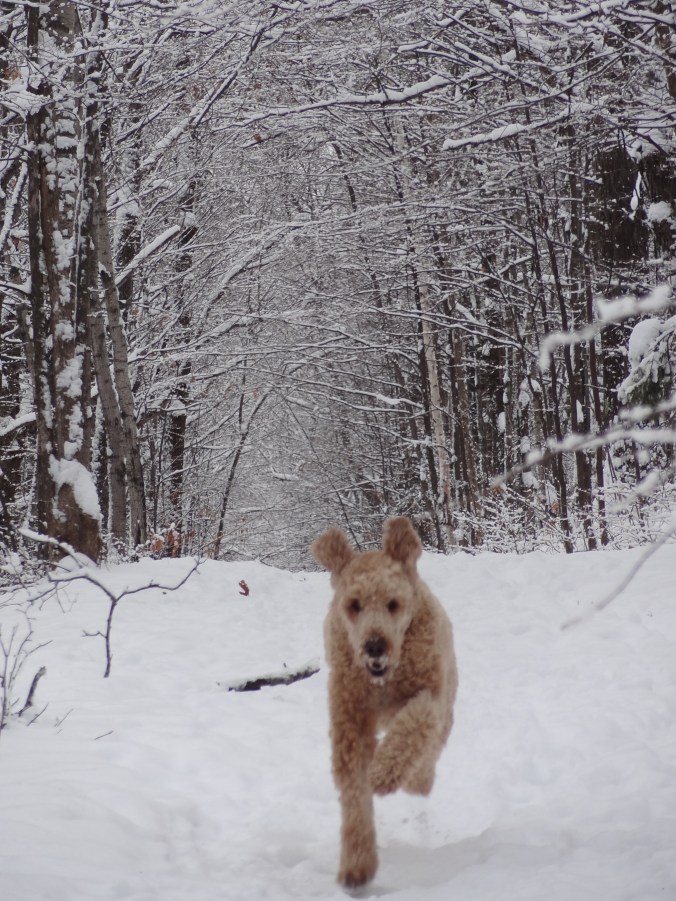
Attack of the abominable snow dog!


Duluth Does the Day of the Dead

All Souls Night 2015 007
At the risk of having you all think I’m extremely morbid, (since I just wrote about obituaries) I am going to write about All Souls Night in Duluth, also known as the Day of the Dead. It’s a community event that, although somber, is an expression of joy and remembrance for our ancestors.

I’ve wanted to attend All Souls Night for a year or two, but it never worked out until this week. Part of the event is held indoors and part outdoors on a chilly northern November evening. After applying colorful skull makeup at home, my friends and I arrived for the indoors part in time to hear a local singer and choir perform. Then there was a ceremony to honor the dead. Most touching was when audience members called out the names of the departed. Their offerings were recognized with the ring of a bell.

Tribal belly dancers came next, honoring the dead with their sinuous and graceful movements. Then it was time to head outdoors for the Funeral March for Bad Ideas. A jazz brass band led the hundred-plus people around the block along with stilt walkers, and several huge puppets that depicted death and rebirth: fish and moose skeletons combined with a monarch caterpillar and butterfly.

We gathered in a pavilion and held a ceremony to burn pieces of paper upon which the audience had written their bad ideas from the past year. Some were funny (like “Donald Trump”) and others were more personal. My friends and I were getting cold, so we left after the spiral dance, missing the music that continued indoors.

I was impressed by the range of ages of the crowd. There were more children than I was expecting for an event that deals with death. But I suppose it is good to have the next generation learn about honoring ancestors.

I was also surprised to learn this has been going on for eight years here. Candlelight and singing amid the clutter of our lives. . . .

The Purge (or When a Trip to the Dump can be Good for the Soul)

Image courtesy of St. Louis County, Minn.

Image courtesy of St. Louis County, Minn.

Today I got rid of some dead weight and made a new friend along the way.

It was time for fall cleaning, if you will. I got rid of some household hazardous waste (fluorescent light tubes and used snow blower oil) and detritus accumulated over several years — both mine and my parents.

My family moved our aging parents twice in the past several years — from their home to an assisted living facility, and from there to another facility in a different town. I kept some of their things on the chance they might need them, but now that it’s been several years and they live out of town, I realized that ain’t gonna happen. So it was time for a purge.

How it works at our self-service dump is you tell the attendant what you’ve got in your (car, truck or trailer) load and they assess you a charge. Then you drive up a hill. Below the hill are large dumpsters either for metals, cardboard, wood, or miscellaneous waste. You park on the dumpster hill and then toss your junk down into the appropriate container. After that, you drive down the hill and loop back to the entrance to a shed where electronics are collected.

The last time I visited the local dump (now called the more politically correct “Materials Recovery Center”) was about a year after my divorce. I loaded all the junk my ex (who was sort of a hoarder) left into my then-boyfriend’s truck and we made a date of going to the dump. Hey, don’t knock it until you’ve tried it!

Let me tell you, throwing your stuff into the dumpster abyss is a rush. You’re flinging off your old world to make room for the new. It can get addicting. My boyfriend and I laughed as we did it — the feeling was so freeing. This time, I felt rather sad because some of my parents’ discarded items meant their lives would never be the same, but still it felt good to get the stuff cleaned out of my house and garage.

And I made a new friend in the form of the lady attendant who assessed my load. We happened to have the same type of vehicle, so while I was showing her the stuff in my trunk, we talked about the merits of our cars. I paid and when she came back to give me the receipt she asked more questions about my car.

I thought having a dump worker who wasn’t a stressed out robot was a nice change of pace. But the guy in the truck behind me did not. He yelled at the woman to hurry up. Ignoring him, she replied to me, “It’s my job.” (With the unspoken, “And I can do what I like to make it bearable.”) We exchanged a few more words and then I went on my merry way up dumpster hill.

After my cathartic dump (smile), I waved to her as I left.

So, that’s life in northern Minnesota. We make friends at the dump and get our kicks tossing stuff away. What can I say?

Try visiting your local dump someday. It could be good for your soul.

Bobcat Fog

Fog

Buddy and I went for a walk along the lake in the fog this evening. I love fog. It’s so . . . atmospheric. Makes you feel enveloped, safe in a wall of mist, moving mysterious through the world. Of course, Lake Superior was gray, too – water and sky indistinguishable, quiet.

As a fog-lover, I live in the right place. The dynamics of the lake and the hillside in Duluth make for a larger than usual number of foggy days.

During my walk, I was reminded of the Carl Sandburg poem about fog – how it comes in on little cat feet. He wrote that about Chicago – seeing fog in the harbor. But cat feet just don’t cut it for Duluth. Our far north fog is less domesticated, a bit more dangerous. If I were to write a haiku about fog in Duluth, I would describe the fog as coming in on bobcat feet.

Radio Interview About My Books

Hello — Life has been sweeping over me like a tidal wave recently, but I was still able to make time for an interview about my novels on a community radio station. Follow this link to hear my interview yesterday on KUMD’s Minnesota Reads show (and discover why I’m nervous to have my parents read my books).

I was honored to be included in the show, which airs every Thursday morning at 8:15 a.m. Tune in!