Rounding Off the Rough Edges of Torment and Desire

Kevin Kling

Kevin Kling

I didn’t mean to start taking notes during the keynote speech at the Northeastern Minnesota Book Awards when they were held last week in Duluth, but I couldn’t help it. When a speaker quotes Johnny Cash: “Talent is God-given; style comes from our limitations,” and starts talking about writing, well, it’s hard not to . . . start writing in every open space on the back of the program.

But I also need to let you know that there was pie at this event; five kinds of free pie provided by the Rustic Inn up the North Shore of Lake Superior. I wrote my notes under the sugar-rush influence of a raspberry cream variety, so keep that in mind as you read this.

The speaker was Kevin Kling, noted playwright, speaker, author and storyteller who I am ashamed to say, I’d never heard of before. But hey, I live in Duluth. That’s my excuse and I’m sticking to it. Kling is almost as cool; he hails from Minneapolis. He talked a lot about why people write and how the process helps people deal with emotions, tensions and physical difficulties.

Kling’s physical differences are more apparent than most. Although he was born with a short left arm that has no wrist or thumb, audience members couldn’t help but notice it because it’s the only arm he can use. His right arm (which he used to depend on) was rendered pretty much inoperable by a motorcycle accident over a decade ago.

Kevin Kling as a Minnesotan.

Kevin Kling as a Minnesotan.

Despite a shorter than usual appendage with which to make his point, Kling made his point clear, even to the sugar-impaired. He told us a condensed story about his accident and used it to illustrate how, when he tells a story, it doesn’t control him anymore. “By the telling and the asking, we know we’re not alone.” Kling was in therapy after the accident and described how retelling the story of his accident so that he didn’t crash lessened the hold the experience had on him. By rewriting it in his mind, he took away its power.

Other notes I scribbled include: stories are tension – things that need to be worked out. And, “God loves stories so much; he created people so there would be an endless supply.” (Love that quote!) And Kling discussed how stories “round off the rough edges of torment and desire.” Now, as an eco-mystic romance writer, I know a bit about desire and torment. I lived with it for the 17 years it took to write my first novel, and I’m living through it now while writing the sequel (which I hope will take me less than two years). I suspect the thing that kept me going that long on the original (other than to eventually prove I could finish it) was to work out the feelings that inspired it. Did all that writing help? Yes, I think so. The feelings aren’t locked inside me anymore. They are loose upon the world, for better or worse.

By the way, my novel was not up for consideration in the competition, since it was set on Isle Royale, which is technically an island in Michigan (not Northeastern MN), and it was published in 2011. The stories under consideration for this ceremony were published in 2012. I attended the event to just to enjoy hob-knobbing with bookish folks in hopes it would help me stay inspired.

My first novel did not have a happy ending for the human protagonists. I’m a sucker for a happy ending, so I’m working to find them one in the sequel – so that some of their desire and torment can be lessened; and in doing so, lessen mine.

But right now, I’m desiring more of that pie. . . .

God loves stories so much; he created people so there would be an endless supply.

Kevin Kling – author, storyteller, playwright
Northeastern Minnesota Book Awards ceremony, May 23, 2013 in Duluth, MN

Beer: A Love Story

Woman holding glass of beer over her head

Woman holding glass of beer over her head (Photo credit: Wikipedia)

It’s not my love story; I’m more of a wine person. But I did meet someone who loves beer. A group I’m a member of met at the new Canal Park Brewing Company in Duluth a few days ago. In addition to our group meeting, we got a tour of the on-site brewery by Jeremy, one of the brew masters.

Jeremy is just four days into his job and it shows. Bright-eyed and bushy-faced (he has a sparse beard), he spoke with true enthusiasm. He comes to northern Minnesota from Milwaukee, which, of course, is known for its beer. Jeremy has a good pedigree; he’s done college work in biochemistry and almost has a doctorate in it. It sounded like the only thing standing in his way was some impatience with academic bureaucracy.

He’s done a lot of work with yeast and home brewing, and he worked as a volunteer for a well-known brewery in Milwaukee, the name of which I can’t recall because I was drinking wine at the time. And I’m drinking a nice zinfandel as I write this, which is not helping.

Anyway, this is Jeremy’s first paying job at an official brewery. He showed my group around the temperature-controlled vat room (a cool 53 degrees) and the warmer room where they store the hops. We also got to see the fancy computer panel that he uses to cause various mysterious things to happen to the brews, and the hopper that dispenses the grain so vital for the operation.

So it was the lure of this job that brought him to Duluth, and also . . . you guessed it . . . a woman. His lady friend happens to work for the competition: Fitger’s Brewhouse , just up the shore of Lake Superior a bit.

Seeing someone so obviously well-suited to their job was fun, and it was nice to think that love was an important side-benefit of Jeremy’s move north. Being a fly on the wall during one of his conversations with his lady friend about brewing and what their respective work places are up to would be so interesting. Do they share trade secrets with each other or keep mum for fear of giving the other an advantage?

Although I didn’t drink the beer so can’t comment on it (and you wouldn’t want me to), the food was notable, the wait staff attentive, and they were patient with someone like me who had questions about which entrees are best to eat for someone who can’t tolerate wheat (yet another reason I don’t drink beer, besides the taste). I had a Jaeger burger, which features smoked gouda cheese, black forest ham and sautéed wild mushrooms (without the bun), along with some garlic mashed potatoes.

And Jeremy answered all the questions we threw at him. I could tell he loved the topic of beer and I’m sure he’ll do credit to this profession. So, if you’re ever in Duluth, stop in at the Canal Park Brewing Co. And no, they are not paying me to say that!

A River Runs Through My Bucket List (or Learning How to Fly Fish Before It’s Too Late)

English: Green Highlander salmon fly. The hook...

English: Green Highlander salmon fly. (Photo credit: Wikipedia)

I have to admit, I like creating lists. They help me remember things and when I cross something off one, it gives me a straight-lined sense of accomplishment. A few years back I started a “Things to Do When I Retire” list; not really a bucket list (things to do before I die), but a similar concept. The list contains things like volunteering for the Red Cross, taking painting lessons, taking classes at a local folk arts school, and doing more photography.

I was content to delay the activities on the list until I had time during retirement, which was probably about 15 years away. That was, until one of my friends died unexpectedly in his early 40s. A sense of mortality smacked me in the forehead and I realized how much I’d been putting off really living and making the most of the present. In my friend’s honor, I decided to stop PLANNING and start DOING.

One of the activities on my retirement list is fly fishing. I suspect the inspiration for that came from watching the 1992 movie “A River Runs Through It.” Directed by Robert Redford and featuring Brad Pitt, the movie centers around fly fishing scenes in Montana. It was also around that time that I visited Montana and helped fight a wildfire on the White River National Forest in Colorado. I saw people fly fishing on rivers in these places and it looked so idyllic, I knew I had to try it someday. Plus, the biological aspect of the sport appeals to me. You have to know how to think like a fish and be aware of what’s going on with the local bugs to be successful.

Well, “someday” came last week. Rogue, non-retired list-breaker that I am, I took a fly fishing class with a group of women along the banks of a river on the outskirts of town. The opportunity was organized by one of my women friends and taught by Katherine Lansing, a local fly casting instructor certified by the International Federation of Fly Fishers.  

Katherine Lansing

Katherine Lansing

Lansing became an instructor by accident. She had been fly fishing for a few years, then she signed up for a class she thought was about how to learn to cast better. Turned out it was about how to learn to teach other people to cast better. Although hesitant, she took the class, which led her on the path to becoming one of only 80 female certified fly fishing instructors in the U.S. at the time.

We met under a picnic shelter at a local city park on a 40-degree evening. As the five other women described how they became interested in fly fishing, I realized I was the only one there not introduced to the sport by a man. Everyone else had been introduced by a boyfriend, husband, brother or father. Not sure what that says about me. I do admit I had been hoping “some man” would take me fly fishing, but it just never happened.

Lansing started the class by giving us an overview of the various fly fishing equipment and showing us how things worked. Then she introduced us to knot tying. We learned two knots, practicing first on chunks of nylon rope, and then on the more challenging fishing line. Tying the knots became more difficult as the cold temperature took its toll on our fingers. But it wasn’t long before we were up and moving, practicing our casts on the lawn beside the river, which was roaring with melt from spring runoff.

Casting was fun, and people kept remarking that I’m a natural at it (preen, preen). If I am a natural it’s from a lot of practice casting regular fishing lures and maybe from throwing an atlatl (a prehistoric throwing spear), which is a story I’ll perhaps tell another time. As we casted, Lansing went around and gave us tips in her no-nonsense and helpful manner.

After about 2-1/2 hours outdoors, I could no longer feel my toes, so I decided it was time to head home. But I enjoyed the experience and I’m looking forward to actually getting out on the water to fly fish next time. Then I’ll be able to officially cross that one off my list, and I’ll have a new hobby NOW instead of waiting for my retirement or until I’m dead, whichever comes first. (Smile.)

Working by the Duluth-Superior Harbor and Lake Superior

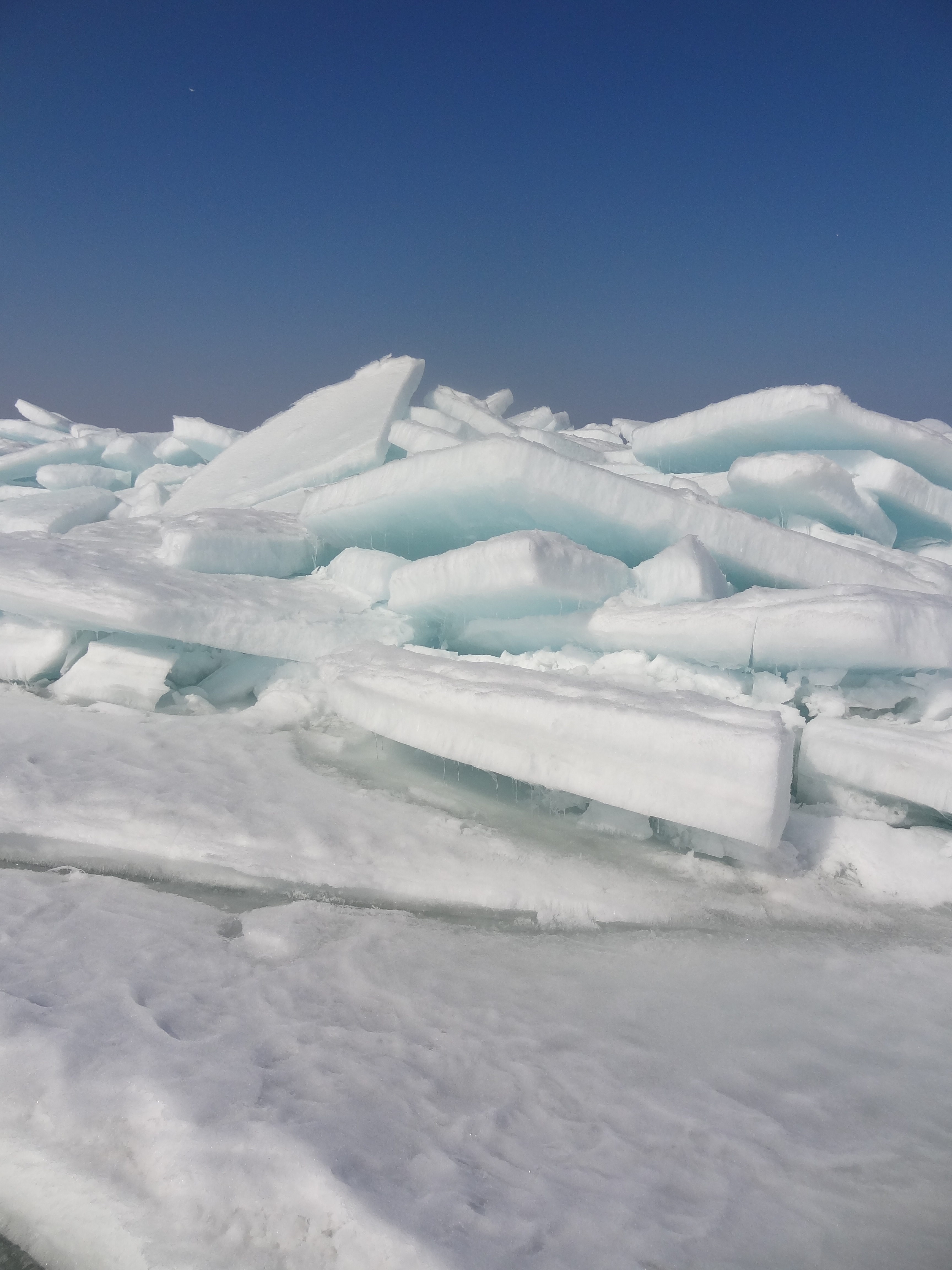
Huge chunks of ice piled atop eachother off of Wisconsin Point, Superior WI

Huge chunks of ice piled atop eachother off of Wisconsin Point, Superior WI in April.

No deep thoughts for this week; just wanted to show you some photos I’ve taken recently at and near my office on an island in the Duluth-Superior Harbor. I feel so fortunate to work in such a cool place and I never take it for granted. Ice can still be found in the bays and along the shore, but the spring break-up is finally here and it’s as if a bottleneck of birds has been unleashed upon the waters. I haven’t taken any bird photos, but I did manage to catch a fox kit out the office back door, an instant before it got scared away by someone approaching outside.

A fox kit investigates a stick as seen out the back door of my office last week.

A fox kit investigates a stick as seen out the back door of my office last week.

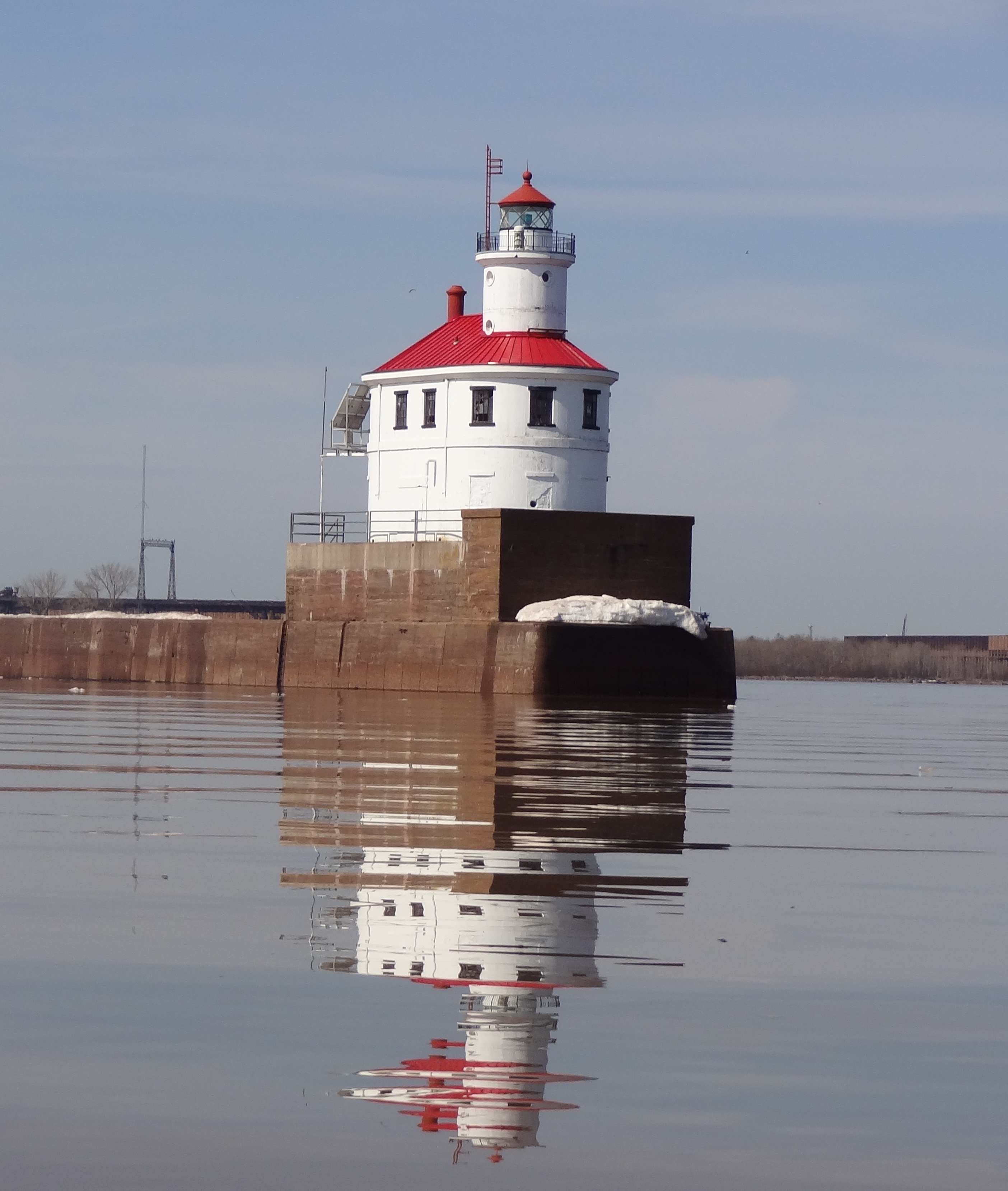
Yesterday I accompanied some researchers out on the St. Louis River Estuary. They were taking water samples for an ongoing project about seasonal water quality variation in the river. Because it was a calm day, we went out on Lake Superior just for kicks, through the Superior Entry. I got a good shot of the lighthouse despite the chilling wind that stole my cap later on and dunked it into the river. The researchers were nice enough to turn the boat around so I could retrieve it. My cap is now christened in the estuary, so I guess I’ll have to wear it out there all the time now. Anyway, I love the reflection in this photo!

The lighthouse that guards the Superior Entry into Lake Superior.

The lighthouse that guards the Superior Entry into Lake Superior.

On the other side of the breakwall was the U.S. Army Corps of Engineers dredger and some tugboats. The Army Corps dredges the harbor (digs out the muck) to ensure that the harbor is deep enough for the boats that ply its waters. The dredge is resting here. I thought this photo looks like a little mechanical family; papa dredge, mama tug and baby tug. Enjoy!

Dredge and tugs, Superior WI Entry to Lake Superior

Dredge and tugs, Superior WI Entry to Lake Superior

Vinny with a Y not an IE

grey wolf

grey wolf (Photo credit: Wikipedia)

I was walking my dog through the local forest the other day when I met a 12-year-old neighbor boy for the first time. His name is Vinny; spelled with a Y on the end, not an IE. “People mix that up all the time,” he said. He was walking a chocolate lab who was also 12 years old. His lab got along well with my goldendoodle so we let them off their leashes to romp.

Vinny was the talkative sort. I’m always amazed at how much kids unknowingly reveal about their lives and their parents’ lives to strangers. While on the one hand, I’m glad children are still trusting, on the other hand, I shudder to think what could happen if the information made it into the wrong ears.

During our short walk, and with hardly any prompting from me, I learned about all of Vinny’s former and current pets, that Vinny’s parents are hiring a nanny for the summer to drive him to his soccer games, that he has a sore knee but his mom said that some exercise walking the dog would probably be good for it (I had to smile at that one), and that Vinny’s dad shot a wolf.

Of course, as a wolf novelist, this last bit of news gave me pause. I can’t even remember how the topic came up, but suddenly, there it was, as unexpected and pungent as blood on leaves. I do remember that Vinny was explaining how he likes to deer hunt. He was in his deer stand when he was 7 and a wolf appeared and scared him. From questioning and further conversation, I got the impression he was in the stand alone, but that his dad was nearby, possibly in a different stand. Vinny ended up meeting up with his dad and telling him about the wolf. That’s when he told me his dad shot the wolf.

Oh, there were so many things I could have said and so many routes our conversation could have taken. My first instinct was to trot out the fact that wolves have not been documented to kill a human in the U.S. but once in recent history; that they are shy and normally do not approach humans. But I didn’t. I wasn’t there in the forest in a deer stand with a scared young boy. Obviously, something the wolf was doing scared him and concerned his dad enough that he decided to kill it. And during my book signings in northern Minnesota and Michigan, I’ve heard many stories from people about wolves. I understand that they are capable of all sorts of behaviors, many of which are seen as threatening by humans.

Instead, I said something about wolves usually being curious more than anything else. I wanted to ask him if his dad reported the shooting, because I’m sure at that point in history (5 years ago) the wolf was still considered an endangered species and thus illegal to kill. But I really didn’t want to know.

Vinny then went on to describe a plan he and his dad made in case Vinny ever felt threatened by a wolf again. He told me the special kind of ammunition they would use, which would hurt/scare the wolf but not kill it. This gave me a bit of consolation. At least they knew that killing the wolf was wrong and either got the special ammunition idea from a conservation officer or his dad had thought about it enough to figure it out. I doubt that shooting a wolf with anything is a good idea because the wolf could die of an infection, but I kept my mouth shut about this, also. I didn’t want to criticize Vinny’s dad because that could shut Vinny off for future conversations about wolves.

Our conversation ended with Vinny asking me if my youngest son likes to hunt. I told him we weren’t hunting people, but that my son enjoys fishing. By that time, we were at a crossroads and we separated, each to our own homes. I hope I meet Vinny again. Maybe I’ll have another chance to educate him more about wolves. I sure hope so.