Minnesota Nice Meets Hollywood (and it isn’t pretty)

HollywoodSign

The minister at my church gave a sermon on “Minnesota Nice” last Sunday. When he read the Wikipedia definition of it, my mouth almost dropped open. (If I wasn’t Minnesotan, my mouth would have dropped ALL the way open.) He was describing a great deal of my personality:

Minnesota nice is the stereotypical behavior of people born and raised in Minnesota to be courteous, reserved, and mild-mannered. The cultural characteristics of Minnesota nice include a polite friendliness, an aversion to confrontation, a tendency toward understatement, a disinclination to make a fuss or stand out, emotional restraint, and self-deprecation. It can also refer to traffic behavior, such as slowing down to allow another driver to enter a lane in front of the other person. . . . Some traits typical of this stereotype are also generally applied to neighboring Wisconsinites and Canadians. Similar attributes are also ascribed to Scandinavians, with whom Minnesotans share much cultural heritage.

I never knew Minnesota nice had its own Wikipedia entry. I’ve read books and watched the movie (“How to Talk Minnesotan”), but I’d never seen the personality type spelled out so clearly before. The minister went on to explain what Scandinavian traditions could have inspired this behavior and how they are rooted in “the good of the group” mentality. In general, people were supposed to work together and not call attention to themselves for the betterment of everyone.

Although not Scandinavian, I am a fifth-generation Minnesotan. The Minnesota nice philosophy has had plenty of time to seep up into my ancestors and me from the soil. It’s been absorbed into my family from neighbors and community. I’ve found I have to work to overcome it in a greater society that values individualism and charisma. Self-deprecation, after all, makes it difficult to find a job, sell a product or attract a mate (unless that mate is also into Minnesota nice and recognizes it for what it is). I’ve also found I measure people from the perspective of Minnesota nice. I mistrust anyone who is too confident or self-promoting. I suspect they do it to cover up insecurities, but it also goes against the code of Minnesota nice.

I and another co-worker once took a news producer from Hollywood on an overnight trip up the North Shore of Lake Superior to the famed Boundary Waters Canoe Area Wilderness to film a spot for “Good Morning America.” That man could talk, and self-promote.

By the next day, when we were driving back to civilization, he could tell he was out of place. He complained that I and my coworker (also a Minnesotan) didn’t talk enough. “Maybe we don’t have anything to say,” was the reply. He didn’t know how to deal with that. We weren’t trying to be mean — we had been worn out by talking over the course of his tour and didn’t know how to relate to his foreign personality type. He gave up after that and we rode along in blissful silence — blissful for us, awkward for him.

Back to the sermon. The point of it was that Minnesota nice isn’t enough. It’s too constricting and confining – allows for too little self-love. There’s got to be a happy medium between self-sacrifice for the good of the group and self-love that promotes a fulfilling life. I’d like to think that I’ve learned this during my life, sometimes the hard way. Although it goes against my nature, I can brag when I have to, and I’ve learned how to appreciate certain traits and aspects of my personality. But I doubt I’ll ever feel comfortable around people like Mr. Hollywood.

To Mine or Not to Mine?

Native copper. Image by Jonathan Zander, Wikimedia.

Native copper. Image by Jonathan Zander, Wikimedia.

That was the question I pondered along with about 1,500 other people and lots of rent-a-cops at a public meeting in Duluth last week. The project up for comments is an open-pit copper-nickel mine (a.k.a. sulfide mine) farther north near Ely, Minn., on the border of the Boundary Waters Canoe Area Wilderness. I have followed the development of this Polymet Corp. project for several (five?) years, trying to learn as much as I can to make informed comments as a concerned member of the community.

True to my blog’s name, this post is going to meander quite a bit as I try to gather my thoughts, so please bear with me. The problem is that copper sulfide mining has never been done successfully (from an environmental standpoint) in the U.S. These mines have a bad track record of long-lasting pollution. Even with all the new technologies the mining company proposes using with it, this mine will require 200-500 years of water treatment once its 20 years of life is over.

I was heartened to see so many people involved in the public meeting. It was well-organized and moderated. As is typical for public meetings about contentious issues, the open house portion of the meeting was designed to divide up the audience. The organizers provided tables staffed by people conversant in different specialties such as air quality, water quality, mercury, and wetlands. I had questions about how the acid-rain producing gasses from the waste rock were going to be handled, and ended up having conversations at four tables. I spoke with a consultant at the water quality table, who referred me for more information to the air quality table. They couldn’t answer my question, so referred me to the Polymet table. I also stopped at the “cultural resources” table (which was really the tribal table) just because I knew the people staffing it.

The public comment period followed, with everyone filling up a huge ballroom of the conference center. Guidelines for giving verbal comments were clearly spelled out in the meeting packet, and speakers (whose names were drawn at random) were given three minutes to say their piece. Groups of mining supporters in the audience sported royal blue round stickers (curiously, the same color as the Polymet staffers’ polo shirts), and environmental supporters wore round green stickers.

The thoughtfulness and thoroughness of people’s comments impressed me, as did the polite applause following each talk, no matter what viewpoint the speaker espoused. I heard that the applause got rowdier as the hours-long comment period progressed, but I had a dog to let out back at home, so I didn’t stay for the whole thing.

This is the mining company’s second try at an Environmental Impact Statement (EIS). The Draft EIS they released in 2009 was deemed inadequate by the state and federal agencies involved, so they issued a Supplemental Draft EIS. This version addresses some water quality concerns and waste tailings disposal issues. It also adds a necessary land exchange with the Superior National Forest, since the mine will impact National Forest lands.

If this EIS gets shot down, I’m not sure if the Polymet Corp. will get another do-over or not. What would that be called, I wonder – an Additional Supplemental Draft EIS? (Grin.)

But I have a feeling that even if the mining companies are required to add more details before the project can begin, they will complain, but they will do it. There’s a lot of money and profit riding on this project. And it’s not just this one mine – several others are in line behind it. The corporations are salivating over this copper-nickel vein, which is one of the richest untapped sources around.

As the Polymet project stands now, the mining company wants to use northern Minnesota as a guinea pig for some new techniques. Call me selfish, but I’d rather they practiced their techniques somewhere else first and proved them effective before using them here. The natural environment in that part of Minnesota is the most precious thing we have. It’s what gives the BWCA Wilderness the status of the most-visited wilderness in the lower 48 states. And this is not your grandpa’s iron ore mine — the type of pollution sulfide mines can produce is orders of magnitude different than the types an iron ore mine can produce, and this mine would be right near the wilderness.

I think that 500 years of maintenance for 20 years of jobs is too steep a price to pay for some copper. I thought it when I first heard about the project, and even with all the research and listening I’ve done that remains unchanged. Yes, I know that copper is vital for the functioning of society. Heck, I’m writing this on a computer, which I assume must have copper in it somewhere. But if we can’t extract copper without having to clean up the pollution from the operation for five centuries afterwards, maybe now is not the right time to be doing it. Maybe we should wait until mining methods improve enough that a legacy of pollution is not what’s left once the project is done.

Although the people I spoke with at the open house tables were all respectful and knowledgeable, I must admit, I trusted the folks at the tribal table the most. They are the ones that have the land and the environment as their number one priority. They are not pulled in as many competing directions as are the agency and corporate staffers.

The tribal comments are contained in Chapter 8 of the Supplemental EIS in a section reserved for “major differences of opinion.” One (of several) issues they raise is that an underground mining operation was not adequately considered. If the operation was kept totally underground, it would eliminate the impact to wetlands and surface waters, and it could limit the sulfide gas (acid-rain-producing) emissions from the site. The tribes argue that underground mining is technically feasible, “leaving only the lack of economic feasibility as the rationale used by the co-lead agencies to eliminate the alternative.”

I found the response by the co-lead agencies about underground mining arrogantly dismissive, and it backs up the tribal complaint: “The co-lead agencies believe that adequate consideration was given to the Underground Mining Alternative prior to eliminating it from further consideration . . . . “ Although they concede that an underground mine would offer “certain environmental benefits,” they contend that the “tonnage/volume and grade (amount of metals) of rock would not generate enough revenue to pay for all the costs associated with underground mining. Therefore, underground mining would not be economically feasible.”

But they offer no numbers. If I was grading this response on a school test paper, I would give it a “D” for “not showing your work.” I guess we’re just supposed to trust them on this. NOT. They also did not do a good job of “showing their work” on the details for the perpetual water treatment system that would need to be put into place.

Would Polymet find a way to make an underground mine feasible if that was the only alternative? I suspect so. If this copper mine is going to happen now with the technologies we have, this is the only alternative I would support, but this EIS gives no adequate justification for not taking that route other than “it costs too much.” I fear it will cost society and the environment too much if we don’t pursue an underground mine. Please, Minnesota Dept. of Natural Resources, send Polymet back to the drawing board!

Beware: X-C Ski Starvation Can Lead to Impaired Judgment

DSC00738

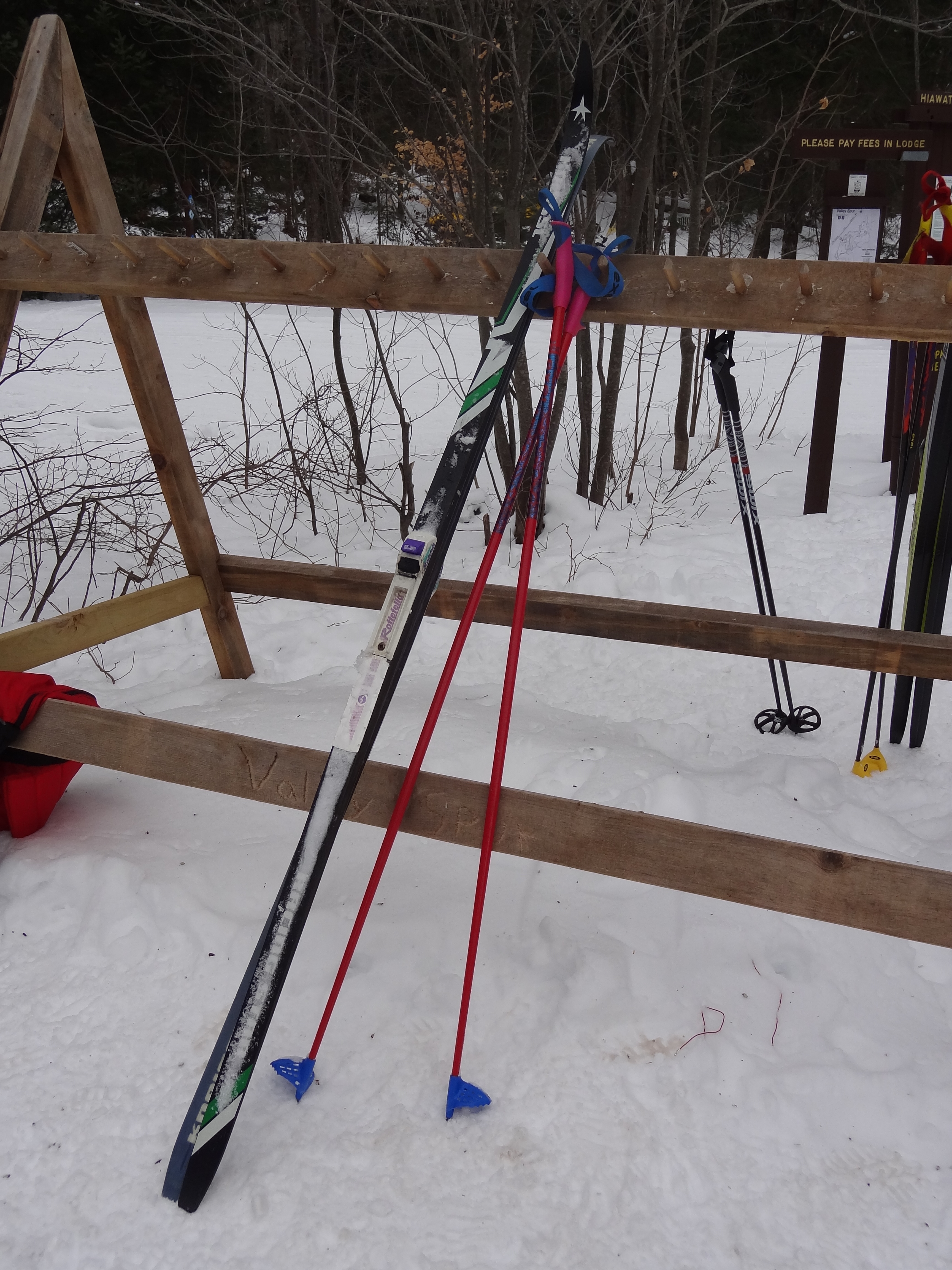
I went cross-country skiing for the first time this season today. All the stars aligned this morning and pointed me in the direction of my favorite trail in the neighborhood where I grew up. I left my teenage son and his sleepover friend with some cinnamon rolls in the oven, waxed my skis, and took off in the car for the trail. I wanted to go alone because usually, my first seasonal ski is not pretty. There’s wheezing and fumbling, and it takes a while to work out the kinks and get back into the rhythm.

A few blocks from my house, I noticed sprinkles of rain on the windshield. Rain? It’s 25 degrees, how can it be raining? Come to think of it, the weather man said something about warmer air traveling over the snow and causing a chance for fog this weekend. I hoped it would just stay a misty sprinkle, because rain wreaks proverbial havoc on x-c ski trails.

As I continued driving, the rain gradually increased from a sprinkle to scattered rain drops. This is the point where a sensible person would have turned around and gone home. I was not sensible, however. I was cross-country ski starved.

For weeks, the beautiful snow had been beckoning, but other commitments caused me to ignore the beckoning. Our recent sub-zero temps also made my fingers not too keen on outdoor activities, especially after my snowblowing frostbite incident. But I love skiing. I grew up with it and desperately needed to do something to raise my heart rate above 70 bpm after falling into winter slothfulness.

So I kept going. When I arrived at the trailhead, I was heartened to see two other vehicles parked in the lot. I’m not the only crazy one. Plus, another car pulled in right behind me. A couple of snowshoers got out of one car, deflating my sense of joint craziness just a bit. Snowshoeing is much more sensible in this weather than skiing, after all. But it was re-inflated when another skier got out and started carrying her equipment to the trailhead. All right! A fellow crazy person.

I unloaded my skis and walked over to where she was putting on her skis. She had white hair and looked about ten years older than me — old enough to have much better judgment. We discussed the bad conditions but both agreed we wanted to try skiing anyway. I tested the conditions with one ski and quickly realized I needed to put on softer wax. As I was doing that, the lady skied down the trail but quickly returned, explaining her wax was not going to work in these conditions. I offered her the use of mine, but she declined, saying it was too slippery. She was going to give up and go home.

So maybe I am the only crazy one. Undaunted, I put on my skis and took off. It was slippery – I had to duck walk up the smallest of inclines. But I did have enough kick to get into a good rhythm on the flats. I snowplowed down the hills until I felt safe enough to get into the icy track for a slick ride down. I saw one other person going the opposite way and we both grinned at each other like ski-idiots.

I skied far enough to feel winded. When I returned to my car, it was coated in a layer of ice, and the rain had become heavier. No mistaking it for a sprinkle, now. I pried open the door and headed home. On the way, my car skated through one red light (at a thankfully empty intersection). I passed two cars that had crashed into snowbanks, and everyone was crawling along at half-speed.

But I survived and made it home. I can say I finally went skiing . . . and lived to tell about it.

Marie Versus the Post Office

Mailbox In The Snow

Mailbox In The Snow (Photo credit: slgckgc)

I’ll cut to the chase, the post office wins. But let me tell you the (long) story.

Earlier this month, my neighborhood received the second-largest snowfall in local recorded history: 28 inches over two+ days. My new snowblower came in extremely handy – I am so happy to have it. But they do have their limits.

Most northerners know that snow clearing is a two-part process. You first clear the snow that nature provides, then you clear the giant five-foot snow wall that the city snowplow provides at the end of your driveway. Now, I’m not complaining. Plowed streets are important, and snow walls are just an inconvenient by-product of having passable streets.

You can try leaving the wall, but unless you drive a Hummer that can break through it, that doesn’t work so well. And if your vehicle does manage to break through it, a large speed bump or ramp is created at the end of your driveway, which tends to launch one skyward upon exit for the rest of the winter. (I know, I’ve done that.)

So after the storm, I cleared my driveway (several times), and the snow wall. That left the mailbox, which sits on a post at the edge of my property facing the street. Only the top of the box was peeking out of the aforementioned snow plow wall. I was too tired to clear it that day, so I left it until the next day. Most northerners know that the cold comes after a snowfall. I know this, too, but my faith in my new snowblower was complete. I thought it could tackle anything.

Apparently, it can’t tackle a five-foot snow plow wall that has cemented together overnight in sub-zero temperatures. After a vain attempt with the snowblower, I tackled it with a plastic shovel. Ha. Silly me.

After another day to regroup, and with no mail delivery because the mailman couldn’t drive his truck directly up to my mailbox, I got the bright idea to use a metal shovel. I have a garden spade, so I attacked the wall on a 20-below-with-windchill day. I managed to clear ten feet in from the road to the box, and about five feet up to the bottom of the mail box. Fifty square feet of clearing snow cement was enough for me. Although I knew the mailman probably couldn’t fit his truck in there, surely, he could tell a clearing attempt had been made and he could take three steps out of his truck to reach my box and deliver my mail. I had Christmas cards to send, so I plopped them in the box and put up the flag.

NOT. Those Christmas cards stayed in their lonely box for two days. I gave up and dropped them in a postbox at a local grocery store. Then, the next day, mail somehow made its way into my box. Much rejoicing ensued. But it was short-lived because it stopped after that. A few days later, I made a foray to the local post office to see if I could collect my mail there, and they informed me that my mail is handled by a more distant post office. So I drove there and told the female clerk my problem. I was pleasant enough, but I made it clear that there was no way I could clear any more of the cement snow than I already had.

After leaving me standing at the counter for ten minutes, she came back with a pile of mail and began sorting through it, taking out only the mail in my name. I let her know that mail for three other people comes to my house (my roommate’s mail and my parents’ mail). The clerk chewed me out for not telling her that in the first place, saying something like I’m lucky she brought all the mail to the counter; otherwise she would have had to go back wherever she had been for ten minutes to get the rest. I explained to her that I am not familiar with the process, but besides, what’s the big deal? She had the mail right there. She was chewing me out over something that didn’t happen.

The clerk did not appreciate my astute observation. She wouldn’t give me the other people’s mail even though the clerk working next to her said I could have it. I then told her I had power-of-attorney for my parents, so that she needed to at least give me their mail. So she did, but she wouldn’t give me my roommate’s mail. She said my roommate would have to come there in person and pick it up.

After exposure to the postal clerk’s nasty attitude, I returned home swearing war on the postal service, and to never bust my butt to clear any more snow in front of my mailbox. Ever.

My roommate has no car, so the next day I drove her to the distant post office. This clerk, who was much more reasonable, said there was no mail for us – it must be out on the truck for another delivery attempt. So we went home, empty-handed. Did we get mail delivered that day? No.

The next day (today), I’m lying in my cozy bed on a Sunday morning, hazily coming to consciousness, when I hear a snowplow go by. You know what that means, another snow wall. I rise and pull on my snowpants and jacket over my pajamas, and decide to have at it with the snowblower before the wall has a chance to settle into cement. The thermometer says 13 below, but the wind says it’s more like 36 below.

The plow wall is only about two feet high this time. My snowblower is handling it fine, but my hands are getting cold, despite two pairs of gloves covering them. I contemplate stopping and going back in the house to warm them, but that would mean driving the snowblower at least 30 feet back to my garage so I could plug it in to restart it. That seems like too much extra work, and I’m on a roll, so I just bang my hands together to encourage blood flow and keep working.

I clear my driveway, then I look at the mailbox. The plow has pushed enough cement, er . . snow, out of the way that a person could actually clear a truck-sized spot in front of the mailbox if they had the inclination.

Conceding defeat in my war with the postal service, I decide to go for it. Using a combination of the garden spade and the snowblower, I clear what darned well better be a large enough space for the mailman’s #$$%%$#& truck. My hands are getting numb, but they still function on the controls, so I just swing them around to get the blood flowing and keep going.

After 45 minutes outside, I go back inside, feeling pleased with the accomplishment — that is, until my fingers start warming up and I take off my gloves. Now, I’m no stranger to cold hands. I don’t know if it has to do with the metal controls on the blower, but this is a new kind of cold.

The tip of my middle finger on my left hand is white. If digits could scream, each one would be emitting a high shrill as the blood starts circulating again. I walk around the mudroom, bare hands in the air, breathing like I’m in a Lamaze Class. My dog is so concerned, he starts howling. Eventually, my wobbly legs suggest that I sit down. The pain is so intense, if I had eaten breakfast that morning, it would have been all over the floor. I put my head between my knees, hands still raised to slow the blood and the pain, and try not to faint.

This pain is only rivaled by the feeling of my son’s head repeatedly jamming into my inner hip during his trip down the birth canal several years ago. The dog calms down, the white tip of my finger turns pink. My hands function well enough for me to remove my boots and outer clothing.

I go lay on the couch in my pajamas, my face white as a wall of newly plowed snow, but at least the postman has no excuse now not to deliver the mail.

The Perfect Christmas Gift for Me

Gift Box

Gift Box (Photo credit: Ken’s Oven)

On this Black Friday frenzy of Christmas shopping, which, by the way, I am NOT participating in, I wanted to write about the perfect Christmas present for me — a Northern Minnesota woman – just in case you were wondering.

The perfect present would be a snow blower – a two-stage, push-button-start, Craftsman model from Sears with a three-year warranty to be exact; a new machine to save me from being at the mercy of a thirty-two-year old Toro blower, which I inherited from my parents, who bought it when I left home for college and took my strong shoveling arms with me.

I love shoveling – I enjoy the exertion, and, unless the blizzard is still howling, it’s usually quiet and sometimes starlit work. If the neighbors are shoveling, they often end up taking a break, gathering in the street to shoot the breeze and make sure everyone made it through the storm all right. But there are times when the snow is piled too deep, and the need to get down my 30-foot driveway to the office is too urgent for shoveling.

The old Toro ran well up until last year when the pull cord got stiff and the auger started jamming. I promised myself the whole of last winter that this winter I would get a new one as a Christmas present of sorts.

I made good on that promise last week. But you know what the real gift was? The time my friend took to accompany me to the store and pick it out. Not to mention the pickup truck he provided to haul the snow blower home. Now, if I could just get him to read the manual for me so I know how to start it . . . . (smirk)

Happy Holidays everyone. May you find the gifts within your presents.

Whaz SUP? Stand Up Paddleboarding in Duluth

Stand Up Paddleboarding

Proof that a 50-year-old can learn new tricks!

It all started so innocently. I was biking on the end of Duluth’s Park Point Recreation Area when I noticed the sign for Stand Up Paddleboard (SUP) rental. I’d been wanting to try SUP for a couple of years so I stopped and spoke with the attendant. The price was right ($15 for an hour) so I made a reservation for the next day.

The day dawned with perfect SUP weather – calm waters and gorgeous sunshine. But I wondered what I’d gotten myself into. Despite being half-mermaid, I’m a warm-water mermaid. The harbor water was 73 degrees – pretty warm for these parts, but what if I fell in? It would be shocking. And what if I made a fool of myself? Leave it to me to practice Fall Down Paddleboarding. Okay, this last one was only a slight fear. I’ve been on the planet long enough and made myself a fool several times over and survived. But still . . .

I went anyway. At the boat access, I met Heather with North Shore SUP. She had me sign a waiver (“SUP is an inherently dangerous sport,” blah, blah, blah) and read some rules, the first of which was, “Always SUP with a partner.” Guess I broke that one right off. I’d tried to find someone to join me during the past 24 hours, but my friends were all otherwise occupied. Heather let me go anyway.

Next, Heather’s partner Garrett gave me some cursory instruction. I could tell he’s given the spiel many times; he went a little fast for a newbie like me, but the other issue was that he was instructing me on land. I learn better by doing. But I must have absorbed enough because I’m still alive to write this. And, by the way, he’s one of the few certified SUP instructors in the country, so he knows what he’s talking about.

Heather introduced me to my board and instructed me how to get on it and stand up, and what to do if I fell. Then she cast me adrift. I’m thinking, Shouldn’t there be more to this? You mean no one’s going to come out with me for a few minutes to make sure I stay alive? Nope.

I kneeled on the board for a few moments until I got a feel for how it handled, then I took a big breath and stood. My first impression was one of tallness. I’m used to seeing the water from sitting in a canoe or kayak. My second impression was that it takes a lot of leg and core body power to make the board move. My legs began shaking in no time. BUT I didn’t fall.

Accompanied by distant cheers from a different paddling event across the way (the Dragon Boat Festival on Barker’s Island), I tooled along the shore, going into a bay where several sailboats were moored. I had this sudden sense of freedom. I could go over and see the sailboats more closely if I wanted, which I did. After a while circling the bay and enjoying the bright stands of purple loosestrife (a pretty, but invasive plant), I reversed direction and headed toward a nearby seaplane base.

Two balance challenges presented themselves along the way. One was a rock that my board scraped against and the other was the wake of a boat. Although not the most graceful, I remained upright. I made it part way to the base when my legs told me it would be a good idea to turn back and stop soon. So I did, enjoying the feeling of walking on water along the way.

Once I beached the board, I got to talk to Heather. She said that SUP can burn 500-800 calories per hour and that she is also a yoga instructor. She even teaches a yoga SUP class – imagine that! Both of my new interests combined. With the strength required for yoga poses combined with the workout of balancing on water, I bet a person must burn about 1,000 calories doing SUP yoga.

Heather mentioned she and Garrett used to run a whitewater rafting business out West. I didn’t get the chance to ask her what drew them to Duluth because another customer was waiting to buy one of their end-of-the-season boards.

Once home, my mom called me to be sure a storm didn’t blow me and my board away.

I guess the lesson is: don’t let your fears hold you back. Use common sense, but don’t sit out life!

Touring the Tall Ships on a “Short” Ship

The Schooner Coaster JJ

The Schooner Coaster JJ

I arrived at the Duluth Tall Ships Festival just when it was closing. Workers were pounding and pulling stakes out of parking lot asphalt once covered by tents, and festival T-shirts were being offered for half-off by a desperately vocal vendor.

But the nine tall ships were still in port and that’s what I was after. I was looking forward to a close-up view of the tall ships via a short, regular sailboat berthed in the ship canal in downtown Duluth. However, the craft was neither short nor regular but a gorgeous 42-foot Beneteau with cabin floors varnished so thickly it was like walking on water, and a nimbleness of handling that belied its more than adequate size. Named the Makena, the craft was one of two in the Moon Shadow Sailing fleet, which offers tours of Lake Superior and the harbor.

Joining me were a couple from Rochester, Minn., and a couple from Duluth who were friends of the captain. The sun finally smiled upon the festival, a light breeze blew; it was a perfect night for sailing. With a warning ring, the Canal Park pedestrian bridge raised and we were off.

Pictures will probably do more justice to the experience than words. Let me just say that the company was outstanding and it was an experience I won’t soon forget. Happy Sailing!

A sailor out on a (sailing) limb.

A sailor out on a (sailing) limb.

The Privateer Lynx


The Privateer Lynx and the Aerial Lift Bridge

The Privateer Lynx and the Aerial Lift Bridge

Captain Marie (and friend)

Captain Marie (and friend)

The Aerial Lift Bridge welcomes us back.

The Aerial Lift Bridge welcomes us back.

The Lark Descended

This is a quick update to my previous post about the Lark, a replica of a 1913 sea plane that was built in Duluth and celebrated recently with a weekend festival. I am sad to say that the Lark crash-landed in the Duluth-Superior Harbor yesterday as its builders were testing its flight capabilities. News reports say the craft was “totaled,” but that no one was hurt in the crash.

I do believe yesterday was one of the first times the Lark was airborne. So the good news is that the builders know it can fly now. The bad news is that the landing needs some work! A small group of dedicated aviation enthusiasts labored over 5 years to build the replica, which attracted attention nationwide. I sincerely hope the crew takes time to mourn the damage but then gets back to work to rebuild it again. I’m sure the community will gather behind the effort and will want to help in some way.

The Lark Ascending

The Lark of Duluth
The Lark, a “flying boat” that first took off in Duluth, MN.

I wanted to share some photos I took this weekend at the “Lark O’ the Lake” Festival, which was held in Duluth. The Lark is a replica of a seaplane that was first flown in Duluth 100 years ago. It was called a flying boat back then. During the winter the original Lark was transported to Florida where it served as the world’s first airliner – transporting passengers between St. Petersburg and Tampa.

The Color Guard at sunset, Sky Harbor Airport, Duluth, MN

Several of my friends were involved in rebuilding the Lark, a labor of love and ingenuity. The builders worked from photos, written descriptions and studying other similar seaplanes. Last weekend’s festival was held to remind Duluthians of their place in aviation history and to show off the flying boat. I attended the opening ceremony of the three-day event, which was complete with skydivers (including the intrepid Mayor of Duluth), spectators in vintage clothing, a band, and carriage rides. The skydivers in my pictures all landed safely, however, later in the weekend, a couple of them ended up landing in Lake Superior. Only in Duluth!

Michael Gardonio, Thomas Betts

Mr. Gardonio and Mr. Betts were among the builders of the Lark.


Duluth Mayor Don Ness in a tandem sky dive for the opening ceremonies of the Lark O'the Lake Festival.

Duluth Mayor Don Ness in a tandem sky dive for the opening ceremonies of the Lark O’the Lake Festival.

Duluth Mayor Don Ness skydive

Duluth Mayor Don Ness, glad to be alive after his skydive. His family is behind him.

Movie Madness

Thanks to the Duluth Superior Film Fest, Duluth was awash in independent films last week. The event offered an interesting slice of culture and some trips down memory lane. I skipped the much-lauded reunion for the Disney movie “Iron Will,” which was shot in the region 20 years ago. I haven’t had a chance to watch it yet (!) and I had other things going on during the screening. But I did attend screenings for two other movies.

Fifty Lakes, One Island,” by Chicago-based filmmaker, George Desort, is about one of my favorite places on Earth: Isle Royale National Park. In a quest to visit each lake on this wilderness island, which is itself in the middle of a big lake (Lake Superior), Desort spent 80 nights on Isle Royale. The movie is not so much a lake-bagging countdown as it is an exploration of external and internal wilderness terrain.

Of course, the external wilderness is the island itself. Desort bushwhacked to many of the lakes, a feat complicated by wetlands and the rugged landscape, which he often negotiated carrying his kayak, camera equipment and food. The trip was made further challenging by the island’s mercurial weather and penchant for stealing things (like water shoes) strapped to the outside of packs.

Exploration of the internal wilderness comes with the isolation and lack of distractions. As the film’s Vimeo website states: “Desort’s breathtaking footage is paired with his personal, unvarnished story-telling.” He introduces this in the very first scene, in which he’s kayaking and reminiscing about how the tent he is using ties him to his sister and father. The personal narrative continues through to the end of the film where, punctuated by loon calls, Desort talks about feeling as if the island is about to unveil a great secret. Does he learn the secret? You’ll have to watch the movie to see!

The other screening was for a work-in-progress called “In Winter.” In a freewheeling discussion, local director Alex Gutterman described the process of making the movie and showed trailers and clips. Set against the starkness of a northern winter, the movie deals with the themes of class, culture, and relationships.

One of my friends is an extra and supporter of the film and it was fun to hear his experiences being involved in the production. It’s certainly not glamorous. But I think that makes a person appreciate the finishing and polishing that goes into the final product all the more. This movie is expected to make its debut in November 2013.

My claim to fame is that I was in a movie with Bradley Cooper. “Older Than America” was shot in nearby Cloquet, Minn., about six years ago, back before Cooper became famous for his roles in “The Hangover” and “Silver Linings Playbook,” and as “People” magazine’s Sexiest Man Alive. I never did see Mr. Cooper on set (sigh) but in my role as an extra I did get to work with the talented Tantoo Cardinal of “Dances with Wolves” fame. I had the privilege of touching her arm as I led her from a hospital room where we were “electroshocking” her niece.

English: Bradley Cooper at the 2009 Tribeca Fi...

Bradley Cooper. Credit – Wikipedia.

But enough name-dropping. The independent film deals with the fall-out from the common past practice of sending Native American children to boarding schools to acculturate them. I got to play a nurse who was assisting with the electroshocking of the aforementioned Native American lady. Although the role was not one I would have chosen, I jumped at the chance to be involved and learn more about the workings of movie production.

I suspect I got the part because I was the only one who could fit into the period nurse uniform they had. Even so, a button popped off when I put it on, and the staff seamstress had to sew it on before I could go on set. The button situation was holding up production, and the seamstress was so stressed, I thought she would stab me with her needle as she sewed while I stood there wearing the uniform. I escaped unscathed.

I learned that movie production is a lot of “hurry up and wait,” and repetition. We must have done that electroshocking scene 15 times. I felt so sorry for the actress who was writhing on the table. She expended a lot of energy! There were also some psychologists on hand who coached the actress about how a patient being electroshocked with 1950s equipment would behave.

I also learned that once you’ve served your purpose, filmmakers tend to forget you. My name does not appear in the credits and I got no notification about the local screening. I heard about it by accident and snuck in unticketed (shhhsh) in a move of stealth I’m still proud of even today. But I get to brag that I was in a movie with Bradley Cooper and I appear in the movie trailer (and the movie). Seems like payment enough.