A Lake Superior Sailing Experience, Part Two of Two: In Which I Become a Winch Wench

20180704_181011Vignette

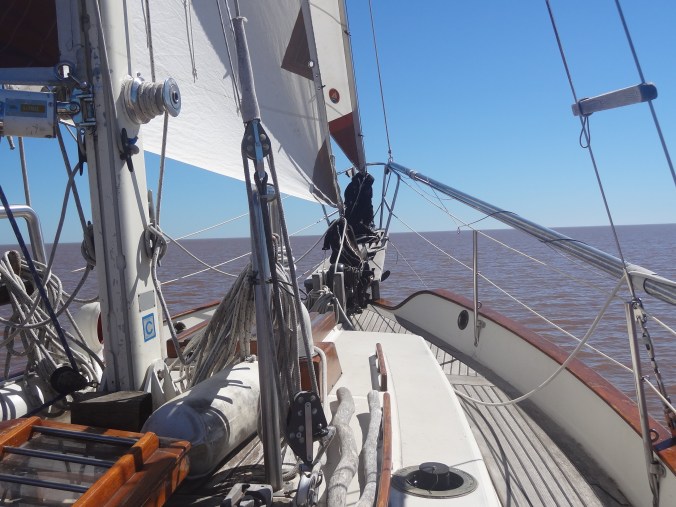
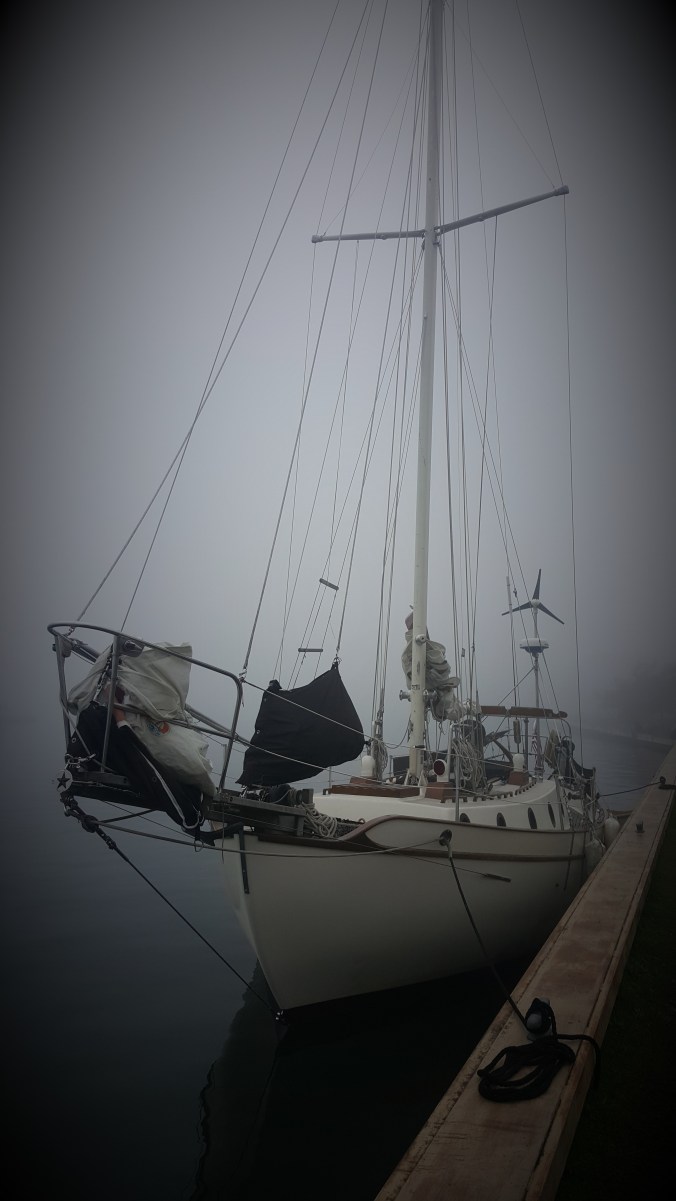
We sailed in a 32-foot Westsail.

When our sailing captain was hoisting the genoa sail during my recent trip (see Part One), the block for it broke off the top of the mast. A block is a pulley that the line (rope) for the sail goes through. Let’s just say it’s a rather necessary piece of equipment if one wants to use a sail.

We had other sails up, however, so we were able to voyage to our desired destination without the genoa. But the issue needed to be addressed. So after we anchored off Outer Island in the Apostle Islands (the most remote of all the islands), our captain decided on a daring and strenuous plan.

DSC04744.JPGMy friend Russ was to hoist him up to the top of the mast so he could replace the block with a spare he happened to have on board. This feat would involve several ropes and climbing gear, along with the help of a winch. Russ was supposed to pull the rope by hand, which was wrapped around the body of the winch spool several times for support.

My job was to take pictures of the event and pray that our captain did not fall and hurt himself in the process. If that happened, let’s just say we would have a questionable chance of making it back home. So I felt I had a rather important job.

The captain donned his harness and got all the ropes in place. Russ started pulling, I started taking photos, and the operation commenced.

Now, you should understand that masts are tall. I’m not sure exactly how tall, but they seem even taller when you’re on a boat that’s rocking in the water, even if the rocking is gentle.

DSC04773

Captain on his way up the mast…

Russ was able to get Captain about a quarter of the way up the mast when his progress slowed and it became obvious that more person-power was needed. So I pocketed my camera, put the handle in the winch, and hauled away. Between my winching and Russ’s pulling, we were able to get Captain half-way up the mast where he had a different job to do, fixing something else that had broken a while ago.

We rested while he worked, but soon he was ready to go to the top. Man, we winched and pulled as hard as we could, and slowly, steadily hoisted Captain all the way up. Thankfully, the waves and winds remained calm, and he was able to do his work.

Then his legs started going numb from the pressure of his harness. And clambering up a mast is hard work, even if you’re being hoisted. And I suspect it’s a bit scary up there.

DSC04780

All the way to the top!

Before he had the job completed, he wanted to come down. So we lowered him, with me standing behind Russ and holding the rope as a backup in case another set of hands was needed to steady his descent.

When Captain’s feet touched the deck, we all breathed secrets sighs of relief, even if the job was incomplete. We couldn’t sail as fast without the genoa, but suddenly, that seemed all right for now.

And I gained yet another new sailing skill on this trip, that of a Winch Wench.
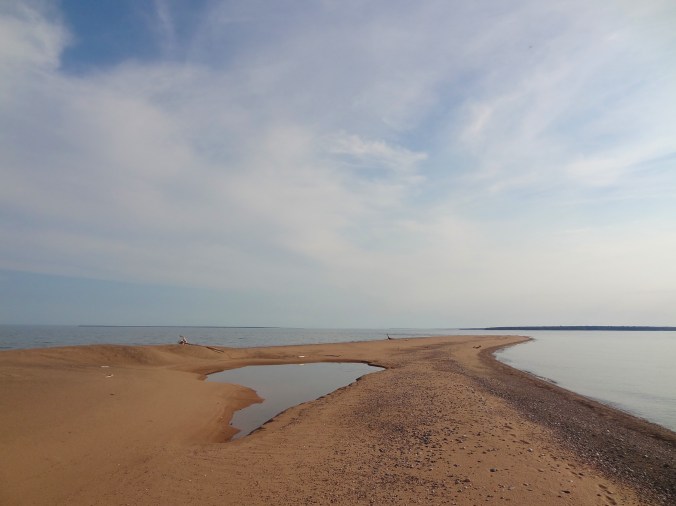
DSC04796

Outer Island sand spit, Apostle Islands National Lakeshore.

Other things I learned as a Lake Superior sailing newbie:

-You need to be willing to take orders.

-You have to be willing to be taught everything, even how to go to the head (the boat had a compostable toilet).

-Bring your winter clothes, even in the middle of summer.

-Pay attention all the time to everything.

-The captain is the boss of the ship, but the lake and the winds are the boss of the captain.

-Bring along good food, good music, and good scotch. They can go a long way to make up for any uncomfortableness.

Anyone else out there have more to add?
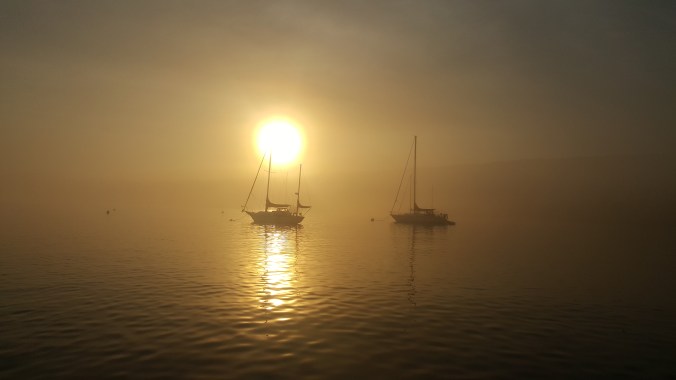
20180704_200455

Sunset in Grand Marais Harbor, Minn.

A Lake Superior Sailing Experience, Part One: Chocolate Milk and Biting Flies

DSC04737

I recently meandered out onto Lake Superior on my first extended sailboat trip across it with some friends. We left Duluth, Minnesota, and headed to Wisconsin’s Apostle Island National Lakeshore, and then traversed the western arm of the lake to Grand Marais Harbor in Minnesota.

Since I am writing this, you know I survived the three-day trip. If fact, I would like to think I thrived, despite turning green with seasickness once (I avoided hurling, though!) and having to wear all my winter gear, plus hand warmers, on the 4th of July.

I learned a lot about sailing, but still have more to know. And I got a firsthand look at conditions on the lake, which is useful for my job, since we fund research projects on Lake Superior.

Two things struck me and my sailing companions. The first was the color of the water. Almost all the way to the Apostles it was the hue of chocolate milk. The large extent and persistence of the coloring was unusual. There were also floating logs to watch out for.

According to a news story I read upon returning home, the condition is due to a series of recent heavy rains that have sent thousands of tons of silt into the lake. Chequamegon Bay, on the other side of the Apostles, is also experiencing heavy sedimentation.

Usually, the chocolate milk dissipates within a few days, but this round of it is lasting longer than usual because we kept having downpours every few days. Most of the sediment comes from the Nemadji River and its red clay banks, along with the St. Louis River.

We also had more than double the amount of usual rainfall for the month of June. Anglers and charter captains are having to travel farther than usual out into the lake to find clear water for fishing.

DSC04795

Stable flies covering jeans during a beach walk. Good thing they can’t bite through denim!

The second notable thing were the flies. Known locally by the name of “ankle-biters” or sand flies, stable flies look like a common housefly but they are meaner because they bite – usually a person’s ankles. I can attest that there are roughly a gazillion of them out on the lake and its shores this summer.

The only thing that saved us from certain insanity on a shore trip to Outer Island was the fact that we were wearing jeans, which they couldn’t bite through.

The flies congregated in seething clusters from our knees down, rarely venturing farther up our legs. Thank goodness they had no interest in our bare arms or we would have had to run screaming back to our dinghy!

According to a story on National Public Radio, researchers have figured out how and why the flies and other biting insects like mosquitos do this. They think these biting bugs target feet and ankles because we are less likely to notice (and therefore kill) them. They hone in on their target by smell, and apparently, the sweat and skin on our ankles smells different from that of the rest of our body.

Besides wearing jeans, we found it helpful to elevate our feet off the ground while we were on the boat. They didn’t seem to be able to find our ankles if they were level with the rest of our legs. Conditions on the boat never got bad enough that we needed to apply repellant, but we were glad we had some along, just in case.

Although the water wasn’t its typical crystal-clear blue, and we had many insect stowaways aboard our sailboat, Lake Superior was still magical. I greatly enjoyed spending time on it, and hope to do so again someday.

DSC04785

DSC04790

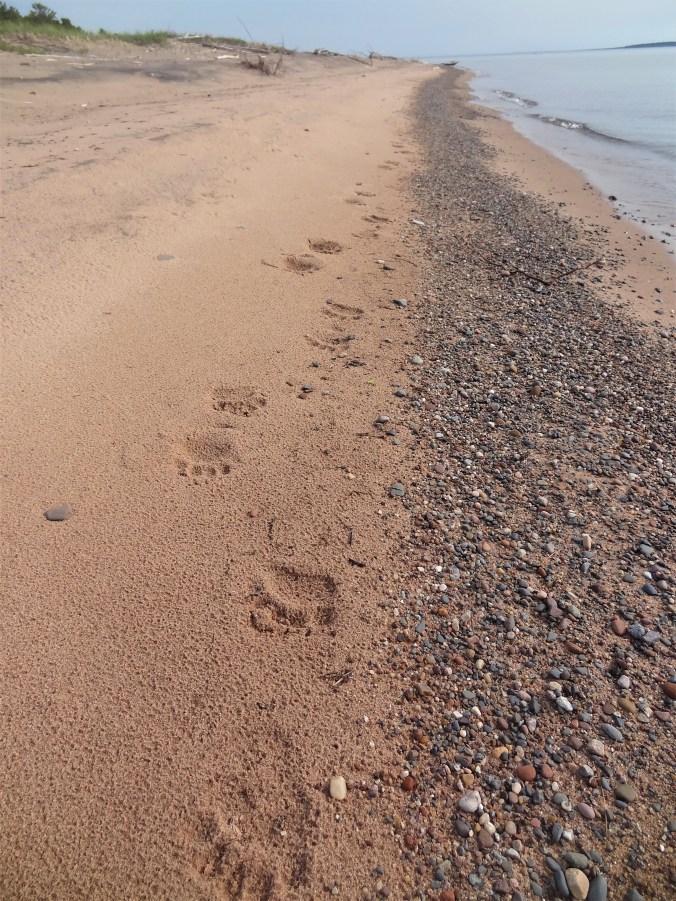
A bear got to this beach before we did.

Echoes of the Past: A Sneak Peek Into the Hotel Chequamegon

DSC04555

The Hotel Chequamegon

I had the opportunity recently to stay at the Hotel Chequamegon (Sheh-wa-meh-gone) in the northern Wisconsin town of Ashland. I’d driven by the hotel many times on Highway 2, and always thought it looked like an interesting place to stay. I was happy to have this chance.

From the outside, the building and its white mansion-like expanse is reminiscent of the grand hotels of the past. In fact, it’s patterned after the Grand Hotel on Mackinac Island in Lake Huron. Inside, it has a whiff of the fictional Overlook Hotel from “The Shining,” but without the requisite creepiness.

DSC04553Although it looks like it’s been on the site forever, the hotel is young. It opened in 1986 only about a half-block away from the original hotel. According to a helpful historical fact sheet provided to me by the desk clerk, the original hotel was built in 1877 by the Wisconsin Central Railroad when Ashland was a transportation hub for lumbering, quarrying, and mining.

DSC04549

This chair in the hotel parlor is from a castle in France, 1880-1890.

The original hotel met its demise by fire on New Year’s Day in 1958. To build the current hotel, wood salvaged from the nearby ore docks was used. Although many of the Victorian antiques look like they came from the original hotel, those were burned, except for the lobby clock, which sits in the Ashland Museum. Apparently it was a “thing” in the past to save lobby clocks from burning hotels. The antiques were either donated or gathered from far-flung places with the help of eBay.

My quiet room had tall ceilings and a view through equally tall windows, which looked out on the Lake Superior bay that gives the hotel its name. The word “Chequamegon” is an Ojibwa term that means “spit of land.” There used to be a narrow spit visible from the hotel, but it was eroded by wave action in the 1800s.

DSC04551The basement level is home to Molly Cooper’s Bar and Grill. It was closed in the morning when I was snooping around, but looked like it would be a fun place to eat, with views of the lake.


Although there are rumors the hotel is haunted, I had no notable experiences in my first-floor room, other than a bathroom door that closed unexpectedly. Alas, the floor was just crooked. No spooks.


DSC04558

A mural in “downtown” Ashland that honors the lighthousekeeping history of the area.

How my Blog Helped me Win a Writing Contest

Gut Instict

Northland College in northern Wisconsin holds an annual writing contest organized around a specific theme. Chosen writers have the opportunity to read their poems, essays or short stories in front of an audience. Plus, for the past couple of years, the readings are broadcast on Wisconsin Public Radio.

The theme last year for the Writer’s Read Contest was “The Dark Side.” I wasn’t going to enter because I didn’t feel like I had anything that fit the theme.

That is my strategy – I rarely write anything new for contests. I like to choose from pieces I’ve already written. I guess I’m lazy that way, or efficient. Take your pick!

A nice thing about this contest is that, unlike most writing competitions, they will accept stories that have been previously published. So you can recycle works that have appeared elsewhere or won other contests.

However, a friend encouraged me last year to “add my voice into the mix,” so I entered a couple of stories even though I didn’t think they fit the theme. My stories were not chosen.

This year, after learning that the theme was “Gut Instinct,” I performed a mental inventory of all my short stories, poems, and blog entries to see if I had anything that fit. I have learned from conducting writing contests myself that the nonfiction essay category usually has the fewest entries, so I decided to concentrate on my blog posts to increase my chances of being chosen to read.

A couple of postings came to mind, but one I wrote in 2013 was especially dramatic. It was called “Are Book Signings Worth Risking Your Personal Safety?” It detailed two run-ins I had with a robber when I was in college, and it also dealt with writing, so I hoped it would be appealing to the judges and to the listening audience. How did it fit the theme? My gut told me to run the robber over. My brain told me otherwise. Which one did I listen to?

However, I needed to make the story even more dramatic, so I rewrote the blog post. I also had a writer friend (the same one who encouraged me to enter last year) look at the story and offer comments before I submitted it. She had some good ideas for rearranging the middle and for adding more details, which I heeded. In return, I offered comments on the fiction story she planned to enter.

Lo and behold, both of us were chosen to read! The event is happening later this week and our stories will be broadcast at a later date. (I will be sure to post a link here when that happens.) (Here’s the link! My story starts at the 4:10 minute mark.)

I’ve toyed with the idea of writing my blog for money. But the whole reason I started it was to write for fun, and to try and make sense out of my life — and perhaps share some wisdom. So I have refrained from blog-writing-for-profit. However, now I have discovered that blog writing can also help a person win a writing contest! How cool is that?

Fun with Apostrophes

DSC04196

As a writer, I care about the written word. I care about proper grammar. While I have been known to dangle a preposition at the end of my sentences, I usually try to do what’s proper, especially in my writing for hire.

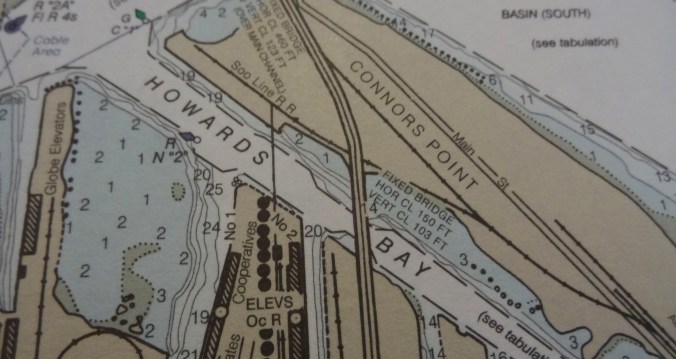
I had an instance this week where I wanted to confirm the name of a bay in the Duluth-Superior Harbor. Someone who works for an agency in another state asked me to review a web site about this bay, which is the subject of a federal cleanup project because it’s contaminated. My office coworker is also helping with the project by providing engineering advice.

The title of the web page was first thing I noticed. It was called “Howards Bay,” which just screams out for a possessive apostrophe, doesn’t it? (Howard’s Bay.) Unless, of course, the bay was named after someone with the last name of Howards vs. the first name of Howard.

I’ve run across instances before where proper grammar for place names flies out the window because some mapmaker hundreds of years ago labelled places incorrectly on local maps. As such, writers like myself are required to grit our teeth and perpetuate the mistake because what’s on the map has become the actual factual name for those places. One example is the St. Marys River, which empties out of Lake Superior and into Lake Huron. It makes me cringe every time I write it, but there’s no possessive apostrophe in that name due to a mapmaker’s error.

Hoping against hope that wasn’t the case for Howards Bay, I investigated. I looked on the internet. I found that newspaper stories about the bay gave Howards an apostrophe. I found that many government documents (but not all) did not. I asked friends if they knew which form was correct, and received helpful suggestions about where else to check. I looked it up on the U.S. Board of Geographic Names website. It had “no data available” about this name.

Along the way, I discovered that that state of Wisconsin (where Howards Bay is located) has a state Geographic Names Council. Who better to ask? So I sent them an email. While I was awaiting their reply, I learned more about the organization. They seem mainly formed to approve new names for lakes and other geographic features.

They have a list of rules for new names. Among them is one that says, “newly acquired proper names for geographic features shall not be designated with ” ‘s ” or “s”, indicating possession, following the name. For example: Mott Lake, rather than Mott’s Lake or Motts Lake.”

Geez, I wish they would have had that rule in place when Howards Bay was being named!

The next day, I received the geographic names councilperson’s reply to my apostrophe question. Here’s what he said: All of our records that I have been able to find have no apostrophe for Howards Bay. I’ve attached a state sediment sampling document as evidence. I cannot give a more definite answer to the “official” name but I would say that the consistency in our records would point to this being the correct spelling.

In the meantime, with my dogged grammatical passion, I had asked the state cleanup project manager for Howards Bay the same question. He said: The apostrophe question has come up before.  I have not been able to determine which version is correct and occasionally catch myself using both. For consistency, the project team chose to perpetuate the mistake and go with the original name shown on maps, i.e. “Howards.”

Aaargh! Why are we at the grammatical mercy of ancient map makers? I say that modern writers should rise up and free themselves from this typographical tyranny! Add the apostrophe “s” and may the mapmakers be dammed!

Who’s with me?

____________________________________________________________________________________________

**Update** August 9, 2017

A friend of mine asked a research librarian with the Superior Public Library the origin of the name of Howards Bay (also called Howards Pocket). She said it’s named for John D. Howard who held an interest in a sawmill on Connors Point. He died in 1891.

So there really should be an apostrophe because it is Howard’s Bay. Darn those mapmakers! And there should be an apostrophe in Connors Point, too, but I’m not even going to go there. 🙂

Crossing Death’s Door on Lake Michigan

On the Robert Noble ferry to Washington Island.

My coworkers and I crossed Death’s Door not one, but two times last week. And we lived to tell about it!

Death’s Door is a treacherous crossing of water off the tip of the Door Peninsula on Lake Michigan. Many a ship and many a life have been lost to its currents and weather. Our goal was to visit Washington Island, a six-mile-by-five-mile piece of land about a half-hour ferry ride from the mainland. We were on a field trip to check out some Sea Grant projects in the area and to interview a commercial fisherman to learn more about his trade.

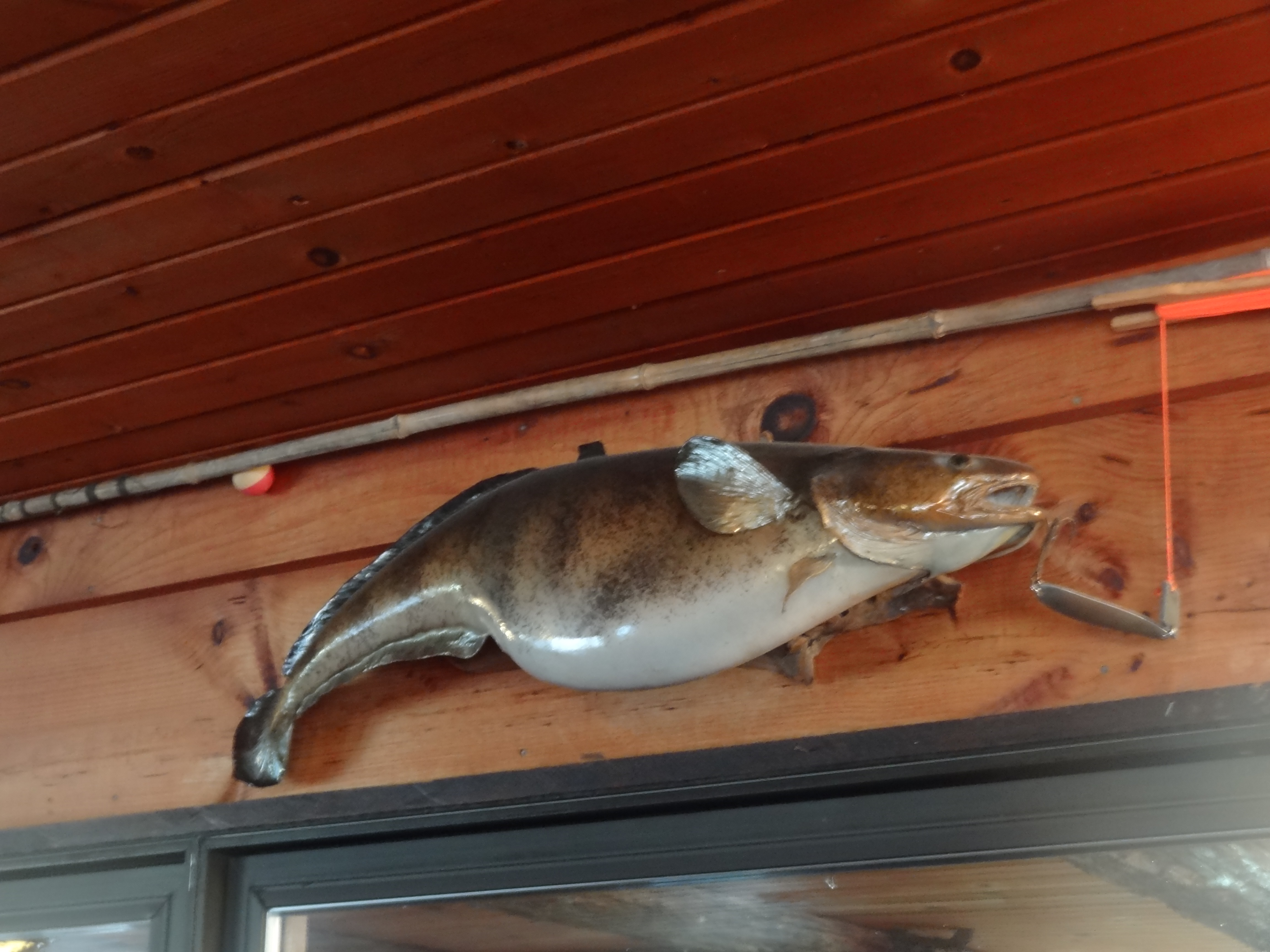
While waiting for the ferry, we checked out a historical shipwreck sign our agency produced. After a gray and rainy crossing, we landed on the island and drove to our lunch destination, the KK Fiske Restaurant, where we heard you can eat fresh lawyers. No, we are not cannibals; lawyers are one of the nicknames for burbot, a cod-like fish caught in local waters.

A stuffed lawyer.

Appetites at the ready, we were disappointed to find they had no luck catching lawyers that day, so we’d have to make do with whitefish. That was pretty tasty, in any event.

We only had a couple of hours to spend on the island before we needed to head back to the mainland to interview the fisherman. Besides eating, we spent it driving to a state natural area on the end of the island, called Little Lake. There is indeed a lake there, along with a museum that features artifacts from people who used to live in the area.

Little Lake State Natural Area, Washington Island.

After a coffee stop and an unsuccessful search for the island’s lavender farm, we were back on the ferry. Once we landed, breathing a metaphorical sigh of relief that we survived the crossings, we headed toward Bailey’s Harbor.

We found Bailey’s Harbor Fish Company off the beaten path, where we interviewed Tate Stuth, one of the new generation of commercial fishermen in the area. He explained how this fourth-generation family business works, and shared some of the frustrations and unique aspects of their operation. I left the interview thinking that the industry is in good hands.

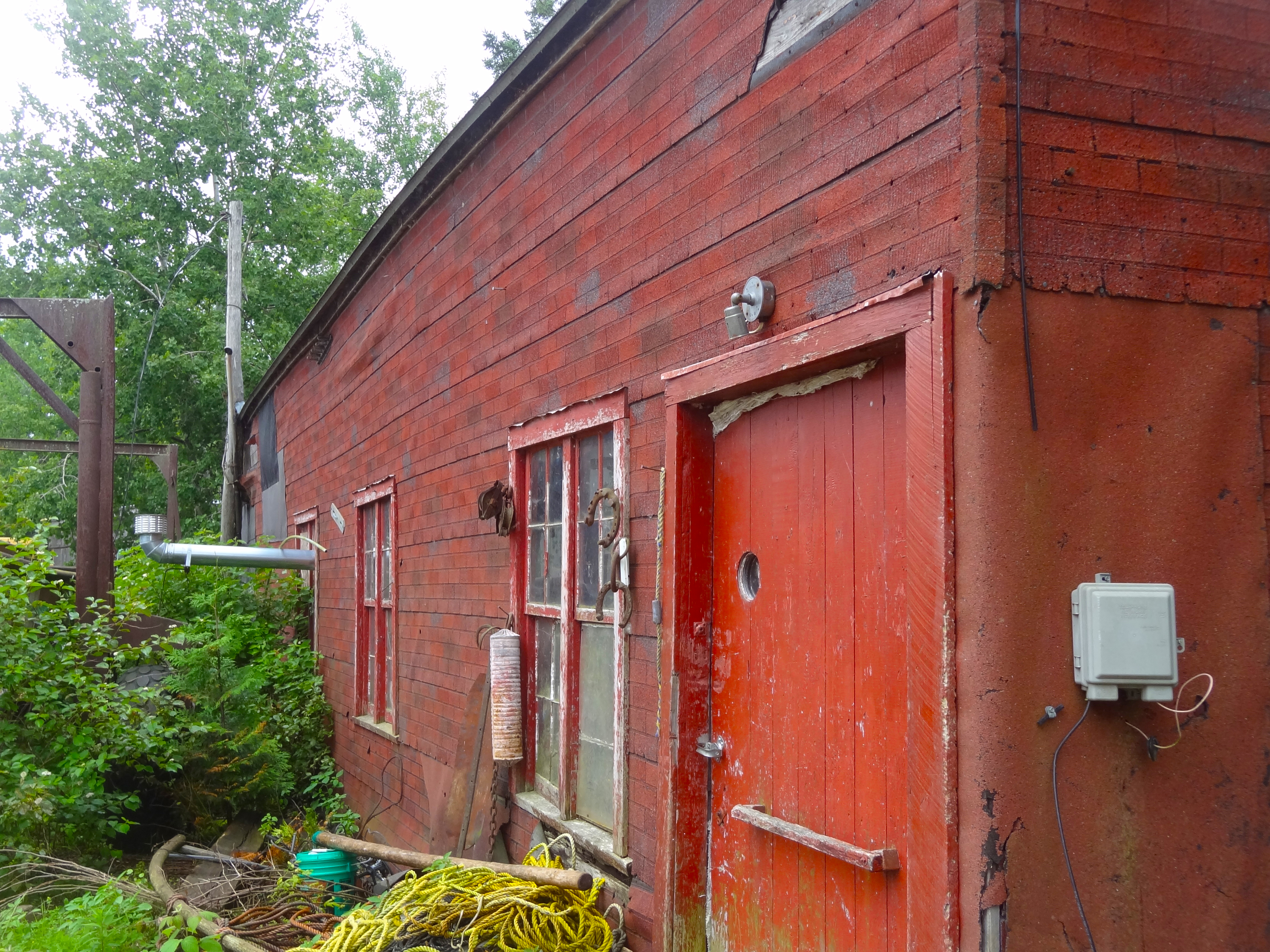
One of the most enjoyable parts of the trip for me was roaming around the fish yard after the interview was over. It held old net buoys and floats, rusty trucks, dry docked boats, nets drying on racks. I hope you enjoy the pictures!

Free Books!

Going Coastal

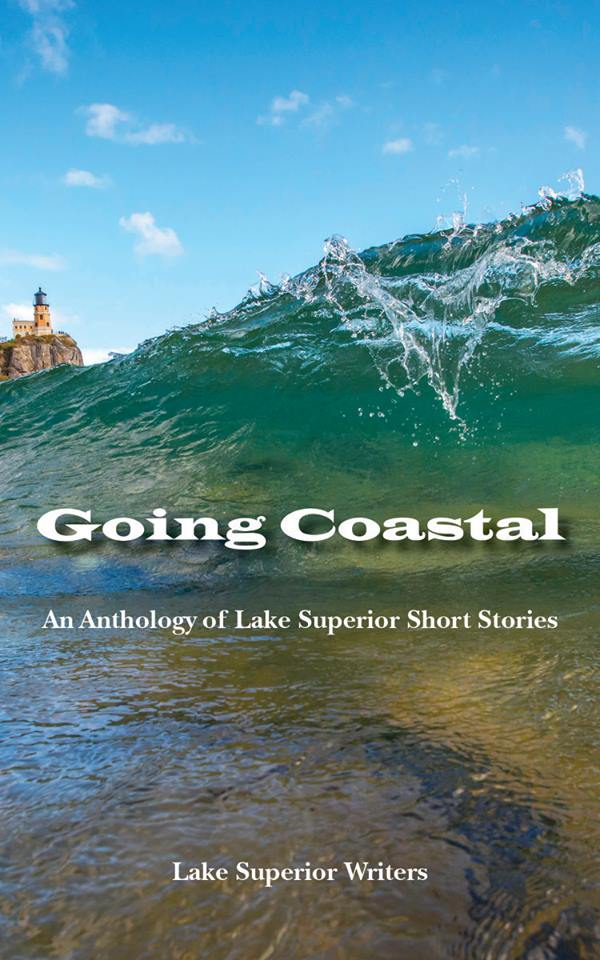
If you’re active on Goodreads, a book giveaway is currently open for “Going Coastal.” This book is a collection of short stories about Lake Superior. Authors hail from northeastern Minnesota and northern Wisconsin. (A story by yours truly is included.)

The stories were chosen by a panel of judges during a contest offered by Lake Superior Writers last year. Lake Superior Writers is a nonprofit group with over 200 members that supports the artistic development of writers and fosters a vibrant literary arts community.

“If you like lighthouses, ships, beaches, ghosts, road trips up the shore, history, storms, agates, islands, family drama, and the mystical power of water, you’ll enjoy this book,” said Marty Sozansky, board chair of Lake Superior Writers.

Like the horizon blurs between sky and water, reality and fantasy merge in these tales of human struggle on the edge of one of the world’s largest lakes. Click here to enter the giveaway and the chance to win one of two copies. The giveaway is open until June 24, 2017.

If you don’t win, you can always purchase the book for $12.95 at Fitger’s Bookstore in Duluth and online through North Star Press, Amazon.com, and Barnes and Noble. Sales support Lake Superior Writers.