When last you saw us, Russ and I were thwarted in our attempts to bike along the North Shore of Lake Superior by cold weather and lack of appropriate clothing on my part. As an alternative, we decided to hike somewhere we had never been before. This turned out to be along the Temperance River.
The trailhead is extremely easy to reach – it’s right along Highway 61, with parking on both sides of the road. (The trailhead is on the side opposite Lake Superior.) Russ and I had driven past the park roughly a bazillion times but were always going somewhere else. We were so glad we stopped this time!
The first part of the trail takes you to a plunge pool, which is at the base of a waterfall hidden back in the rocky clefts. At the end of the Ice Age, the waterfall wasn’t so hidden. Torrents of melting glacier ice cascaded over the rock ledges, creating a waterfall that was 300 feet wide, or so said the interpretive sign along the trail.
We hiked along the river gorge on the Superior Hiking Trail about eight-tenths of a mile to the upper falls and then backtracked to return to our car. With lots of rocky ledges to clamber and scenic river vistas around every turn, this trail would be a perfect way to get sullen teenagers excited about nature. Although there are some stairs to climb, most of the trail is relatively easy if you are able-bodied.
The river gorge is super gorgeous. I kept wondering why I’d never heard my friends who know the North Shore rave about it, because it certainly is rave-worthy. My photos only capture a minor part of the beauty.
If you do go to the Temperance River, please remember to practice social distancing and carry out your trash. The park looked clean when we were there, but I know that some parts of the shore are being over-loved and over-travelled lately.
For mini-vacation #2, Russ and I meandered with our thirteen-foot Scamp trailer to Cascade River State Park on the North Shore of Lake Superior. (Interested in mini-vacation #1? Read about Lake Vermilion State Park.)
I must admit, one reason we chose Cascade River was because it had camping reservations available during the time we wanted. Another reason is that, despite innumerable trips along the North Shore, neither of us had spent any time there. It was a good excuse to see some new sights.
We decided to add a little glamour to this outing, just for fun. Before we left Duluth, we made dinner reservations at The Strand restaurant at Lutsen Resort, which is just a 15-minute drive from the campground, and for a wine tasting at the North Shore Winery, also at Lutsen.
Because it’s late in the camping season, the shower building wasn’t open at the campground, so we decided to go the restaurant our first night (of two). We weren’t sure how presentable we’d look later!
Before I go into the long description of our stay, I’ll offer some Cascade River Campground pros and cons for those of you in a hurry.
PROS
Although the campground is located near a highway, it was quiet at night.
A short hike takes you to the river’s scenic falls and to Lake Superior. Plus, there are many options for other hikes.
Near the many civilized attractions of the North Shore at Lutsen and Grand Marais.
We saw a bear!
CONS
The sites offer little privacy. The lack of vegetation between them made us feel like we were living in an outdoor fishbowl sometimes.
You can hear the highway during the day.
The squirrels and chipmunks are habituated to people – watch your food!
We saw a bear, which made going to the outhouse in the middle of the night a sketchy affair.
You can’t check into your site until 4 p.m., so we only had enough time to plug in our camper and take a quick hike along the river and shore before we needed to leave for dinner at Lutsen. The waterfall cascades that the park is named for are just a short walk directly from the campground, and Lake Superior is not far downstream, so we were able to see a lot in just an hour. We had time to plunk ourselves down on a rock along Lake Superior and shake off the worries of the city.
Soon, it was time to hike back to our site and drive to Lutsen. This is the first restaurant we’ve eaten inside since COVID. We felt that by now, most restaurants should have their safety act together regarding the virus, especially a place like Lutsen, which sees a lot of tourists. We decided the food was worth whatever slight risk it might entail.
The image from our table at The Strand Restaurant.
I’m not sure how we managed, but we scored a table right by a window overlooking the lake. While we ate, we watched the sun set in muted pinks and purples – a perfect accompaniment to our food. For starters, Russ had the North Shore salad, which features blueberries, candied pecans, and a blueberry vinaigrette dressing. I had a cup of the Red Lake wild rice chowder.
My tastebuds were in heaven! I’ve eaten many chowders in my day, but this ranks among the top. I could tell it was made with real cream, hand-harvested wild rice that was fluffy and tender, and care. The flavors were perfectly balanced, and the soup wasn’t too salty. I would have just been happy with the soup, but there was more!
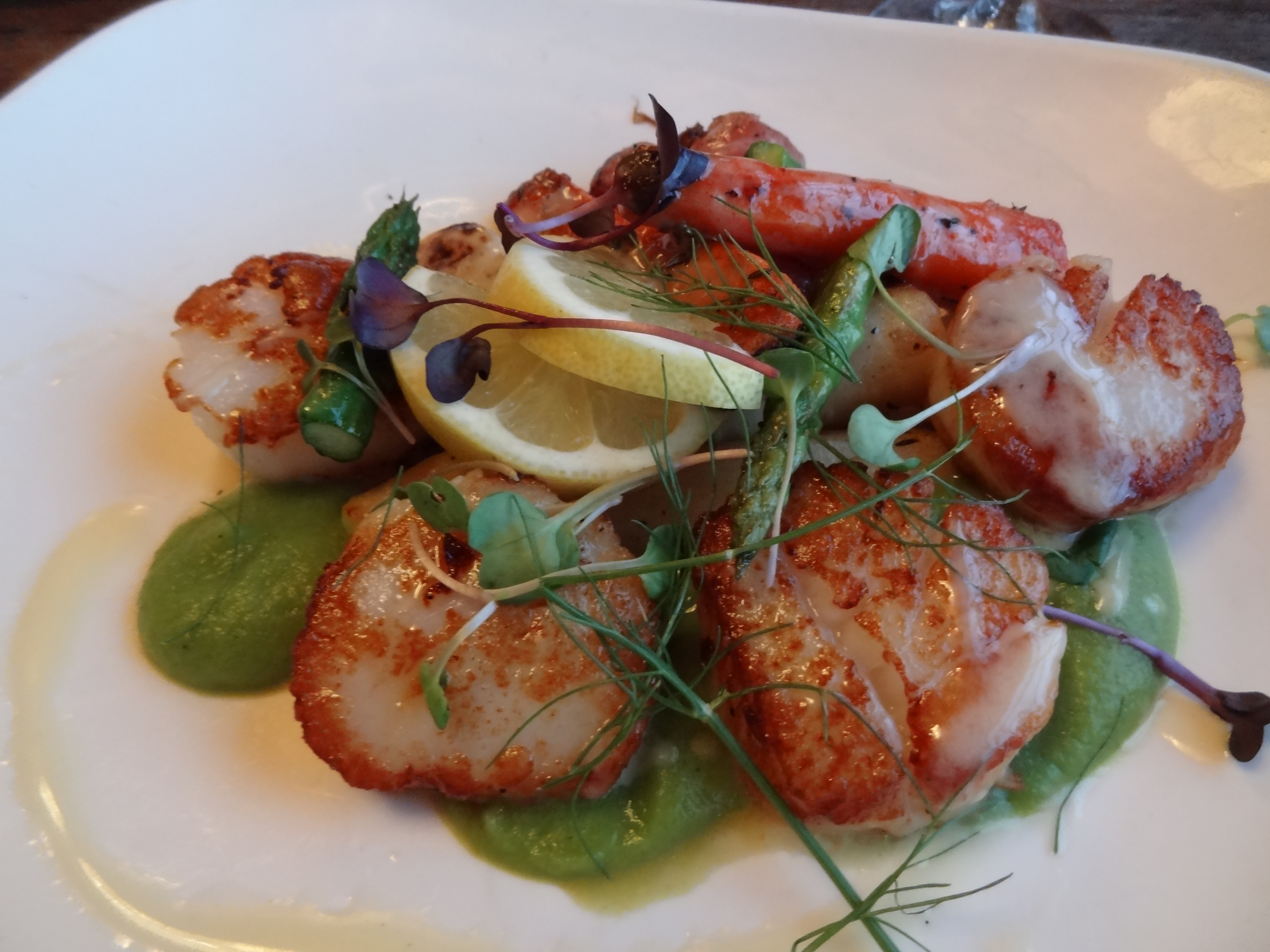
For entrees, Russ ordered the night’s special, which was a rack of lamb. I ordered the sea scallops. Russ was very happy with his, and I was, too. My scallops were seared to perfection and accompanied by an asparagus puree and root vegetables. As I dined on the parsnips, I was transported back to my childhood when I used to help my father harvest parsnips from our backyard garden. And then a bite of scallop zinged me over to the seaside, but I didn’t mind!
We decided to go for the gusto and ordered dessert. Russ had the apple pie ala mode. I had the flourless orange chocolate cake. Once again, a win, although my cake was not shaped like any piece of cake I’ve ever seen before. It was rather like a tall blob. But it was a good blob. I ate it all. Well, Russ had to help with the last few bites because I was stuffed.
On our sated drive back to the campground, our headlights shined on a black bear crossing the road near the entrance. We had already noticed signs everywhere in the campground about bears, and this proved them right. Thankfully, the bear was headed away from the campground.
Despite being near the highway, the campground was quiet at night. It was also cold. Both nights were near freezing and we were glad we brought extra blankets.
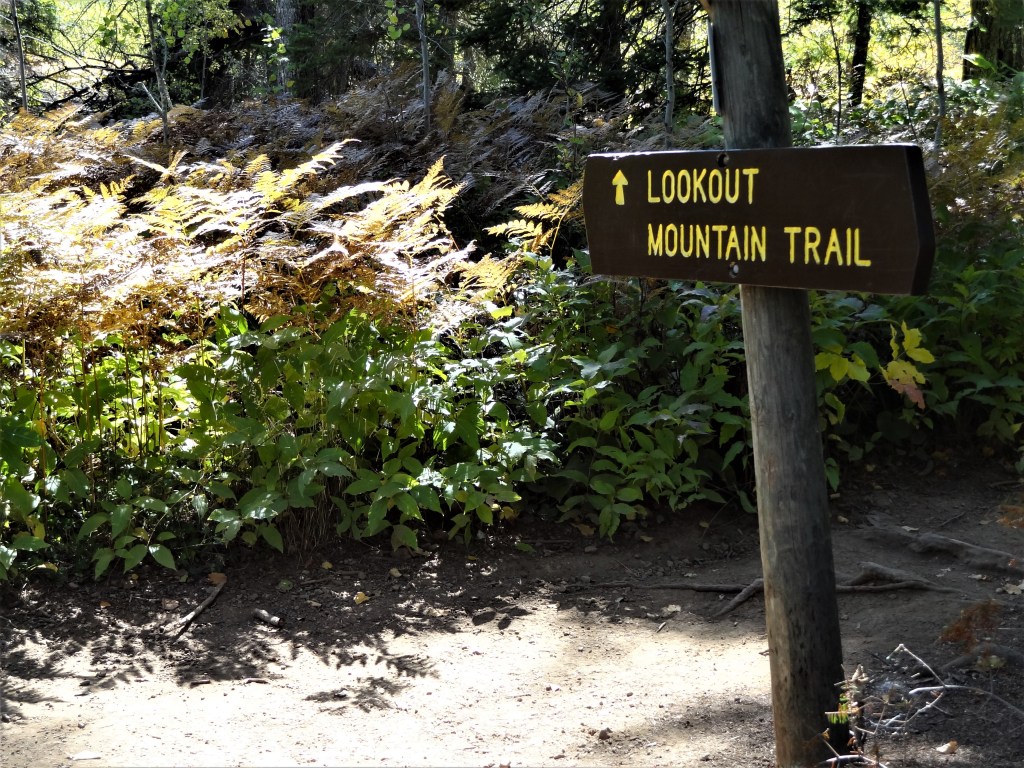
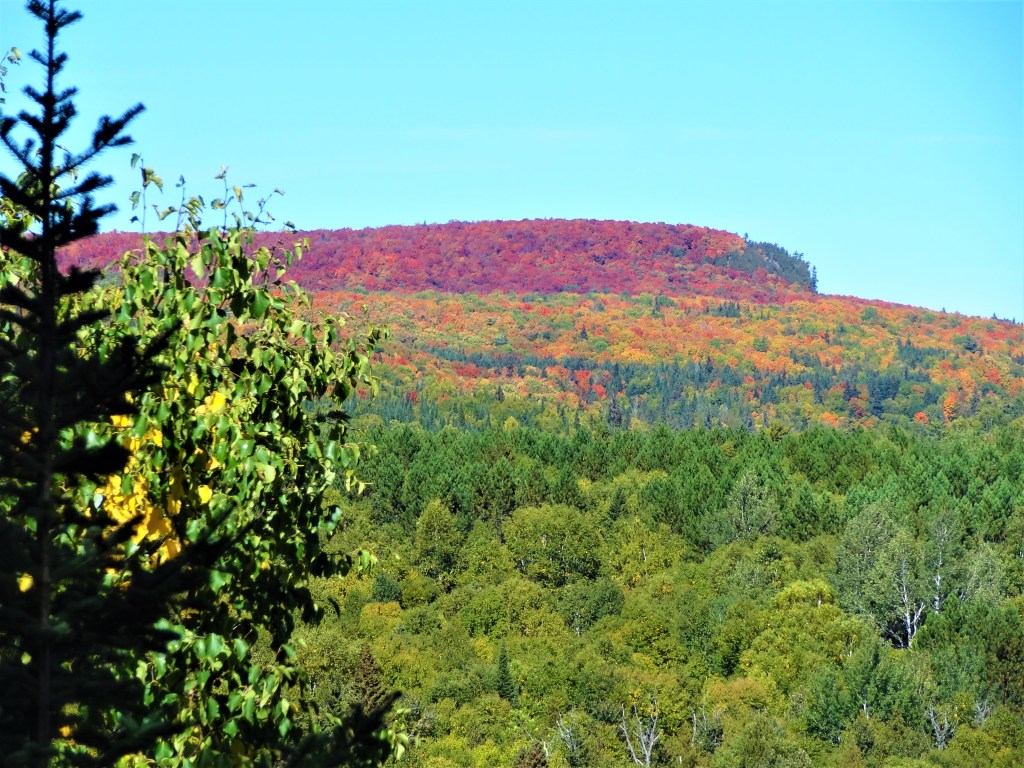
The next day we hiked to Lookout Mountain, which was about a 2.6-mile round trip. The cold nights hastened the fall colors, which were especially spectacular to see from the mountain overlook. We also took in more waterfalls along the river.
Then it was time for Thursday-night date night at the North Shore winery. From 6-8 pm you can listen to music and try flights of their red or white wines and hard ciders. It surprised us that the event was all outdoors. That’s not mentioned anywhere on their website or when you call them for a reservation. It was a bit nippy spending a couple of hours outdoors on a September evening, but thankfully, we happened to be dressed for the occasion.
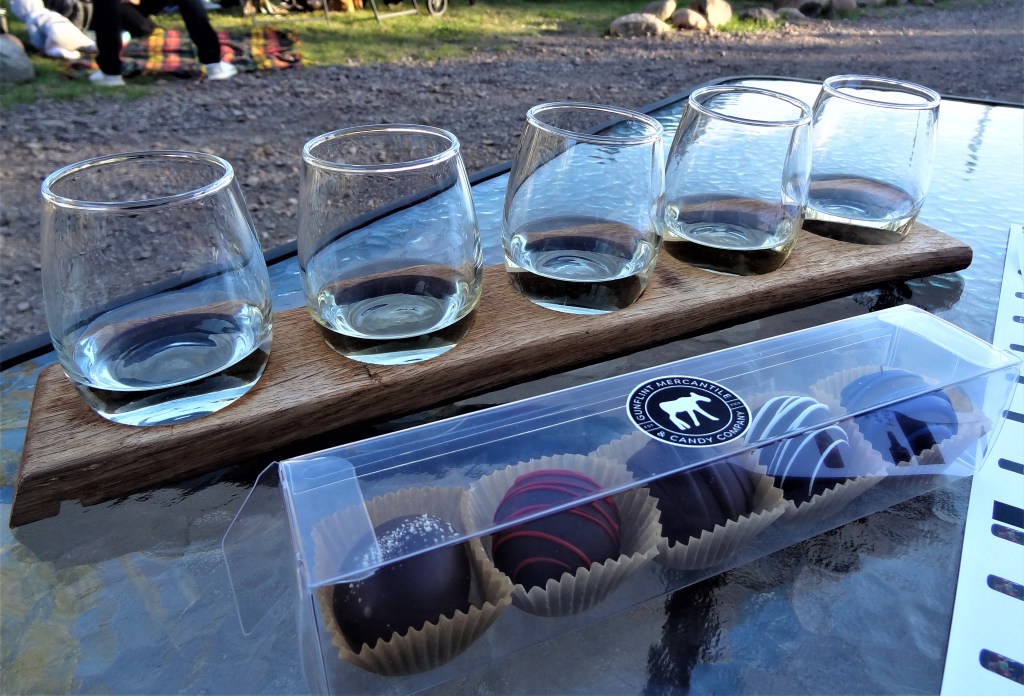
I tasted a white flight and Russ a red. None of the whites did much for me, but Russ liked some of the reds, enough to buy a bottle of their oak-aged petite syrah for home. The winery also offered munchies with the wine, like salami bites, cheese, and truffles. I was impressed by the flight of truffles from the Gunflint Mercantile in Grand Marais. The flight consisted of blueberry, espresso, triple chocolate, maple, and dark chocolate raspberry.
The maple was my fave – creamy and not overpoweringly sweet. I liked it enough to order a dozen once we returned home. I was especially delighted when they eventually arrived to discover they were about twice as large as the ones we had at the winery. So good!
The white flight of wines from North Shore Winery, plus a flight of truffles.
On our final day we had plans to bike on the Gitchi-Gami State Trail but were thwarted by the cold. On a whim, we decided to visit another place we never have had the opportunity to explore before: Temperance River State Park. But I will save that for another post.
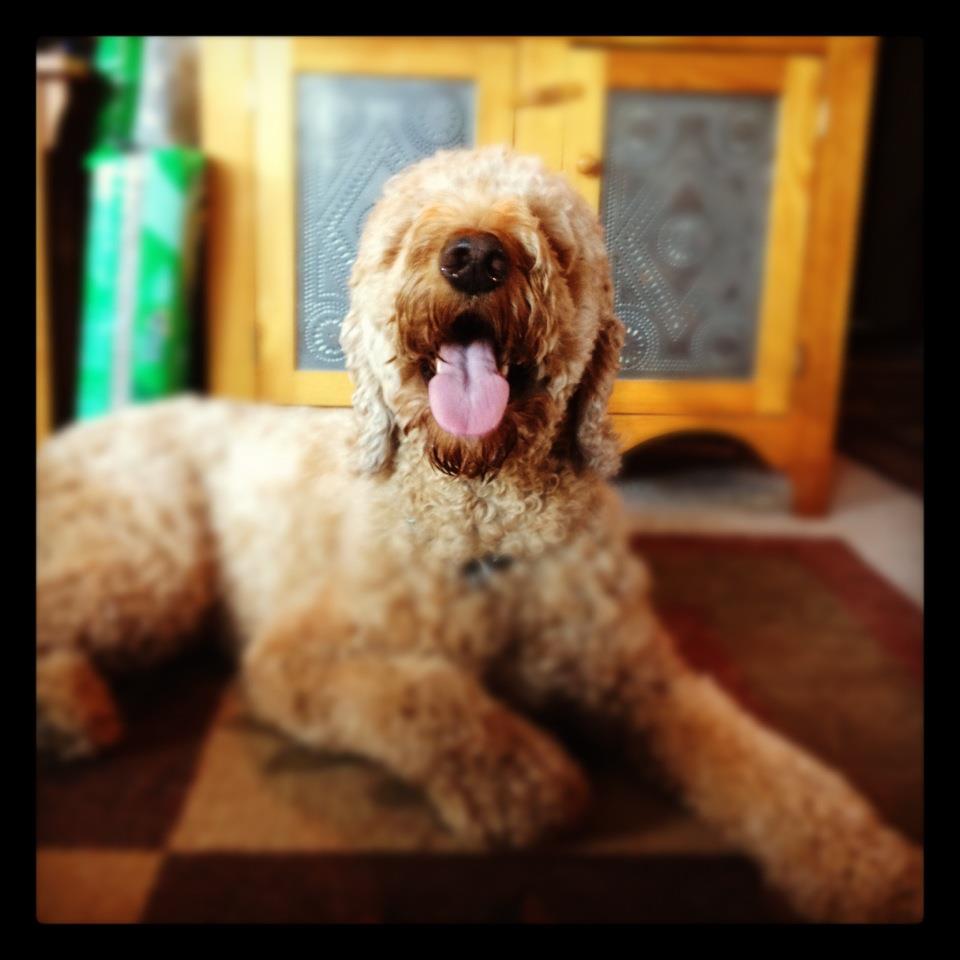
Today would have been Buddy the Wonderdog’s eleventh birthday. I am sorry to say that our beloved companion died on August 21st. It’s taken me a while to be able to write about it.
We had hints of the end five months ago when Buddy had two grand mal seizures, the first in the middle of the night. I had never witnessed a seizure before, so I wasn’t sure what was wrong. Was he just acting out a dream?
Buddy. Image by Amanda Jo Dahl Sales.
In the morning, I made an appointment with the vet who explained what they were. We decided to wait to see if another one happened. If it did, I would put him on anti-seizure meds. She said he could have epilepsy, or he could have eaten something that triggered it, or it could be cancer.
Buddy had a cancerous tumor in his ear, which easily could have spread to his brain or vice versa. I had chosen not to have it taken out previously (along with some skin cancer spots) because Buddy had a heart murmur. There was a risk that if we put him under, he might never wake up. I felt like he would have a better, longer life if we did not do any medical intervention.
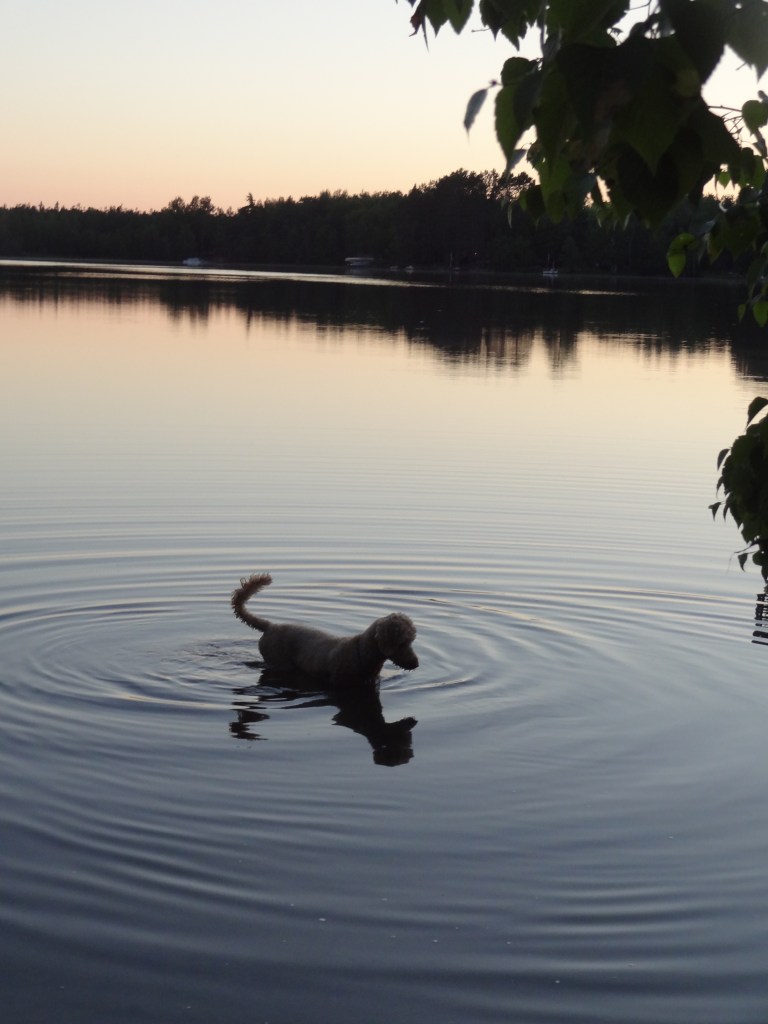
His seizures did not return and during the five extra months we had, Buddy got to enjoy summer – swimming in lakes, riding in boats, two walks a day, playing with neighborhood doggie friends. And as you know, he discovered his true passion: fishing. He acted like the seizures never happened. Buddy also got to enjoy having his people with him all day, since I was working at home due to COVID-19 and Russ is retired.
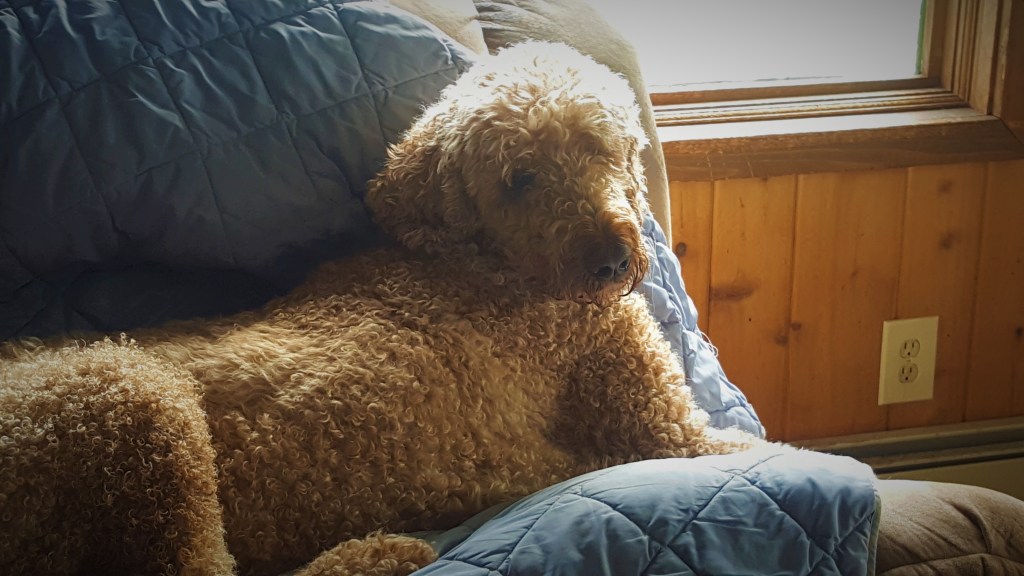
On August 21, Buddy was fine until early afternoon. He was laying on the living room carpet, drifting to sleep when his first seizure happened. The event seemed to scare him more than before, and he stuck with me, wanting to be pet and comforted.
The second seizure happened a couple of hours later as he was drifting to sleep again. After this one, I called the vet’s office and got some anti-seizure meds. I gave him a pill right away, but it takes time for the medicine to build up to effective levels.
Buddy had two more seizures, each more severe. By that time, it was 8 p.m. on a Friday night. The vet was closed, so I called the emergency vet. They told us to bring him in.
Buddy was excited to go for a car ride and happy to hear we were going to the “doggie doctor”—one of his favorite places. He stumbled getting into the car and we noticed during the ride that he seemed to have trouble swallowing or he had a hitch in his breathing.
Due to the virus, we couldn’t go inside the office, but Buddy went without protest. The vet examined him and then called us as we waited in the car. He was pretty sure Buddy had a slow-growing brain tumor. He could treat the seizures with intravenous meds, but that would not fix the underlying problem of the tumor. He also said that Buddy’s bark did not sound normal – as if something in his throat was paralyzed by the seizures.
Things had already been ugly, but I knew they were about to get a lot uglier if we started hooking Buddy up to tubes. Russ and I made the hard decision to euthanize him.
Before the procedure, they brought Buddy out so we could see him one last time. I told Buddy that we loved him and would miss him. I explained what was going to happen. I cried. But Buddy seemed distracted, like he was eager to go back inside. So after a short time, I let him go. He knew what was best, too.
As one of my friends said, “To know Buddy was to love him.” He was such a large, exuberant presence in our lives. I’m still getting over the shock of having him here one day and gone the next. Of course, I’ve second-guessed our decision — should we have spent more time and money on his recovery? Ultimately, I feel like we did the right thing by him. We plan to spread his ashes along his favorite walking trail and his fishing spot in northern Minnesota.
My last photo of Buddy, taken between seizures.
One of my former colleagues recently wrote a story describing a University of Wisconsin-Madison study about the monetary worth of a dog’s life. The researchers surveyed hundreds of dog owners to see what they would be willing to pay for a hypothetical vaccine that would protect their dog from a fatal dog flu. Incorporating additional factors, they were able to come up with the value of $10,000.
We did not spend nearly that much during Buddy’s last day. But if some sort of procedure was available that could have reversed his brain tumor and cured his seizure damage, I would have considered it.
We are still dealing with the emotional cost of his absence. There’s no way to put a monetary value on grief.
Bye bye, big guy.
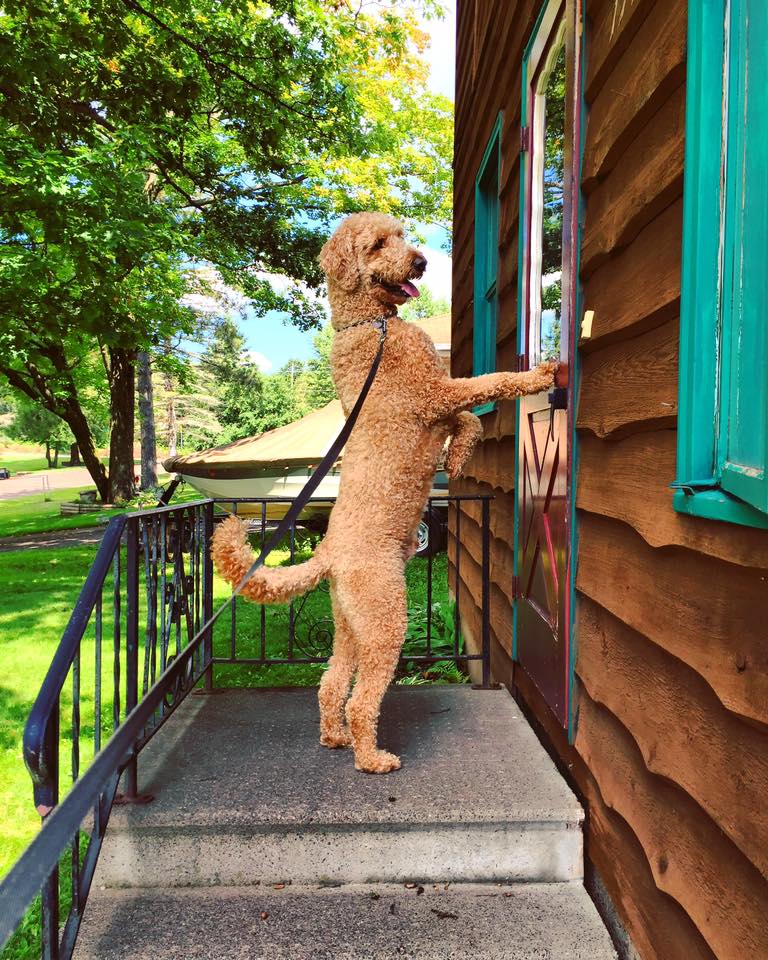
Buddy, the door-to-door salesman. Image by Amanda Jo Dahl-Sales.
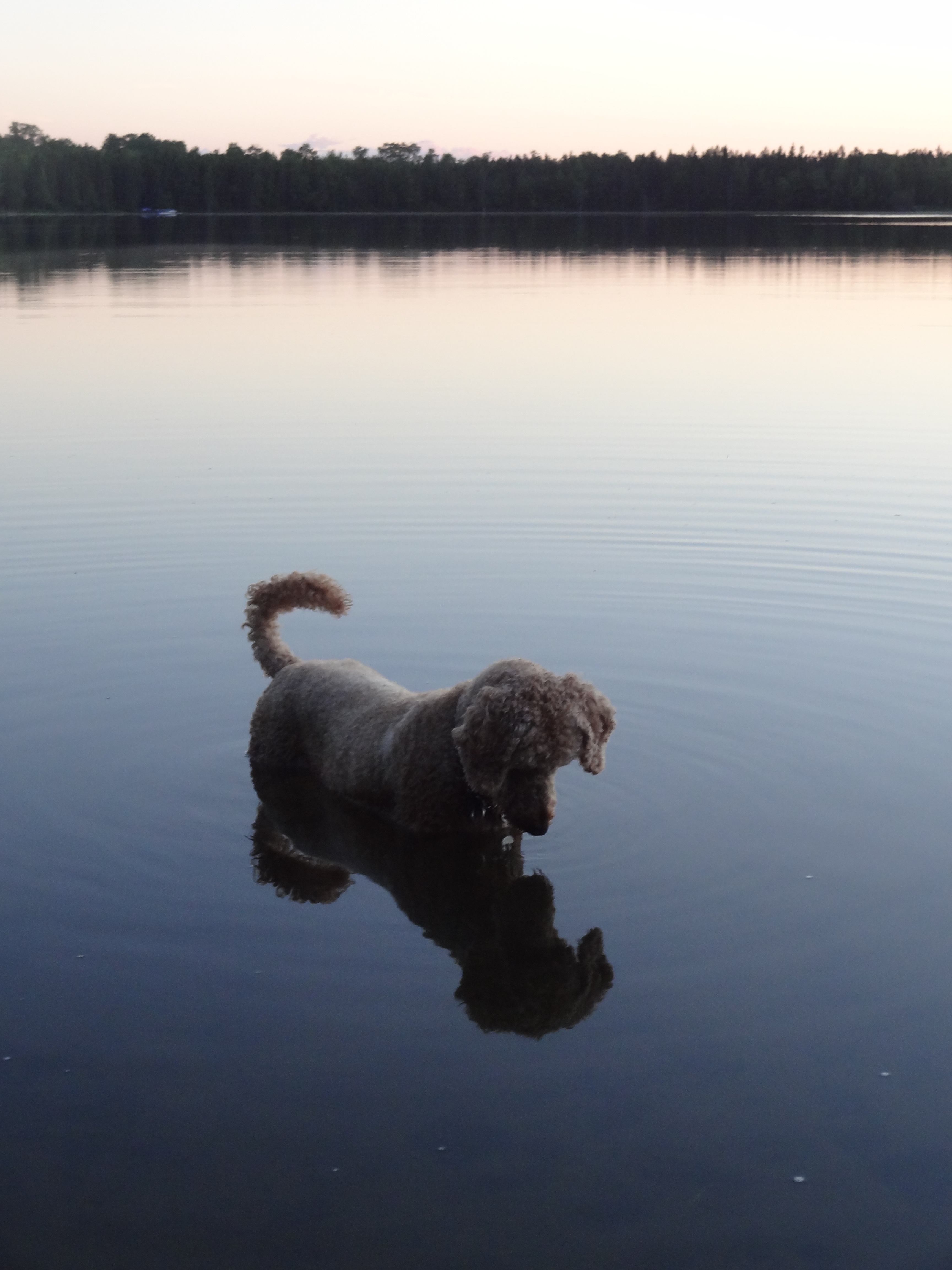
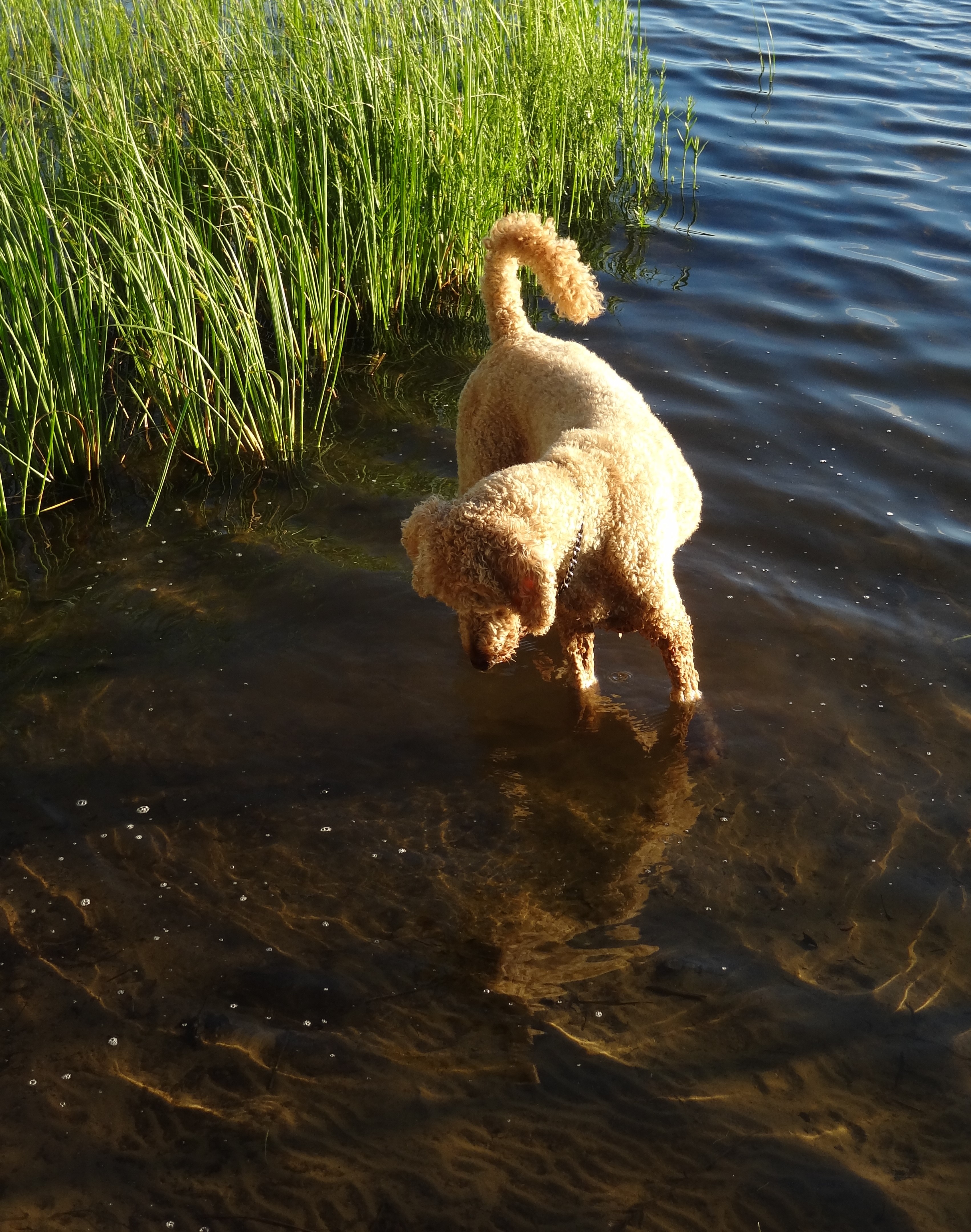
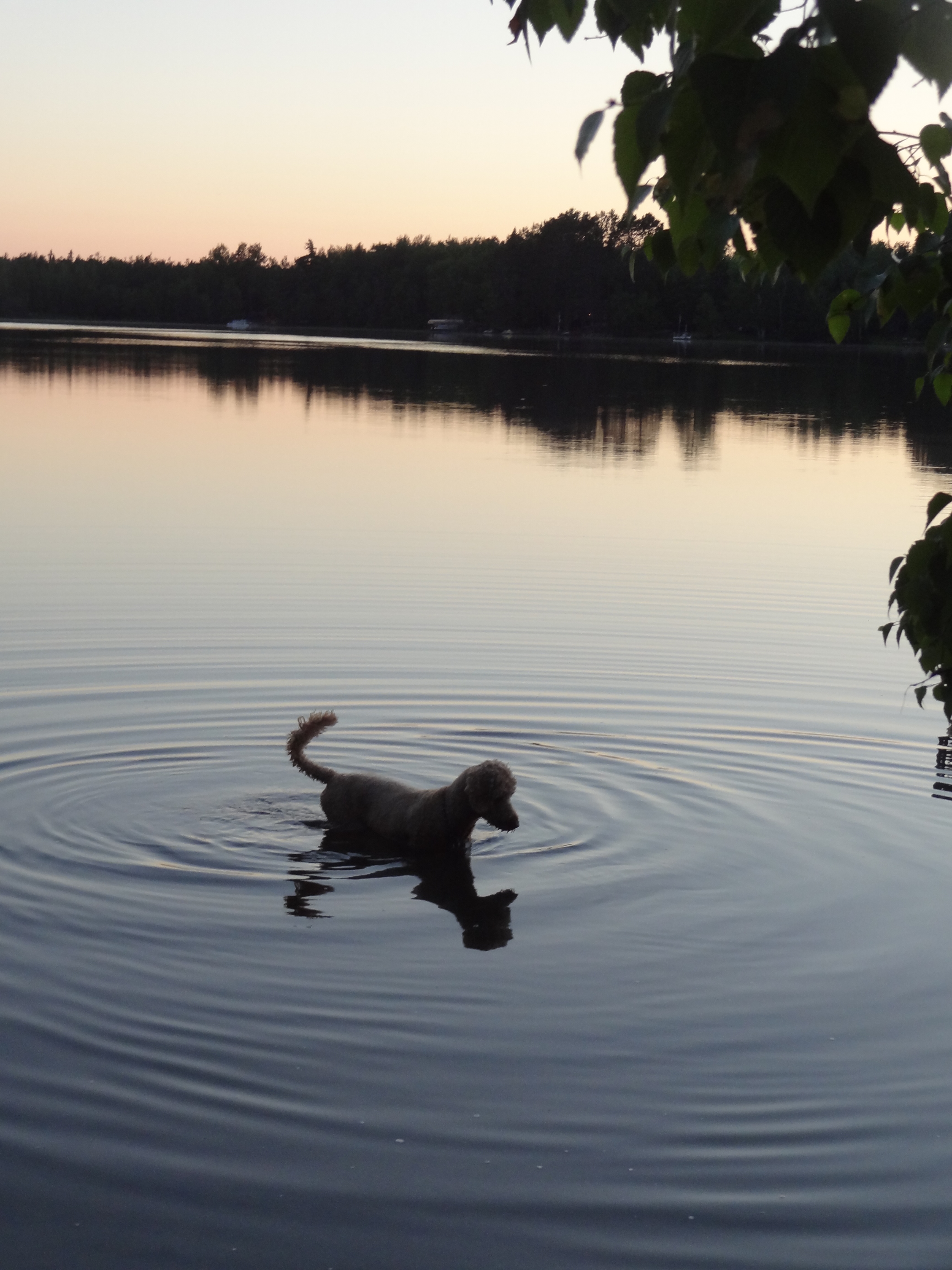
He’s had the chance to spend extra time on a clear northern Minnesota lake. It’s easy to see the young fish and bluegills against the sandy bottom. He was so excited when I pointed out the “fishies” in the water that now he whiles away many an hour wading and chasing them.
He hasn’t caught a fish yet. I don’t think he’d know what to do with one if he did. But that’s why they call it “fishing” and not “catching,” right?
I know that Garrison Keillor of “Prairie Home Companion” fame has fallen out of favor these days, but he told a great story about Bruno, the fishing dog, during a Lake Wobegon skit a few years ago. Bruno could catch fish, and caused a memorable panic during a baby’s baptism reception.
I am hoping that Buddy does not follow suit.
It’s just fun seeing Buddy excited about fishing. I am hoping it doesn’t stress out the fish too much. They probably know by now that he’s not a major threat.
I hope you all are having a summer as good as Buddy’s.
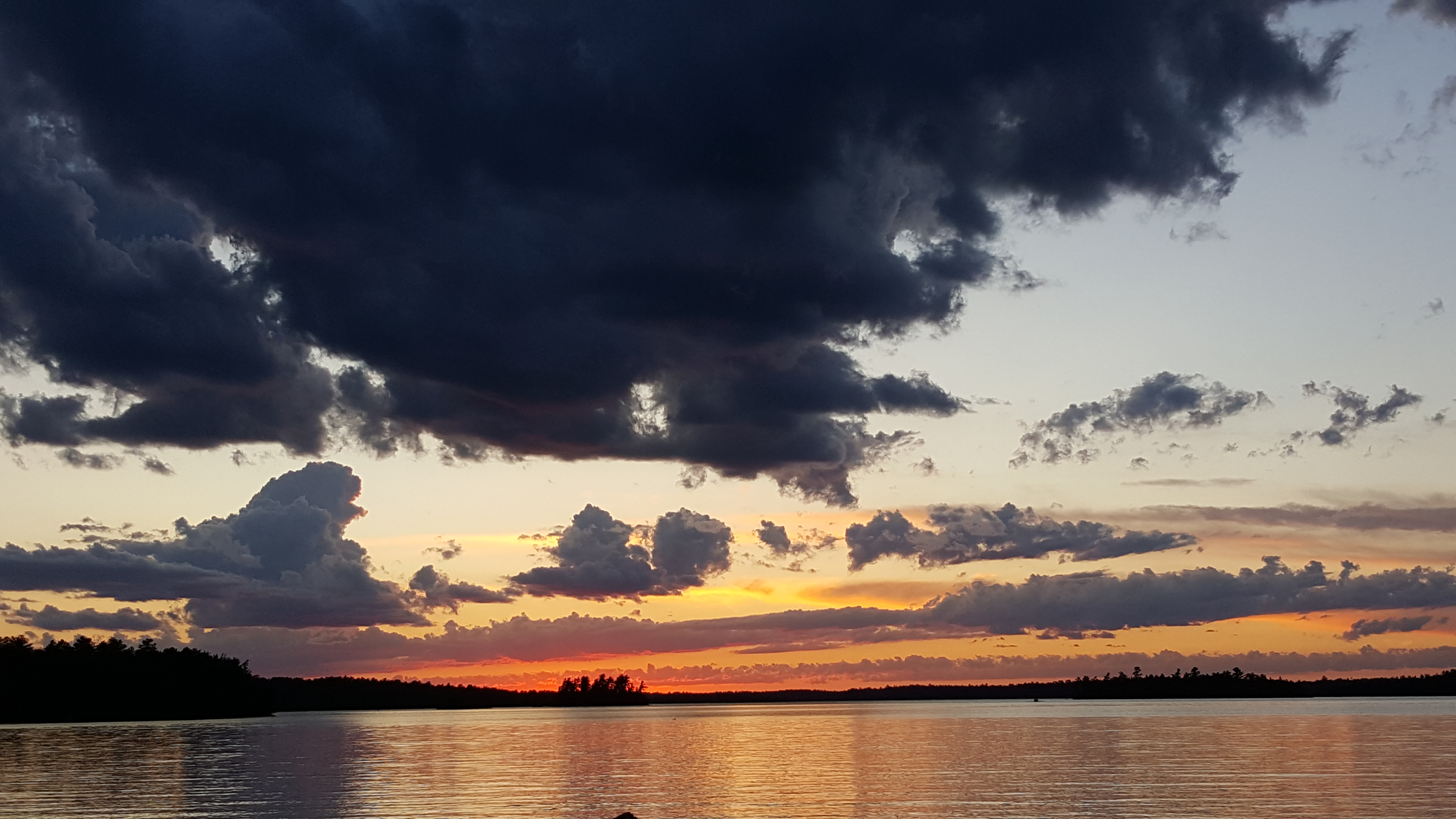
A vermilion sunset on Lake Vermilion. Night One of our stay.
Since nobody wants Americans in their countries right now, Russ and I decided to take several local camping trips. For mini-vacation #1, we trailered our thirteen-foot Scamp to Lake Vermilion State Park, a newish development in northern Minnesota.
I’ve spent some time on Vermilion Lake before but had not been to the park yet. This large lake is reminiscent of the Boundary Waters Canoe Area Wilderness – same rocky shorelines, scraggy spruces and towering pines – but development is permitted (outside of the park) so lots of cabins and lake homes line the shore.
There’s also an historic iron ore mine located in the park. When viruses aren’t running rampant, underground tours are offered, which are an interesting way to learn about the importance of Minnesota’s Iron Range.
We spent two nights in the Vermilion Ridge Campground. We brought our kayak, paddleboard, and bikes, and used them all, even though the weather wasn’t that good. We went during the week because all of the weekends for the summer were booked already – apparently, everyone else had the same idea to travel locally.
Here are some pros and cons we discovered.
PROs
A nice boat launch. You can use it if you have a state park sticker, otherwise, I think there’s a daily fee. (Staying at the campground requires a state park sticker, which you can apply for at a self-service kiosk when you enter the park.) We found that the boat launch dock was a good place to watch the sun set. That’s where I took some of the photos that accompany this post.
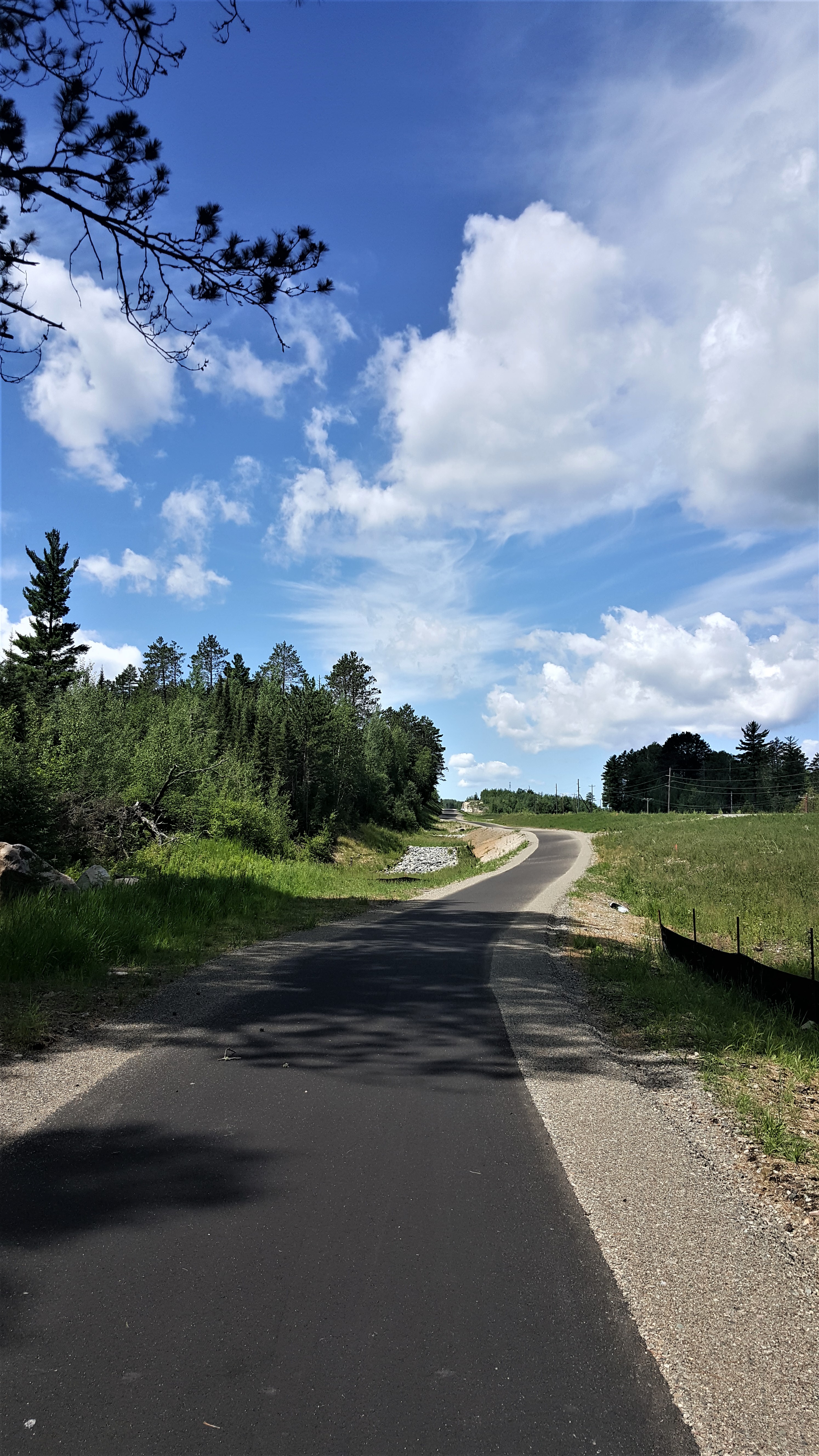
Close to the Mesabi Trail. This is a bike trail that spans 135 miles across the north. It’s not all completed yet. The section near the campground seems new. We were able to bike to it from our site and ride 4-5 miles toward Ely before the pavement stopped. Someday, the trail will reach Ely.
There’s wifi! If you need to keep in touch with friends, family, or social media while you’re in the woods, you can.
Quiet. The campground was quiet at night and there’s a good screen of trees between sites, which affords some privacy.
New pavement. The campground was constructed about ten years ago and work is still being done on the roads. All the pavement (including the bike trails) is smooth and new – a dream for longboarders, bikers and inline skaters.
Sunset on Lake Vermilion, Night Two.
CONS
No swimming beach. There’s no good place to swim in the park. A drive is required to reach local beaches on the lake.
Hard to get a reservation. Like I mentioned, we had to go in the middle of the week because summer weekends were filled already. Plan ahead to get the dates you desire.
The campsites aren’t on the lake. They are farther inland. I suppose this is better for the health of the lake, but it would’ve been more scenic to be near the water.
A building at the Tower-Soudan iron ore mine.
Another thing to know before you go is that you can’t bring your own firewood or gather it in the park. You’ll need to pay a fee to use wood the park provides. I think this has to do with not spreading the emerald ash borer beetle.
An idyllic scene from the Mesabi Trail.
If you go, we hope you enjoy the park as much as we did. Buddy liked it, too!
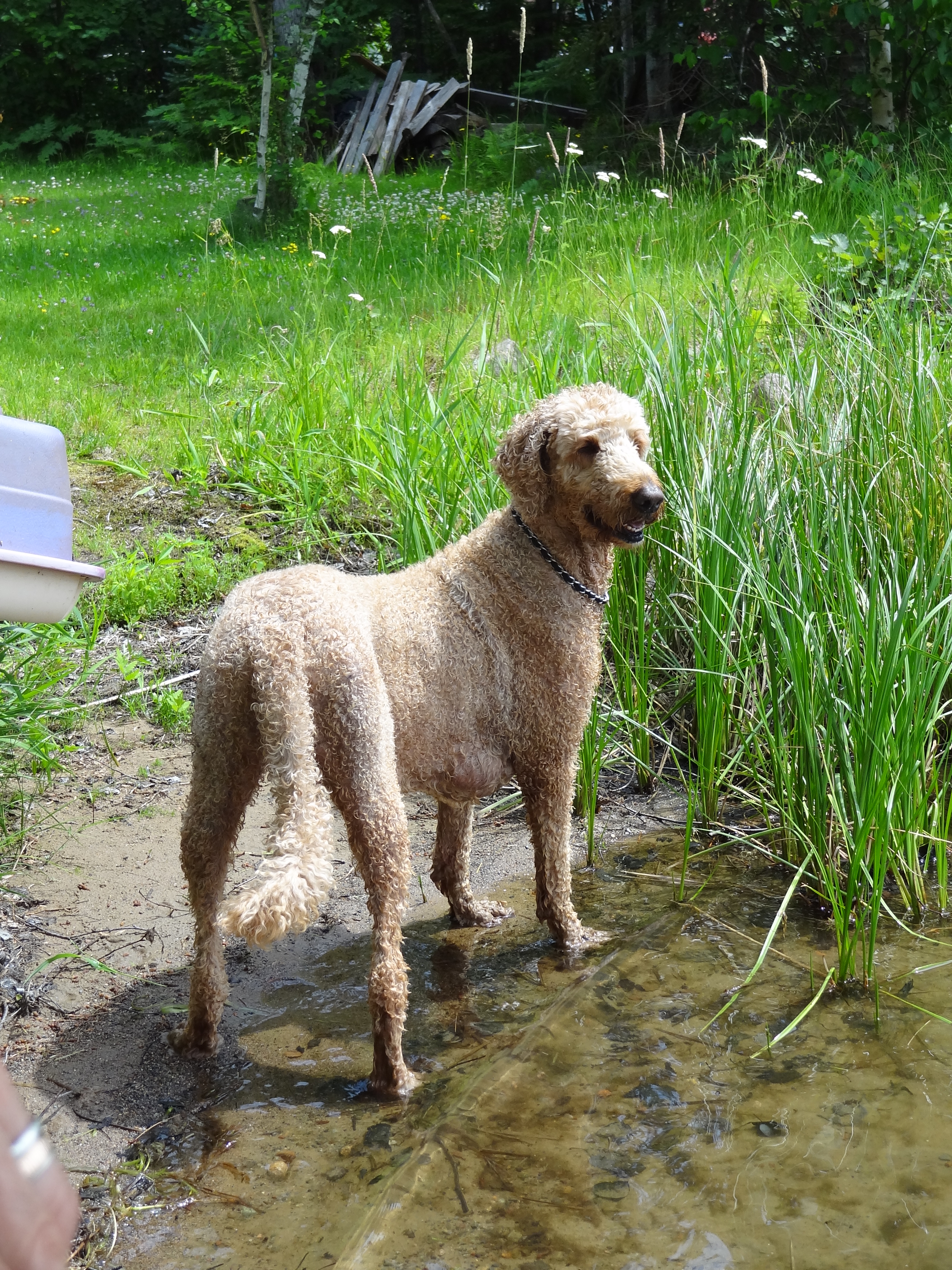
Buddy, a goldendoodle naturally highlighted by a golden sunset.
A view from the Kingsbury Creek Trail, Duluth, MN.
Prepare to be confused and impressed. Russ and I checked out the Kingsbury Creek Hiking Trail near the zoo in Duluth recently. We were confused because so many trails intersect in the area. There’s a mountain bike trail, and the Superior Hiking Trail, a gravel trail, and a footpath. We were aiming for the footpath, and think we found the right one, but since it was our first time on it, I’m not exactly sure.
Whatever trail it was, the scenery was impressive. Quiet pools in the creek attracted Buddy the Wonderdog. Huge white pines evoked awe. If we have to be quarantined, Duluth isn’t such a bad place for it.
I’m psyched that a photo of Lake Superior I took while on vacation last year is being used by my employer for ads that will soon appear in “Milwaukee Magazine” and the Milwaukee Airport. The ads are designed to increase awareness and appreciation for the Great Lakes.
I took this photo from the top of Spar Island during a sailing trip last year. (Read about it and see more photos in my blog post about the trip, “Wilderness Sailing in Canada, eh?“)
We need to do all we can to protect this source of life for so many!
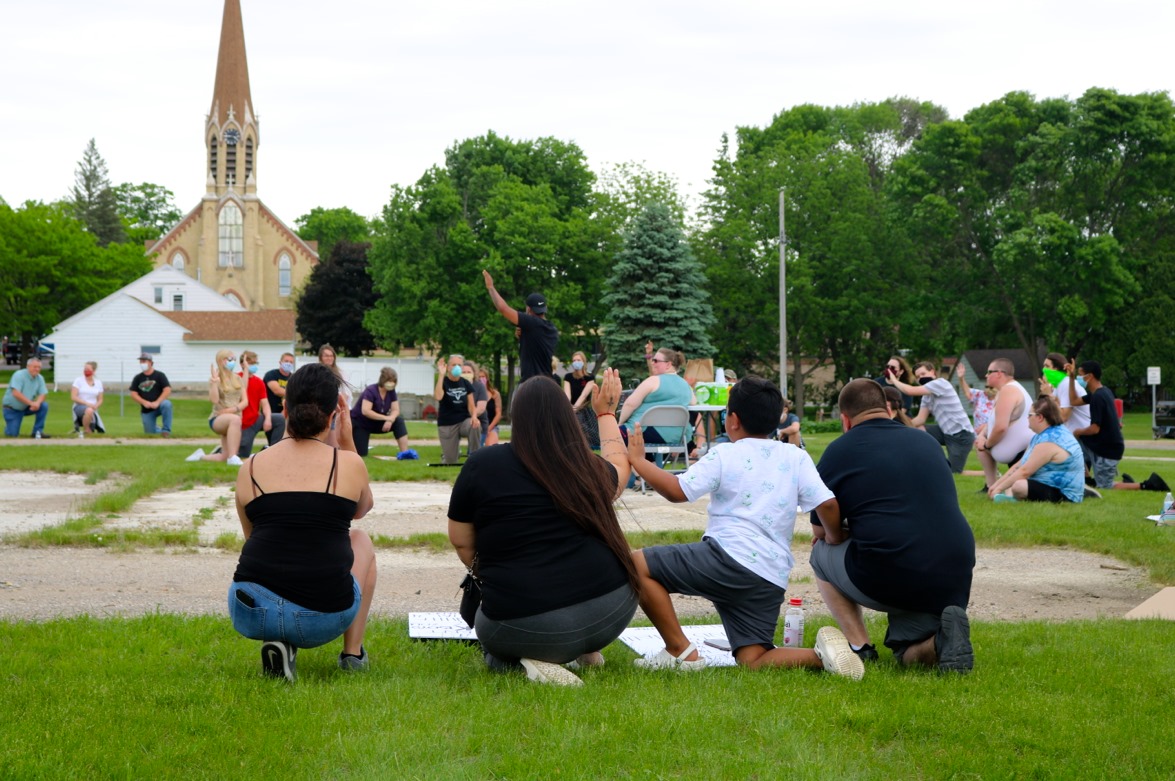
Today, I saw a news photo on social media that was taken by a former intern of mine. Brianna Taggert is working for The McLeod County Chronicle in the small Minnesota town of Glencoe. Her photo shows people kneeling in a public square in a peaceful Black Lives Matter protest. Four people in the foreground are kneeling close together.
One social media commenter criticized the protesters’ lack of social distancing. I’ve found myself thinking the same thing when I see personal posts on social media of big families, who I know don’t all live in the same house, getting together for gatherings during the pandemic. It’s only natural to question the wisdom of this.
However, I’ve refrained from commenting. I don’t know the circumstances of the people involved.
Maybe they are all living together temporarily and are exposed to each other every day – they are in a pandemic social bubble together.
Maybe they’ve all had the virus and are not contagious now.
Maybe they’ve all been super careful about their exposure and have made a considered, conscious decision to expand their bubble to include other family members now.
Perhaps the viewpoint of the images gives a false impression of how close people really are to each other.
Maybe the photo was taken a year ago.
For example, in the protest photo I mentioned, it looks like the people in the foreground who are right next to each other could easily be members of the same family. They are well away from other people. Seems pretty responsible to me. For the people in the background, I can’t really tell how close the groups of people are to each other because of the viewpoint of the photo. But if they are family groups, it looks like they are appropriately distanced.
The New York Times posted an article about social bubbles back in April. It offers excellent commentary on this topic.
One of Brianna’s professors from the University of Minnesota Duluth, John Hatcher, said this about the photo:
It’s Brianna’s “second day on the job and she’s covering what may be the most important story of her career. What I most appreciate is that this story shows us that the impact of George Floyd’s death is not just being felt in larger cites or solely by people of color. This is a story that is prompting action by people across our country and the world and in even in Glencoe, Minnesota, population 5,467. Let’s hope all of this is just the beginning of how we all reflect on what needs to change in our society and our own lives.”
That’s the real takeaway message of this photo.
Of course, this photo is different from images of protests in larger cities where it’s obvious that people are not practicing social distancing. And that’s why public health officials have asked them to self-quarantine for two weeks. I have serious doubts about whether any of them will do so, but I can’t control what other people do. I can only control what I do, and I can make suggestions to my family about what we should do.
I refrain from commenting on social media because I am not the social distancing police. And even if I did comment, it’s not going to make people change their behavior. Such commenting is for public health officials, not me.
Please, think twice before you make knee-jerk judgments on such photos. I’m not trying to control what YOU do, just making a suggestion to think before you type.
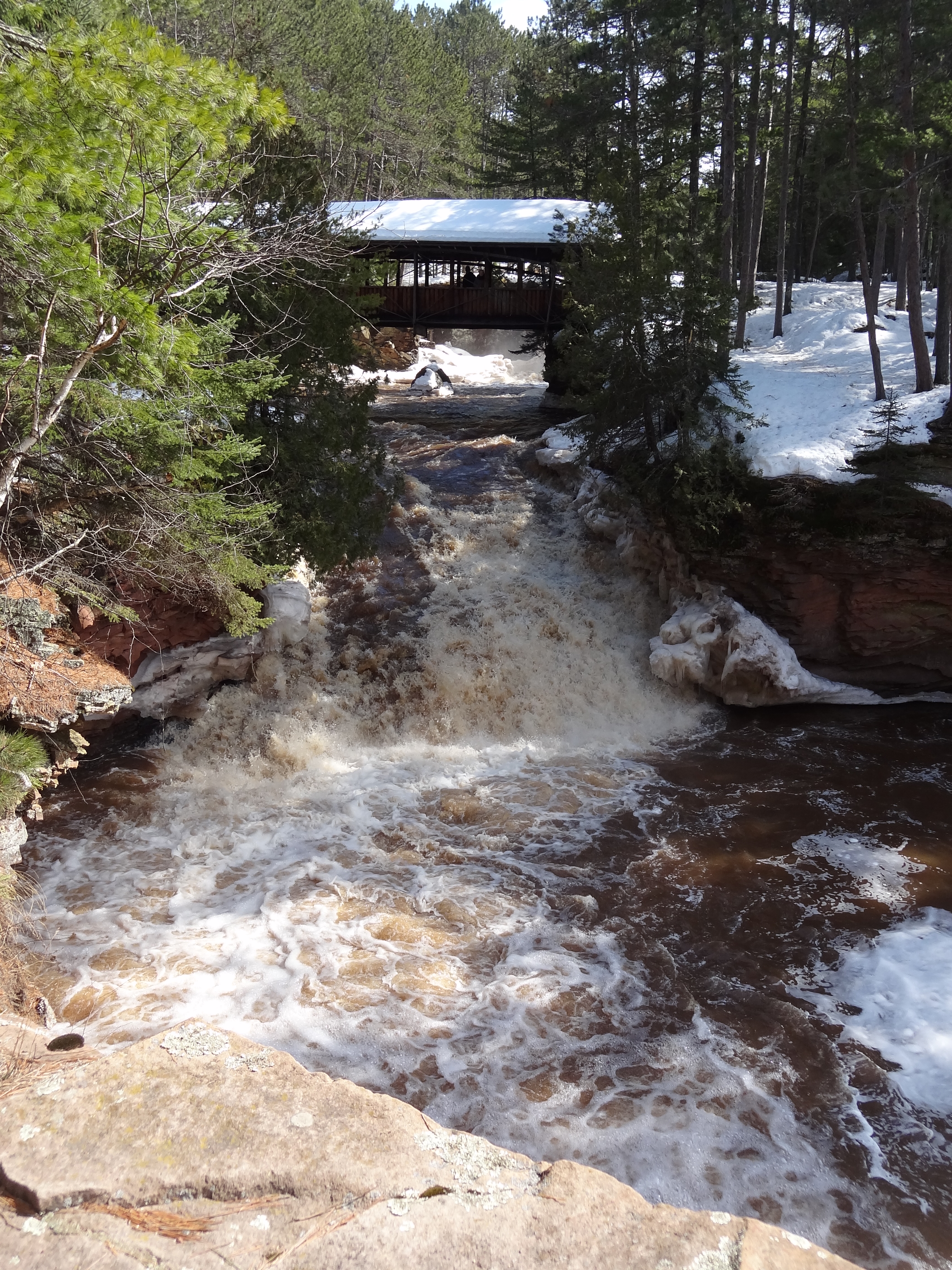
The Horton Covered Bridge over the Amnicon River lower falls in northern Wisconsin.
Lured by free entrance to Wisconsin State Parks during the pandemic and a sunny day, Russ, Buddy and I meandered down to Amnicon State Park to see the surging waters and feel the power of spring.
We weren’t the only ones. Many others had the same idea, and almost all of them brought their dogs, too! However, everyone was careful to keep the six-foot distance rule while hiking and enjoying the view.
The Amnicon River did not disappoint. Standing so close to such power is a reminder of forces we have no control over, and that nature does just fine without us.
Upper Falls, Amnicon River State Park.
The river is thirty miles long, flowing from headwaters somewhere near Amnicon Lake, through eight counties and into Lake Superior. Along its journey, the river’s elevation changes 640 feet, about a third of which happens in the park.
Huge ice chunks piled along shore of the Amnicon River. Each one is about half the size of a car.
The picturesque Horton Covered Bridge has graced many a calendar page and no doubt hosted many a wedding ceremony.
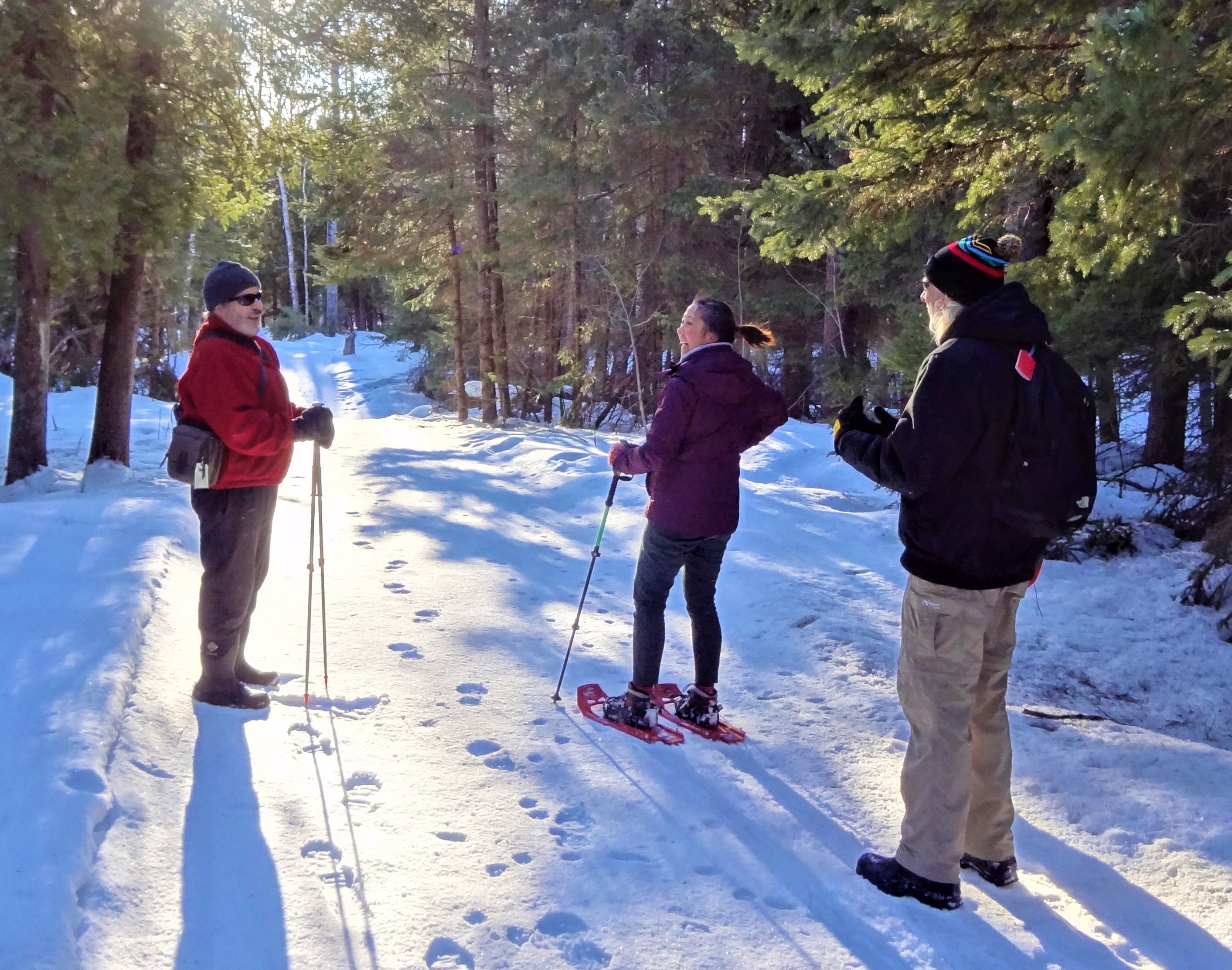
Mike Anderson, Natalie Chin and Friends member Ruben enjoy a hike through the Superior Municipal Forest.
As we walked across the frozen bay, a dark shape appeared. Nearing, we could see a large chunk of deer hide lying wrinkled in the snow like a rich lady’s carelessly discarded fur coat.
Were we deep in the wilderness? No. We were just a 15-minute drive outside of Superior, Wisconsin.
This green gem offers 4,400 acres of the best remaining example of a boreal forest in Wisconsin and it’s the third largest municipal forest in the country.
Although I’d driven through the forest several times, I’d never had time to actually walk out into it. So, I jumped at the opportunity for this outing, and invited Natalie, who is new to the area.
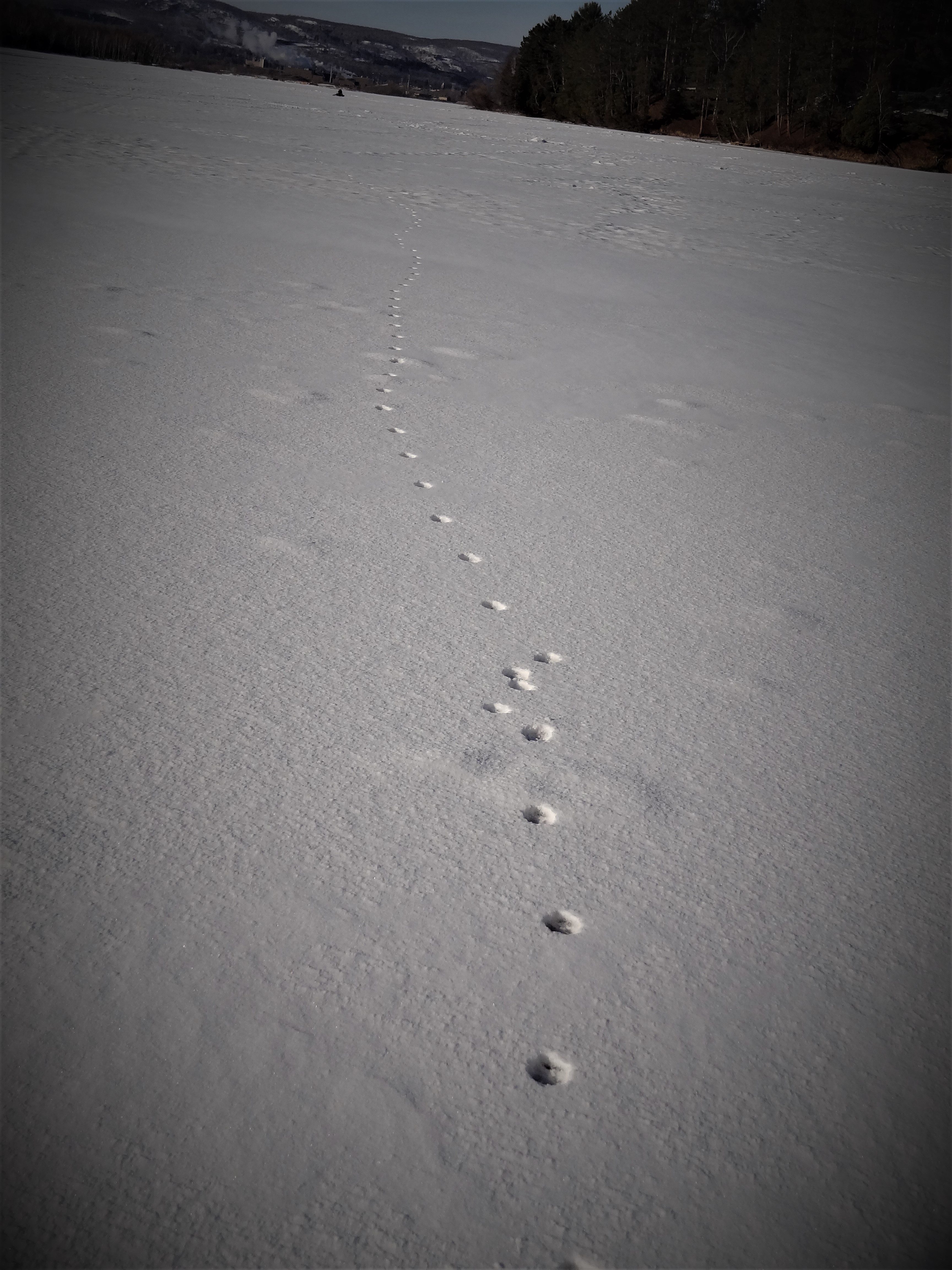
Coyote tracks on Kimball’s Bay.
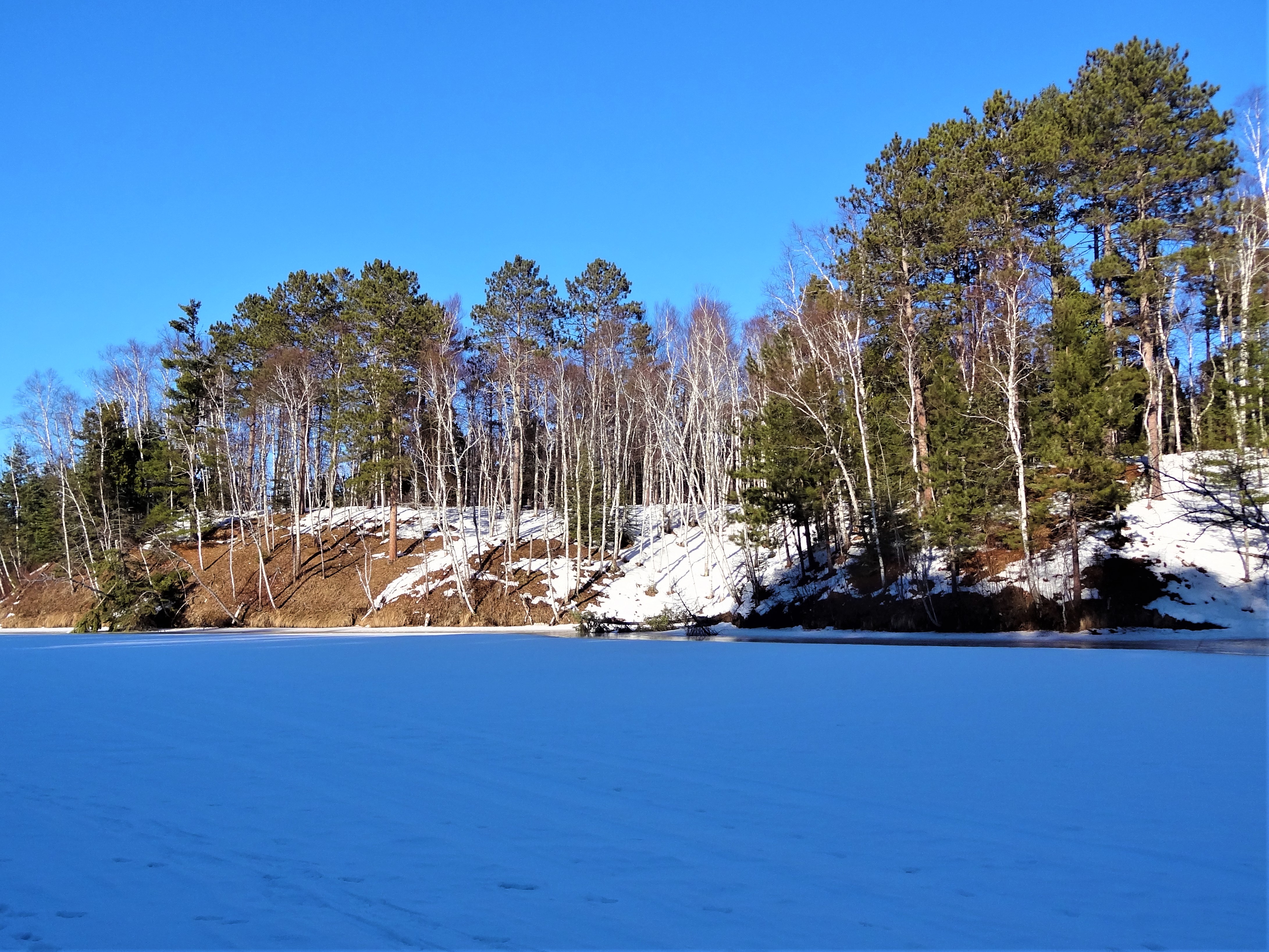
We met in a parking lot for a motorized winter trail. With snowshoes and highwater boots on, we hiked with several other Friends members down the trail to a frozen bay, which Mike told us was Kimball’s Bay. All was quiet except for the crunching of snow under our boot. We found several old red pines on the shore that had fallen recently, their trunks snapped due to high water levels in the St. Louis River, which caused the shore to erode. The trees leaned and leaned until they could lean no further, and snapped from the extreme physical forces.
Along the way, Mike described the area’s history. Although the ends of many of the peninsulas that poke into the bay are developed with homes, the municipal forest is preserved from development. Anderson was active in efforts to protect the area. Only cross-county ski trails, hiking trails and a campsite point to human use of the forest.
Deer hide in snow.
We trekked across to the other shoreline, passing an ice angler and coyote tracks. Two deer bounded across the ice ahead of us. We clambered up and over another point onto Cedar Bay, which is a narrower inlet. A short walk led us to the dark shape of the slain deer in the snow.
Soon, it was time to return to our cars and the demands of urban life. Reluctantly, we headed back, savoring views of the slanting setting sun and a rising waxing moon.
The Friends of the Lake Superior Reserve hopes to organize more tours come spring. The group acts as ambassadors and supporters for the Lake Superior National Estuarine Research Reserve – the same folks in the building where our Sea Grant Lake Superior Field Office is located. They are a nonprofit group of volunteers who love the St. Louis River Estuary and work to highlight its importance to the community. They even help with the reserve’s science projects sometimes. Find out more about what they do here. If all this sounds interesting to you, consider joining their group. It might give you a whole new perspective.
Besides being a great guide, Anderson is an accomplished nature and event photographer. You can view some of his municipal forest and St. Louis River images here:



 I’ve spent some time on Vermilion Lake before but had not been to the park yet. This large lake is reminiscent of the Boundary Waters Canoe Area Wilderness – same rocky shorelines, scraggy spruces and towering pines – but development is permitted (outside of the park) so lots of cabins and lake homes line the shore.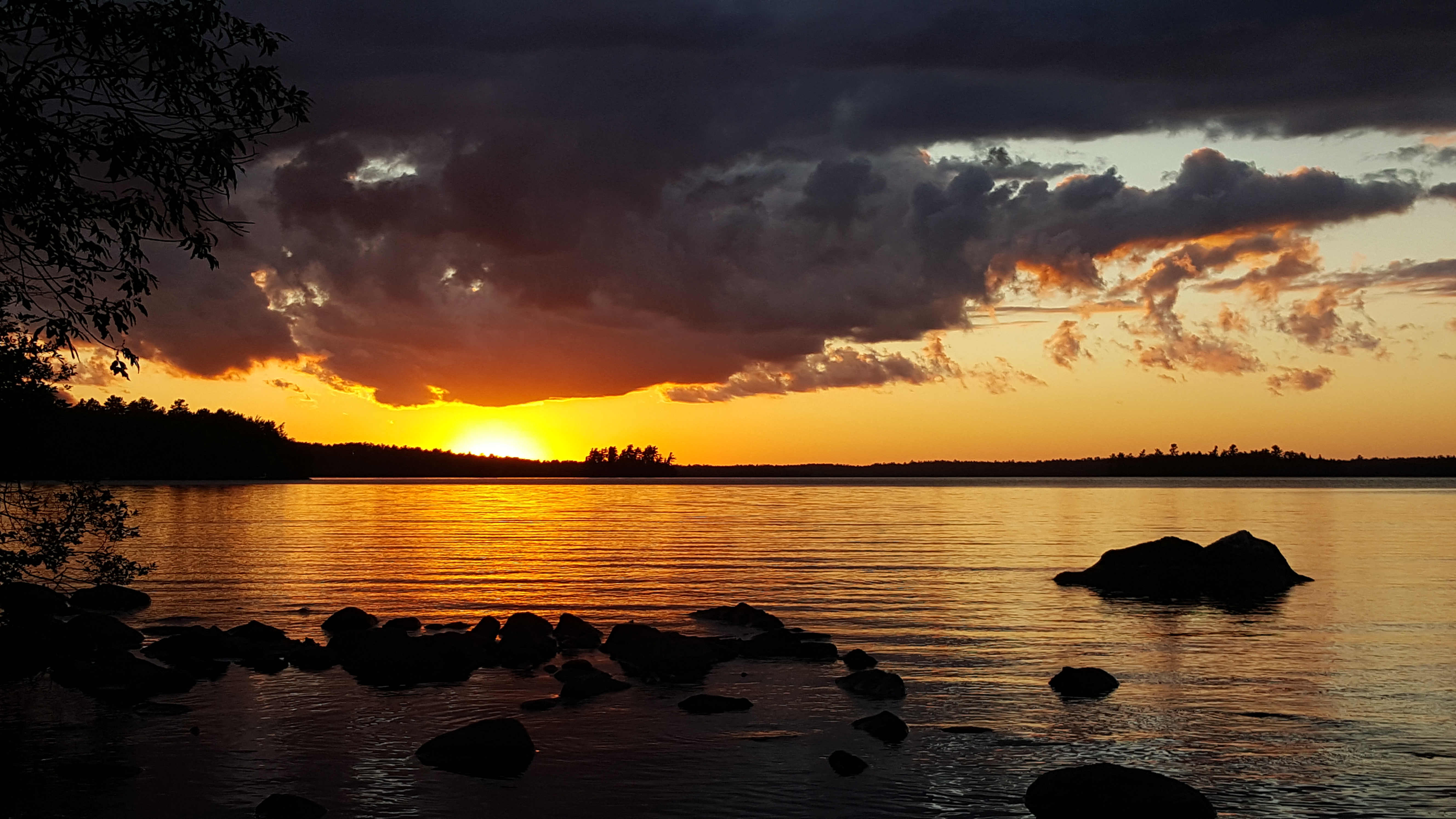







 Marie's Meanderings