Cover Reveal!

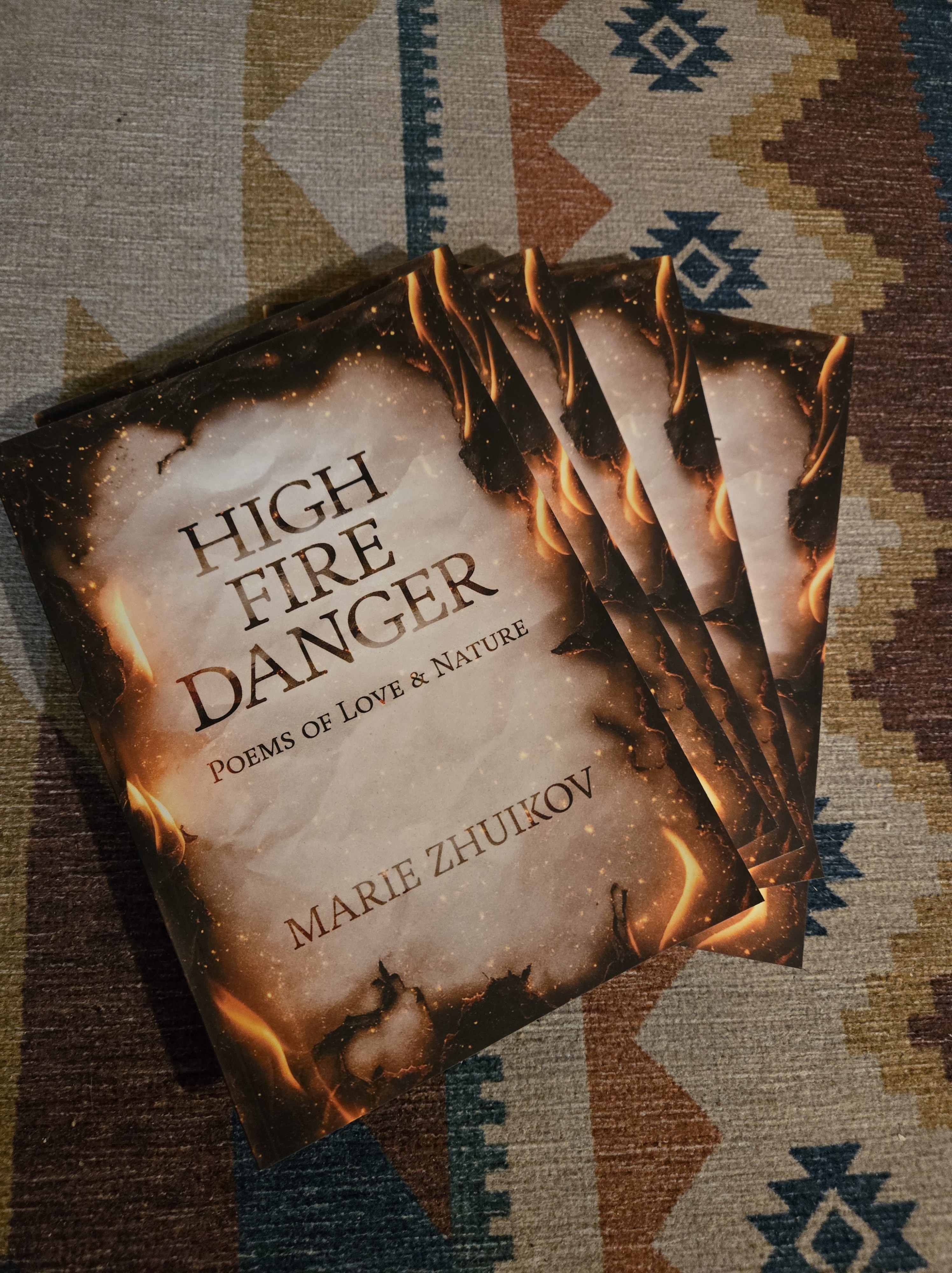
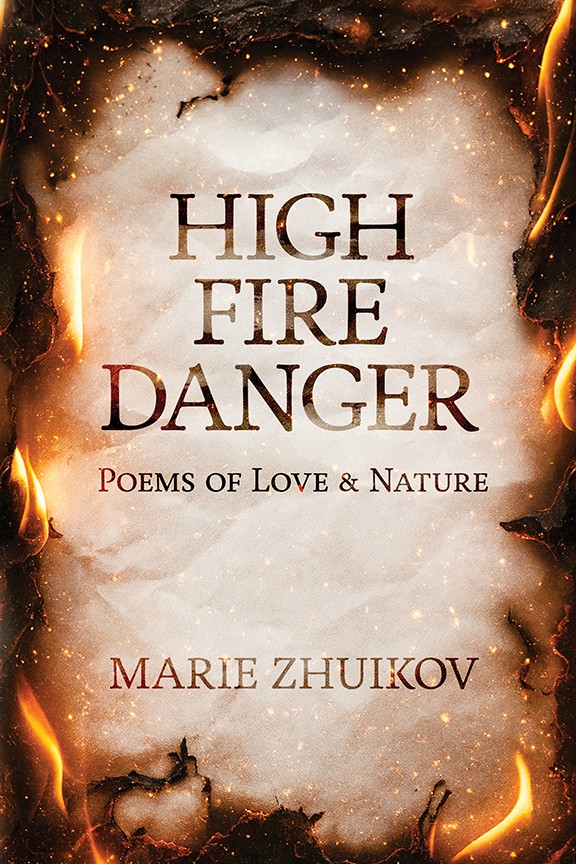
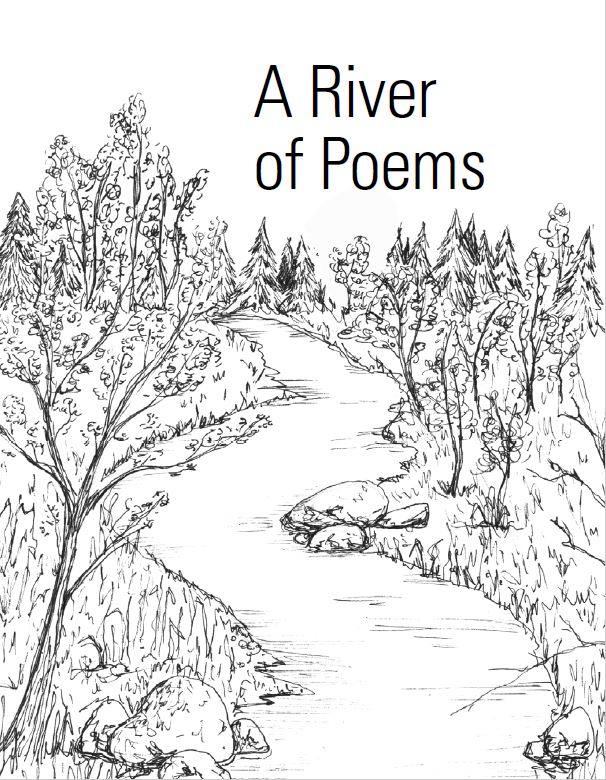
I’m interrupting my New England Road Trip travelog to reveal the cover of my latest book. It’s my first collection of poetry. As I mentioned in this previous post, the book came together fast because it’s locally (but professionally) produced. The designer and I had fun playing with ideas for the cover but we settled on this one quickly.

The book’s comprised of poems I’ve written over the past 38 years. Many were published in literary journals, including the one for which the book is named. Here’s a taste:

High Fire Danger

The flame is still there,
sparking,
small and warm.

It was all I could do
to dampen it.
Your breath
kindles it brighter.
Neutrality only a
smoky dream.

I will give you
what breath I can,
but my house burned once
and I must protect
my family from fire.

The paperback is available now on Amazon for $15. Visit this link to buy. I’m so happy to see the book out in the wilds! For info about my other fiction and nonfiction books, please visit my book page.

Finding Your Voice Through Writing

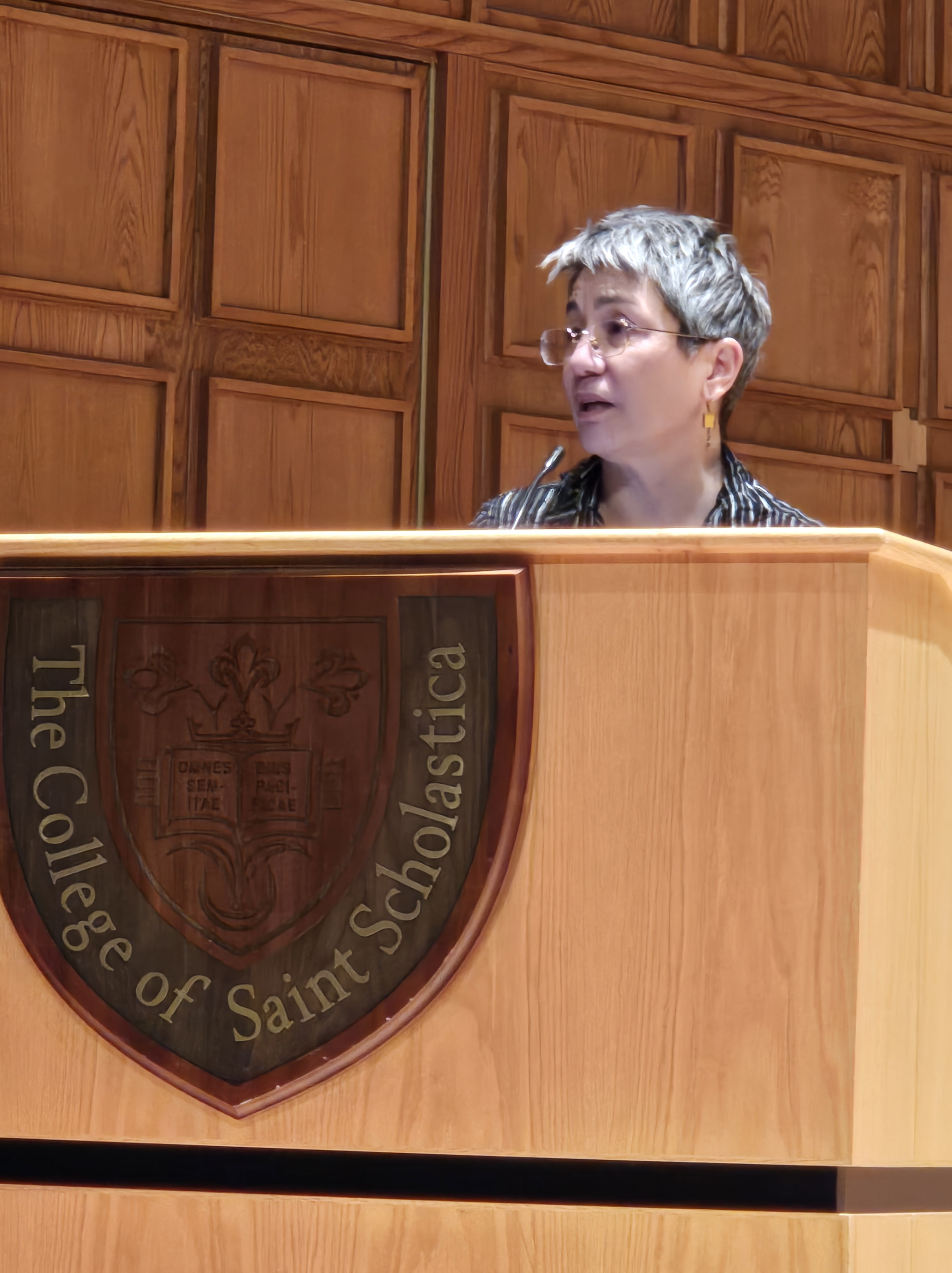
Last week, I had the privilege of hearing a nationally known poet read at a local college. Kimiko Hahn was flown out from New York City by the college’s English Department to be part of its annual Rose Warner Reading Series. The college brings in a poet for a day who performs a morning reading and discussion with local high school students and an evening reading for the public. After the morning reading, the students break into groups where a “Northland Writer of Distinction” talks to them about writing and how to find their voice through it.

Poet Kimiko Hahn reads at the College of St. Scholastica.

I was one of three so-called writers of distinction. The other two were Sheila Packa, a former Duluth Poet Laureate, and Nick Trelstad, a published poet and high school English teacher. Having never done this event before, I was a bit nervous. Both the other writers were repeaters; they were also both wearing plaid. I had not received that memo! But now I know in case I get invited back.

I was not familiar with Hahn’s poetry, so I was looking forward to hearing her read for the students. Hahn’s mother died in a tragic car accident, so many of the poems she read in her soothing voice were about that. She also read political poems. But, since I am a science communicator, the ones that caught my attention most were pieces she wrote based on science stories in the New York Times. Hahn commented that she’s bad at science but is fascinated by it, especially entomology (bug science). She often takes a science news story and makes it into poetry.  She does this through typical fashion but also using a technique called erasure poetry.

This was a new one on me. In erasure poetry, which began in 1965, writers take an existing text – like a newspaper story or the Declaration of Independence – and blackout or erase words to create a poem. Sometimes they leave the words in their original formatting (with lots of blank space in between) or sometimes they reformat them. Visual artists use the technique, too. Hahn read the students her poem, “Erasing Love.” Then she asked them to figure out what original article’s topic was. Several students mentioned that it was a science or medical story, but I think everyone was surprised when Hahn said it was about a giant fish called an oarfish and that the professor studying it had the last name of Love. (At the end of her poem, she links to the original article.) I enjoy creating found poems (like this one based on Chinese scooter instructions) so I’m definitely going to try erasure poetry sometime soon.

Hahn’s poems delved into grief, love, and science, often containing subtle and not-so-subtle humor. She said she gains inspiration from writing prompts and that she writes as an outlet for her opinions and rambunctiousness. Her reading persona is not rambunctious, but during the q & a afterward, more of her personality shone through.

Then the students were split into groups with their respective local writer. Hahn was a tough act to follow! For my presentation, I told the students about my professional and creative writing careers. The students were from the same high school that I went to, and I wanted to show them that a career in writing is possible. I described my books and talked about how this blog helped me find my voice. I read them two posts that offer good examples of opinion writing, which I can’t do either in my day job or my novels. These were “The Jayme Closs Case and the Importance of News Headlines,” and “The Christmas City of the North Parade: Socially Sanctioned Child Abuse or Festive Community Event?

There was no clock in the room. For the first group of students I spoke with, I blathered on about myself for so long, I ran out of time to read the Jayme Closs story, but I made up for that with the second group.

A few writer nerds were in the audience and asked good questions. After my talk, one girl introduced me to Dark Romance. If you haven’t heard of it, either, Dark Romance features kink and violence – darker themes that don’t sound all that romantic to me. I don’t think I’ll be pursuing it in any way.

My main points to the students were to write what they enjoy without worrying about what other people will think, to practice, and get feedback from people they trust. Of course, I encouraged them to start blogs since it’s a good way to practice and to get feedback from a supportive community.

Have you found that your blog is a good way to develop your writing voice?

Garden Gnome

Inspired by mishearing the song “Cardinal” by Kacey Musgraves. Thought it was funny. Hope I don’t get sued.

I saw a sign or an omen
In the garden, in the morning
Right after I
Lost a friend without warning

Words unsaid
Nose of red

Garden gnome
Are you bringing me a message from the other side?
Garden gnome
Are you tellin’ me I’m on somebody’s mind?
Don’t leave me behind

I took a walk in the ‘hood
To clear my head
Turned my collar to the wind
On the street, it was blowin’

And there he was
By the shed

Garden gnome
Are you bringing me a message from the other side?
Garden gnome
Are you tellin’ me I’m on somebody’s mind?
Don’t leave me behind

Are you just watching and waiting for spring?
Do you have some kind of magic to bring?
Are you just watching and waiting for spring?
Do you have some kind of magic to bring?
Are you just watching and waiting for spring?
Do you have some kind of magic?

Garden gnome
Are you bringing me a message from the other side?
Garden gnome
Are you tellin’ me I’m on somebody’s mind?
Garden gnome
Are you bringing me a message from the other side?
Garden gnome

Connecting Through Writing

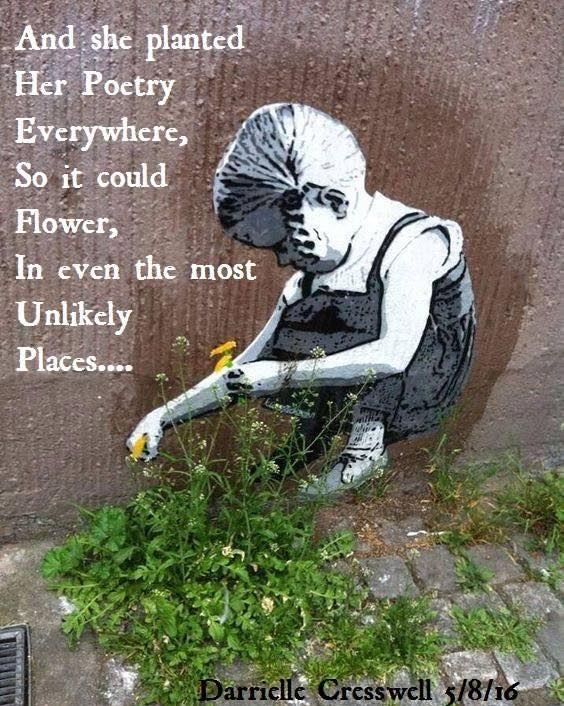
I once planted poems throughout my town (Duluth, MN) when I contributed to a Local Free Poetry project. Our poet laureate at the time scattered hard copies of poems by local poets in area businesses. I submitted four poems. One of them was entitled, “Perfunctory Kisses.” The short (8-line) poem detailed how I dislike kisses that don’t mean anything. I might want to publish it somewhere in the future, so I won’t share the whole thing here, but just let me say that the first line is: Perfunctory kisses suck.

I know, not exactly subtle, but I like my poetry to be accessible. 😊

Last summer, I received an email through my author website from a woman who lives in Eau Claire, Wisconsin. She said my poem captivated her when she found it. She used it as a reading at her recent wedding – her groom read it to her before they exchanged vows.

“Your short poem offered a sharp and punchy contrast to some of the more traditional readings of the ceremony,” she said. “We heard gasps of delight as the first line was read aloud. Let’s say, it was well received, as we knew it would be.” She ended with, “Thanks for your contribution to making our ceremony unique and memorable.”

Receiving her note made my day, my year! I’m tickled and honored that my poem landed on fertile ground and was used in such a personal way.

After my book launch this winter for “Meander North,” I heard from our friend, Sailor Dave, who connected with one of the stories I read about bunnies. Unlike with my poem, you can read this one because the book is made up from posts from this blog. (Seeing Rabbits) It explores the thought that rabbits might be guardians of our sleep.

Dave lives in a tiny house at a local marina. He said, “I wanted to tell you that I had a “pandemic bunny” living under my house last winter, too. When listening to Marie read the story, I was anticipating a dark turn, with Russ finding a great “New York Times” rabbit stew recipe that he was dying to try. Of course, it took a more spiritual turn and I found myself wondering if my rabbit would return. I did leave veggies out now and then. And there were baby bunnies in the spring. After our last snow, I spotted fresh bunny tracks around the house. My guardian bunny has returned! Probably under the house right now, waiting for me to go to sleep.”

Then there was a note I received through my website right after Christmas. A reader from Marshall, Minnesota, thanked me for writing my first novel, “Eye of the Wolf,” which deals with the wolves on Isle Royale National Park. He said it was, “An enjoyable foray into their lives and possibilities.”

Since my novel is rather old now (12 years), I asked him where he found it and he said it was in the library there. I let him know that there’s a sequel (“Plover Landing”), which he also ended up reading, and appreciated. I planted those copies in the town when I participated in a local arts board event years ago. So nice to learn they also found fertile ground!

I love these connections and I love it when readers take the time to send me their comments.

Russ and I were just listening to the latest episode of NPR’s “Wait, Wait, Don’t Tell Me” show. Author George Saunders (“Lincoln in the Bardo”) was on it. During his interview he offered this thought on how to define a literary work: “Anything that connects people in a way that’s deeper than the usual way – habitual way we connect. That can be seen as literature.”

I’d also posit that literature connects through space and time. The good books will resonate into the future and across geography. I’m not really saying that my writing is great literature, but I’m always trying and am heartened by these little successes.

Free Poetry Book!

I’ve posted several times about the “River of Poems” project on my blog. I’d like to let you know we (as in Wisconsin Sea Grant and the Lake Superior Reserve) finally got around to publishing this book of river poems from poets around the world.

To refresh your memory, in 2020, we sent out a call for river poems for The River Talks speaker series we hold with the Lake Superior National Estuarine Research Reserve. Poets were offered the opportunity to read their poems via Zoom during one of the River Talk monthly presentations.

Poets from across the world responded. With help from a judging committee, we narrowed the pool to a dozen poets, who read their works in March 2021 in conjunction with the St. Louis River Summit. The event was so moving, and the poems so well received, we created a publication to showcase them. “A River of Poems,” is now available as a free download.

In “I Held Us on for 36 Hours After the Levee Broke to Hell,” Heather Dobbins tells the story of a family who spends the night atop a phone pole to escape a raging river.

In “Catching Your Drift,” Lorraine Lamey highlights the subtle humor in natural resource regulations for a river in Montana.

Poet Ron Riekki shares how water can be an antidote for PTSD from war in “It Took a Long Time to Discover.”

A river in Detroit burns in Derold Sligh’s “Rouge River” poem, heralding a cry for environmental and social justice.

Download the book here.

Turning a Magazine Story into a Poem

My poem, “Ojibwe Horses” was just published in “The Nemadji Review,” a literary magazine published by students at the University of Wisconsin-Superior. If you’d like to read my poem, look for it on page 8 in the PDF found here. As far as I know, it’s just a happy coincidence that a horse is on the cover.

You may recall that I wrote a story about this rare breed of horses for “Lake Superior Magazine.” (Read about that process here.) It’s become one of my missions lately to increase public awareness about these lovely animals and their plight. To expand the reach of my magazine story, I decided to write a poem based on it. I had never done this before. Shrinking a 2,560-word story into a 290-word poem was not easy! But it was a fun exercise and it reminded me about the differences between poetry and prose. How could I distill the essence of my experience with the horses? How could I offer captivating images and feelings? What was most important to say?

Getting the poem to this point took several rewrites, one rejection, and more rewrites, but I think it works. I sent it to one of the Ojibwe horse owners who I interviewed for my story, and she loved it, which is the best compliment I could ever hope for.

This is the first time I’ve been published in “The Nemadji Review.” We had a virtual book launch reading for the journal recently. Seeing the young crew who worked on it made me feel like the love of literature is alive and well in the next generation. It will be exciting to follow the careers of these talented students.

Back in the early-1980s, I was part of a group of students at the University of Minnesota who started a literary magazine for undergraduates. To the best of my recollection, we named it “Undercurrents.” It was a small publication, 5 x 7 inches, with a blue cardstock cover and a stapled binding. It contained art, poetry, and stories.

I only worked on the first issue. I can’t remember if “Undercurrents” continued after that or not. I think I stopped participating because I wasn’t satisfied with the process we used to choose the journal content. The process probably wasn’t objective enough for me, or maybe poems I really liked didn’t make the cut, or maybe both! But that initial experience is probably what made me comfortable stepping up to coordinate literary contests later in life for the Lake Superior Writers group.

I just did a search, and the U of MN has a literary journal for undergraduates now, called “Tower.” I’m glad to see what we started has continued, even if it has a different name now.

Anyway, I hope you enjoy the poem. And if you’re a writer, I would encourage you to connect with local community colleges and universities – many open submissions to their literary journals to community members, not only students. It’s a way to support learning by students and could lead to a nice publication credit on your literary resume.

A “River of Poems” spans the world

We expected only a few local poets would be interested. We thought they’d offer poems about the St. Louis River on the Minnesota-Wisconsin border.

That was our mindset when the River Talk planning team at my workplace first developed the theme for the public poetry reading to be held in conjunction with the St. Louis River Summit as an evening program in March 2021. We were mistaken, but in the best possible way.

In reality, our call for river poems through the literary submission management platform Submittable garnered interest from 76 poets from across the U.S. and around the world. They submitted 148 poems for consideration.

“As it turns out, a lot of people like to write about rivers. That’s because they are really important in our communities and in our lives,” said Deanna Erickson, director of the National Lake Superior Estuarine Research Reserve, which co-sponsors the River Talk series with Wisconsin Sea Grant.

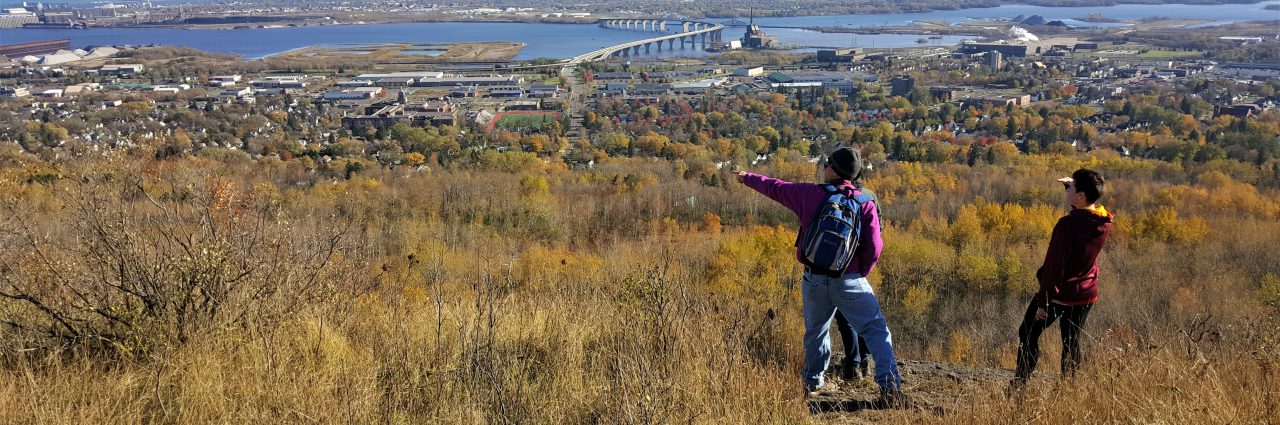
An overlook above the St. Louis River in Duluth, Minn.

We quickly realized we were going to need more judges. In the end, we gathered six who represented a good cross-section of the audience we expected to attend the summit.

The judging was “blind,” which means the poets’ names were not associated with their poems. After two rounds, the judges narrowed the number of poems down to a dozen, with a few for backup in case any of the chosen poets could not be reached.

Although communication was sometimes a challenge, all 12 poets were enthusiastic about participating in the reading. They represented a wide diversity of ages and ethnicities.

The River Talk was a couple of weeks ago, but the warm fuzzy feelings it engendered remain with me. I could use many adjectives to describe it: powerful, beautiful, stark, raw, funny — but it’s really best if you listen to the poems and feel all the feels for yourselves. The reading drew 85 Zoomers, a record attendance.

The Lake Superior Reserve, our partner in the talks, recorded the reading and it’s available on their YouTube channel. Here’s a list of the poets (in the order they read) and the names of their poems:

Tyler Dettloff (Michigan) “My Stars”
Heather Dobbins (Arkansas) “I Held us on for 36 Hours after the Levee Broke to hell”
Ben Green (New Mexico) “Immersion: A Prayer of Intent”
Lorraine Lamey (Michigan) “Catching Your Drift”
Joan Macintosh (Newfoundland) “The Current Feels”
Kate Meyer-Currey (England) “Timberscombe”
Rebecca Nelson (California) “Of the St. Louis River”
Stephanie Niu (New York) “To the Beaver’s Eyes”
Diana Randolph (Wisconsin) “Knowing the Way”
Ron Riekki (Florida) “It Took a Long Time to Discover”
Derold Sligh (South Korea) “Rouge River”
Lucy Tyrrell (Wisconsin) “Talking Water”

Ironically, the one poem specifically about the St. Louis River was written by someone who had never visited it. Rebecca Nelson said her poem, “Of the St. Louis River” was inspired by the spiritual experiences she’s had while watching water. She grew up in the Midwest and said she wrote the poem thinking of the rivers she knew from childhood. “I would love to visit sometime after the pandemic!” Nelson said.

Barb Huberty, St. Louis River Area of Concern coordinator for the Minnesota Pollution Control Agency, offered this comment in the Zoom chat, “I never knew that poetry could unite people across the globe.”

Sharon Moen, Eat Wisconsin Fish outreach specialist for Wisconsin Sea Grant, offered, “Thank you to all the poets and organizers! I am inspired by the depth of your thoughts and stories.”

Remaining River Talks will be held on April 14 and May 12. For more information, visit the River Talks page: go.wisc.edu/4uz720.

A River of Poems

This Wednesday at 7 p.m. Central, I’m co-hosting a Zoom event that will showcase a dozen poets from around the world and across the country reading their powerful, evocative and beautiful poems about rivers. The March 3, 2021 reading is an evening program of the annual St. Louis River Summit, which brings together hundreds of people who work on and care about the St. Louis River in Minnesota and Wisconsin. It’s also part of our monthly River Talk programs, which are free and public-friendly. Details are below. Come experience different perspectives on our waterways!

Here is the Zoom link:
https://uwmadison.zoom.us/j/93264788373?pwd=amRqSWgvT1ZxNW03WFBnU2ZYclZUQT09
Meeting ID: 932 6478 8373
Passcode: 776905

The selected poets are:

Tyler Dettloff (Michigan) “My Stars”
Heather Dobbins (Arkansas) “I Held us on for 36 Hours after the Levee Broke to Hell”
Ben Green (New Mexico) “Immersion: A Prayer of Intent”
Lorraine Lamey (Michigan) “Catching Your Drift”
Joan Macintosh (Newfoundland) “The Current Feels”
Kate Meyer-Currey (England) “Timberscombe”
Rebecca Nelson (California) “Of the St. Louis River”
Stephanie Niu (New York) “To the Beaver’s Eyes”
Diana Randolph (Wisconsin) “Knowing the Way”
Ron Riekki (Florida) “It Took a Long Time to Discover”
Derold Sligh (South Korea) “Rouge River”
Lucy Tyrrell (Wisconsin) “Talking Water”

The reading will last an hour and will include time for comments and questions. The talk will be recorded and posted afterward on the Reserve’s Facebook page and YouTube. A summary will also be posted on Wisconsin Sea Grant’s blog.

River Talks are sponsored by The Lake Superior National Estuarine Research Reserve and the Wisconsin Sea Grant Program.

Climate Emergency Poetry

This is just a quick post to let you know I’ll be giving a reading this weekend that’s being organized by a local Climate Change awareness group. The event is this Sunday Feb 21 by Zoom.

Here are the deets:

Here’s info about the Zoom poetry reading I’ll be doing this Saturday (Feb 21) at 3 pm Central. I’ll be reading an excerpt from “Plover Landing,” and a couple of poems. I think I will be the last reader because they’ll be going alphabetically.
Here’s the Zoom address for Climate Emergency Poetry Reading #5 set for THIS Sunday, February 21 at 3:00 p.m. CST (4 EST):https://us02web.zoom.us/j/81576699711…

Join our Cloud HD Video MeetingZoom is the leader in modern enterprise video communications, with an easy, reliable cloud platform for video and audio conferencing, chat, and webinars across mobile, desktop, and room systems. Zoom Rooms is the original software-based conference room solution used around the world in board, conference, huddle, and training rooms, as well as executive offices and classrooms. Founded in 2011, Zoom helps businesses and organizations bring their teams together in a frictionless environment to get more done. Zoom is a publicly traded company headquartered in San Jose, CA.us02web.zoom.us

Meeting ID: 815 7669 9711Passcode: 286977

SEE YOU THERE! HERE ARE YOUR SCHEDULED GUESTS:POETS: Ella Grim, Marie Zhuikov, Cal Benson, Jill Hinners, Jim Johnson
CLIMATE ACTIVIST: Bill Mittlefehldt
UMD MPIRG SPOKESPERSON: Stine Myrah
YOUR HOSTS: John Herold & Phil Fitzpatrick           AND OUR FIRST Q & A SESSION WILL FOLLOW!