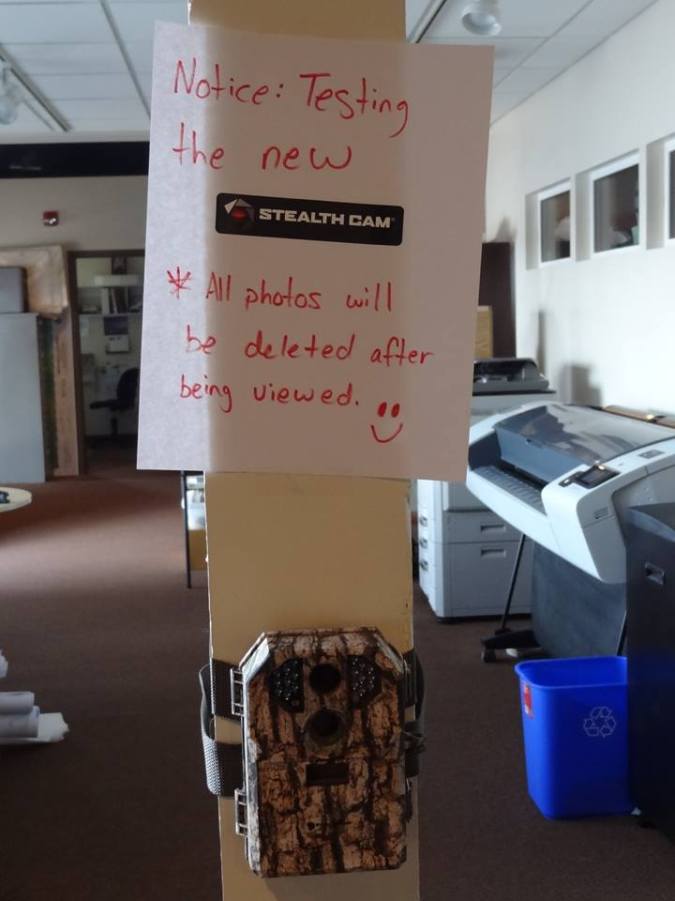
Trail Cam in the Office

TrailCam

True story. This happened in my office last week.


We’re caught
inside the camouflaged box that’s mounted on a pole
in our office.
Eyes wide, coffee cups in hand
we walk down the hallway
feeling like someone is watching.

What strange natural rituals
will the camera catch —
Mating habits of the white-collar worker?
Dominance displays of the office alpha female?
A furtive mail boy stealing candy from a desk?
The shy engineer emerging from a conference call?

I suspect all the mother wolves who have had their birth dens invaded,
all the nesting birds who just want to feed their young in peace
would enjoy the sweet revenge
of these photos.

©2016  Marie Zhuikov

The World’s Largest Freshwater Sandbar

Barkers & WI Point 047

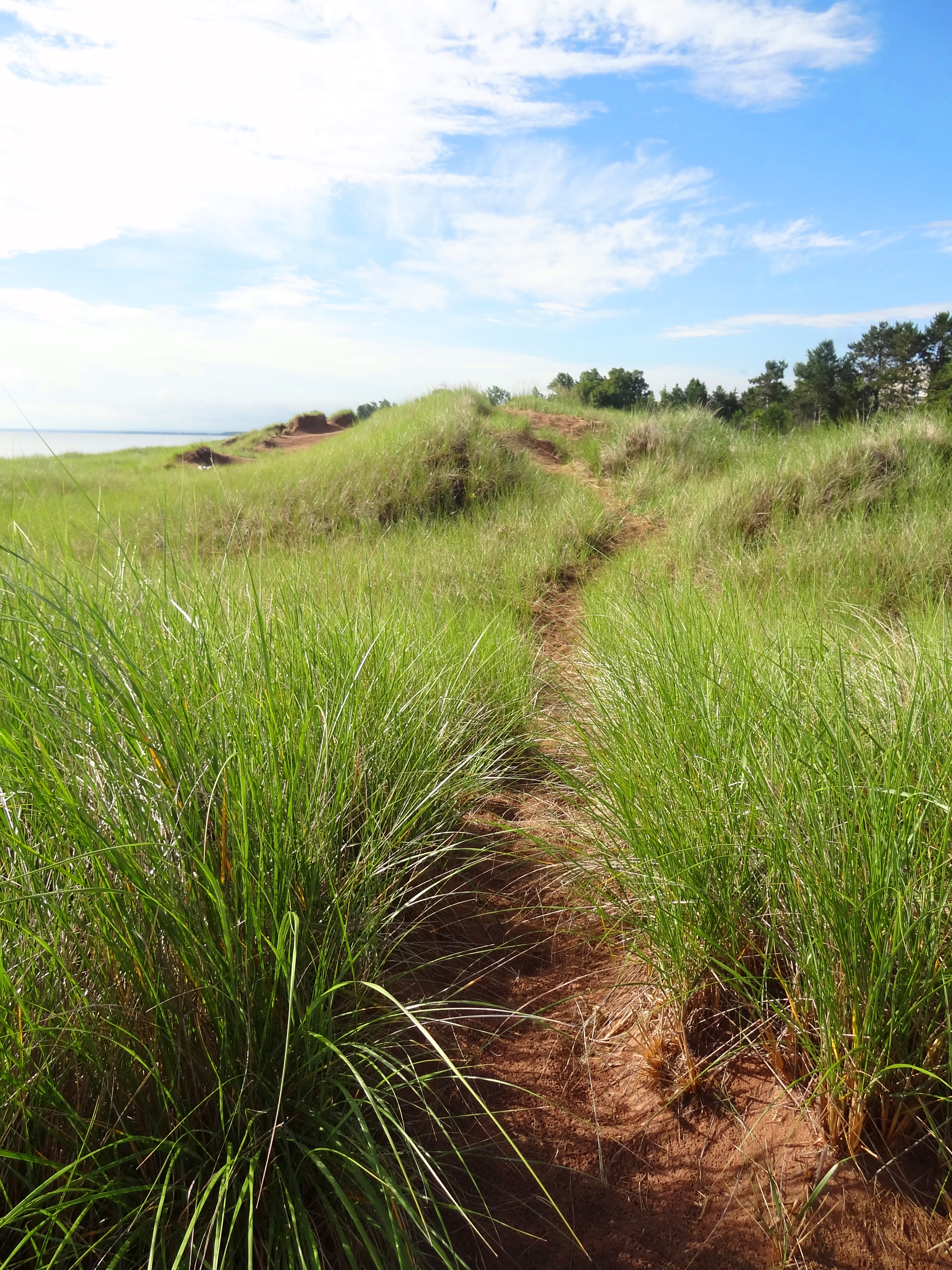
Even though Wisconsin Point on Lake Superior is not truly part of “the world’s largest freshwater sandbar,” it’s still pretty.

It’s a common local point of pride in Duluth to say that Minnesota Point (a.k.a. Park Point) and Wisconsin Point form the “World’s Largest Freshwater Sandbar.” I am sorry to burst the community bubble but . . . NOT.

Way back so many years ago I can’t even find it on the Internet, Duluth sent a delegation of kayakers to Lake Baikal in Russia. They returned with tales of a sandbar or two on this freshwater lake that were even larger than MN/WI points. Maybe I was the only one who listened then because local tourism organizations and media outlets continued to refer to our sandbar as the “world’s largest.”

A couple of years ago (2014), I decided to fact-check the claim because I was editing a government report that repeated it. Lo and behold, I found a provincial park in Canada that claimed the same thing (Sandbanks Provincial Park).

I also asked several scientific types who are in the know about such things and received a response from a researcher at the University of Minnesota Duluth’s Large Lakes Observatory. Prof. Ted Ozersky did some Google Map comparisons and found that Jarki Island at the northernmost tip of Lake Baikal sports a sandbar that is 18 kilometers long. MN/WI points are 16 km long.

He also found a series of long sandbars on Proval Bay along the eastern shore of Lake Baikal that collectively stretch for 40 km.

So, in the document I was editing, I changed the wording to MN/WI points as comprising “one of the largest freshwater sandbars in the world.”

The issue arose again just last week when a fellow blogger made the “world’s largest” claim in his post. Why? Because he saw it elsewhere on the Web.

I figure it’s high time to get definitive news out on the Web that, alas, Minnesota and Wisconsin Points ARE NOT the largest freshwater sandbar in the world. Even the park in Canada has downgraded their claim to say instead that they have the “world’s largest baymouth barrier dune formation.”

In short, it’s okay to say that MN/WI points are the largest freshwater sandbar in the country, or one of the largest freshwater sandbars in the world, but not “THE largest freshwater sandbar in the world.”

Class dismissed.

A Lake Superior Cruise

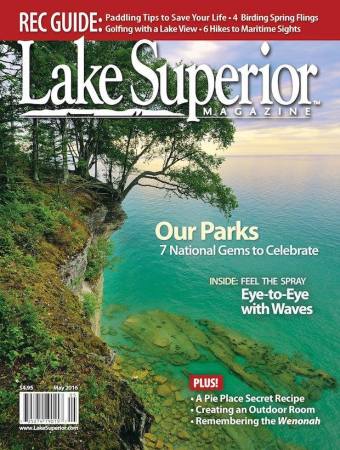
I stopped freelance writing a few years ago, choosing instead to focus on writing fiction and poetry. (And this blog!) I was tired of hiring out my brain for somebody else’s use, since that’s what I do all day at work already. Thankfully, I also no longer had a financialLSMagazineMay16 need to freelance, so I made the conscious decision to stop.

That worked well until about a year ago, when I took a cruise on Lake Superior aboard the Wenonah, the ship that took me on my first trip across the lake.

The cruise dredged up old memories. I considered blogging about them, but once I started writing, I realized I had a story I could sell, dang it!

Alas, I succumbed to freelancing, but at least the story was one I truly wanted to write. I know, poor me. It’s a good problem to have.

My story was recently published in Lake Superior Magazine. It’s a superb magazine — pick up a copy and check it out! (Page 14.)

They also published a couple of my photos. But I have gobs of other photos I took that day, which I thought I would share with you. Please enjoy this virtual cruise along Lake Superior’s North Shore.

DSC02270

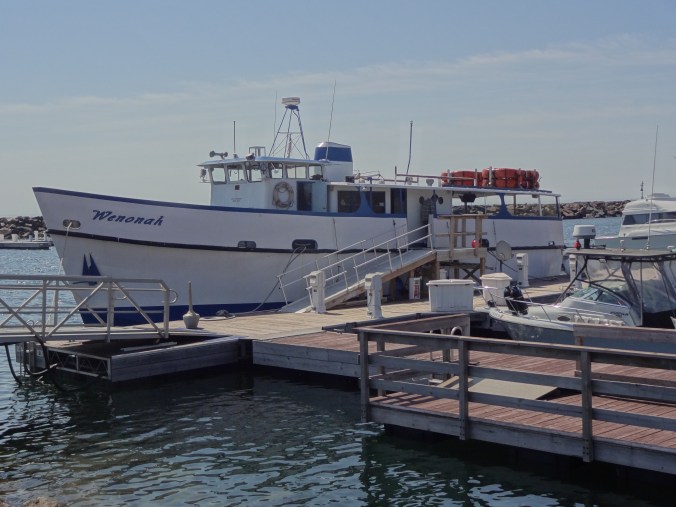
The Wenonah at Silver Bay Marina.


DSC02290

The tip of Gold Rock, site of a shipwreck in 1905 that claimed a life.

DSC02298

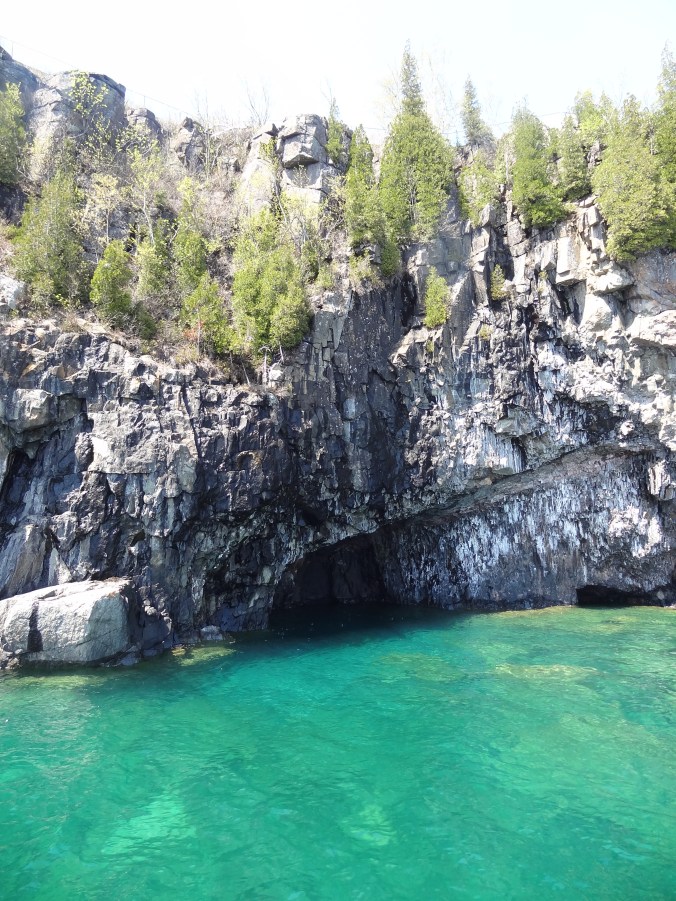
That turquoise water looks like the Caribbean, doesn’t it? I wouldn’t jump in though. It’s a bit nippy.

DSC02303

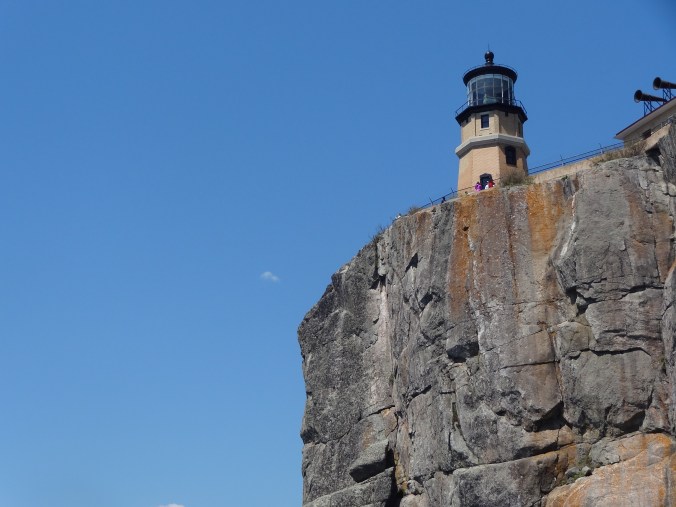
Coming around Split Rock Lighthouse. Not many people get to see the lighthouse from a mariner’s view.

DSC02310

A more classic view of the lighthouse.

DSC02322

People frolicing with gulls on an island off Silver Bay.

DSC02327

Piles of taconite pellets waiting to be shipped south to be made into steel.

DSC02333

The taconite plant in Silver Bay, although it looks more like a cloud factory. Perhaps it’s not beautiful, but it’s part of the cultural landscape of this area.

DSC02275

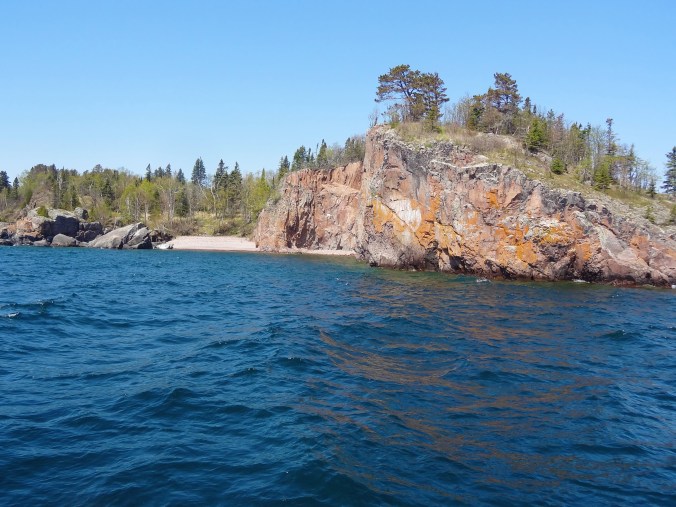
The rugged coastline of Lake Superior’s North Shore.


Hiking and Emoting for the Climate

ClimateWalkThis past weekend I joined about 175 other people in an event to raise awareness about climate change. If you’ve read my novel, “Plover Landing,” you know that climate disruption (as some are now calling it) is a topic addressed in it, and it’s a cause near and dear to me.

The event was held in a church near Duluth’s Lakewalk – a boardwalk that follows the shore of Lake Superior. Several speakers kicked things off inside the church, and it was interesting to see who the players are, and which politicians are devoted to this issue. It was also fun being with other people who have similar concerns. I’m not sure whether our message will reach from Duluth to the climate summit in Paris, but perhaps this blog will help!

After the talks, we hiked on the Lakewalk, along Lake Superior – one of the largest freshwater lakes in the world, but also one that is showing marked effects of climate change.

During the talks, which were heartfelt and inspiring, I found myself impatient with the lack of factual information in them. Speakers mentioned their observations of changes in behavior in animals and weather but admitted they didn’t know if it was directly due to climate change or not. They admitted knowing scientists they could ask about these things, but apparently, none of them did.

No one mentioned the impacts of climate change on the lake, facts which are readily available from local organizations, and I assume, was the reason the event was held on its shores.

I realized that listening to talks filled with too much emotion and few facts was as frustrating as the last climate event I attended — a talk by the state climatologist (see It’s Climate Change, Stupid!) where there were too many facts and not enough emotion.

Somewhere, there’s got to be a happy medium, but I haven’t heard a local speaker yet who is able to mix climate change facts and emotion in a compelling way. That needs to be done for this issue to reach the widest range of people, and to have an effect. And don’t you start looking at me (Smirk). Seriously, I’m a better writer than talker, and my way of contributing to the issue is through my novel (and this blog).

One of the best heart-twisting climate change stories I heard was from a bird biologist and author. She said that in her talks, she doesn’t even mention the term climate change, but she describes how winter thaws, which are becoming more frequent, can kill baby birds.

Gray_Jay_in_Late_Spring

Image of a gray jay by Zachaysan (Own work) [CC0], via Wikimedia Commons.

The species in question is the gray jay. These curious birds are a cousin of the blue jay, but don’t have the pointy head or the bright plumage. I’ve often seen them deep in the woods, where, with whisper-quiet wings, they like to follow hikers and campers. The biologist said that the birds hide small pieces of meat or berries under the bark of trees in winter as food caches for their babies, which hatch in late winter.

If there’s a mid-winter thaw, the food spoils. The parents can’t tell if it’s spoiled though, and when their babies hatch, they feed them the rotten food and the chicks die. The biologist teared up as she described it, and I almost stated bawling right during her talk, too. But then, I’m a bird person. Although we humans may rejoice in a winter thaw, such unusual events can mess up other species.

Not to dismiss the efforts and emotions of the people at my local climate event, but I came away from it thinking that we need more stories like the one about the gray jays – stories from people who know their facts but aren’t afraid to add emotions to them.

Bobcat Fog

Fog

Buddy and I went for a walk along the lake in the fog this evening. I love fog. It’s so . . . atmospheric. Makes you feel enveloped, safe in a wall of mist, moving mysterious through the world. Of course, Lake Superior was gray, too – water and sky indistinguishable, quiet.

As a fog-lover, I live in the right place. The dynamics of the lake and the hillside in Duluth make for a larger than usual number of foggy days.

During my walk, I was reminded of the Carl Sandburg poem about fog – how it comes in on little cat feet. He wrote that about Chicago – seeing fog in the harbor. But cat feet just don’t cut it for Duluth. Our far north fog is less domesticated, a bit more dangerous. If I were to write a haiku about fog in Duluth, I would describe the fog as coming in on bobcat feet.

“H is for Hawk” Book Review: The Value of Animals Apart from Us

A northern goshawk. Image by Norbert Kenntner.

A northern goshawk. Image by Norbert Kenntner.


I gave this memoir five out of five stars on Goodreads not because I agreed with everything in it but because I found it thought provoking and well written. It’s the story of Helen Macdonald, an Englishwoman who is dealing with the death of her father.

To help her get through her grief, Macdonald decides to train one of the most difficult of hawks: the goshawk. She names hers Mabel. She contrasts her experience with that of Terence White, author of the childhood classic, “Sword in the Stone,” and an avid falconer who wrote about his experience in “The Goshawk.” I listened to the audio version of the CD, read by the author in her classic British accent.

So many things to say. Where to begin? To start, it’s ironic that Macdonald chose to deal with death by training an avian killing machine. It’s kind of like dealing with a job loss by helping other people get fired from their jobs over and over again. But this technique worked for Macdonald, who wanted solace by forming an attachment to an animal, and by coming closer to the wild.

However, by the middle of the book, I found myself thinking how unfair it was to burden the bird with the owner’s grief and mental health issues – both for Macdonald’s and White’s goshawks. I mean, they are birds, not people. They are separate beings, but both authors are so caught up in themselves they don’t see this. It’s a lesson I learned years ago from living in the wilderness, and something I suspect most people, who are used to having animals around as pets or for food, don’t have an opportunity to realize.

Macdonald’s attitude of animals being defined in the world by the meanings given to them by humans came to light in a section where she attended an art exhibit about California condors. She says, “I think about what wild animals are in our imaginations and how they are disappearing, not just from the wild but from people’s everyday lives – replaced by images of themselves in print and on screen. The rarer they get, the fewer meanings animals can have. Eventually, rarity is all they are made of. The condor is an icon of extinction . . . How can you love something, how can you fight to protect it if all it means is loss?”

My argument is you fight for endangered animals because they have value apart from us. It’s perhaps the ultimate hubris to think the world revolves around us and our meanings. Most wild animals don’t need us to survive. In fact, they would probably do much better if humans were out of the picture. And why did the condor nearly go extinct in the first place? From human actions (poaching lead poisoning, etc.) It seem so unfair for humans to cause these problems and then to complain that thinking about these animals is depressing. What’s really depressing is what we do to some animals.

Toward the end of the book Macdonald finally realizes that people are more fitting agents for emotional support than animals. While animals provide great solace, they are no substitute for a pair of human arms around you. And she realizes that animals have intrinsic value apart from humans.

She writes, “Of all the lessons I’ve learned in my months with Mabel this is the greatest of all: that there is a world of things out there – rocks and trees, stones and grass, all the things that crawl and run and fly – they are all things in themselves. We make them sensible to us by giving them meanings that shore up our own views of the world.”

Right on. She says she learned with Mabel how to “feel more human once you have known, even in your imagination, what it is like to be not.” She could have ended the book there and I would have been happy but she continued on with White’s story, which at times, overshadowed her own. I could have done without much of the detail of his story and the book would have been stronger for it. I also found myself getting tired near the end from hearing mini dramas about how she was always losing her hawk. But I still gave it five stars, so it these things must not have bothered me too much!

One thing I thought was funny was how, once Macdonald started using antidepressants, she described the hawk as looking much happier, too. I think this was when she was still caught up in the hawk being an extension of herself.

And I was happy to see that Macdonald delved into the “conversation of death” described in Barry Lopez’s book, “Of Wolves and Men.” This is an exchange that happens between wolves and their prey that either triggers a chase or diffuses the hunt. If you’ve read my novel “Eye of the Wolf,” you know that I delved into it, too.

As I was thinking about writing this review, I came across a quote from Henry Beston (“The Outermost House”) that sums up my philosophy and what I think Macdonald was trying to say with her memoir well:

“We need another and a wiser and perhaps a more mystical concept of animals…. For the animal shall not be measured by man. In a world older and more complete than ours they move finished and complete, gifted with extensions of the senses we have lost or never attained, living by voices we shall never hear. They are not brethren, they are not underlings; they are other nations, caught with ourselves in the net of life and time, fellow prisoners of the splendour and travail of the earth.”

Agree? Disagree? Am I some psycho loony? (Smirk.)
Nantucket Sleigh Ride Via Loon

Loons dancing in the morning mist on Tuscarora Lake in the Boundary Waters Canoe Area Wilderness. (Photo taken by me in the mid-1980s.)

Loons dancing in the morning mist on Tuscarora Lake in the Boundary Waters Canoe Area Wilderness. (Photo taken by me in the mid-1980s.)

Strange things happen sometimes in the Northwoods – this land where humans and animals live so near each other. When I was young (8? 9?) my family went fishing on a lake north of Duluth. While casting our lines, we noticed a loon swimming nearby, calling in an unusual manner. As outdoorsy types, we had heard many loons before, but this one sounded more plaintive than normal, like it was in distress.

The loon kept circling — swimming near us, which was also odd for this rather stand-offish species. My dad said something like, “I think that loon needs help,” so we canoed toward it. Soon we saw the problem. A homemade fishing pole crafted from a large branch trailed about fifteen feet behind the bird. My dad grabbed the pole, thinking he could just pull the loon toward us and find where the fishing hook was lodged in it.

Ha! He underestimated the power of the loon. Upon feeling the tug of the line, the loon took off and dove underwater. My dad kept his grip on the pole, and the loon proceeded to pull our canoe (and the three or four of us in it) through the water at a good clip.

Now, a Nantucket sleigh ride is what used to happen to whalers after they harpooned a whale. The whale would take off, towing the whaling boat and its occupants through the sea until the whale tired and surfaced. That’s what was happening to us, only our whale was a loon.

Soon the loon tired and my dad was able to pull it close enough to capture in his gloved hands. This in itself was a feat of daring. Adult loons are about the size of a goose, and their bills are long and sharp.

After my dad wrestled it onto his lap, we discovered the hook embedded in the bird’s neck. Imagine — all that force from our lake sleigh ride concentrated on such a fragile body part. But that hadn’t stopped the loon.

My brother handed my dad the pliers and he was able to remove the hook. We released the loon back into its watery home. As the loon departed, its call was different. Happier.

Was it saying thank you? I’d like to think so.

Jersey Shore Sojourn

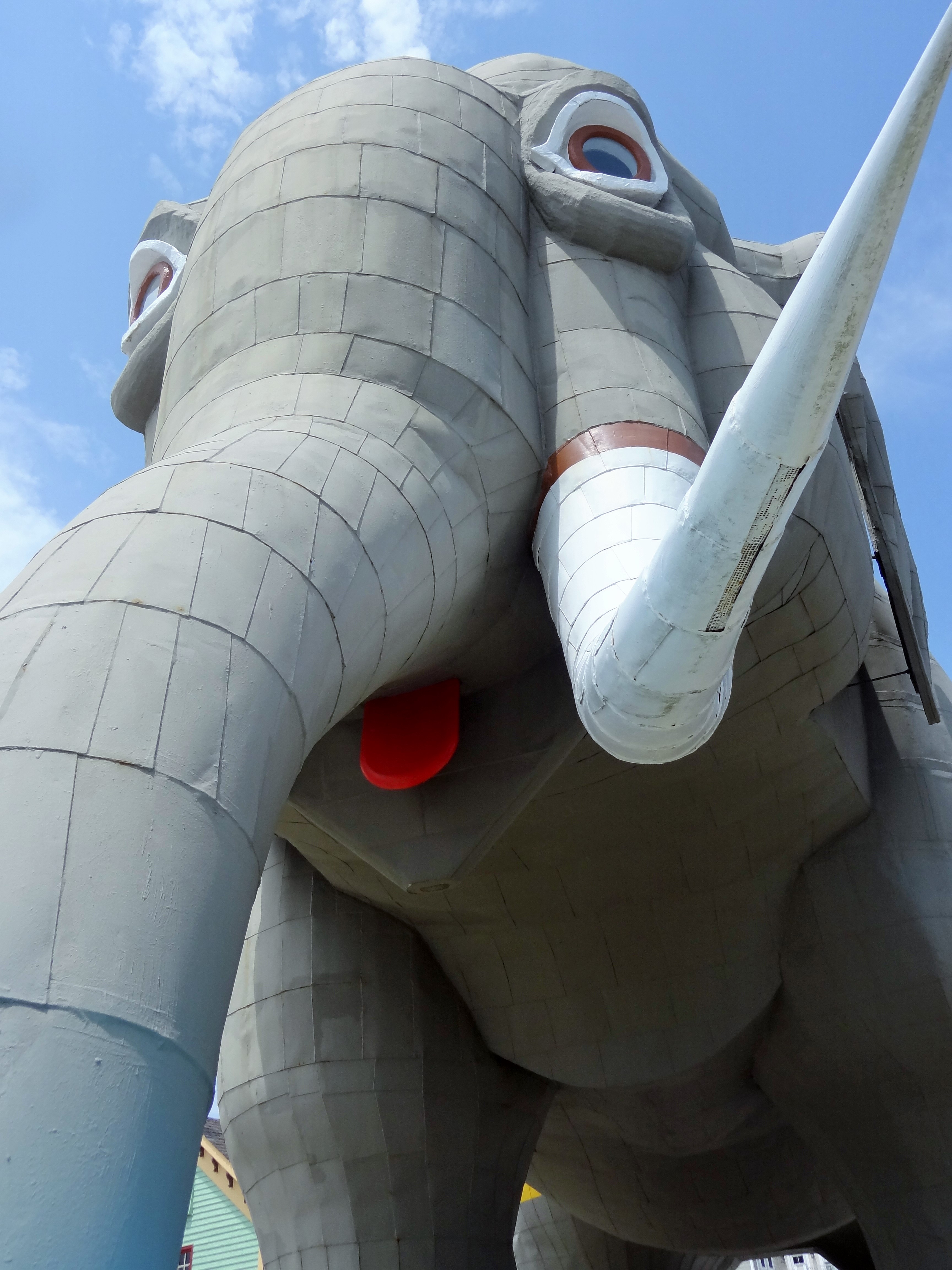
Did you know that the United States has a national historic elephant landmark? It's in New Jersey, and her name is Lucy.

Did you know that the United States has a national historic elephant landmark? It’s in New Jersey, and her name is Lucy.

My impression of New Jersey turned inside out last week when I traveled there. Before that, my main experience with the state was gained through several extended stays in the Newark Airport (one overnight on a hard plastic chair) and from brief, accidental, distasteful viewings of the “Jersey Shore” TV show.

What I learned:

Hydrangeas are my new favorite flower. Two varieties are pictured here.

Hydrangeas are my new favorite flower. Two varieties are pictured here.

  • New Jersey is not an industry-strewn state. Nature abounds in the pine barrens, designated natural areas, wildlife sanctuaries, and even in the tangle of forest along the highway.
  • Hydrangeas are obviously New Jersey residents’ favorite flowers.
  • It can get hot there! My Minnesota blood was thinned by the 80- to 90-degree days. There’s even a native cactus.
  • Drivers are not allowed to pump their own gas at service stations according to state law.
  • Liquor is sold as “packaged goods” (which provides easy fodder for jokes among the dirty-minded).
  • The state is home to Lucy, a human-made, six-story elephant that serves as a national historic landmark.
  • Palm trees can grow in New Jersey. Although they are not native, certain species can survive, providing the last word in tropical ambiance for its beach-going residents.
  • Beach culture is alive and well on the Jersey Shore. Several times I had to shake myself and remember I wasn’t in California.
  • Although people can be crass by Minnesota standards, at least one person in New Jersey was pretty darn nice (ahem).
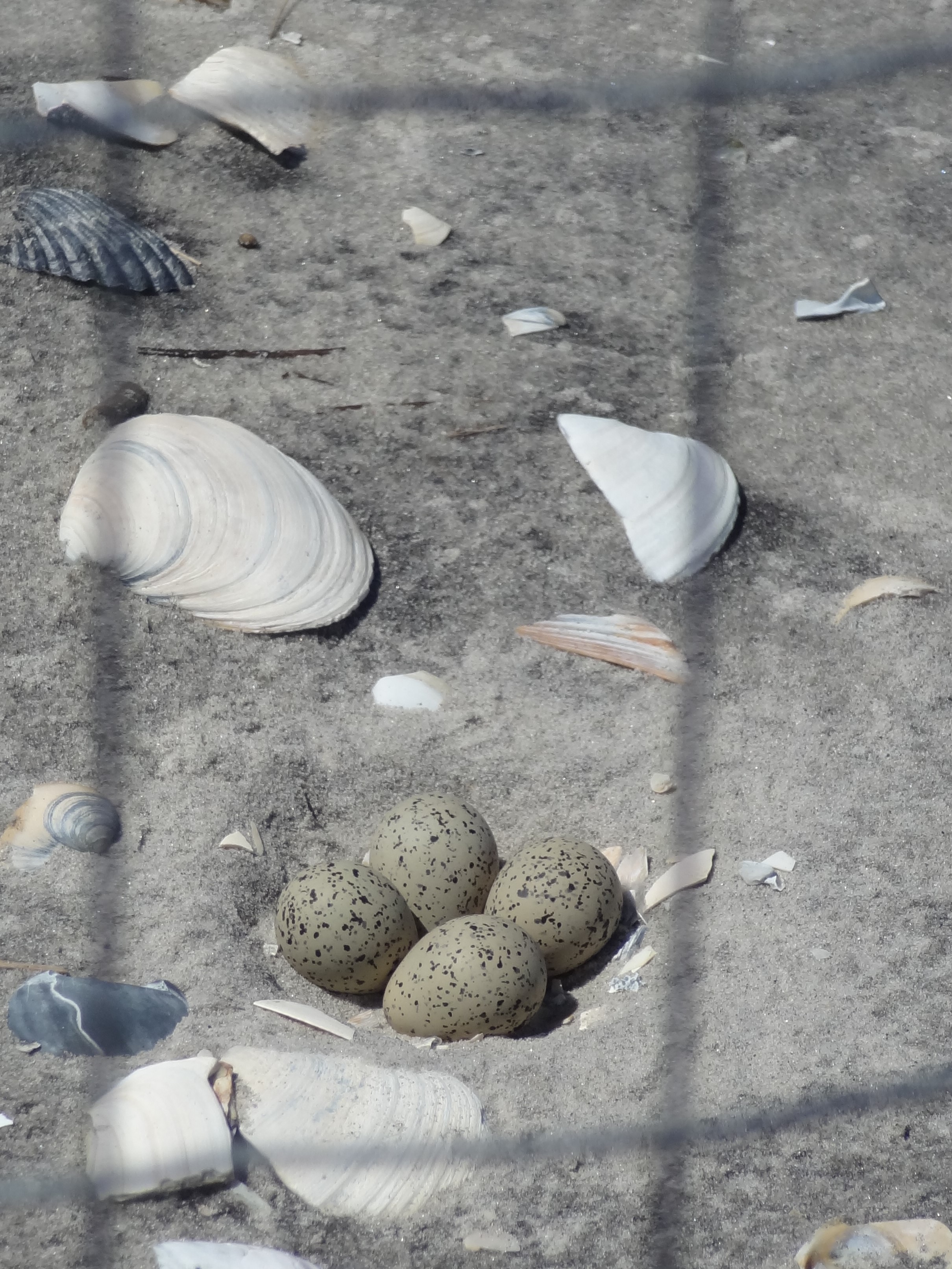
A clutch of four piping plover eggs seen through the fence that protects the nest.

A clutch of four piping plover eggs seen through the fence that protects the nest.

The highlight of the trip for a piping plover novelist like myself, was seeing plover nests, chicks, and adults. While my home of northern Minnesota hardly has any, the beaches of New Jersey are home to about 100 pairs of breeding plovers. These endangered shorebirds (reminiscent in looks to a killdeer, but much cuter) are monitored and protected by the New Jersey Division of Fish and Wildlife and conservation groups like Conserve Wildlife Foundation of New Jersey.

I also saw frolicking dolphins, horseshoe crabs, diamondback terrapin turtles returning to the sea from laying eggs, and bunches of other birds unusual to me.

If you ever get a chance to visit the Jersey Shore, don’t be scared off by its television-show namesake!

Why did the terrapin cross the road? To lay its eggs, of course! Here's one on her way back to sea.

Why did the terrapin cross the road? To lay its eggs, of course! Here’s one on her way back to sea.