AI and Winter

He who marvels at the beauty of the world in summer will find equal cause for wonder and admiration in winter. — John Burroughs

I’ve been circling artificial intelligence for a while now, like it’s a dangerous wounded animal. When AI results first showed up for my Google searches, they were pretty bad. But I’ve got to admit, the responses to my esoteric search queries (like “Literary quotes about Minnesota winters”) have gotten better lately. I guess the beast is learning.

Some high school students recently asked me if I used AI in my writing. I told them that I don’t, and that I can tell when blog posts are created with AI because the writing is generic. However, I admitted that I have considered using AI to generate ideas.

Today, I took the plunge on the idea front because I didn’t have a good winter quote already in my head. I typed in that search term above about Minnesota winters. This came back: While there might not be a specific literary quote explicitly mentioning “Minnesota winter,” quotes that capture the essence of a harsh, snowy, and solitary winter landscape could be applied to a Minnesota winter experience.

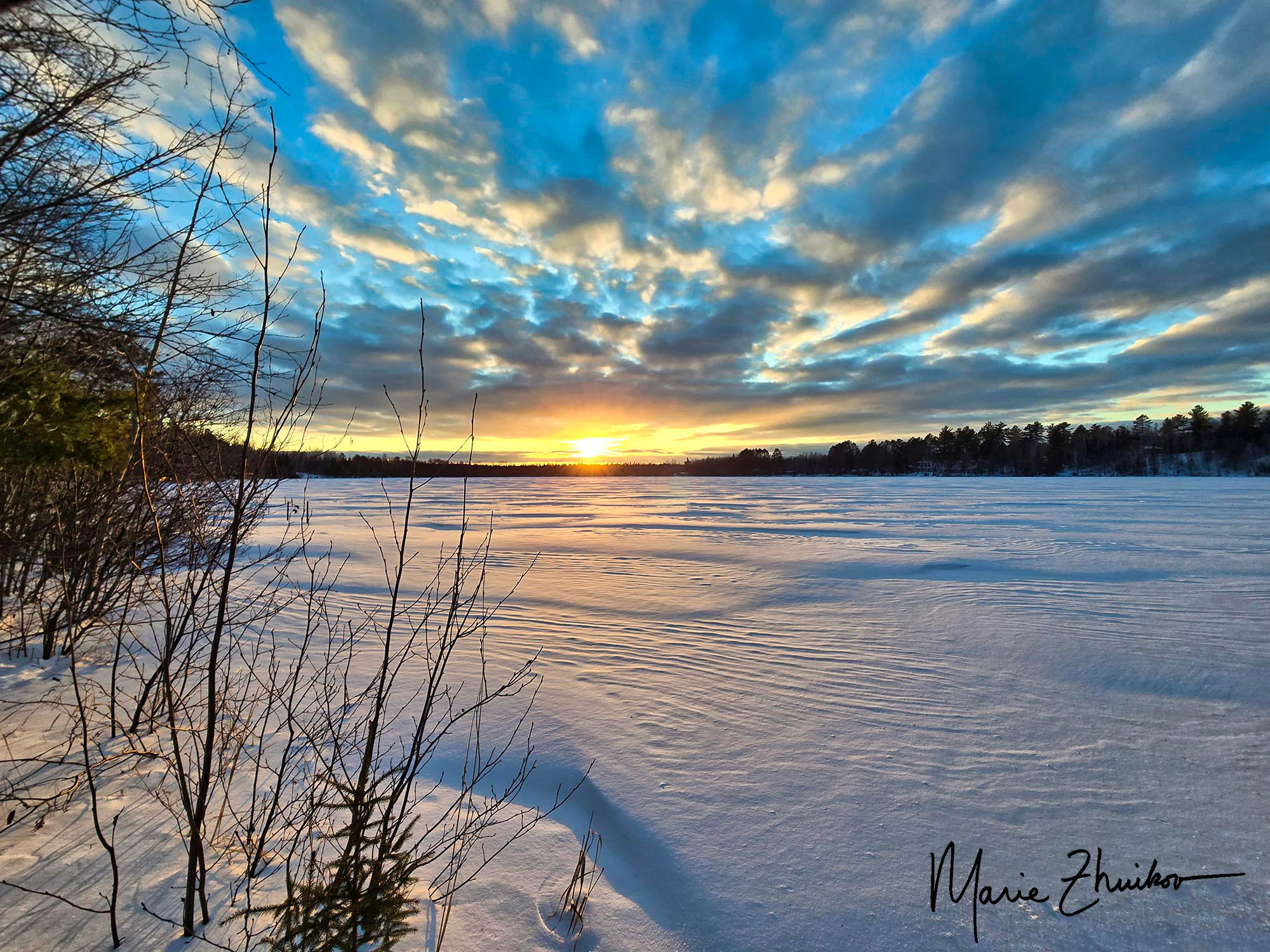
In the spirit of full disclosure, one of the quotes from my search is at the beginning of this post. Maybe AI isn’t so bad? And while I’m disclosing everything right now, I might as well say that my photo editing software uses AI to enhance images. I used it on the images that accompany this post, except for the bottom one. The photography teacher who introduced me to this software said that cameras can’t capture everything our eyes see. The editing software brings the photos closer to that ideal. I admit to loving the subtle changes the software makes to the original image. I’m not going to disclose what that software is here, however. I need to keep some secrets to myself. 😊

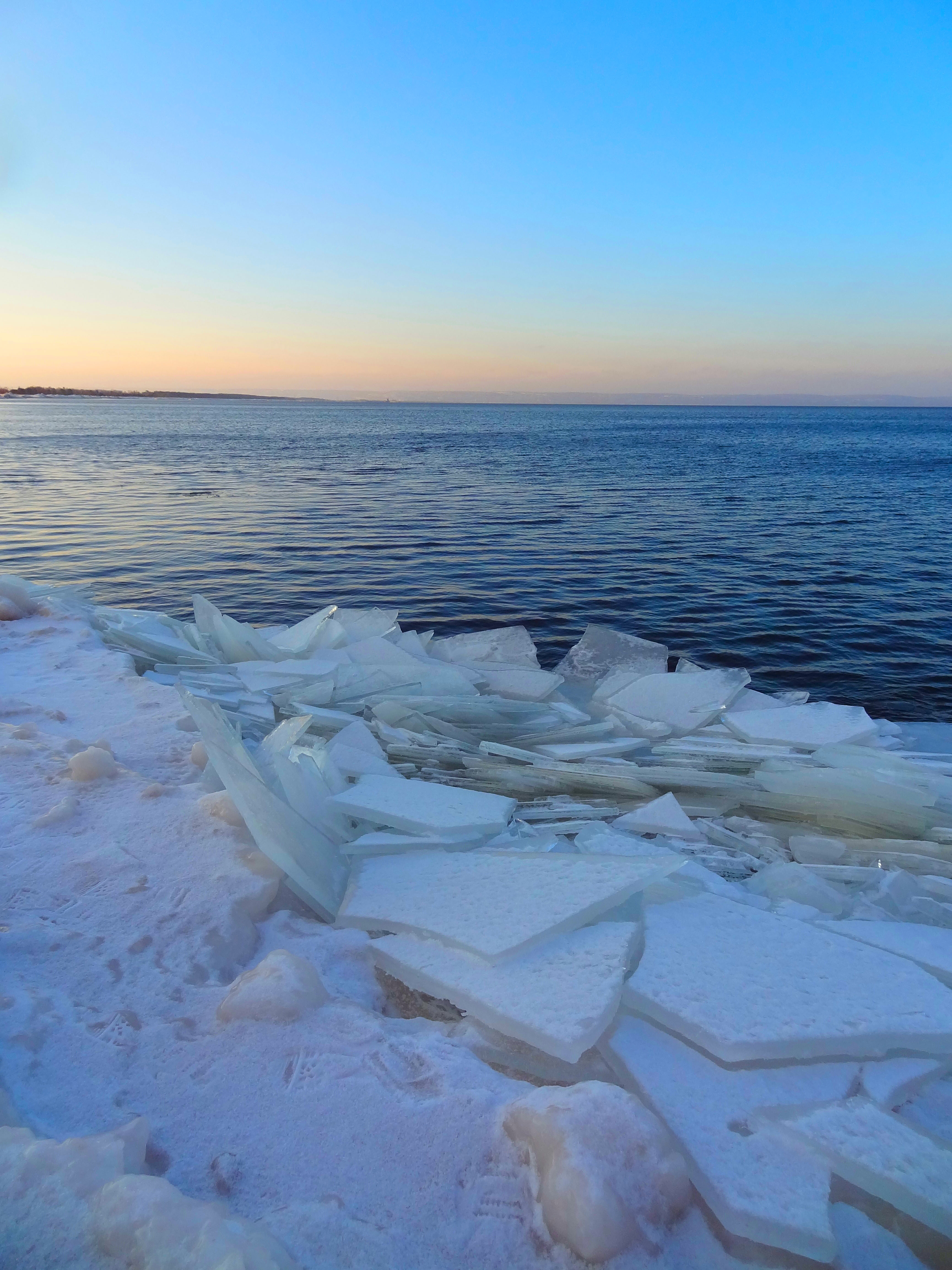
But I don’t want this post to be about AI. I want it to be about winter. I took these photos at our cabin, which is on a small lake in northern Minnesota. The sun was setting as Russ and I cooked dinner. As with this summer sunset from a few years ago, I had to neglect cooking duties to run outside and capture the light before it disappeared. Luckily, earlier in the day we’d gone snowshoeing and had packed a path down to the lake through the deep snow. I was able to pop on my Sorrels and jog through the cold to the frozen lakeshore with ease.

As I snapped a few photos, I marveled at the still, white landscape and the way the sun tinged the small ridges of snow collected on the lake a dull orange. My camera couldn’t capture those ridge colors very well, but AI helped bring them out a bit.

Normally, we’d be travelling somewhere beachy and warm this time of year to soak up the sun and Vitamin D. We decided not to do that this winter because I am . . . drumroll . . . retiring this spring. I only have two-and-a-half weeks of workdays left! I have too many projects to wrap up before then for a vacation. We are saving our beachy-warm trip for this May.

It’s been good, so far, to stick out the winter here this year. We’ve ridden the temperature swings, complained with our neighbors about the cold, shoveled roughly a ton of snow off our cabin deck, and gotten out cross-country skiing for the first time since the winter of 2022-23. (The snow conditions were too poor after that.) Besides, if we travelled to where the temperature is eighty degrees, we’d have to worry about sunburning our Minnesota-white skin, and then reacclimatizing once we got off the plane. I have not-so-fond memories of walking to our car in the Minneapolis airport parking lot without winter coats or gloves in minus-ten-below temps, since we left our winter outerwear in the car.

To sum it all up: I’m enjoying winter in Minnesota, and I’ve prodded the AI beast. Maybe it’s friendly?

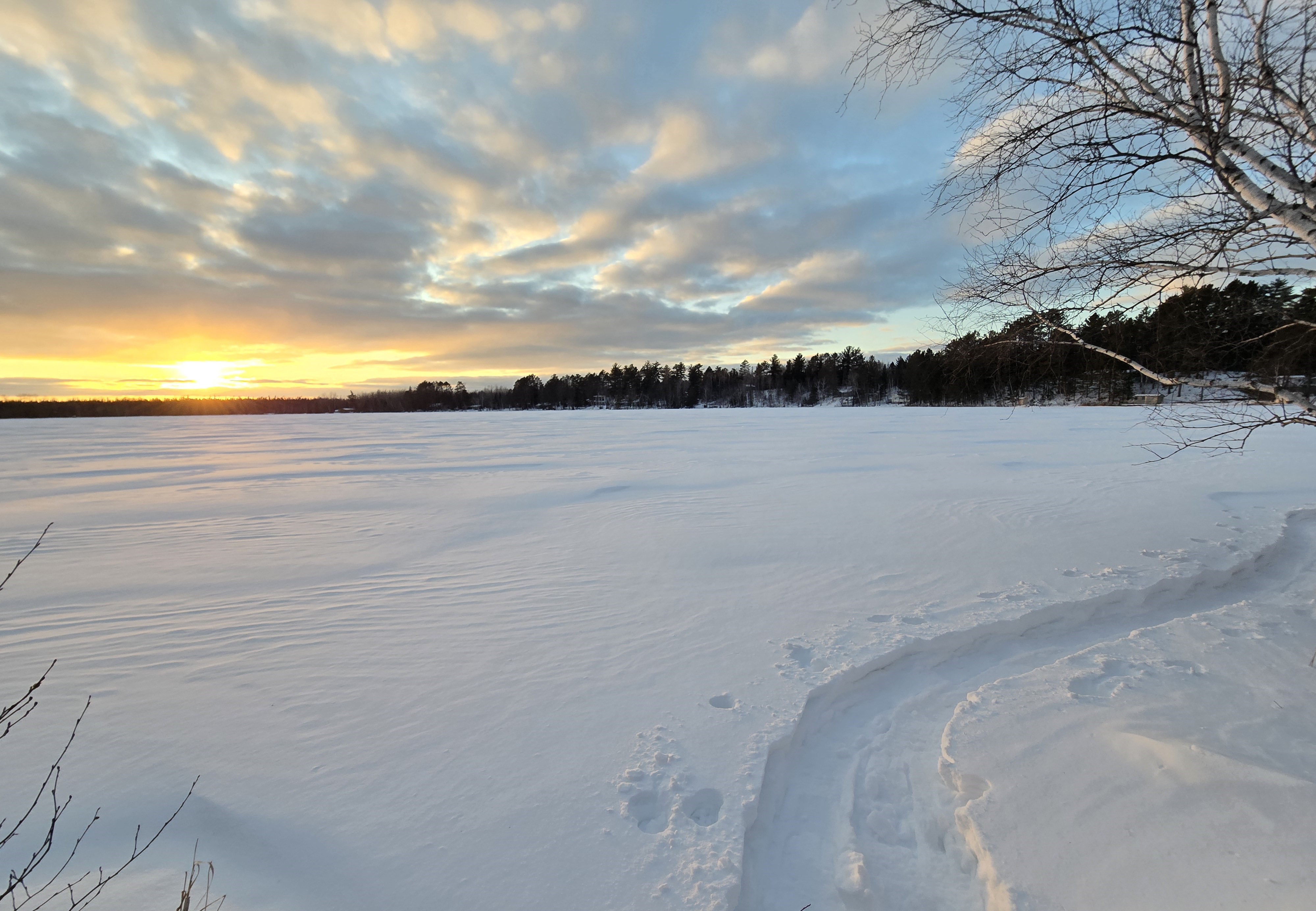
Our lake and snowshoe path. This photo was not edited using AI. Maybe you can tell that it’s not quite as sharp as the others in this post.

The Top Meanders of 2024

Putting the “Happy” Back into New Years

Twenty twenty-four began with a bang on my blog. One of my first posts of the year was its most popular. It dealt with the death of my sister many years ago during New Years and the effect it had on me and my family. I wrote it as a guest post for the Happiness Between Tails blog. (Thanks again, da-Al!) I plan to raise yet another toast to my sister this New Years.

The Minute Men and the Minister

Second-most-popular was this post about my New England colonial ancestors. I found out rather by happenstance that they founded two towns (one in Massachusetts and one in Canda) and that two statues have been erected in their memory. Also, one penned the famous words: a government of the people, by the people and for the people. All this while I was actually looking for something else! I’m not sure why this post is so popular; perhaps because it deals with some American icons.

If I Were a Real Photographer

I still utter this phrase more often than I would like. Because I remain tied to the workaday world, I cannot run off, camera in hand, to pursue the glorious shots I know that are out there. My retirement is looming, however. This spring, I hope to say that phrase a lot less often, and to have the photos to show for it.

Thank you, dear readers, for following my meanderings through Ireland, Scotland, Georgia, Wisconsin, and Minnesota this year, as well as those more internal meanderings. I wish you a good end to the year and an even better 2025!

That Time I Lost a Canoe in the Wilderness

Me and my boys in our Old Town canoe, Clearwater Lake. Photo by Sharon Moen.

It was August 2003 and my friend Sharon and I decided it would be fun to do a mother/children canoe trip in Minnesota’s Boundary Waters Canoe Area Wilderness. At the time, my boys Hunter (4 yrs) and Logan (11 yrs) had been camping but I don’t think they’d been in the wilderness yet.

We planned to stay on Clearwater Lake, which I became familiar with years ago when I was a volunteer wilderness trail crew member for the Forest Service. I had fond memories of the clear water and impressive rock ledges on the campsites there. I used to work for the Forest Service and had been in the wilderness many times, so I was quite comfortable taking my children there in our red Old Town canoe without their dad.

Marie, Hunter, and Logan. Photo by Sharon Moen

Sharon brought along her two girls, Sierra and Savannah, and their dog. I can’t recall exactly how many days we camped – maybe two or three. The weather was great, and the water was warm enough for swimming. A submerged log lay not far offshore from our campsite and provided endless hours of entertainment for our children as they swam. They could stand and bounce on it, which made it seem like a wilderness theme park ride. A downed tree near our campsite also fascinated them.

Marie camp cooking. Photo by Sharon Moen

We spent evenings around the fire regaling each other with tales of our wilderness exploits and prowess. One afternoon, we decided to canoe to a campsite farther down the lake that I recalled was a good fishing spot. A large rock ledge with a deep drop off was also the perfect place for a picnic lunch. We beached our canoes on the small sandy beach at the empty campsite and the festivities commenced.

Sharon about to help Logan unhook his fish.

Later, Logan caught a fish. As Sharon was trying to unhook it for him, the hook went into her finger. I performed minor surgery to get the hook out and all was well. That was, until I noticed a red canoe floating across the lake.

“Huh, that canoe looks the same as mine,” I said to Sharon.

She looked at the beach where her canoe sat all by itself. “That IS your canoe!” she said.

What I, Miss Wilderness Expert, didn’t count on was the wind switching. Part of my canoe had still been in the water, enough so that it floated away.

I panicked. Losing a canoe in the wilderness is like losing your car in the city; maybe worse than losing your car because there’s no public transportation in the wilderness. I was ready to swim out and grab it. I’m not sure why I didn’t think of paddling to it in Sharon’s canoe with one of my children and having them hold onto the canoe so we could tow it back. Anyway, swimming was what made sense at the time. And time was of the essence before the canoe drifted farther away.

I was ready to jump into the lake when a couple in a motorboat happened by. Although motors are not allowed in most of the wilderness, there are a few lakes like Clearwater where they are allowed. I think it’s because there’s a resort on this lake.

“That your canoe?” One of them asked. When we responded in the affirmative, they followed up with: “Want us to get it?”

That earned an enthusiastic “Yes, please!”

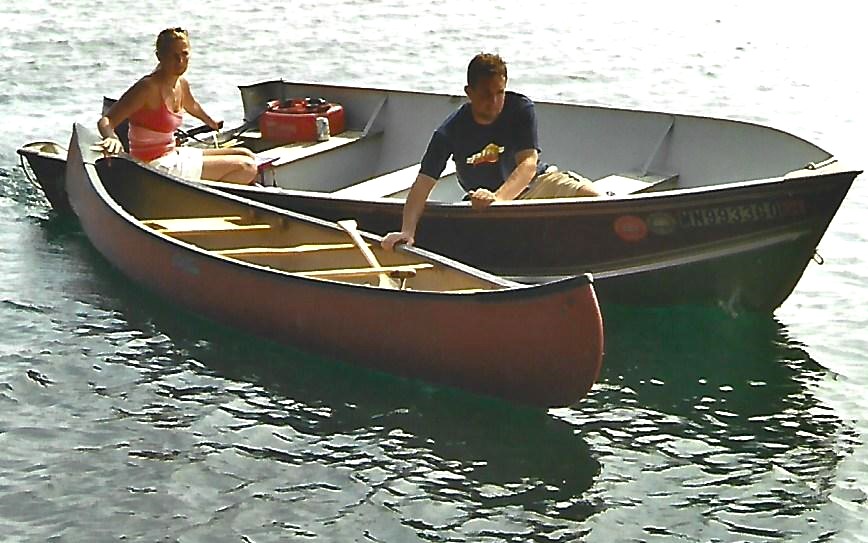
Helpful motorboaters return my canoe. Photo by Sharon Moen

They grabbed the canoe, no problem, and brought it back to us. We thanked them profusely and I made sure that sucker was totally out of the water when I beached it this time.

Over the years, Sharon has made sure I don’t forget this incident. We trotted it out just last week when having lunch with a new coworker who wanted to know how long we’d been friends.

Although it was incredibly embarrassing at the time, losing my canoe was a good lesson about not getting too complacent in the wilderness or in life. You never know when the wind might switch.

The whole crew.

End of Season Paddle

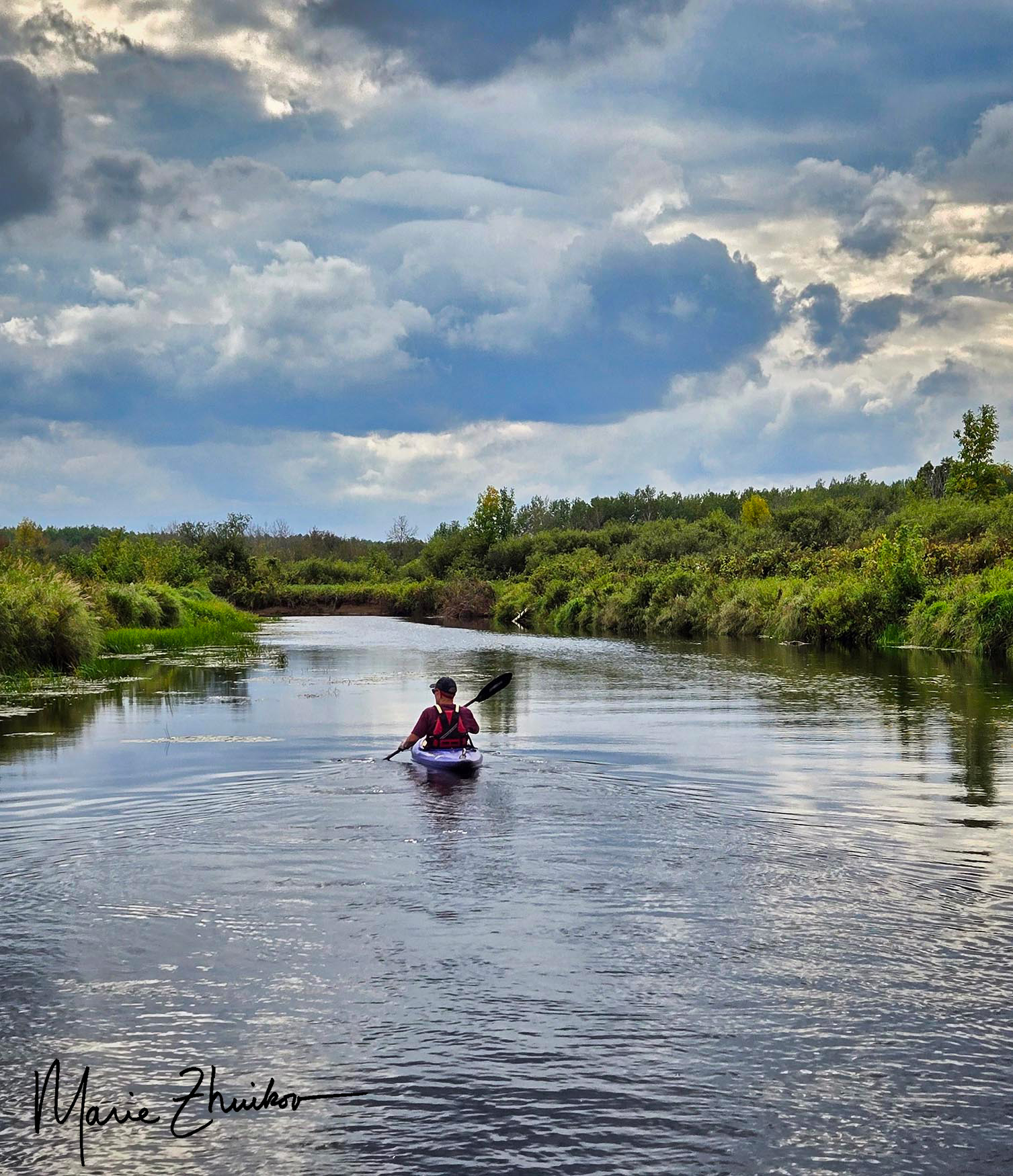
Russ and I took our kayak and paddleboard to a river near our cabin in northern Minnesota. We’d been on this stretch once before in a canoe. It was so calm, I vowed to return with my paddleboard some day. This was that day.

The fall colors were turning but not quite at their peak. We’ve had an usually warm fall and this day was no exception.

We paddled past beaver homes, some derelict, some not so derelict. Three Canada geese, disturbed by our approach, flew downriver to escape us several times. Fluffy white down feathers littered the backwaters where they must have spent the night.

Rain threatened, but never fell. After an hour paddling, we turned around to head back to the landing. We were going with the current this time, so the return trip was faster. My legs were quaking with fatigue when we reached the end of this long, end of season paddle. But my heart sang.

Sapelo Island Salt Marsh

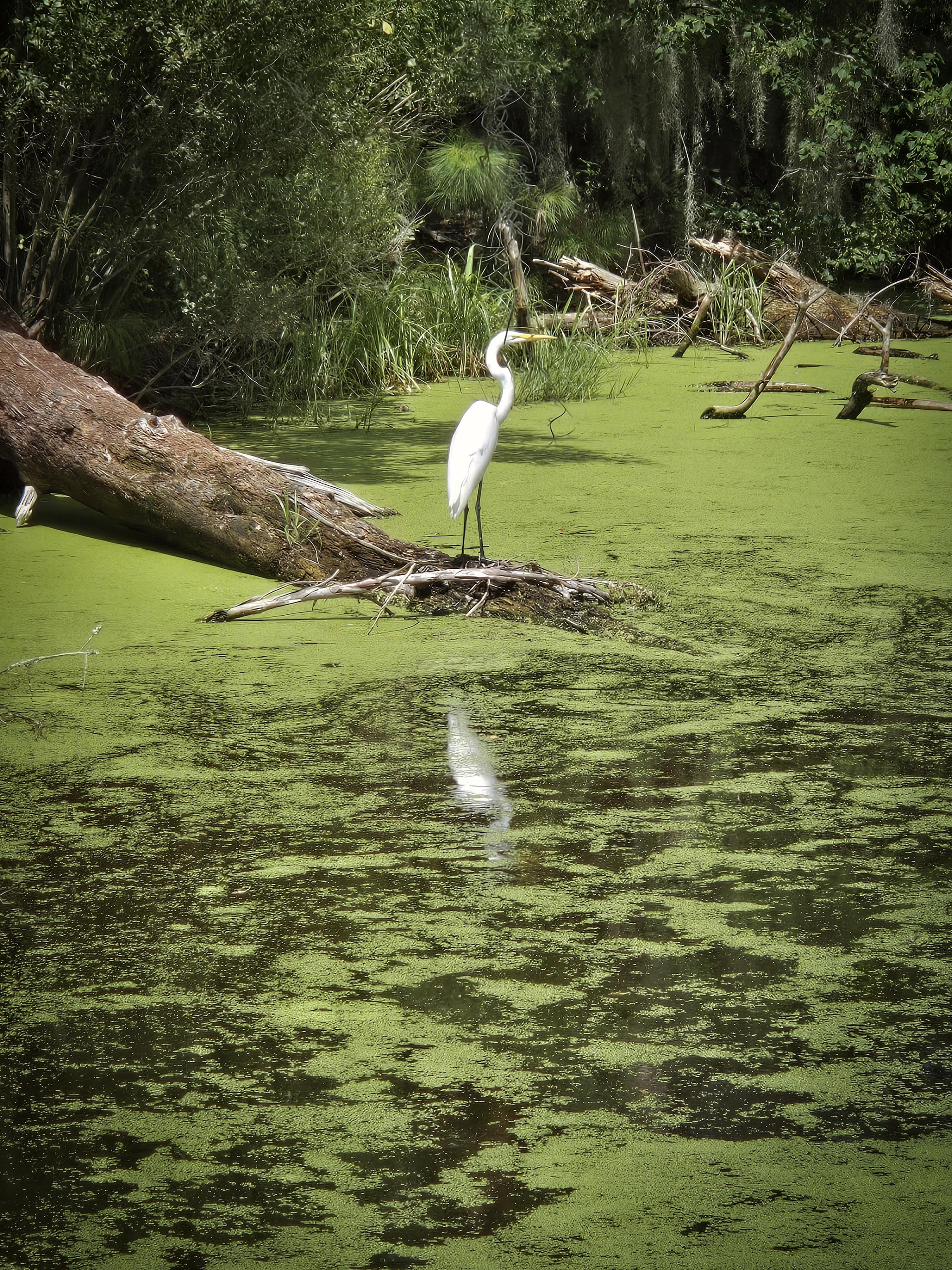
Lime-green trees, water weeds
surround the marble-white egret.
Chocolate-brown muck lines the shore.
The sun glows like a lighthouse.

The bird hunches
springs
off the log
hot, humid
into flight.

This bird eats gray fish, brown bugs,
tiny translucent shrimp.
How does it grow them into
the snowy feathers
of an angel?

Listening to the Savannah River

The Savannah River spoke to me as I walked its banks at night. Stark white and neon purple lights reflected across its surface, and it whispered, “I’ve been widened, deepened, and dirtied. Cargo ships ply through me. Tourists in paddlewheel boats churn atop me. Factories have dumped their pollution in me. I am ancient, older than those who use me. Once you are gone, I will remain. I will become whole again.”

Two Nature Encounters

Painted turtle photo by Andrew Patrick on Pexels.com

I usually take two walks every day. Recently, on one of my walks, I saw a painted turtle crossing the gravel road. It was headed in the direction of a small lake and had already made it across most of the road. But was now it had stopped. I worried it might get run over by an inattentive driver. I was tempted to pick it up and move it in the direction it was traveling, yet didn’t want to overly disturb it.

Luckily, as I stood behind the turtle, pondering, it began to move closer to the road’s edge. I slowly stepped forward and kept encouraging it to move in this way until I was sure it would be safe.

I wondered whether it was a late hibernator emerging from an inland pond or if it had laid its eggs somewhere and was now making its way back to the lake. I often see multiple painted turtles hanging out on a log at the end of the lake or swimming with their noses just above the water on quiet evenings.

After I walked a few more yards, a drizzle began. Then the drizzle became a shower. I wasn’t wearing a raincoat, so I cut my walk short and began quick-stepping my way back home. About a hundred yards past the first turtle, I saw another one that was almost the entire way across the road. It was moving quickly, so I didn’t worry about it like I had the first turtle.

Curious at seeing the two turtles crossing the road at nearly the same time, once back inside, I searched online for a possible explanation. Google said: “Every year, in mid to late spring, turtles start to move. The males are looking for partners and the females are looking for a good place to make a nest for their eggs. Unfortunately, for a lot of them, this means crossing busy roads and many don’t make it.”

In addition, Mississippi State University said that in the South, a legend says that rain is on the way any time you see a turtle cross the road. They continue, “There’s very little truth to this myth, even though it does seem like rain is in the forecast after we see one of these creatures slowly making its way across the street.”

Given my experience that day, I’m inclined to believe this legend!

Then I looked up the spiritual meaning of a turtle crossing your path. Google said it’s a sign of good fortune to come. Turtles are also omens of good health and symbolize a long, prosperous life.

If that ends up true, I’ll let you know in about thirty years.

My second wildlife encounter happened the next day. The moment I stepped out the door for another walk, I felt something land in my hair. I thought it was a bug and tried to brush it away. Out fell a five-inch black feather!

I looked around but whatever bird had lost the feather was long gone. However, a crow sat in a tree not far away. The feather certainly looked like it could be a crow feather.

While I’ve come across feathers on the ground before, I’ve never had one actually fall on me. The event was rather surprising and noteworthy (thus this blog post).

The feather that fell on my head.

I seemed to be a roll with interesting animal encounters. Once again, I consulted the wise and wonderous internet for interpretation. I searched for “meaning of crow feather falling on your head.”

Nothing came up under that specific heading, but there were lots of entries about the “meaning of coming across a crow feather in your path.”

Apparently, like with the turtles, this is a good omen. A woo-woo yoga site said, “When a crow feather lands at your feet, it is a positive omen, meaning your calls have been heard and answered. If a feather comes to your path magically or surprisingly, it means a spirit is supporting or guiding you.”

Since the feather fell on my head, I must really be protected and supported!

Another site said it can also signify a visitation by a male loved one who has passed.

For several months, I have been working on a nonfiction story about a male relative. Although I was not born when he died (tragically and suddenly), I’ve found myself wondering if I haven’t conjured up his ghost with all my recent attention.

If he is watching over me, I’m okay with that. He was a good guy and I wish I would have had a chance to know him. Even if he’s not, these natural encounters have been interesting.

When I told Russ about the mysterious crow feather atop my head, he said, “At least it was a feather and not something else that birds usually let drop!” That’s my guy.

I think I’ll take another walk and see what happens next.

Northern Nights and Lights

Thanks to a gargantuan sunspot group 15 times the size of Earth, we on Earth in northern climes were treated to a spectacular aurora borealis display last night.

The evening began with a thunder shower, which led to a picturesque sunset, which was capped off by the northern lights display.

I ran around with my camera, documenting everything at our cabin in northern Minnesota. I had tried before to photograph the sky at night with little luck. But this time, it worked! My camera captured even more colors than were visible to the “naked” eye.

As I wandered on gravel roads in the middle of nowhere with eyes raised to the eternal mystery of the dancing sky, our resident loons began to call. Spring peepers croaked and a distant train whistle blew. We are so fortunate to live in these times, in this place.

Spring and Newton’s Apple Tree

I traveled to Madison, Wisconsin, this week for a water symposium on the university campus. As I walked back to my hotel from the event, I passed the university’s botany garden. On a whim, I meandered off course a few steps and entered.

Although it was too early in the season for everything to be blooming, enough flowers were showing to keep me moving through. Sculptures with botany themes were scattered throughout the small but pretty garden.

One plant and plaque stopped me in my tracks: a picturesque apple tree surrounded by a fence. The tree sported white blossoms and looked older than its 23 Years. Reading the sign, I learned that the tree, planted in 2001, is a direct descendant of the original tree that bore the fruit which inspired Sir Isaac Newton’s Theory of Gravitational Forces.

Huh. I always assumed that the whole apple falling on Newton’s head thing was a myth. But now here was living proof that the tree from which said apple fell not only could be identified, but its offspring was living in Madison!

The plaque said the original “Newton Apple Tree” grows on the grounds of the National Institute of Standards and Technology. But that institute is in the United States (in Maryland). I thought Newton made his discovery in England.

So, in writing this post, I did some digging. The institute tree the Madison tree is grafted from was a clone. Alas, the clone fell over and died about a year ago “due to unknown reasons” according to Wikipedia.

Tulips and a crabapple tree were in bloom in UW-Madison’s Botany Garden. The person in the image is taking a picture of the tulips from below.

The actual original Newton tree grew in the 1600s on the grounds of the English manor where Newton was raised. The Woolsthrope Manor tree has died, but its descendants and clones live on at the manor and many other places around the world.

The story of the apple inspiring Newton’s theory gained public visibility when Newton’s niece related it to Voltaire, who included it in an essay. The apple, however, did not fall on Newton’s head. That is a silly myth.

The Madison tree was planted in honor of F. James Sensenbrenner, chair of the U.S. House of Representatives Committee on Science (1995-2000). Sensenbrenner was a Republican congressman from Wisconsin and a graduate of UW-Madison. From the plaque text, it sounds like Sensenbrenner presented the tree to the university himself in hopes that “the fruit of this descendant inspires others to partake in scientific discovery.” This strikes me as rather self-aggrandizing, but it was a nice gesture, no doubt accompanied by some additional funds.

As if having a copy of the Newton tree isn’t enough, the UW-Madison Botany Garden was the first in the world to be based on the new Angiosperm Phylogeny Group system of molecular classification of plants. I don’t really know what that means but if you visit the garden’s webpage, there’s a chart about that.

As I continued my walk through the garden, I envied the Madisonians their warm breezes and blooms. In northern Minnesota, our daffodils are just beginning to show. It will take us about three weeks to catch up to the plants in Madison. Sigh. But this way, lucky me experiences two blooming seasons and that’s just fine.

I exited the garden, glad for my little educational and botanical detour and that I’d have something to share with you. And now you know more than you probably ever wanted about Newton’s apple tree!