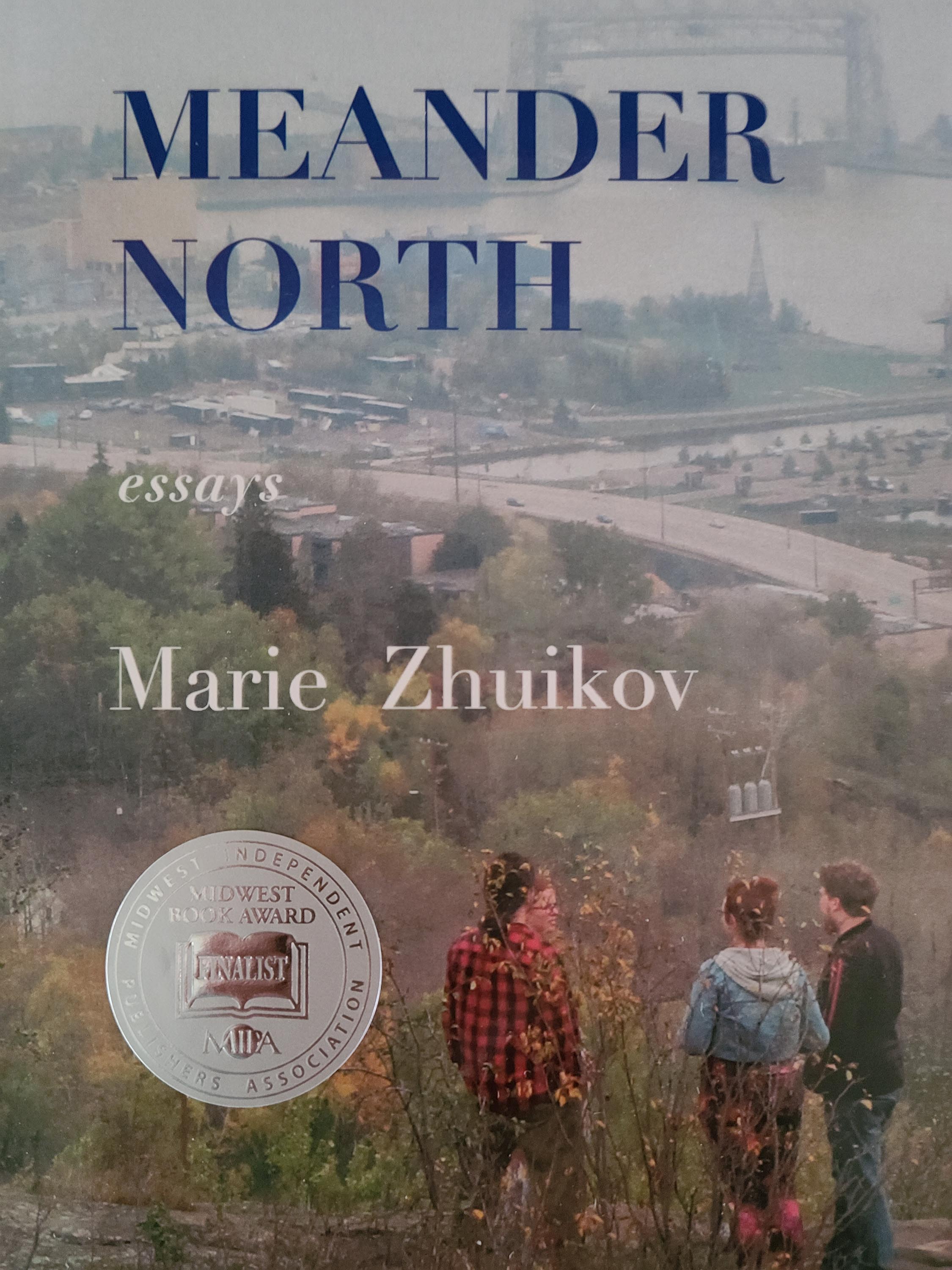
Meander North E-Book Available

I made my Minnesota-themed blog-memoir, “Meander North,” which features essays from this very blog, into an e-book. My publisher didn’t offer that service, so I did it myself over holiday break. It took quite a while because of formatting issues. I grumbled, but I did it!

It’s now available on Kobo, Barnes and Noble, and Amazon. It sells for about half the price of the print version. But if you’re a fan of print books, that’s still available, too, through distributor Itasca Books.

If you like this blog, you’ll love the book. It earned a Midwest Independent Publishing Association book award last year for nature writing, so it’s not just me saying that it’s good. It’s all your favorite posts gathered into one place.

Thank you for reading and thanks for your support!

Marie Goes Wild Ricing

Me, happily ricing, unaware of what lies ahead. Image credit: Wisconsin Sea Grant

I had a chance to harvest wild rice in the St. Louis River near Duluth recently for work. It wasn’t the first time I’d been ricing, but it’s the most memorable.

You can read about my little adventure on the Wisconsin Sea Grant blog through this link. Enjoy, and happy meandering!

Learning About Bears in the Apostle Islands

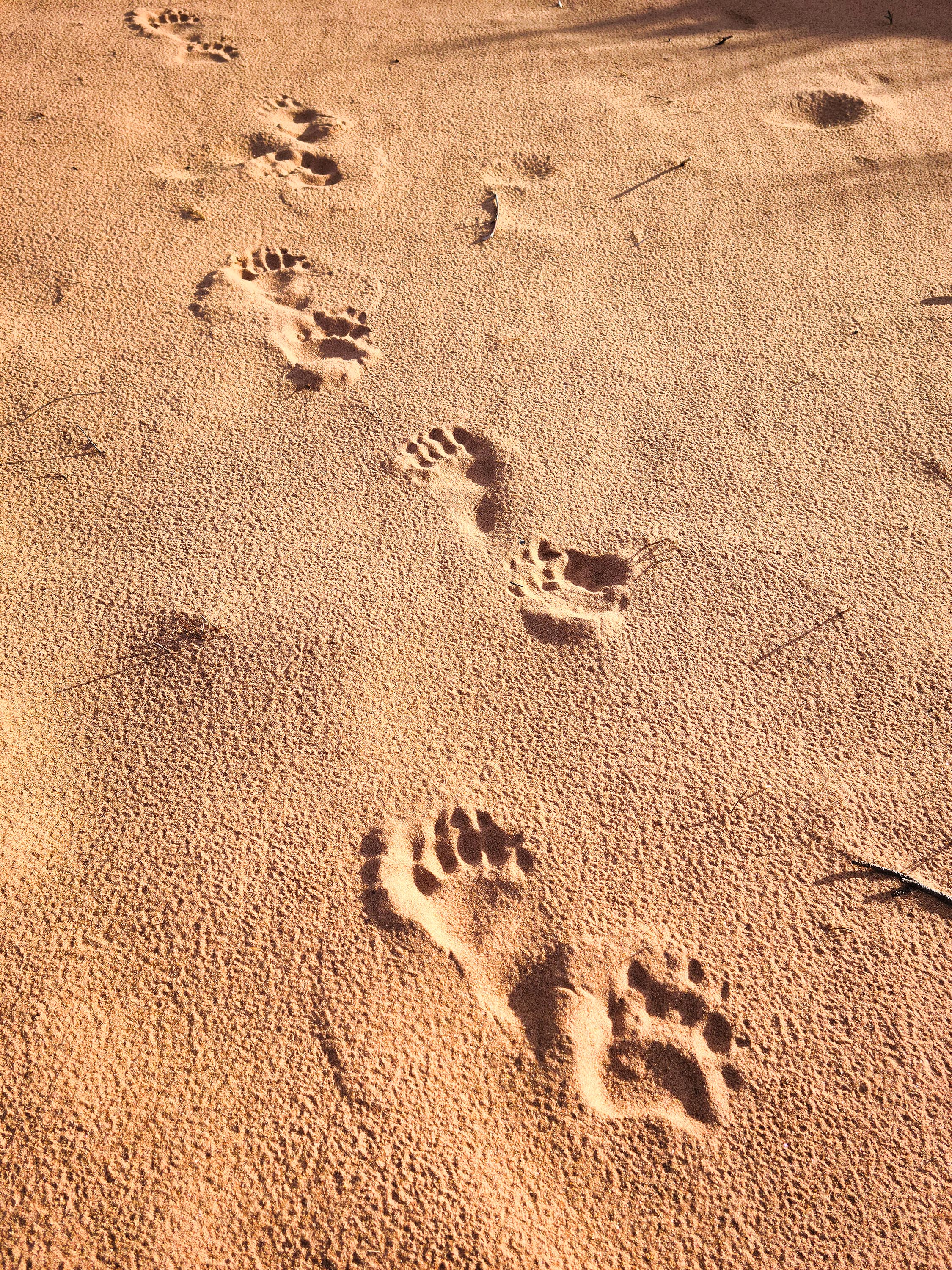
Bear tracks on Julian Bay, Stockton Island.

I had the chance to meander to Stockton Island, one of several islands in the Apostle Islands National Lakeshore in Lake Superior a couple of weeks ago. I was there to cover what the National Park Service is doing to make their facilities on the island more accessible to disabled people. I’ll be writing a story about that for work, but I also got a tour of the island by former park ranger, Neil Howk, who gave us (there were about 8 of us) the skinny on the history of black bears on the island.


Neil Howk imparts his knowledge about bears.

Neil worked for many years in the Lakeshore and is now on the board of the Friends of the Apostle Islands, which organized the tour on a sunny, breezy Friday. Neil took us on a short hike on the trail that leads through the campground on Stockton Island to the signpost for campsite number 4. We took a sharp right and began bushwhacking into the woods. Neil knew there was a bear den nearby.


After not too much whacking or getting whacked by tree branches, we came to a deadfall – a tree that had been blown over by wind. Neil said the bear had made its den among the tree roots, which provided a fairly snug place to spend the winter.

He felt okay taking us to this location because: 1) It’s not winter, so no bear will be actively hibernating there, and 2) Bears usually only use a hibernation site once, so disclosing its location should not endanger the privacy of any bears (except if another one ends up using it!)

Besides overwintering in dens in rocks or tree roots, black bears have also been known to hibernate inside hollow trees and even in eagle’s nests. I did not know the eagle’s nest thing. I also learned many other new bear trivia, such as: bears don’t poop all winter. Neil said they eat grass in spring to get their bowels going again.

The deadfall bear den that Neil Howk showed us on Stockton Island.

Also, cannibalism is normal for bears. Males will sometimes eat cubs – presumably ones that aren’t related to them, in order to bring females into estrus sooner so that they can procreate with them. And bears will also eat meat (besides the berries, ants, and other things that bears are known to consume). Neil said that deer fawns and chipmunks are among their favored meaty fare.

Another fact that Neil conveyed is that when bears were first counted on Stockton Island – sorry, I’m not sure when that began – there were only a couple. But now there are 20 known to live there. I can attest to their presence. On my several trips there, I’ve seen many bear tracks on the island’s beaches. (I’ll try to dig up some of my photos of those for this post.)

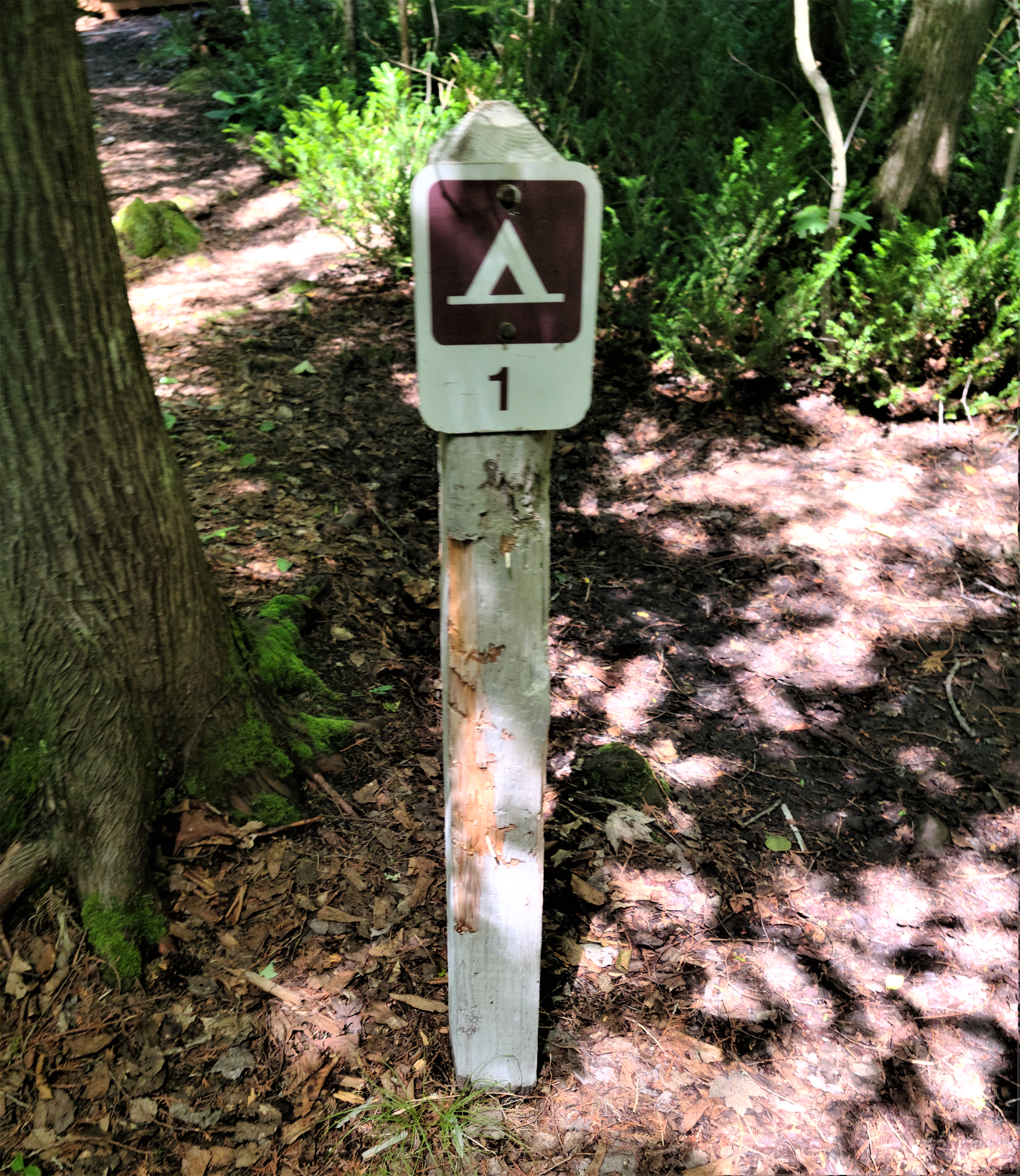
Black bears like to gnaw upon and otherwise dismember the wooden campsite markers on Stockton Island.

One memory that emerged during the tour came from a trip I made to Russia many years ago. One of my former husband’s relatives bragged about a bear he had shot. Granted, this relative liked his vodka and ended up chasing one of my young sons around the picnic table where we were eating – he was a rather scary, imposing figure, somewhat bearish. At some point, he showed us photos of his triumphant hunt. From the snow in the photo and the location, it became obvious that he had shot a hibernating bear. So much for sportsmanship, but I guess maybe they do things differently in Russia!

Anyway, I learned some things I didn’t know about bears from this tour, and I hope you did, too.

Natural History Gone Wild

An Ice Age exhibit at the Bell Museum of Natural History, including a mammoth, giant beaver and musk ox.

I recently had the chance to meander through two very different natural history museums. One was public and the other not so much. Both impacted my psyche.

The public one was the Bell Museum of Natural History. This was one of my favorite hangouts during my college days when I was minoring in biology. (I won’t divulge how many decades ago that was!) Besides the obvious appeal to the science-minded, my poetry professor once took us to the museum for inspiration purposes.


The new Bell Museum.

The Bell Museum used to be on the Minneapolis Campus of the University of Minnesota in Minneapolis. Now, it has a “new” facility on the St. Paul Campus.

Russ indulged me (smart man) and tagged along as we visited the Bell’s planetarium where we learned about astrobiology, or the search for life on other planets. The planetarium has a domed Imax theater roof. We saw a movie that was narrated by an actual museum staffer (in real life). This was unexpected, but cool, because we could ask questions. Many children in the audience did, and I was impressed by their interest in the planets.

One thing I learned was that we’ve had unmanned spacecrafts land on Venus. Somehow, I missed that news. It was so interesting to learn about the inhospitable conditions there – the landing crafts only lasted a few hours before they were incinerated by Venus’s hot temperatures.

Antlers on the wall, Bell Museum of Natural History.

In the natural history part of the Bell Museum, I was heartened to see that the painted dioramas I so loved in the old museum had been moved into the new museum. There was the wolf pack on the North Shore of Lake Superior. There were the sandhill cranes of the Platte River. I can’t imagine what it must have taken to move those overland to the St. Paul Campus intact!

Plus, the museum has many new exhibits that deal with the evolution of life on this planet. I don’t think they knew that stuff when I was a college student.

The not-so-public museum was the Zoology Museum on the University of Wisconsin-Madison Campus. I meandered into it for work. Every year, my boss at Sea Grant organizes a field trip for us science communicators and this year, our focus was Madison. This is where most Wisconsin Sea Grant staff are located, but there are many staffers from other areas in the state (including me), so all this was new to me.

The UW Zoology Museum is mainly for researchers and it was formed by researchers. Many of the specimens were collected during science expeditions or they came from nearby zoos. To give you an idea of its layout, there’s a bone room, where bones of animals are stored in boxes. There’s a skin room where animal skins are stored in drawers (think about an entire polar bear fitting into a small drawer). There’s also a taxidermy room that features various birds and mammals.

A soulful lion greeted us in the taxidermy room of the Univ. of Wisconsin-Madison Zoology Museum.

As we entered the facility, we had to carefully close doors behind us so that bugs and other contamination couldn’t follow us and destroy the samples.

In the lower level of the building is a fish room where various species of fish are stored in ethanol in jars and pails. This is in case the jars ever break – that way they won’t flood the other floors. The various jars are on shelves that are moveable. These are called compacter shelves. As opposed to stationary shelves, these can be easily moved so that more can fit in a room than otherwise possible.  Zooplankton are also preserved here. Various historic scientific instruments are scattered on nearby tables.


Another part of this basement room features preserved mammals, reptiles, and invertebrates in ethanol.

It was all kind of creepy and gave me some good ideas for a horror story. There were so many many samples! Something about all those dead animals in jars seemed wrong, even though it’s for the sake of science.

A polar bear in a drawer.

The piece de resistance, however, was a room we didn’t even get to see. It’s the room with the flesh-eating beetles. The museum staffer described the beetles as the best method to remove the “meat” from the bone samples that the museum staff wants. The beetles live up to their name, eating off the flesh from the bones. The dark room the beetles live in is down a concrete corridor that would give even Edgar Allan Poe pause. We did not get to see it, but our tour host’s description was good enough.

The beetles do a much better job of cleaning than any other method, so the university still uses them, even in the 21 Century.

Mice and bats in jars in the Zoology Museum.

I realize that science needs access to real animals for research purposes, but I must admit that this research museum creeped me out much more than the public museum. I guess that’s to be expected. I’m glad I was able to see both of them.

Look for the fruits of this field trip in my fiction some day! I just discovered that there’s a horror sub-genre called “dark academic.” The Harry Potter series fits into this – think gothic architecture, pleated skirts, melancholia, and leather satchels. This is opposed to “light academic.” “Pride and Prejudice” fits into this – think of the opening of the movie where Elizabeth Bennet Walks through a sunny field reading a book. It’s all about light and happiness. My story will be more along the dark academic vein.

My takeaway with this post? Visit a natural history museum near you sometime. It might spark something!

The Top Meanders of 2022


Mmmm, bison potroast from Owamni Restaurant.

Well, the tenth year of “Marie’s Meanderings” is wrapping up. I made up for a lack of meandering during the pandemic with many more travel posts than in the past few previous years. That made for fewer musings than usual and more practical information. So, it’s not surprising that this year’s most popular posts feature outings that Russ and I took. One was to the homestead of my father’s side of the family in central Minnesota, the other to a popular cross-county ski trail in northern Wisconsin, and the last to a new restaurant in Minneapolis.

Drumroll, please! Here are the top posts for 2022:

  1. A Family Tradition Returns – My father’s ancestors emigrated from Germany to Minnesota in the mid-1800s. Every two years, the descendants all gather in the town near the family farm for a picnic. This story is about the picnic and the family history. Several of my relatives helped with facts and photos, and they shared the post among the family, which I suspect accounts for its popularity.

  2. Superior Skiing – Chronicles our first cross-country ski outing in the Superior Municipal Forest. This city forest is one of the largest in the country and sports trails perfect for all levels of skiers. This post got shared among local skiers via social media, which accounts for its popularity.

  3. Owamni Restaurant: Celebrating Native American Cuisine – Russ and I were lucky enough to snag a chair (well, actually two chairs) for dinner at Owamni, a Minneapolis restaurant run by Chef Sean Sherman who wrote the “Sioux Chef” cookbook. This unique eatery specializes in precolonization food – natural foods that Natives ate before European colonization of the U.S.

Thank you for meandering with me for yet another year. I plan to keep writing whenever something of interest happens or meanders into my head. I’m working on getting a fiction book published, so my posts might be fewer than usual until I make headway with that, and then there’s this long fiction story I need to finish . . . but I will not abandon my blog!

Book Review: Meander North by Marie Zhuikov

I so appreciate this book review of “Meander North” by blogger and fellow writer Vickie Smith.I especially like the paragraph where she mentions that my book/blog invites people along on my meanders. That is my hope – that my essays/posts inspire people to meander around on their own, plus have a few laughs while they do it.

youngv2015's avatarWriting Near the Lake

[Meander North can be preordered through Itasca Books. It’s currently available at Zenith Bookstore, and will be available in other bookstores November 21.]

Marie Zhuikov’s newest book, Meander North, is a collection of essays, many from her blog Marie’s Meanderings, which she started writing in 2013. I look forward to each new post by Zhuikov, so when I had a chance to read Meander North, I was excited. Zhuikov selected some of her favorite blogs, then added essays, some of which have appeared in other publications.

Many of Zhuikov’s selections are about getting outdoors and enjoying nature. In her humorous essay “How X-C Ski Starvation Can Lead to Impaired Judgment,” she writes about one of her first cross-country skiing adventures of the season: “I . . . desperately needed to do something to break out of my winter slothfulness and raise my heart rate…

View original post 510 more words

Canoeing the Whiteface, Take Two

The Whiteface River under a sky that portends some weather.

After my story was published in “Northern Wilds” magazine about our first canoe adventure down the Whiteface River in northern Minnesota, someone contacted me by Facebook Messenger.

This secret nature informant let me know about an easier route on the river than the one that Russ and I took a couple of years ago. They said we could canoe for an hour without running into any pesky rapids. In fifteen years, they only ran into another person once. Because they wanted to keep the route unpopulated and “secret,” they asked me not to let anyone else know about it.

I am honoring their wish – mostly – by writing this post and not letting you know the specific location.

With canoe in hand (on truck) Russ and I left our cabin one grey day a couple of weeks ago. In keeping with our newfound desire not to let the threat of a little rain stop us from being outdoors, we continued onward to the Whiteface.


During our adventure, we discovered that my secret nature informant was correct, the river was placid and rock-free for about an hour’s paddle one way. Blooming white and yellow water lilies filled its sheltered bays. Old beaver houses lined the banks, and animal trails led from the water to the inland wilderness.

A white water lily on the Whiteface River.

Unlike the previous stretch we had canoed, this part of the river was wilder. No homes lined its banks. No cars could be heard from a nearby road. If a person got in trouble, they’d have to fend for themselves.

A light rain began to fall, but we just donned our raincoats and kept paddling. The drizzle stopped and started, but we barely registered it as we marveled at the bounty of nature before us.

I hope to return to this stretch of river with my paddleboard one day. It would also be a great place to bring our grandchildren for a placid canoe ride.

If we visit often enough, perhaps one day we’ll meet my secret nature informant.

No doubt, they’ll be dismayed that we’re there!

Isle Royale on Fire

Hidden Lake with a low fog, Isle Royale National Park.

When we last checked in, Russ and I were on Isle Royale, a wilderness national park in Lake Superior. It was our final day. Before we had to catch our boat back to the mainland in the afternoon, we had plans to canoe across Tobin Harbor to a rugged trail that leads to Hidden Lake, Monument Rock, and an overlook high on the backbone of the island with the prosaic name of Lookout Louise.

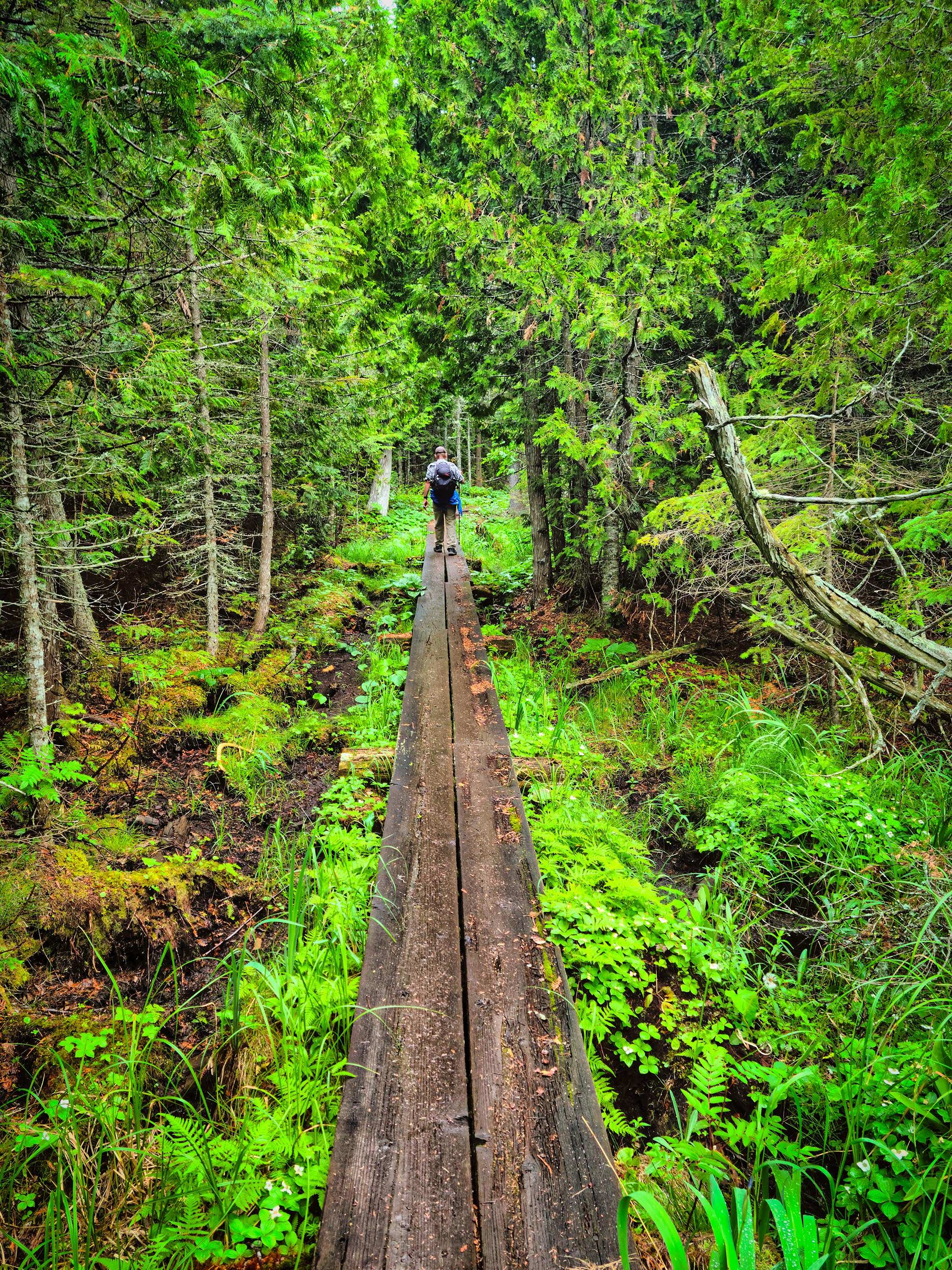
A boardwalk over a wetlands near Hidden Lake.

The weather had other ideas for us, however. A gray sky and drizzle greeted us as we carried our friends’ canoe down to the harbor. To me, it didn’t feel like we were in for a downpour, just a steady drip, so we decided not to let a little rain keep us from my old haunt and one of the most spectacular overlooks on the island. On a clear day, a person can see the other side of the island and all the way to Canada.

After about a half-hour paddle from the sea plane dock on the crystal-clear waters of Tobin Harbor, we reached the Hidden Lake dock. We hauled our canoe ashore and began the mile-long hike to the lookout. While the beginning part of the trail at Hidden Lake is flat, the grade gradually rises until it reaches a steep pitch on the way to Monument Rock and the lookout. Because of this, the difficulty is considered moderate to difficult.

Fog shrouded part of Hidden Lake, adding to its mystery. We found a pile of super-fresh wolf scat next to the trail along with lady slipper orchids.

For entertainment one evening earlier on our trip, we attended a park ranger talk at Rock Harbor. The topic was the fire that occurred on this part of the island last year (2021). Named the Horne Fire, it began as a lightning strike and ended up burning 335 acres and threatening cabins on Tobin Harbor. People were evacuated, tourism was disrupted, and a fire crew was brought in to fight the blaze.

Russ by Monument Rock, which was in the path of the Horne Fire in 2021.

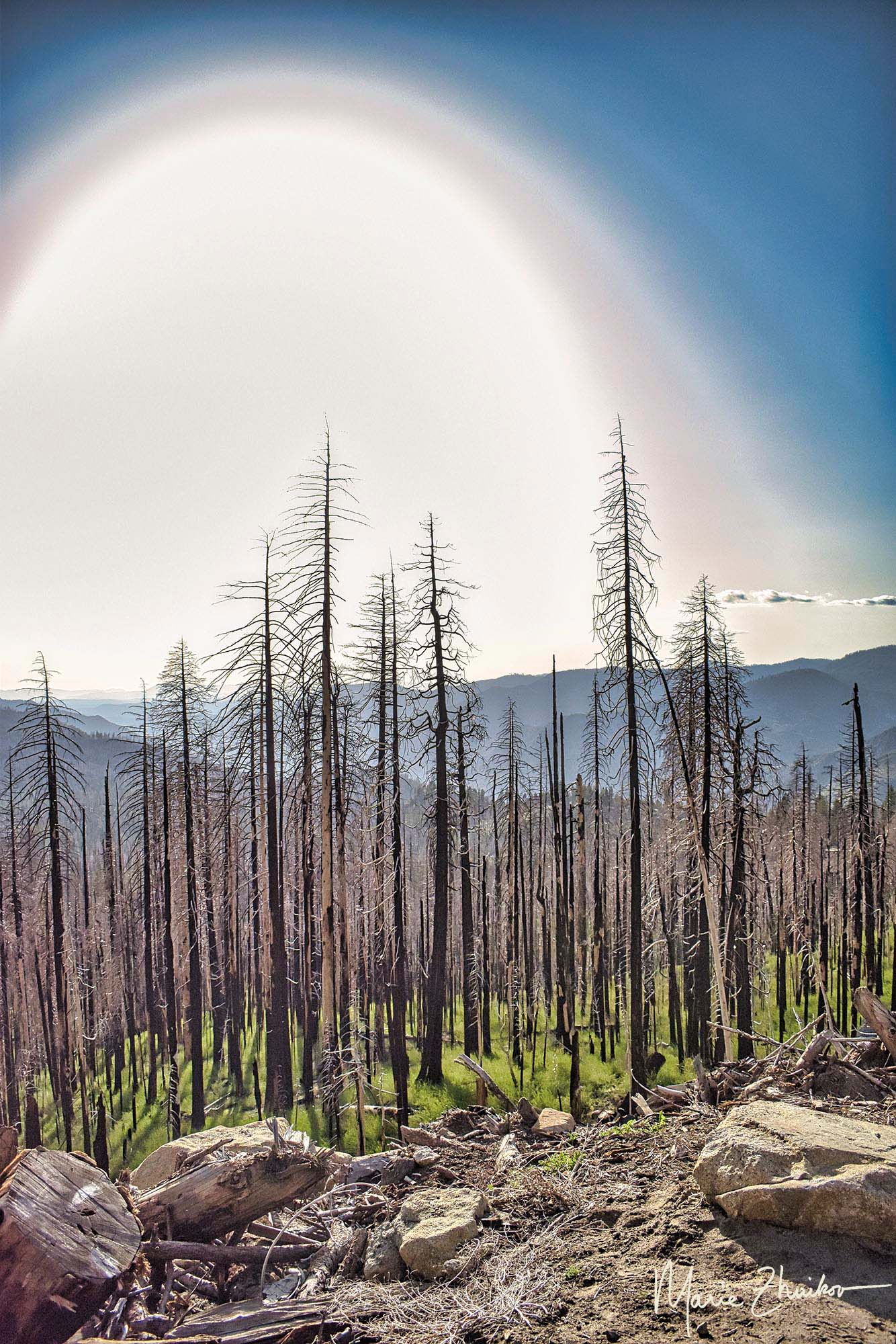
From attending the talk, we knew that the Lookout Louise Trail would take us right through the burned area, so we were ready for the black chaos when we found it. Huge trees were uprooted, soil was blackened. Dead trees, denuded of branches, reached toward the gray sky like iron spikes. But some greenery was returning in scattered patches.

One unexpected benefit of the Horne Fire was that the view of Monument Rock – a large sea stack that sticks up from the hillside – was easily visible. Usually, it’s shrouded by trees. Reaching the landmark means you’re over halfway to the lookout. Once past the rock, the trail becomes a bit less steep.

We didn’t have much time to enjoy the view at the lookout for fear we would miss our boat home, but our gazes drank in what they could of Duncan Bay and Lake Superior. On a clear day, Pie Island, the Sibley Peninsula and Edward Island in Canada are visible.

I heard two days ago that Isle Royale is on fire again. Visitors were evacuated from Three Mile and Lane Cove campgrounds. Those campgrounds are currently closed as are some trails in that area. For more details, please see news article(s) about the fire. Of course, fires are natural on the island, but it is distressing to see the destruction they leave behind and how they impact the lives of the people who live and work on the island in summer.

The view from Lookout Louise.

According to the park service, the lookout was named for Louise Savage of St. Paul, Minnesota. Her family owned one of the cabins on Tobin Harbor before the area became a park.

As we hiked back to the dock, the drizzle grew into a light shower. But we didn’t mind. We had accomplished our goal and were feeling good. The fresh rain seeped into our jeans and into our bones, a reminder of our closeness to nature. We were able to return to Rock Harbor in plenty of time to catch our ride home.

Hidden Lake, Isle Royale. You can see evidence of the Horne Fire on the hillside in the upper right.

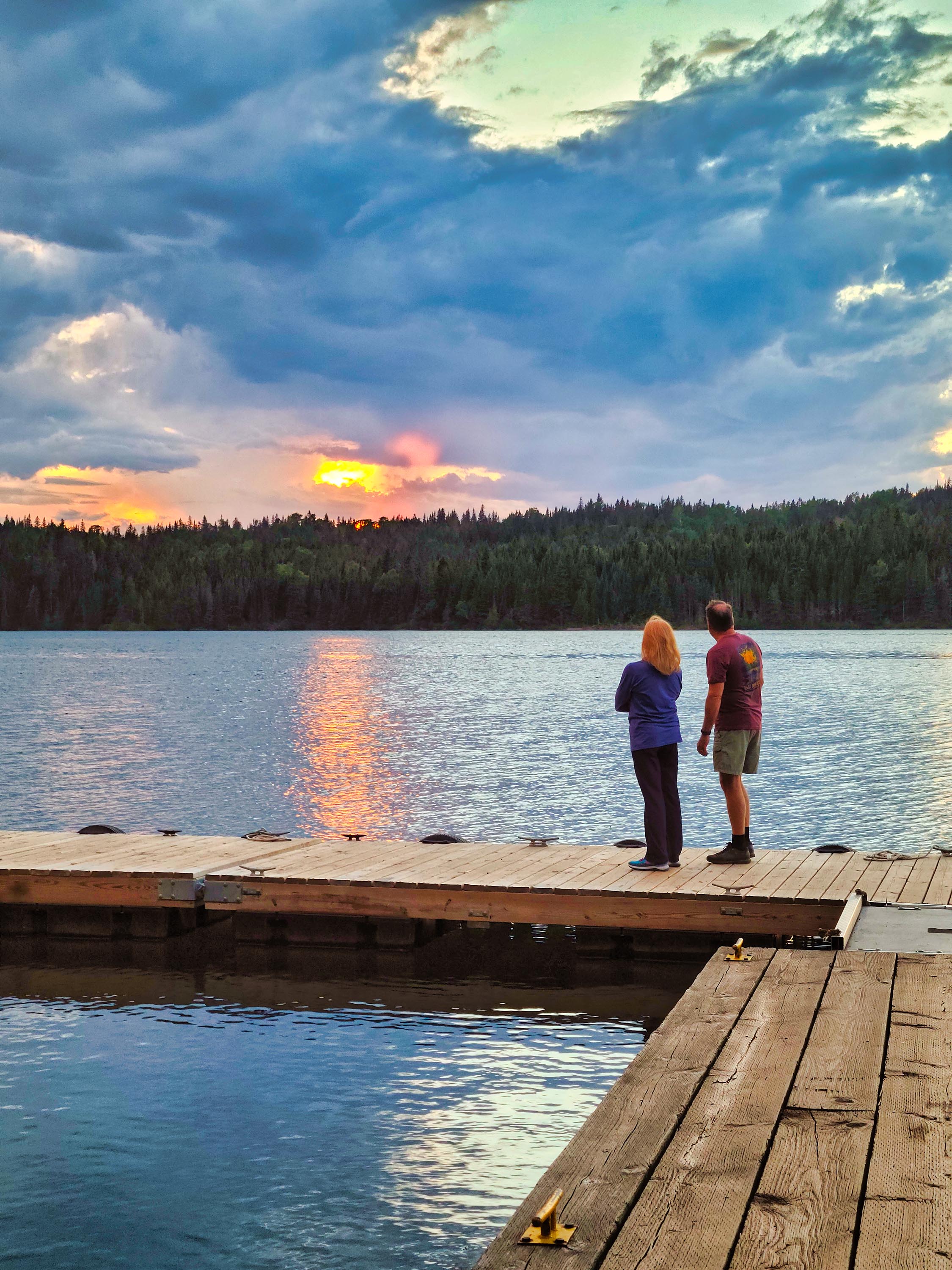
I left the island feeling peaceful. I was glad to see that lodge employees still gather on the sea plane dock to watch the sun set every evening like I used to back when I worked there decades ago. It’s obvious that the island still works its magic on employees and visitors alike.

I was taking sunset pictures on the dock during the final island evening of our trip. As oranges and pinks filled the sky, we could hear the rattling trumpet calls of distant sandhills cranes. These birds were not on the island when I worked there in the 1980s, but I guess they are more common now.

Then, right when the sun dipped behind the island’s Greenstone Ridge, a lone wolf howled somewhere near Lookout Louise (was it his/her scat we found the next day?) The small group gathered on the dock all looked at each other in wonderment, as if asking, was that a wolf we just heard? The wolf’s mournful, long howl was followed by a second. No other wolves replied.

As I stepped off the dock onto the land with my camera gear, a man sitting on a bench said, “I’ve been coming here for thirty years and that’s the first wolf I heard. That’s pretty special.”

Darn right it is! I told him the howls were also a first for me. That’s one of those mystical Isle Royale moments I won’t forget.

Isle Royale visitors take time to watch the sunset on the sea plane dock in Tobin Harbor.

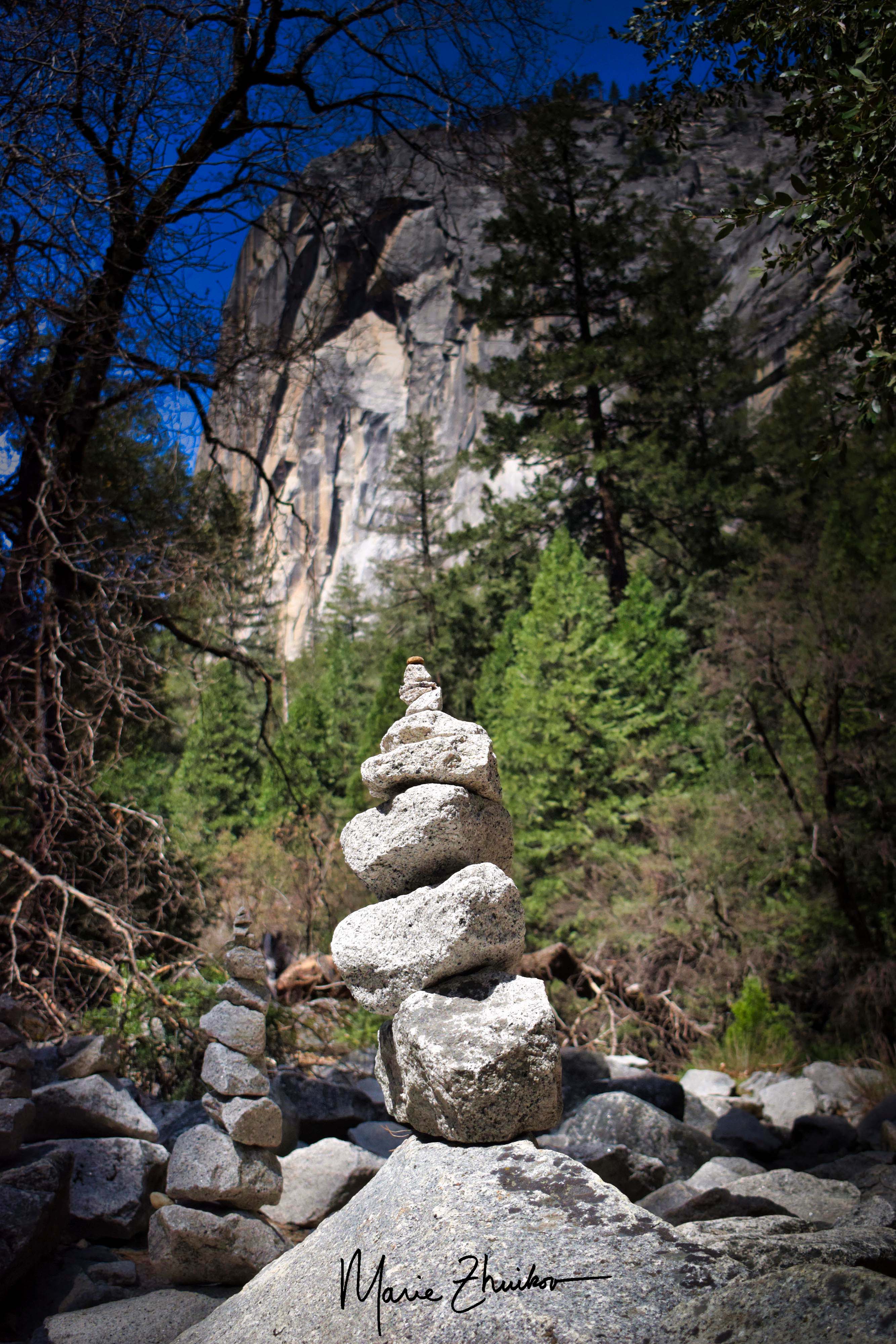
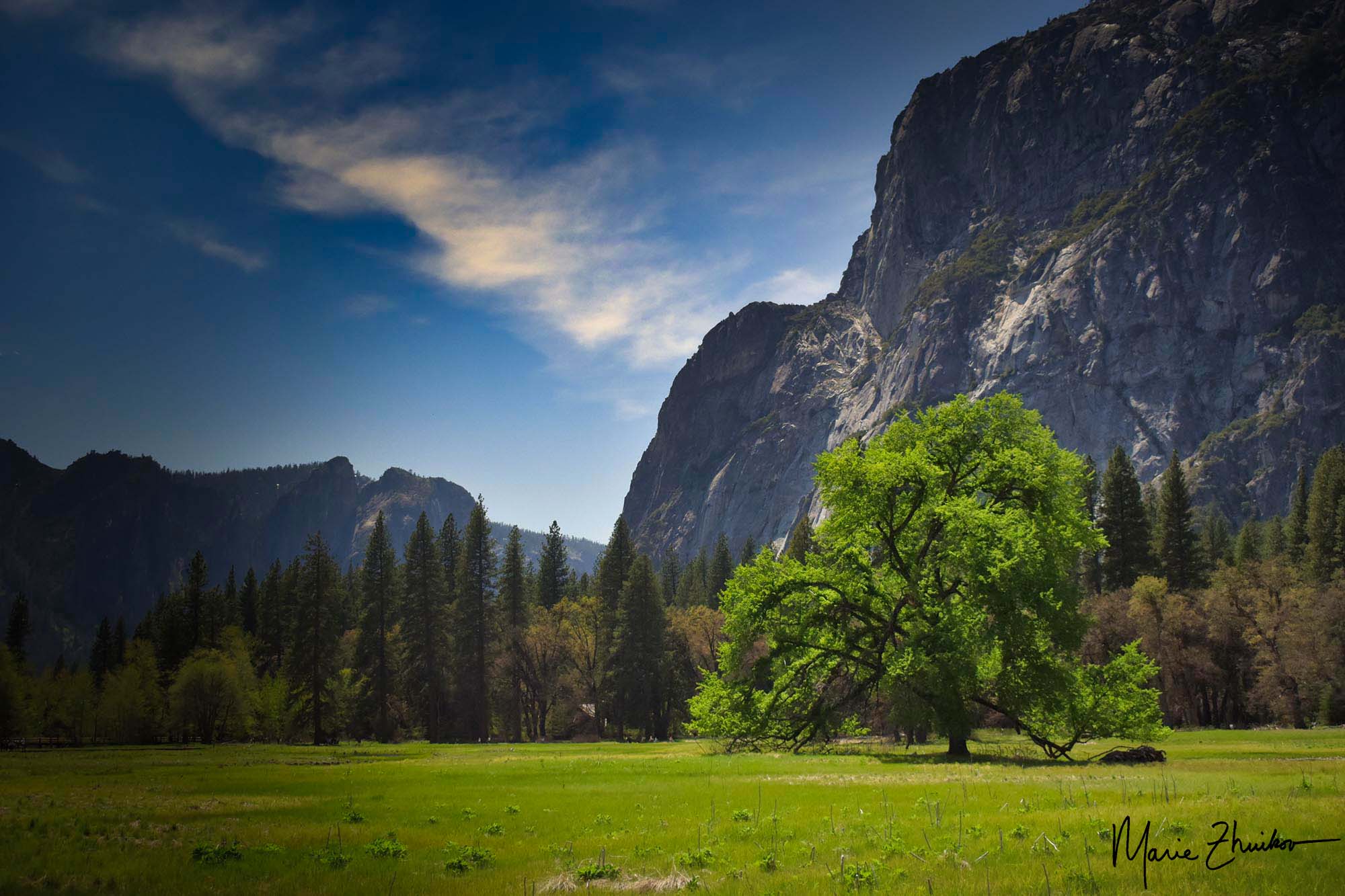
Westward Ho! Yosemite National Park

The view from the Tunnel View pulloff in Yosemite National Park. Bridalveil Falls is on the right, Half Dome is in the middle and El Capitan is on the left.

The last time I was in Yosemite National Park, it was on fire. I was there to put help put it out. That was 32 years ago (!) when I worked for the Forest Service. (See that story in “Why I Miss Wildland Fire Fighting.”)

I journeyed to the park this time to be a photographer-tourist.

As Russ and I planned a long overdue (due to Covid) vacation to Lake Tahoe, we discussed what to do there. It came to light that Yosemite was within driving distance and that Russ had never been there before. Well, that would never do.

A sequoia near Mariposa Grove.

“You’ve got to see it!” I said. Wise man that he is, we made plans to begin the first few days of our trip in Yosemite and then drive to Tahoe. Thus, began our Westward Ho adventure.

In late April, we flew into Fresno, CA, and then drove about 90 mins to our lodge just outside the park. Our first foray on the day we arrived was to Mariposa Grove, which wasn’t far from the lodge. We eagerly hiked two miles to see the grove, only to be mystified when we discovered it was closed!

How can a grove of ancient sequoia pines be closed, you ask? Well, you’ve got me on that one. There were no signs at the trailhead giving hint of this closure, nor did we see anything obvious online. But after we made it back to the (closed) visitor center near the grove, we did see a small sign that explained the grove was closed until 2023 so that the trail could be rehabbed.

The grove had a fence all around it, which prohibited people from using the trail that runs through it. Thankfully, we were at least able to view the trees from outside the fence on the road that runs past it. Disheartened, we walked back to our car on the road, which was much easier than the trail. Positive points are, we saw a mule deer (see photo) and a cool rock cut alongside the road (see the other photo).

Another closure to be aware of is that Bridalveil Falls – the iconic waterfall that’s the first thing tourists see from the Tunnel View overlook and when they approach the park from the south, is closed. This is another closure that’s not very well publicized by the Park Service. But you can still get close to the base of the falls if you are a bit intrepid.

We spent the next few days driving through the park and doing more hiking. We visited Yosemite Falls, Mirror Lake (an easy two-mile round-trip hike on a closed paved road), Cathedral Beach, and Valley View. Valley View was hard to find because there were no signs that designated it, just so you’re aware. We tried unsuccessfully to find it our first full day but figured it out by the second day. We also ate lunch one day at the historic Ahwahnee Lodge, which is in the park.

Russ’s favorite experience was visiting Yosemite Falls. There’s an upper and lower part of the falls, and he appreciated the aesthetics of the approach as you walk toward the falls. I think mine was Mirror Lake. As you can see from the photos, the reflections of the backside of Half Dome in the water were stellar, and I enjoyed the scenes available along Tenaya Creek.

One thing that struck me was how rough the forest looked. Wildfires had obviously burned all the way into the Yosemite Valley floor. That must have been nerve-wracking for the park service. And many areas on our drive to the park were burned or showed evidence of wind damage. California has been experiencing a drought for the past three years and it sure showed. Perhaps the fire that I worked on so many years ago was only the beginning?

Timber salvage operations were taking place in the burned areas of the valley when we were there, necessitating some traffic disruption. BUT it was Spring, and the waterfalls were full, conveying runoff from the High Sierras. The water-full bounty a glorious sight to see, as John Muir would have said.

I hope you enjoy my photos. Next up: Lake Tahoe or maybe a post about my first art exhibit. I’m not sure which I’ll finish writing first.

As always, please do not use photos that have my signature on them. Others you may use with permission.

A Close-ish Encounter with a Fox

The curious fox after I crouched down. No, it did not obey the “Danger Thin Ice” sign.

My office sits on a manmade island in the Duluth-Superior Harbor. Its windows overlook a stretch of water that leads to the mainland. In addition to water, sky and ice, the view sometimes includes animals like coyotes, bears, groundhogs, birds (lots of waterbirds!), otters, rabbits, and foxes.

This winter, a fox has been frequenting the island. I don’t think it lives here – I don’t see its tracks that often, but maybe the island is one of its winter getaways.

The other day as I was transcribing an interview, I saw the fox pass my office window. It was headed toward the slope along ice and snow-covered water. I leapt out of my chair and grabbed my phone to take pictures. It was cold that day, in the single digits, so I remembered to take my jacket but not my gloves (can’t take pictures with gloves on).

I trotted out the office door and carefully looked around the corner toward the harbor. The fox was far out on the ice by now, but as I stepped away from my office building, it must have noticed my movements and it stopped, looking at me intently.

I took a few photos, but (as you can see) the fox was too distant for anything good. My hands were getting cold, so I put them into my jacket pockets along with my phone. I waited to see what the fox would do. It just stood, watching me.

I wished the fox would come closer. Inspired, I crouched down so that the fox couldn’t see me because of the small hill of snow that lined the slope leading down to the ice. Soon, the fox’s head popped up above the snow hill, his/her eyes still trained on me. Appealing to the fox’s curiosity worked!

I took a few more photos from that vantage. The fox was still too far away. I knew that food was the only thing that might lure it closer. I didn’t have any and don’t really like the idea of feeding wild animals, so I just stayed in my crouch, enjoying the fox’s undivided attention. Its fur was fluffy and full, its color a rich red – quite a handsome animal.

Putting my phone and hands back into my pockets was awkward at this angle so, my icy hands soon told me it was time to go back inside. Besides, I also realized the fox probably thought I was going to give it a handout. I’m sure other people must have. I didn’t want to tease it any longer, so I stood and went into the office.

When I looked out my window again, the fox had moved back onto the ice, but it was still staring intently at the office door. Maybe it thought I was going to come back out with some food. Maybe it missed me, ha ha. It waited a few minutes, walked further, stopped and stared again. This went on several more times before the fox gave up and trotted back to the mainland shore.

Despite the interruption in my work for pay, I felt like I accomplished a lot that day during a few minutes spent communing with a fox.