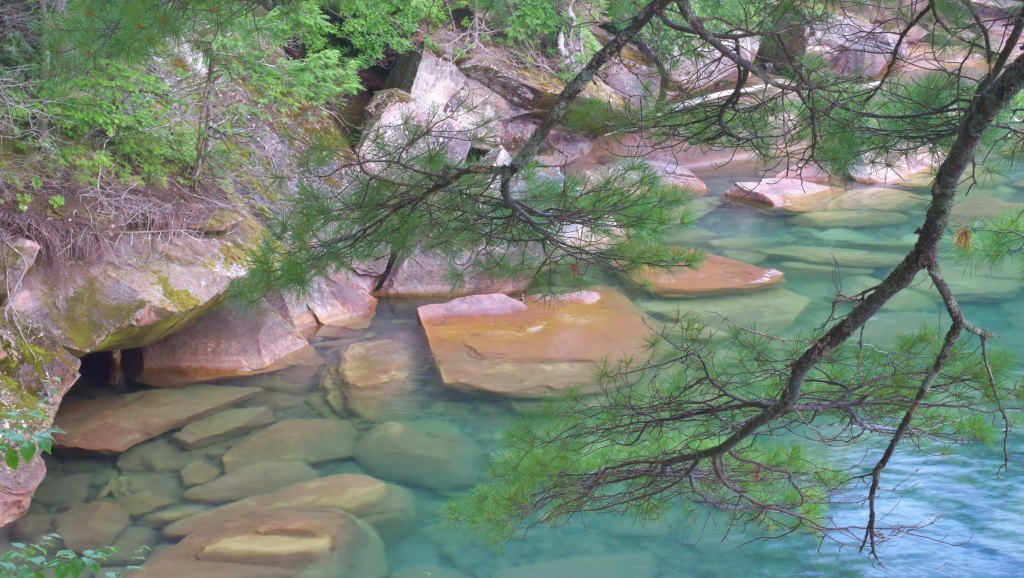
The Whiteface River under a sky that portends some weather.
After my story was published in “Northern Wilds” magazine about our first canoe adventure down the Whiteface River in northern Minnesota, someone contacted me by Facebook Messenger.
This secret nature informant let me know about an easier route on the river than the one that Russ and I took a couple of years ago. They said we could canoe for an hour without running into any pesky rapids. In fifteen years, they only ran into another person once. Because they wanted to keep the route unpopulated and “secret,” they asked me not to let anyone else know about it.
I am honoring their wish – mostly – by writing this post and not letting you know the specific location.
With canoe in hand (on truck) Russ and I left our cabin one grey day a couple of weeks ago. In keeping with our newfound desire not to let the threat of a little rain stop us from being outdoors, we continued onward to the Whiteface.

During our adventure, we discovered that my secret nature informant was correct, the river was placid and rock-free for about an hour’s paddle one way. Blooming white and yellow water lilies filled its sheltered bays. Old beaver houses lined the banks, and animal trails led from the water to the inland wilderness.
A white water lily on the Whiteface River.
Unlike the previous stretch we had canoed, this part of the river was wilder. No homes lined its banks. No cars could be heard from a nearby road. If a person got in trouble, they’d have to fend for themselves.
A light rain began to fall, but we just donned our raincoats and kept paddling. The drizzle stopped and started, but we barely registered it as we marveled at the bounty of nature before us.
I hope to return to this stretch of river with my paddleboard one day. It would also be a great place to bring our grandchildren for a placid canoe ride.
If we visit often enough, perhaps one day we’ll meet my secret nature informant.
Hidden Lake with a low fog, Isle Royale National Park.
When we last checked in, Russ and I were on Isle Royale, a wilderness national park in Lake Superior. It was our final day. Before we had to catch our boat back to the mainland in the afternoon, we had plans to canoe across Tobin Harbor to a rugged trail that leads to Hidden Lake, Monument Rock, and an overlook high on the backbone of the island with the prosaic name of Lookout Louise.
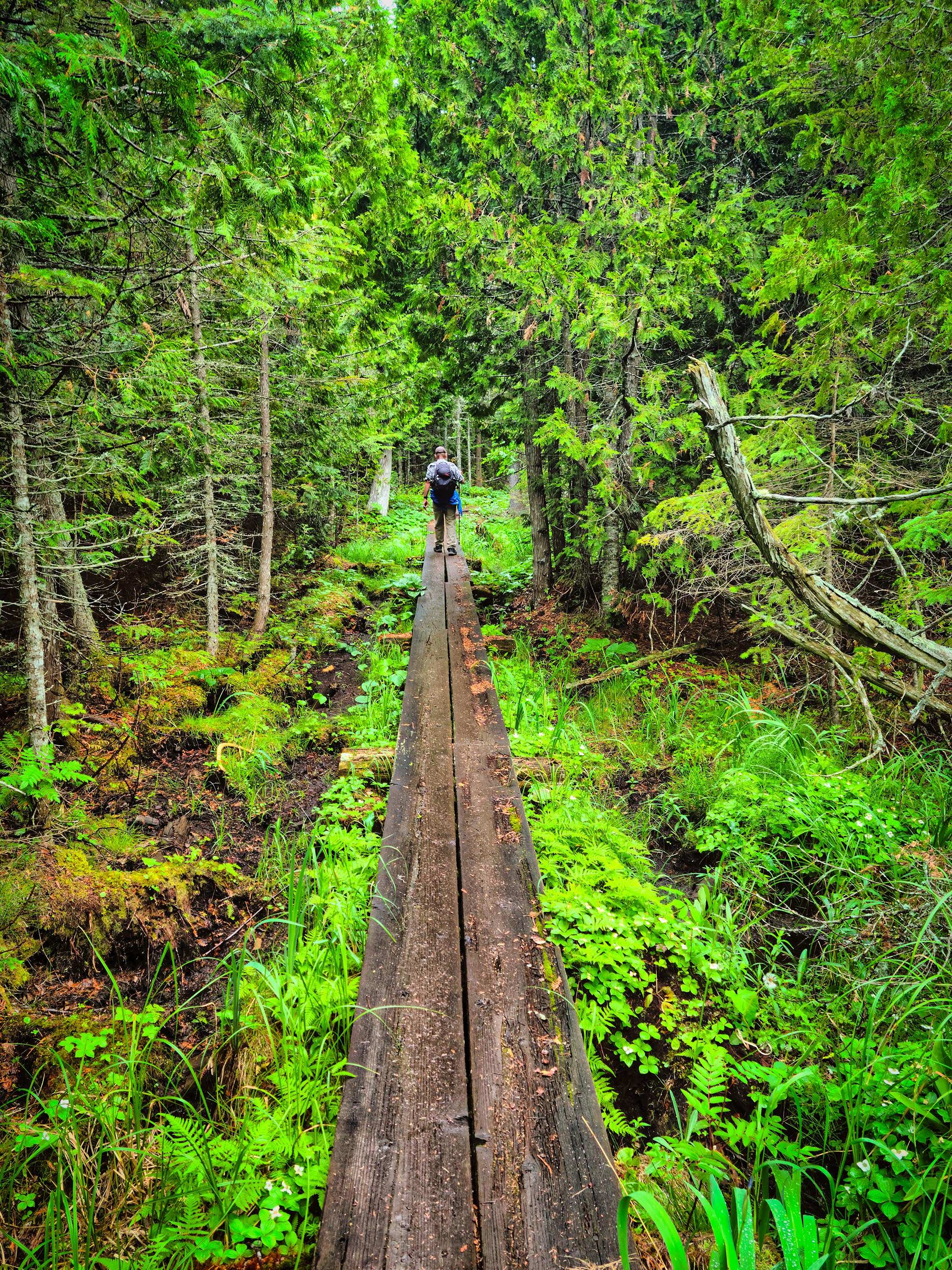
A boardwalk over a wetlands near Hidden Lake.
The weather had other ideas for us, however. A gray sky and drizzle greeted us as we carried our friends’ canoe down to the harbor. To me, it didn’t feel like we were in for a downpour, just a steady drip, so we decided not to let a little rain keep us from my old haunt and one of the most spectacular overlooks on the island. On a clear day, a person can see the other side of the island and all the way to Canada.
After about a half-hour paddle from the sea plane dock on the crystal-clear waters of Tobin Harbor, we reached the Hidden Lake dock. We hauled our canoe ashore and began the mile-long hike to the lookout. While the beginning part of the trail at Hidden Lake is flat, the grade gradually rises until it reaches a steep pitch on the way to Monument Rock and the lookout. Because of this, the difficulty is considered moderate to difficult.
Fog shrouded part of Hidden Lake, adding to its mystery. We found a pile of super-fresh wolf scat next to the trail along with lady slipper orchids.
For entertainment one evening earlier on our trip, we attended a park ranger talk at Rock Harbor. The topic was the fire that occurred on this part of the island last year (2021). Named the Horne Fire, it began as a lightning strike and ended up burning 335 acres and threatening cabins on Tobin Harbor. People were evacuated, tourism was disrupted, and a fire crew was brought in to fight the blaze.
Russ by Monument Rock, which was in the path of the Horne Fire in 2021.
From attending the talk, we knew that the Lookout Louise Trail would take us right through the burned area, so we were ready for the black chaos when we found it. Huge trees were uprooted, soil was blackened. Dead trees, denuded of branches, reached toward the gray sky like iron spikes. But some greenery was returning in scattered patches.
One unexpected benefit of the Horne Fire was that the view of Monument Rock – a large sea stack that sticks up from the hillside – was easily visible. Usually, it’s shrouded by trees. Reaching the landmark means you’re over halfway to the lookout. Once past the rock, the trail becomes a bit less steep.
We didn’t have much time to enjoy the view at the lookout for fear we would miss our boat home, but our gazes drank in what they could of Duncan Bay and Lake Superior. On a clear day, Pie Island, the Sibley Peninsula and Edward Island in Canada are visible.
I heard two days ago that Isle Royale is on fire again. Visitors were evacuated from Three Mile and Lane Cove campgrounds. Those campgrounds are currently closed as are some trails in that area. For more details, please see news article(s) about the fire. Of course, fires are natural on the island, but it is distressing to see the destruction they leave behind and how they impact the lives of the people who live and work on the island in summer.
The view from Lookout Louise.
According to the park service, the lookout was named for Louise Savage of St. Paul, Minnesota. Her family owned one of the cabins on Tobin Harbor before the area became a park.
As we hiked back to the dock, the drizzle grew into a light shower. But we didn’t mind. We had accomplished our goal and were feeling good. The fresh rain seeped into our jeans and into our bones, a reminder of our closeness to nature. We were able to return to Rock Harbor in plenty of time to catch our ride home.
Hidden Lake, Isle Royale. You can see evidence of the Horne Fire on the hillside in the upper right.
I left the island feeling peaceful. I was glad to see that lodge employees still gather on the sea plane dock to watch the sun set every evening like I used to back when I worked there decades ago. It’s obvious that the island still works its magic on employees and visitors alike.
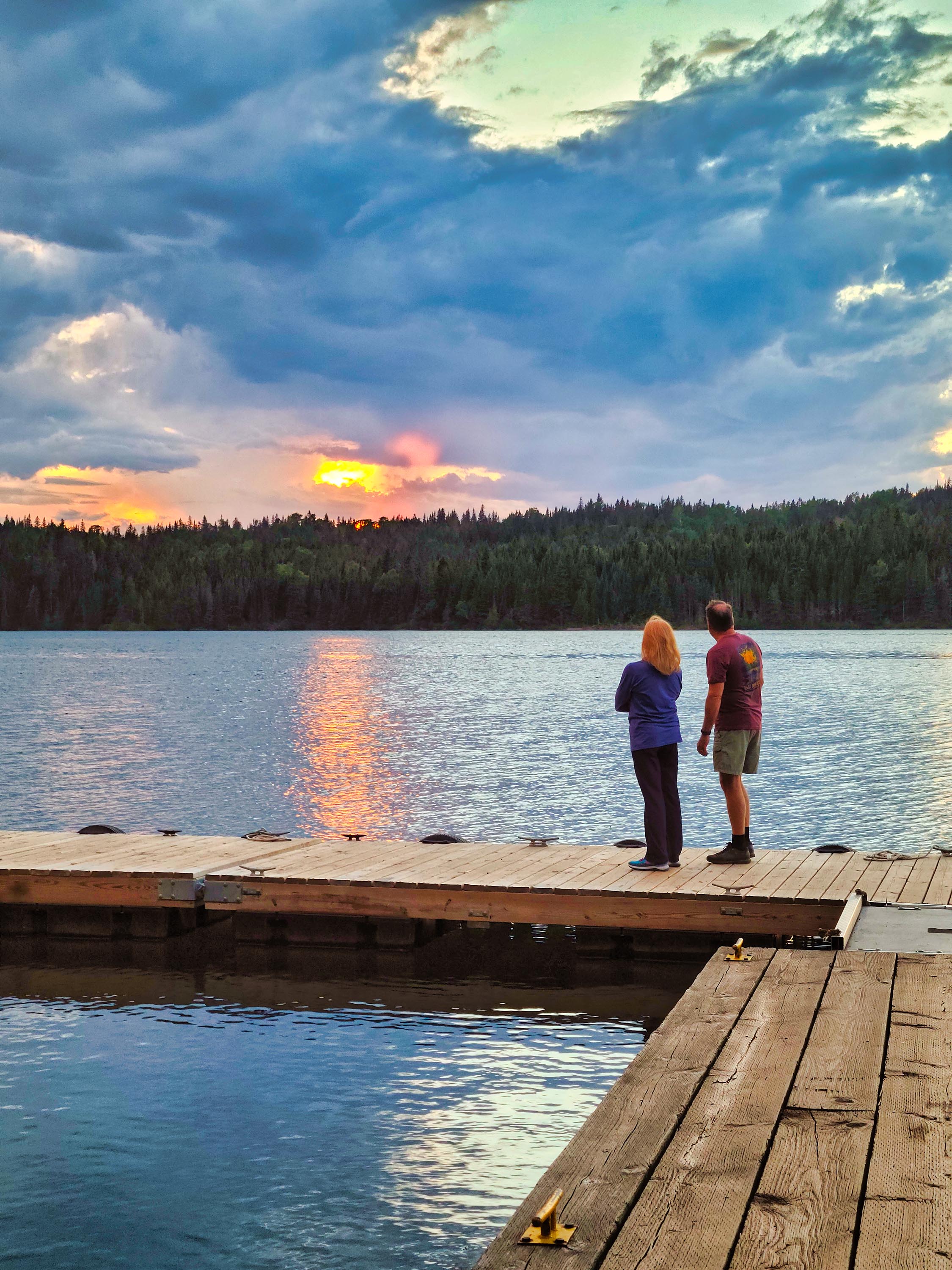
I was taking sunset pictures on the dock during the final island evening of our trip. As oranges and pinks filled the sky, we could hear the rattling trumpet calls of distant sandhills cranes. These birds were not on the island when I worked there in the 1980s, but I guess they are more common now.
Then, right when the sun dipped behind the island’s Greenstone Ridge, a lone wolf howled somewhere near Lookout Louise (was it his/her scat we found the next day?) The small group gathered on the dock all looked at each other in wonderment, as if asking, was that a wolf we just heard? The wolf’s mournful, long howl was followed by a second. No other wolves replied.
As I stepped off the dock onto the land with my camera gear, a man sitting on a bench said, “I’ve been coming here for thirty years and that’s the first wolf I heard. That’s pretty special.”
Darn right it is! I told him the howls were also a first for me. That’s one of those mystical Isle Royale moments I won’t forget.
Isle Royale visitors take time to watch the sunset on the sea plane dock in Tobin Harbor.
The view from the Tunnel View pulloff in Yosemite National Park. Bridalveil Falls is on the right, Half Dome is in the middle and El Capitan is on the left.
The last time I was in Yosemite National Park, it was on fire. I was there to put help put it out. That was 32 years ago (!) when I worked for the Forest Service. (See that story in “Why I Miss Wildland Fire Fighting.”)
I journeyed to the park this time to be a photographer-tourist.
As Russ and I planned a long overdue (due to Covid) vacation to Lake Tahoe, we discussed what to do there. It came to light that Yosemite was within driving distance and that Russ had never been there before. Well, that would never do.
A sequoia near Mariposa Grove.
“You’ve got to see it!” I said. Wise man that he is, we made plans to begin the first few days of our trip in Yosemite and then drive to Tahoe. Thus, began our Westward Ho adventure.
In late April, we flew into Fresno, CA, and then drove about 90 mins to our lodge just outside the park. Our first foray on the day we arrived was to Mariposa Grove, which wasn’t far from the lodge. We eagerly hiked two miles to see the grove, only to be mystified when we discovered it was closed!
How can a grove of ancient sequoia pines be closed, you ask? Well, you’ve got me on that one. There were no signs at the trailhead giving hint of this closure, nor did we see anything obvious online. But after we made it back to the (closed) visitor center near the grove, we did see a small sign that explained the grove was closed until 2023 so that the trail could be rehabbed.
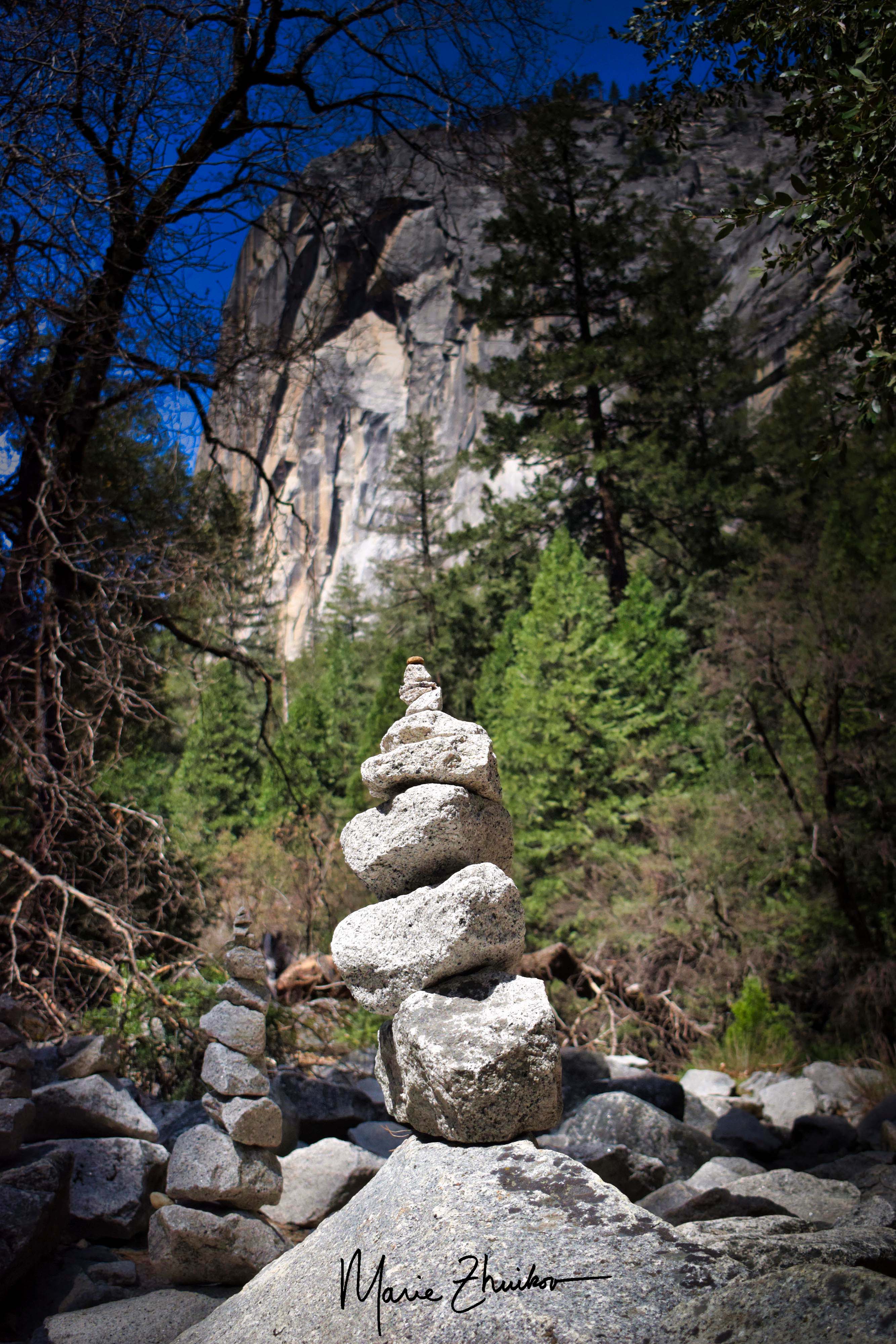
The grove had a fence all around it, which prohibited people from using the trail that runs through it. Thankfully, we were at least able to view the trees from outside the fence on the road that runs past it. Disheartened, we walked back to our car on the road, which was much easier than the trail. Positive points are, we saw a mule deer (see photo) and a cool rock cut alongside the road (see the other photo).
Another closure to be aware of is that Bridalveil Falls – the iconic waterfall that’s the first thing tourists see from the Tunnel View overlook and when they approach the park from the south, is closed. This is another closure that’s not very well publicized by the Park Service. But you can still get close to the base of the falls if you are a bit intrepid.
We spent the next few days driving through the park and doing more hiking. We visited Yosemite Falls, Mirror Lake (an easy two-mile round-trip hike on a closed paved road), Cathedral Beach, and Valley View. Valley View was hard to find because there were no signs that designated it, just so you’re aware. We tried unsuccessfully to find it our first full day but figured it out by the second day. We also ate lunch one day at the historic Ahwahnee Lodge, which is in the park.
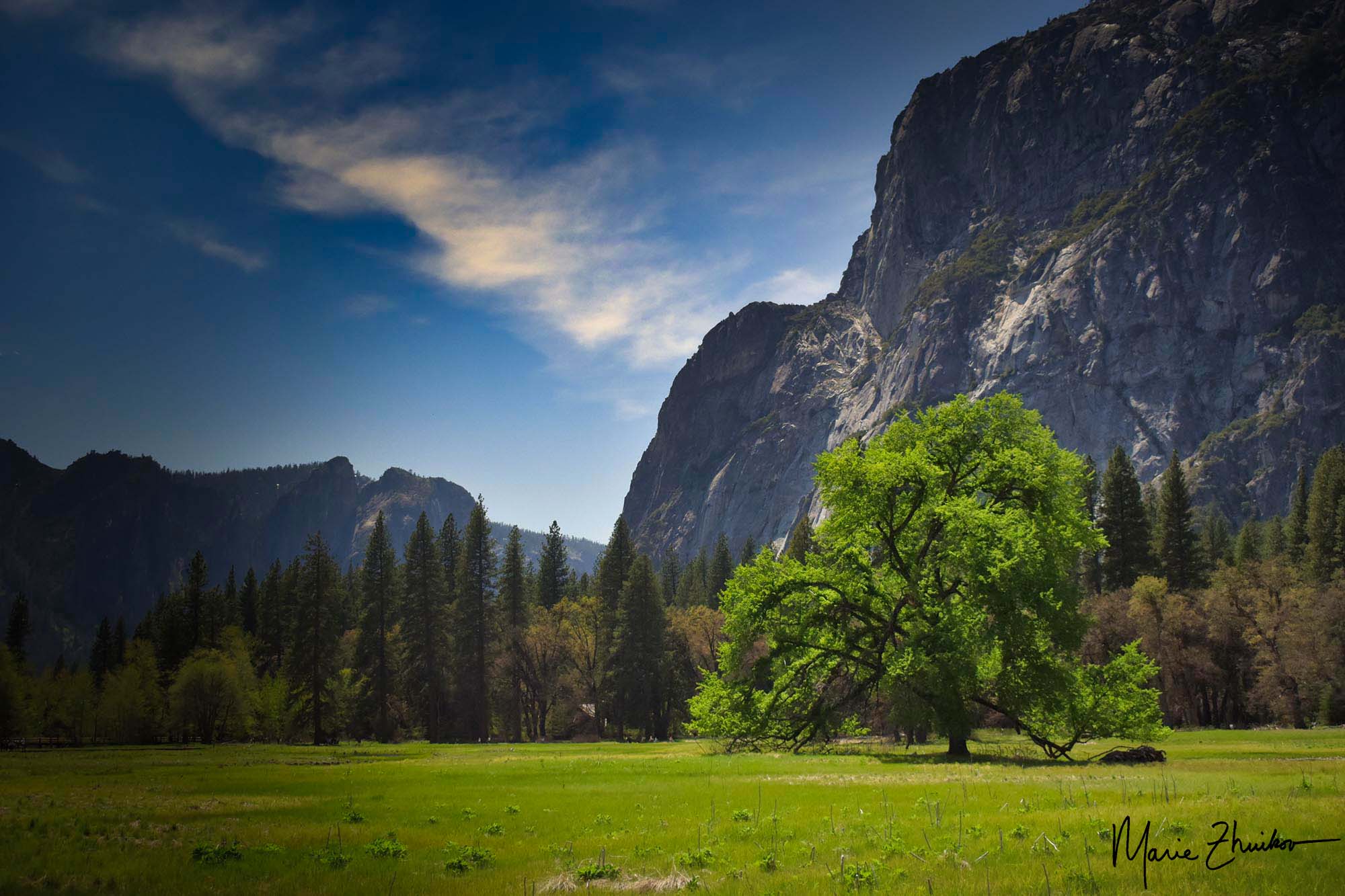
Russ’s favorite experience was visiting Yosemite Falls. There’s an upper and lower part of the falls, and he appreciated the aesthetics of the approach as you walk toward the falls. I think mine was Mirror Lake. As you can see from the photos, the reflections of the backside of Half Dome in the water were stellar, and I enjoyed the scenes available along Tenaya Creek.
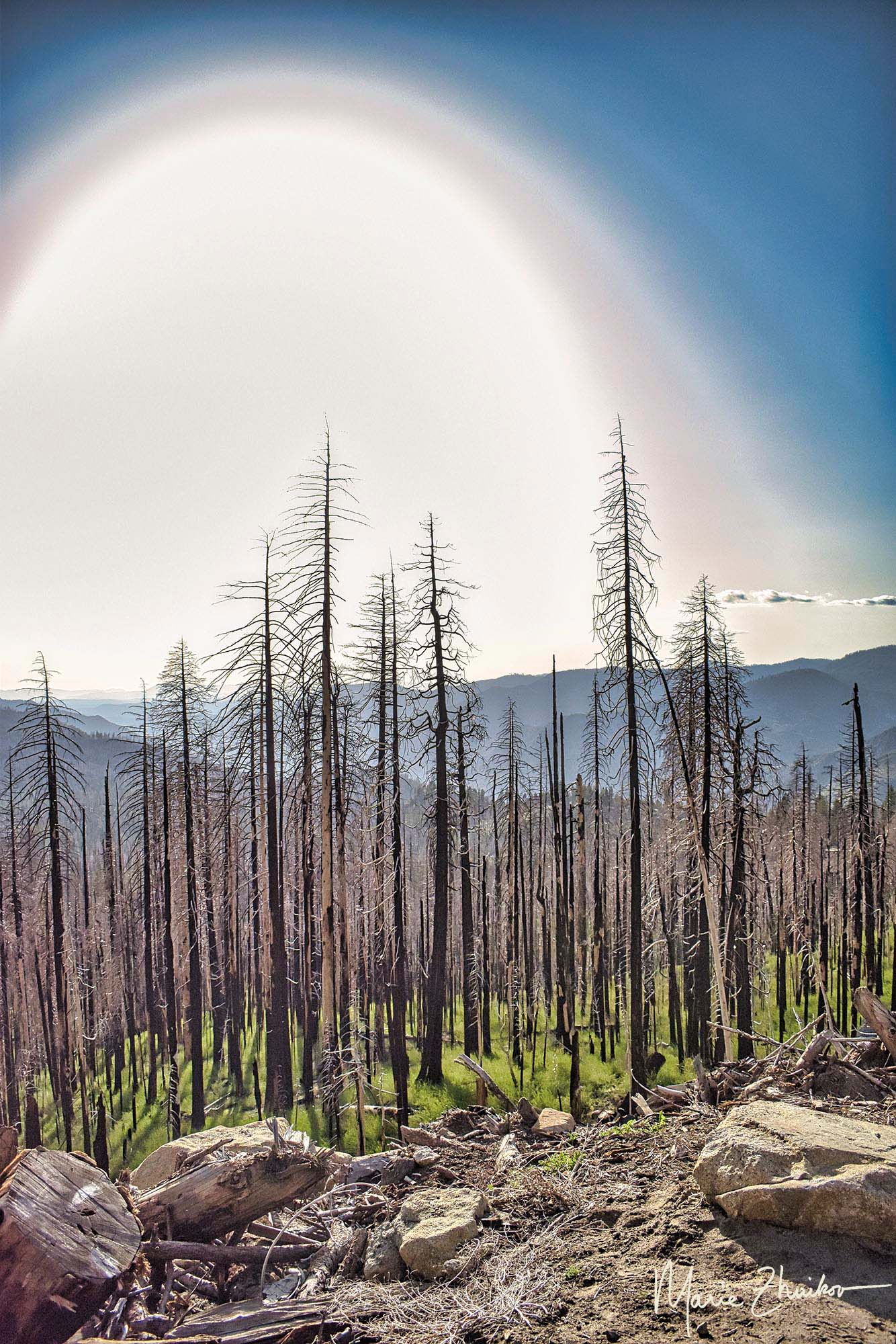
One thing that struck me was how rough the forest looked. Wildfires had obviously burned all the way into the Yosemite Valley floor. That must have been nerve-wracking for the park service. And many areas on our drive to the park were burned or showed evidence of wind damage. California has been experiencing a drought for the past three years and it sure showed. Perhaps the fire that I worked on so many years ago was only the beginning?
Timber salvage operations were taking place in the burned areas of the valley when we were there, necessitating some traffic disruption. BUT it was Spring, and the waterfalls were full, conveying runoff from the High Sierras. The water-full bounty a glorious sight to see, as John Muir would have said.
I hope you enjoy my photos. Next up: Lake Tahoe or maybe a post about my first art exhibit. I’m not sure which I’ll finish writing first.
As always, please do not use photos that have my signature on them. Others you may use with permission.
Lower Yosemite Falls in black and white and green.
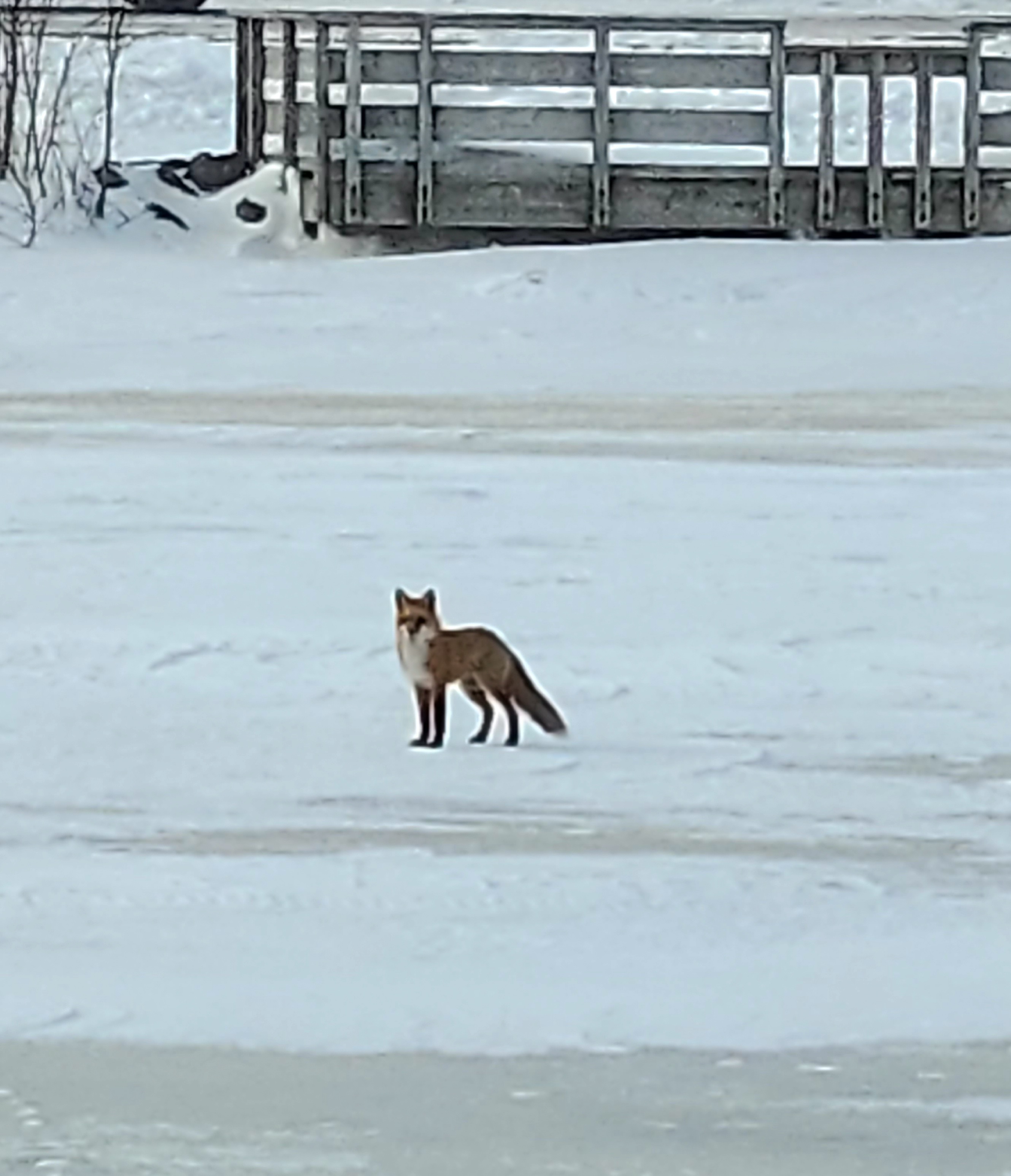
The curious fox after I crouched down. No, it did not obey the “Danger Thin Ice” sign.
My office sits on a manmade island in the Duluth-Superior Harbor. Its windows overlook a stretch of water that leads to the mainland. In addition to water, sky and ice, the view sometimes includes animals like coyotes, bears, groundhogs, birds (lots of waterbirds!), otters, rabbits, and foxes.
This winter, a fox has been frequenting the island. I don’t think it lives here – I don’t see its tracks that often, but maybe the island is one of its winter getaways.
The other day as I was transcribing an interview, I saw the fox pass my office window. It was headed toward the slope along ice and snow-covered water. I leapt out of my chair and grabbed my phone to take pictures. It was cold that day, in the single digits, so I remembered to take my jacket but not my gloves (can’t take pictures with gloves on).
I trotted out the office door and carefully looked around the corner toward the harbor. The fox was far out on the ice by now, but as I stepped away from my office building, it must have noticed my movements and it stopped, looking at me intently.
I took a few photos, but (as you can see) the fox was too distant for anything good. My hands were getting cold, so I put them into my jacket pockets along with my phone. I waited to see what the fox would do. It just stood, watching me.
I wished the fox would come closer. Inspired, I crouched down so that the fox couldn’t see me because of the small hill of snow that lined the slope leading down to the ice. Soon, the fox’s head popped up above the snow hill, his/her eyes still trained on me. Appealing to the fox’s curiosity worked!
I took a few more photos from that vantage. The fox was still too far away. I knew that food was the only thing that might lure it closer. I didn’t have any and don’t really like the idea of feeding wild animals, so I just stayed in my crouch, enjoying the fox’s undivided attention. Its fur was fluffy and full, its color a rich red – quite a handsome animal.
Putting my phone and hands back into my pockets was awkward at this angle so, my icy hands soon told me it was time to go back inside. Besides, I also realized the fox probably thought I was going to give it a handout. I’m sure other people must have. I didn’t want to tease it any longer, so I stood and went into the office.
When I looked out my window again, the fox had moved back onto the ice, but it was still staring intently at the office door. Maybe it thought I was going to come back out with some food. Maybe it missed me, ha ha. It waited a few minutes, walked further, stopped and stared again. This went on several more times before the fox gave up and trotted back to the mainland shore.
Despite the interruption in my work for pay, I felt like I accomplished a lot that day during a few minutes spent communing with a fox.
Pergrine falcon. Photo by Frank Cone on Pexels.com
One summer, not long ago, I was walking down my home street in Duluth when a pigeon came streaking above it, like the proverbial bat out of hell. A flock of pigeons lived in an old school building on the end of my street. Seeing pigeons around was not unusual, but I’d never seen one fly so fast. In another few seconds, a peregrine falcon zoomed by in pursuit.
This minidrama was a first for my quiet neighborhood, as far as I know. The birds were too far away for me to see if the pigeon was doomed, but witnessing the chase was definitely exciting.
Not long ago, peregrines were classified as an endangered species in Minnesota and the rest of the country. They were delisted federally in 1999 and in Minnesota in 2013, although they are still considered a species of special concern.
I’ve had the privilege of documenting and even helping a bit with their recovery, so seeing one fly down my street did my heart good. It all began in the spring of 1985 when I was the environmental reporter for the University of Minnesota college newspaper, “The Minnesota Daily.” A photographer and I were invited to the top of the IDS Tower (also known as the Multifoods Tower, the tallest structure in the city at that time) for a peregrine falcon media event. Staff from the university’s raptor center and biology department were going to install chicks that had hatched in a hack box that had been newly established atop the tower.
Hack boxes are large wooden boxes with a nest inside them. Young birds of prey grown from eggs that were either captive bred or taken from wild nests are placed inside the boxes a couple of weeks before they fledge (start trying to fly). In the meantime, the birds are closely looked after and provided food without too much human contact. In a few days, the box is opened, and the birds can start stretching their wings, so to speak. They are still fed until they are self-sufficient.
Why was it a good idea to introduce falcons into the middle of the city? Well, Minneapolis contained plenty of food for the falcons (pigeons), the skyscraper mimicked their preferred habitat (steep cliffs), natural enemies were scarce, and it was an easy place for researchers to access.
I remember the excitement when one of the researchers (Pat Redig) took a squawking, fluffy baby falcon out of a carrier to put into the box. As he did, he described the plight of the birds and the concept behind hacking. Photographers clicked away and reporters scribbled in their notebooks. We were able to wander around atop the building and look over the impressive edge, 51 stories high – a memorable experience in itself.
A pre-event story I wrote about that news conference ended up being 40 newspaper column inches long. This was longer than usual. My editor (Doug Iverson) asked me to justify why he should give me such a large space. I don’t remember what I said (probably something like, “because peregrine falcons are cool!”), but it must have worked because he didn’t cut its length. The post-event story I wrote made page 1 of the newspaper, which was a big deal to this cub reporter.
The next time peregrines came into my life was a couple years later when I was a summer volunteer for the Forest Service on the LaCroix Ranger District in Cook, Minnesota. My boss (Steve Hoecker), was a falconer and he was involved in the recovery effort. A hack box was being constructed on one of the iron ore mine pits nearby in Virginia, MN. Like the IDS Tower, the mine featured steep cliffs that peregrines prefer.
My memory of this experience is hazier than the IDS Tower event, but I think I helped Steve scramble box construction materials down the steep banks of the mine. I took photos and covered the story for the local newspaper.
The next time I saw a falcon, it was in the wild. I was hiking on Isle Royale, a national park island in Lake Superior in the early 1990s with a group from an Audubon Society camp, when a peregrine shot across and above the trail in front of us, like a kamikaze jet. The island features some steep cliffs as does the Canadian shore not far away where the falcons could nest. I remember thinking that maybe all the work being done to restore the falcons was beginning to pay off.
After that, my last experience with a falcon (before seeing the one on my street) was in downtown Rochester, Minnesota. It happened during the winter of 2009 when I was working at Mayo Clinic in public affairs. I lived within walking distance of my office. As I trudged along on cold winter days and evenings, a strange call of a bird echoed loudly against the clinic building walls. The call was familiar to me, but I couldn’t quite place it. And what kind of bird would still be in Minnesota in February, for goodness sakes?
It took me a few months, but I finally figured out that the obnoxious bird call that accompanied my walking commutes was a falcon. They had been hacked atop one of the clinic buildings. I think I was even able to attend some sort of celebration event about the project at Mayo that year.
If you’d like more information about the history of peregrine recovery in Minnesota, a good article can be found here.
So, it seems like peregrines have been following me around ever since my first encounter with them in downtown Minneapolis. Or have I been following them around? Maybe we’ve been following each other. In any event, their recovery is a good news story in a world beset by so many environmental problems.
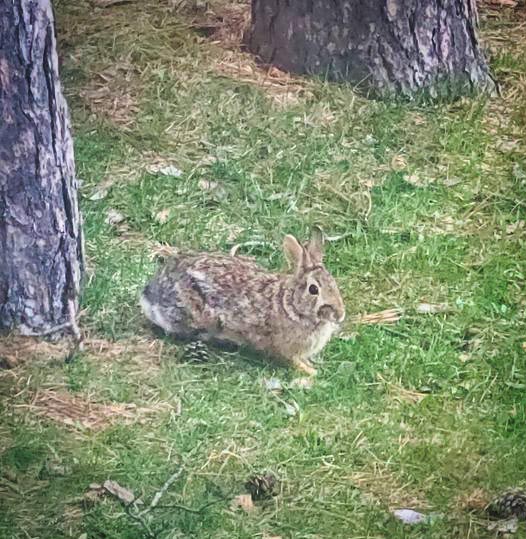
Last winter, a rabbit lived in our backyard, sheltering under our neighbor’s shed. We’d awaken in the morning, shuffle downstairs and take a look out our window on the landing where we could see the back yard. More often than not, there she crouched, a brown cottontail, nibbling what grass wasn’t already covered by snow.
Since both of our dogs died, we’ve been petless. We saw this rabbit so much, it just seemed natural to start becoming a little attached. I began leaving her offerings of dried orchard grass, remnants of our deceased guinea pig. I also initiated a naming contest for the bunny on Facebook. My friend June won with the moniker of “Tater Tot.” It fit – the shape and coloring were approximately right.
Tator Tot survived the winter and this spring we noticed several Tiny Tots scampering around the backyard – her children, no doubt. They didn’t seem to be doing any damage to my hostas, just hiding under them instead of eating them, so we welcomed these new additions to the yard.
I suspect that Tator Tot eventually left our yard for the forest at the end of our road. We sometimes saw a rabbit fitting her description during our woods walks. Her Tiny Tots hung around for several weeks and then seemed to disappear. I hope they, too, found their way to the forest. But they could have easily been eaten by a neighborhood cat or a fox.
I rather miss these foster pets. They were easy to take care of. No fuss, no muss.
I recently read Linda LeGarde Grover’s book “Gichigami Hearts.” LeGarde is a former neighbor of mine; we grew up in on the same street on the other side of Duluth. Her book offers a Native American perspective of our old neighborhood. In one chapter, “Rabbits Watching Over Onigamiising,” she describes how seeing rabbits reminds her of the Native spiritual being, Nanaboozhoo. Now, if you’ve read my book, “Eye of the Wolf,” you know that Nanaboozhoo is a trickster – part rabbit, part human. He embodies the best and the worst of humans and the supernatural.
Tator Tot
LeGarde’s backyard bunnies savored her tulips, necessitating a change the next spring to planting marigolds, which she says the “rabbits nibbled on, but not much.” LeGarde writes that planting different flowers rather than trying to eradicate the bunnies was a good compromise. “We are all here to live our lives . . . We know from traditional teachings that all animals are important to the earth, that no animal is ranked higher or lower than any other in the eyes of the Creator, and that all have a contribution to make.”
She recounted a conversation she had with a friend about seeing rabbits on clear nights in the moonlight in winter, sitting with their legs folded under them like a cat – like they were waiting for something. LeGarde’s friend told her, “When we see them like that at night it is because the rabbits are watching over us, over a sleeping world and our dreams.”
Here in the north, we have two kinds of rabbits: cottontails like Tator Tot and snowshoe hares, which are larger and turn white in winter. Rabbits in the moonlight reminded me of one of my favorite chapters in northland author Sigurd Olson’s book, “The Singing Wilderness,” about the Boundary Waters Canoe Area Wilderness. It’s the chapter called “Moon Madness,” where he recounts seeing hares on his moonlight walks.
“If, when the moon is bright, you station yourself near a good rabbit swamp and stay quiet, you may see it, but you will need patience and endurance, for the night must be cold and still. Soon they begin to emerge, ghostly shadows with no spot of color except the black of their eyes. Down the converging trails they come, running and chasing one another up and down the runways, cavorting crazily in the light.”
Olson concluded that moonlight “made animals and men forget for a little while the seriousness of living; that there were moments when life could be good and play the natural outlet for energy.”
It’s comforting to think of rabbits or hares cavorting crazily in the darkness or quietly keeping watch. I never saw Tator Tot or the Tiny Tots at night because I was, well, sleeping. Perhaps I never saw them because the magic they worked was so effective.
When I emerged from my office building in Superior yesterday evening, I was thinking about all this. As I walked, who scampered across the parking lot pavement not ten feet from me? A big fluffy cottontail. She looked suspiciously like Tator Tot.
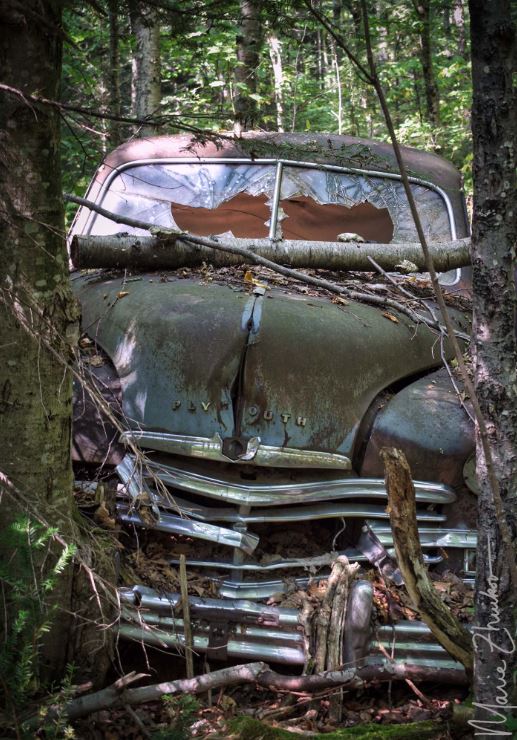
Once upon a time on Outer Island in Lake Superior, a lumber company cut much of the remaining old growth hemlocks and other trees to make baby furniture. The lumberjacks lived in a camp near sandstone ledges on the shore. They used a railroad built by previous loggers through the middle of the island to haul the heavy logs to a dock for shipping to shore. Eventually, the crew built an air strip so they could go home on weekends.
The company that used the wood was Lullabye Furniture of Steven’s Point, Wisconsin. By the 1960s, logging on the island cost too much, so the men left their camp. They also left behind the buildings, old trucks, a stove, a water tank.
Slowly, the forest took its revenge. Snow knocked down the buildings, the trucks rusted, animals carried away seat cushion stuffing for their nests. The forest regrew, swallowing the lumber camp and reclaiming the land as its own.
Russ and I meandered to the Apostle Islands National Lakeshore last month. We had the privilege of camping on Outer Island for two glorious, warm nights. Lake Superior was so calm, we could hear ore boat engines quietly throbbing even though they were dozens of miles away as they passed the island.
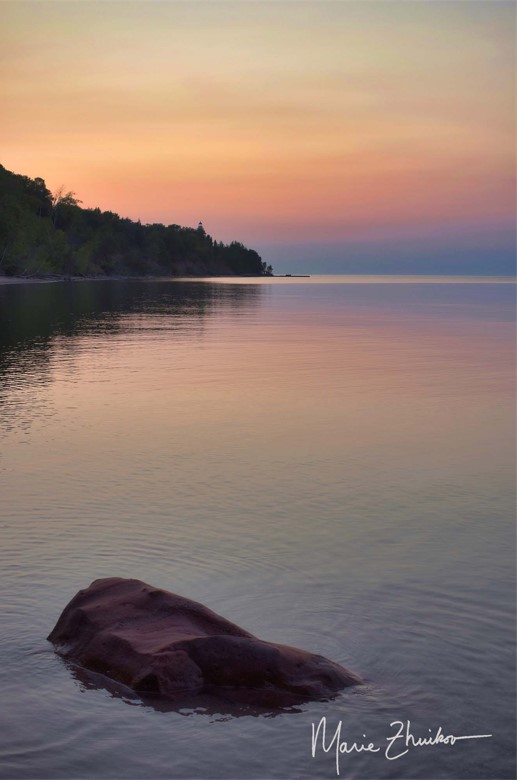
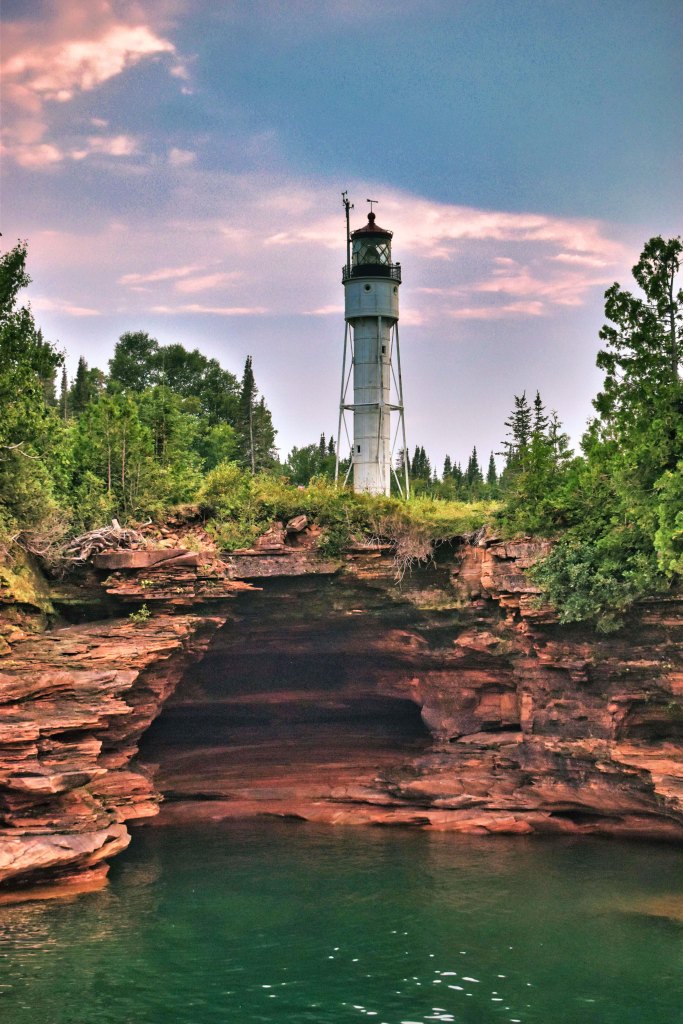
I took this shot from the beach near the lighthouse. You can just see the lighthouse over the tops of the trees by the dock. A wave-worn rock provided a perfect foreground. Can you feel the peace?
I’ve never had time to just hang out somewhere and take photos for a week. That’s what I was able to do (thanks to my awesome workplace) earlier this month. I took a landscape photography class at the Madeline Island School for the Arts.
Madeline Island lies off the Bayfield peninsula in northern Wisconsin. It’s adjacent to (but not part of) the Apostle Islands National Lakeshore.
The class focused on sunrise and sunset photography. This made for long days, but it was worth it. The class was life-changing and life-affirming. I knew I had a good eye — I told my fellow students I learned photography “by osmosis” from my mother — but I’ve never had any formal training in it. An F-stop? ISO? What are those? I got a crash course and affirmative feedback, but am still learning.
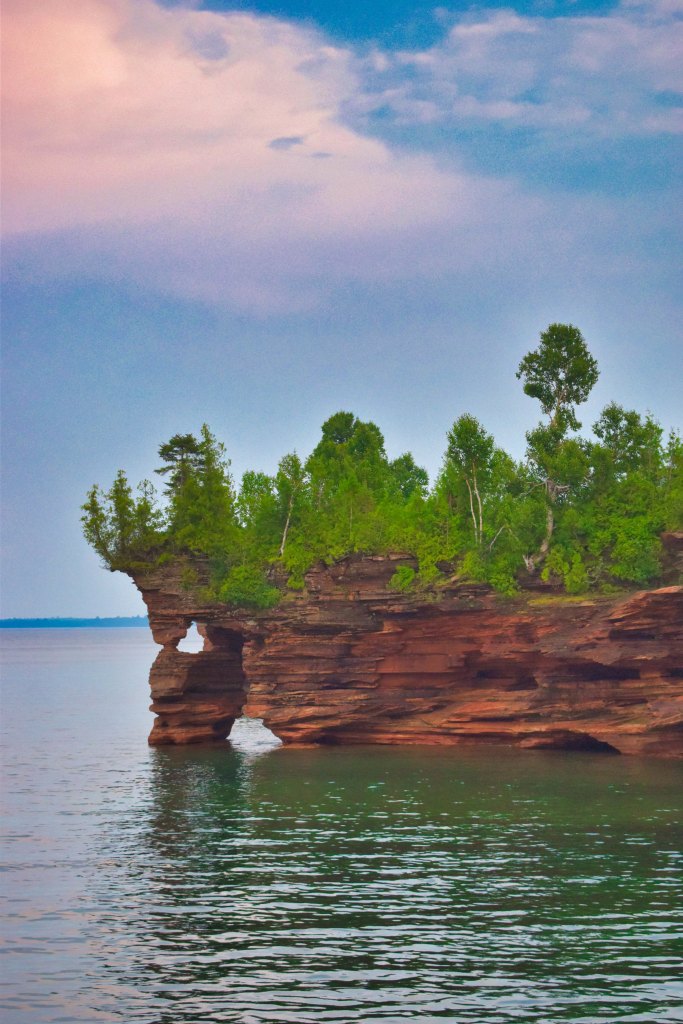
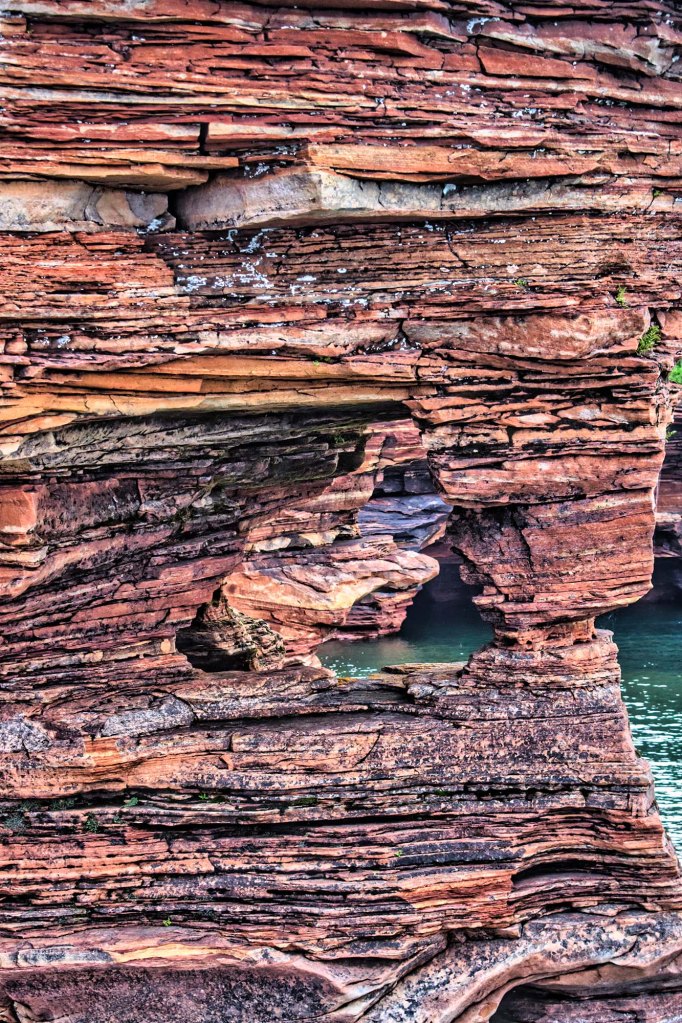
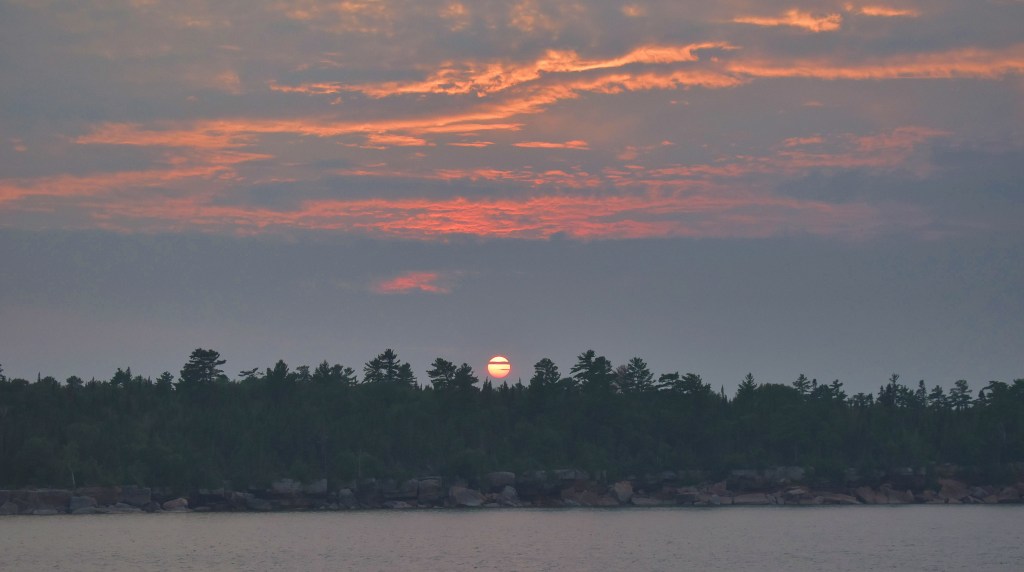
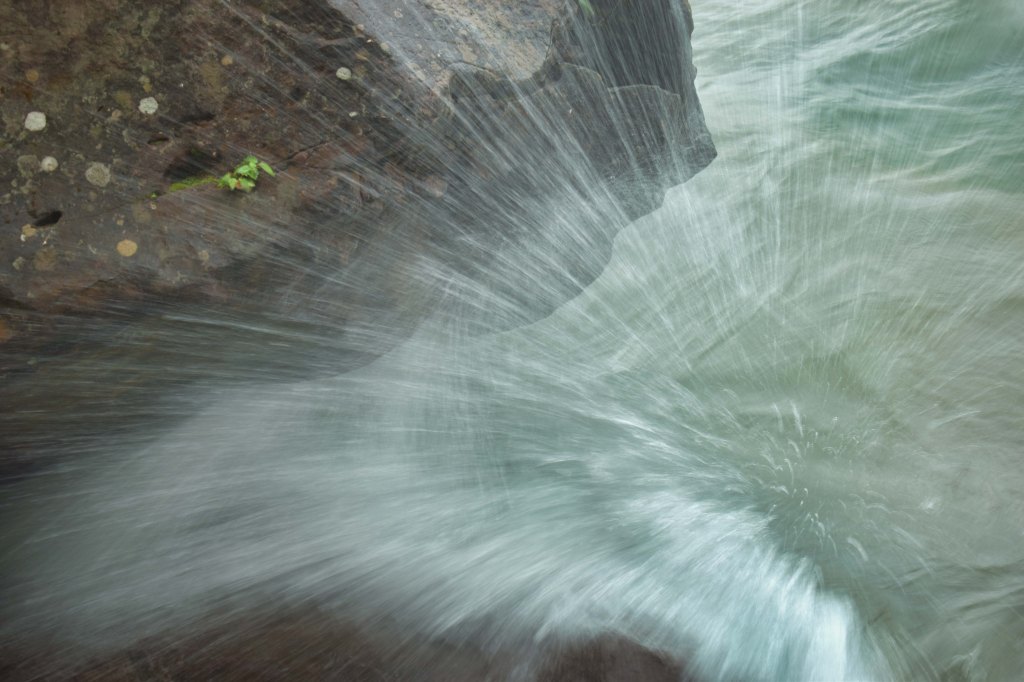
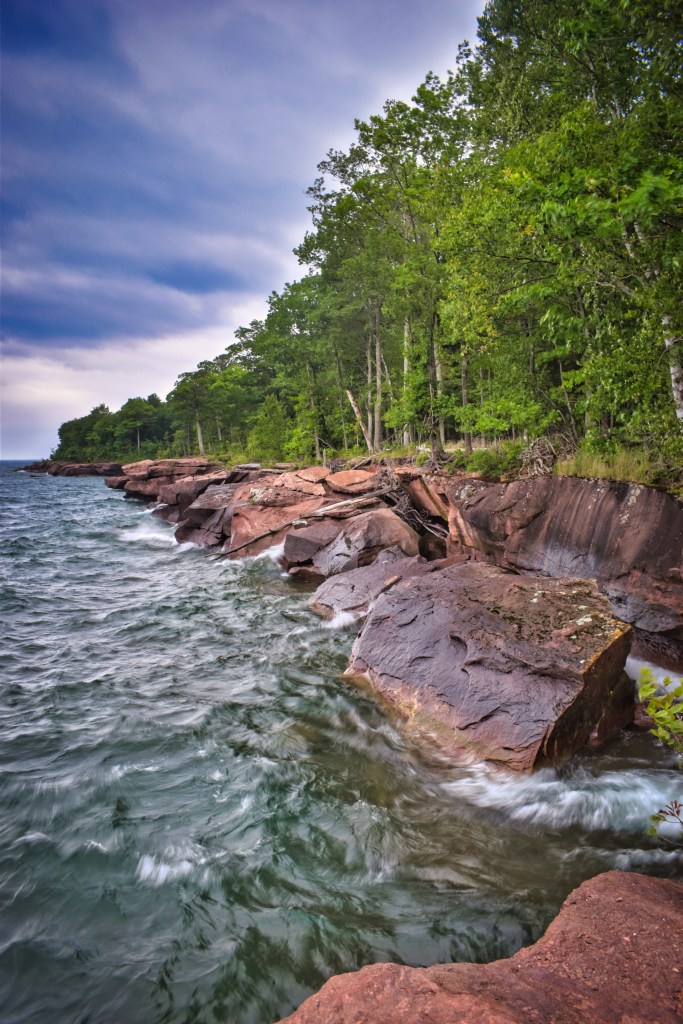
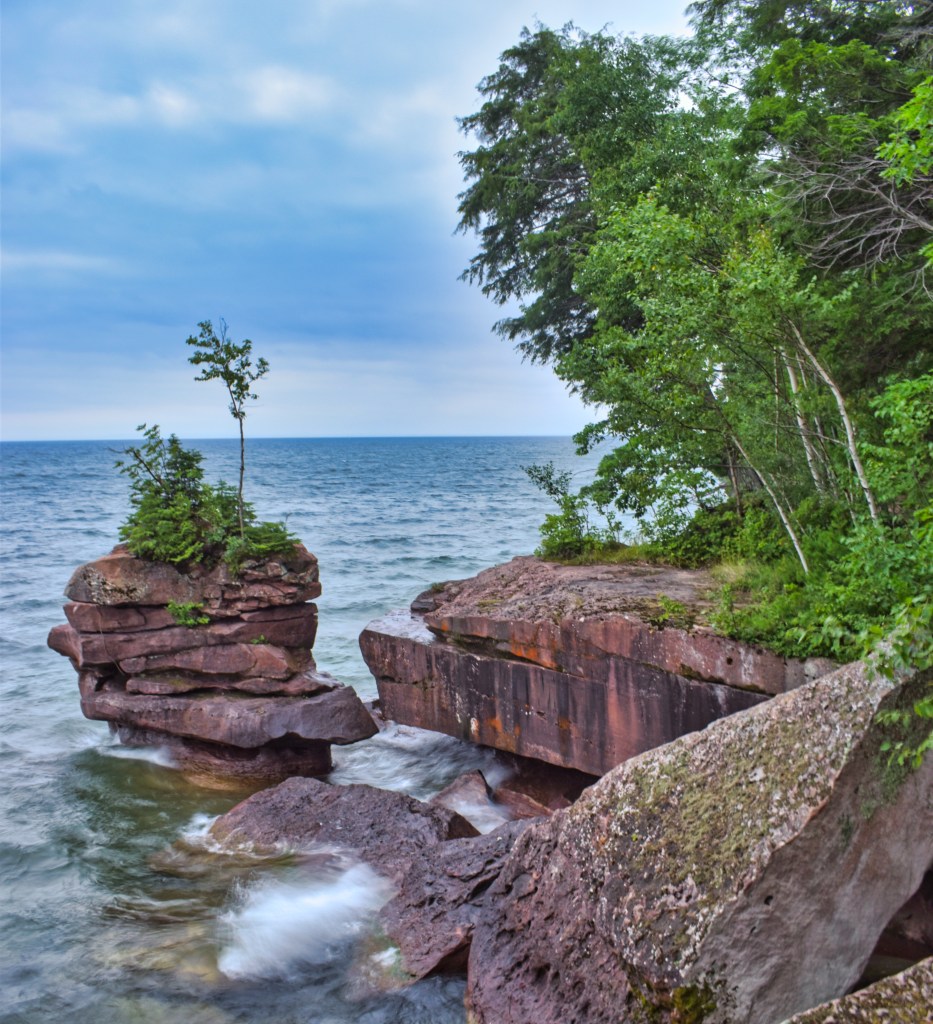
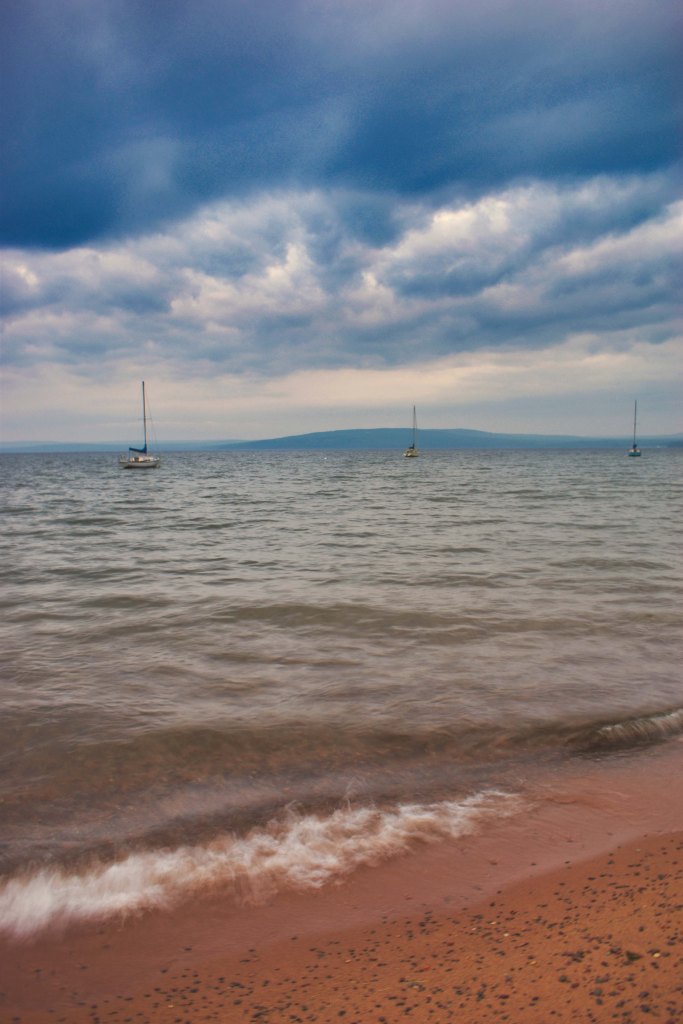
I’d like to share some of my favorites from the week with you. Locations include Joni’s Beach, Grant’s Point, Big Bay State Park, Black Shanty Road wetlands, the art school grounds, and Devil’s Island.
As always, feel free to use my images, but please give me (Marie Zhuikov) credit.
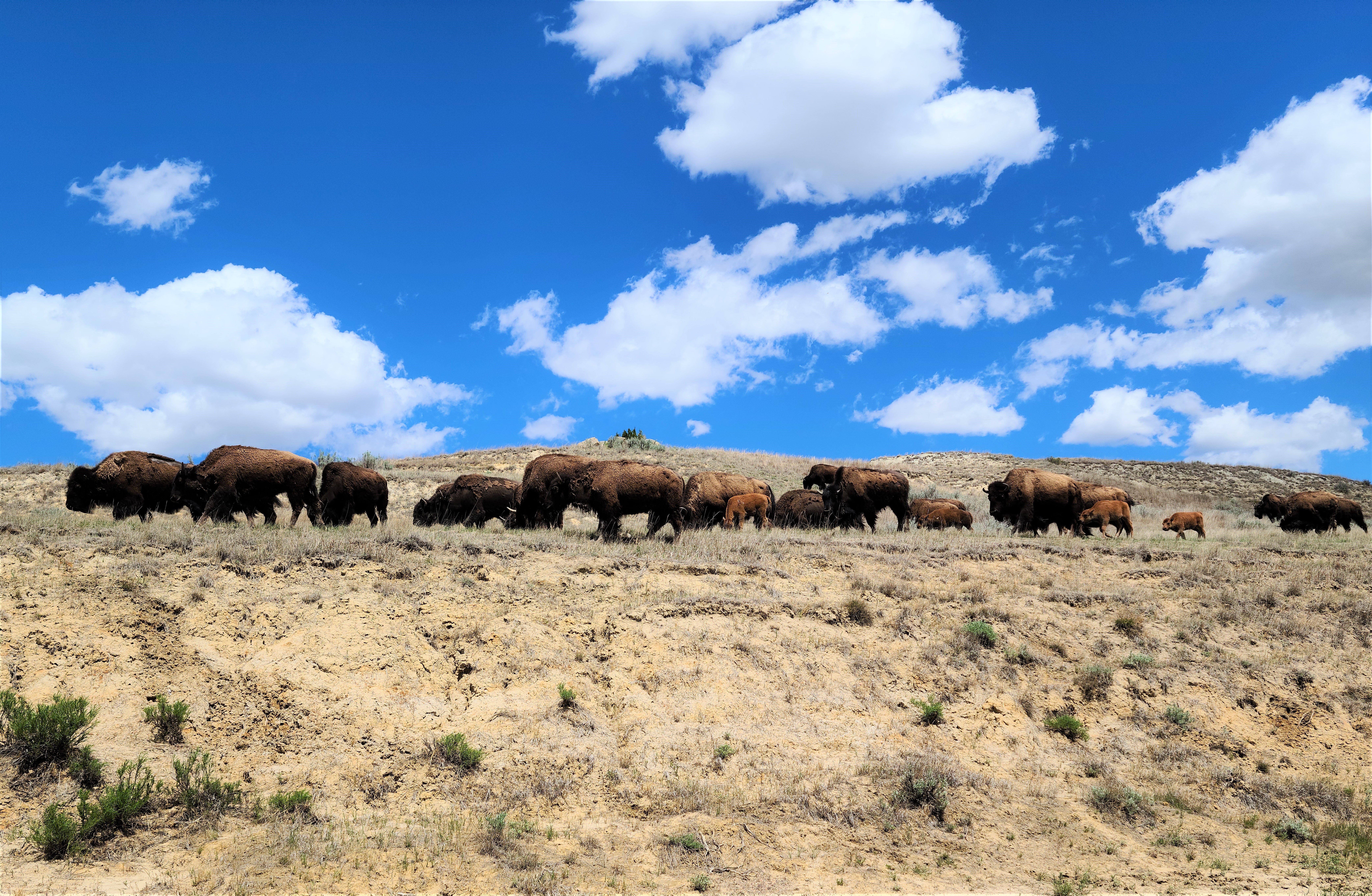



As you may be aware, Russ and I had the chance to camp in Theodore Roosevelt National Park last month. Here’s my last group of photos from the trip. We felt privileged to wander among the wild buffalo, horses and prairie dogs.