A Lake Superior Cruise

I stopped freelance writing a few years ago, choosing instead to focus on writing fiction and poetry. (And this blog!) I was tired of hiring out my brain for somebody else’s use, since that’s what I do all day at work already. Thankfully, I also no longer had a financialLSMagazineMay16 need to freelance, so I made the conscious decision to stop.

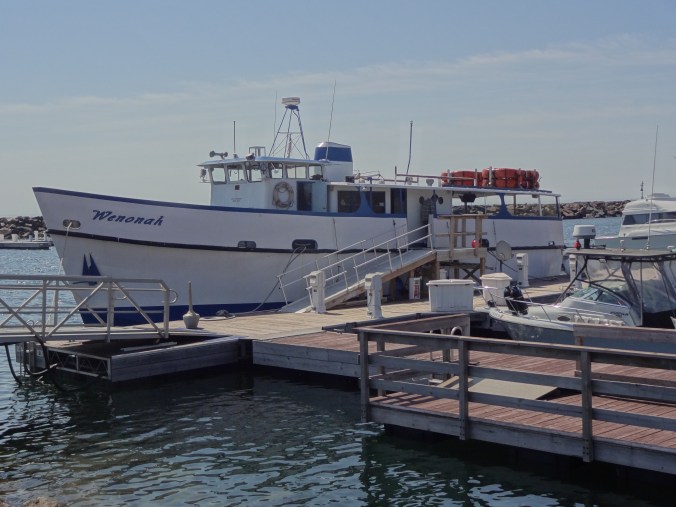
That worked well until about a year ago, when I took a cruise on Lake Superior aboard the Wenonah, the ship that took me on my first trip across the lake.

The cruise dredged up old memories. I considered blogging about them, but once I started writing, I realized I had a story I could sell, dang it!

Alas, I succumbed to freelancing, but at least the story was one I truly wanted to write. I know, poor me. It’s a good problem to have.

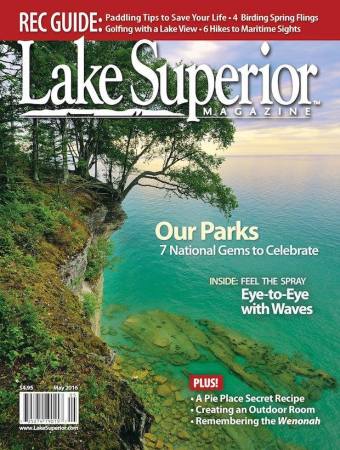
My story was recently published in Lake Superior Magazine. It’s a superb magazine — pick up a copy and check it out! (Page 14.)

They also published a couple of my photos. But I have gobs of other photos I took that day, which I thought I would share with you. Please enjoy this virtual cruise along Lake Superior’s North Shore.

DSC02270

The Wenonah at Silver Bay Marina.


DSC02290

The tip of Gold Rock, site of a shipwreck in 1905 that claimed a life.

DSC02298

That turquoise water looks like the Caribbean, doesn’t it? I wouldn’t jump in though. It’s a bit nippy.

DSC02303

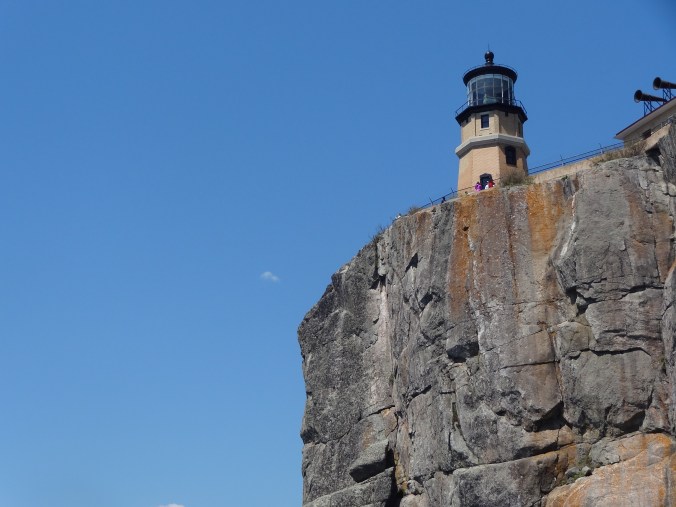
Coming around Split Rock Lighthouse. Not many people get to see the lighthouse from a mariner’s view.

DSC02310

A more classic view of the lighthouse.

DSC02322

People frolicing with gulls on an island off Silver Bay.

DSC02327

Piles of taconite pellets waiting to be shipped south to be made into steel.

DSC02333

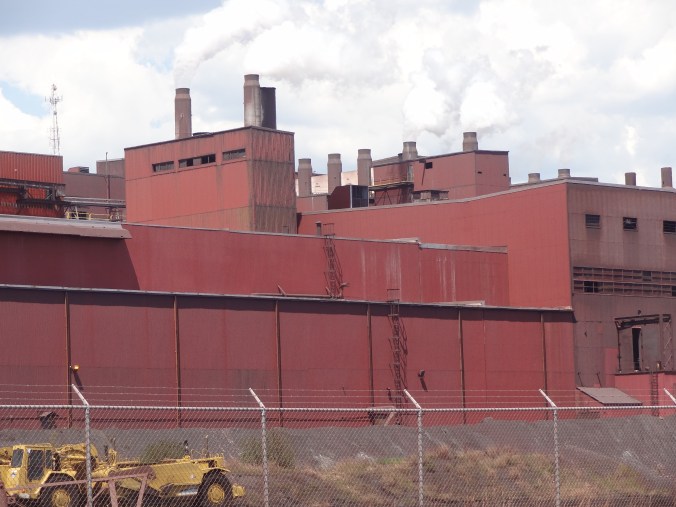
The taconite plant in Silver Bay, although it looks more like a cloud factory. Perhaps it’s not beautiful, but it’s part of the cultural landscape of this area.

DSC02275

The rugged coastline of Lake Superior’s North Shore.


My Recent Embarrassment with White Culture

NativeWhite

Nothing says Native American better than a white girl in a headdress.

Native Americans are the largest non-white population in my northern Minnesota county, coming in at just over two percent. Even though they are the largest “minority” population, in my experience, the “majority” community still struggles to remember to represent Native Americans on decision-making and natural resource committees. But I recently participated in two events where natives were remembered and asked to take part. However, the events reflected poorly on us white folks.

The first event was a journalism panel for a project (One River, Many Stories) that’s trying to bring journalists together to write about a major river that flows through our community. The river, which has been a dumping ground, is being cleaned up and is the focus of major restoration and community planning efforts.

The three journalists on the panel were speaking about collaboration for this project. One was Native American and the others were white. Granted, getting media types — who have been trained to compete with each other — to cooperate is a tall order to begin with, but as the discussion and Q&A session progressed, I felt increasingly chagrined. The native journalist was giving the audience tips on how to find story sources through old records and by talking to people. The white journalists were spouting the corporate line and jumping on chances for exclusive stories. Hello. The whole point of the discussion was collaboration, which the white journalists just didn’t seem to grasp.

Even the audience (mostly white from what I could tell) ended up grand-standing and sniping about which media outlet was the better storyteller. I left the event embarrassed by the blatant blindness to the benefits of collaboration by the white folks.

The second instance was an open mic poetry/prose reading last night at a local coffee house. Although anyone is welcome to read at these sessions, each features an established writer who is given extra time to showcase their work. The featured reader last night was a Native American. His reading concluded with a song he sung in Ojibway. Once done, he invited a lady on stage to read, who also looked native.

Their poems were moving and heartfelt, raw and sentimental. They worked for me. What didn’t work was the lady who read last. She was a blonde older woman who ended her set with a song from a play she wrote. She said she decided to sing in appreciation of the featured reader. But as she belted out several times that she was a “full-blooded Indian” and had endured repression as a native, I began to squirm.

Now, I know that Native Americans come in all colors, but this lady was definitely not native. And I understand that she was trying to honor the culture in an artistic fasion. But I don’t think she realized how farcical it is for a native to see a white person trying to “be” native. It made about as much sense as a Nigerian singing onstage about being Swedish, even if that Nigerian really digs and honors Swedish culture.

I’m sensitized to this issue from recently reading Alexie Sherman’s “The Absolutely True Diary of a Part-Time Indian,” but also because over the years I’ve spent time on reservations around the country, in kiva ceremonies and at pow wows, and with Native American medicine men. Besides, don’t forget that I am a whopping 0.4 percent Native American myself (smirk).

I realize I’ve opened a can of worms with this post. I guess what I am trying to say with it is, please, please, please white people – there are better ways to honor Native American culture than by trying to pass yourself off as something you are not. And please learn how to collaborate, a trait that seems to come so much easier to native peoples. I worry about white culture’s ability to survive on several levels unless we do so.

A good blog post about Native American cultural appropriation can be found here.

As I left the coffee house last night, the two native poets happened to walk out behind me. I casually held the door open for them. It was the least I could do.

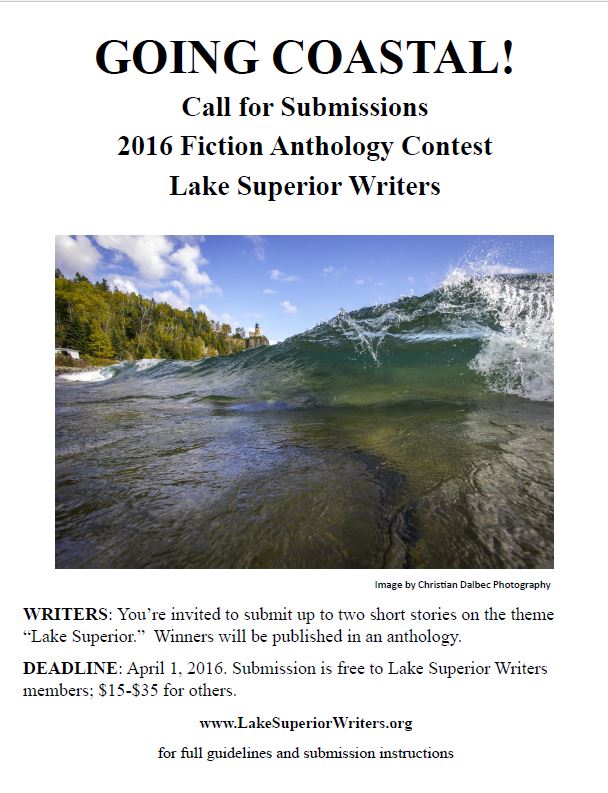
Going Coastal! Lake Superior Writing Contest

PosterJpeg

If you’ve ever written a short story (6,500 words or less) about Lake Superior or you’d like to write a short story set in or around it, this is your chance to have it published. Instead of cash prizes this year, the writing group I belong to is offering the chance to be published in an anthology.

Authors can submit up to two stories. The deadline is April Fool’s Day, 2016. Don’t be a fool! Let’s all go coastal and then write about it. See the rules here.

That Scalp-Tingling Feeling


001cropped

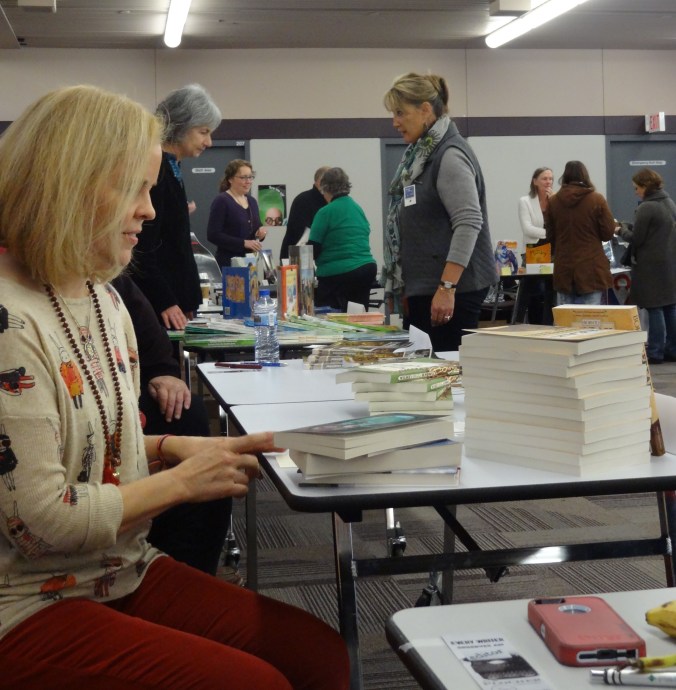
People at one of my recent book events (but not the one I describe here).

While I was sitting at a bookselling event today, waiting for someone to come to my table, I experienced a feeling I’ve had only a few times in my life: a tingle that travels from the back of my neck up to my scalp, and I kind of zone out.

It’s a pleasant feeling – one I first felt in elementary school when the rest of the class was bent to their work and the teacher was writing on the chalkboard – the chalk rasping softly on the board. It was peaceful, and then the tingling began in my neck and travelled up my scalp. My eyes unfocused and I was just living and feeling in the moment.

Today it happened while there was a large crowd at my bookselling event. People were visiting various tables where artists were displaying their wares around me. Their talk was a low hum, everyone was busy looking at the artists’ offerings or in conversation. I observed the scene and the tingling began.

I realized that in all the books I’ve read or conversations I’ve had, I’ve never heard anyone else describe a feeling like this.

I tried to figure out just what it was. It’s peaceful and fuzzy. Dare I say I was contented????

Maybe that’s it: scalp-tingling contentment. Has anyone else ever experienced this, or am I just weird? By the way, I had sold a lot of books by this time, so I was content in that respect. (Smirk.)

The Power of Collaboration (and how it Relates to the Pitch Perfect Movies)

002

Teague Alexy, collaborator extraordinaire.

I admit it. I’ve watched Pitch Perfect 1 and 2 movies. Pitch Perfect 1 helped me escape from a hard time. The humor is truly funny and the singing – well, it just makes you want to walk around performing acapella and dancing all day. I just watched Pitch Perfect 2 and it’s got me musing about the value of collaboration.

In the movie, one of the lead singers of the “Bella” college acapella group ends up collaborating with one of the newest members to create an original song, which not only impresses her music industry boss, it helps the group win the world acapella competition.

This weekend I was privileged to be part of a book launch and music event that was a collaboration between 10 or so local authors. The lead author/singer (Teague Alexy) could have held the event by himself, but he chose to invite others to participate. He even took a chance on someone like me – a local novelist and poet who he just met a week ago (but we share a publisher.)

He held the event in an independent theater in downtown Duluth. Attendance wasn’t huge –a lot of events competed that night – but I’m sure it was larger than if he had been the only one performing. The range of styles of the authors was refreshing and mind-expanding, and I met several new ones.

Earlier in the day I had a conversation with an established author. We talked about how being an author (even one with a hard cover book published by a state university press) doesn’t mean you will rake in the dough. We agreed that the lifestyle is the reward, not the profit.

The night of the performance, I could have been sitting around home banging away at my computer or doing dishes, but instead I joined a bunch of other writers and we shared our work with an audience. The power of collaboration was evident then, and I’ve seen it at operate many times in the past in my day job, when organizations work together to strengthen the reach of their programs and projects.

I truly believe that organizations that try to protect their turf by outcompeting the competition are missing a great opportunity. I just want to say that if you’re an author, don’t be afraid to share the limelight with others – it will be to your advantage. Likewise if you’re an organization.

It takes a village to make a good book launch. And if enjoying Pitch Perfect 1 & 2 is wrong – if collaborating is wrong – I don’t want to be right.

My Obituary

I was digging through an old grocery bag of papers and artwork from my school days when I found a news story that detailed my death. I must have written it for English class. Here it is:

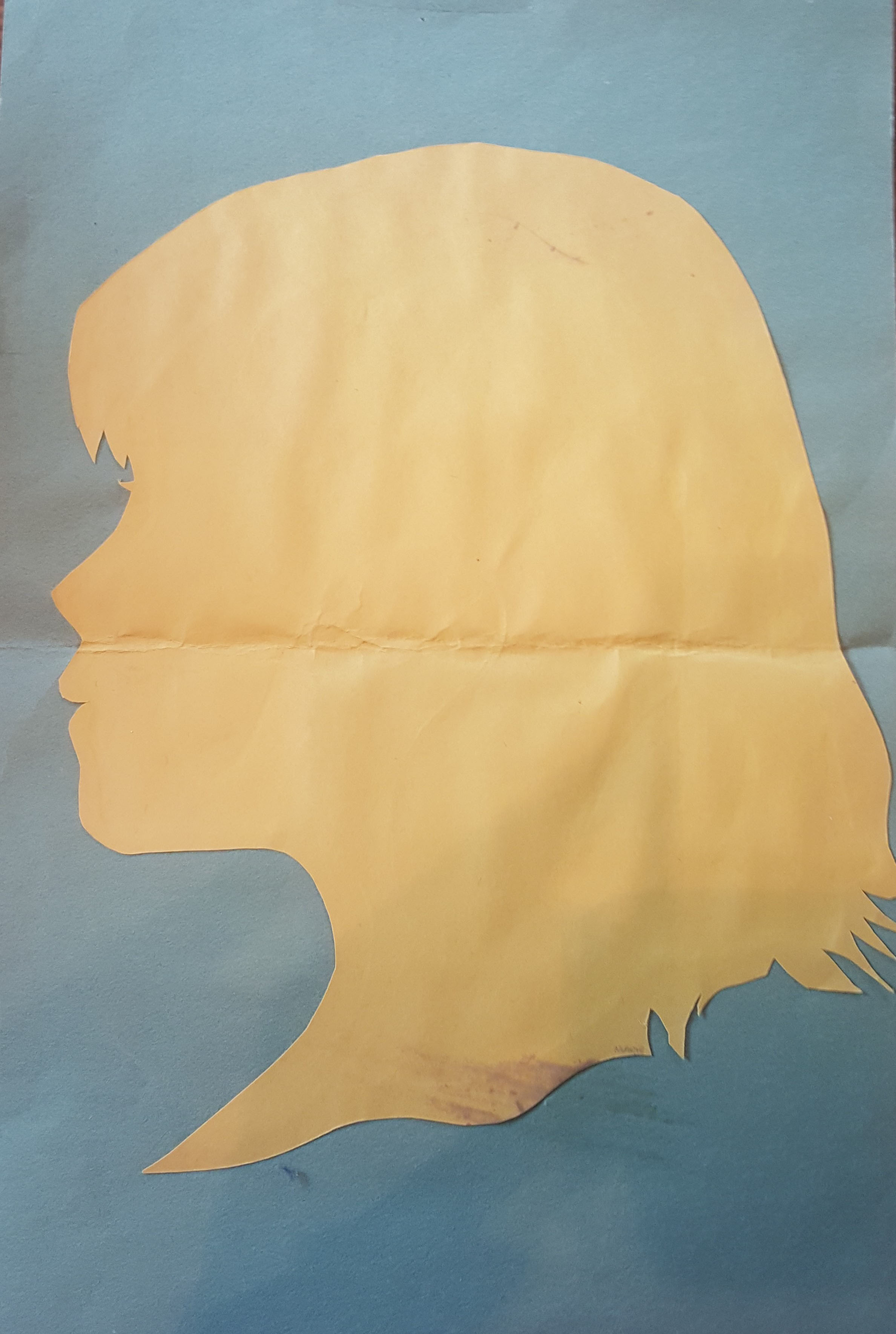
Another schoolwork bag find: my shadow portrait from sixth grade.

Another schoolwork bag find: my shadow portrait from sixth grade.

Marie, 16, died today after saving five girls from drowning. She was lifeguarding at the YWCA girl’s camp, Camp Wanakiwin. The girls were having trouble swimming to shore from an airplane that crashed in the lake near the camp.

Said one of the rescued girls, “She was going back to the plane to get a sixth girl when the plane blew up.”

Marie had completed her sophomore year at (specific school name deleted to protect the innocent). Her anatomy teacher said that she was witty and smart. “I used to give her a hard time,” he said. “Her presence will be sorely missed in school.”

Marie was one of the top swimmers and cross-country skiers at (school name), holding the city titles for 100-yard breaststroke and girl’s senior high cross-country skiing.

The funeral will be held at First United Methodist Church, 10 a.m., this Wednesday.

I’m sure I wrote the story tongue-in-cheek (delusions of grandeur, much?!), but it gives a glimpse into the things that were important to me at the time: mainly, my lifeguarding class and athletics. My anatomy teacher was my favorite because he was always cracking jokes and made learning fun. And what better way to leave this world than in an effort to help others, combined with a big explosion!

Later, after I became a mother and wrote a relative’s obituary, I wrote a serious obituary about myself. Motherhood and my relative’s death reminded me of my mortality, and the journalist in me wanted to know that the last words written about me would be somewhat accurate. That obituary has been lost to the winds of time, but I recall it focused on my career and role as a mother.

Lately I’ve been considering taking a stab at another one. Not to be morbid, but because I’m not sure that my kids or relatives know enough to do it justice. I mean, think about it. Good obituary writing is an art. And for some people, it’s the only time they’ll ever get in the newspaper other than their birth announcement. I’d really rather have my obituary say more than I liked knitting and was a good speller.

I’ve saved a couple of friends’ obituaries I thought were well written. But I suppose that even after I rewrite mine, I’ll have to update it — sort of like a resume or a will. Things change the longer you live. Accomplishments that were important to you in high school no longer matter as much when you’re in your fifties.

From my past efforts I know that writing your own obituary causes you to take stock of life. It makes you ask: Is what I’m doing really important? (To yourself or to society.) Is this how I want to be remembered? Do I need to change something?

Who will write your obituary after you die? Do you think they’ll get it right? Does it matter or is it all vanity? It’s something to consider.

Radio Interview About My Books

Hello — Life has been sweeping over me like a tidal wave recently, but I was still able to make time for an interview about my novels on a community radio station. Follow this link to hear my interview yesterday on KUMD’s Minnesota Reads show (and discover why I’m nervous to have my parents read my books).

I was honored to be included in the show, which airs every Thursday morning at 8:15 a.m. Tune in!

Spending the Fourth of July in . . . the Twilight Zone

William Shatner and the gremlin in

William Shatner and the gremlin in “Nightmare at 20,000 Feet.”

While most people in Duluth were finding their way to favorite spots on the hillside or waterfront to watch the night’s fireworks display, I got distracted by the SciFy channel’s Fourth of July Twilight Zone Marathon. I had socialized and visited the beach earlier in the day, and was watching a bit of television before leaving for the fireworks. Problem was, an episode was airing that scared the bee hooosis (Minnesotan for bejesus) out of me when I was young.

I hadn’t seen “Nightmare at 20,000 Feet” since that fateful night my parents were out and I watched a scary television show despite their instructions to the contrary. Would the episode be as frightening to now? Would the face that appears in the airplane window when the passenger draws back the curtain make me hide behind the living room curtains like when I was little?

I had to watch it. Fireworks be dammed. Cue Rod Serling’s opening narration:

Portrait of a frightened man: Mr. Robert Wilson, thirty-seven, husband, father, and salesman on sick leave. Mr. Wilson has just been discharged from a sanitarium where he spent the last six months recovering from a nervous breakdown, the onset of which took place on an evening not dissimilar to this one, on an airliner very much like the one in which Mr. Wilson is about to be flown home – the difference being that, on that evening half a year ago, Mr. Wilson’s flight was terminated by the onslaught of his mental breakdown. Tonight, he’s traveling all the way to his appointed destination, which, contrary to Mr. Wilson’s plan, happens to be in the darkest corner of the Twilight Zone.

Robert Wilson is played by a young William Shatner. His wife sits beside him on his plane ride home from the sanitarium.

I marveled at the 1960s clunky airplane backdrop, made with cheap wood paneling, the airline seats with so much room on either side they looked like today’s first-class seats, and the quaint plaid curtains covering the plane windows.

Was I was scared watching the show now? Of course not. I’ve been too jaded by the likes of “Jaws,” and “The Exorcist,” and “Amityville Horror,” and dozens of other horror movies for a little Twilight Zone to scare me. But I understood why the story was so frightening when I was younger; it was the feelings that Mr. Wilson was alone in his belief that someone was out on the airplane wing. The plane is in peril from this person outside. Only he knows this, but he can’t make anyone else believe him because the humanoid (which we later learn is a gremlin) hides when anyone else tries to see him. That kind of emotional tension must have been unbearable to me as a child.

Plus there’s the tension and surprise when Mr. Wilson closes the curtain after seeing the gremlin the first time, but then wants to open it up later, just to check if anything is really out there. His hand hesitates above the curtain as he struggles with his feelings. When he draws back the curtain, the gremlin’s morose yet curious face fills the entire window. (I suspect this is the point where I fled behind the curtains.)

Nightmare_ar_20,000_Feet_GremlinThe gremlin’s appearance in the window is scarier than the appearance of the gremlin itself. He’s more like a wooly clown with a bad make-up job. But it’s all the peril and tension that made this episode so memorable.

This little trip down horror memory lane was worth missing the fireworks show. Even after all these years, it reminded me what makes a good horror story: tension, surprise, peril, and emotional isolation.

Now, if I could just remember that the next time I write a horror story. Who knows? Maybe I will scare the bee hooosis out of a seven-year-old.

Writing at Dream Speed

The Northeastern Minnesota Book Awards ceremony was held a few days ago in Duluth. I attended in because my novel, Plover Landing, was nominated in the fiction category, and because it’s fun to hob nob with other writers. Although any hope of an award was futile (sniff, small sob), the event always has inspiring speakers (see last year’s blog story), and poet Barton Sutter provides entertaining emceeing.Layout 1

This year’s speaker was Duluth Poet Laureate Jim Johnson, who offered a tongue-in-cheek look at the writing process. Regarding the importance of writing rituals: “The muse can only find you at the same place and same time every day. The first step in writing is to be there . . . . While you are waiting for the muse to appear, you might as well write.”

Is the writing process about hard work or inspiration? “Yes,” is Johnson’s answer. “You can’t write if your ritual doesn’t work right. Don’t skip over the details!” Then he went into a long explanation of the importance of exact paper and pen placement on the desk, having all your pencils sharpened, your computer programs updated, etc.

Is all this preparation and procrastination worth it? “Trust me,” Johnson said. “Something will happen. When it does, it’s magical. The words will come out at dream speed . . . . This is its own reward. Writing isn’t about money, awards, or publication. Sometimes we’re rewarded, sometimes not. The odds are not good.”

DSC02240

The crowd gathers for the Northeastern Minnesota Book Awards presentation.

Basically, he was saying that writers need to trust in whatever process they’ve developed, and that the key is to persevere despite rejections from publishers or awards judges. There’s nothing better than when the words seem to come of their own accord and you get into that “flow.”

Keep flowing, my friends. Keep writing at dream speed.