Wisconsin Public Radio Interview – Holiday Reads

love-books-1Greetings! I had the privilege of being interviewed last week on the local Wisconsin Public Radio affiliate, along with Julie Gard, a poetry professor at the University of Wisconsin-Superior, and Julie Buckles, the public relations person for Northland College in Ashland, Wis.
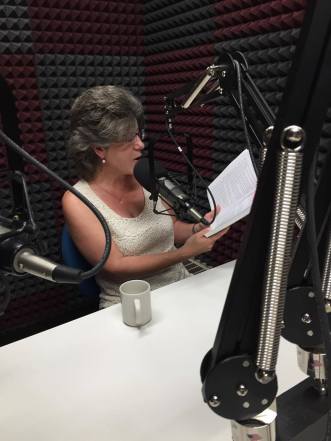
The show is hosted by Danielle Kaeding, now a full-fledged reporter for KUWS Radio (91.3 FM), who assisted me when she was but a college student and I had a radio show for work. Danielle hosts “Hear Me Out,” an hour-long show every Friday morning. She asked us what books we recommend for holiday gifts and holiday reading. (During all that spare time you have during holiday break – right!?)

In my role on the board of Lake Superior Writers (a local writers’ group), I always like to feature our member writers and other local authors when the topic of books comes up. And this interview was no exception. Between the three of us, we hit many of the most recent books produced locally. I only wish we would have had more time to highlight even more authors.

Our interview is featured in the first half-hour of the show. You can listen here.

Oh, and if you need a little romance during your holiday, don’t forget about my books.

Happy Reading!

How I got into a Fight with Carol Bly

PS3552.L89.M9.2000, author

Carol Bly. Image courtesy of the Minnesota Historical Society.

For those of you not familiar with the literary scene in Minnesota, Carol Bly is a literary legend in the state who has passed on to the great beyond. She is best known for her nonfiction essays about rural life compiled into the book “Letters from the Country.” She was born in Duluth and lived not too far away for most of her life. She was divorced from poet Robert Bly and they had four children. Carol’s writing had a strong moralistic and socialist voice. In her later years, she started teaching writing.

That’s where I come in. In the 1990s, I was one of about a half-dozen local writers selected to take a workshop with Carol. At the time, I was working on my first novel, “Eye of the Wolf,” and I was looking for all the literary education I could get.

I entered the workshop with trepidation because I had heard how forthright and brutal Carol could be with her critiques. Little did I know that her feedback would turn me off from writing for two years and that we would have a literary argument that would even be reflected later in Carol’s relationship with one of her daughters.

Most of the several-day workshop was great. I enjoyed Carol’s quick wit and literary experience. We had group discussions and writing exercises, which culminated in a one-on-one review of our work by Carol. As you know, my work is fictional and romantic and Carol was a nonfiction writer. I expected some differences just based on our genres, but I didn’t expect the depth of those differences.

Through her critique, I became aware of how much more work I needed to do with my novel to better incorporate descriptions of the settings into the story. I could see how much more time that was going to require, which was depressing and overwhelming at that point because I felt like I’d already put so much time into the story.

Then came the comment that cut the most. She wrote on my manuscript that she was a “serious creative writing teacher, not a hack manuscript-assister.” She hoped I would take on a sincere personal narrative instead of the story I was writing.

Our resulting one-on-one discussion, which was as polite as two Minnesotans can be who disagree with each other, centered around whether one can reflect real-life issues in fiction (vs. nonfiction). Carol argued that it was impossible to address true-life themes in fiction, especially the clap-trap kind of fiction that is romance writing. I strongly begged to differ.

Creative differences aired, we left it at that.

After two years of being overwhelmed by the thought of all the rewriting I needed to do, I pulled up my big-girl coveralls and got to it. And I finished my gosh-darned novel, and I got it published. Take that, Carol! My ego felt better, and I’m sure my novel was better for the extra work I put into it.

Imagine how much more happy my fragile writer’s ego was when I discovered years later that one of Carol’s children was a published fiction author (Mary, who wrote under the pen name of Eloisa James). Even “worse,” she was a romance fiction writer! Carol was quoted in one news article I read saying she wished her daughter’s efforts were “focused more towards more literary works.” After my exchange with Carol over the value (or lack thereof) of romance writing, I could totally see why her daughter felt like she needed to write under a pseudonym.

Imagine that same vindication magnified by one-and-a-half when, a couple of more years later, I discovered that Carol’s last book (she was terminally ill) was to be a work of fiction (“Shelter Half”). I bought the book as soon as I had a chance. It was pretty good, I admit, and it reflected many of the social issues she addressed in her nonfiction works.

I had to wonder though, if her final work was an apology to her daughter. Did Carol have the same argument with her daughter that she had with me so many years ago? I have a sneaking suspicion that she did. I suspect she wrote her book in part as a consolation to her daughter, and maybe to all the other fiction writers to whom she caused angst.

It made me feel good that I stuck to my guns during our discussion about the value of fiction writing. And it made me feel good that I discovered the strength within myself to work on my book because I thought it had value, even if Carol wasn’t so sure.

Writers – remember this story. If you truly believe in your work and your talent, don’t let a teacher dissuade you. Learn from them, yes, but keep going if what you’re working on rings true to you. And then do your damndest to make sure your work gets shared with the world. Because if you find it of value, no doubt others will, too. Even if it is a smarmy romance novel.

Radio Interview About Writing

13931688_10209957610474242_1721626169_o

Me doing my radio thang.

Hello! I was interviewed earlier this month by for a show on the local Wisconsin Public Radio affiliate station, KUWS. The show is called the “Nine O’Clock Meltdown, ” and it’s hosted by “Simply C,” who I met at an open mic poetry reading.

She allowed me gobs of time on her show to talk about my novels, writing, and creativity in general. The file is so large, she had to divide it into two parts so I could post it. Give a listen to find out what I’m up to in my writing life…

Part 1

Part 2

Nobody Dies in Spring in Duluth

Marsh_marigolds_near_a_stream,_Lydiard_Park_-_geograph.org.uk_-_1249758

Marsh marigolds. Credit: Brian Robert Marshall [CC BY-SA 2.0 (http://creativecommons.org/licenses/by-sa/2.0)%5D, via Wikimedia Commons.

April is National Poetry Month in the U.S. I couldn’t let it pass without posting a poem. This is one I just finished, inspired by a poetry class taught by Duluth Minnesota’s Poet Laureate Jim Johnson, based on Philip Appleman’s poem, “Nobody Dies in Spring.” Try your own version! It’s a fun exercise. I hope this Spring finds you well.

Nobody Dies in Spring in Duluth

Nobody dies in Spring in Duluth.
That’s when we hold gloved hands
with total strangers on the Lakewalk.
We sing sweet nothings to our dogs,
who have been lying by the fireplace
all winter, gazing up at us
with walk-hopeful eyes.
Kids yell and splash bikes through street potholes.
High school students don shorts
when the mercury hits forty-five.
Fathers take a year’s worth of family refuse
in pickup trucks to the dump.
Pussy willows sprout gray fuzzy nubbins
for mothers to cut and bring inside.
Shy yellow marigolds beckon in marshes.
White gulls cry and fly over melting snowdrifts.
The sun reaches down with tentative warm caresses.
Nobody dies in Spring in Duluth.

©2016 Marie Zhuikov


Please Vote for my Poem on Goodreads!

640px-2scones

By Jonathunder – Own work, GFDL 1.2, https://commons.wikimedia.org/w/index.php?curid=27488865

I swear this is no April Fool’s joke. I entered a poem in the Goodreads Newsletter contest and it’s one of six finalists up for vote. The winning poem will be featured in this month’s newsletter, which Goodreads says is read by 20 million people.

My poem, “Inevitable Scones,” is currently in second place by ten votes. If you are active in Goodreads, please join the Poetry Group, read my poem and vote for it if you like it.

This is the first time I ever entered a poem in this contest, and I am amazed it was picked as a finalist. I’m also excited that it has the chance to be read by so many people. For those of you already a member of the Goodreads poetry group, here’s a direct link to the voting.

Voting ends at 11:59 p.m. (Pacific Time) on April 2. Every vote counts!

* * *

UPDATE, 4/3/16:

Well, my scones poem didn’t win the Goodreads contest. Even though, as my brother would say, it makes me the first loser, I am at peace with my poem’s strong second-place finish. I’m excited by it! This is the first time I’ve entered a poem in a national competition and it’s validating to see my little book-inspired nostalgic ditty place well. Thank you for the pains you took to vote, and for your encouragement.

A Lake Superior Cruise

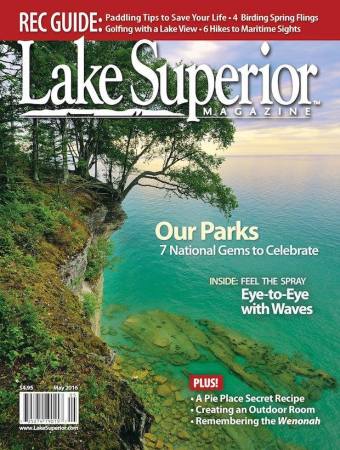
I stopped freelance writing a few years ago, choosing instead to focus on writing fiction and poetry. (And this blog!) I was tired of hiring out my brain for somebody else’s use, since that’s what I do all day at work already. Thankfully, I also no longer had a financialLSMagazineMay16 need to freelance, so I made the conscious decision to stop.
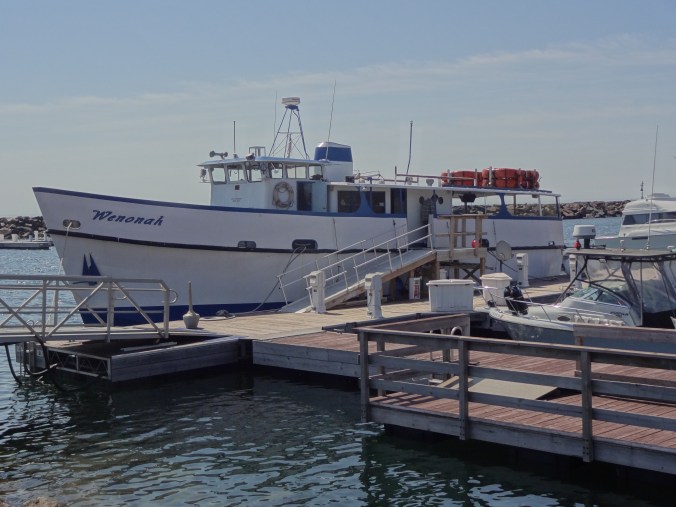
That worked well until about a year ago, when I took a cruise on Lake Superior aboard the Wenonah, the ship that took me on my first trip across the lake.

The cruise dredged up old memories. I considered blogging about them, but once I started writing, I realized I had a story I could sell, dang it!

Alas, I succumbed to freelancing, but at least the story was one I truly wanted to write. I know, poor me. It’s a good problem to have.

My story was recently published in Lake Superior Magazine. It’s a superb magazine — pick up a copy and check it out! (Page 14.)

They also published a couple of my photos. But I have gobs of other photos I took that day, which I thought I would share with you. Please enjoy this virtual cruise along Lake Superior’s North Shore.

DSC02270

The Wenonah at Silver Bay Marina.


DSC02290

The tip of Gold Rock, site of a shipwreck in 1905 that claimed a life.

DSC02298

That turquoise water looks like the Caribbean, doesn’t it? I wouldn’t jump in though. It’s a bit nippy.

DSC02303

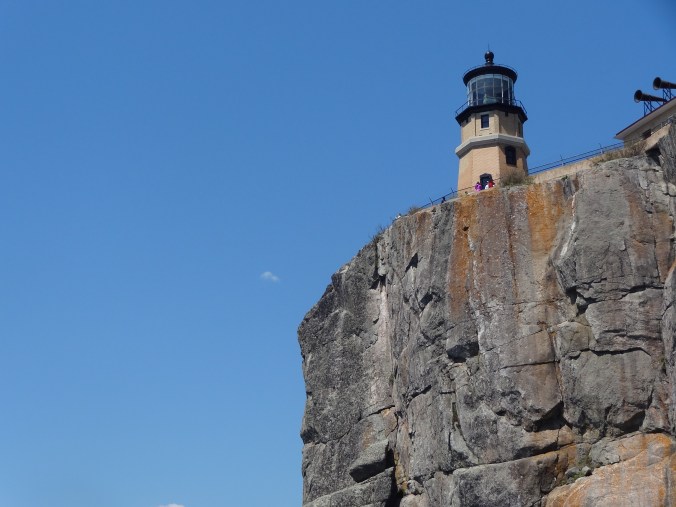
Coming around Split Rock Lighthouse. Not many people get to see the lighthouse from a mariner’s view.

DSC02310

A more classic view of the lighthouse.

DSC02322

People frolicing with gulls on an island off Silver Bay.

DSC02327

Piles of taconite pellets waiting to be shipped south to be made into steel.

DSC02333

The taconite plant in Silver Bay, although it looks more like a cloud factory. Perhaps it’s not beautiful, but it’s part of the cultural landscape of this area.

DSC02275

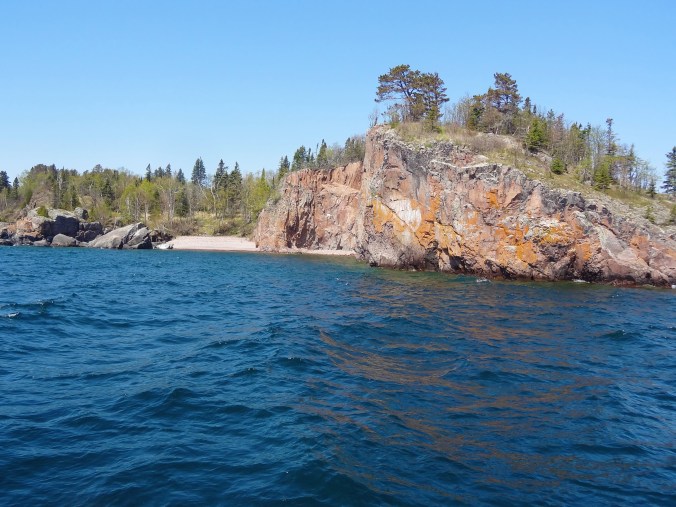
The rugged coastline of Lake Superior’s North Shore.


My Recent Embarrassment with White Culture

NativeWhite

Nothing says Native American better than a white girl in a headdress.

Native Americans are the largest non-white population in my northern Minnesota county, coming in at just over two percent. Even though they are the largest “minority” population, in my experience, the “majority” community still struggles to remember to represent Native Americans on decision-making and natural resource committees. But I recently participated in two events where natives were remembered and asked to take part. However, the events reflected poorly on us white folks.

The first event was a journalism panel for a project (One River, Many Stories) that’s trying to bring journalists together to write about a major river that flows through our community. The river, which has been a dumping ground, is being cleaned up and is the focus of major restoration and community planning efforts.

The three journalists on the panel were speaking about collaboration for this project. One was Native American and the others were white. Granted, getting media types — who have been trained to compete with each other — to cooperate is a tall order to begin with, but as the discussion and Q&A session progressed, I felt increasingly chagrined. The native journalist was giving the audience tips on how to find story sources through old records and by talking to people. The white journalists were spouting the corporate line and jumping on chances for exclusive stories. Hello. The whole point of the discussion was collaboration, which the white journalists just didn’t seem to grasp.

Even the audience (mostly white from what I could tell) ended up grand-standing and sniping about which media outlet was the better storyteller. I left the event embarrassed by the blatant blindness to the benefits of collaboration by the white folks.

The second instance was an open mic poetry/prose reading last night at a local coffee house. Although anyone is welcome to read at these sessions, each features an established writer who is given extra time to showcase their work. The featured reader last night was a Native American. His reading concluded with a song he sung in Ojibway. Once done, he invited a lady on stage to read, who also looked native.

Their poems were moving and heartfelt, raw and sentimental. They worked for me. What didn’t work was the lady who read last. She was a blonde older woman who ended her set with a song from a play she wrote. She said she decided to sing in appreciation of the featured reader. But as she belted out several times that she was a “full-blooded Indian” and had endured repression as a native, I began to squirm.

Now, I know that Native Americans come in all colors, but this lady was definitely not native. And I understand that she was trying to honor the culture in an artistic fasion. But I don’t think she realized how farcical it is for a native to see a white person trying to “be” native. It made about as much sense as a Nigerian singing onstage about being Swedish, even if that Nigerian really digs and honors Swedish culture.

I’m sensitized to this issue from recently reading Alexie Sherman’s “The Absolutely True Diary of a Part-Time Indian,” but also because over the years I’ve spent time on reservations around the country, in kiva ceremonies and at pow wows, and with Native American medicine men. Besides, don’t forget that I am a whopping 0.4 percent Native American myself (smirk).

I realize I’ve opened a can of worms with this post. I guess what I am trying to say with it is, please, please, please white people – there are better ways to honor Native American culture than by trying to pass yourself off as something you are not. And please learn how to collaborate, a trait that seems to come so much easier to native peoples. I worry about white culture’s ability to survive on several levels unless we do so.

A good blog post about Native American cultural appropriation can be found here.

As I left the coffee house last night, the two native poets happened to walk out behind me. I casually held the door open for them. It was the least I could do.

Going Coastal! Lake Superior Writing Contest

PosterJpeg

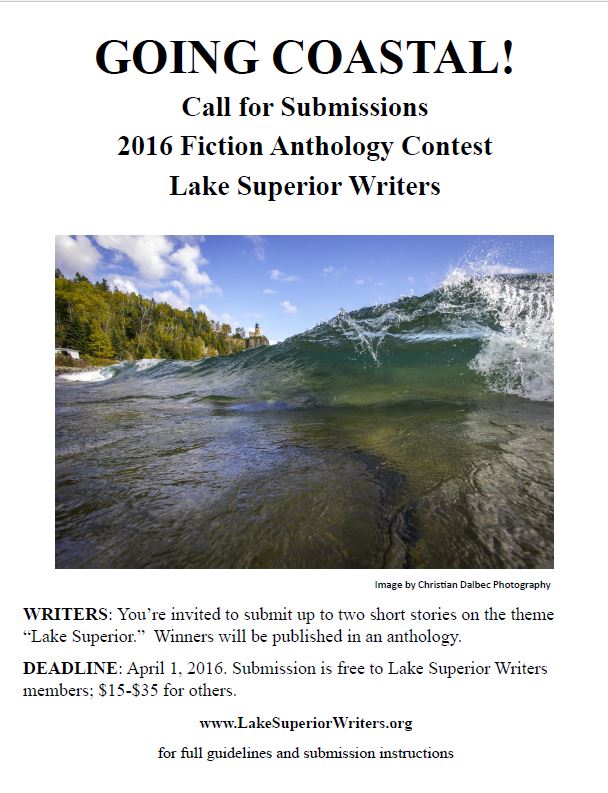
If you’ve ever written a short story (6,500 words or less) about Lake Superior or you’d like to write a short story set in or around it, this is your chance to have it published. Instead of cash prizes this year, the writing group I belong to is offering the chance to be published in an anthology.

Authors can submit up to two stories. The deadline is April Fool’s Day, 2016. Don’t be a fool! Let’s all go coastal and then write about it. See the rules here.

That Scalp-Tingling Feeling


001cropped

People at one of my recent book events (but not the one I describe here).

While I was sitting at a bookselling event today, waiting for someone to come to my table, I experienced a feeling I’ve had only a few times in my life: a tingle that travels from the back of my neck up to my scalp, and I kind of zone out.

It’s a pleasant feeling – one I first felt in elementary school when the rest of the class was bent to their work and the teacher was writing on the chalkboard – the chalk rasping softly on the board. It was peaceful, and then the tingling began in my neck and travelled up my scalp. My eyes unfocused and I was just living and feeling in the moment.

Today it happened while there was a large crowd at my bookselling event. People were visiting various tables where artists were displaying their wares around me. Their talk was a low hum, everyone was busy looking at the artists’ offerings or in conversation. I observed the scene and the tingling began.

I realized that in all the books I’ve read or conversations I’ve had, I’ve never heard anyone else describe a feeling like this.

I tried to figure out just what it was. It’s peaceful and fuzzy. Dare I say I was contented????

Maybe that’s it: scalp-tingling contentment. Has anyone else ever experienced this, or am I just weird? By the way, I had sold a lot of books by this time, so I was content in that respect. (Smirk.)