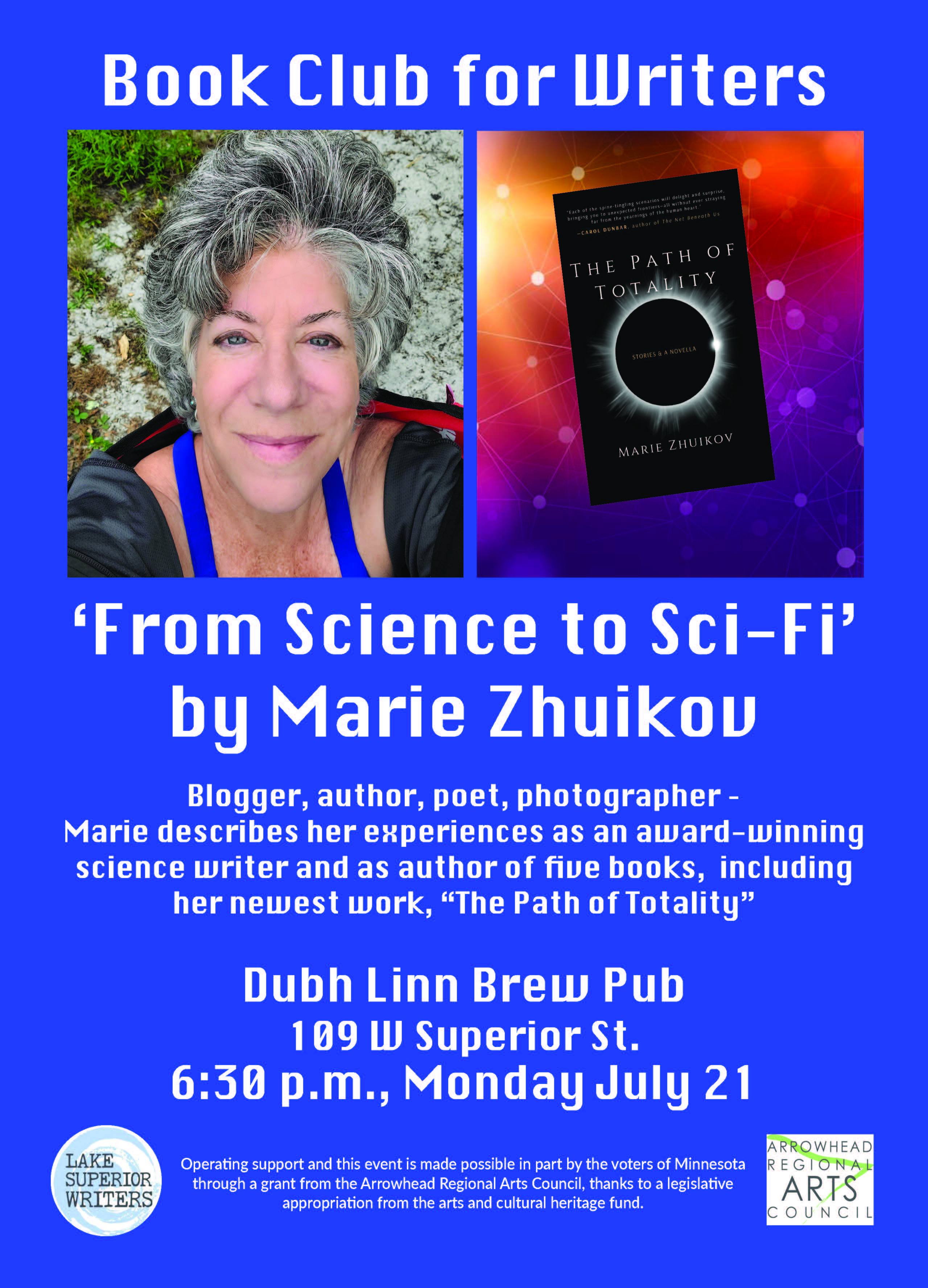
I’ll be talking about how I weave science into my fiction stories, with a focus on my science background and my latest book, The Path of Totality, which is a collection of short stories. If you’re in/near Duluth MN, come have a pint and a listen!
I’ll be talking about how I weave science into my fiction stories, with a focus on my science background and my latest book, The Path of Totality, which is a collection of short stories. If you’re in/near Duluth MN, come have a pint and a listen!
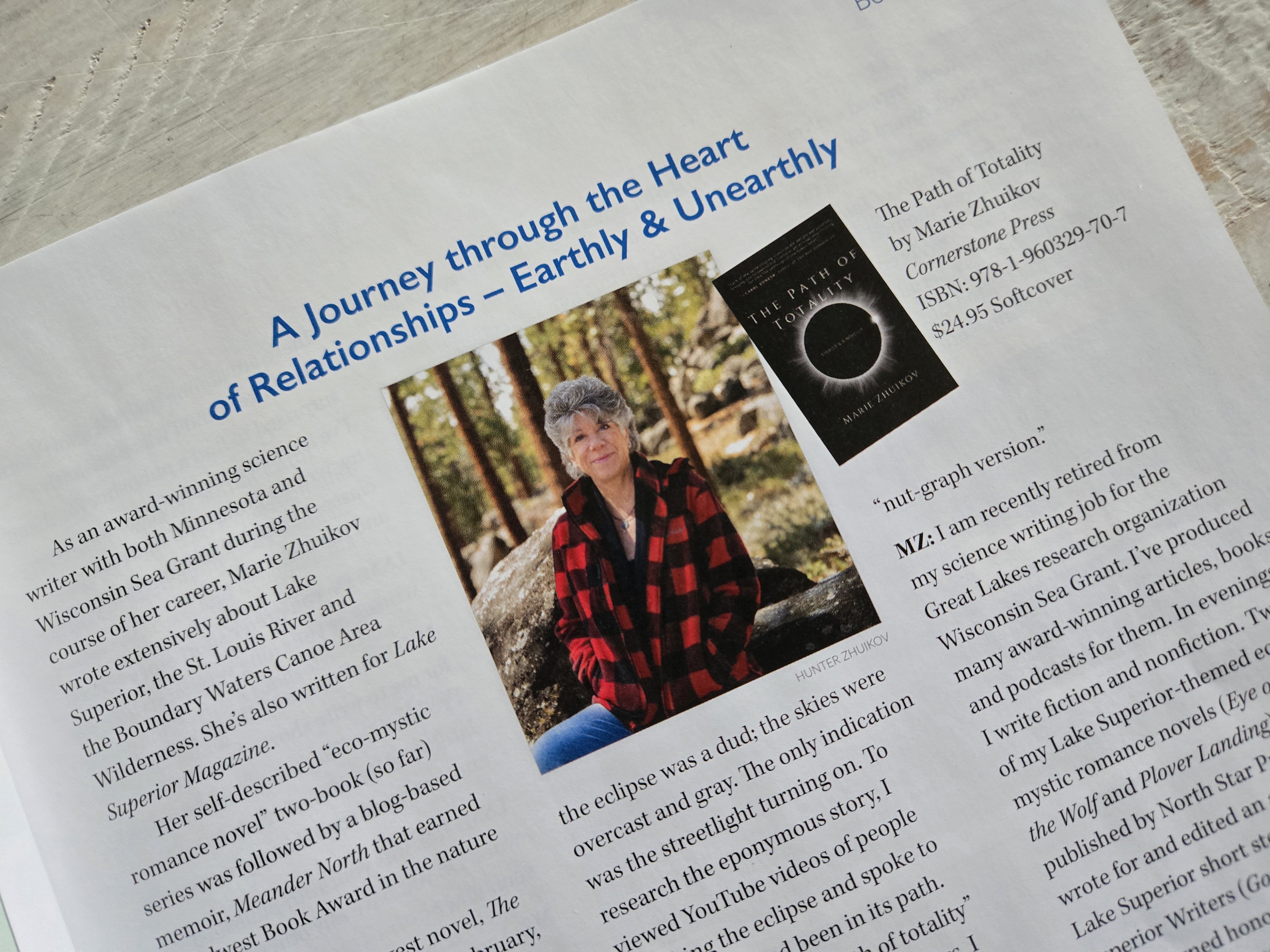
The April/May issue of Lake Superior Magazine offers an article about my magical realism short story collection, The Path of Totality. It takes the form of a Q&A, so I actually wrote much of it. 🙂 I was tickled to be able to use a word in the article that I recently learned: eponymous. (Thanks to blogger friend Vickie Smith.) It means a person or thing that gives their name to something. In my book’s case, it’s named after the first story. I was even more tickled that the editor kept the word in the article!
One question from the editor gave me pause. It was: What question have you always wished someone would ask you? I replied that I wished people would ask me if my book had a secret.
It does, and it involves the anchor story, “Invisible Connections.” A few other secrets are scattered here and there, but will only make sense to certain people. If you get a chance, check out the magazine to learn the secret! Better yet, read my book. It’s still offered at a discount at this link.

Note: The time on this graphic is incorrect. The event is beginning at 6 p.m., not 5 p.m.!
Hey, this Thursday at 6 p.m. Central, I’ll be one member of a four-author panel for my publisher, Cornerstone Press. The event is being held at the University of Wisconsin-Stevens Point. If you can’t make it in person, it will also be live streamed and available afterward on their YouTube channel.
I’ll be reading from my speculative fiction short story collection, The Path of Totality. We’ll also be doing a panel discussion and taking questions from the audience.
I’m looking forward to meeting my publisher in person for the first time, along with the other authors!

Bookish things have been happening in my world. First, I wanted to let you know that my speculative fiction/magical realism short story collection, The Path of Totality, (POT) is having a giveaway on Goodreads. Three copies will go to some lucky readers in ten days on March 12.
The second thing is something I learned from one of my fellow writers. He clued me into the WorldCat website, which is where you can see what libraries around the world carry certain books. He looked up POT and told me that it was in seven libraries already. Cool! Of course, I then looked it up and my other books. POT is available in libraries in Omaha, NE; Farmington, NM; Charleston, SC; and Orlando, FL. This exercise reminded me that I should donate a copy to my library in Duluth so that they have it.
One surprising thing I discovered is that my first novel, Eye of the Wolf, is available in the National Library of Qatar, in the Middle East. How did that happen?? Another surprising thing is that my second novel, “Plover Landing,” is available in 233 libraries! I think that might be because I offered libraries free rights to a PDF download of it. Since that happened a few years ago, I can’t recall now what service I used for that.
The last bookish thing regards a signing and reading I had yesterday at a new bookstore that opened in Superior, Wisconsin. Foxes and Fireflies Booksellers is run by a woman who’s also a reporter for the local newspaper. Maria Lockwood began the store as a lark. She was reporting on a business startup grant program and as part of that, put in a grant request to open a bookstore as an experiment to see how the process worked. Lo and behold, she was awarded the grant.

Superior hasn’t had a literary independent bookstore in many years, so the community was excited to see Foxes and Fireflies open. The store is very cozy and is filled with neat items. I probably spent any royalties I made during my signing on a cute little fox toy that is destined for our cabin. Oh, the glamorous life of a regional author! Superior writer Vickie Smith featured the bookstore recently on her blog.
Now that I’m on a countdown to retirement for my day job (not my fiction writing), I figure I’ll have more time to read writing trade magazines. I used to subscribe to Writer’s Digest but quit after a while because the copies just kept piling up and it felt too much like work to read them. I’m wondering what writing magazines are your favorites? I’d appreciate recommendations.
My collection of shorts stories, “The Path of Totality,” is being published this week by Cornerstone Press. It will still be on sale for a few more days for 20% off until the publication date, which is Feb. 11. You can order it from Cornerstone here.
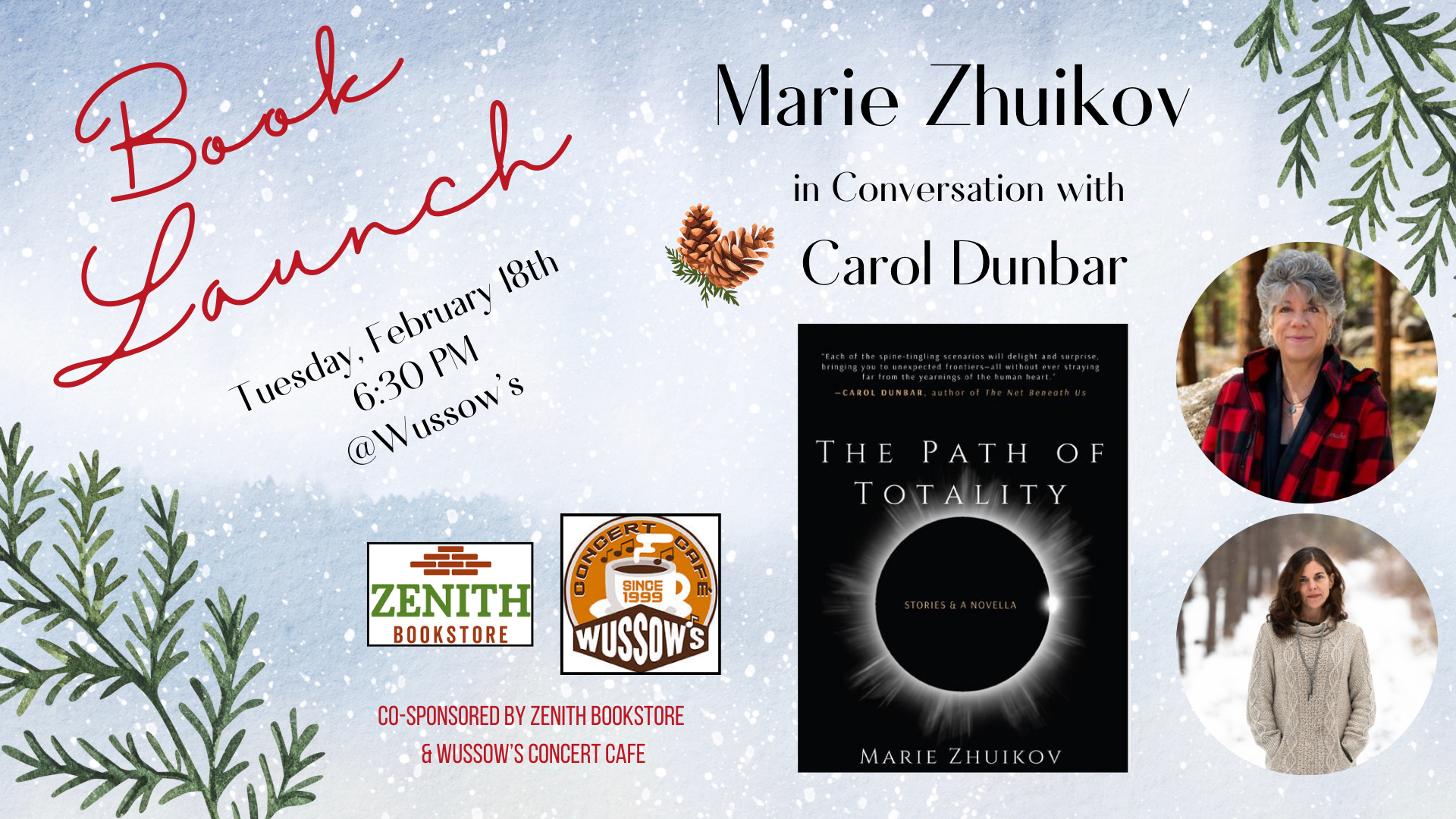
I’m having a launch event Feb. 18th, 6:30 p.m., at one of my favorite cafes in Duluth—Wussow’s Concert Cafe. It’s being hosted by Zenith Bookstore. I’ll also be doing a reading/signing at Foxes and Fireflies Bookstore in Superior on March 1 from 1-3 p.m. If you’re in the area, please stop by!
Noted Superior, Wisconsin, author, Carol Dunbar is helping me with the Feb. 18th event. She is way more well-known than I am, having had two books published by a national publisher. She was nice enough to write a blurb for my book, which appears on its cover. She was also nice enough to volunteer for a question and answer discussion with me of our books and careers. We deal with many of the same themes in our writing, so it should be a cool event!
“Booklist,” which caters to libraries, recently reviewed “The Path of Totality.” Here’s what they said:
Love, in its numerous forms: romantic, parental, devotional, inspirational, and desperate, has a lingering presence in Zhuikov’s collection of tales. The title story describes a young couple’s emotional struggles after the devastating loss of a premature baby boy. While viewing the 2017 total solar eclipse, healing suddenly sprouts as something “flipped a reset switch” inside the wife. “Bog Boy” is a comically creepy tale illustrating that love truly has no limits. A teenage girl discovers the long-dead body of a young man entombed by peat in the woods, and the preserved corpse becomes her de facto boyfriend. “The Shower Singer” is a feel-good story about an aspiring musician who receives more than just a much-needed jolt of creativity when he hears a woman in the adjacent apartment singing lovely melodies in the shower. Other characters include a sleuthing widow obsessed with the strangeness of a house who ultimately pays a steep price for her curiosity, a hungry alien life form that stalks a college student in Biosphere 2, and a reference librarian with an extraordinary connection to sentient trees.
Last week, I had the privilege of hearing a nationally known poet read at a local college. Kimiko Hahn was flown out from New York City by the college’s English Department to be part of its annual Rose Warner Reading Series. The college brings in a poet for a day who performs a morning reading and discussion with local high school students and an evening reading for the public. After the morning reading, the students break into groups where a “Northland Writer of Distinction” talks to them about writing and how to find their voice through it.
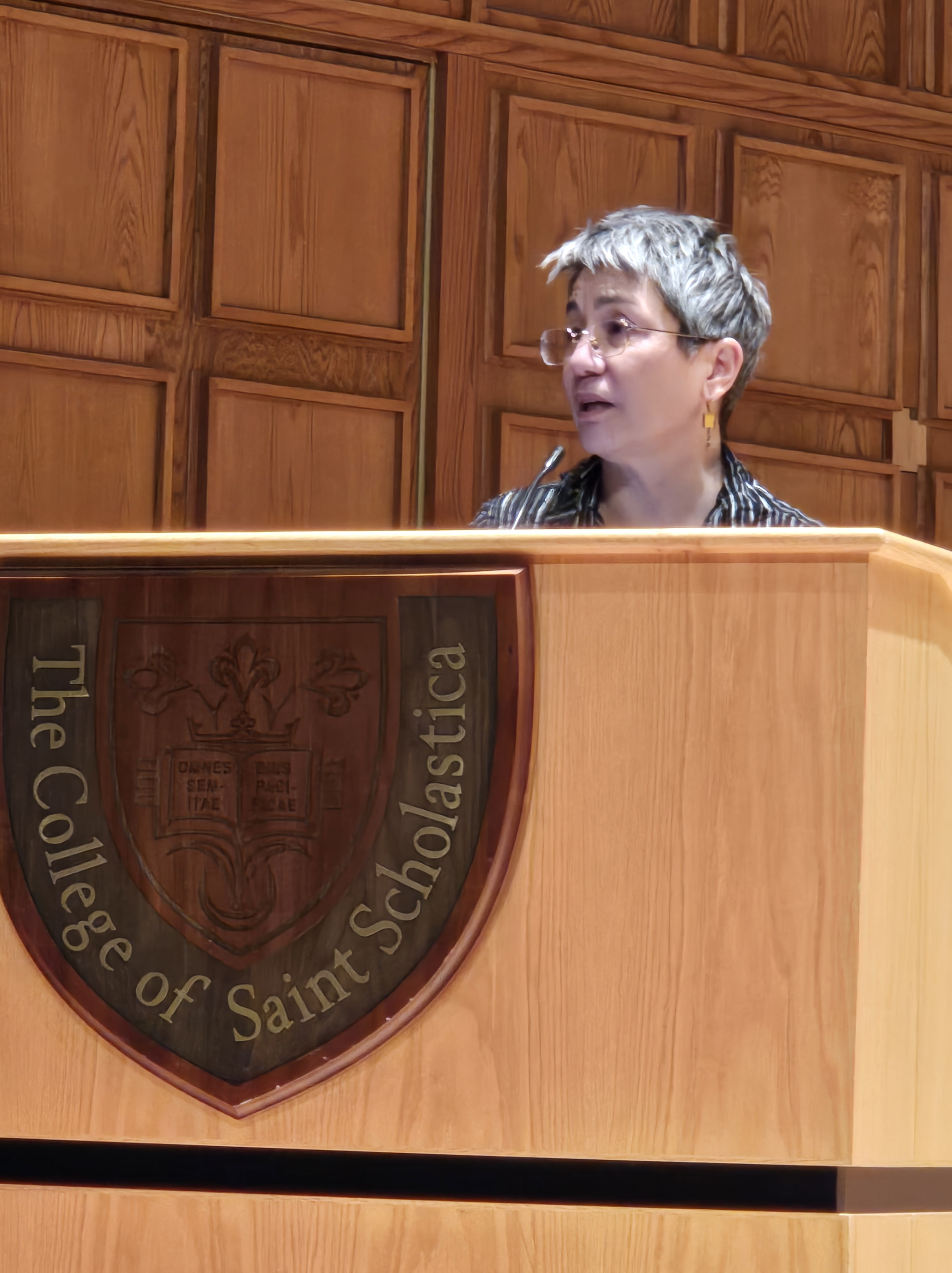
I was one of three so-called writers of distinction. The other two were Sheila Packa, a former Duluth Poet Laureate, and Nick Trelstad, a published poet and high school English teacher. Having never done this event before, I was a bit nervous. Both the other writers were repeaters; they were also both wearing plaid. I had not received that memo! But now I know in case I get invited back.
I was not familiar with Hahn’s poetry, so I was looking forward to hearing her read for the students. Hahn’s mother died in a tragic car accident, so many of the poems she read in her soothing voice were about that. She also read political poems. But, since I am a science communicator, the ones that caught my attention most were pieces she wrote based on science stories in the New York Times. Hahn commented that she’s bad at science but is fascinated by it, especially entomology (bug science). She often takes a science news story and makes it into poetry. She does this through typical fashion but also using a technique called erasure poetry.
This was a new one on me. In erasure poetry, which began in 1965, writers take an existing text – like a newspaper story or the Declaration of Independence – and blackout or erase words to create a poem. Sometimes they leave the words in their original formatting (with lots of blank space in between) or sometimes they reformat them. Visual artists use the technique, too. Hahn read the students her poem, “Erasing Love.” Then she asked them to figure out what original article’s topic was. Several students mentioned that it was a science or medical story, but I think everyone was surprised when Hahn said it was about a giant fish called an oarfish and that the professor studying it had the last name of Love. (At the end of her poem, she links to the original article.) I enjoy creating found poems (like this one based on Chinese scooter instructions) so I’m definitely going to try erasure poetry sometime soon.
Hahn’s poems delved into grief, love, and science, often containing subtle and not-so-subtle humor. She said she gains inspiration from writing prompts and that she writes as an outlet for her opinions and rambunctiousness. Her reading persona is not rambunctious, but during the q & a afterward, more of her personality shone through.
Then the students were split into groups with their respective local writer. Hahn was a tough act to follow! For my presentation, I told the students about my professional and creative writing careers. The students were from the same high school that I went to, and I wanted to show them that a career in writing is possible. I described my books and talked about how this blog helped me find my voice. I read them two posts that offer good examples of opinion writing, which I can’t do either in my day job or my novels. These were “The Jayme Closs Case and the Importance of News Headlines,” and “The Christmas City of the North Parade: Socially Sanctioned Child Abuse or Festive Community Event?”
There was no clock in the room. For the first group of students I spoke with, I blathered on about myself for so long, I ran out of time to read the Jayme Closs story, but I made up for that with the second group.
A few writer nerds were in the audience and asked good questions. After my talk, one girl introduced me to Dark Romance. If you haven’t heard of it, either, Dark Romance features kink and violence – darker themes that don’t sound all that romantic to me. I don’t think I’ll be pursuing it in any way.
My main points to the students were to write what they enjoy without worrying about what other people will think, to practice, and get feedback from people they trust. Of course, I encouraged them to start blogs since it’s a good way to practice and to get feedback from a supportive community.
Have you found that your blog is a good way to develop your writing voice?
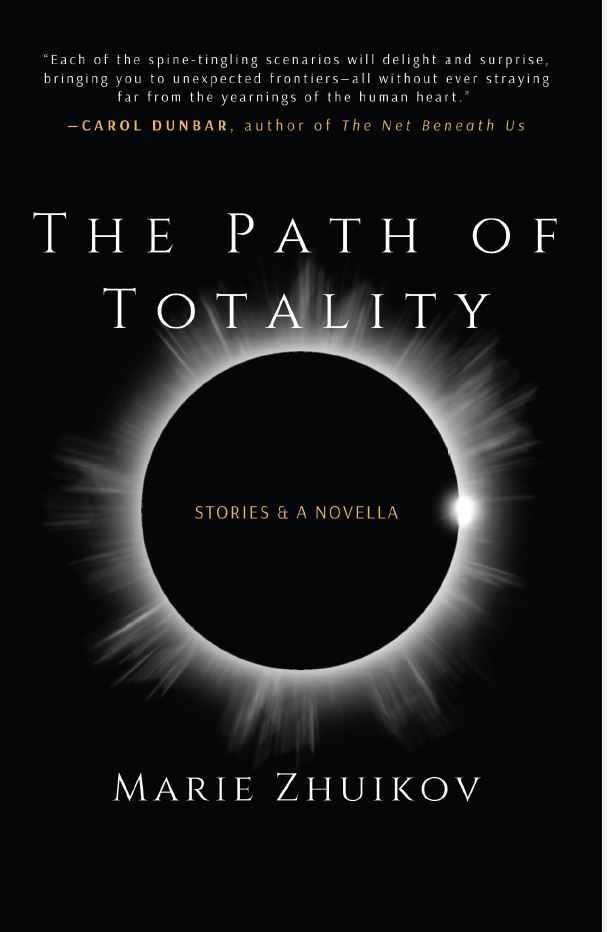
A young man is mystified by why he can’t see an eclipse. A scammer falls for a woman he’s targeting. A nondescript gray house hides a secret from a curious woman walking her dog. A girl discovers a mummified Viking bog boy while on a birding tour. A college student gets trapped in a biosphere after hours. Hemingway’s stolen stories are found in New Jersey. Singing in the shower takes on a whole new meaning. And a librarian develops her own theories about the influence of trees. United by the power of appearances to deceive and captivate, these tales glisten with the magic and menace of everyday lives.
My next book is a collection of short stories and a novella. “The Path of Totality” is a meditation on the power of appearances to deceive and captivate. It’s being published by Cornerstone Press at the University of Wisconsin-Stevens Point and is now available for preorder at a 20% discount. The books will be distributed in February.
It’s already received some endorsements:
These stories concern everyday people discovering who they now are as opposed to who they once were. A grieving couple come to accept the death of their child. A woman pays too large a price for caring about a neighbor’s son. And in “Bog Boy: A Northern Minnesota Romance”—a gem of a story, a perfect story—a teen falls in love with someone suspended in time. Not all of Zhuikov’s characters find peace and harmony, for the damned soul and the broken heart and the heart’s longing are nothing to fool with. But the few who find love, for instance, Sheila and Peter in the long final story, enter paradise.
—Anthony Bukoski, author of The Blondes of Wisconsin
Richard Powers meets Gabriel Garcia Márquez in a collection that nonetheless could have been produced only by a singular sensibility— one firmly planted in a fully recognizable, verifiable natural world that’s also brimming over with mystery, wonder, and the fantastic. I love Marie Zhuikov’s brain. She’s both a scientist and a dreamer. These stories, rich in emotional metaphors that play out in magical ways, remind us to tread carefully and to always pay attention.
—Cheri Johnson, author of The Girl in Duluth (under the pen name of Sigurd Brown)
In settings strange yet familiar we meet characters who are sincere but possibly duplicitous in this new story collection spun by science writer Marie Zhuikov. Each of the seven, spine-tingling scenarios will delight and surprise, bringing you to unexpected frontiers—in a biodome, a graveyard, the husk of a living tree—all without ever straying far from the yearnings of the human heart. Reader, I defy you not to be curious.
—Carol Dunbar, author of The Net Beneath Us
Marie Zhuikov’s The Path of Totality is a gem of a collection. These speculative stories explore a wide range of unusual situations with humor and insight, with empathy and heart. Readers will get carried away—just like these memorable characters get carried away—into imaginative worlds full of mystery and wonder. She delves into our longing for connections, how we respond in the face of strangeness and mystery beneath the ordinary.
—Jim Daniels, author of The Perp Walk
Please consider preordering while this discount is in place. You’ll be happily surprised come February. And thank you for your support!

After an awesome Outlander Tour and seeing the Tower of Clackmannan the previous day, we spent our final day in Scotland meandering some more around Edinburgh. We walked through the Princes Street Gardens, marveling at the fountain, statues, and quaint homes that can be viewed from it.

One unexpected sight was a statue memorializing Bum the Dog. Usually, everyone wants to see Greyfriars Bobby, the cute little statue of a terrier who slept on his master’s grave for years. I mean, the dog has even had a movie made about him! I don’t know. I much prefer the less popular landmark of Bum.
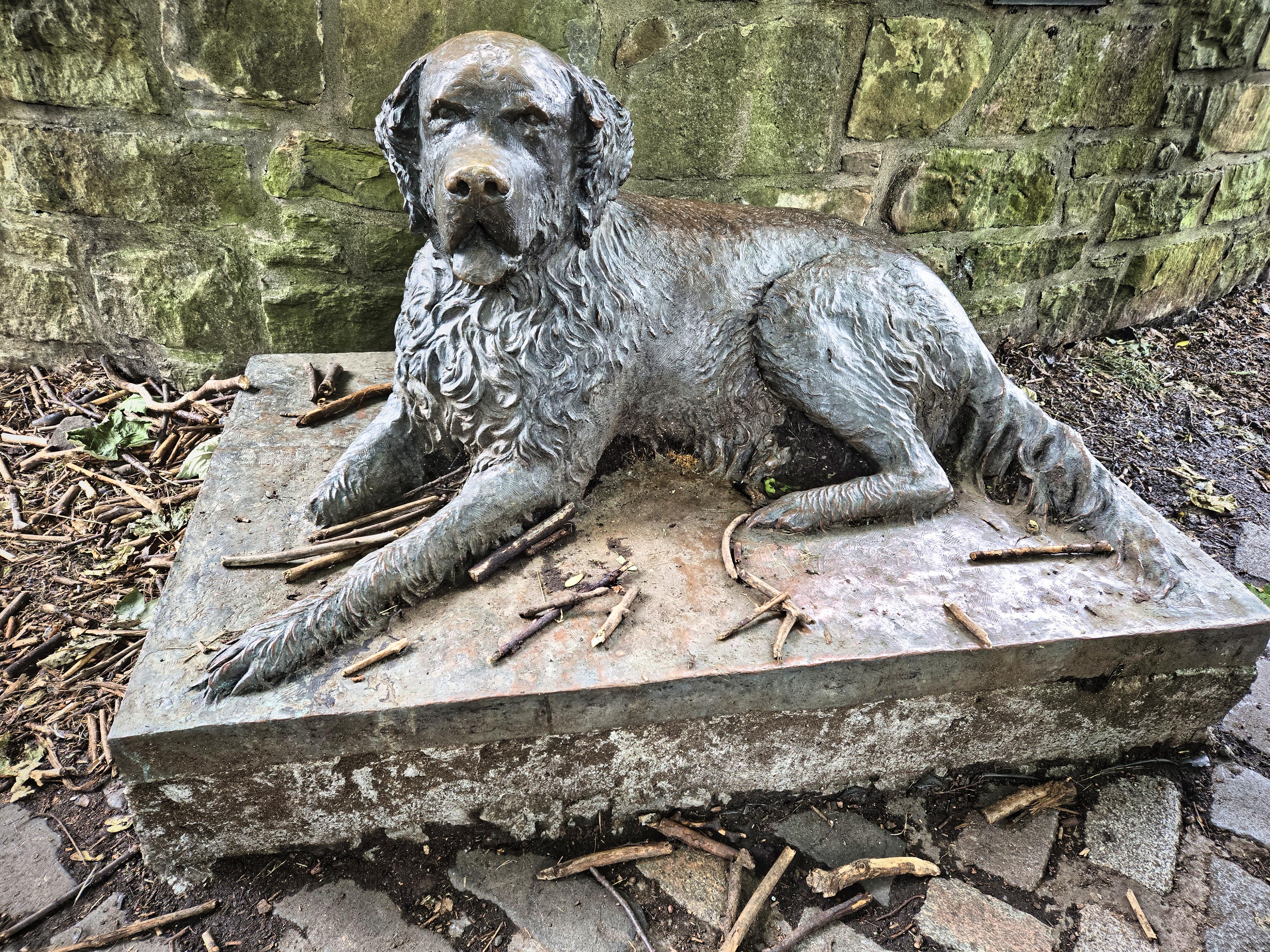
This remarkable dog disembarked from a ship in San Diego, where he won the hearts of the populace. The half-St. Bernard, half-Spaniel was owned by everyone and no one. Butchers fed him scraps and local doctors met his medical needs. He was so beloved that when San Diego issued its first dog license, Bum’s image adorned it.
His likeness sits in a small park in Edinburgh in tribute to San Diego, which is Edinburgh’s sister city. The Scots gifted San Diego with a statue of Bobby. The dogs represent the spirit of a twinning link friendship, loyalty, and shared experience. Bum died at age 12 in 1898. His memorial is one of five dog statues in Edinburgh.
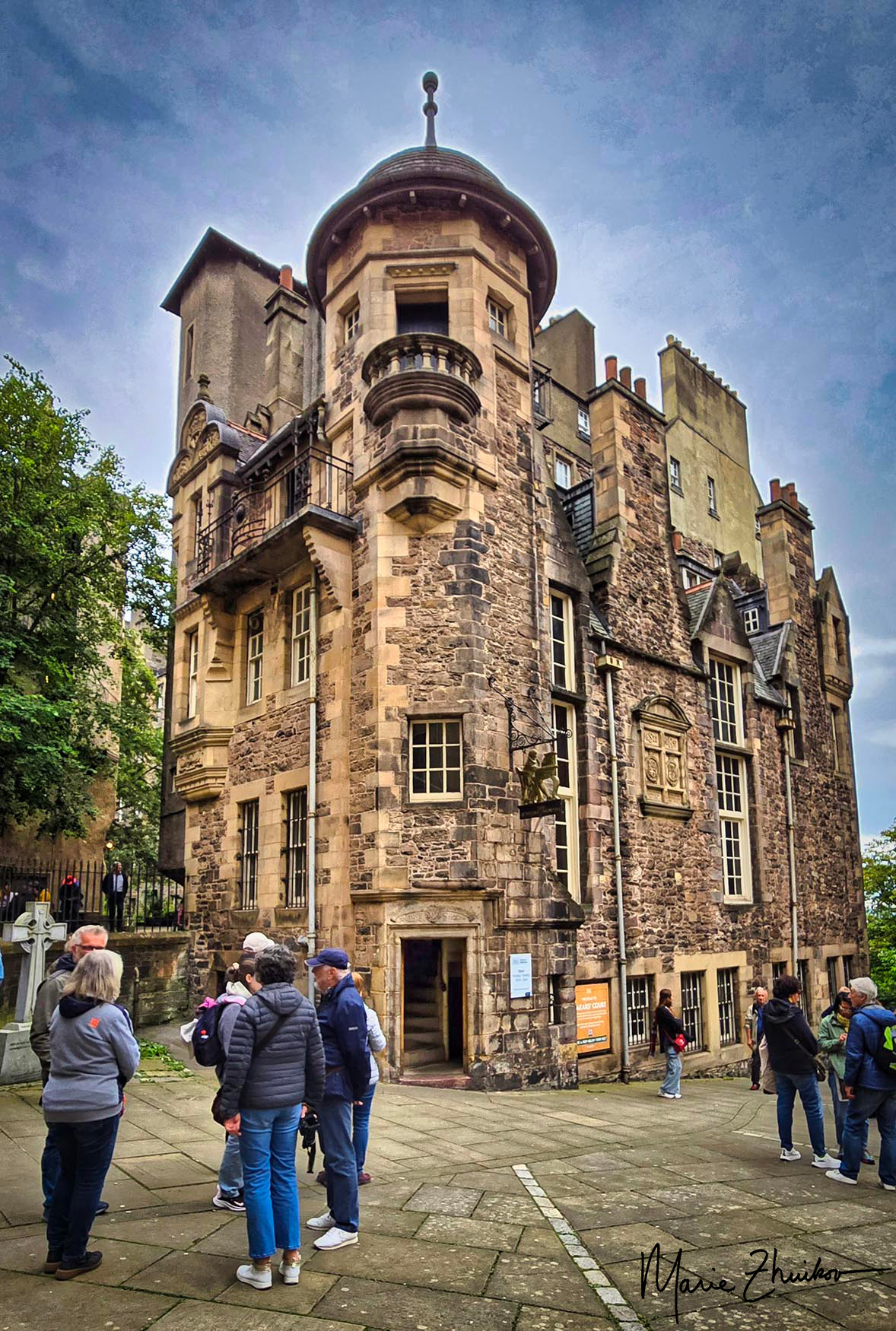
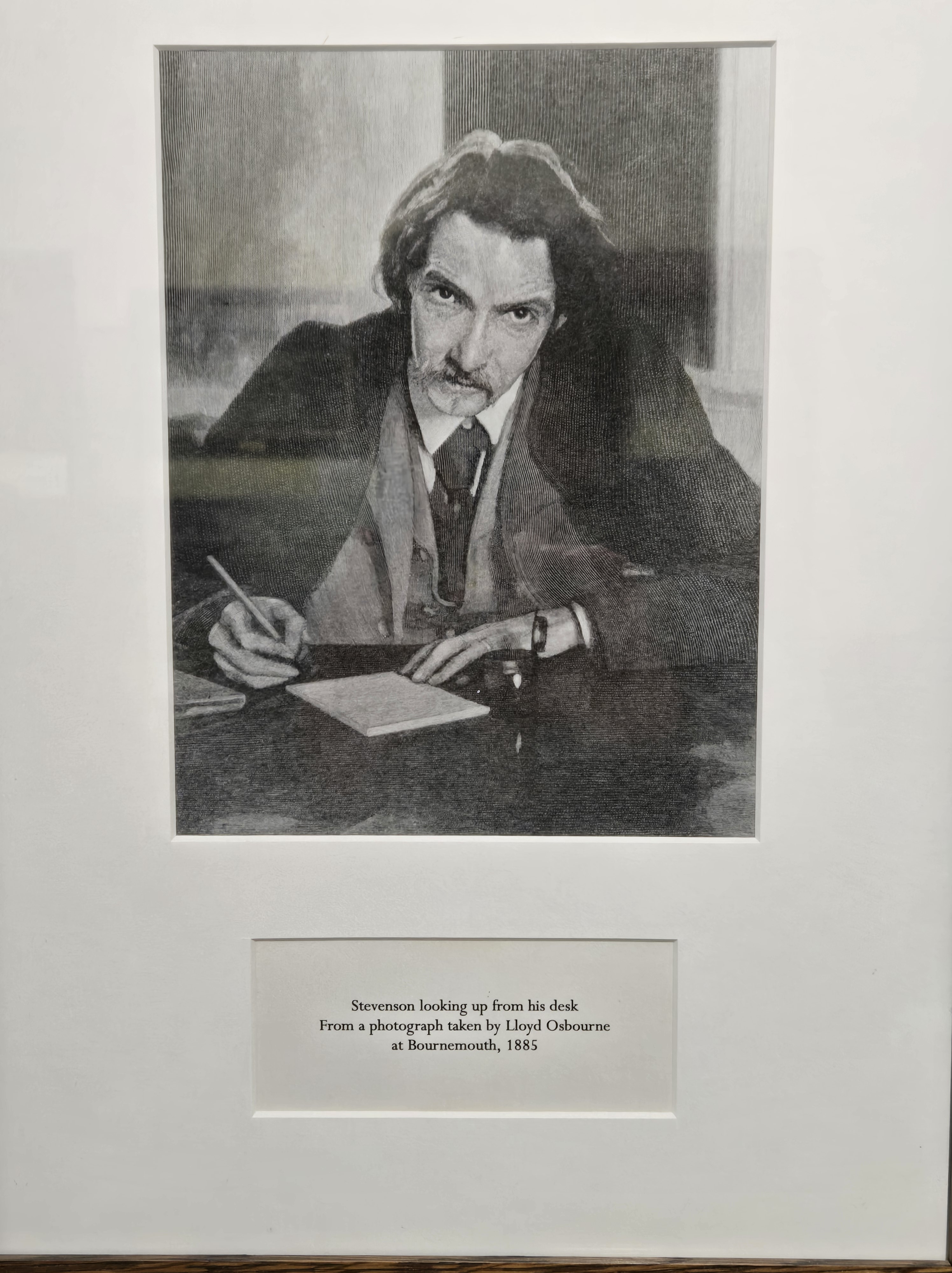
On the other side of the gardens, we made our way to the Writers’ Museum. It’s in a narrow stone building, complete with more spiral staircases (my favorite!) The free museum is devoted to three Scottish writers: Robert Louis Stevenson, Sir Walter Scott, and Robert Burns. I never knew that Stevenson spent his later years in Samoa. One of the artifacts we saw was a tortoise shell ring given to him by a Samoan chief, engraved with the name ‘Tusitala,’ meaning ‘teller of tales.’
The museum is near the Royal Mile, so we walked down that again, picking up last gifts for people back home. We also found the Witches’ Well, a memorial to all the women who were killed for practicing “witchcraft.” They were strangled and burnt on Edinburgh Castle’s Esplanade. It’s so small, we almost missed it! Surely, a memorial to the deaths hundreds of people should be a bit larger?
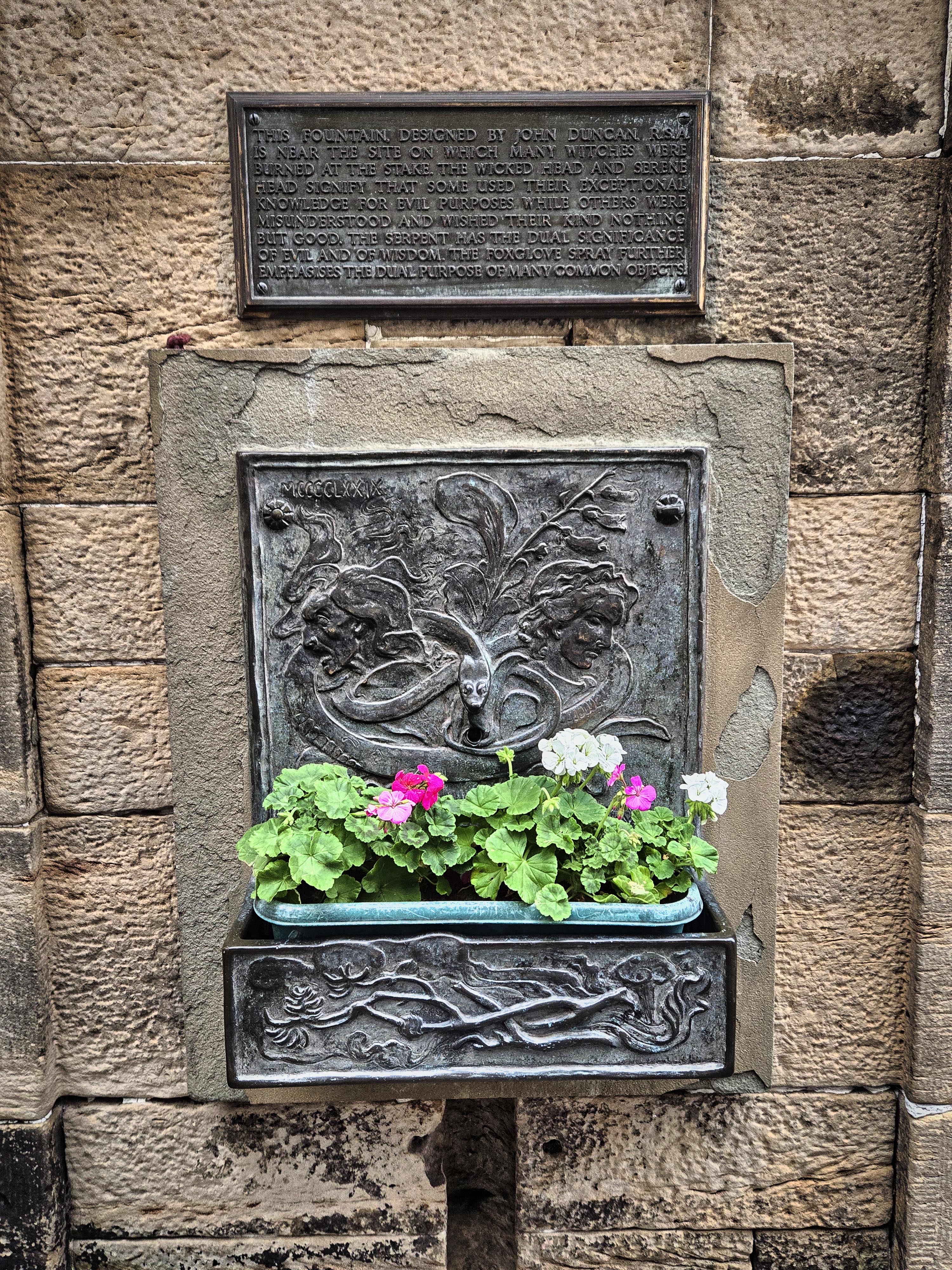
The plaque features a bronze relief of witches’ heads entangled by a snake. It uses dualism to highlight the balance between good and evil and to show that every story has two sides. The relief contains the image of a foxglove plant, from the center of which is a coiled snake intertwined around the head of Aesculapius, the god of medicine, and his daughter Hygeia, the goddess of health. Foxglove, though used medicinally, can also be poisonous depending on dosage, and the image of the serpent imbued with wisdom is also acknowledged as evil.
As if to counterbalance the paganism, we popped into St. Giles Cathedral, another free tour opportunity. It’s quite the impressive structure! It was built in 1124 and has no doubt been rebuilt over time. I loved the ornate ceiling.

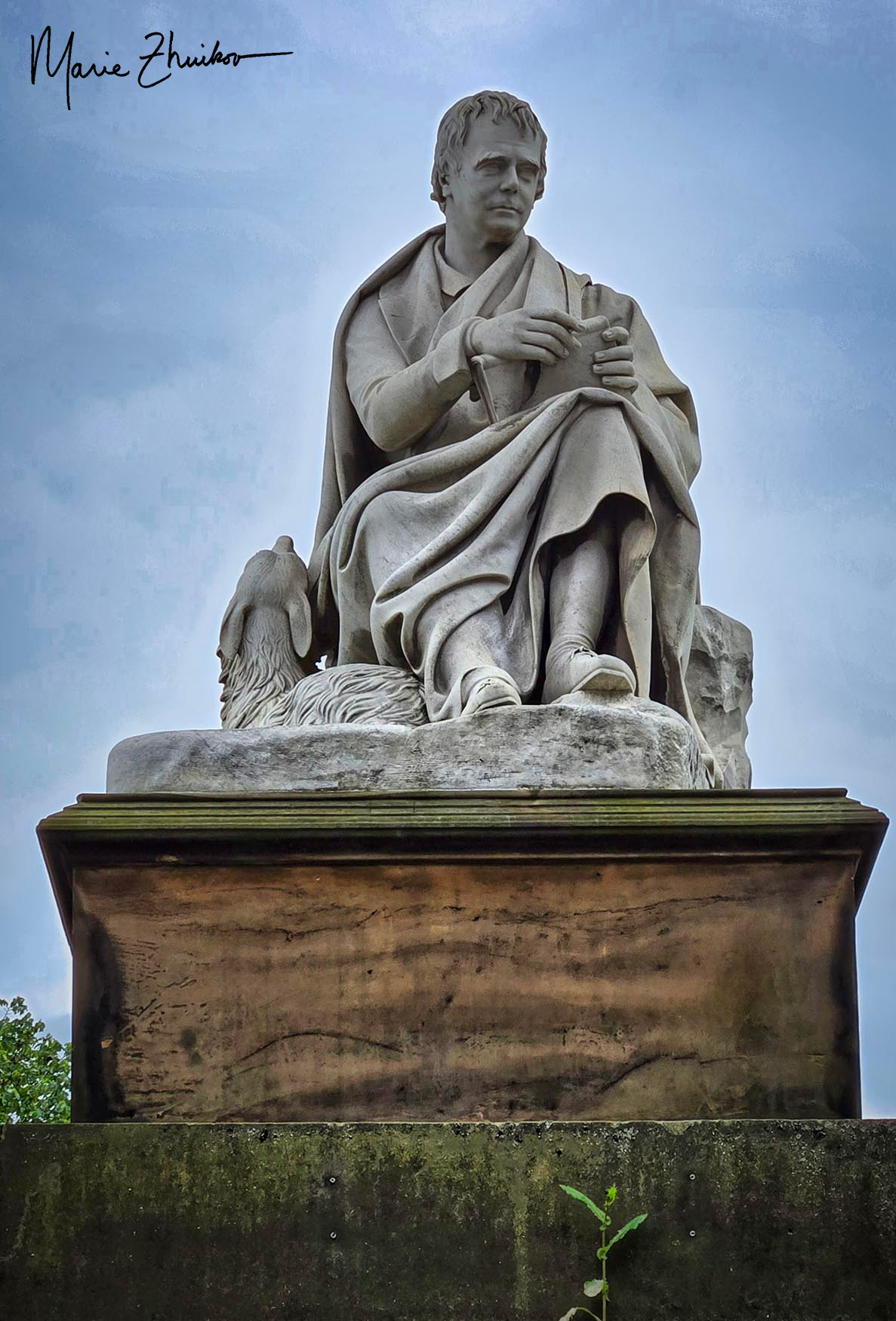
On our walk back to our hotel, we passed the Sir Walter Scott Monument, or the “gothic rocket ship” as our Outlander tour guide Henry dubbed it. I climbed the monument as a child and didn’t particularly feel the need to traverse more spiral staircases with my mending broken ankle now, so we appreciated it from the ground. Sir Walter’s statue in the middle of the tower sported another one of Edinburgh’s dogs, which sits by Sir Walter’s side. The dog, Maida, was a cross between a highland deerhound and a Pyrenean wolfdog.
At the hotel, we got spiffed up for our final dinner in Scotland. We planned to go out in style! We had made reservations at The Rhubarb Restaurant, where rhubarb was first introduced to Scotland from Asia in the eighteenth century. Its garish yet fun interior reflects the plant: red velvet with green accents. So does its menu.

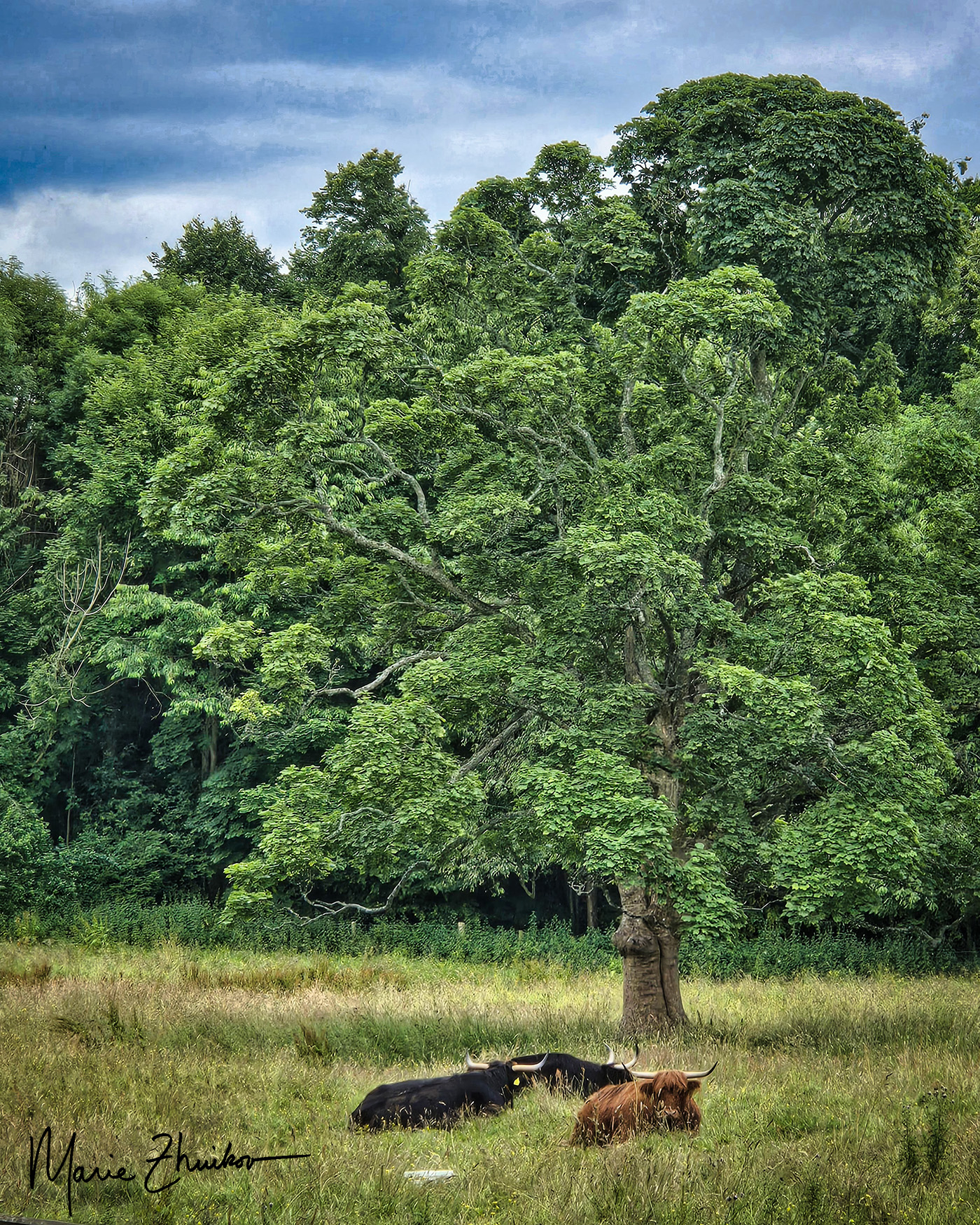
We caught a cab for a ride around the other side of Edinburgh Castle and Arthur’s Seat where the mansion and its large landholdings sit in the middle of the city. We had some time before our reservation and used it to explore the grounds and gardens. We were inordinately excited to see Highland cows (or coos) on the estate. We hadn’t seen any proper coos during our trip yet. There they were, lying underneath an impressive tree!
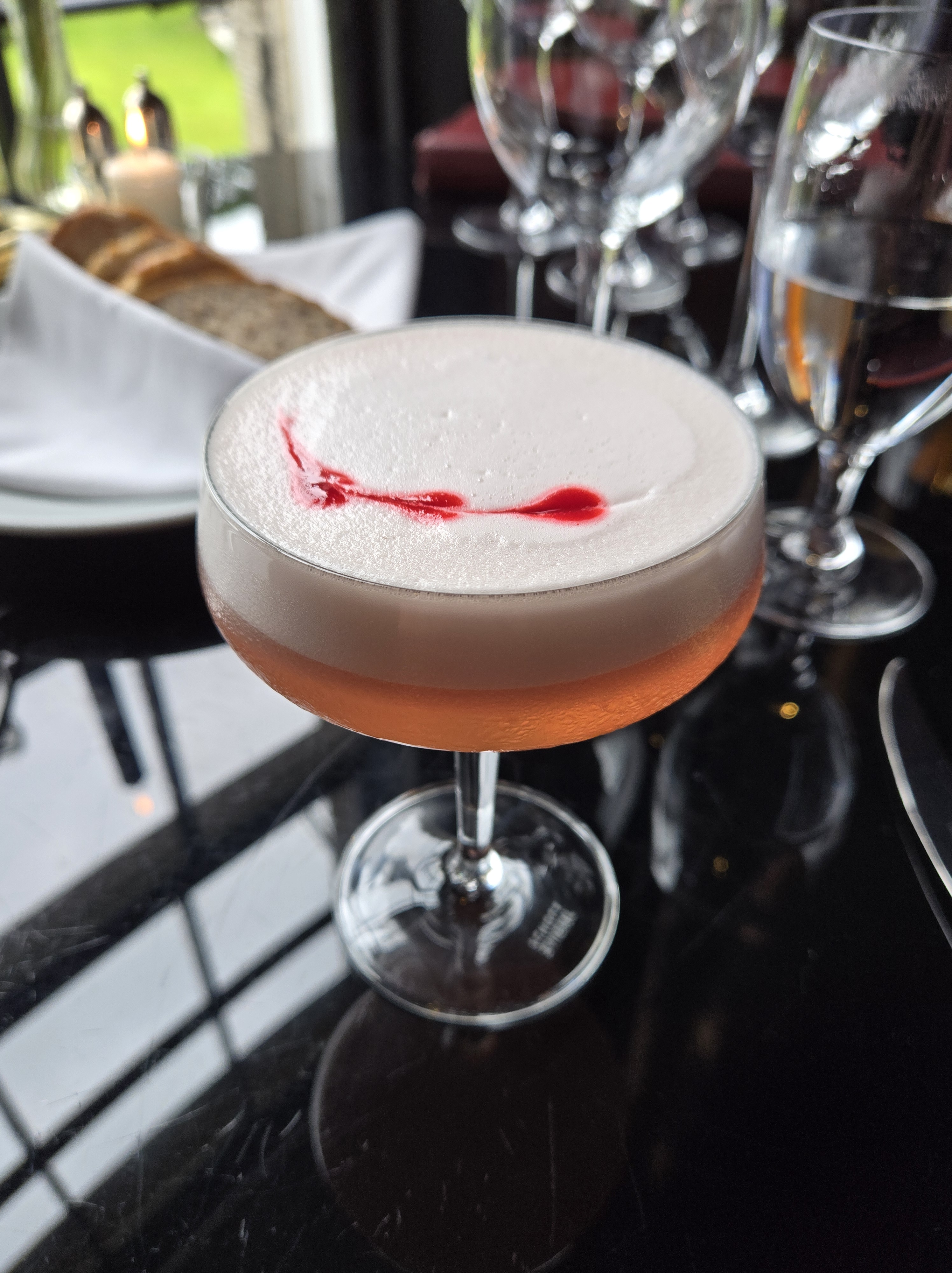
Inside, we were seated in a dining room (there are several) that offered a beautiful view of the grounds. I had a rhubarb-themed cocktail called the rhubarb patch. It had vermouth and rhubarb syrup — very good!
For dinner, we shared a Châteaubriand Angus steak platter for two that was accompanied by potato purée, Lyonnaise potato with leek emulsion, crispy onions, braised red cabbage, honey-roasted pumpkin, beef dripping parsnips, a chicory and watercress salad, Béarnaise sauce, and Madeira jus. Oh man, the meat was so tender. As we ate, we watched a peacock strut outside and a cat scampering.

For dessert, Russ had a hazelnut banana ice cream concoction. I had tiramisu topped with a decorative chocolate square. Our dining experience was completed by a bagpiper who marched through the restaurant. I can’t think of a better way to top off our trip.

The next day, however, we were slapped back into reality. Our plans were to fly to Dublin and then to Minneapolis. We made it to Dublin, but our plane arrived late from Edinburgh, and it took SO LONG to get through customs and security that we missed our flight to Minneapolis. When we arrived at the gate, they informed us we missed our flight by only two minutes! As it turned out, this was just as well because our baggage never even made it on the plane to Dublin because they didn’t have room for it.
Same as with our flights to Ireland at the beginning of this adventure, once again we were stranded without our baggage. But unlike that experience, this time the airline (Aer Lingus) put us up in a 4-star hotel and all our meals were paid for. It was a nice place, but it had a non-functioning toilet paper dispenser. How can a hotel get 4 stars with broken TP dispensers? I know, whine, whine. But we just wanted to get home! By now, we knew how to survive without a change of clothes or any toiletries. It really wasn’t that bad. What upset us was that due to this delay, we would miss our friends’ 50th wedding anniversary back home.

The next day at the airport, the lines for security and customs were EVEN LONGER (think hundreds of people) but we made it to our gate in time. Plus, once we landed in Minneapolis, our baggage was there, too!
So ends our nearly three-week excursion through Ireland and Scotland. Thanks for coming along on this epic ride. It’s taken me three months to write about everything. Reliving our adventures was so fun. Every time I wrote a post, I felt like I was right back in the experience. But my impatient mind already has ideas for six other topics I’d like to write posts about. I guess I’ll just have to keep blogging!
Despite setbacks, this trip opened our eyes to our pasts and gave Russ and I a stronger sense of where we come from. In Russ’s case, it’s a quaint hovel in the Irish countryside. In my case, it’s an imposing tower on a hill. It was truly a journey of discovery, and we feel so fortunate to have had these experiences.
I opened this series with a quote and I’m going to end with a favorite quote I discovered during our trip:
The world is full of magical things patiently waiting for our senses to become sharper. William Butler Yeats.
Keep your senses open, dear readers, and keep meandering!
We explored Dublin, feeling more connected to this land after our previous day’s adventure seeing where Russ’s ancestors lived. Our first stop was the National Museum of Archaeology. We saw golden artifacts and a huge dugout canoe crafted over 4,000 years ago (the Lurgan canoe). But the things I most wanted to see were the bog bodies.

If you’re not familiar, bog bodies are the corpses of unfortunate people who were either murdered or ritually sacrificed and buried in the boglands of Ireland and other countries. There are five bodies (or parts of bodies) on tasteful display in the (free to enter) museum. I’d only seen photos of them in magazines before. I wanted to see the bodies in person because I wrote a short story about a bog body, which will be featured in my book that’s slated for publication this fall. I’m in the middle of editing the manuscript and wanted to see if this museum experience would give me any new ideas.
I only took photos of two of the bodies: Gallagh Man and Clonycavan Man. Gallagh Man was a six-foot-tall, healthy man with reddish hair who lived sometime between 470-120 BC. He was found in County Galway, Ireland, in 1821 by laborers digging peat for fuel. The twenty-five-year-old was most likely strangled before being buried in the bog.

Clonycavan Man was found in County Meath in 2003, also by peat harvesters. Alas, they were using a machine that cut the body in half, and only the upper torso and head remain. He was between 20 and 40 years old when he died sometime between 392-201 BC. At five-foot-two, he was shorter than Gallagh Man. One of Clonycavan Man’s most distinguishing characteristics was his hair. He had what may have been the first man bun! Perhaps it made him look taller. Scientists even discovered an ancient form of hair gel in his hair, made of plant oil and pine resin. The presence of this gel indicates he was fairly wealthy during his lifetime; it was made from materials found in France and Spain. His injuries suggest a grisly death, which may have been the result of torture. I’m not going to go into them here!
One theory proposed is that these men were failed kings or failed candidates for kingship who were killed and placed in bogs along tribal boundary lines. Their bodies served as offering to the goddess of the land to whom the actual king was “wed” in his inauguration ceremony.

I was particularly excited to see Clonycavan Man’s hair bun, since I gave the bog body in my short story a similar attribute. Seeing the bodies did not give me new ideas; rather the experience enforced what I’d already written. But it was very interesting to see them up close.
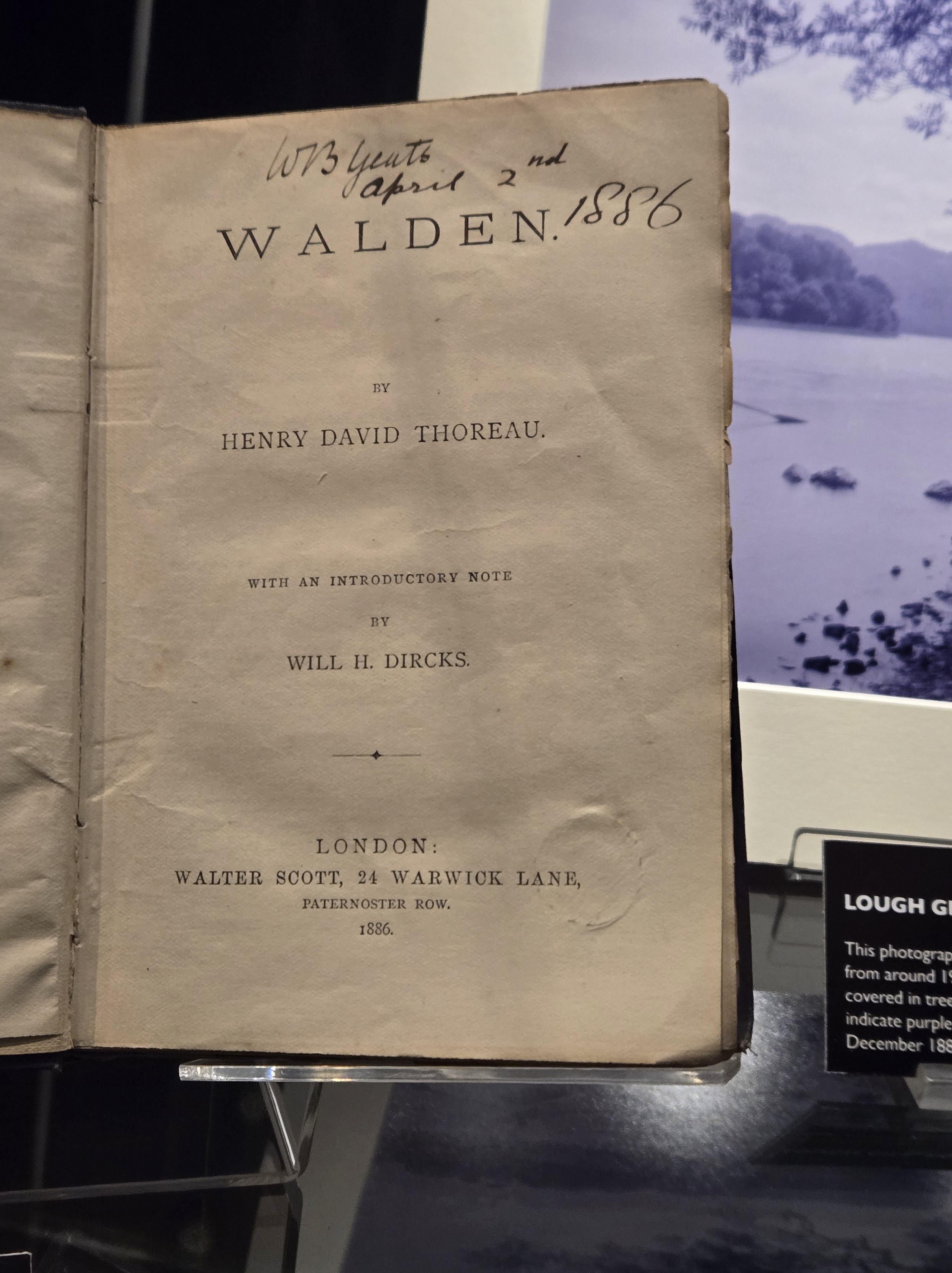
Next door to the museum is the National Library, which offered a free exhibit on William Butler Yeats, one of my favorite writers. We saw his copy of “Walden” and learned more about Maud Gonne, his muse who refused to marry him several times. I also learned that Yeats was heavily into spiritualism (think seances). I had not known that before.
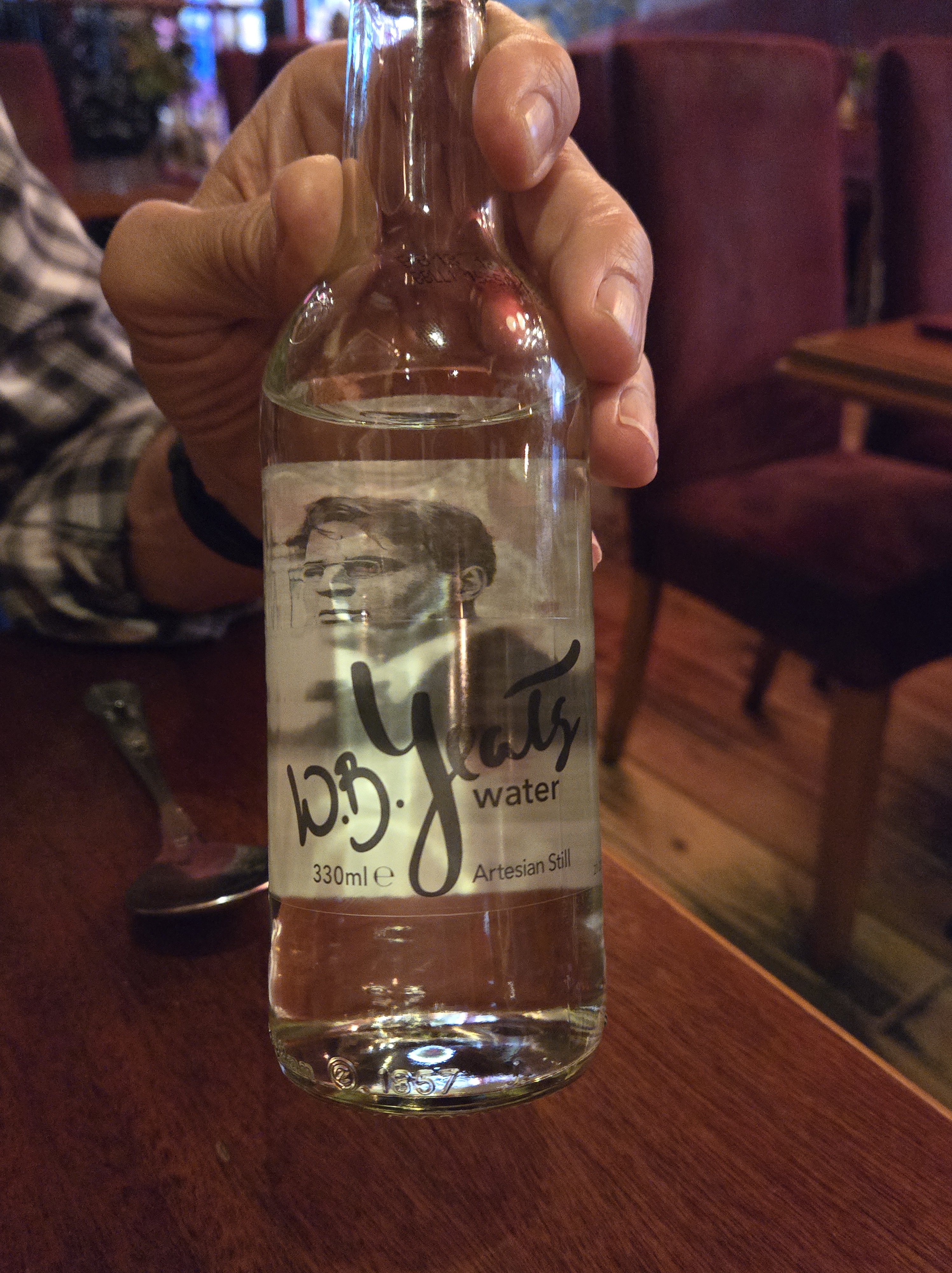
In an interesting coincidence, later that day, I ordered water at a restaurant. It came in a bottle sporting Yeats’s photo. The brand name was W.B. Yeats water. Imagine, naming a commercial brand after a writer! We don’t do that enough in the U.S. I will happily sell my name and likeness to anyone who wants to use it for commercial purposes. 😊
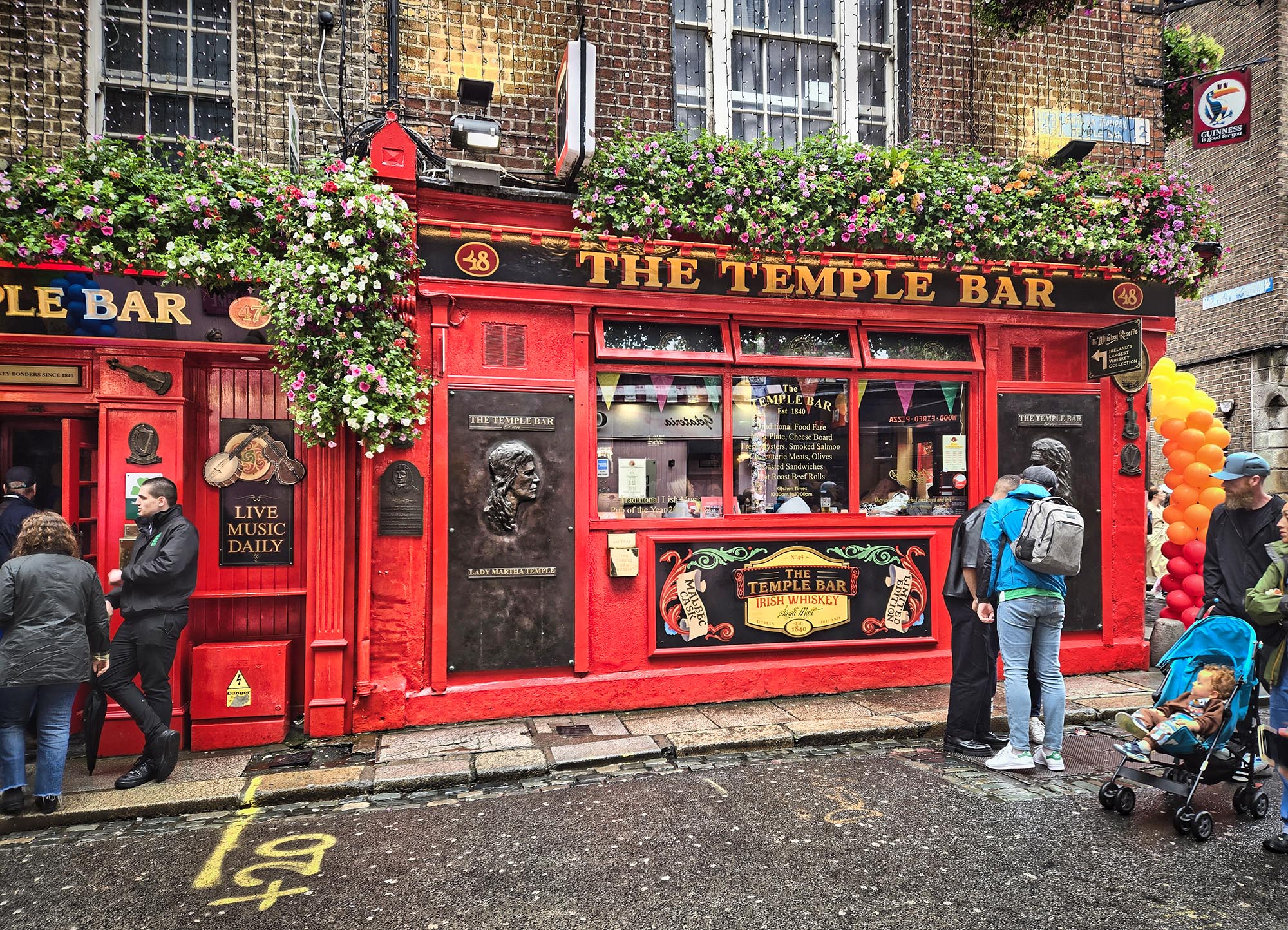
After touring the library, we walked through a drizzle to the famous Temple Bar. It’s known for its live music, ambiance, and large whiskey collection. It was too crowded and noisy, so we satisfied our curiosity with a mere stroll through it.
We had more Dublin adventures that day, but I’ll save them for the next post.

I usually take two walks every day. Recently, on one of my walks, I saw a painted turtle crossing the gravel road. It was headed in the direction of a small lake and had already made it across most of the road. But was now it had stopped. I worried it might get run over by an inattentive driver. I was tempted to pick it up and move it in the direction it was traveling, yet didn’t want to overly disturb it.
Luckily, as I stood behind the turtle, pondering, it began to move closer to the road’s edge. I slowly stepped forward and kept encouraging it to move in this way until I was sure it would be safe.
I wondered whether it was a late hibernator emerging from an inland pond or if it had laid its eggs somewhere and was now making its way back to the lake. I often see multiple painted turtles hanging out on a log at the end of the lake or swimming with their noses just above the water on quiet evenings.
After I walked a few more yards, a drizzle began. Then the drizzle became a shower. I wasn’t wearing a raincoat, so I cut my walk short and began quick-stepping my way back home. About a hundred yards past the first turtle, I saw another one that was almost the entire way across the road. It was moving quickly, so I didn’t worry about it like I had the first turtle.
Curious at seeing the two turtles crossing the road at nearly the same time, once back inside, I searched online for a possible explanation. Google said: “Every year, in mid to late spring, turtles start to move. The males are looking for partners and the females are looking for a good place to make a nest for their eggs. Unfortunately, for a lot of them, this means crossing busy roads and many don’t make it.”
In addition, Mississippi State University said that in the South, a legend says that rain is on the way any time you see a turtle cross the road. They continue, “There’s very little truth to this myth, even though it does seem like rain is in the forecast after we see one of these creatures slowly making its way across the street.”
Given my experience that day, I’m inclined to believe this legend!
Then I looked up the spiritual meaning of a turtle crossing your path. Google said it’s a sign of good fortune to come. Turtles are also omens of good health and symbolize a long, prosperous life.
If that ends up true, I’ll let you know in about thirty years.
My second wildlife encounter happened the next day. The moment I stepped out the door for another walk, I felt something land in my hair. I thought it was a bug and tried to brush it away. Out fell a five-inch black feather!
I looked around but whatever bird had lost the feather was long gone. However, a crow sat in a tree not far away. The feather certainly looked like it could be a crow feather.
While I’ve come across feathers on the ground before, I’ve never had one actually fall on me. The event was rather surprising and noteworthy (thus this blog post).
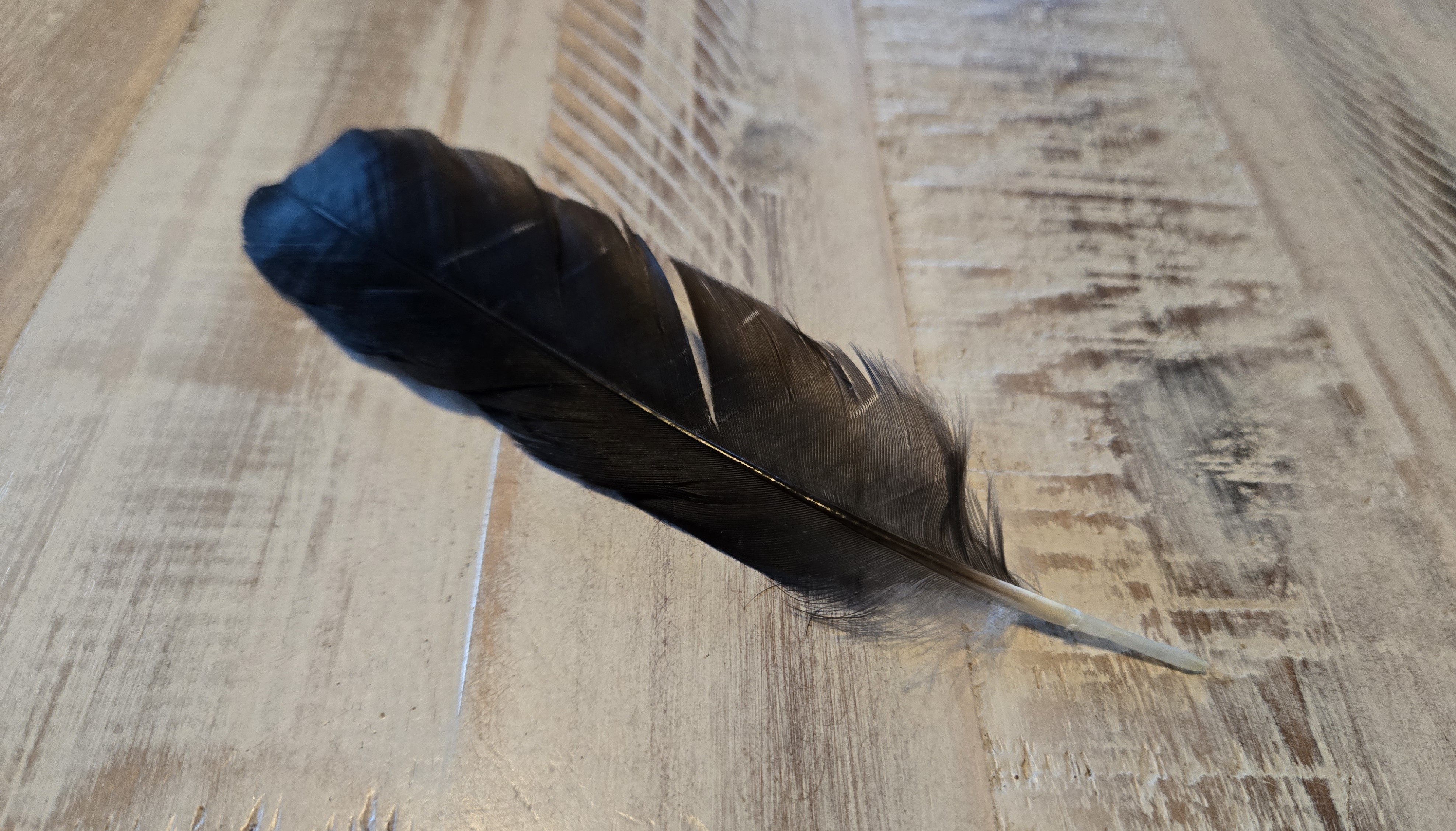
I seemed to be a roll with interesting animal encounters. Once again, I consulted the wise and wonderous internet for interpretation. I searched for “meaning of crow feather falling on your head.”
Nothing came up under that specific heading, but there were lots of entries about the “meaning of coming across a crow feather in your path.”
Apparently, like with the turtles, this is a good omen. A woo-woo yoga site said, “When a crow feather lands at your feet, it is a positive omen, meaning your calls have been heard and answered. If a feather comes to your path magically or surprisingly, it means a spirit is supporting or guiding you.”
Since the feather fell on my head, I must really be protected and supported!
Another site said it can also signify a visitation by a male loved one who has passed.
For several months, I have been working on a nonfiction story about a male relative. Although I was not born when he died (tragically and suddenly), I’ve found myself wondering if I haven’t conjured up his ghost with all my recent attention.
If he is watching over me, I’m okay with that. He was a good guy and I wish I would have had a chance to know him. Even if he’s not, these natural encounters have been interesting.
When I told Russ about the mysterious crow feather atop my head, he said, “At least it was a feather and not something else that birds usually let drop!” That’s my guy.
I think I’ll take another walk and see what happens next.
 Marie's Meanderings