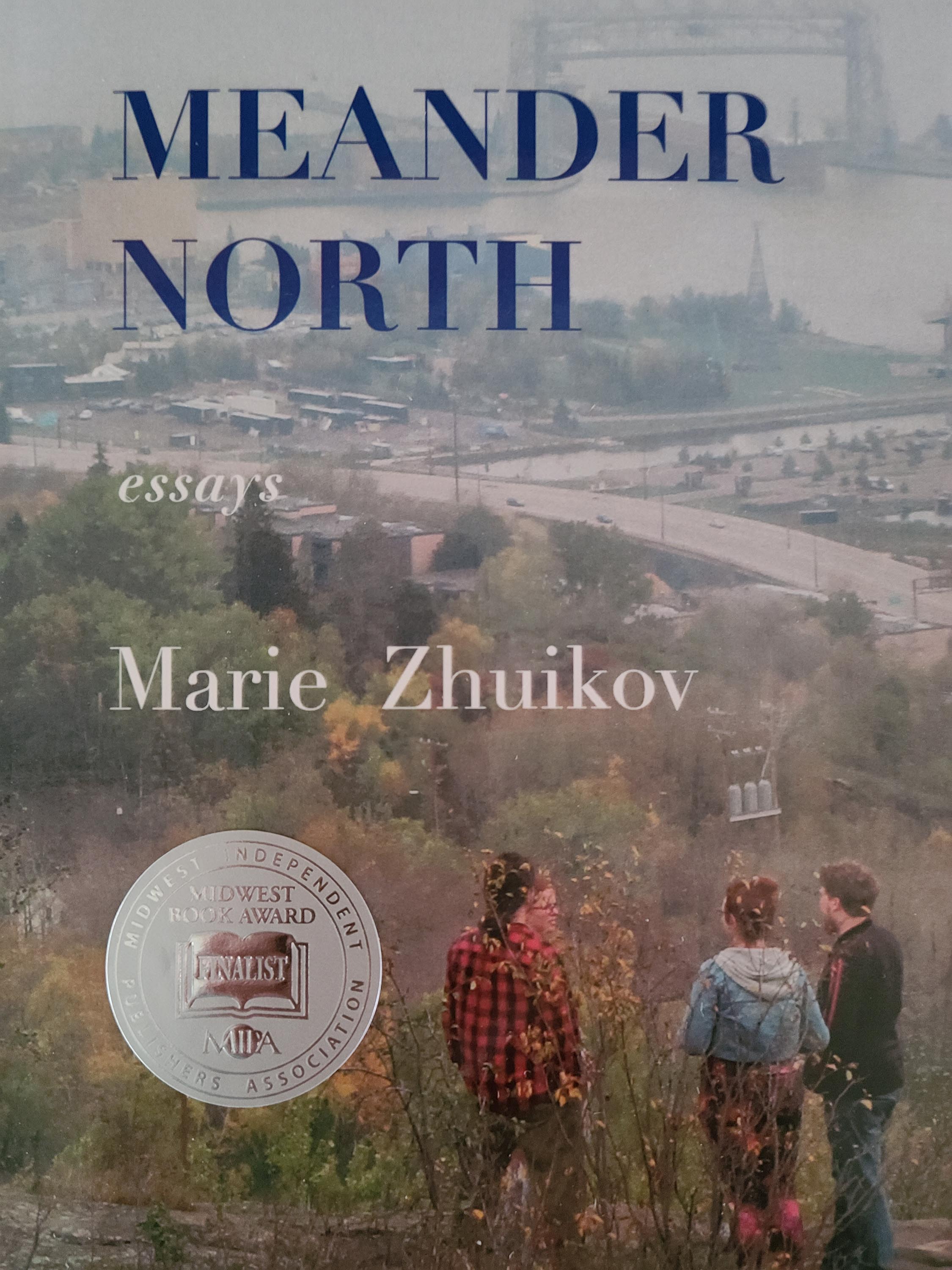
I made my Minnesota-themed blog-memoir, “Meander North,” which features essays from this very blog, into an e-book. My publisher didn’t offer that service, so I did it myself over holiday break. It took quite a while because of formatting issues. I grumbled, but I did it!
It’s now available on Kobo, Barnes and Noble, and Amazon. It sells for about half the price of the print version. But if you’re a fan of print books, that’s still available, too, through distributor Itasca Books.
If you like this blog, you’ll love the book. It earned a Midwest Independent Publishing Association book award last year for nature writing, so it’s not just me saying that it’s good. It’s all your favorite posts gathered into one place.
Thank you for reading and thanks for your support!
I received a text from my trash and recycling company the other day, telling me their schedule had changed for the week due to the New Year holiday. From nowhere, a motto popped into my head: “We’re at your disposal.”
If you own a trash company and need a motto, please feel free to use this one. 😊
True to my prediction last year, during my eleventh year of blogging, I was not as active as in the past. I posted the same number of stories, but I didn’t have time to interact as much with other bloggers as I would have liked.
One reason is that a collection of short stories I wrote was accepted for publication this year but it’s not going to press until 2025, so I spent a lot of energy ensuring the stories are well-written. I also had a long (68-page) “short” story to finish, which I accomplished, as well as a (surprise bonus!) horror story. As if that weren’t enough in addition to my day job for Sea Grant, I am turning my blog-memoir, “Meander North,” into an e-book. It’s almost ready!
For the posts I wrote this year, social media sharing by others continues to be an important factor in their popularity.
Without further ado, here are the top posts from 2023:
“How Hallmark’s Rescuing Christmas Movie Made my Tree Ornament Famous” – This post describes a Hallmark movie that was shot in my hometown of Duluth. I was surprised to see a Christmas tree ornament during a major scene in the movie that’s the same as one I have in my own collection. After writing the post, I discovered that the local artist who made the ornament didn’t know it was featured in the movie. She was delighted by the news. I’m not sure if she shared my post on Facebook or if others did, but it got a lot of views through social media accounts other than my own.
“Saying Goodbye to my 102-Year-Old Aunt” – This is my tribute to my Aunt Marguerite Pramann, who died this year after a rich life. I suspect this post was shared and accessed by other relatives, which accounts for its popularity, besides the fact that my aunt was an outstanding person.
“A Lake Superior Survival Story” – This is another movie review I recently wrote about a true story set on what is now Isle Royale National Park. Many of my friends were unaware of the movie. They commented on it and shared it via Facebook, so it received more interest than usual.
Hmmm. Maybe I should turn this into a movie review blog??
In other news, a notable story from 2019 continues to receive many (1,200) hits through Google searches and social media shares. “The Case of the Headless Bunnies” describes a disturbing sight I happened upon during my dog walks in my neighborhood woods. Several headless rabbits appeared in the same location on different days. I did some research to determine if it was perhaps a natural thing or the workings of a satanic cult! Turns out, it was natural.
Apparently, others have happened upon similar situations and turned to Google for help and found my blog, sharing their insights on social media. I am happy to have put minds to rest on this grisly topic.
I still find things to blog about and plan to continue “Marie’s Meanderings” for yet another year. I appreciate your continued readership.
Well, it wasn’t the series itself that broke the internet in my neighborhood, rather it was a virtual presentation about it by Netflix that seemed to break it.
About a month ago, I was invited to an exclusive virtual screening of a new television series that’s being made out of the book, “All the Light We Cannot See,” by Anthony Doerr. I was invited because I rated the book on Goodreads.
However, right when the screening was supposed to begin, the internet went down at my house. Luckily, I was able to access the event via my cell phone. I sure was glad I signed up for that new unlimited data plan!
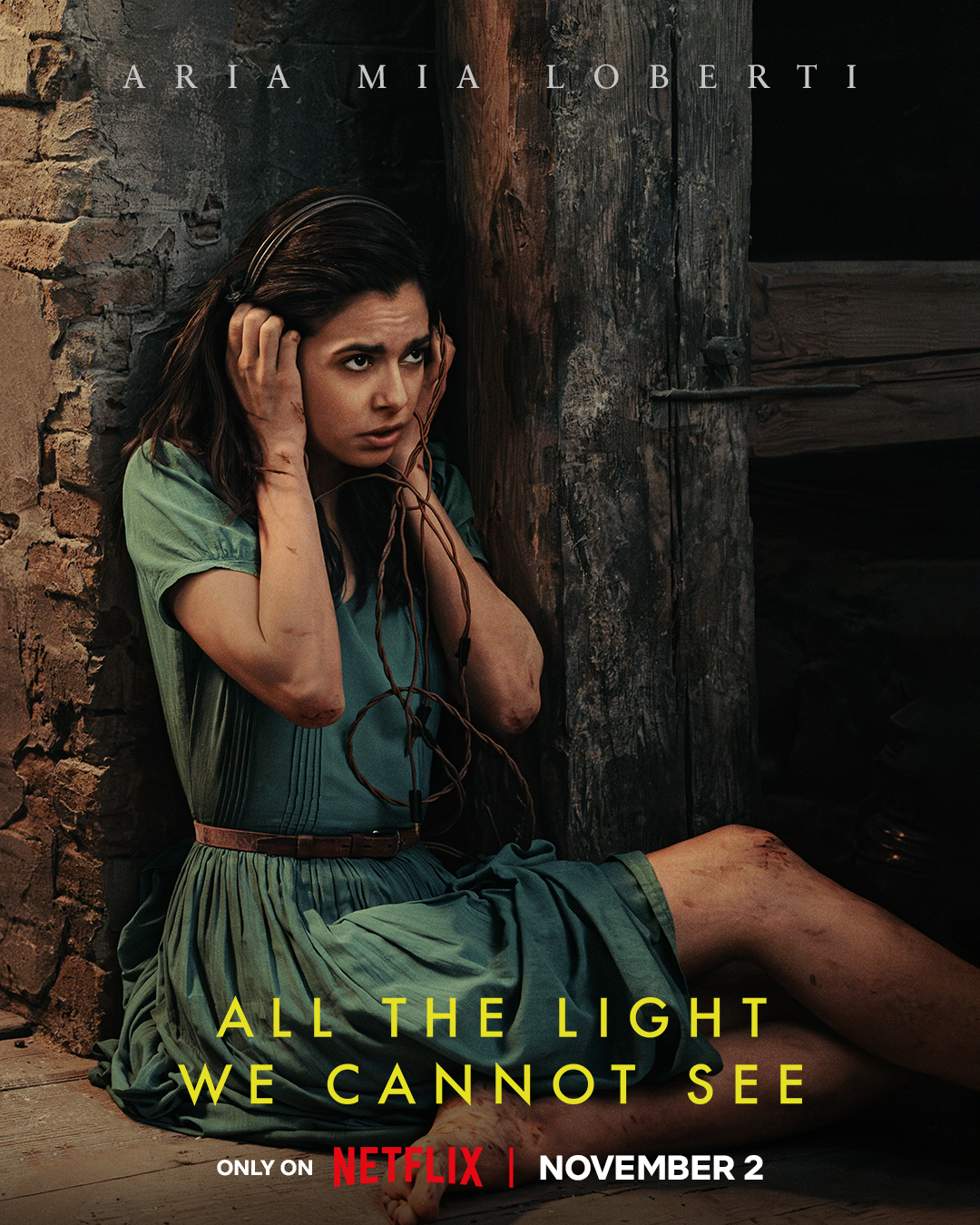
The event began with an introduction of one of the series’ main characters (Aria/Marie). Then the first installment of the four-part series was shown. It was filmed in Budapest and is set to air November 2 on Netflix. This was followed by an enthusiastic conversation between Doerr and the series director, Shawn Levy. I recorded it so I could make this blog post, complete with quotes and everything.
If you’ve been living under a literary rock, you might not know that “All the Light We Cannot See” won the Pulitzer Prize for fiction in 2015. I attribute this to Marie being one of the main characters’ names. Ha ha.
Marie-Laure is a blind girl who crosses paths with a Werner Pfennig, a German soldier, in occupied France during World War II. After her uncle disappears, Marie takes over his nightly clandestine radio broadcasts from the attic. Werner’s job is to track down resistance operations, including radio broadcasts. His life and Marie’s collide in this book, which illuminates the ways people try to be good to one another against all odds.
I gave the novel five stars on Goodreads, saying, “This book has *almost* spoiled me for any other. The writing! The metaphors! The sensory descriptions! OMG. The flipping between time periods and character points of view were confusing at times, but it all works in the end. So, keep reading. You won’t be disappointed.”
The character of Marie is played by a woman who is actually blind, “That’s valuable detail that impacts and informs every frame of this series,” Director Levy said. He conducted a global casting search for the part.
“We got thousands of videos. One of them is a unicorn of a discovery. She’s never auditioned, she’s never thought about being an actress, she’s an academic,” Levy explained.
He chose Aria Mia Loberti. She’s an American who was a graduate student in rhetoric. She learned about the audition from a former childhood teacher. Aria was a fan of the book and this is her first acting role.
Levy optioned the rights for the story after it was rejected by another firm, which decided it was too complicated to tell in a single movie.
Levy directs all four episodes, a task that Doerr called “herculean,” but Levy said this allows for aesthetic continuity between episodes.
Levy decided to direct all four out of selfishness because he loved the book. “By page 12 of episode 1 of the script . . . I said, ‘Oh no, no, I can’t share. I need to direct it and I need to direct all of it because I want live in this world and create this world in a way that feels uniform and unified across episodes.’”
Levy describes the work as one story that happens to have four episodic breaks. “I knew if I could make myself happy as a rabid fan of this book, likely I could make other fans happy. That was my whole strategy.”
Levy previously directed “Stranger Things,” a sci-fi horror series on Netflix. He also directed “The Night at the Museum” movies and “Deadpool 3.”
Doerr said that the general advice writers get is to write what they know. “I like to write into what I don’t know.” With “All the Light,” he said to Levy, “often, I’d get one-and-a-half sentences in and just like you guys, I’d have to go and build the set.” He had to research what it was like to be blind during the time period of World War II.
Levy asked Doerr how he combines lyrical storytelling with a taut narrative action. “Often, as a novelist, you’re toggling between the tiniest microscopic details, which can take a whole morning . . . and then other days, you’re trying to move totally structurally, and think, ‘where’s this tiny moment in the book falling in the larger scope of the narrative?’” Doerr said.
Levy finished Doerr’s thought with: “Because you always have to keep the narrative in your mind. Always. But you also have to be hyper-focused on this shot. It’s like zooming in and out from a macro to a micro lens.”
Many people think the book’s title comes from the blindness of the protagonist, but this was not Doerr’s intention. He thought of the title while on a train to NYC to see his editor about the cover of his current novel at the time.
“There was a guy in the seat in front of me and he was on his big 2004 cell phone. He was talking about the movie, ‘The Matrix.’ I remember that quite clearly. As we go underground as we near the city and Penn Station, his call drops, and he gets unreasonably angry. I remember thinking at the moment that what he’s doing is a miracle. He’s got this tiny set – a radio — a receiver and a transmitter no bigger than a deck of cards, and he’s expecting this conversation to work at 60 miles an hour, sending these little packets of light between radio towers at the speed of light. And who knows, the person’s he’s talking to could be in Madagascar or France. I remember thinking that what we’re all taking for granted is using this invisible light that can pass through walls. It’s a miracle and so many generations of humanity never had access to this kind of communication.
“I wrote down the title (usually titles come really late to me) but I wrote down “All the Light We Cannot See” in my little notebook that I carry in my pocket before I had anything. All I had was a girl reading a story to a boy, which is how episode 1 really begins, over the radio. I conceived of her being blind and him trapped in darkness, desperately needing this story. I just wanted to play with all the metaphorical meanings of where are we living and what our human perceptions involve.”
Levy asked Doerr whether it is surreal to have this population of people living in your head for years and then to see them burst into life on the screen. Doerr replied that he was blown away by seeing Aria’s audition video and also by the younger version of Marie, played by a child actress named Nell.
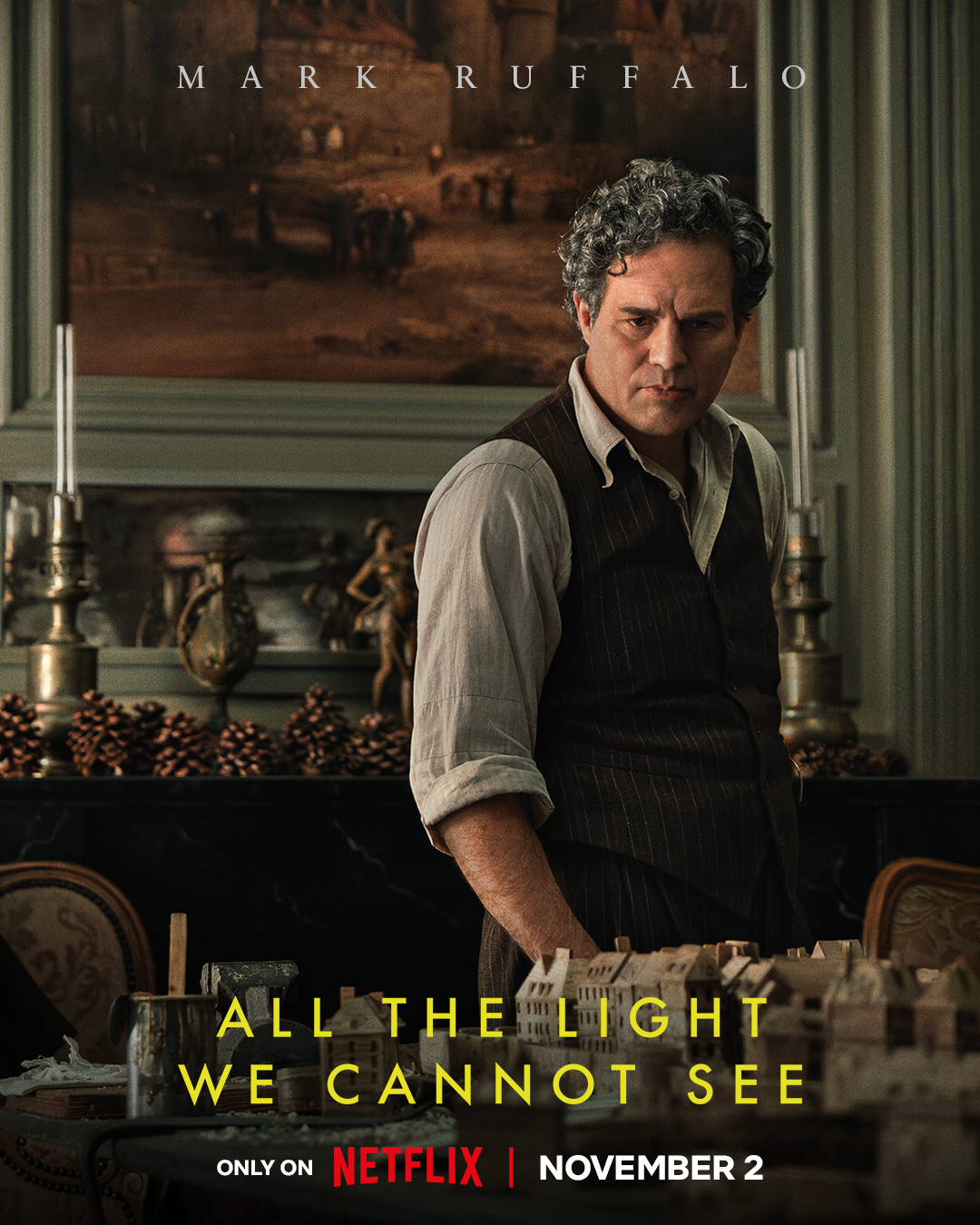
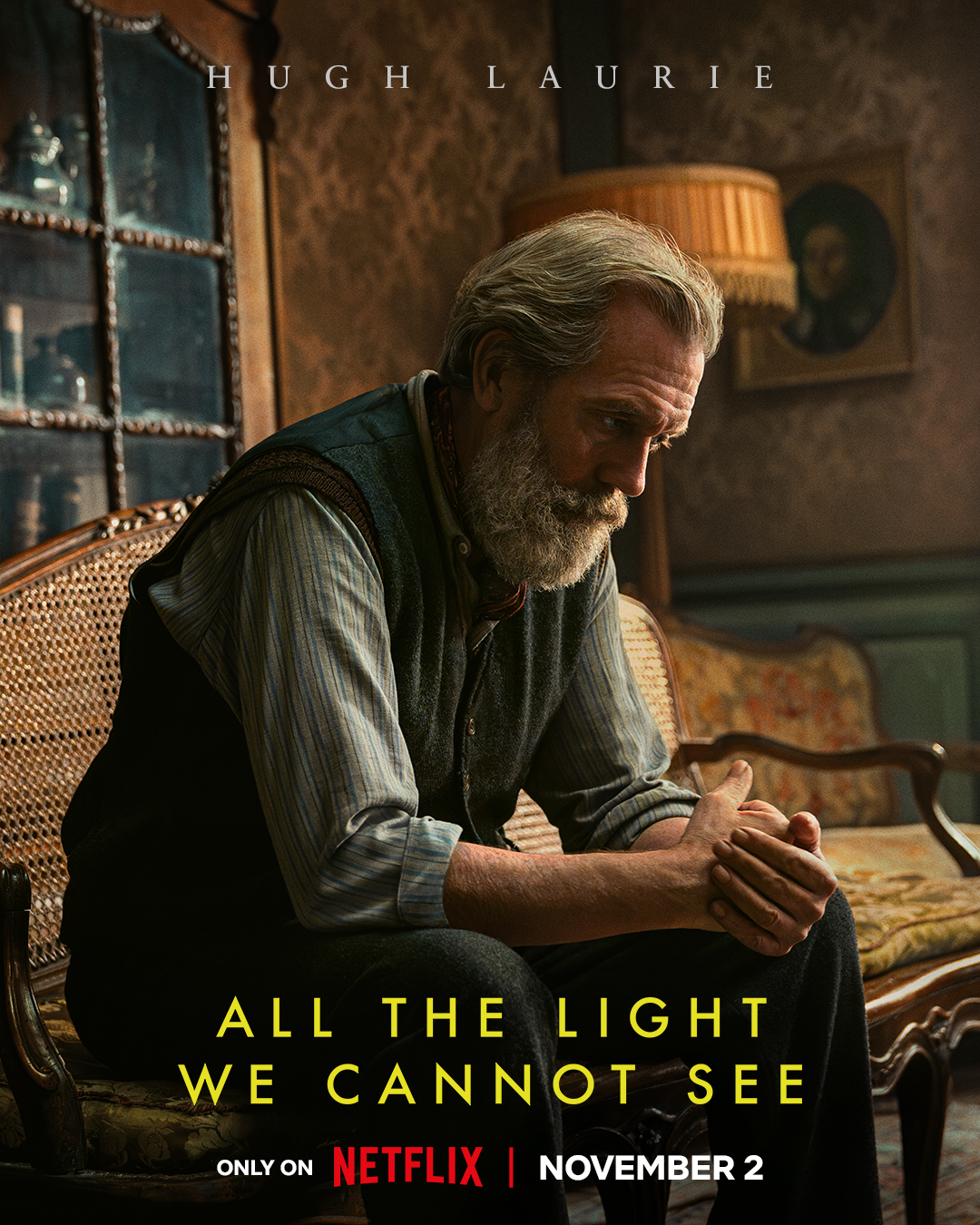
The movie stars other, more familiar actors, too. Wisconsinite Mark Ruffalo plays Daniel, Marie’s father. Hugh Laurie plays the reclusive uncle.
From being privy to episode 1, I can tell you that if you loved the book, you’ll love this series! I still can’t quite believe that I was invited to this preview.
Then the screening and conversation was over. Just as mysteriously, my internet reappeared at that instant. It made me wonder how many people got invited to this “exclusive” screening, anyway?
Unlike the man on Doerr’s train, I did not get unreasonably angry when my technology stopped working. I did get stressed out though, because I didn’t want to miss the screening. The irony does not escape me that my cell phone worked while the train man’s didn’t. And for that, we have to thank the miracle of invisible light that can pass through walls.
An Ice Age exhibit at the Bell Museum of Natural History, including a mammoth, giant beaver and musk ox.
I recently had the chance to meander through two very different natural history museums. One was public and the other not so much. Both impacted my psyche.
The public one was the Bell Museum of Natural History. This was one of my favorite hangouts during my college days when I was minoring in biology. (I won’t divulge how many decades ago that was!) Besides the obvious appeal to the science-minded, my poetry professor once took us to the museum for inspiration purposes.

The new Bell Museum.
The Bell Museum used to be on the Minneapolis Campus of the University of Minnesota in Minneapolis. Now, it has a “new” facility on the St. Paul Campus.
Russ indulged me (smart man) and tagged along as we visited the Bell’s planetarium where we learned about astrobiology, or the search for life on other planets. The planetarium has a domed Imax theater roof. We saw a movie that was narrated by an actual museum staffer (in real life). This was unexpected, but cool, because we could ask questions. Many children in the audience did, and I was impressed by their interest in the planets.
One thing I learned was that we’ve had unmanned spacecrafts land on Venus. Somehow, I missed that news. It was so interesting to learn about the inhospitable conditions there – the landing crafts only lasted a few hours before they were incinerated by Venus’s hot temperatures.
Antlers on the wall, Bell Museum of Natural History.
In the natural history part of the Bell Museum, I was heartened to see that the painted dioramas I so loved in the old museum had been moved into the new museum. There was the wolf pack on the North Shore of Lake Superior. There were the sandhill cranes of the Platte River. I can’t imagine what it must have taken to move those overland to the St. Paul Campus intact!
Plus, the museum has many new exhibits that deal with the evolution of life on this planet. I don’t think they knew that stuff when I was a college student.
The not-so-public museum was the Zoology Museum on the University of Wisconsin-Madison Campus. I meandered into it for work. Every year, my boss at Sea Grant organizes a field trip for us science communicators and this year, our focus was Madison. This is where most Wisconsin Sea Grant staff are located, but there are many staffers from other areas in the state (including me), so all this was new to me.
The UW Zoology Museum is mainly for researchers and it was formed by researchers. Many of the specimens were collected during science expeditions or they came from nearby zoos. To give you an idea of its layout, there’s a bone room, where bones of animals are stored in boxes. There’s a skin room where animal skins are stored in drawers (think about an entire polar bear fitting into a small drawer). There’s also a taxidermy room that features various birds and mammals.
A soulful lion greeted us in the taxidermy room of the Univ. of Wisconsin-Madison Zoology Museum.
As we entered the facility, we had to carefully close doors behind us so that bugs and other contamination couldn’t follow us and destroy the samples.
In the lower level of the building is a fish room where various species of fish are stored in ethanol in jars and pails. This is in case the jars ever break – that way they won’t flood the other floors. The various jars are on shelves that are moveable. These are called compacter shelves. As opposed to stationary shelves, these can be easily moved so that more can fit in a room than otherwise possible. Zooplankton are also preserved here. Various historic scientific instruments are scattered on nearby tables.

Another part of this basement room features preserved mammals, reptiles, and invertebrates in ethanol.
It was all kind of creepy and gave me some good ideas for a horror story. There were so many many samples! Something about all those dead animals in jars seemed wrong, even though it’s for the sake of science.
A polar bear in a drawer.
The piece de resistance, however, was a room we didn’t even get to see. It’s the room with the flesh-eating beetles. The museum staffer described the beetles as the best method to remove the “meat” from the bone samples that the museum staff wants. The beetles live up to their name, eating off the flesh from the bones. The dark room the beetles live in is down a concrete corridor that would give even Edgar Allan Poe pause. We did not get to see it, but our tour host’s description was good enough.
The beetles do a much better job of cleaning than any other method, so the university still uses them, even in the 21 Century.
Mice and bats in jars in the Zoology Museum.
I realize that science needs access to real animals for research purposes, but I must admit that this research museum creeped me out much more than the public museum. I guess that’s to be expected. I’m glad I was able to see both of them.
Look for the fruits of this field trip in my fiction some day! I just discovered that there’s a horror sub-genre called “dark academic.” The Harry Potter series fits into this – think gothic architecture, pleated skirts, melancholia, and leather satchels. This is opposed to “light academic.” “Pride and Prejudice” fits into this – think of the opening of the movie where Elizabeth Bennet Walks through a sunny field reading a book. It’s all about light and happiness. My story will be more along the dark academic vein.
My takeaway with this post? Visit a natural history museum near you sometime. It might spark something!
When I was in the process proofreading my blog memoir, “Meander North,” before publication, I found myself laughing. “Hey, this book is pretty good,” I thought. “Who wrote it?”
Reading my book was like having an out-of-body experience. Finding pleasure in what I wrote was a good thing but it’s not a very Minnesota thing. We’re not supposed to think we’re that special! Well, it’s too late. I really did like what I wrote. That doesn’t happen often.
My book with its silver award seal.
I suspect most writers will agree there are several distinct and disparate phases they go through in completing a work. When you complete that first draft, you’re so relieved! You think it’s God’s gift to humankind. Then your writing group or beta readers get ahold of it and you begin to see its flaws. You fix those but by that time, you’re able to distance yourself from it enough that you see even more flaws. You hate the work. It’s awful. It should never see the light of day! There’s so much that needs fixing.
Some writers never get past this point. But if you take it slow, chunk by chunk, and are kind to yourself, and you remember what you were trying to say with your work, you can come out on the other side. You might even like it in the end – enough to think that maybe somebody else wrote it.
I recently attended the Midwest Book Awards Gala, held in Minneapolis for finalists in their awards program. It’s put on by the Midwest Independent Publishers Association, which serves indie publishers in 12 states. This year, the contest attracted 227 books from 122 publishers. “Meander North” was one of them. It ended up earning a silver award in the nature category.
Mary Ann Grossmann, keynote speaker.
The gala’s keynote speaker was Mary Ann Grossmann, retired book editor for the St. Paul Pioneer Press. She told tales from her long career, including when Pulitzer Prize-winning author Studs Terkel “kidnapped” her in his car because he wanted to keep talking, and when Grossmann convinced activist author Susan Sontag to go see the 5,000-pound boar at the Minnesota State Fair.
Grossmann’s main advice to authors was to “hire an editor!” In my case, I hired two of them, just to be sure. I was so close to the material that I felt like I was missing all the little nits that needed picking in the text.
At the end of the gala, authors were given the judges’ comments. I was heartened to see that they all thought the writing was very strong. The book was also judged on things like production quality and mechanics/organization. One judge said their favorite story was the one about the sensory deprivation tank. They said, “These essays are definitely something I would read again, and I intend on following this blog now, as well.” Thank you, whoever you are!
Another judge said they thought I had a “really appealing and charming voice, and I found the writing excellent.”
Do you see me over here, preening myself in a most non-Minnesotan way? Ha ha.
Cheri Johnson, who goes by the pen name Sigurd Brown, accepts her Midwest Book Award at the gala.
While at the gala, I got to meet some people from my past who turned into authors, one of them for the same publisher who produced my book (Nodin Press). I also met some people I have had interactions with online but had never seen in person. One of them was Sigurd Brown, the pen name for the author of the thriller, “The Girl in Duluth.” Her book won gold in its category. I have not read her book yet, but I have it on order.
She was nice enough to read “Meander North,” and she posted this review on Goodreads:
I enjoyed this book very much. Zhuikov’s personal stories of everyday life in northern Minnesota—which include subjects as varied as solving the mystery of headless rabbits on a trail near her house to her discovery, twenty-five years after the fact, that the UPS delivery driver at her new job is the boy she kissed in the coat room of her first-grade classroom—are both frank and charming, and in total they tell not only the story of a life but describe the fabric of a town (the port city of Duluth on Lake Superior, where Zhuikov lives). This is a friendly and calming book, with a narrator who is pleasant to spend time with. Reading one or two of the short essays that make up the book every night before bed, I often had the feeling that I was out on my porch in the evening, exchanging a few words with the neighbor I’m always glad to run into. The writing is also very nice; her sentences are as neat and luminous as pearls. The book is a silver winner of a 2023 Midwest Book Award and I can see why.
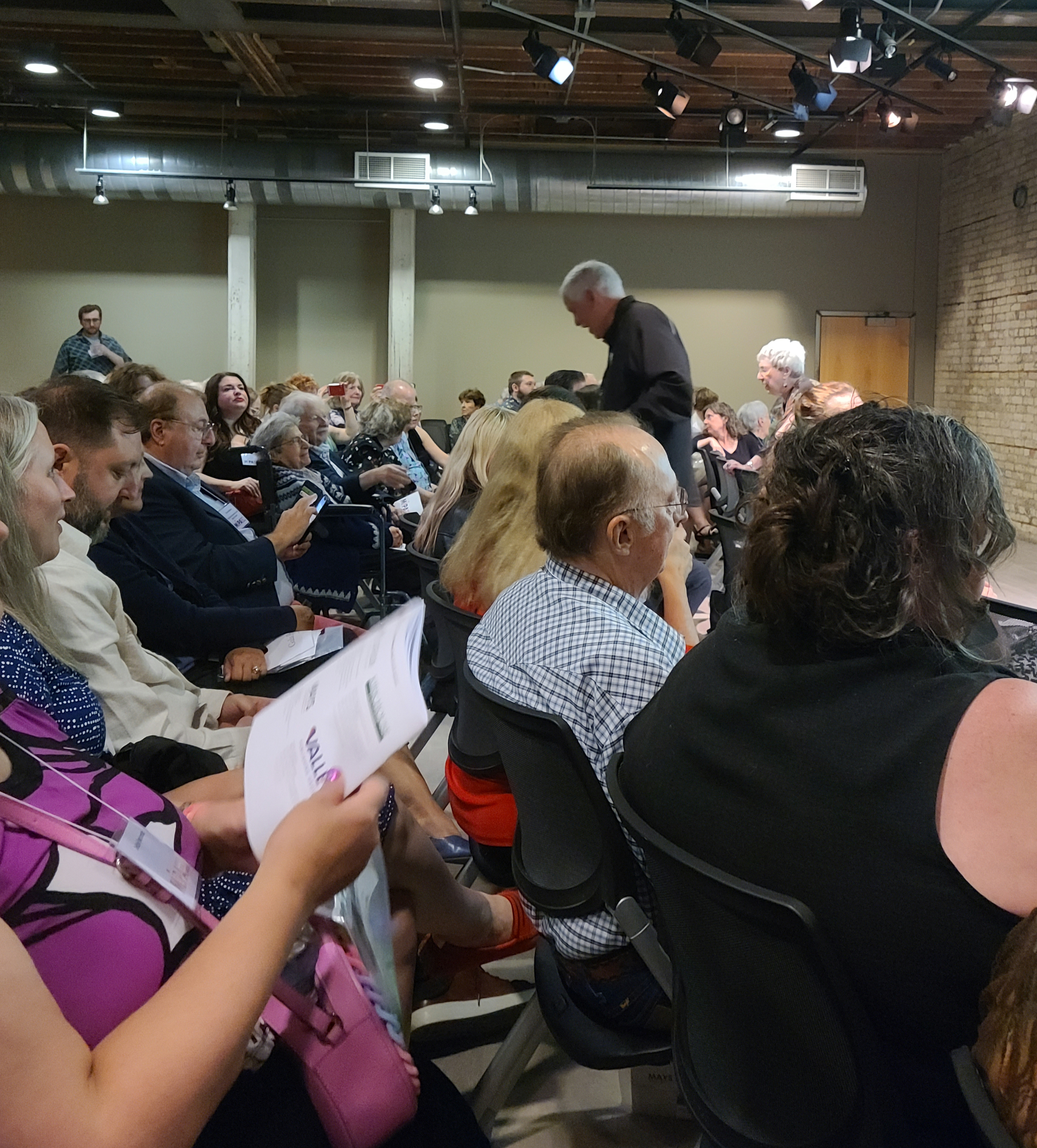
The gala audience.
I reread, “Her sentences are as neat and luminous as pearls,” several times. That’s what having two editors will do. Lord knows I don’t have that many editors for my blog! (From which the stories are derived.) Needless to say, I’m feeling a bit of pressure to write a similar glowing review of her book. But I’m sure that won’t be hard since it’s a gold winner already.
“Meander North” was also recently featured on the National Science Writers Association website. They offer a column that describes new books written by association members, and they were good enough to list mine, even though it’s been out for a while. Although my book is mostly personal reflections, there is some overlap with my day job as a science writer, so those things are highlighted in the column.
There, enough bragging. In ending, I’d like to point out that I probably never would have had enough content for a book based on this blog without the feedback and continued readership over the years from all my blogger buddies. So, you can consider this your accomplishment, as well. Thank you!!
The Isle Royale Lighthouse on Menagerie Island. Image courtesy of the National Park Service.
I recently had an article published in Lake Superior Magazine about a family of lighthouse keepers who spent their summers on a remote, rocky island that’s part of Isle Royale National Park. Here’s how the story (“Romancing the Stone”) came about.
Last December, I was hawking my books at a table at Fitger’s Bookstore in Duluth. Many holiday shoppers passed by, but one couple stopped to chat. Somehow, we got on the topic of Isle Royale, and I told them that my first novel was set on this island in Lake Superior.
The husband said something like, “Well, I’ve got a story for you. My ancestors were lighthouse keepers for two generations on Isle Royale.” The husband’s name was John Malone. His wife was LaRayne, and she mentioned they got engaged while on a trip to the “family’s lighthouse,” which was the Isle Royale Light on Menagerie Island. John mentioned that his lighthouse keeper great-grandfather had 11 children who lived out on the remote (and very small) island.
Although intrigued, I had plenty of story ideas in my head to keep me occupied for months. I told them I’d consider it but couldn’t promise anything.
But the more I thought about it afterward, the more interested I became in the story of the Malone Family. I checked with the Lake Superior Magazine editor to see if they’d ever featured a story about the Isle Royale Lighthouse and the Malone Family. She told me they hadn’t and that she would be interested in it.
I couldn’t find John Malone in the phonebook, but I was able to connect with him through social media. I reminded him who I was and told him I was interested in doing a story about his ancestors and family. On New Year’s Eve, he replied to me with his phone number. I called him to get more information so that I could pitch the story to the magazine.
Not long after, I pitched it, and the story was a go!
Then the work began. I was lucky that the Malones had a copy of a copy of the Isle Royale Lighthouse Keepers’ log, which they loaned me when I visited their home for an interview. Also, the National Park Service had done oral history interviews with two Malones a few decades ago. These Malones were now deceased, so those interviews were invaluable. I was able to combine those interviews with the ones I did with John.
After the last lighthouse keeper in the Malone Family quit his job on Isle Royale, he piloted yachts for the wealthy in Duluth. One of those families were the Congdons who built Glensheen Mansion, which is a tourist attraction now in the city. John Malone told me a tale about how his ancestor had been aboard the yacht when it sunk due to a fire. He had this great information (which is in my magazine story), but he didn’t think that the staff at Glensheen Mansion had heard the history.
It so happens that my daughter-in-law used to be a docent at the mansion and still has ties there. I consulted with her and she consulted with the staff at Glensheen to see what they knew about the sinking. It seemed as if a meeting between John and the mansion staff was in order, so I arranged it.
We met at the mansion and met with a Glensheen historian and the education manager. John got to tell his tale and I recorded it for my story. The mansion staff was excited to learn this new information. I hope they work it into the information that they provide to the public. And I think John was touched to have someone value the historic information he was privy to.
The Lake Superior Magazine editor only wanted a 1,200-word story, but I gave her more like a 2,000-word story. I apologized, saying the more I learned, the more there was to tell! But it paid off in the end because she dedicated much of that issue to maritime history.
Trying to sell books to people passing in a hallway can be depressing. I sometimes feel like one of those poor souls who stand on a street corner with a cardboard sign. My sign would say, “Will write for pay.” But this is one case where several good things came from putting myself out into the world.
Architectural drawings for the Isle Royale Lighthouse.This did not make it into my magazine story. Illustration courtesy of the National Park Service, U.S. Department of the Interior, Isle Royale Light Building Proposal, ISRO Archives, ACC#ISRO-00999, Cat#ISRO 20175.
The book I wrote based on the best of these blog stories is a finalist for a Midwest Book Award. I can hardly believe it! “Meander North” was nominated by my publisher, Nodin Press, in the nature category. Two other books are finalists in that category also: one about Wisconsin rivers and lakes, and one about Iowa farmland.
I was surprised to see my book in the nature category. I think of it more as a memoir, but you’ve got to admit that the outdoors plays a big role in my life.
This is an annual competition organized by the Midwest Independent Publishers Association, which operates over a 12-state region. This year, they received 303 entries and 83 are finalists. Judges are booksellers, university staff, and librarians who are subject matter experts and collectively hail from the Midwest. Winning entries will be announced at a ceremony in Minneapolis in mid-June.
You can view all the finalists and purchase the books here.
I am a bit flabbergasted, but extremely honored just to be a finalist. I could not have produced the book without the help of Nodin Press, and my editors John Toren and Lacey Louwagie. Both of my editors are also bloggers. You can find their sites here:
Characters from the series “Sanditon.” Image courtesy of PBS.
In my household, we’ve been watching the Public Broadcasting Service series, “Sanditon.” It’s based on an unfinished novel by Jane Austin – the last of her writings before she died. It’s set in England, of course, with strong and conflicted heroines.
Anyway, a social media announcement for last Sunday’s program said it was time to watch “the penultimate episode of Sanditon!”
I got all excited and told Russ that the best-ever episode of Sanditon was coming up. In our ensuing discussion I discovered that the word “penultimate” does not mean the ultra-ultimate of something like I had been thinking all these decades. Instead, it simply means it’s the next to last episode.
I was so disappointed. Not only because the series is ending and because the episode wasn’t going to be the best-ever, but because I’d been misinterpreting this word for so long. I don’t think I’d ever actually used the word anywhere, but it was a quite a blow to someone who is a writer.
I had fun thinking up a title for this post. Does the title mean this is the second to last mistake I will ever make in my life, or does it mean I am mistaken about the word penultimate? Or does it mean I’ve made the best mistake ever? 😊
Last week, I gave a presentation about blogging for my local writers’ group. It was a first for me, so I needed to research the topic. Thankfully, there’s a lot of info out there about blogging, much of it from Word Press. I thought I’d share some of what I learned with you since I am now this font of knowledge.
There are 600 million blogs out there in the world. This is so many that they make up one-third of the web!
Most people read blogs to learn something new.
80% of new blogs last only for 18 months. Most quit after 3 years.
22% of Word Press bloggers write once per week. 2% post daily.
Word Press is the most popular blogging platform, hosting 43% of blogs.
The highest recorded salary for a blogger in the U.S. in 2022 was $104,000.
It takes an average of 20 months to start making money with a blog, but 27% of bloggers start earning money within 6 months and 38% are making a full-time income within 2 years.
Posts that have “how-to” or “guide” in their titles are the most popular in general. (I am testing this with the title of this post!)
Images are helpful in garnering interest. Post with up to 7 images get 116% more organic traffic compared to posts with no images.
In 2021, the average length of a blog post was 1,416 words.
The average blog post length has increased 57% since 2014.
The trend is for increasing word count for posts. Posts with over 3,000 words get 138% more visitors than posts with fewer than 500 words.
Do any of these stats surprise you? I’m surprised by the trend toward longer posts, but perhaps that makes sense because there more words and more topics for search engines to find. But I would think that people don’t have that much time to read. Maybe they find the posts but don’t read all of them?
Okay, now I need to find an image for this post. And I should probably make it longer, but I am out of time!