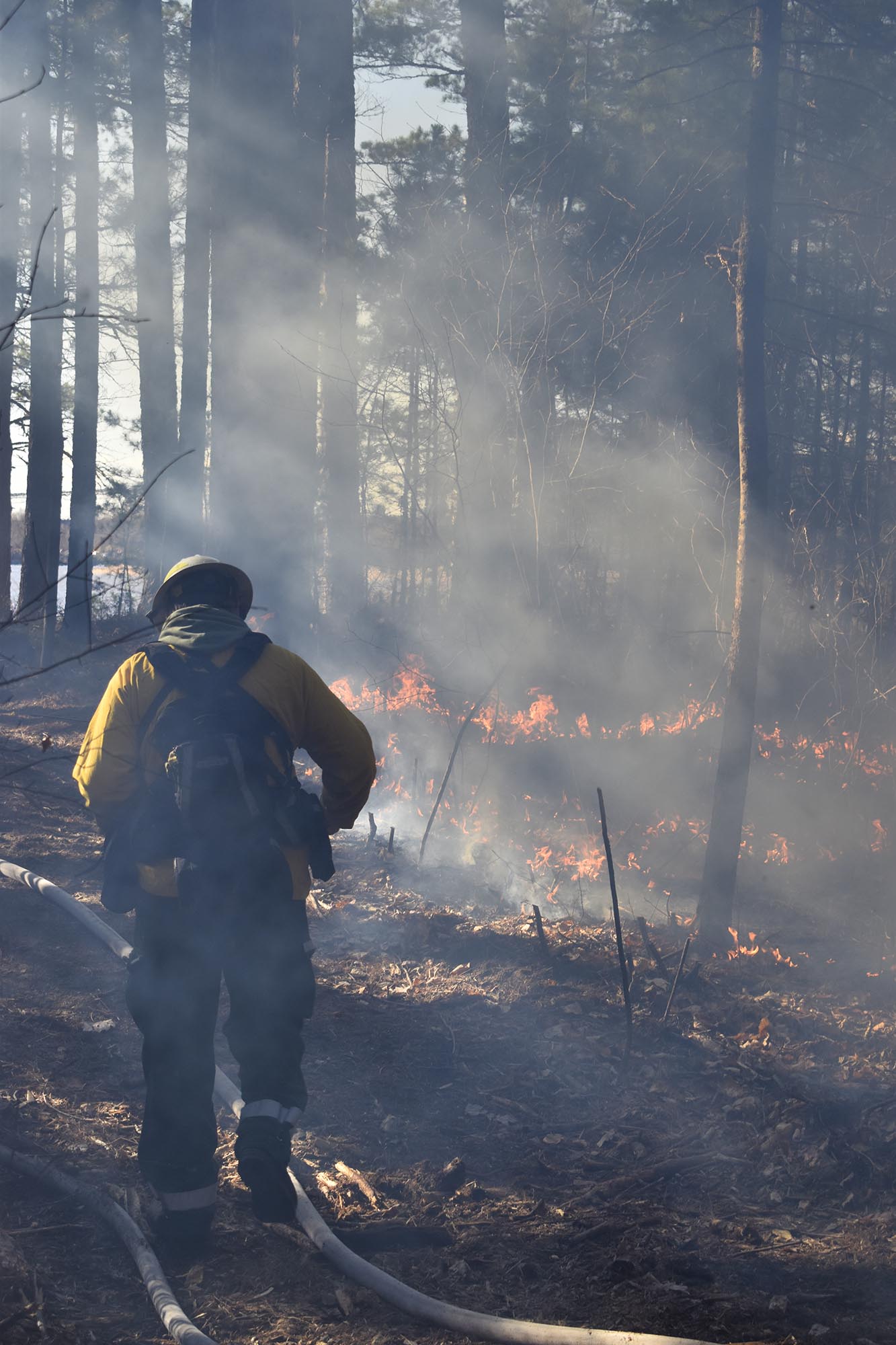
A story of mine appeared in the April/May 2026 issue of Lake Superior Magazine. It covers a project I’m involved with that’s designed to bring back the Ojibwe tradition of prescribed burning on Wisconsin Point, a long sandspit on Lake Superior. The Ojibwe once lived in the red and white pine woods there until they were moved to reservations in the mid-1800s. Before then, they would set small, controlled fires to keep brush down, encourage plants like blueberries, and help red pines sprout. They call these fires “Ishkode,” or good fire.
I first heard about this practice a few years ago while I was still working as a science communicator for Wisconsin Sea Grant. The organization funded research that studied tree rings and fire scars on Wisconsin Point and its neighboring sandspit, Minnesota Point. I reported on the project by writing articles, news releases, and producing a podcast.
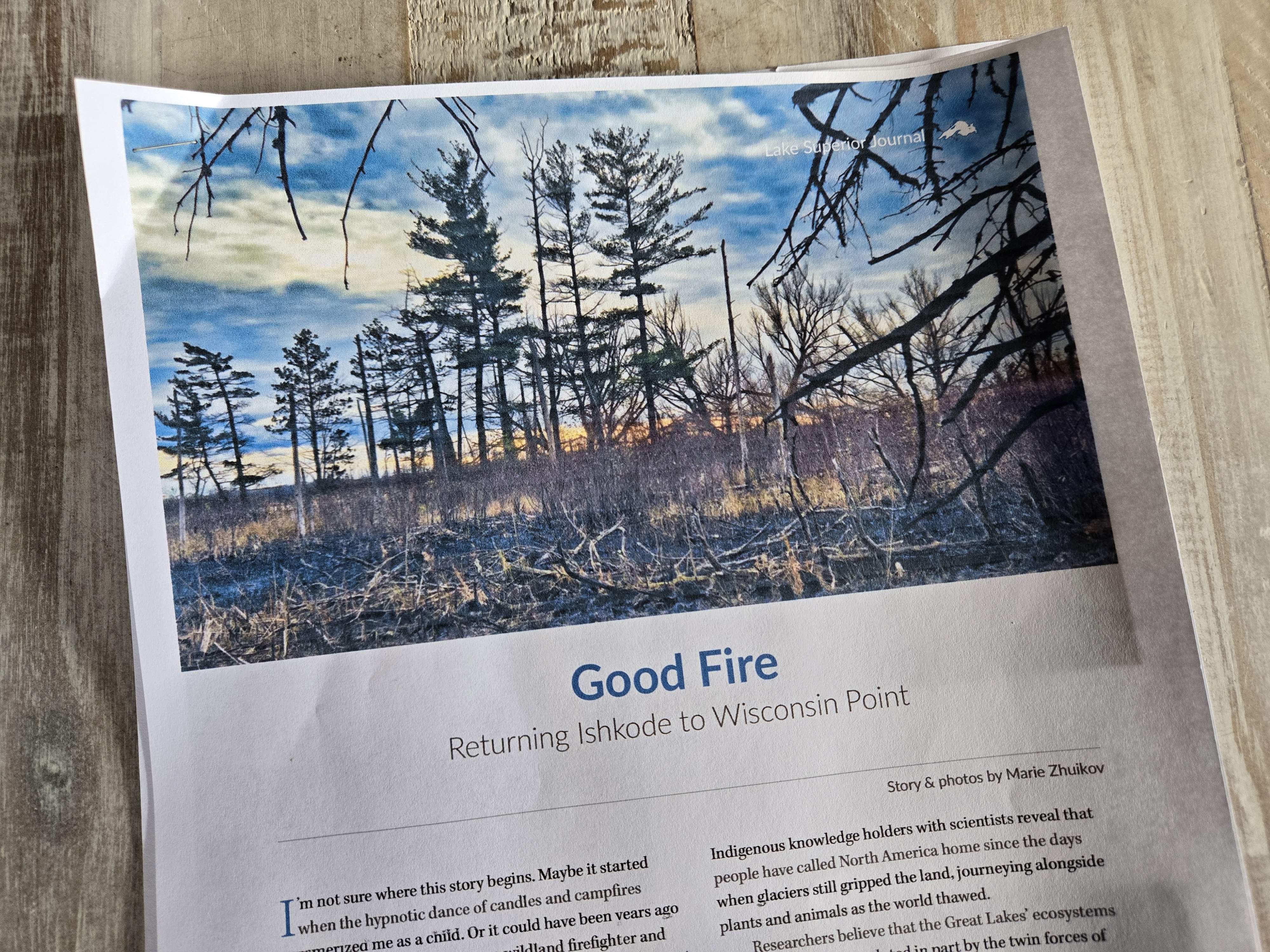
Last year, a few months before I retired, I heard that the Ishkode group was looking for help with communications. I immediately volunteered, and you can read about the results in my article. I’m happy to say that last fall, Ishkode successfully returned to the point for the first time in 159 years. And nobody got hurt! More patchwork burns are planned in the future.
As a result, I was approached by a different group that’s working to bring Ojibwe fire practices back to Minnesota Point. Although the two points are separated by a short span of water, they are different politically and socially. Not only are they in different states, but Wisconsin Point is uninhabited, whereas more than 100 homes line Minnesota Point, many of which are beachfront mansions. Wisconsin Point is owned by the City of Superior and the Fond du Lac Tribe. Minnesota Point is a mix of private, city, and state Department of Natural Resources property. There’s even an airport near the end of it.

Both fire projects are led by Fond du Lac tribal members. Except for those folks and me, most of the rest of the people involved in each project are different. Because of its complexity, the Minnesota Point group is much larger (about 40 people). I began helping them this winter and finally have everyone’s names and affiliations down.
Our goal is to conduct a prescribed burn on Minnesota Point this spring. It will be the first time in 180 years that a burn has occurred there. Things are falling into place nicely, and so far, public reception has been good.
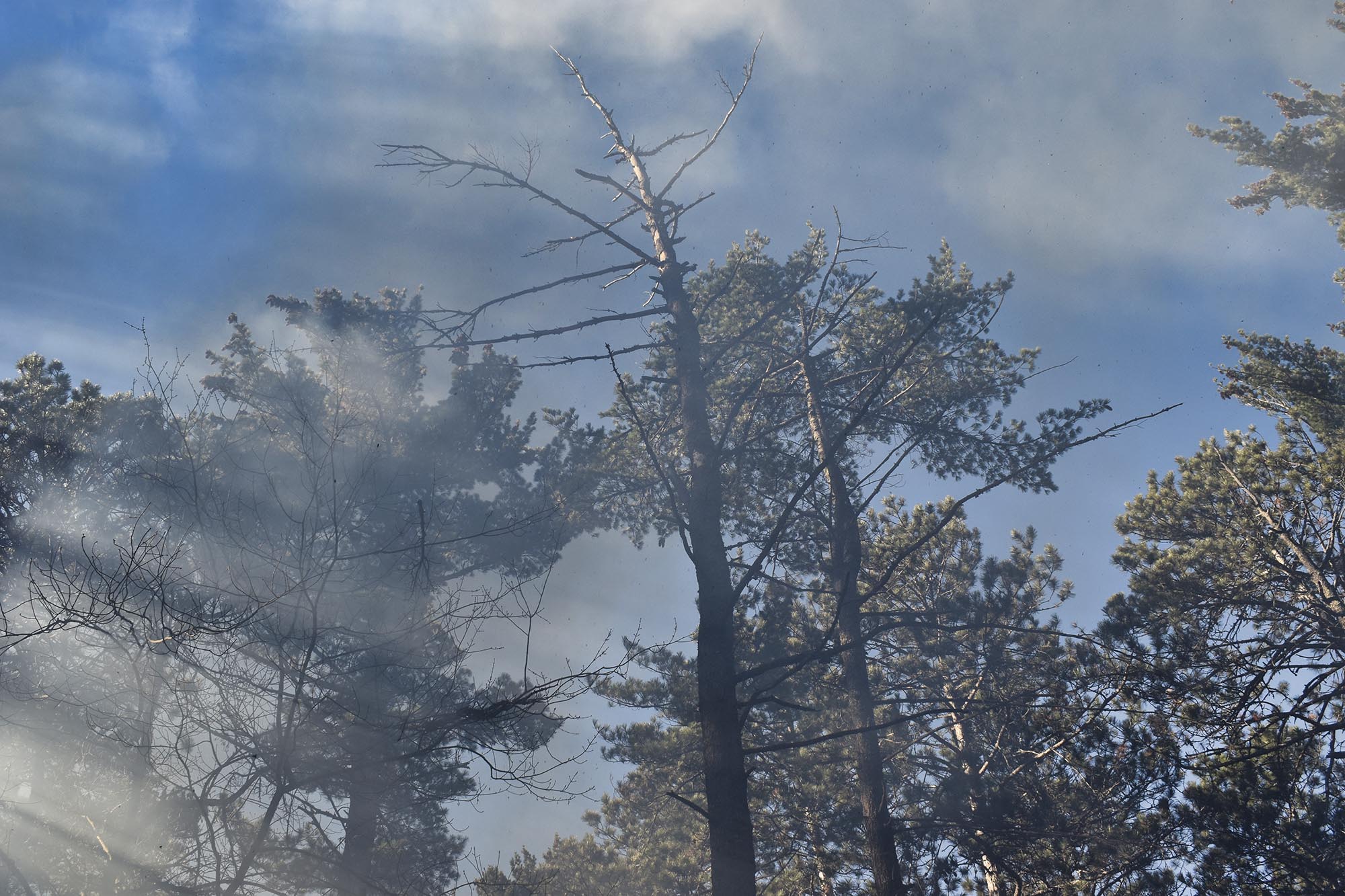
I’m happy to have a hand in returning a missing piece of the ecosystem to the shores of Lake Superior. As one of our group members said, the burns will help the choked forests breathe again. These points aren’t the only places where the Ojibwe used to burn. Evidence can be found all around the lake.
For more information, check out my article in the print version of the magazine, or check the Wisconsin Point Ishkode webpage.
 Marie's Meanderings
Helping the choked forests breathe again—what a gift, Marie! I am so impressed by your expertise and dedication.
Thanks, Lori. It’s a labor of love.
Congratulations, Marie, on the placement of an important story about your important work!
Thanks, Dave. I have appreciated this chance to learn more about Ojibwe culture.
This is great, Marie. Congrats on your story!
Thanks, Jennifer. I always enjoy writing for this magazine.