Aruban Dreams (Part 2) – Caves

DSC03902

Quadirikiri Cave

In the previous episode, my friend and I were returning from a trip to the Conchi Natural Pool in Arikok National Park in Aruba. After being spared a forced death march through the desert back to our car by some kind folks who had room in their Jeep, my friend and I were set to explore two of the park’s caves.

IMG_7433

What we could see of Fontein Cave through the locked gates. Photo by Karen Brehmer.

The caves are drivable via a paved road that devolves into a gravel road. But first we needed some lunch. Boca Prins Restaurant appeared before us, an oasis in the middle of nowhere – at the edge of a sea cliff where the paved road ends.

I had THE BEST pina colada and fish stew of my life there. The cold drink felt wondrous after our morning adventure and the fish stew was light, fishy, and limey – obviously made by someone who knew what they were doing.

We tarried over lunch so long that by the time we got to Fontein Cave, the gates to it were closed (it closes at 3:30 p.m.). If we had been able to enter it, we would have seen native pictographs dating back 1,000 years, along with drawings by colonialists. Guess I will have to visit it again on my next trip to Aruba.

DSC03910

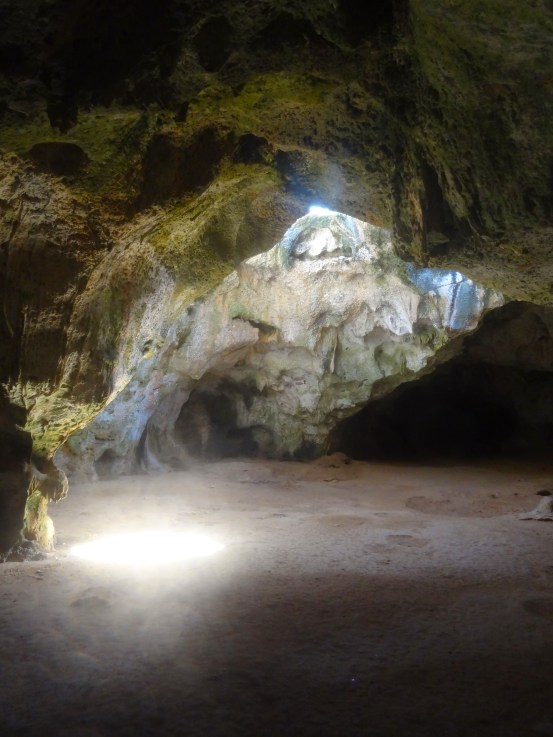
Quadirikiri Cave

Then we traveled to Quadirikiri Cave, which is known for its two large caverns and bats. The caverns are lit from holes in the ceiling. I could immediately see the appeal of the caves to ancient peoples. They provided shelter from the relentless and ever-present Arubian tradewinds and sun, and they were very roomy. I would totally have lived there 5,000 years ago.

On our way out of the park, we drove past some prominent landmarks that took the form of wind turbines. Aruba gets a good percentage (15%) of its power from renewable sources, with a goal of 100% for the year 2020. The wind-farm we drove past is not part of the park, but it’s just as impressive as some of the natural landmarks.

Thus ends our time in the park. Next up: Beaches and Butterflies.

IMG_1443

Image by Karen Brehmer.

Blueberry Buttermilk Pancake Distraction

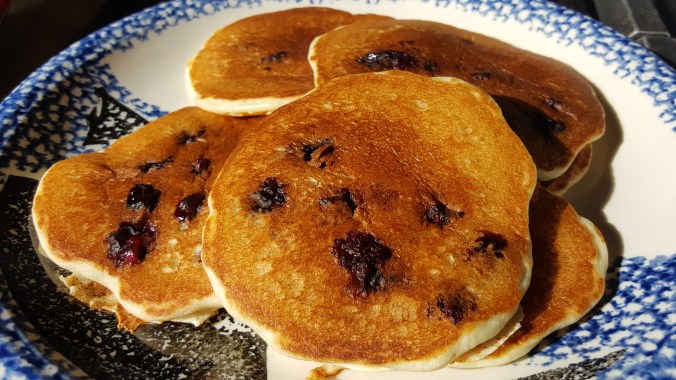
20170304_102544Never mind that President Donald Trump just zeroed out the agency I work for in his proposed federal budget. (I work for the Sea Grant Program under NOAA.) I realized I haven’t shared a recipe lately. Here’s a wheat- and corn-free version of blueberry buttermilk pancakes. I’d much rather think about them than Donald Trump’s budget.

If I let The Donald freak me out too much, he wins. I won’t let him win. But I will tell my friends to write their congressional representatives, and I’m sure I’ll blog more about this situation later. (Oh lucky readers, you!) In the meantime, I’ll cook some luscious pancakes in the sunshine on a weekend morning.

20170304_102057This recipe makes a lot of pancakes – enough for 4-6 people. If you’re sensitive to wheat, make sure to use vanilla extract that contains no grain alcohol. I make mine by soaking several vanilla beans in a bottle of potato vodka for a few weeks. For the gluten-free flour mix, I use Bob’s Red Mill all-purpose gluten-free baking flour.

And if you’re sensitive to corn products, make sure the buttermilk you buy doesn’t have a lot of extra ingredients added to it (like “natural flavor,” which can be secret code for corn syrup). Also, don’t use table salt. It usually has cornstarch added to it to make it flow more smoothly. Use sea salt instead.

Enjoy!

Blueberry Buttermilk Pancakes

2 eggs
2 cups buttermilk
4 T canola oil
1 cup rice flour
1-1/4 cups gluten-free flour mix
2 T cane sugar
½ t cream of tartar
1 t baking soda
1 t sea salt
1 t vanilla
1+ cup blueberries

Whisk eggs. Add remaining ingredients (except blueberries) in the order listed and whisk until smooth. Stir in blueberries.

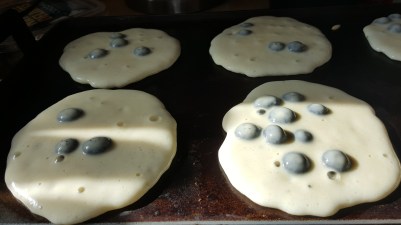
Pour batter onto hot griddle. Turn pancakes as soon as they are puffed and full of bubbles, but before the bubbles break. Bake other side until golden brown.

20170304_1035230

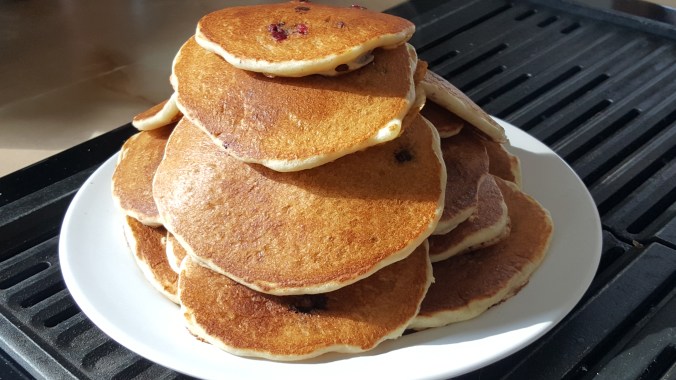
This recipe makes A LOT of pancakes.

Gingerbread House Catastrophe

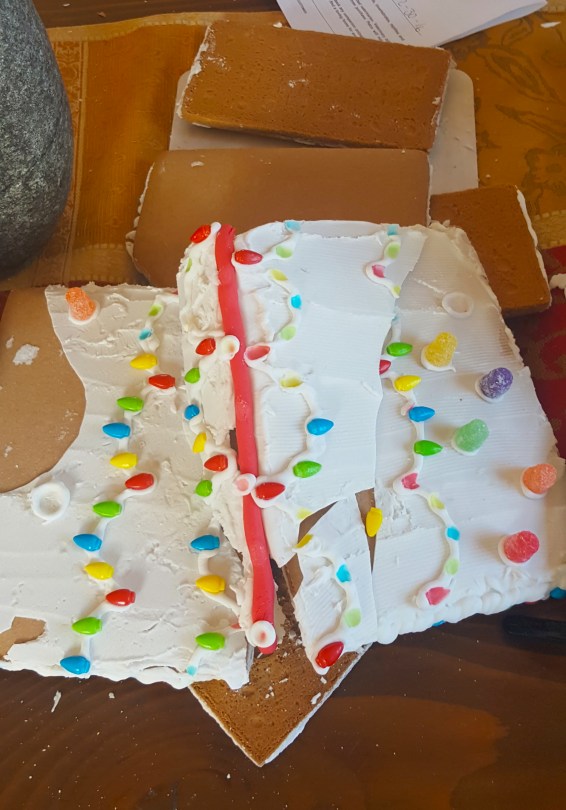
20161231_123313

Tragedy struck the Marie household yesterday with the total and spontaneous collapse of a gingerbread house.

“I was in the kitchen doing something at the sink when behind me I heard this terrible crunching sound and a thud,” said Marie. “When I turned around, I saw the gingerbread house that my son and his girlfriend made spread flat out on the kitchen table. I swear, I didn’t touch it!”

Emergency responders on the scene reported that no people or animals were injured in the collapse. Damages estimated at $10.

Marie said that when she told her son about the incident, he instructed her to throw away the sides of the house, which had already been picked clean of frosting and candy, and to save the roof, which still contained candy.

“I sure hope this isn’t a harbinger of doom for 2017,” she quipped.

The Deflowering of a Whisky Virgin: Adventures in Scotland, Part 3

SCOTLAND! 077

Sure, I messed around a few times – kissed the rims of a few whisky glasses in my fifty-something years, took a few sips — but I didn’t know what I was doing.

In my everyday world, most of my experience was with wine, gin, and hard cider. I really can’t have much else due to an intolerance for wheat and alcohol made from grain. But scotch whisky is made from barley, so our trip to Scotland within sight of the Speyside Whisky District provided a prime opportunity to experiment and branch out into a whole new area of sensual delights.

My friend and I visited two distilleries in the Highlands during our week together: Glen Dronach in the town of Huntley, and Strathisla in Keith. As with most sensual experiences, my first at Glen Dronach, was the most memorable.

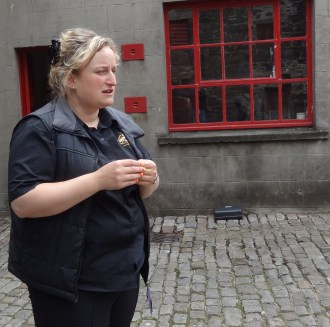
Glen Dronach is renowned as a “distiller of richly sherried single malt whiskies of inimitable and individual character” (according to their web site). Our tour guide, Karen, explained that unlike other distilleries, their whisky is aged in barrels that were once used to store sherry in Spain. The flavor of the sherry seeps into the wood, and seeps back out into the whisky stored in them.
SCOTLAND! 076B

Karen, our distillery tour guide.

The distillery was in full production mode, so we were able to see all the processes, from the malted barley being ground into flour, to the brewing, fermentation, and distillation. The smells of all those processes were earthy and wondrous. I was impressed by how huge the vats were in comparison to a gin distillery I recently visited back home in Minnesota.

As we walked out of the distillery and into the visitor center for our tasting, Karen pointed out an American flag on the lawn amongst several others. She said the flag was new and represented the fact that Glen Dronach and its parent company were recently acquired by the parent company of the Jack Daniel’s brand of whiskey. Others on our tour expressed fears that the new company would come in and change everything. Karen said she hoped that wouldn’t happen. “Why buy something that you like and then change everything?” Those Highlanders and their traditions. I expect that even if the new company wants to change things, they’ll run into a bit of resistance. 🙂

An interesting thing we learned on the tour is that while it is aging, some of the scotch evaporates from the barrels. This is unavoidable. The disappearing drams are called the “angels’ share,” since it’s the angels that get to drink it. Karen said she’d like to be one of those angels someday.

Onto the tasting. I chose the basic tasting, which featured eight-, twelve-, and eighteen-year-old scotch samples. My friend (who was our driver) took the driver’s tour, which, alas, featured no on-site tasting, but she was given a dram of twelve-year-old scotch to take home. Since the distillery is sort of in the middle of nowhere, it makes sense that they would offer this option because the only way to get there is by driving. I suppose there are legal reasons, too.

As I was sampling, my friend asked our guide what her favorite whisky was. Karen said when she has company at home, she brings out the twelve-year scotch. “But,” and here she cradled a bottle between her breasts like a child, “for my family, I save the eighteen-year scotch.”

She was right to save the oldest for her closest kin. The younger whiskies were fine, but when the eighteen-year-old version touched my tongue, I felt things I never had before. (Smirk.) No really, the flavor was so much more full-bodied and warm. The whisky assaulted my entire tongue, not just a part of it. Tastes of sherry, oak, barley fields, Highland air and Speyside water made me stop and take a step back from the table.

“Oh, that’s good,” I said, promptly ignoring the dregs of my other two whiskies, and concentrating on the eighteen-year-old.

We talked for a while more and then a blond-haired gentleman walked into the room. Karen introduced him as Billy, the master distiller. She told him about my reaction to his eighteen-year-old scotch. He smiled and looked pleased that he obviously still had the right touch.

Of course, now that I’m back in America doing research for this posting, I find out that Billy (Walker) is pretty much head of the whole frikin’ company. I can’t believe we met him!

We left Glen Dronach with a good feeling about the family atmosphere of the distillery, and with a supply of scotch to celebrate that night’s Solstice back at Crovie Cottage #13.
031

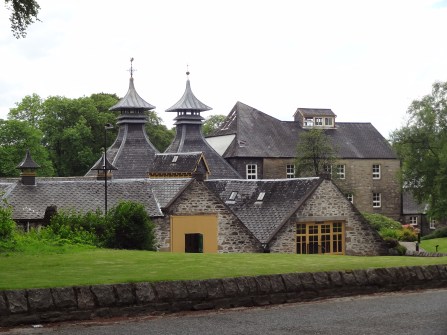
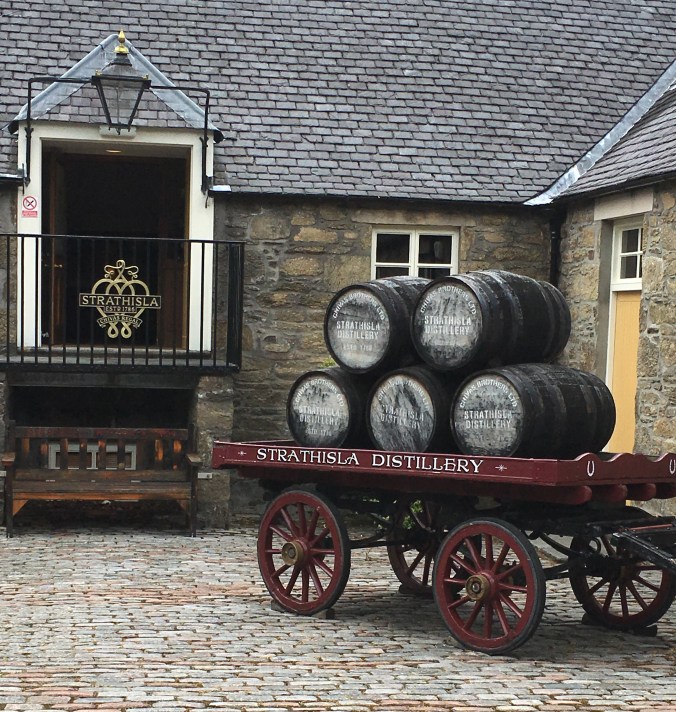
Strathisla Distillery in Keith, Scotland.

A few days later we visited Strathisla (pronounced Strath-ila), the oldest operating distillery in the Highlands, and the spiritual home of Chivas Regal scotch. Like Glen Dronach, Strathisla was purchased by an American company that had already been using Strathisla’s single-malt scotch as the basis for its blended whisky products. Strathisla’s parent company also owns The Glenlivet and Aberlour distilleries.

Unfortunately, the distillery was down for cleaning, but we decided to take the tour and do a tasting anyway since we had time. The size and scope of Strathisla were similar to Glen Dronach. But at Strathisla, we had the additional experience of going into one of the warehouses to see where the barrels rest. We learned that distilleries often warehouse other distilleries’ barrels as a kind of insurance in case some disaster befalls the parent distillery.

Another fact our tour guide mentioned is that there are 20 million barrels of whisky in Scotland. Wow! Even though there’s so much of it, it has to age at least three years before it is used. She said the distilleries are having a hard time meeting demand for their product worldwide, and that China is home to most of that demand.

All but one of the whiskies offered at their tasting was blended with grain alcohol, so I only tried the twelve-year-old single-malt Strathisla. (Besides that, I was the driver this time.) It was very good, but did not have quite the same effect on me as the eighteen-year-old Glen Dronach.

I left glad that I had lost my whisky virginity to Glen Dronach and the skillful hands of Billy Walker. Now I know a little bit more what I am doing when it comes to scotch.

As if whiskey virgin deflowering weren’t exciting enough, my next entry will focus on some of the wilder pursuits in Northeastern Scotland.
IMG_1020

Cullen Skink and Scones: Adventures in Scotland, Part 2

SCOTLAND! 037

The non-rocky part of the trail to Gardenstown.

We spent our first day at Crovie Cottage #13 on the Moray Coast exploring the small fishing village and hazarding the “Danger! Falling Rocks!” trail that leads along the sea to neighboring Gardenstown. Eventually, we stopped at a café for lunch.

The Tea Pot Cafe is the kind of place where everyone notices when somebody new walks in. Your table neighbors will advise you on menu choices, ask where you’re from, and if you’re lucky, will tell you the best places to visit.

SCOTLAND! 053

The rocky part of the trail.

We were advised to visit Delgatie Castle for the best scones and Cullen skink in the land. Scones need no explanation. Cullen skink, however, is a chowder made from smoked haddock. It was invented in the nearby town of Cullen, and is apparently all the rage. Certain restaurants along the coast even boast chefs who have won Cullen skink soup honors. The “Cullen” part of the name of this dish sounded okay to us. The “skink” part, not so much, but we were game to try it.

026

Delgatie Castle

So, the next day, after a visit to a nearby gannet colony at the Troup Head Nature Reserve, we were off to the castle. Delgatie Castle is no longer inhabited, but is run by an organization. As we approached on the dirt road and the pink tower loomed through the trees, we were stuck by the feeling we were in a fairytale.

Hungry again, we opted to visit the Laird’s Kitchen first and tour the castle later. We were not disappointed by either the scones or the soup, although as you can see from the photo below, the meal was a bit, er . . . white. The bread was homemade and the scones were meltingly hot.

The castle is primitive compared to others I’ve been in but it was interesting to see how the rooms were arranged around the large central tower staircase. There’s also a creepy story in one of the rooms about a monk being buried behind a wall.

So that was our introduction to local fare and Delgatie Castle. Next, it’s on to whisky!

SCOTLAND! 067

Cullen skink soup, homemade bread, and tea – of course.

Dining Our Way to Mad City

20160128_172614

The view of the Wisconsin State Capitol from our table at the Old Fashioned Tavern.

The Mother Ship for my day job is located in Madison, Wis. My coworkers and I recently took a road trip to the “Mad City” for a strategic planning meeting. To make things more fun, we strategically planned our lunch stop to coincide with the Broadway Diner in Baraboo, Wis.

I learned about the Broadway Diner the weekend before during a TV show called “Discover Wisconsin.” Since I am a lifelong Minnesotan who now works for a Wisconsin institution, I have endeavored to learn about my employing state. Discover Wisconsin is one of my secret weapons in this cross-cultural quest.

20160128_114314

Inside the Broadway Diner in Baraboo, Wis.

The show featured eating establishments that use locally sourced ingredients. The Broadway Diner caught my eye because I knew I’d be travelling through the town, and because I’m developing a “thing” for diners. The diner supplies its cheese, eggs and meat from local sources.

The Broadway looks like any respectable diner from New Jersey, with a metallic outside and a tiled, stooled inside. We learned while there that the diner was, in fact, made in New Jersey, and it spent many years in Connecticut as a diner, before it was moved into storage in Cleveland, bought, and moved to its current Wisconsin location.

The food hit our lunch spots, although I had breakfast: potato pancakes with over-easy eggs and sausage. Wonderful. My co-workers enjoyed their wrap sandwiches. For those who are gluten-intolerant, the diner offers gluten-free bread.

Sated, we continued onto our meeting in Madison. After a vigorous afternoon of strategic planning, we converged as a group on The Old Fashioned Tavern and Restaurant in the center of town, directly across from the Wisconsin State Capitol.

20160128_173035

An Old Fashioned.

I treated myself to my first-ever old fashioned. It’s a drink served in a tumbler, which features brandy, cherry and citrus flavors. My first was so good, I had a second.

The Old Fashioned specializes in German cuisine and offers tantalizing appetizers such as spicy pickled eggs, turkey gizzards, and pork hocks. A person can even buy jars of pickled eggs “to go,” if they don’t have time for a sit-down. Fried cheese curds are on the menu, too.

I ate a Wisconsin Burger, which of course, was topped by Wisconsin cheddar cheese. I asked for fried onions instead of the raw onions on the menu, and happily received the correct onion versions.

If you’re ever in or near Madison, try the Broadway Diner and The Old Fashioned. You won’t be sorry. They can even make a strategic planning trip to the Mother Ship enjoyable.

In Which I Learn About Aquaponics (and eat it, too!)

A salad made with aquaponic lettuce. Photo by Moira Harrington.

A salad made with aquaponic lettuce. Photo by Moira Harrington.

Last week, a small cadre of my co-workers and I visited an aquaponics facility in Montello, Wis., to learn more about this intriguing way to grow food. The types of food involved are fish and plants: walleye and tilapia, and just about any type of veggie one can imagine. This alone would be cool, but what’s even more notable is that the water used in the system is recirculated and reused, thanks to the wonders of bacteria and a specialized filter system.

The facility we visited housed joint operations by Nelson and Pade Inc. and the University of Wisconsin-Stevens Point. Nelson and Pade sells aquaponics systems commercially, along with the fishy and veggie fruits of their labor. UW-Stevens Point conducts research into new aquaponics methods.

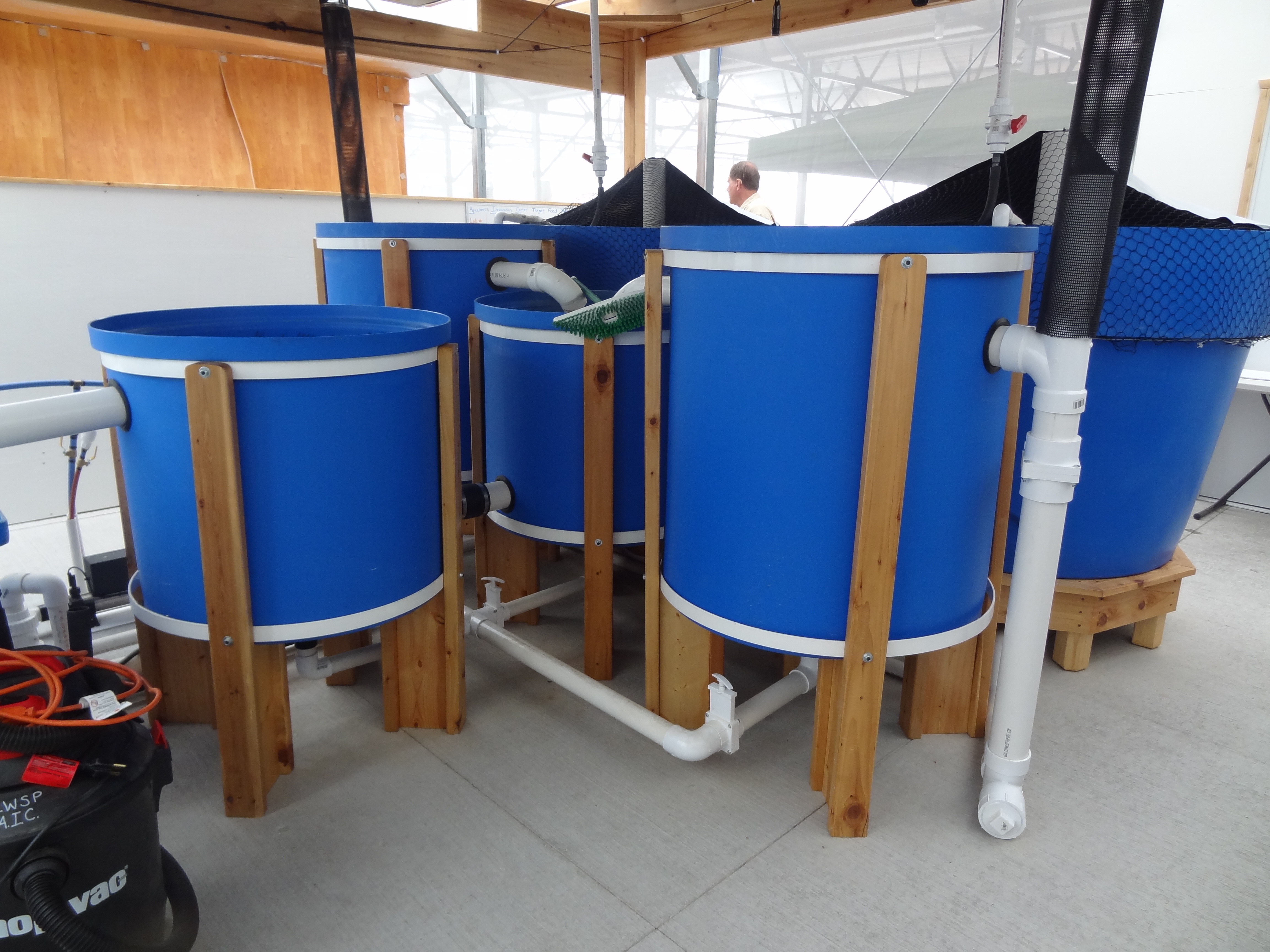
Aquaculture tanks that hold tilapia fish.

Aquaculture tanks that hold tilapia fish.

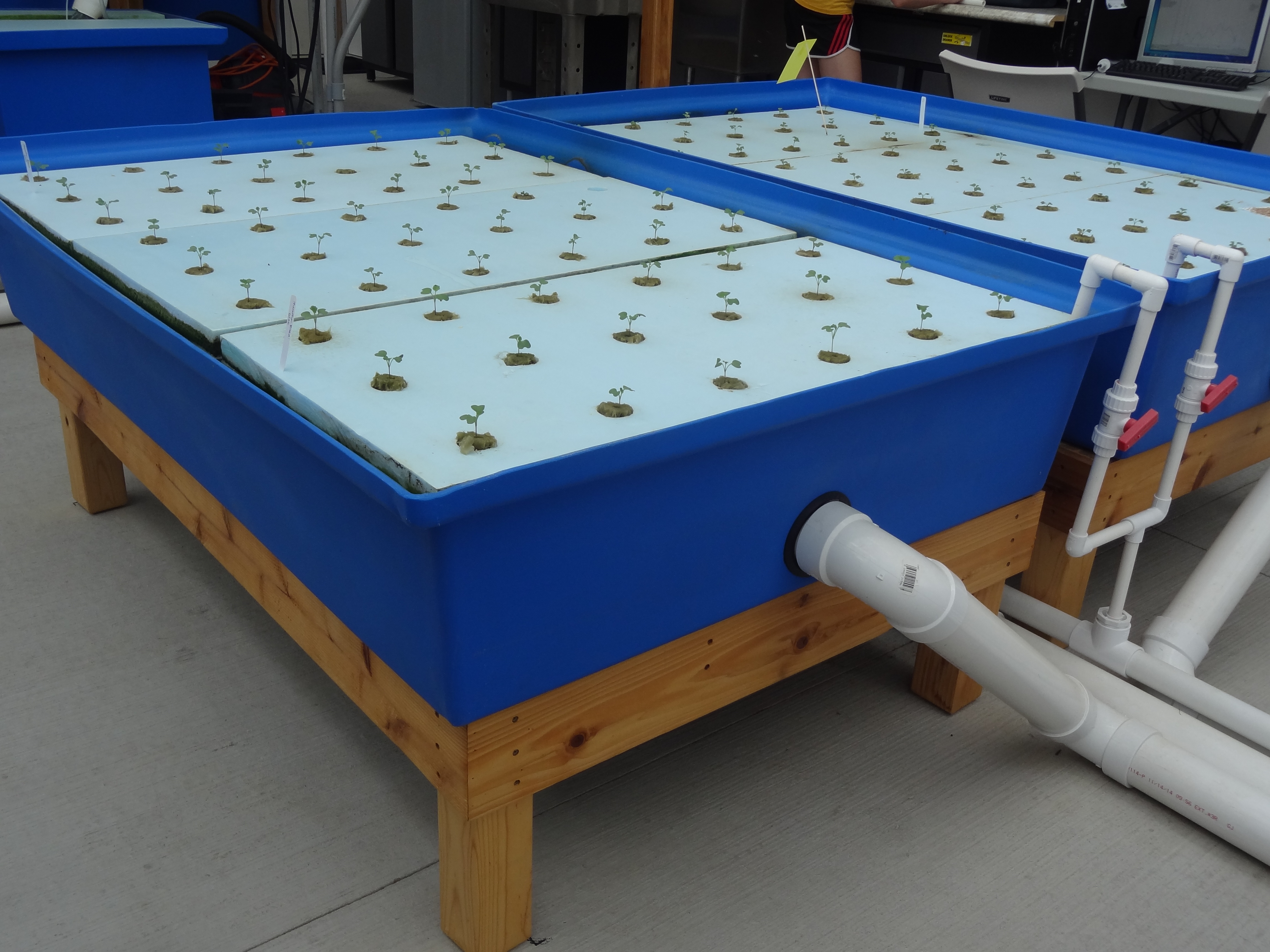
How does aquaponics work? Basically, the fish are grown in aquaculture tanks. The resulting nutrient-rich water from the tanks is filtered through several systems and pumped into plant-growing systems. The plants grow in their own individual base of porous rockwool atop the water in floating platforms. No soil is needed. The plants receive enough nutrients and natural fertilizer from the fish water to grow. The used plant water is then filtered again and recirculated back into the aquaculture tanks.

The goal with aquaponics is to provide a sustainable system for growing high-quality food. Pesticides aren’t used on the plants for fear they will contaminate the water and hurt the fish. Instead, natural methods are used like mites that eat pests.

The plant growing platforms.

The plant growing platforms.

The systems don’t take up much space or use much water after the first set-up, and they produce high volumes of food: ten pounds of plants for every one pound of fish. People can purchase systems small enough to fit in a home or classroom, to those large enough for family farms. My guess is that anyone able to keep fish alive in a home aquarium would be able to do the same thing in an aquaponics system. Sure, the aquarium in this case is a bit more expensive, but the concepts are the same.

To round out the tour, our group ate at a local café where aquaponics lettuce was used in a tasty strawberry walnut salad. It was super good. If you ever get the chance to tour such a facility or eat aquaponics-produced food, go for it!

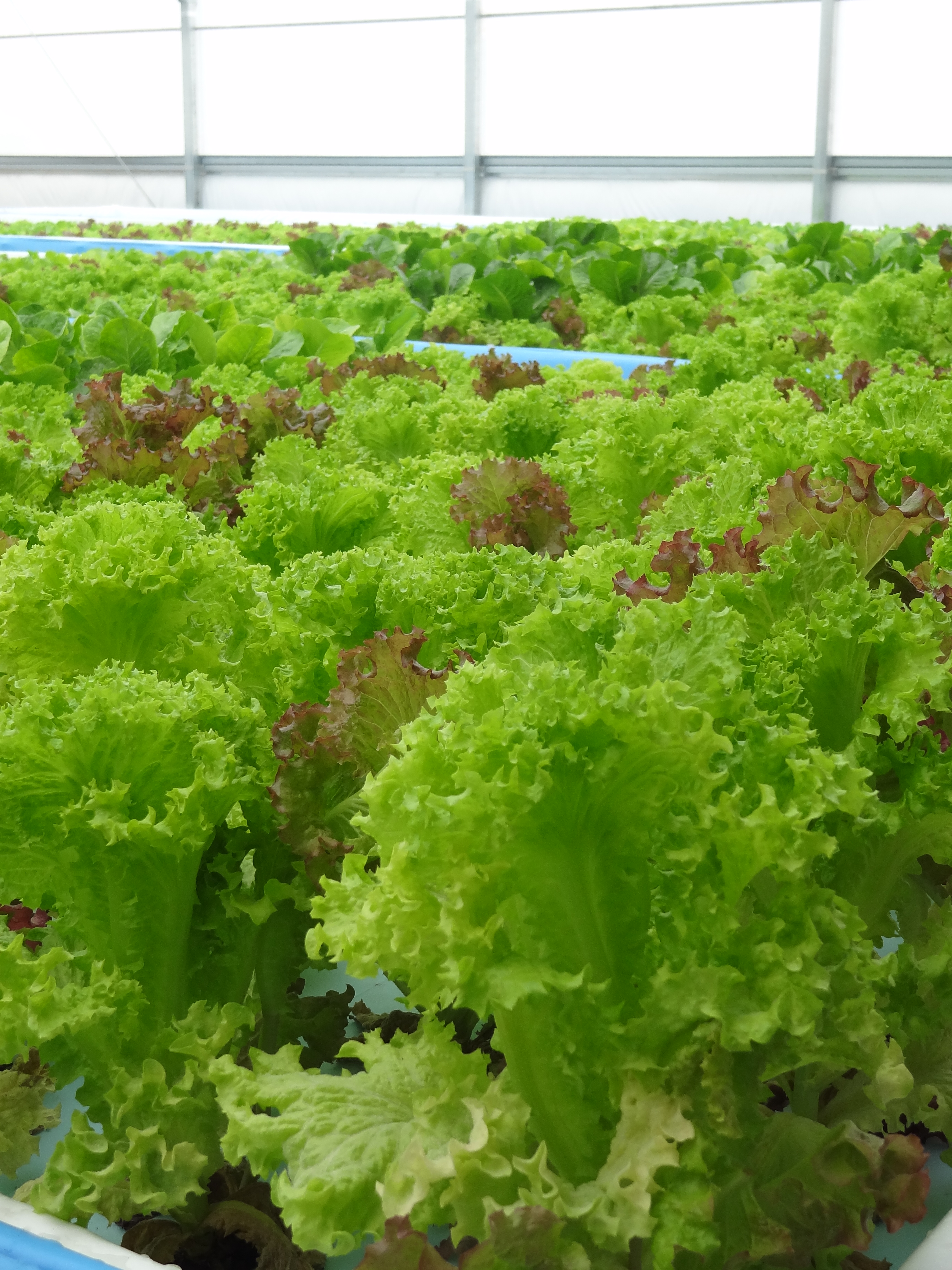
The luscious resulting lettuce.

The luscious resulting lettuce.

Farmers’ Market Find

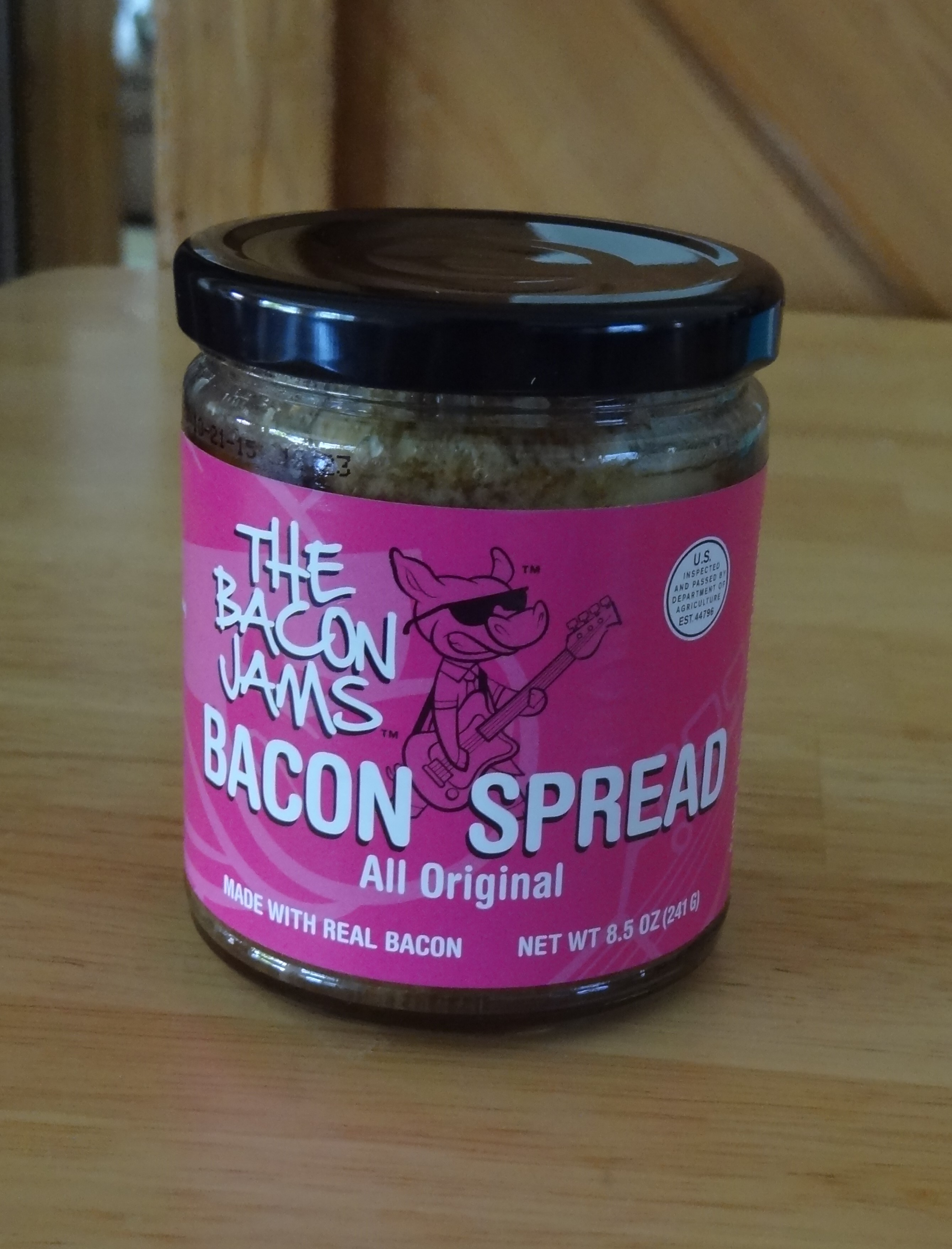
bacon jam spread

I have been quiet for a while because I have been meandering. And what did I find during my jouney? Bacon jam! I made the discovery at a farmers’ market in Brigantine, New Jersey. At $15 a jar, it’s a bit pricey, but as the seller lady said, each jar contains a half pound of bacon. I couldn’t resist. I have a bacon-lover in my family, so the purchase was a foregone conclusion.

It’s made in Pennsylvania and according to the product’s website this bacon spread makes a great topping for scallops, cheese-based appetizers, sandwiches, and as a mix-in for sauces. Although there are different varieties (black pepper, red chili & garlic), I opted for the original, which features just plain bacon.

Who knows what other wonders await in the world?

Mushroom and Wild Leek Risotto

DSC02171
I usually don’t blog about recipes, but my first attempt at cooking risotto is an accomplishment I just have to share. The outcome was superb (if I do say so myself) and I learned that creating risotto is not a privilege reserved for exalted chefs in high-end restaurants. I also want to share it because, if you live anywhere near a natural area, you might be able to gather one of the ingredients yourself. (Never fear, however, there is a non-foraging ingredient option.)

A carpet of wild leeks in my local woods.

A carpet of wild leeks in my local woods.

I wanted to learn how to make risotto because I had a divine offering of it a few months ago in a restaurant. As the daughter of a college home economics major who taught me everything she knows (thanks mom!), I am handy around the kitchen. But risotto seemed daunting – not anything mere mortals could cook.

Alas, I missed that restaurant risotto – had dreams about it – so I decided to give it a shot and searched the internet for recipes. I found one for mushroom risotto, but I changed it a bit to my preferences and to include the wild leeks currently growing in “my” local woods in abundance.

If you live south of Minnesota, you might know wild leeks as ramps. They look like small scallions and have the same oniony taste. Of course, I don’t expect you, dear readers, to scour the woods for an ingredient if you’re not sure what it is. Please only use leeks/ramps if you are sure they are leeks/ramps. You can always use chives or scallions instead. And you don’t have to rip the whole plant from the ground. You can just use the leaves. That way, the plants will regrow next spring.

Obligatory public safety message aside, this recipe turned out great – Nirvana reached! It takes A LOT of mushrooms, though, so be forewarned. This version makes six servings. I am still eating leftovers, which aren’t as good as the freshly cooked batch, but you won’t hear me complaining too loudly.

Mushroom and Wild Leek Risotto

4-1/2 cups chicken broth (or vegetable broth)
4 T olive oil, divided
1 pound Portobello mushrooms, thinly sliced
½ pound white mushrooms, thinly sliced
A handful of wild leek leaves (10-12), coarsely chopped (or 3 T chopped chives)
1-1/2 cups Arborio rice, uncooked
½ cup white cooking wine (or rice cooking wine, white)
1 teaspoon sea salt
Black pepper, to taste
4 T butter
1/3 cup grated Parmesan cheese

Warm the broth in a large saucepan over low heat.

Warm 3 T olive oil in large saucepan over medium-high heat. Sir in the mushrooms and cook until soft, about 4 minutes. Remove the mushrooms and their liquid. Set aside.

Add 1 T olive oil to skillet and stir in the leeks. Cook 1 minute. Add rice, stirring to coat with oil for about 2 minutes. When the rice has taken on a pale golden color, pour in the wine, stirring constantly until the wine is fully absorbed. Add a ½ cup of broth to the rice and stir until the broth is absorbed. Continue adding broth ½ cup at a time, stirring continuously, until the liquid is absorbed and the rice is al dente – about 20 minutes.

Remove from heat, stir in mushrooms and their liquid, butter and parmesan. Season with salt and pepper. Makes 6 servings. Perfect complement for grilled meats and chicken dishes.

Some wild leeks, close up.

Wild leeks, close up.