A Mini-Minnesota Vacation: Cascade River State Park

The main falls on the Cascade River.

For mini-vacation #2, Russ and I meandered with our thirteen-foot Scamp trailer to Cascade River State Park on the North Shore of Lake Superior. (Interested in mini-vacation #1? Read about Lake Vermilion State Park.)

I must admit, one reason we chose Cascade River was because it had camping reservations available during the time we wanted. Another reason is that, despite innumerable trips along the North Shore, neither of us had spent any time there. It was a good excuse to see some new sights.

We decided to add a little glamour to this outing, just for fun. Before we left Duluth, we made dinner reservations at The Strand restaurant at Lutsen Resort, which is just a 15-minute drive from the campground, and for a wine tasting at the North Shore Winery, also at Lutsen.

Because it’s late in the camping season, the shower building wasn’t open at the campground, so we decided to go the restaurant our first night (of two). We weren’t sure how presentable we’d look later!

Before I go into the long description of our stay, I’ll offer some Cascade River Campground pros and cons for those of you in a hurry.

PROS

  • Although the campground is located near a highway, it was quiet at night.
  • A short hike takes you to the river’s scenic falls and to Lake Superior. Plus, there are many options for other hikes.
  • Near the many civilized attractions of the North Shore at Lutsen and Grand Marais.
  • We saw a bear!

CONS

  • The sites offer little privacy. The lack of vegetation between them made us feel like we were living in an outdoor fishbowl sometimes.
  • You can hear the highway during the day.
  • The squirrels and chipmunks are habituated to people – watch your food!
  • We saw a bear, which made going to the outhouse in the middle of the night a sketchy affair.

You can’t check into your site until 4 p.m., so we only had enough time to plug in our camper and take a quick hike along the river and shore before we needed to leave for dinner at Lutsen. The waterfall cascades that the park is named for are just a short walk directly from the campground, and Lake Superior is not far downstream, so we were able to see a lot in just an hour. We had time to plunk ourselves down on a rock along Lake Superior and shake off the worries of the city.

Soon, it was time to hike back to our site and drive to Lutsen. This is the first restaurant we’ve eaten inside since COVID. We felt that by now, most restaurants should have their safety act together regarding the virus, especially a place like Lutsen, which sees a lot of tourists. We decided the food was worth whatever slight risk it might entail.

The image from our table at The Strand Restaurant.

I’m not sure how we managed, but we scored a table right by a window overlooking the lake. While we ate, we watched the sun set in muted pinks and purples – a perfect accompaniment to our food. For starters, Russ had the North Shore salad, which features blueberries, candied pecans, and a blueberry vinaigrette dressing. I had a cup of the Red Lake wild rice chowder.

My tastebuds were in heaven! I’ve eaten many chowders in my day, but this ranks among the top. I could tell it was made with real cream, hand-harvested wild rice that was fluffy and tender, and care. The flavors were perfectly balanced, and the soup wasn’t too salty.  I would have just been happy with the soup, but there was more!

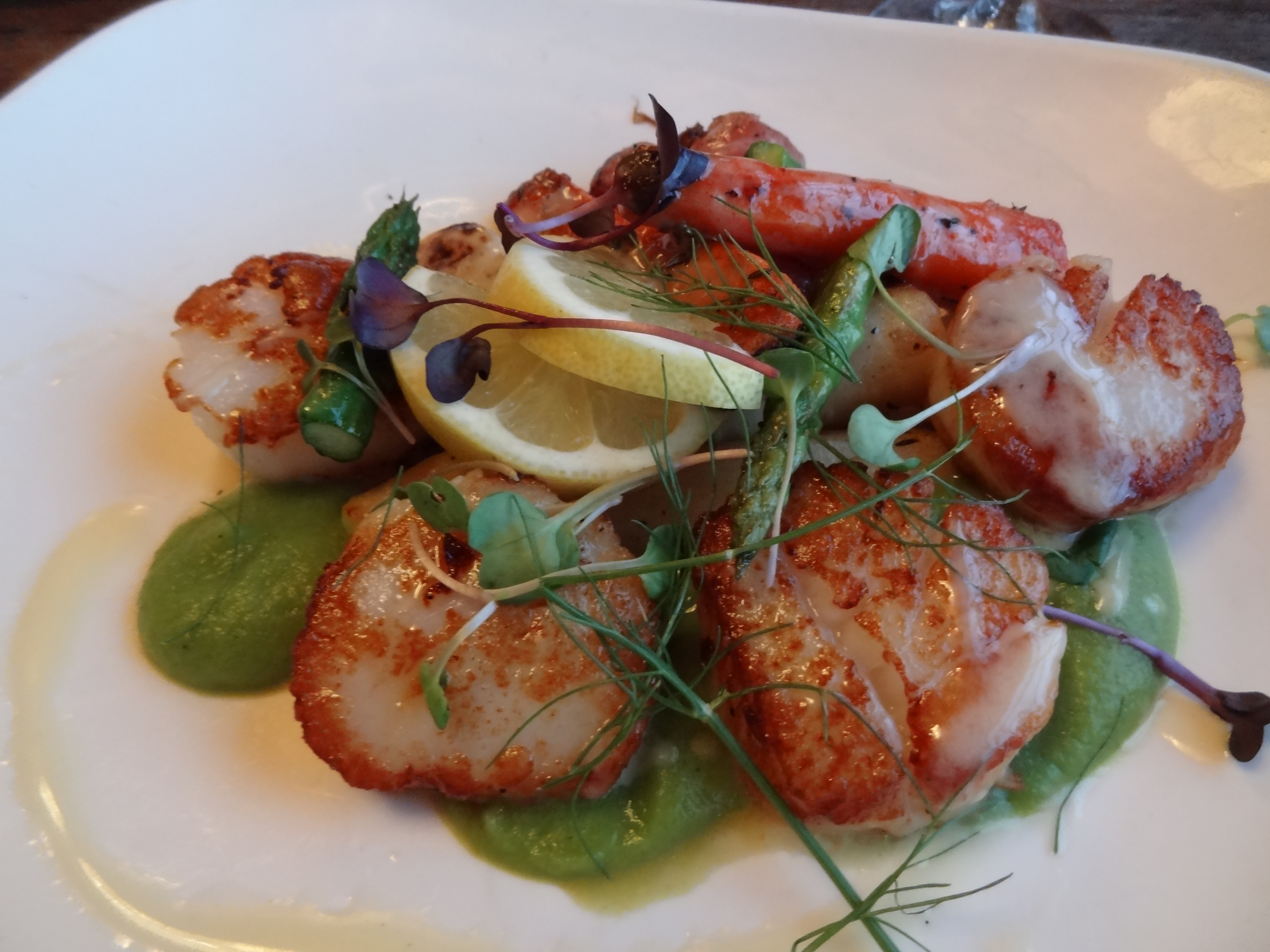
For entrees, Russ ordered the night’s special, which was a rack of lamb. I ordered the sea scallops. Russ was very happy with his, and I was, too. My scallops were seared to perfection and accompanied by an asparagus puree and root vegetables. As I dined on the parsnips, I was transported back to my childhood when I used to help my father harvest parsnips from our backyard garden. And then a bite of scallop zinged me over to the seaside, but I didn’t mind!

We decided to go for the gusto and ordered dessert. Russ had the apple pie ala mode. I had the flourless orange chocolate cake. Once again, a win, although my cake was not shaped like any piece of cake I’ve ever seen before. It was rather like a tall blob. But it was a good blob. I ate it all. Well, Russ had to help with the last few bites because I was stuffed.

On our sated drive back to the campground, our headlights shined on a black bear crossing the road near the entrance. We had already noticed signs everywhere in the campground about bears, and this proved them right. Thankfully, the bear was headed away from the campground.

Despite being near the highway, the campground was quiet at night. It was also cold. Both nights were near freezing and we were glad we brought extra blankets.

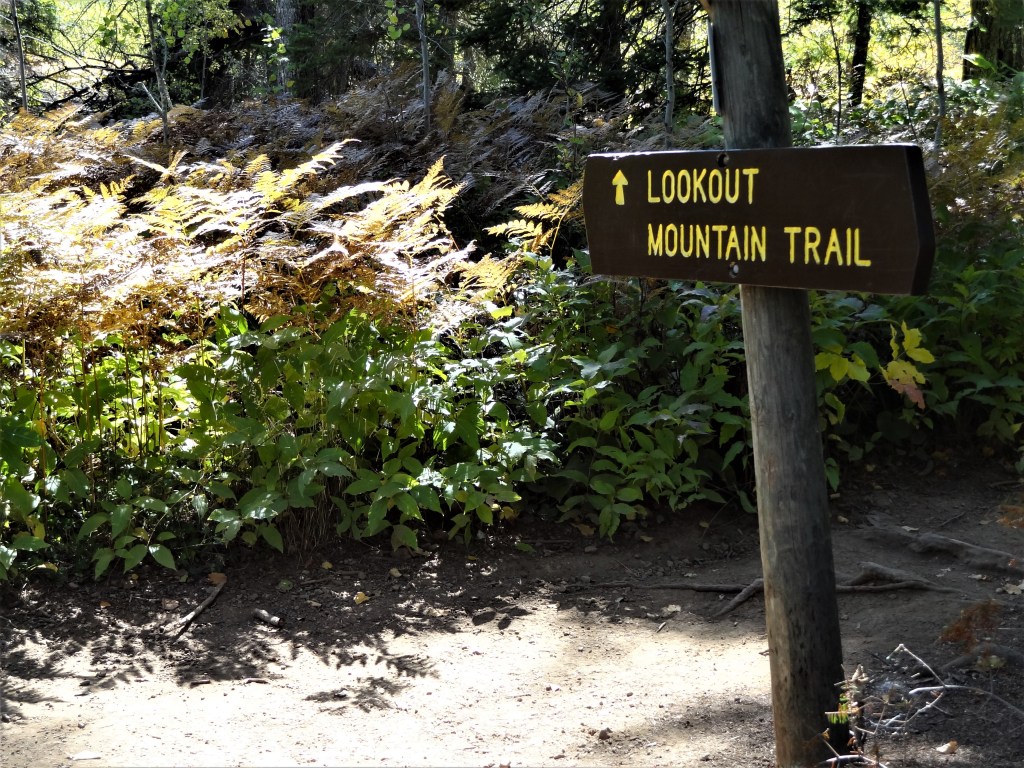
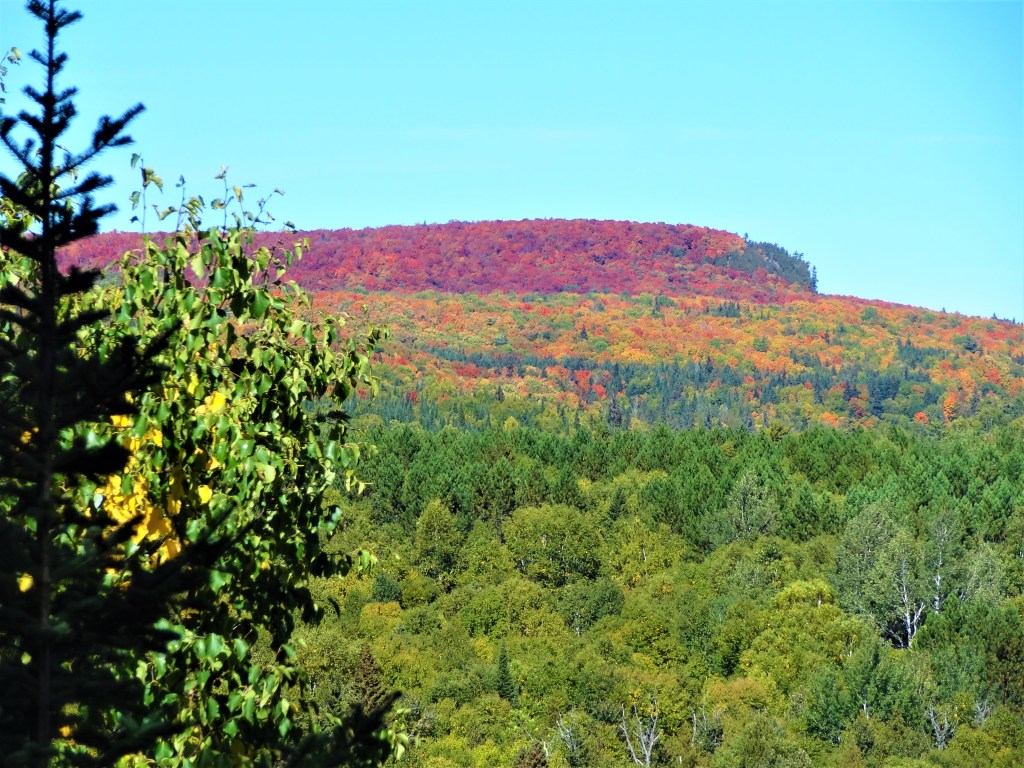
The next day we hiked to Lookout Mountain, which was about a 2.6-mile round trip. The cold nights hastened the fall colors, which were especially spectacular to see from the mountain overlook. We also took in more waterfalls along the river.
Then it was time for Thursday-night date night at the North Shore winery. From 6-8 pm you can listen to music and try flights of their red or white wines and hard ciders. It surprised us that the event was all outdoors. That’s not mentioned anywhere on their website or when you call them for a reservation. It was a bit nippy spending a couple of hours outdoors on a September evening, but thankfully, we happened to be dressed for the occasion.

I tasted a white flight and Russ a red. None of the whites did much for me, but Russ liked some of the reds, enough to buy a bottle of their oak-aged petite syrah for home. The winery also offered munchies with the wine, like salami bites, cheese, and truffles. I was impressed by the flight of truffles from the Gunflint Mercantile in Grand Marais. The flight consisted of blueberry, espresso, triple chocolate, maple, and dark chocolate raspberry.

The maple was my fave – creamy and not overpoweringly sweet. I liked it enough to order a dozen once we returned home. I was especially delighted when they eventually arrived to discover they were about twice as large as the ones we had at the winery. So good!
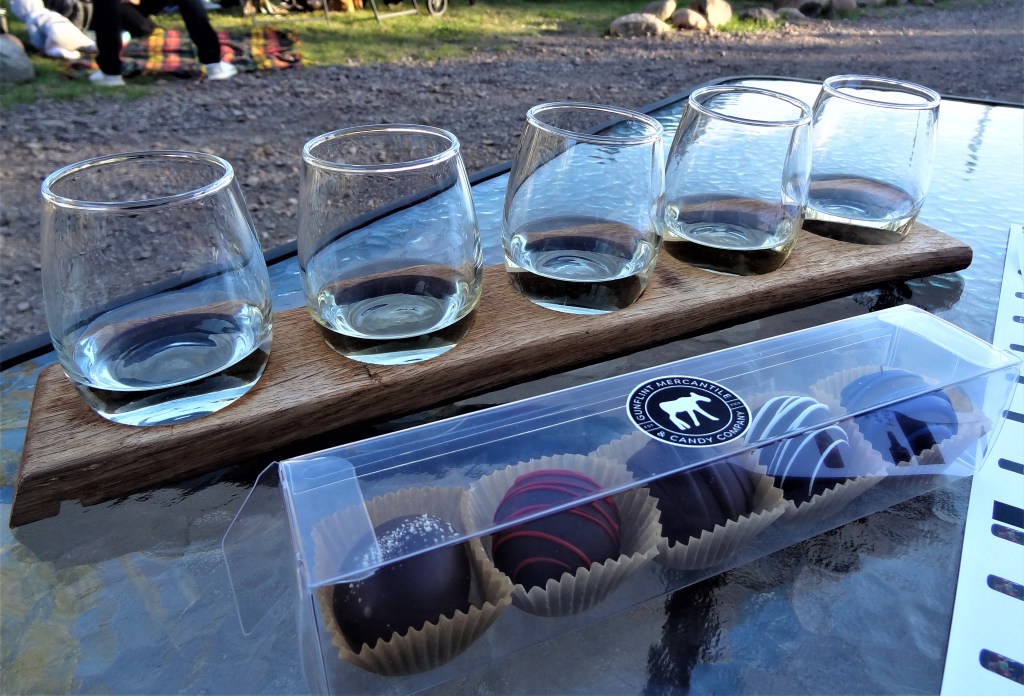
The white flight of wines from North Shore Winery, plus a flight of truffles.

On our final day we had plans to bike on the Gitchi-Gami State Trail but were thwarted by the cold. On a whim, we decided to visit another place we never have had the opportunity to explore before: Temperance River State Park. But I will save that for another post.
Bog Birding Bust

I have heard about the Sax-Zim Bog in northern Minnesota for years, decades even. During winter, it’s a birding mecca – home to many rare owls and other species that visit from the arctic when food and weather conditions get too dicey up there. Birding is good during summer, too. The bog is a place where birds can nest in their natural habitat, relatively undisturbed.

Russ and I had a chance to visit the bog over Labor Day weekend. I’m getting back into birding and was excited to finally be seeing this place I had heard so much about. It’s even mentioned twice in “The Big Year,” a 2011 movie that stars Rosamund Pike, Jack Black, Owen Wilson, and Steve Martin. However, no filming was done on-site, so viewers never get to see the bog. The closest is when Owen Wilson’s character spends Christmas at a Chinese restaurant in Duluth, which is about fifty miles away. I suspect even the restaurant was fictional because it didn’t look like any I’ve ever seen in my hometown.

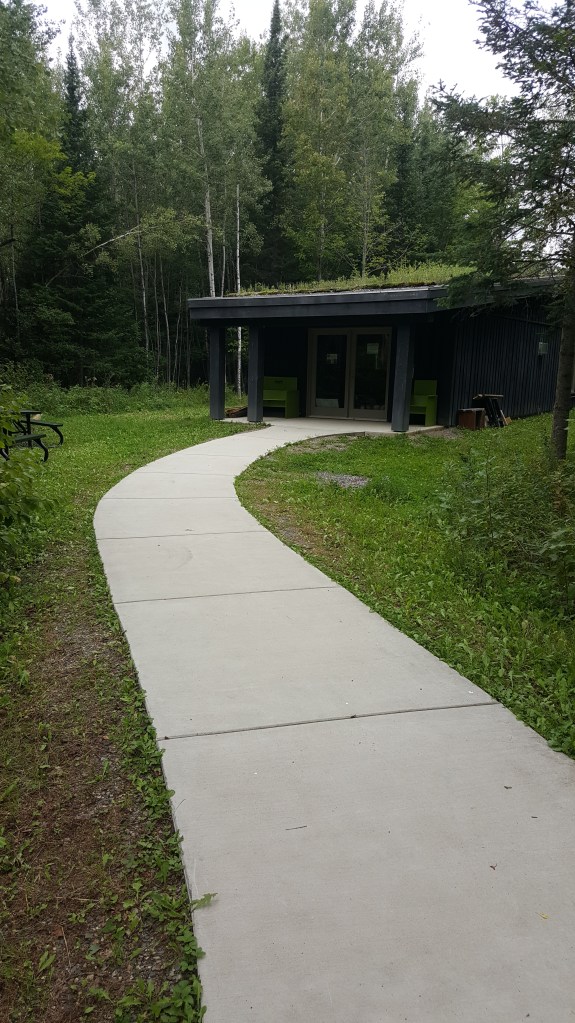
The Welcome Center

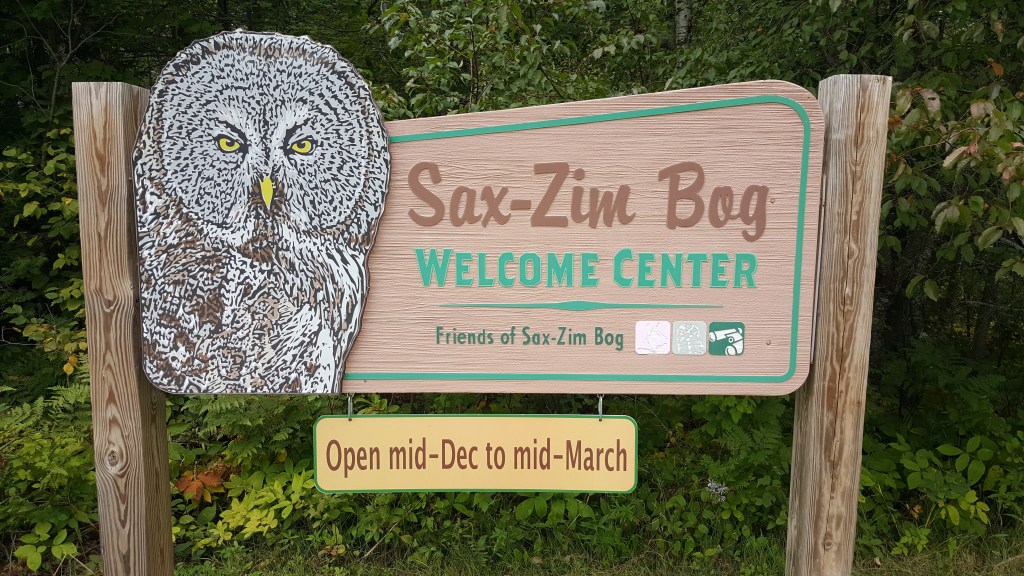
Anyway, so I was psyched to visit the bog. I thought since migration season had started, we might have a good opportunity to see birds moving through the area. We pulled up to the visitor center (which is closed now, opens mid-December through mid-March) and hiked the trails that go out from it. There’s a loop trail that starts at the parking lot and a Gray Jay Way that begins at the visitor center.

After all these years of anticipation, maybe I was expecting too much. We only saw a thrush (probably a Swainson’s), blue jays, and the chickadees and nuthatches found everywhere in the north. I was disappointed.

But it was neat getting a close look at a bog and learning the history of the area from the interpretive signs near the welcome center. For instance, I never knew that Jeno Paulucci, famed creator of Pizza Rolls and Chung King foods had a celery farm near the bog.

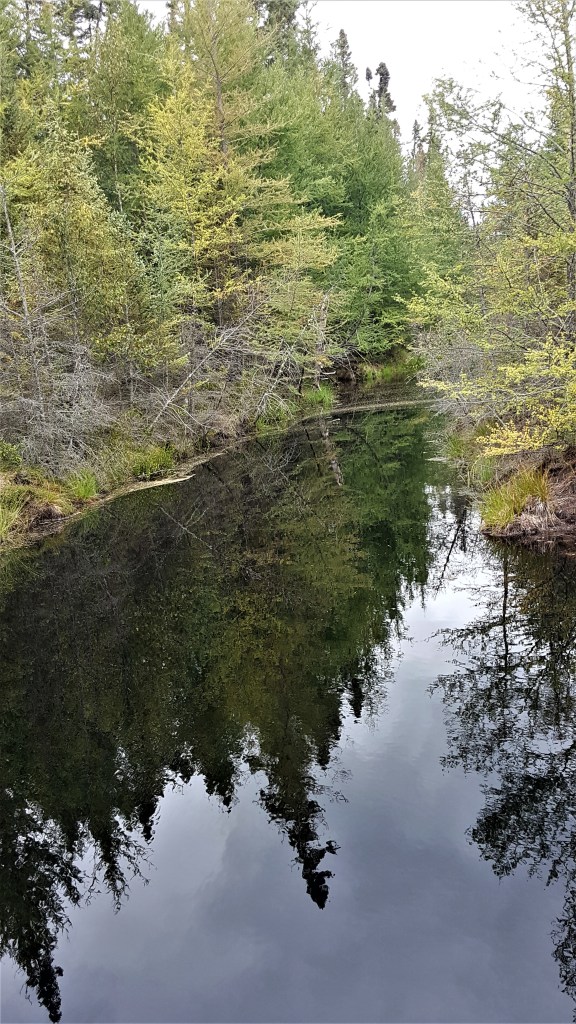
Gray Jay Way ends with a viewing platform where visitors can see the remnants of ditches that were dug in the early 1900s to drain the bog land for farming. Russ and I pushed through the undergrowth for a better look at the ditch junction. The dark bog water lay acidic and still on the landscape, lending an eerie air to the place.

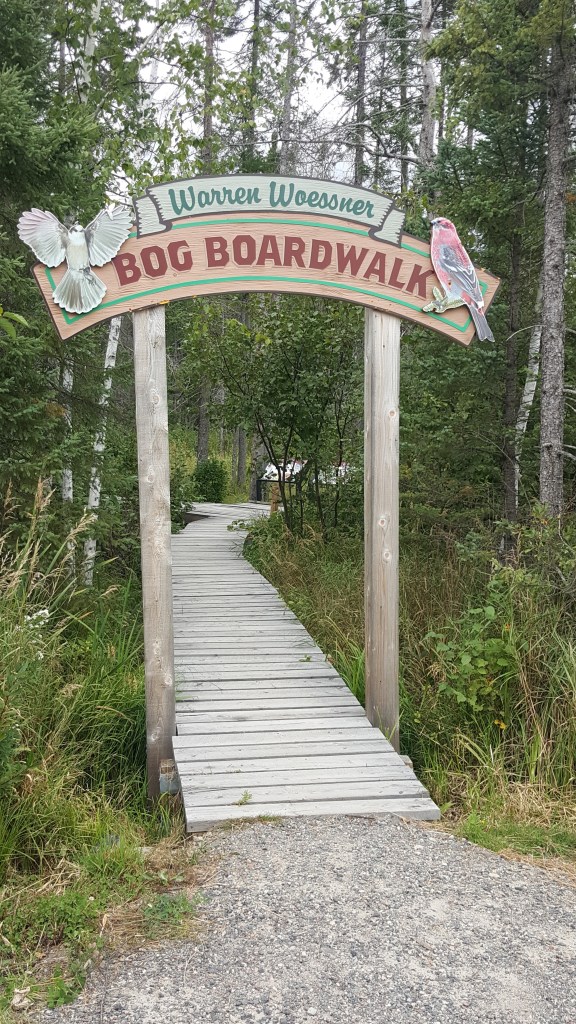
On our way home, we stopped at one of three boardwalks in the bog: The Warren Woessner walk. We marveled at all the work that must have gone into its construction. We had a pleasant walk but didn’t see any more birds.

When I got home, I asked the executive director of the Friends of the Sax-Zim Bog what was up with the lack of birds. Was this just a bad time to look? Sparky Stensaas said this is the worst time of the year for birding in the bog. Just my luck!

Sparky and I go way back to when we used to be on the board of the local Audubon Society chapter. He took over editing the chapter newsletter from me a loooong time ago. Or did I take over from him?

Sparky also said that the visitor center is only open during the winter because that’s when 90% of the visitors come, but that they probably won’t be open this winter due to COVID. Guess I’ll have to content myself with watching the videos Sparky made this spring and summer, which show there really ARE birds in the bog.

So, don’t be like me. Don’t go birding at the Sax-Zim Bog in September.

Biking the DWP

20200815_151705If you are a Duluthian or just want to be Duluthy, and you are tired of biking the Munger Trail, try its wild, more adventurous twin, the Duluth, Winnipeg and Pacific Railroad Corridor Trail. I call it a twin because, like the Munger Trail, it follows an abandoned railroad line and passes over a similar geography. But the DWP is wilder and more adventurous because it’s gravel, less developed, and fewer people use it.

20200815_154215We accessed the DWP from Spirit Mountain’s Grand Avenue chalet. If you go up the ski hill about 200 yards from the chalet, you will run into the trail, which crosses the hill. You can also access it from a gravel road and trail system to the right of the chalet, but those are technically closed this season due to COVID-19.
Take a left, and you are on your way to new vistas, a couple of updated trestle bridges, and a tunnel. The 10-mile trail will take you to Ely’s Peak, Becks Road, and eventually to Proctor. When we arrived at Ely’s Peak tunnel, rock climbers were scaling the outside walls, testing their nerve and equipment.

We turned back at the tunnel. Later, while resting on a bridge, we had the chance to speak to a family who said they biked to the Buffalo House and had lunch before biking back to the parking lot at the chalet.

We hope to do the rest of the trail next time!

20200815_161259

The Dog Who Fished

DSC05844

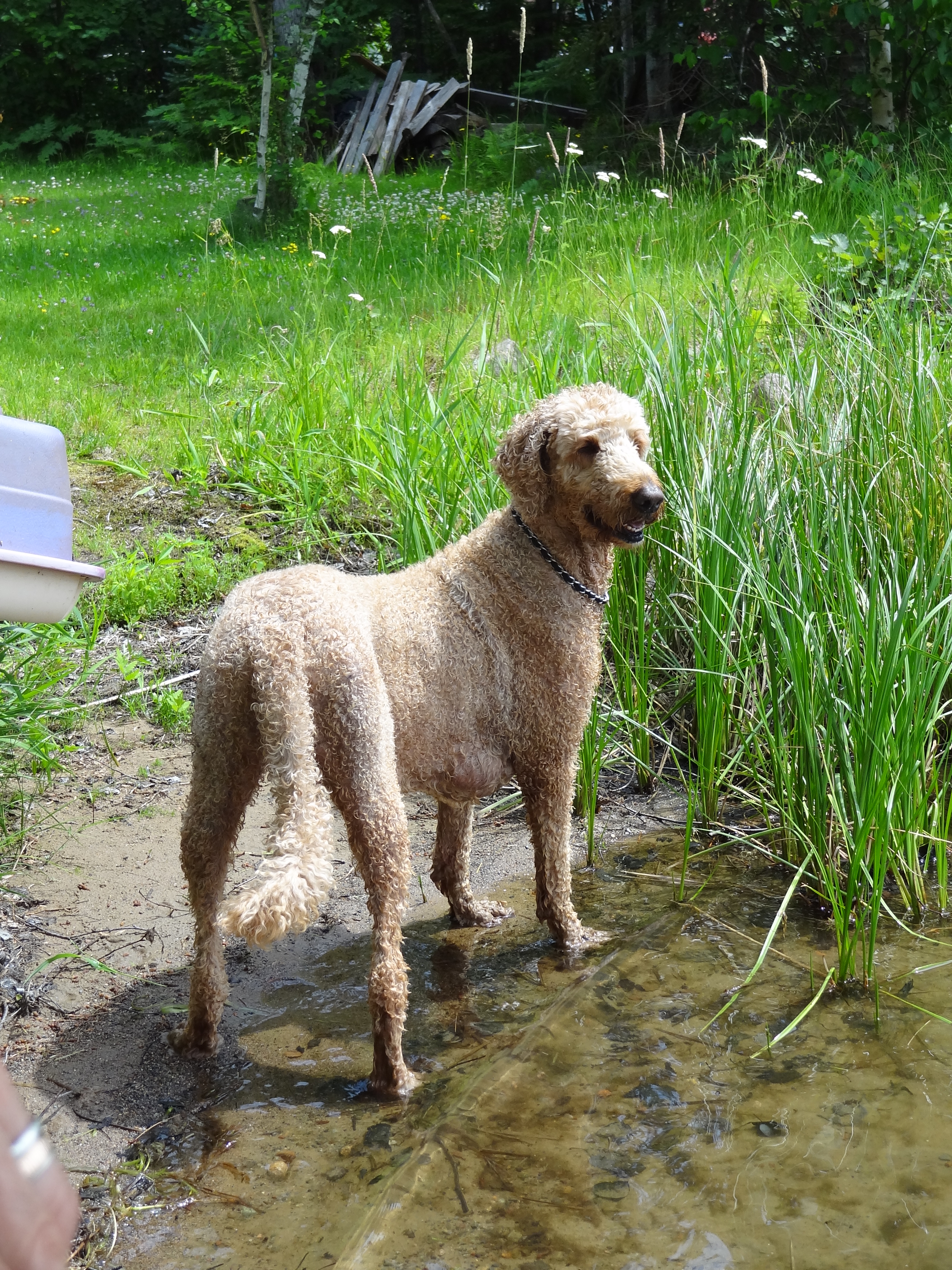
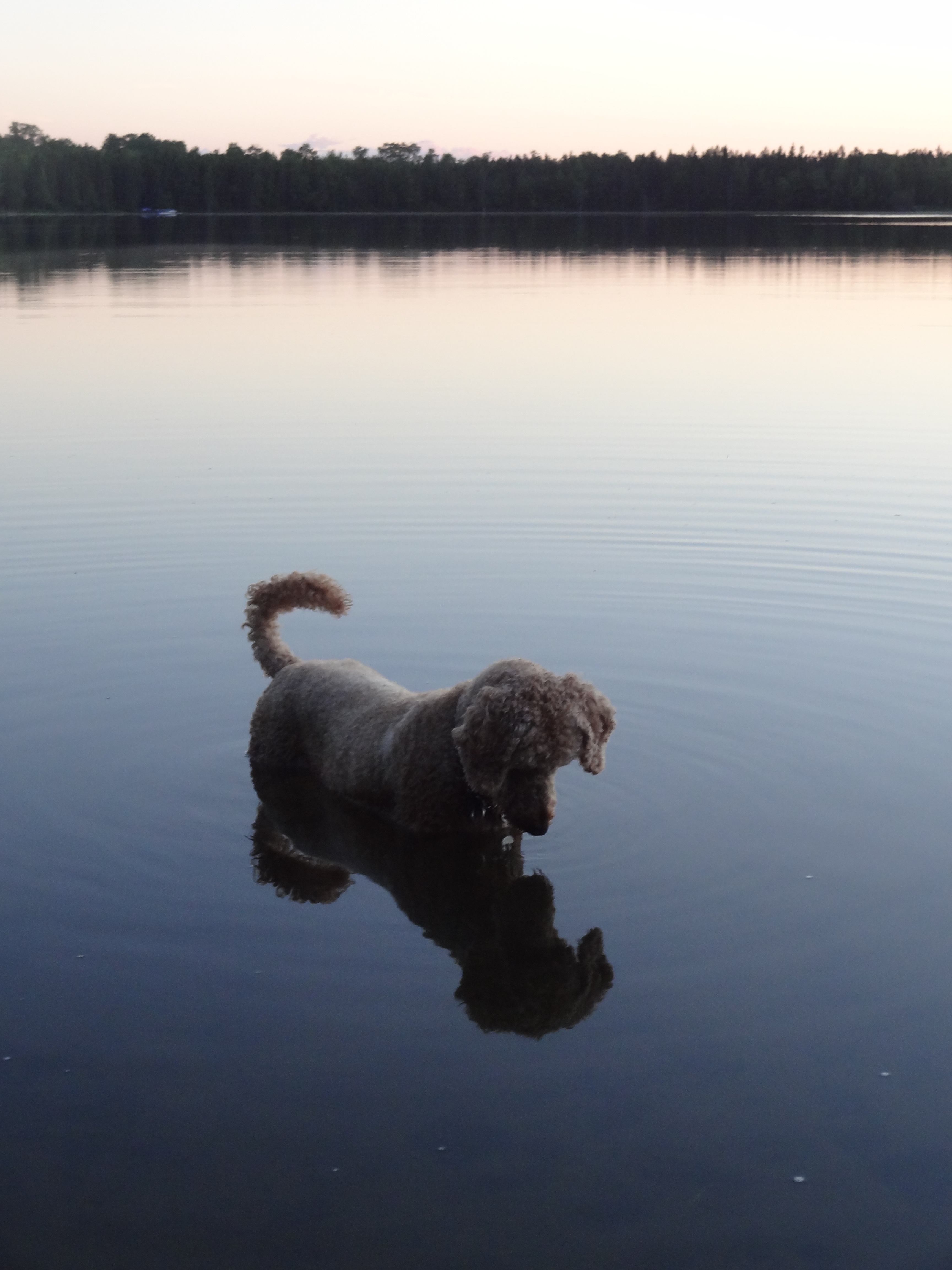
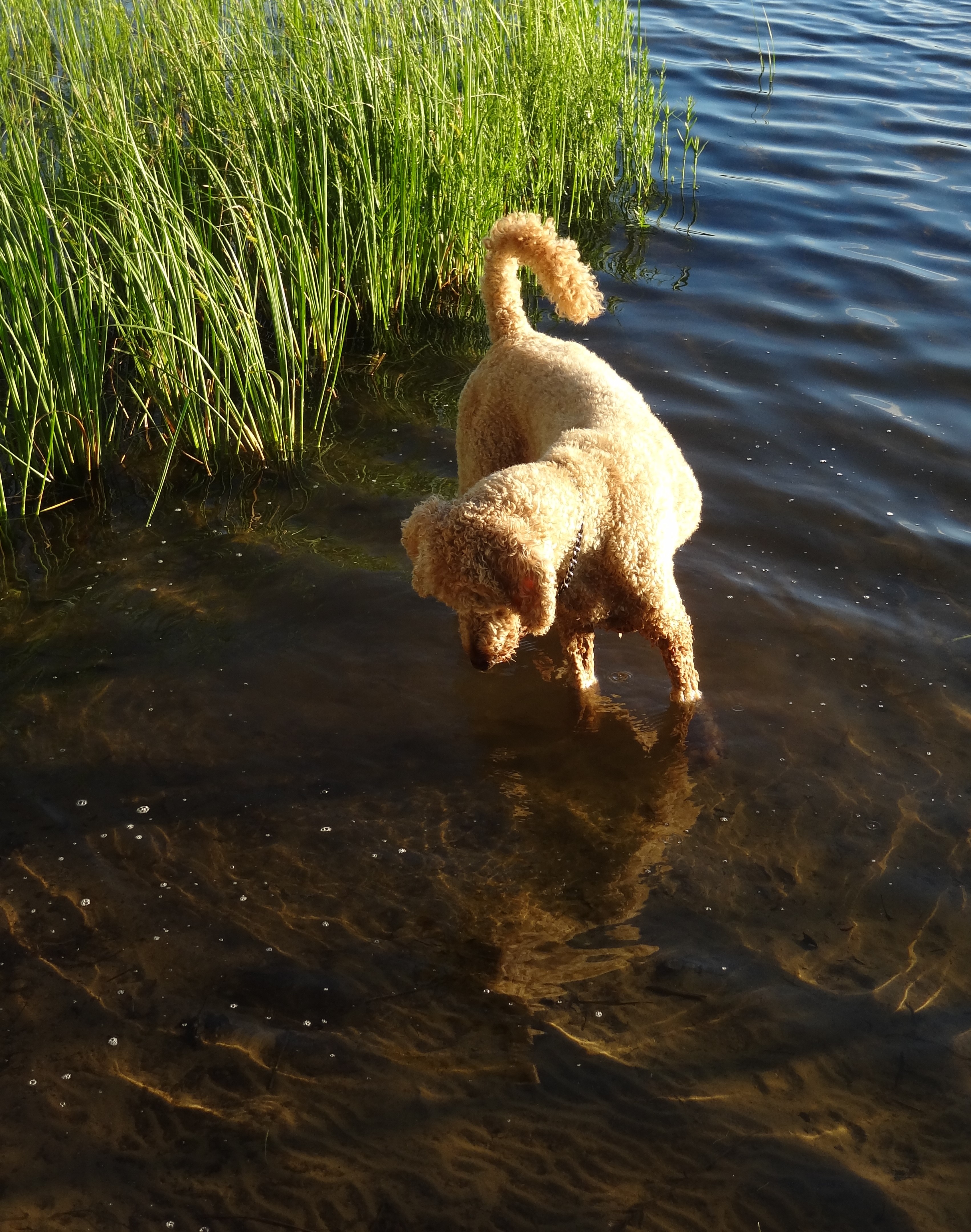
Buddy has a new favorite pastime: fishing!

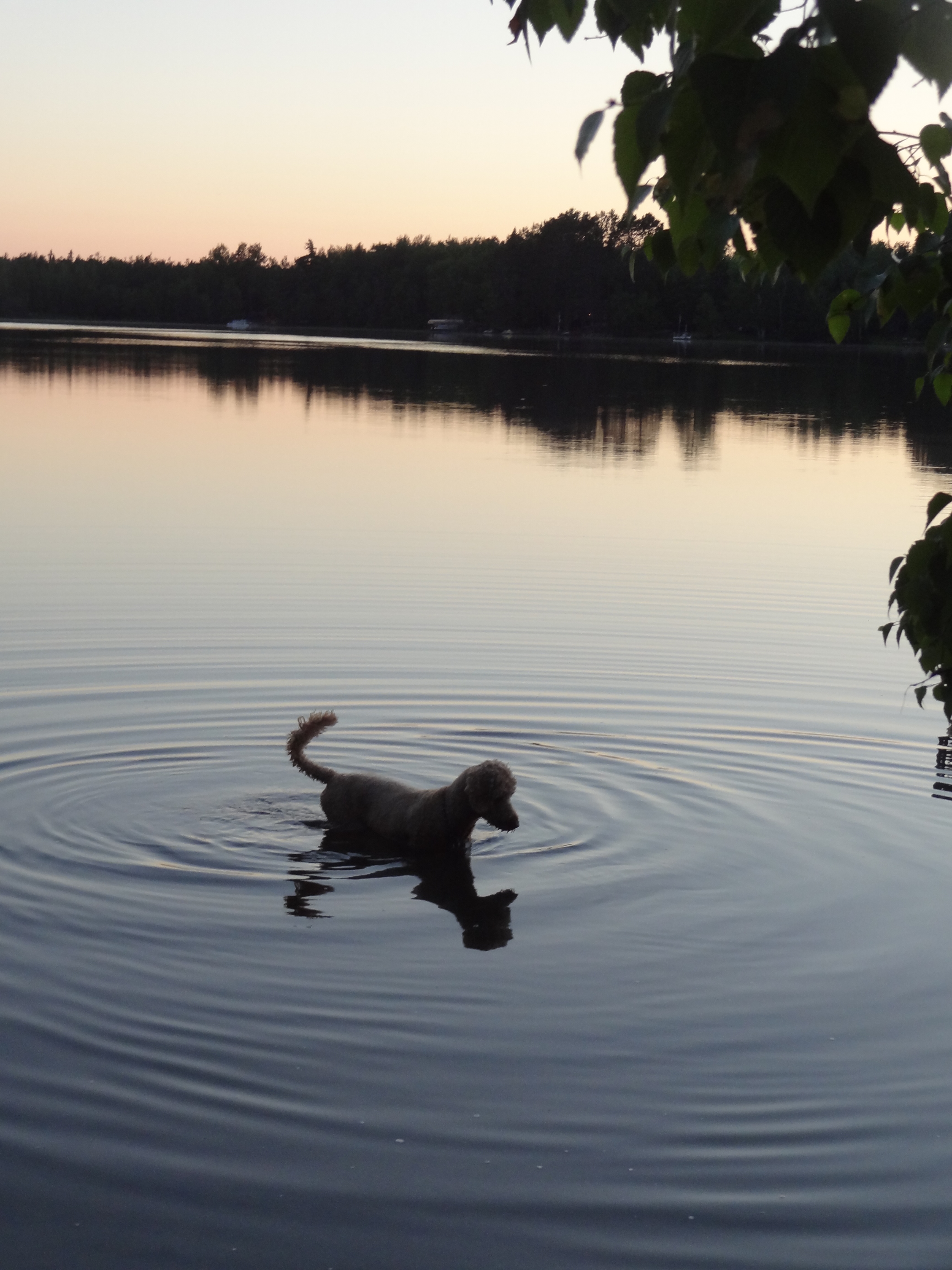
He’s had the chance to spend extra time on a clear northern Minnesota lake. It’s easy to see the young fish and bluegills against the sandy bottom. He was so excited when I pointed out the “fishies” in the water that now he whiles away many an hour wading and chasing them.

He hasn’t caught a fish yet. I don’t think he’d know what to do with one if he did. But that’s why they call it “fishing” and not “catching,” right?

DSC05819

I know that Garrison Keillor of “Prairie Home Companion” fame has fallen out of favor these days, but he told a great story about Bruno, the fishing dog, during a Lake Wobegon skit a few years ago. Bruno could catch fish, and caused a memorable panic during a baby’s baptism reception.

I am hoping that Buddy does not follow suit.

DSC05839

It’s just fun seeing Buddy excited about fishing. I am hoping it doesn’t stress out the fish too much. They probably know by now that he’s not a major threat.

I hope you all are having a summer as good as Buddy’s.

DSC05808

A Mini-Minnesota Vacation: Lake Vermilion State Park

20200715_211056

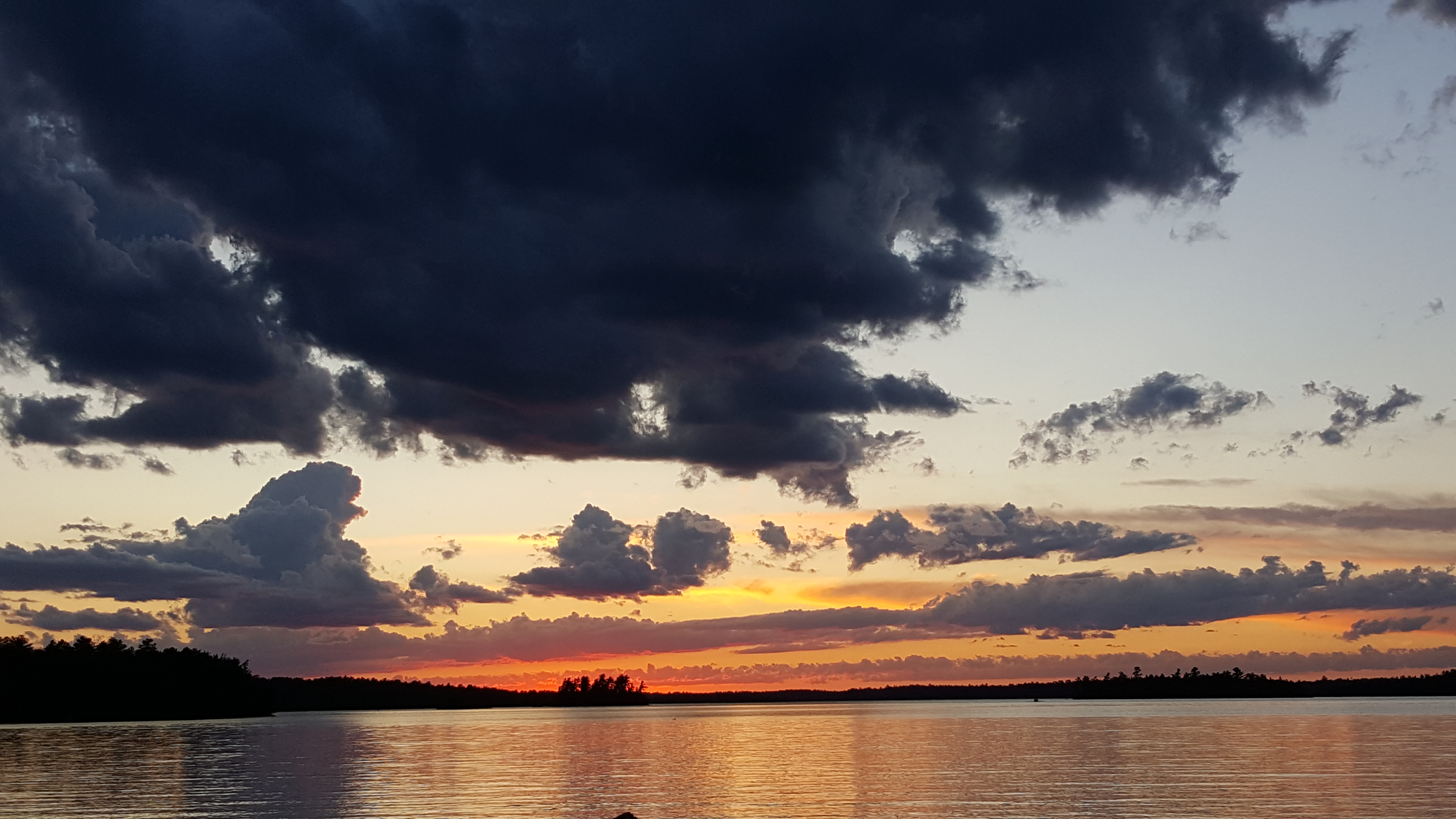
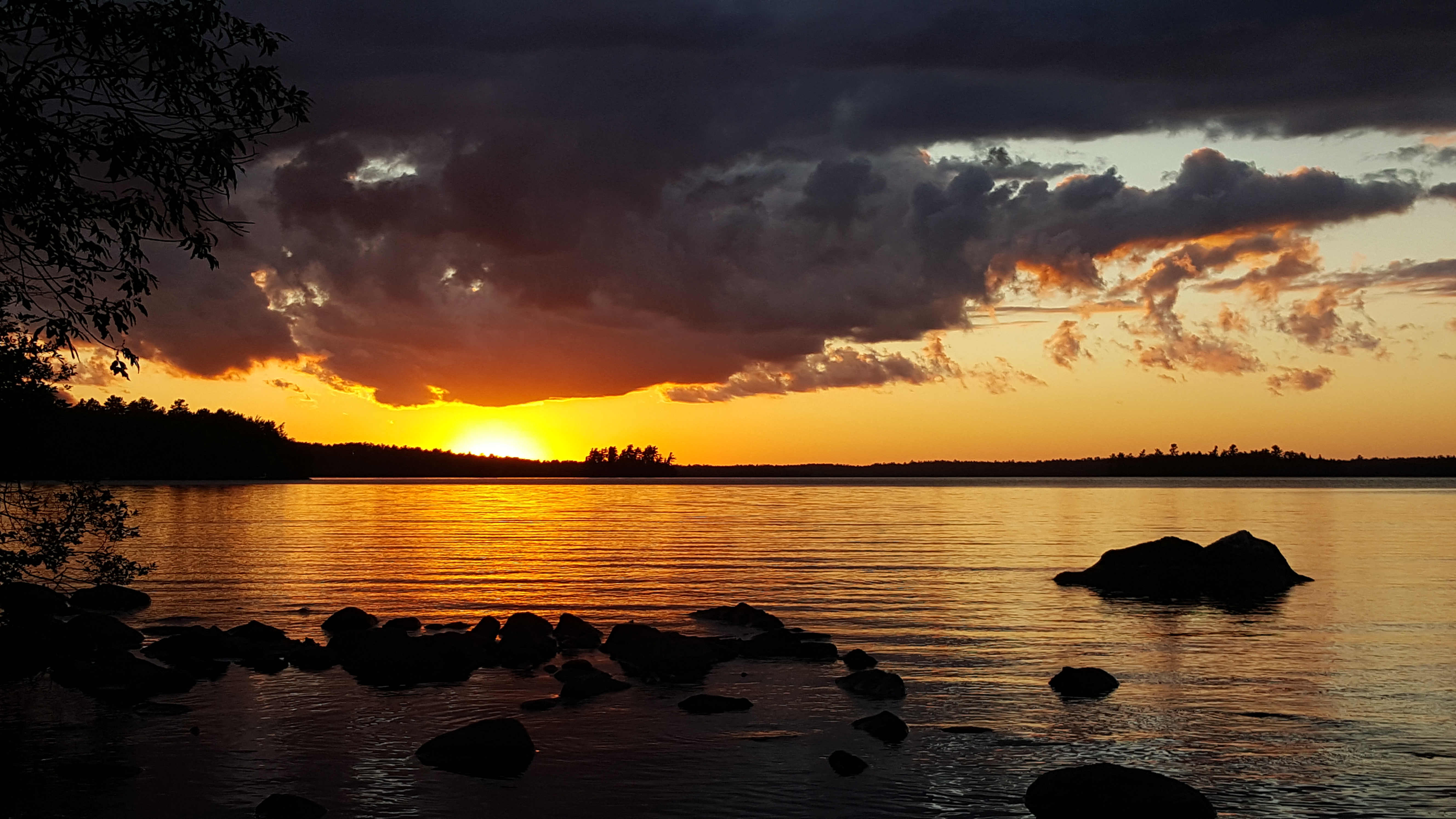
A vermilion sunset on Lake Vermilion. Night One of our stay.

Since nobody wants Americans in their countries right now, Russ and I decided to take several local camping trips. For mini-vacation #1, we trailered our thirteen-foot Scamp to Lake Vermilion State Park, a newish development in northern Minnesota.

20200716_130318I’ve spent some time on Vermilion Lake before but had not been to the park yet. This large lake is reminiscent of the Boundary Waters Canoe Area Wilderness – same rocky shorelines, scraggy spruces and towering pines – but development is permitted (outside of the park) so lots of cabins and lake homes line the shore.
There’s also an historic iron ore mine located in the park. When viruses aren’t running rampant, underground tours are offered, which are an interesting way to learn about the importance of Minnesota’s Iron Range.

We spent two nights in the Vermilion Ridge Campground. We brought our kayak, paddleboard, and bikes, and used them all, even though the weather wasn’t that good. We went during the week because all of the weekends for the summer were booked already – apparently, everyone else had the same idea to travel locally.

Here are some pros and cons we discovered.

PROs

  • A nice boat launch. You can use it if you have a state park sticker, otherwise, I think there’s a daily fee. (Staying at the campground requires a state park sticker, which you can apply for at a self-service kiosk when you enter the park.) We found that the boat launch dock was a good place to watch the sun set. That’s where I took some of the photos that accompany this post.
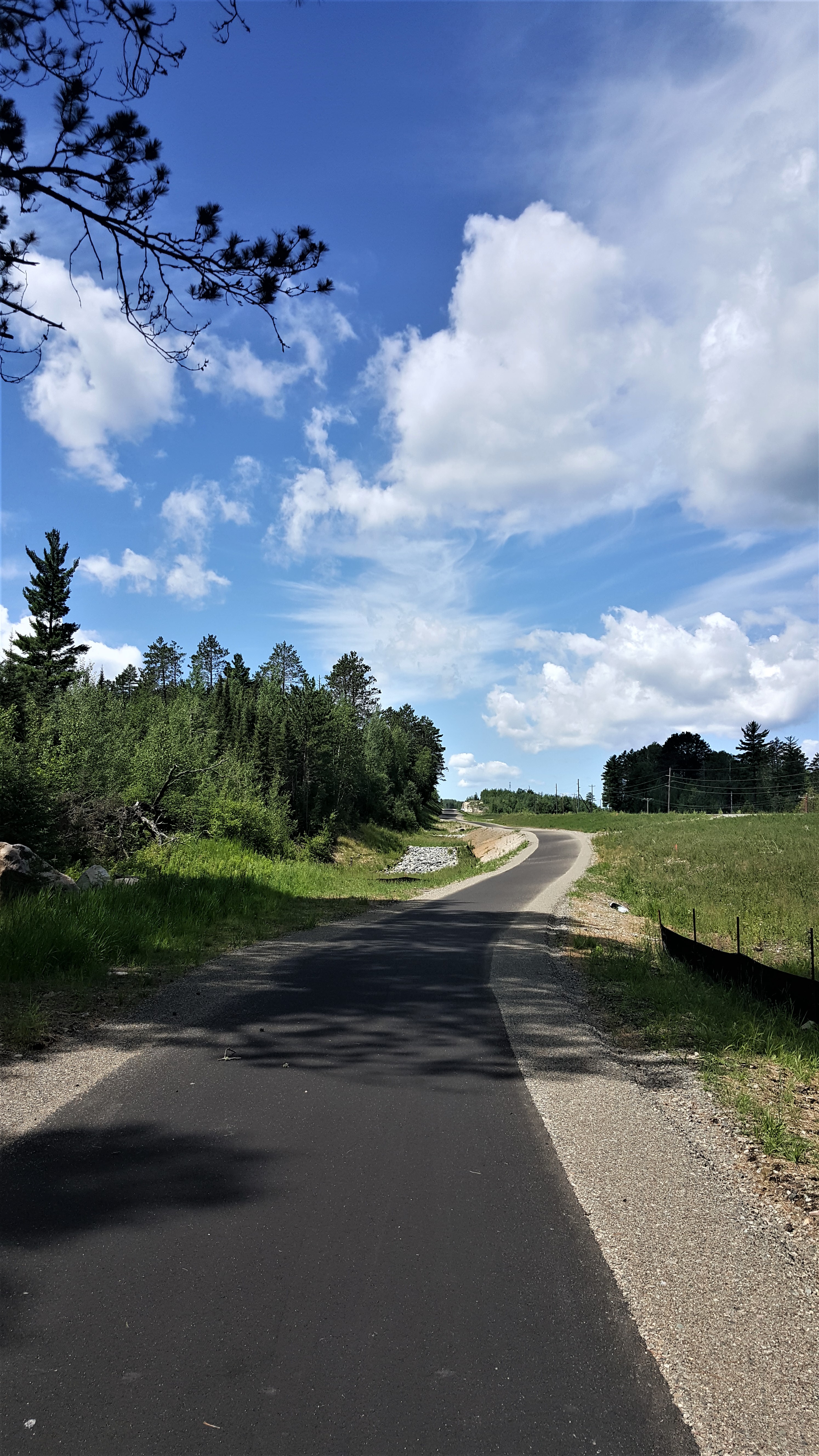
  • Close to the Mesabi Trail. This is a bike trail that spans 135 miles across the north. It’s not all completed yet. The section near the campground seems new. We were able to bike to it from our site and ride 4-5 miles toward Ely before the pavement stopped. Someday, the trail will reach Ely.
  • There’s wifi! If you need to keep in touch with friends, family, or social media while you’re in the woods, you can.
  • Quiet. The campground was quiet at night and there’s a good screen of trees between sites, which affords some privacy.
  • New pavement. The campground was constructed about ten years ago and work is still being done on the roads. All the pavement (including the bike trails) is smooth and new – a dream for longboarders, bikers and inline skaters.

20200716_205737

Sunset on Lake Vermilion, Night Two.

CONS

  • No swimming beach. There’s no good place to swim in the park. A drive is required to reach local beaches on the lake.
  • Hard to get a reservation. Like I mentioned, we had to go in the middle of the week because summer weekends were filled already. Plan ahead to get the dates you desire.
  • The campsites aren’t on the lake. They are farther inland. I suppose this is better for the health of the lake, but it would’ve been more scenic to be near the water.

20200716_150534

A building at the Tower-Soudan iron ore mine.

Another thing to know before you go is that you can’t bring your own firewood or gather it in the park. You’ll need to pay a fee to use wood the park provides. I think this has to do with not spreading the emerald ash borer beetle.

20200717_114710

An idyllic scene from the Mesabi Trail.

If you go, we hope you enjoy the park as much as we did. Buddy liked it, too!

20200716_204347

Buddy, a goldendoodle naturally highlighted by a golden sunset.

Paddling into Deep Summer

DSC05846FixedI awaken at 6 a.m., roll over and look at the lake outside the window. The water is smooth as a scrying mirror. The sun peeks over the spruces, encouraging a lake mist to form.
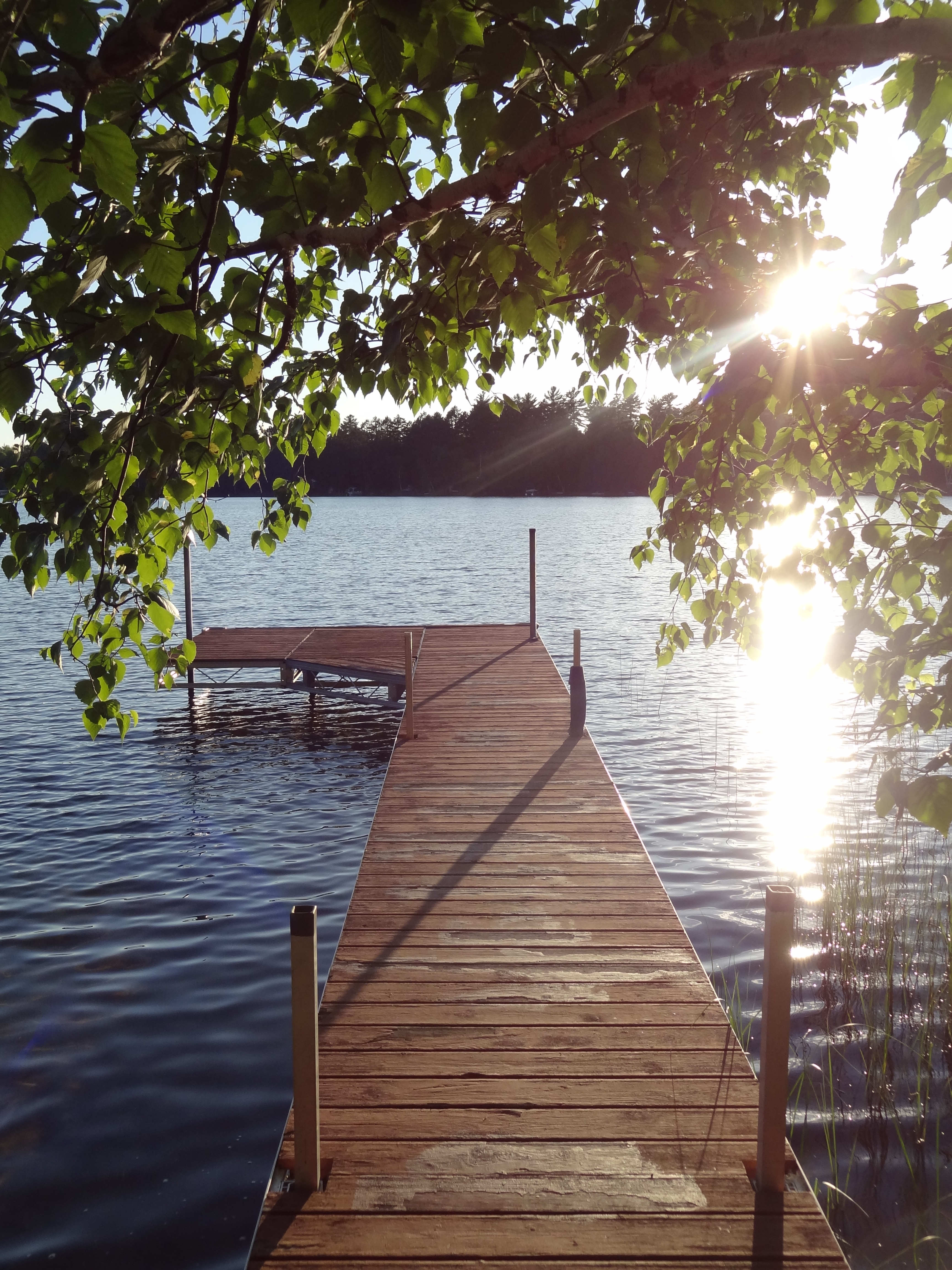
If I were more ambitious, I’d be out paddle boarding right now. Instead, I roll over and shut my eyes, lulled into a doze by the trills of hermit thrushes deep in the forest.

An hour later, I open my eyes to the same scene — the lake still calm, mist still rising.

Although in my book, 7 a.m. is still early to rise, I succumb to the siren call of my standup paddle board. It is early July and the temperature is already 70 degrees outside – one of those days that Minnesotans dream of during February. It would be criminal not to enjoy it.

Russ and the dog are still sleeping, so I quietly get out of bed and don my swimsuit. I tiptoe out into the dew-wet grass toward the boat house – feeling like a teenager headed for an illicit rendezvous. However, I am responsible enough to leave a note on the kitchen table: “Gone paddleboarding!”

DSC05814Opening the boathouse door, I inhale. There’s nothing like that old boathouse smell – decades of damp, mixed with a little mustiness and a hint of worn wood.
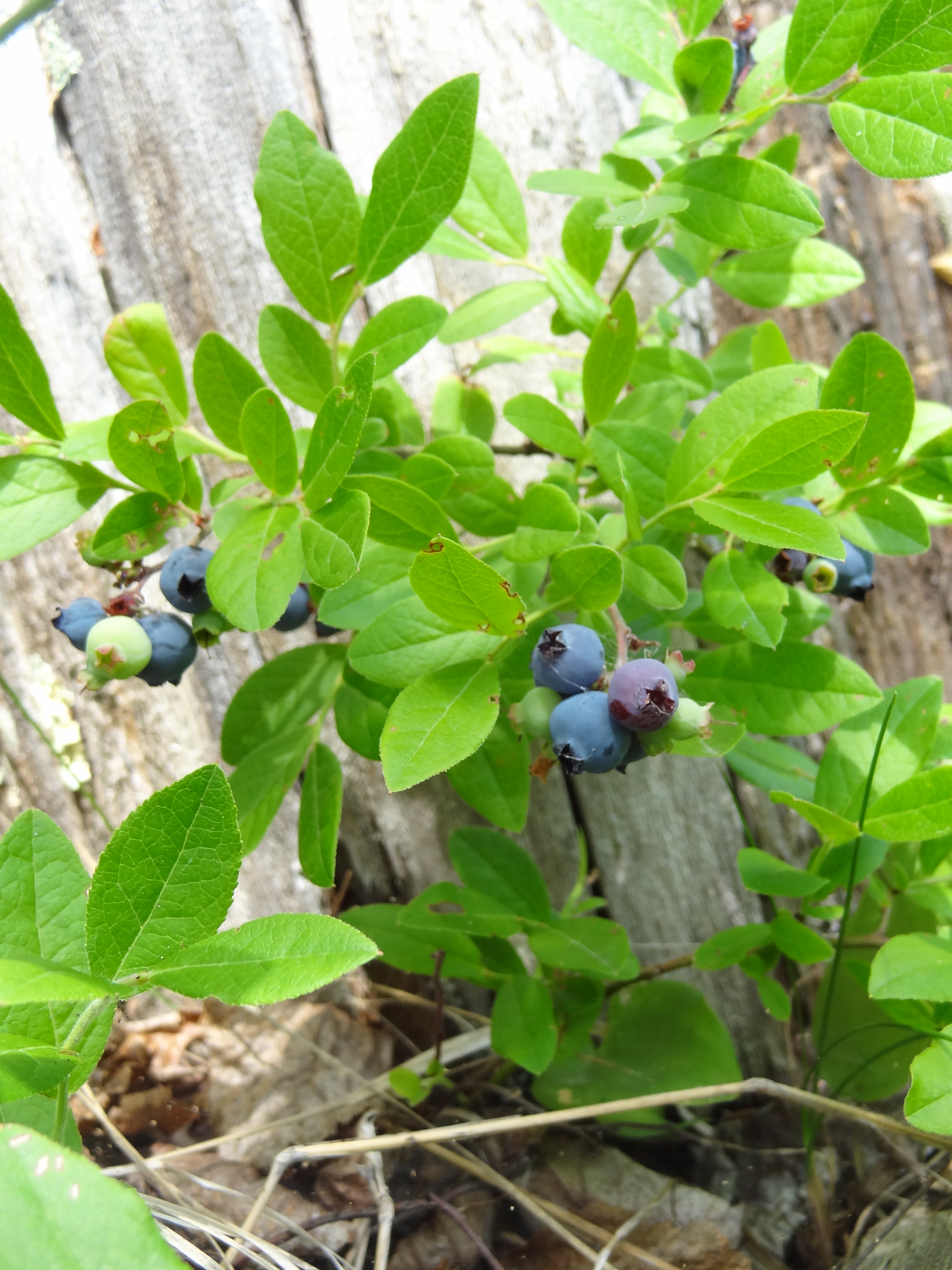
I heft my board and paddle, carefully closing the door so I won’t wake those in the cabin. On my way to the dock, I pass a bunch of blueberry plants covered with small blue sapphires – berries ready for picking. I can’t be distracted, though. They’ll have to wait.

As I settle my board into the water, I giggle inwardly. Hardly typical behavior for someone nearing retirement age, but a quick glance at the lake has told me it will only be me and the loons out there this morning. Life cannot get much better.

I head out in a clockwise direction around the lake. This just seems natural. The night before, a small parade of pontoon boats were all going counterclockwise. We’re living in the northern hemisphere. The toilet water spins clockwise. I figure it’s better not to go against the spin.

My board skims the surface easily. In the clear water below, bluegills rush to hide in the reeds. Water plants stand still and straight as trees. As I paddle, the mist seems an elusive dream. I know I’m in it, but I can’t see it when I arrive. The mist is always just out of reach ahead, playing tricks with my senses.

All of the other cabins are silent, still shuttered for the night. I only see a couple of other ladies, each sitting on shore, enjoying their morning coffee. I wave and they wave back.

My morning idyll is shattered by a pain in the middle of my back, between my shoulder blades. A horse fly or deer fly has found me! As I struggle to paddle into position so that I can safely use my paddle to scratch it off my back, I marvel at how these flies know exactly where to bite where they can’t easily be swatted. It’s like all the babies attend Fly Biting School were the teachers point out the safest places on people and animals to chomp.

Board in position, I carefully balance while lifting my paddle to scratch my back. Success! I don’t fall off my board and the pain disappears, along with the fly. Although a nuisance, these flies need clean water to live. Their presence is an indicator of a healthy environment.

The rest of my paddle is uneventful, if you can call relishing every summer sight and sound uneventful. I arrive back at the dock feeling like I’ve paddled into deep summer.

I am so thankful to be able to enjoy this morning, especially since there are so many people gone from this Earth due to the coronavirus, who will never have the chance to experience such things again. It was worth getting out of bed early.

Now, where are those blueberries?

DSC05805

Kingsbury Creek Trail, Duluth

DSC05797

A view from the Kingsbury Creek Trail, Duluth, MN.

Prepare to be confused and impressed. Russ and I checked out the Kingsbury Creek Hiking Trail near the zoo in Duluth recently. We were confused because so many trails intersect in the area. There’s a mountain bike trail, and the Superior Hiking Trail, a gravel trail, and a footpath. We were aiming for the footpath, and think we found the right one, but since it was our first time on it, I’m not exactly sure.

Whatever trail it was, the scenery was impressive. Quiet pools in the creek attracted Buddy the Wonderdog. Huge white pines evoked awe. If we have to be quarantined, Duluth isn’t such a bad place for it.

DSC05780

DSC05777

DSC05785

Free Horror Story: The House

brown wooden window frames on white concrete wall

Photo by Henry & Co. on Pexels.com

As you may recall, I’ve been writing an anthology of short stories about deceiving appearances. I think I’m almost done with the collection. I’m currently working on the last story, or what I intend to be the last story – but we’ll see if any more ideas strike!

One of the spookier stories in the collection was just published on the website of a local group of Halloween enthusiasts who are collecting horror stories from local authors for future publication in a ‘zine called “Twin Ports Terror.”

My story’s title is “The House.” It’s a cautionary parable about curiosity. I characterize it as a mix of speculative fiction, mild horror, and suspense. A nameless woman is the main character. She walks by a house in her neighborhood every day — a house so nondescript that it looks like it’s trying just a little to hard to fit in. Her curiosity about the place sets her on a perilous path . . . .

Read more here to find out what happens to her!

Thank you to the Haunted Duluth folks for this opportunity to share my work. Thanks also goes to my writer’s group for their help and edits.

Writers from Duluth and Superior – Haunted Duluth is looking for more stories for their ‘zine. Click on my link above to access details.

That Time I was Invited to Join Mensa

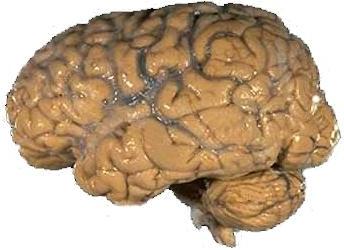
Human_brain_NIH

Credit: National Institutes of Health.

Back in my high school days – when cowl neck fuzzy sweaters were in, hair styles were big, and women’s shirts sported shoulder pads large enough for the wearer to participate in professional football – I took the ACT test to get into college.

I studied out of a large book, which offered practice questions and reviews of math concepts. Now, I’m sure students must be able to do this all online, but this was back in the 80s, before most people had any inkling about computers.

I’m not sure if the test is still in the same format, but back then, most of it was multiple-choice. The most useful thing I learned from studying for the ACT was how to identify incorrect answers so that I could home in on the correct ones. The hardest things about the test were figuring out its format and its unwritten rules.

All my studying paid off. I scored very high in the English section, and higher in the math section than if I hadn’t studied. My overall score was good enough that I didn’t need to worry about admission into the college of my choice. It was also elevated enough that I received a letter from Mensa in the mail one day.

Mensa International is an organization for people with high IQs. As author and comedian David Sedaris says in “Me Talk Pretty One Day” (which I just finished reading), Mensa members “come from all walks of life and get together every few weeks to take in a movie or enjoy a weenie roast. They’re like the Elks or the Masons, only they’re smart.”

Growing up in the northern hinterlands of Minnesota, I had never heard of Mensa. After opening the letter, I mentioned it to my mother, and her first, and only, response was, “Ach, you don’t want to join that!”

So I didn’t.

I was so taken aback by her reaction, I didn’t ask her why I shouldn’t join them.

Looking back over the decades, I have a twinge of regret that I so blindly followed my mother’s advice. How might my life have been different if I had surrounded myself with high-IQ people?

But I also realize my mother’s knee-jerk reaction was truly Minnesotan. It’s not part of our culture to brag or make ourselves stand out. (See more in my post about “Minnesota Nice.”)

Perhaps my mother was afraid my head would swell with self-importance were I to hang around other intelligent people. Or, maybe she figured they were all a bunch of dorks and exposure to them would increase my social awkwardness. Or she could have been threatened by having a daughter labelled as “smart.” I don’t know. My mother has passed, so it’s not like I can ask her now.

A couple of years ago, I looked into the qualifications for joining Mensa. They’ve upped them now. My ACT score is a few points short. Another way to qualify is through an IQ test. But an IQ test just seems like a lot of work to me now. I wonder if they grandfather (or in my case, grandmother) people into the organization based on the year they took their ACT?

Even if I did get in somehow, I suspect I would feel like a fraud. I am not naturally brilliant; I just know how to study, and I read a lot.

I guess I’m satisfied I was invited and could have joined Mensa if I really wanted to — but that I am just too Minnesotan to do so.

Paul Wellstone and the Chickadee

20200404_135718
Russ, Buddy the Wonderdog, and I recently nudged our way north to visit the outdoor memorial to Minnesota Senator Paul Wellstone. Wellstone, his wife Sheila, one of their daughters, and several aides died in a plane crash in 2002, along with the pilots, near the small town of Eveleth, Minn.

I never saw the senator in person, but I had contact with his staffers in the 1990s, particularly Kim Stokes. This was early in my career when I worked in public affairs for the Forest Service. Part of my job was coordinating responses to inquiries from federal congressmen and representatives who received complaints from their constituents about Forest Service activities in the Superior National Forest.

I would receive the letters, decide which Forest Service person should write a response (sometimes this was me), and then follow up, making sure the Forest Supervisor signed the letter and that it got mailed. I know, snail mail – how quaint!

I always enjoyed my discussions with Kim. She was so enthusiastic about the democratic senator, which wasn’t something I usually heard from staffers for other federal legislators. That piqued my interest, and I watched Wellstone’s career from afar.

Despite early public relations gaffes after his election in 1991, the short, feisty, and energetic senator learned from his mistakes and became an effective leader. He even explored a run for the presidency, but did not seek it due to health issues, which ended up being multiple sclerosis.

One of his well-known quotes is, “We all do better when we all do better.”

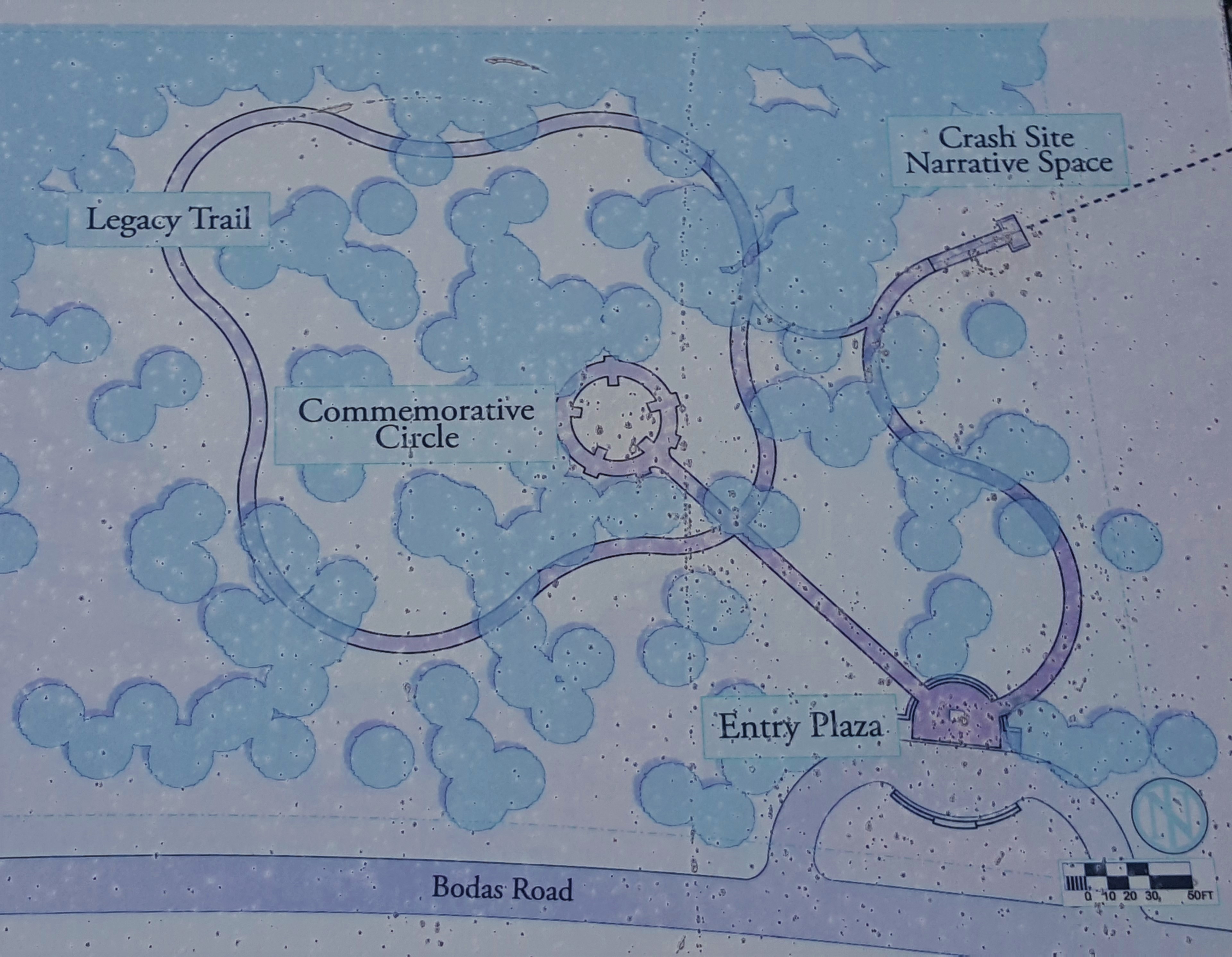
20200404_123600Russ and I had driven past the signs for the memorial off Highway 53 several times and finally had the time to stop. The first thing to greet us in the parking area was poetry. A snow-covered stone mantle sat at the entrance to the memorial. We brushed off the snow, trying to read the poem that was etched into the rock. We couldn’t do this because of the moisture, but were able to make out some of the words later, after they had time to dry.
After visiting the commemorative circle, which featured monuments made of local stone to those killed in the crash (except the pilots), we walked the surrounding legacy trail. The path was covered by about a foot of snow, and it didn’t look like anyone had been there in at least a week. Sinking through the crunchy thin snow crust every other step, we gingerly made our way, marveling at the quiet sun streaming through the skinny pines. Interpretive signs lined the route. After brushing off the snow, we read about Wellstone’s career progression.

20200404_135841

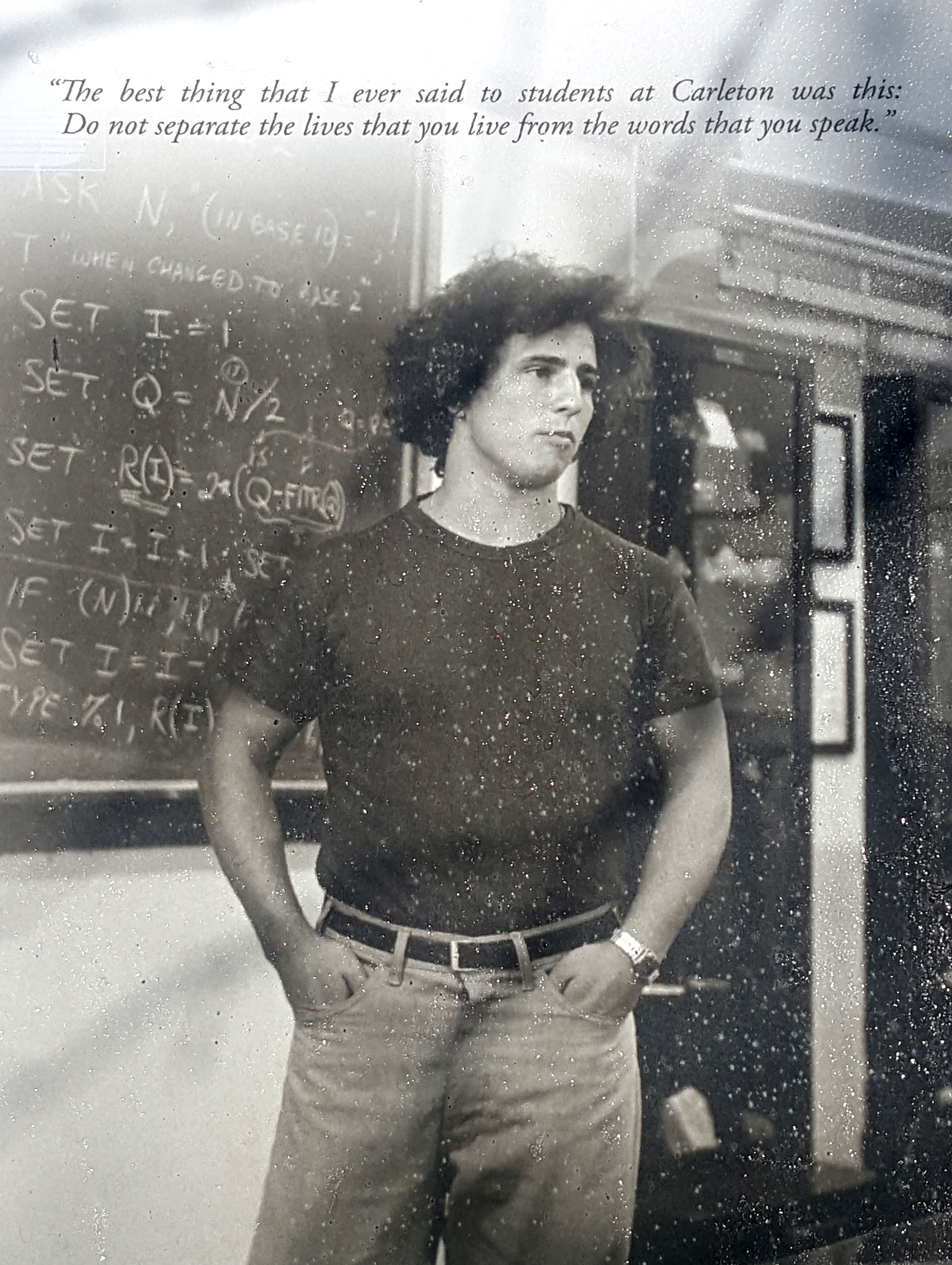
An image of Wellstone from his college professor days at Carleton College in MN.

The final sign on the route was dedicated to his wife, Sheila. The feminist in me did not appreciate this. I thought her sign should have occurred earlier on the trail, perhaps after the sign about their marriage, because I’m sure Paul could not have accomplished even half of what he did without her support. Having her sign at the end seemed like an afterthought.

After coming full circle back to the poetic entry, we walked the trail to the crash site narrative. The trail ended in a viewing platform about 2,000 feet from the actual site. Signs on the platform described the lives of the people lost. Descriptions of the two pilots were notably absent, but I suppose this was because the crash was deemed their fault, combined with poor visibility.

20200404_140053

Looking down the peaceful legacy trail.

As we stood, looking out into the pines, a flock of chickadees twittered among the branches. One brave, energetic bird alighted only two feet from me, calling loudly, as if berating me for intruding. I extended my gloved hand to see if the bird would land, and made a “phish, phish” sound that often works to attract birds.

This feisty little guy was too smart for that. He stayed where he was, continuing his call. Eventually, he flew away to join his friends.

The chickadee reminded me of Wellstone. I would like to think his spirit and those of the others in the crash were somehow absorbed into the forest and live on there.

Wellstone leaves a political legacy in the form of the legislation he passed and in Camp Wellstone, a training program for people interested in political action. His wife Sheila’s legacy lives on in her tireless work against domestic violence.

With Buddy leading, we made our way back to our truck, filled with appreciation for these lives well-lived and duly recognized.