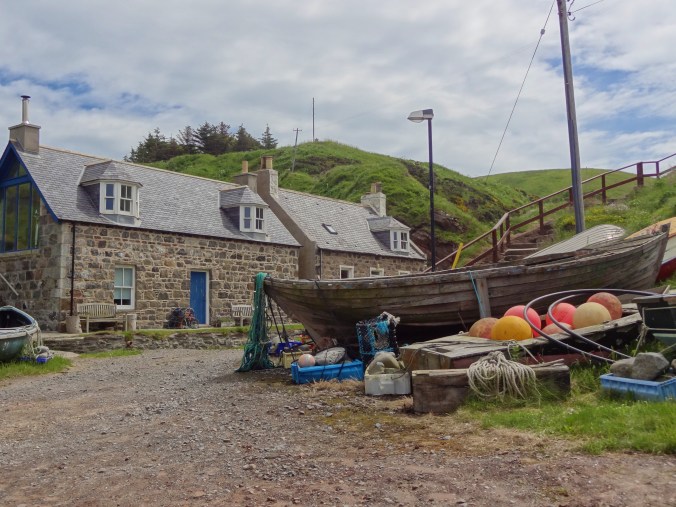
Bob Dylan’s childhood home in Duluth.
Last Friday was Bob Dylan’s birthday. My hometown of Duluth does it up right by holding an annual Dylan Fest — a week of events that features song, poetry, lectures, tours, and birthday cake.
This year, we attended the launch of a new book of poetry inspired by Dylan. “Visiting Bob” contains 100 poems by U.S. and international poets. A half dozen of the poets read their works and other poets’ works. Some of the poems were beyond me but others I understood. One that stuck was by local poet, Connie Wanek. Its theme was Dylan sightings in Duluth — are they false? Are they true? It ends on a hopeful note that perhaps someday the poet really will see him back in this town where he was born.
We also attended a lecture by one of the poets from Texas, David Gaines. Because he wrote a book about Dylan, he attracted media interest when Dylan won the Nobel Prize. Gaines described his experience being interviewed by Swedish public television and other major media outlets. He also got to travel to Stockholm to attend the airing of a Swedish public television story in conjunction with the prize ceremony.
On our way home from the lecture, we decided to stop by Bob Dylan’s home on the hillside, since it was on our route and we’d never seen it. A fan owns it and has spiffed up the duplex. Dylan lived in the right-hand side. A plaque on the front of the home proclaims its significance.
It’s hard to believe that I’ve lived here over five decades and never looked it up before. ‘Bout time, I guess.
When I posted the house photo on Facebook, one of my friends said they had a chance to rent the place in the mid-1970s, but turned it down. They didn’t know the home’s significance, however. When they found out afterward, they deeply regretted their decision because they were fans.
Another friend said she walked by the place thousands of times but it took years before she learned who had lived there.
These are typical instances of “Duluth” to me. It’s a big small town. It’s large enough to get lost in if you want, and to never see parts of it. But it’s small enough that everyone has friends in common through one means or another, whether they went to school with them, or worked with them, etc.
Even after all this time, this town still has hidden gems to discover for those who take the time to look.
 The wave of hard cideries that has swept the coasts has finally made its way inland to the shores of my fair burg. So far, one has opened in Duluth (Duluth Cider) and another is planning to open later this month (Wild State Cider).
 Las Lajas is flavored with coffee from Duluth Coffee Company. I tried this one first, and didn’t like it because it didn’t have the traditional apple taste I was expecting. But after I tasted the other three and came back to it, my palate had gained a new appreciation. Besides the coffee, it carries hints of caramel and vanilla – rather like a crème brulee of ciders. I joked with my friend that this would make a good breakfast cider.
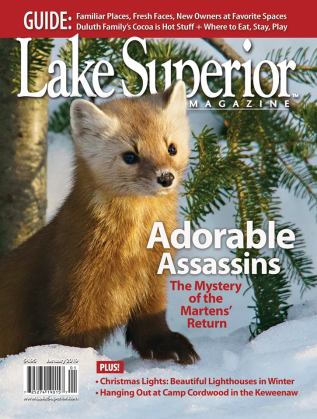 Here’s a peek into the glamorous life of a local author. I was at the mirror in my church bathroom today when a lady going into a stall stopped and said she enjoyed reading the cover story on American martens that I wrote for Lake Superior Magazine recently.

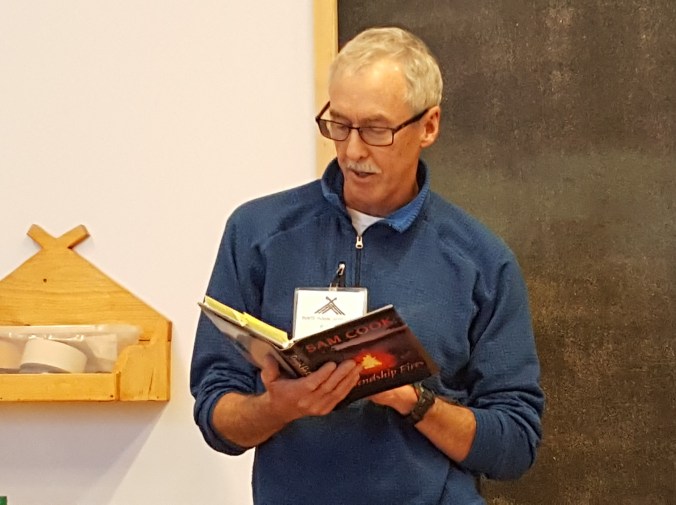 I meandered up the North Shore of Lake Superior last month for a writing workshop offered by Sam Cook, noted book author and outdoors writer for the Duluth News Tribune. The workshop was offered by North House Folk School in Grand Marais, Minnesota.
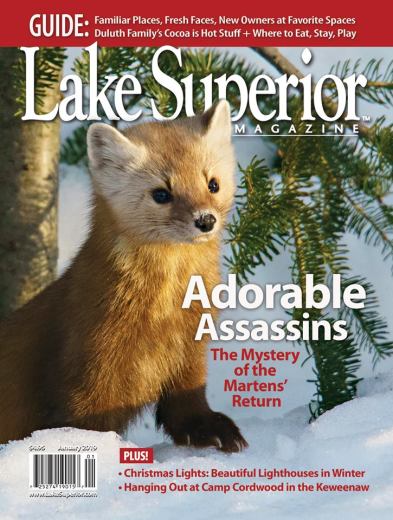 To cover the cost of the symposium and field trip, I wrote two magazine articles about martens. They are both out on newsstands now. The first ended up as the cover story for the