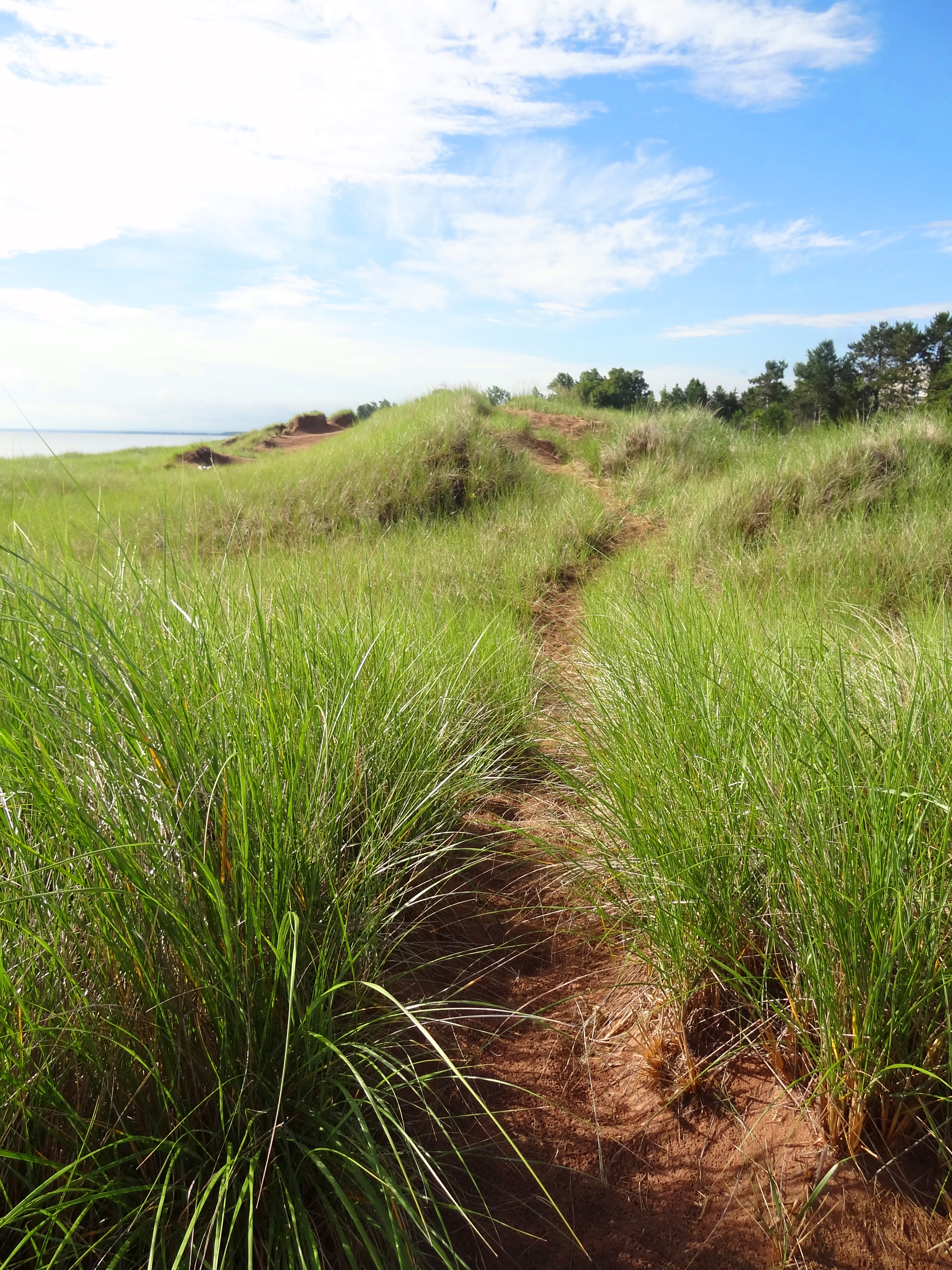
This is Park Point Beach on Lake Superior in Duluth. Hope your summer is filled with scenes like this!
This is Park Point Beach on Lake Superior in Duluth. Hope your summer is filled with scenes like this!

Loons dancing in the morning mist on Tuscarora Lake in the Boundary Waters Canoe Area Wilderness. (Photo taken by me in the mid-1980s.)
Strange things happen sometimes in the Northwoods – this land where humans and animals live so near each other. When I was young (8? 9?) my family went fishing on a lake north of Duluth. While casting our lines, we noticed a loon swimming nearby, calling in an unusual manner. As outdoorsy types, we had heard many loons before, but this one sounded more plaintive than normal, like it was in distress.
The loon kept circling — swimming near us, which was also odd for this rather stand-offish species. My dad said something like, “I think that loon needs help,” so we canoed toward it. Soon we saw the problem. A homemade fishing pole crafted from a large branch trailed about fifteen feet behind the bird. My dad grabbed the pole, thinking he could just pull the loon toward us and find where the fishing hook was lodged in it.
Ha! He underestimated the power of the loon. Upon feeling the tug of the line, the loon took off and dove underwater. My dad kept his grip on the pole, and the loon proceeded to pull our canoe (and the three or four of us in it) through the water at a good clip.
Now, a Nantucket sleigh ride is what used to happen to whalers after they harpooned a whale. The whale would take off, towing the whaling boat and its occupants through the sea until the whale tired and surfaced. That’s what was happening to us, only our whale was a loon.
Soon the loon tired and my dad was able to pull it close enough to capture in his gloved hands. This in itself was a feat of daring. Adult loons are about the size of a goose, and their bills are long and sharp.
After my dad wrestled it onto his lap, we discovered the hook embedded in the bird’s neck. Imagine — all that force from our lake sleigh ride concentrated on such a fragile body part. But that hadn’t stopped the loon.
My brother handed my dad the pliers and he was able to remove the hook. We released the loon back into its watery home. As the loon departed, its call was different. Happier.
Was it saying thank you? I’d like to think so.

The “Pioneers.”
I spoke with THE most delightful group of fifty elders yesterday about my books. They meet monthly along the shore of Lake Superior north of Duluth. For the sake of anonymity, I’ll call them the “Pioneers.” I spoke in a church basement after their business meeting but before lunch. The rituals and small-town nature of the event made me feel like I was in an episode of the Red Green Show or Northern Exposure, which are some of my favorite television shows, so this was a good thing.
The meeting began with the pledge of allegiance. O.M.G. I haven’t said the pledge since grade school. I was surprised I still remembered it. Then came opening jokes. Several were shared, including a priest/rabbi joke and an Ole and Lena joke (a Minnesota favorite). The latter dealt with Lena reading “one of dem romance novels,” and the former dealt with “the pleasures of the flesh” – all of which provided perfect unintended lead-ins to my presentation.
But it wasn’t time for that yet. After introducing visitors (which was only me — introduced as a writer of “one of dem romance novels”) the meeting moved onto birthday announcements (complete with song), anniversaries, minutes of the last meeting, a moment of silence for the deceased, a treasurer’s report, and committee reports. At this point we learned which of the Pioneers were absent due to recent heart attacks. Much discussion ensued about next month’s picnic meeting and how to procure and handle the industrial-sized cans of baked beans.
The formal part of the meeting ended with a prize drawing. I don’t recall what the prize was because I was getting ready to talk, which induced momentary panic and a memory lapse, but I’m sure the prize was fabulous.
This was the first opportunity I’ve had to talk about both of my novels at the same time, so it was good practice. And I was surprised by how many Pioneers had heard about recent sightings of piping plovers on a local beach. (Plovers are the topic of my second novel.) The audience asked lots of questions. In the tradition of “Minnesota Nice,” we managed not to get into any fights over wolf management or the existence of climate change (other novel topics).
Afterwards, people were almost throwing their money at me to buy books – another good thing. We ate “a little lunch,” which consisted of finger foods like homemade pickled devil eggs, half sandwiches, and dessert bars. LOTS of bars.
The event was punctuated with much laughter and good humor. The structure reminded me of my family reunions, which are conducted every two years in central Minnesota. While we don’t have jokes or prizes or as much laughter, we do have ice cream, which makes up for a lot.
Although this glimpse of northern Minnesota social heaven was a privilege, I left the church feeling bittersweet. In our current era of online meetings and cyber conversations, I fear that social groups like the Pioneers are a dying tradition. Will the teenagers of today gather in church basements or town halls on a regular basis when they are senior citizens? Or will they invent some new form of support group? If they do, will it be as fun? More important, will they have bars?
Only time will tell.
The Northeastern Minnesota Book Awards ceremony was held a few days ago in Duluth. I attended in because my novel, Plover Landing, was nominated in the fiction category, and because it’s fun to hob nob with other writers. Although any hope of an award was futile (sniff, small sob), the event always has inspiring speakers (see last year’s blog story), and poet Barton Sutter provides entertaining emceeing.
This year’s speaker was Duluth Poet Laureate Jim Johnson, who offered a tongue-in-cheek look at the writing process. Regarding the importance of writing rituals: “The muse can only find you at the same place and same time every day. The first step in writing is to be there . . . . While you are waiting for the muse to appear, you might as well write.”
Is the writing process about hard work or inspiration? “Yes,” is Johnson’s answer. “You can’t write if your ritual doesn’t work right. Don’t skip over the details!” Then he went into a long explanation of the importance of exact paper and pen placement on the desk, having all your pencils sharpened, your computer programs updated, etc.
Is all this preparation and procrastination worth it? “Trust me,” Johnson said. “Something will happen. When it does, it’s magical. The words will come out at dream speed . . . . This is its own reward. Writing isn’t about money, awards, or publication. Sometimes we’re rewarded, sometimes not. The odds are not good.”

The crowd gathers for the Northeastern Minnesota Book Awards presentation.
Basically, he was saying that writers need to trust in whatever process they’ve developed, and that the key is to persevere despite rejections from publishers or awards judges. There’s nothing better than when the words seem to come of their own accord and you get into that “flow.”
Keep flowing, my friends. Keep writing at dream speed.
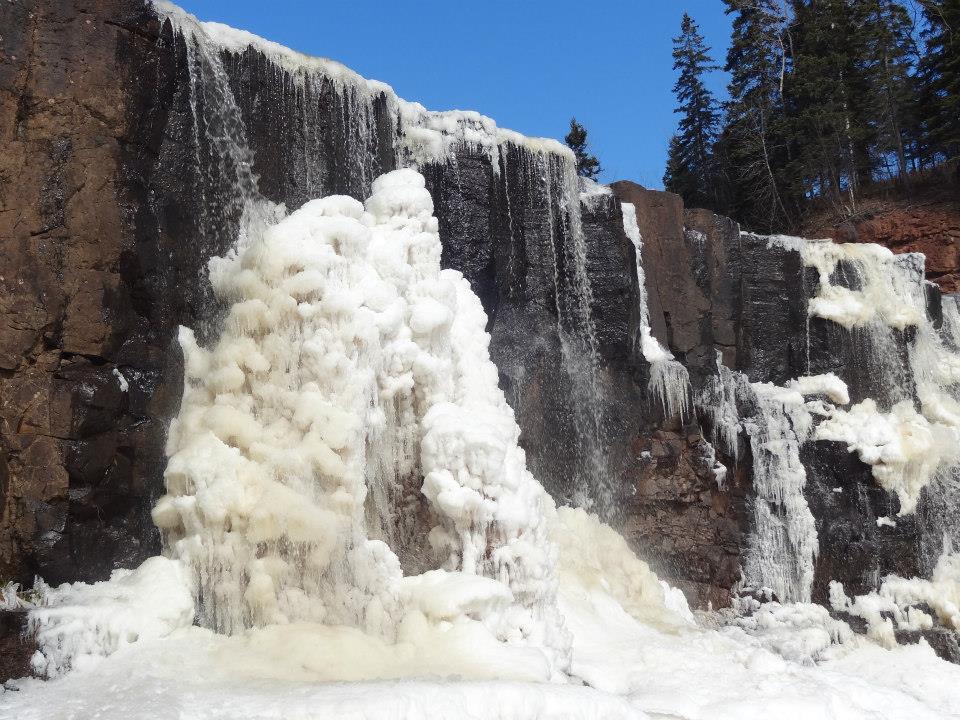
A melting frozen waterfall in Gooseberry Falls State Park.
I meandered up the North Shore of Lake Superior last weekend, looking for signs of spring. Although no tree buds are out, the snow is all but gone (except in the shade) and the ice is melting on the rivers. I hope you enjoy these photos from the trip. Click on a photo below to see a larger image.
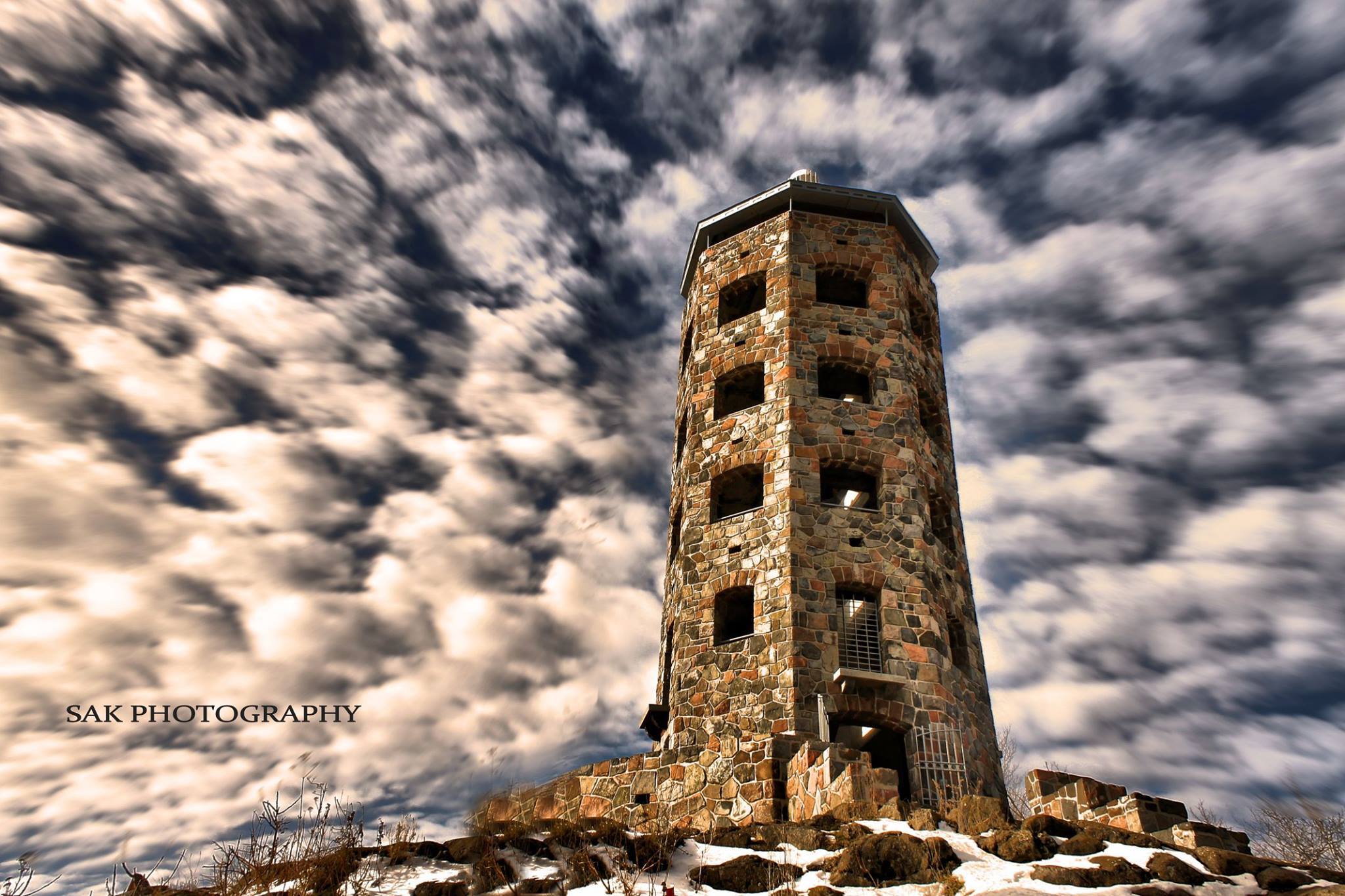
“Anger Tower” in Duluth, Minn. Photo by Sak Photography.
I bought my teenaged son a piece of furniture this weekend, and realized to my horror, that I had been mispronouncing the name of it in my head forever. I bought him a chest of drawers, which I had been thinking of as “chester drawers” since I was young. The salesman tactfully corrected my pronunciation.
Chester drawers — that’s what we called it in my house. I can blame my parents, I guess. Somehow, I’d made it into adulthood without ever needing to buy this particular piece of furniture because there were always plenty of chester drawer hand-me-downs from relatives.
This incident reminded me of two other tricky words. When I was in elementary school, I used to call the library a “liberry,” until some neighbor kid corrected me. Although I went to the liberry a lot, apparently it wasn’t often enough to learn its true name.
Then there’s the iconic local landmark of “Anger Tower.” The foreboding dark stone tower was built atop one of Duluth’s tallest hills. We could see it from my neighborhood before the trees grew and blocked the view. Because it seemed the kind of place where a person would be locked up if they got others angry, it made total sense in my child’s mind to call it Anger Tower. Or maybe it was where angry people lived. But I learned later in junior high school that its real name was Enger Tower after a local business man.
I don’t know. Enger Tower just doesn’t have the same ring. Sometimes real names aren’t as good as the made-up ones. Are there any word pronunciations that surprised you as you grew older?

Laskiainen Festival wear, in both camo and fluorescent orange. Perfect for deer hunting.
Last weekend I meandered a desolate, snow-blown road about an hour north to attend the cultural phenomenon known as the Laskiainen Sliding Festival in Palo, Minn. It’s the 78th year for this event, which celebrates all things Finnish. I sold my novels at a table. I had such a good time when I was invited to sell books there a few years ago that I went back.
Laskiainen is a bring-your-own-sled experience that is held at a community center on the shores of a lake. It provides the perfect place for thousands of Fins from far and wide to slide down the hill in the back of the center onto the lake ice. The farther one slides, the taller one’s flax will grow next summer, or so the story goes.

No Finnish festival is complete without Art, the accordion guy.
Inside the center are rooms filled with vendors, food providers, and a Finnish museum. I got into the event late, so my table was out in a hallway, but it was great for people watching. Rosy-cheeked cherubic children in snowmobile suits passed by along with a plethora of adults, dressed mainly in camouflage (pink camo for the ladies), plaid, fur hats, fur trooper hats, plaid trooper hats, and Carhartt gear (a brand of heavy cotton work clothes). There were even several plaid snowmobile suits. A few people passed my table wearing North Face jackets, but you just know they were visiting relatives.
My table was next to some folks who sold furniture (rustic benches and tables) made of cedar, ash, and other heavenly smelling wood. I sold a few books and had lots of conversations with people who live in the forest and hadn’t talked to anyone in a week, maybe two. An elderly yet sprightly lady from a Finnish newspaper booth a few tables down spoke Finnish-English to me for about half an hour, and we did our best to communicate — about what, I’m still not entirely sure, but she did seem to like the cover of my “Eye of the Wolf” novel, which sports – you guessed it – an eye of a wolf.
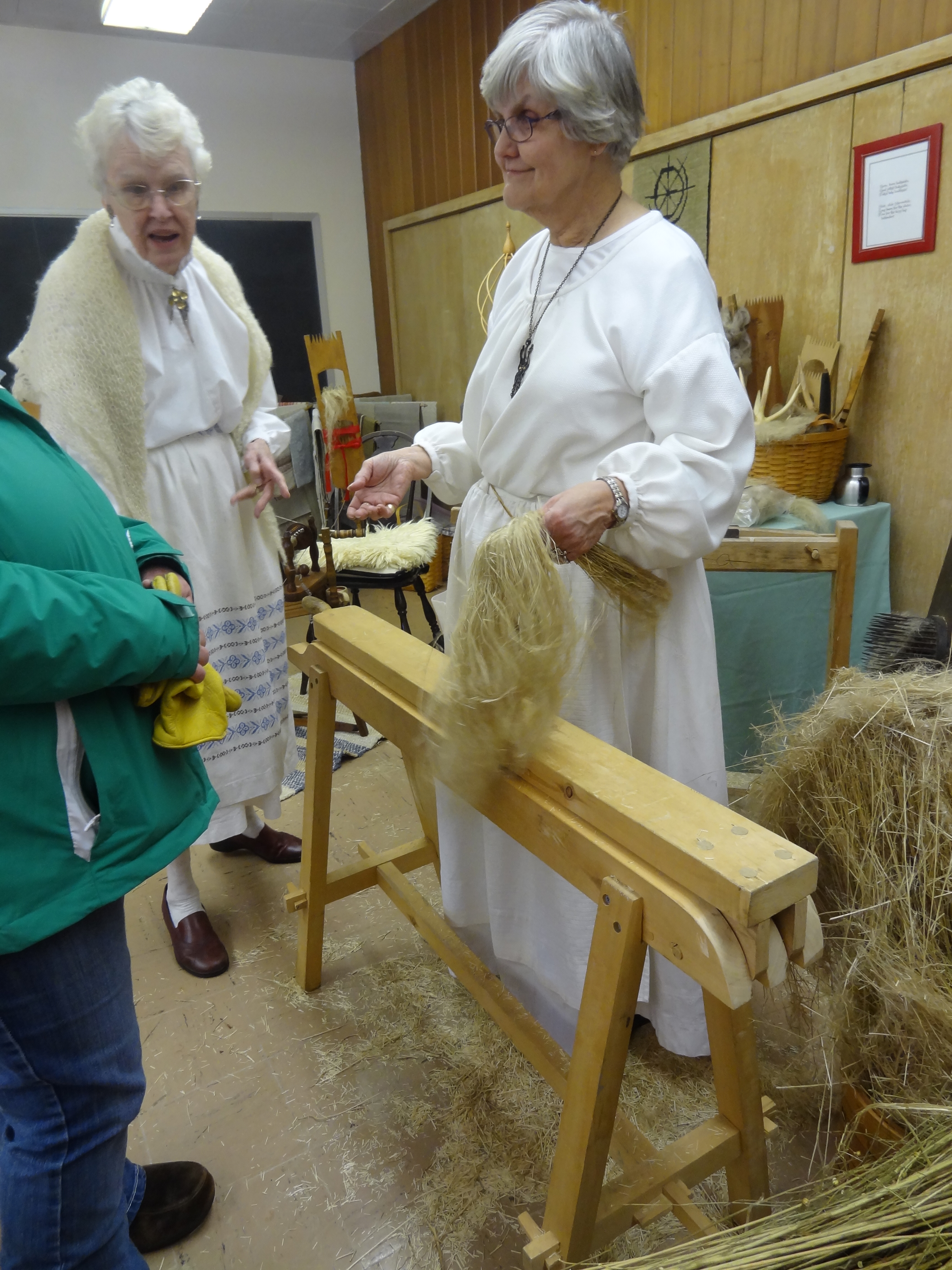
The weavers of the flax.
Talk about Minnesota Nice – it was the type of event where a vendor can leave their table for a potty break and not worry about anyone stealing their wares; an event where the organizers write vendors thank you notes for attending and don’t ask for any payment; where old friends meet and high school classmates reconnect.
The event organizers assure me it is the longest-running Finnish festival in America. May it run (or in this case, slide) for many more. And may their flax grow tall.

The princess of sliding (one of several).
 Duluth, Minn., has a new attraction for tourists and residents alike. What is it? Gin!
Vikre Distillery opened this year in Canal Park, right next to the famed aerial lift bridge. It’s one of several local brewing operations new to town due to the lowering of licensing fees. But it’s the only gin distillery. I recently had the chance to sample their spirits and take a tour courtesy of Caleb Wendel, the distillery’s sales manager. Plus I talked to the co-founder/CEO/distiller, Joel Vikre, a few months ago at a public event. So here’s what I know.
Joel was living in Boston when he and his wife got the idea to open a distillery in Duluth. After all, the area has all the requirements: good water, peat, and a source of grain. Nine months later, his family moved to Duluth and his dream became reality.
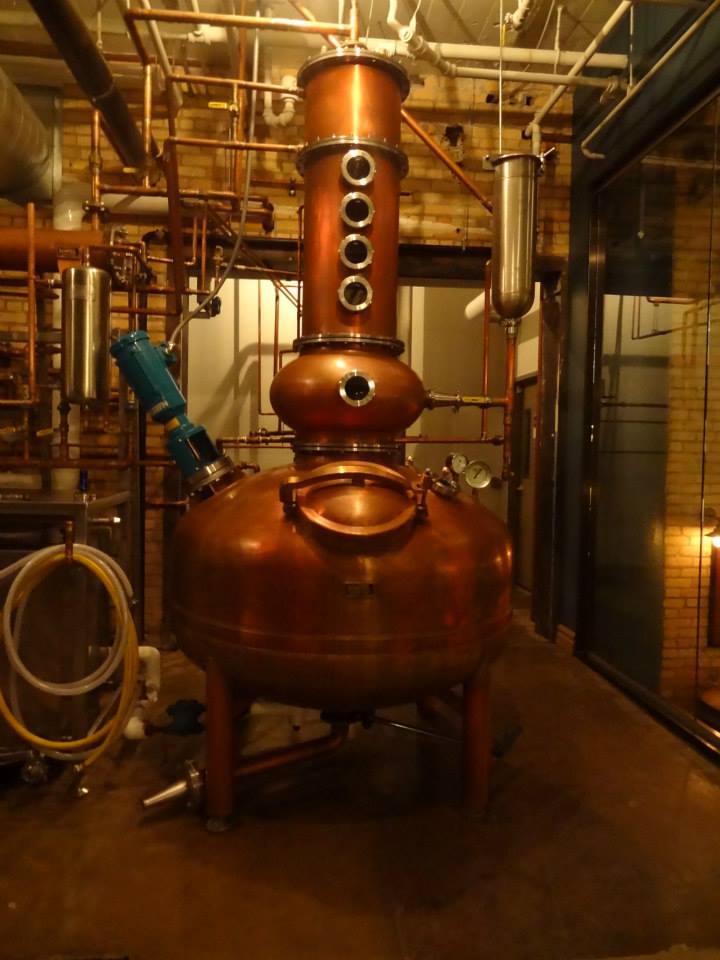
One of the stills.
Vikre (pronounced veek-ruh) Distillery markets its gin as “A Spirited Reflection of One Watershed.” Producing each bottle takes seven gallons of Lake Superior water combined with barley and various botanicals. Joel explained that, unlike in some distillery operations, no reverse osmosis is required with Duluth water. They just run it through a charcoal filter.
“It’s impossible to overstate the importance of water for our business,” Joel said. “We live in one of the great distillery locations in the world.”
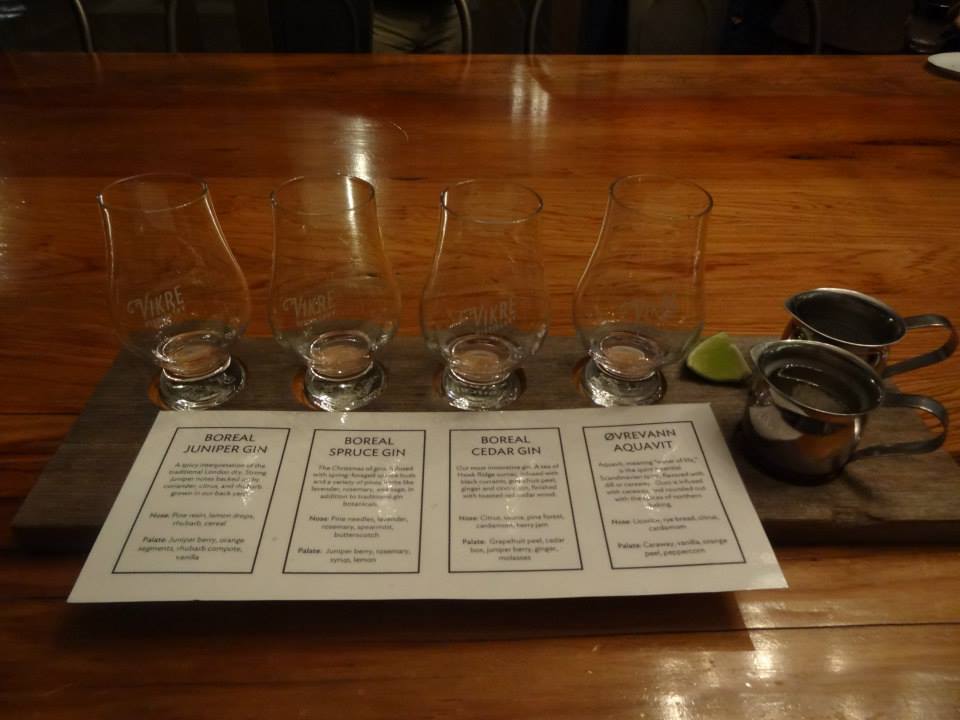
A flight of gin.
Caleb said their gin is about 90 proof and that it comes in three flavors: the traditional juniper (made with organic juniper berries from a supplier plus a few local ones thrown in for good measure), spruce (made from soft new spruce buds that sprout in spring), and cedar. They also produce aquavit (Mikael Blomkvist’s favorite drink in “The Girl with the Dragon Tattoo” book series), which is flavored with caraway.
The bar at the distillery offers a flight so that you can sample each one. The glasses are presented on a rustic wooden platter along with two small metal pitchers of tonic and soda, and a slice of lime. Unless I heard him wrong, the bartender told me to taste first, then smell the gin, which is different from how one samples wine. But after my first try, I saw (or smelled) why. Gin tastes much better than it smells! If a person smelled it first, they are likely to get scared off by the turpentine-y aroma. Perhaps there’s some more sophisticated reason, but that’s my impression.
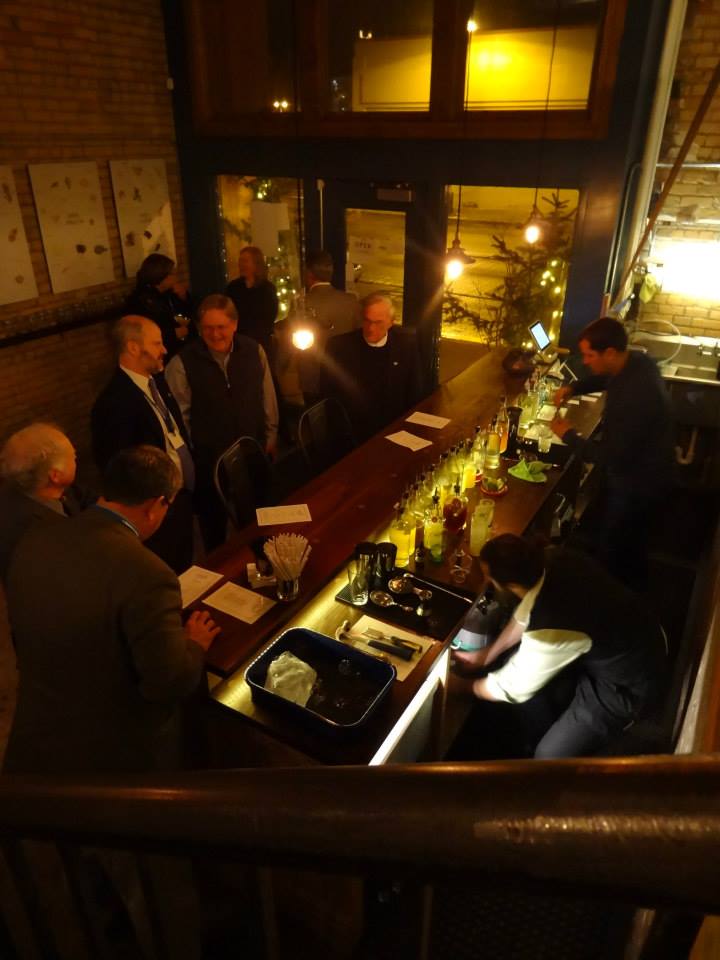
The bar.
I’m more of a wine and hard cider drinker. In fact, I don’t think I’ve had gin since my college days. But this was good. With its woodsy flavors, my favorite was the juniper gin. The bar also offers mixed drinks made from their products. Because I liked the name, I tried a “Lumbersexual,” which was made of aquavit, orange liquer, lingonberry syrup and lemon.
OMG! It was so good; Nordic and not too sweet, but not too sour, either. The bad news is you can’t buy bottles of their gin at the distillery. Caleb says this is due to distributor laws, but that their products are available “everywhere” locally. I quizzed him about the small liquor store by my house, and sure enough, he said they carried it (which I confirmed later through a purchase). Almost all of their distribution is in Minnesota, but if you look at the handy-dandy map on their website, you will see they also distribute in San Francisco. And Caleb tells me they just received their Wisconsin sales license, so watch for it there.
At $30 per bottle, their gin is not cheap. But it’s worth it knowing where it comes from and to support a local enterprise.
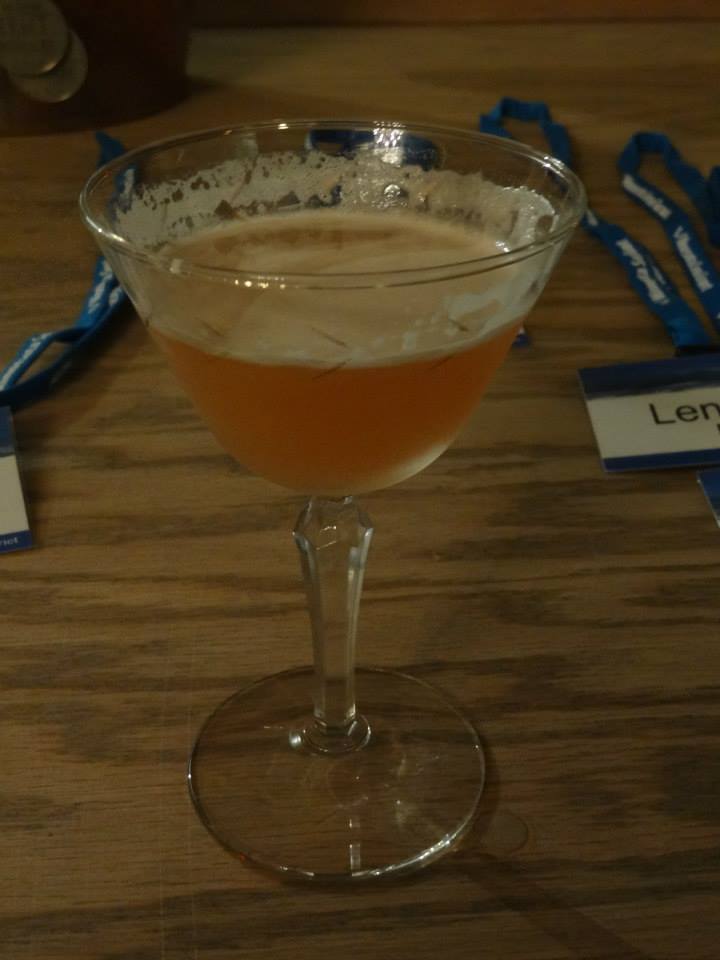
A Lumbersexual.
Caleb says that whiskey is on the horizon for the distillery. It’s in process now and will be coming not-so-soon (it’s better that way). They also hope to sell their own tonic someday. And for you corn-intolerant people, it’s made with cane sugar, not corn syrup. They do offer a cane-sugar tonic for sale that’s made by a different company, however, along with glasses and other gin-drinking paraphernalia, including clothing.
If you’d like to visit Vikre, be sure to check their website for hours. They are open on a limited basis in winter. The distillery is located in the Paulucci Building. There’s no sign for it on the outside of the building at this point. Look for the sidewalk easel sign instead.

An interesting carving in an archway at Yale.
I have a navy blue sweat jacket with white letters emblazoned across the chest that spell out “YALE.” Ivy League paraphernalia are not common in northern Minnesota, so I get sideways looks when I wear it. It’s also not common to “brag” in this manner about going to an Ivy League school. When someone is curious or brave enough to ask if I went to Yale, I delight in saying, “Yes! . . . But only for three days.”
 You see, I went to a science writers conference there a few years back and couldn’t resist buying the jacket. I wear it when I’m in the mood for a social joke, or when I’m cold (which happens quite often).
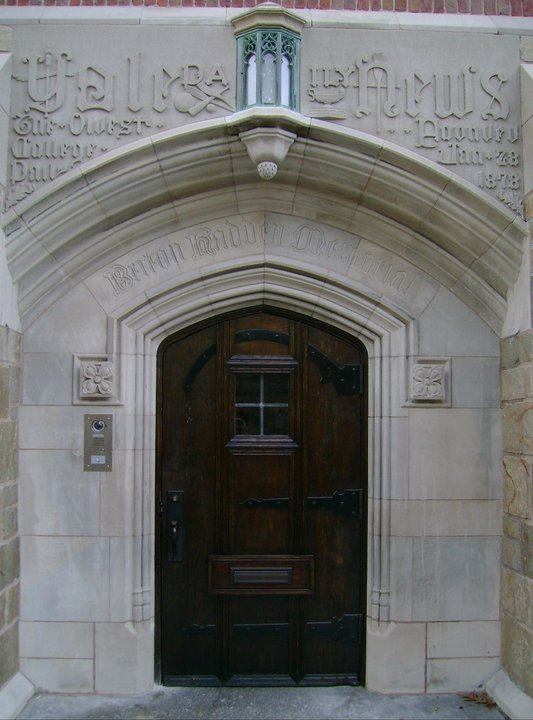
The wording over the door says “Yale News.” A door for journalists.
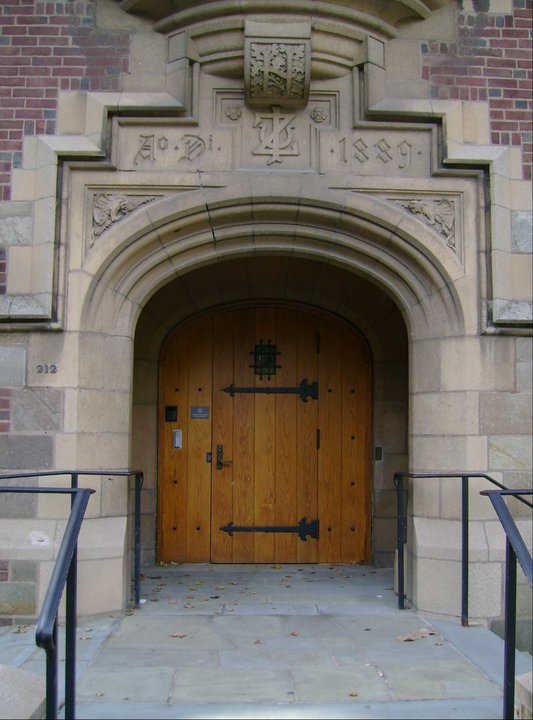
Anywho, I thought I’d share with you some photos of my Yale meanderings. I have this thing for doors, and Yale has some great ones. It also has some great ears. If you ever get the chance to walk the campus in New Haven, Conn., look for these!

The dining hall door. Note the cooked poultry above it.

Image from Pulpconnection.
I attended a reading last night by Duluth’s Poet Laureate Jim Johnson. (Yes, Duluth sports its own official poet.) Superior writer Tony Bukoski also read from his essays. It was hosted by Holy Cow Press – a local publisher that’s been in business for 37 years. Both Jim and Tony write from their ethnic roots (Finnish and Polish, respectively), providing for many laughs and some sighs. Topics included accordions, cows, gravel roads, railroads, and tractors. No saunas, though. Maybe next time.
The reading inspired me to uncover a poem that’s been incubating within me for several years. The reading must have made me think about local poets. Hot off the brain press – enjoy!
Two Poets in the Cereal Aisle
He stands, head bowed toward boxes
on the Captain Crunch shelf.
Bearded and barrel-chested,
if Hemingway had been a poet,
this is him.
The local Old Man and the Sea
is in my grocery store.
I slide over
pushing my cart softly, carefully.
Not wanting to disturb.
Will I see in his next book
a poem about golden wheat?
About waves and ships?
Short men in blue uniforms with
shiny gold buttons, and wearing
large hats?
Eyes still closed,
he reaches out his hand,
steadies himself against the shelf —
inspiration rocking and
pulling him
away from shore.
©2014 Marie Zhuikov

 Marie's Meanderings