A Visit to the Judy Garland Museum

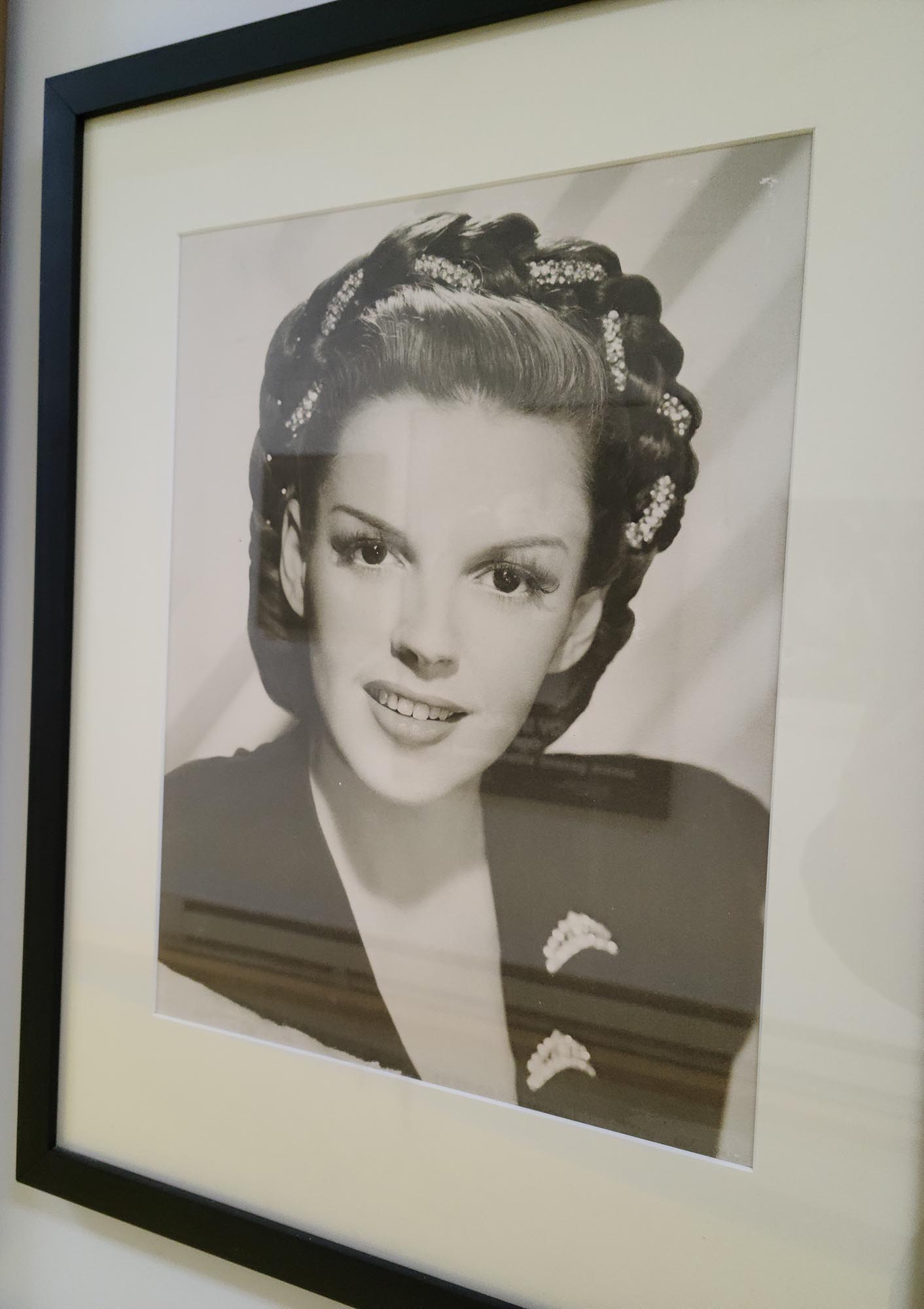
Judy Garland. Image courtesy of the Judy Garland Museum

When I was a child, I used to run around the neighborhood on certain summer evenings, letting my friends know that “The Wizard of Oz” movie was going to be on television that night. I’d hear a promo for the show during the network news or something, and out the door I’d go. I enjoyed the movie so much, I wanted to make sure my friends didn’t miss it.

Our television was black and white until I was almost a teenager, when we got a color set. Imagine my surprise when I watched the Wizard movie and saw everything change to color once Dorothy reached the land of Oz! Nobody had ever told me that happened until I experienced it myself.

Although the Judy Garland Museum opened in 1975, I didn’t know it existed until about a decade ago. I made a mental note to visit one day, and that one day came a few weeks ago when Russ and I meandered north. The museum in Grand Rapids, Minnesota, is composed of a 13,000-square-feet building that’s attached to Judy Garland’s childhood home. Her house has been moved twice, so although the building is original, its location is not. It currently has a scenic view of an Applebee’s Grill and a Home Depot store.

Judy Garland’s Grand Rapids Home

Visitors enter the museum building first to pay and look at the exhibits, and then can access Judy’s home from a covered ramp inside.

We enjoyed seeing the Lincoln Carriage – the carriage that Dorothy and her friends take into the Emerald City. Of course, there’s also the ruby slippers. You may have heard that the slippers, one of at least four pairs, were stolen from the museum in 2005 and then found recently by the FBI. Although they were recovered, they haven’t been returned to the museum and the perpetrators have not been brought to justice.

There are ruby slippers on display at the museum, but they are obvious replicas, not the originals. (Although, the podium is the original podium the stolen slippers rested upon, according to a somewhat amusing sign.)
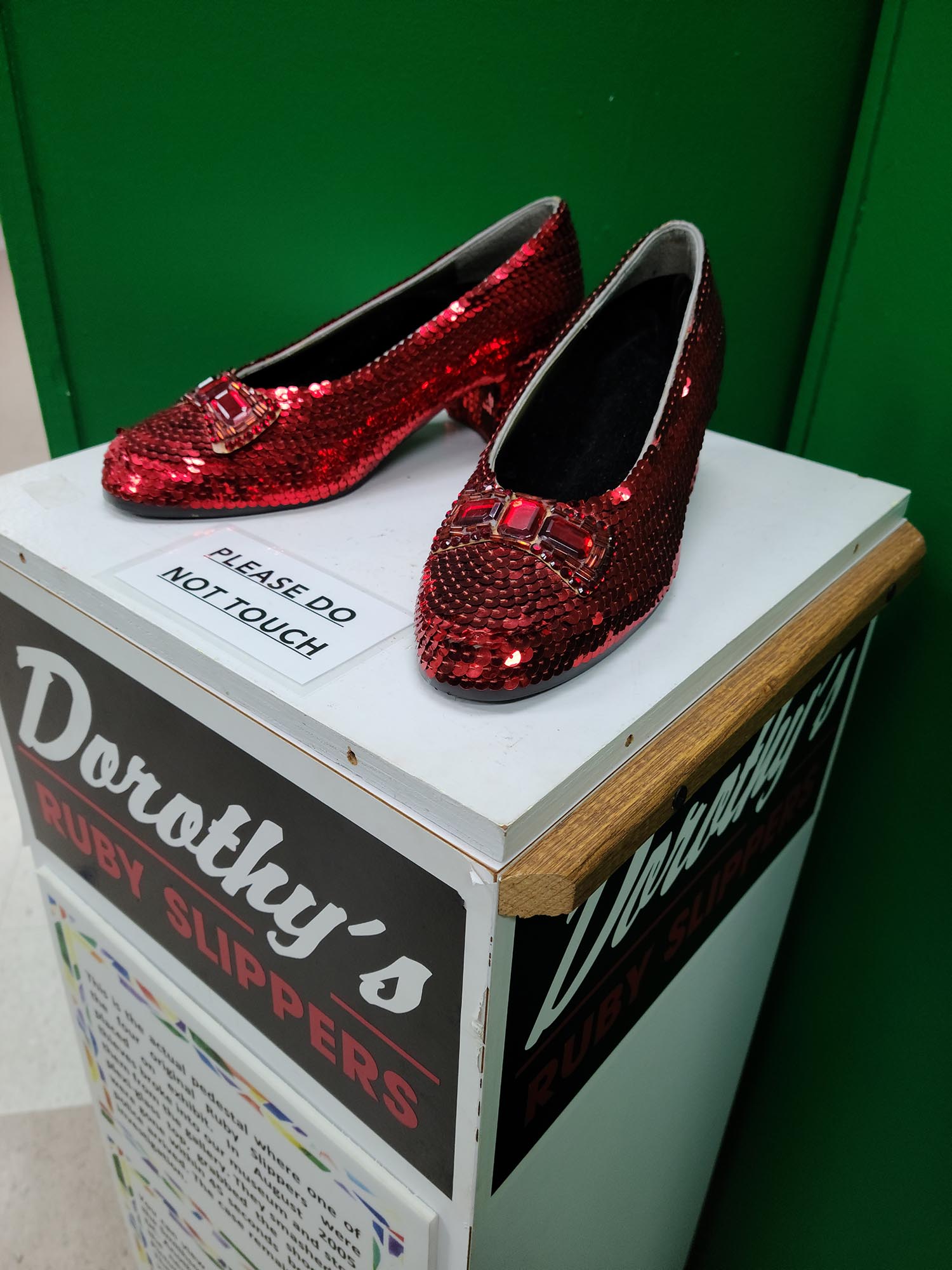
The infamous ruby slippers.

One thing I found strange was that the COVID arrows in the museum direct visitors on a path through Judy’s life backwards. You first see all the memorabilia from her death and when she was famous, and the displays end with her beginnings in Grand Rapids. I’m not sure if that route was due to COVID requirements or if that’s the way the displays were planned.

The chance to look inside Judy’s home was fascinating. The structure was originally built in 1892 by a steamboat captain and his wife. Judy’s parents Frank and Ethel Gumm purchased it was their first family home in 1919. They moved out in 1926 to California. The house was first transplanted in 1938 to make way for a hotel, which was never built. It was brought to its current site in 1994.

While touring the house, visitors are treated to piped-in Judy Garland music. I found that was what I was missing in the museum. Judy’s voice was her claim to fame and it felt weird up to that point not to hear it.

“Judy’s crib” in her parents’ bedroom.

Some pieces of the house are original and some contain carefully curated replicas. One thing you might not know is that Judy didn’t have her own bedroom. She slept in a crib in her parents’ room and her two older sisters shared the bedroom next door. Although the bedrooms were much smaller than we’re used to today, the lower level of the house seemed spacious and similar to present-day homes.

On our way out of the museum, we passed the Children’s Discovery Center, where a raucous birthday party was in the works. There’s also a gift shop that I’m sure will meet all your Judy Garland memorabilia needs.
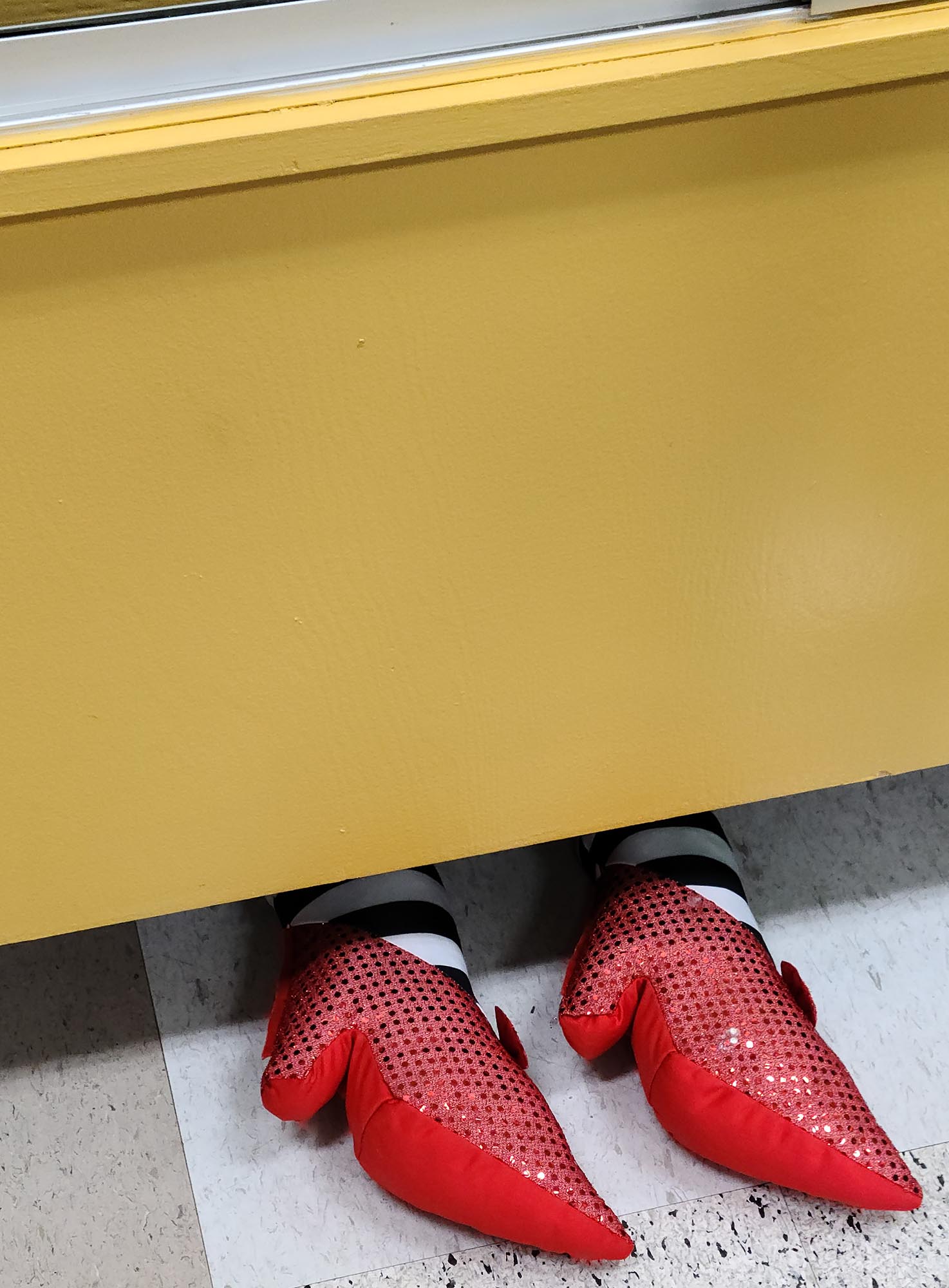
I appreciated the humor in this particular museum display.

I left the museum feeling a bit weirded out and sad for Judy. Imagine having your personal items all out for display to the public! You also get the feeling that she was all too used to having her talent used to make other people money. But I was glad I visited, and feel the museum is a good tribute to this outstanding Minnesota girl.
Mini-Minnesota Vacation #5: Grand Marais and Oberg Mountain

The Path to Enlightenment, Grand Marais, MN

Sometimes you can visit a town many times for decades but still discover new places in it. That’s the way Grand Marais, Minnesota, was when Russ and I meandered north for a weekend in our Scamp.

We were too slow on the uptake to get a reservation at the municipal campground, which is right on the shores of the harbor. But half of the sites (the ones closest to Lake Superior) are first-come, first-served, and there are a lot of them. We figured if we arrived early in the afternoon, we might have a good chance of finding an open site. We didn’t have the option of travelling during a different weekend because we had reservations for a concert that wasn’t happening any other time. We made backup plans to camp in a friend’s driveway and headed out.

I’m sure the suspense is killing you. Did they find a campsite? Yes, we did. In fact, we had five to choose from, thanks to the shortness of our Scamp (13 feet). After we got situated, we had several hours before supper and the concert. We meandered around the campground, getting the lay of the land. We walked into town and along the way, checked out the fishing museum that’s on the shore of the harbor. It features an old fish house complete with fisherman mannequins, a fishing boat, and a smoke house.

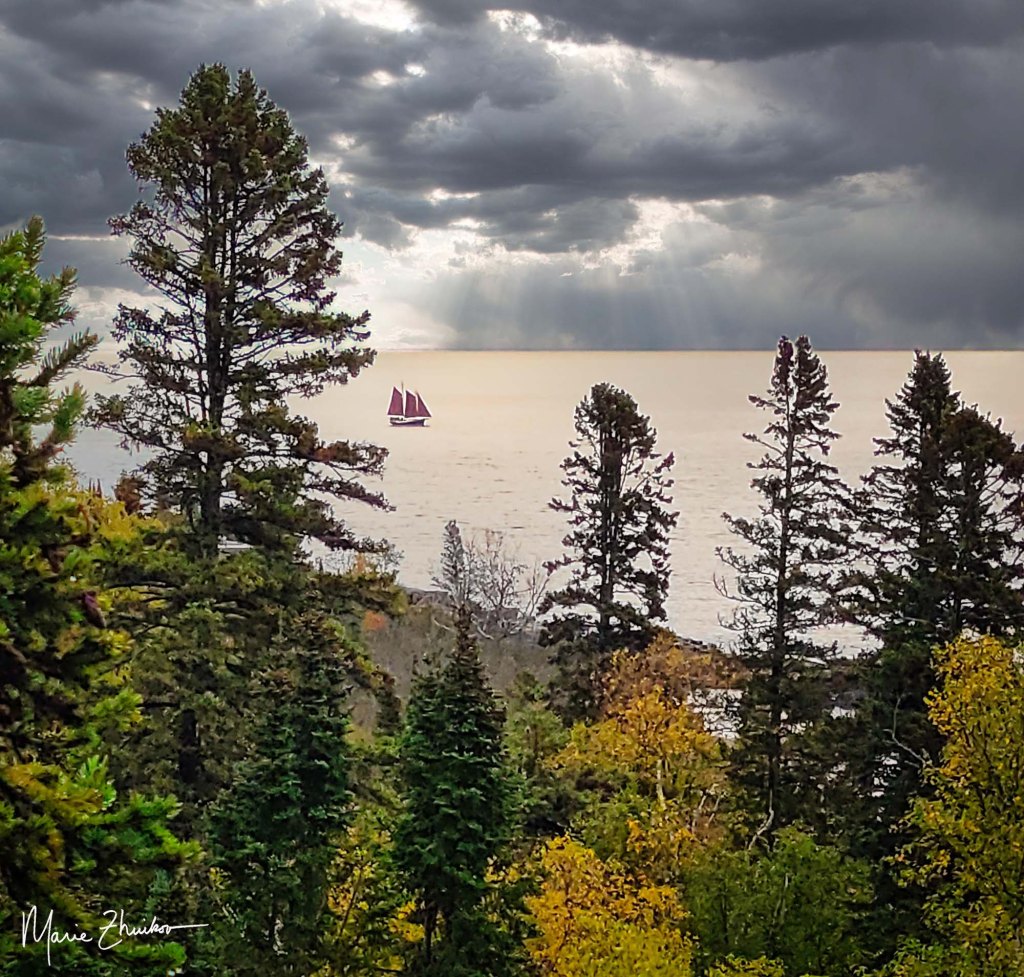
Sailboat Layercake. The Hjordis sailing out of the Grand Marais Harbor.

In town, we visited the Johnson Heritage Post Art Gallery, one of the places I’ve never been inside, despite coming to Grand Marais periodically for fifty years. Unbeknownst to us, the town was hosting a plein air (outdoors) painting festival and competition that week. The artists’ works were displayed in the gallery – a most impressive and inspiring collection!

No visit to the town is complete for us unless we stop in at the Ben Franklin Department Store. The owners are friends who we don’t get to see nearly enough. We also had time to visit the Sivertson Art Gallery, which I think I’ve only been inside once – another notable collection of local artists and photographers.

After supper at the Angry Trout Cafe, which features local foods (note, the Trout is open all year now but is closed sometimes in November), we headed north just outside of town for the concert. The artist is Michael Monroe, an acoustic guitar, ukulele and glass flute musician who’s popular in Minnesota (and other parts of the country, I’m sure!) He offers log cabin concerts. I signed up for our concert months in advance and was dismayed to learn along the way that Michael and his partner Deb sold their log cabin. But they found a friend who was willing to host the concert in their cabin right on the shore of Lake Superior, literally eight feet away from the water.

Musician Michael Monroe

With the sound of waves as a backdrop, we enjoyed an intimate concert in a home environment. Michael’s music makes a person feel all warm and fuzzy inside. If you like Cat Stevens, Paul Simon, and Joni Mitchell, you’ll love Michael’s music.

After a peaceful rainy night’s sleep (we were impressed by how quiet the campground was), the following day, we pursued more natural activities. Right next door to the campground is the Sweetheart’s Bluff Nature Area. An easy, wheelchair-friendly trail begins on the end of one of the campground loops, offering lake and woodland views. If you’re up for a challenge, take the definitely not wheelchair-friendly black diamond-level trail up the bluff. Be prepared to clamber! But the views of the lake and harbor are worth the effort.

The view of Grand Marais from Sweetheart’s Bluff.

Soon, it was time to vacate our weekend home. One place I wish we would have stopped in Grand Maris is the Gunflint Mercantile. They make THE BEST maple chocolate truffles on Earth. Maybe next time!

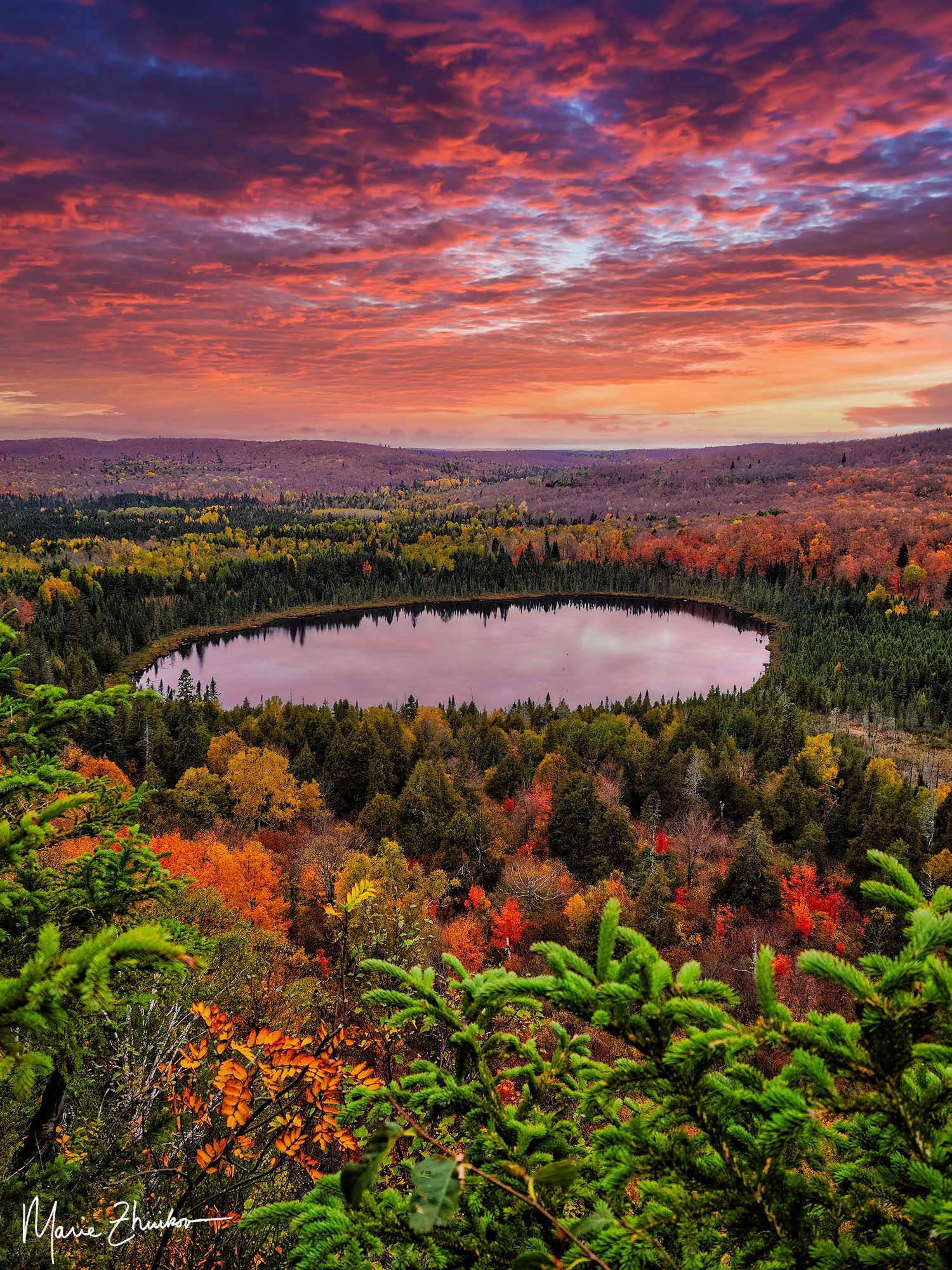
On our way home, we stopped just outside of Tofte to hike the Oberg Mountain Trail.  This fairly easy three-mile loop is known for stellar views of the Superior National Forest and Oberg Lake. The Forest Service says the trail gets “medium” usage, but when we were there on a colorful fall day, I would classify the usage as extreme. There were tons of people there and parking was at a premium. It felt more like a major national park attraction than a national forest.

As we hiked through the cedars and maples, fog began to roll in off Lake Superior. The first few overlooks we reached were totally shrouded. So much for stellar views. But we persisted and were rewarded by fog-free views on the other side of the mountain.

Easter Egg Fall. Oberg Lake as seen from Oberg Mountain.

The wildlife seemed used to people. I was able to get a close look at a hairy woodpecker working on a birch. The red squirrels seemed to delight in racing across the trail just steps away. A ruffed grouse took noisy flight nearby.

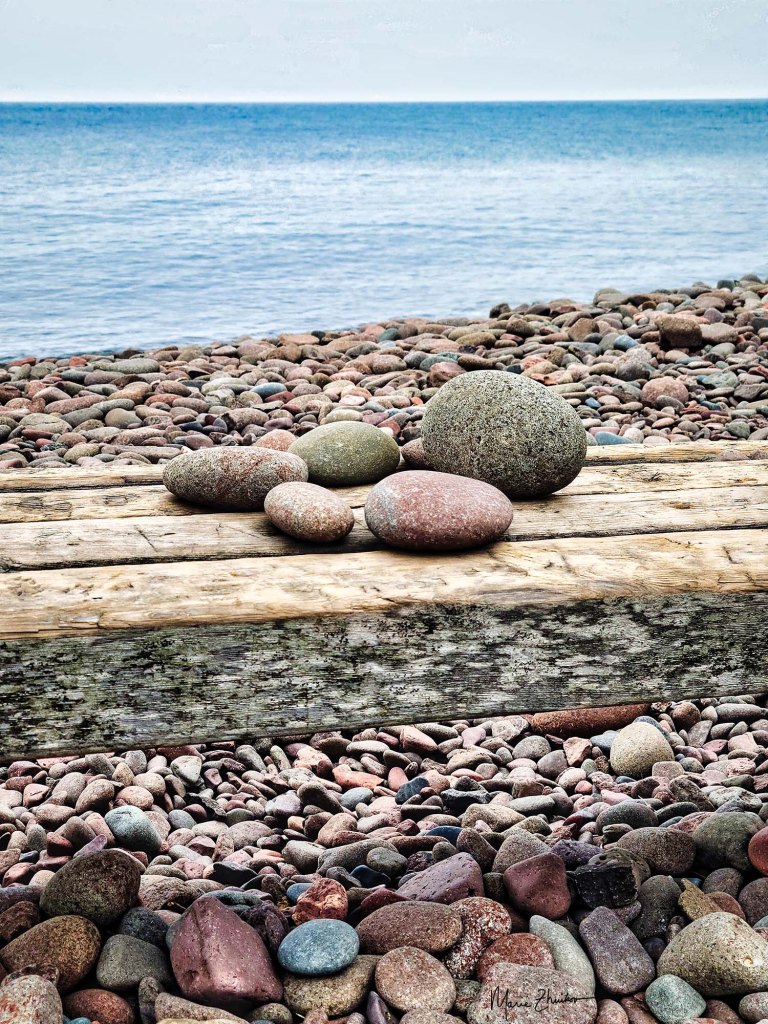
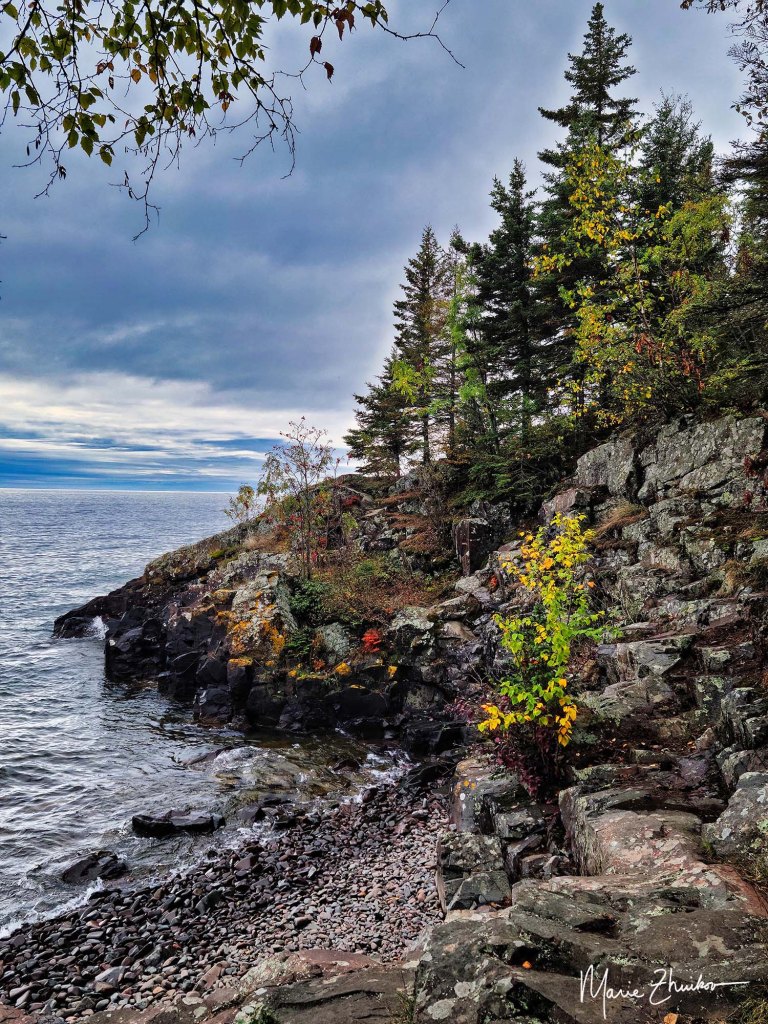
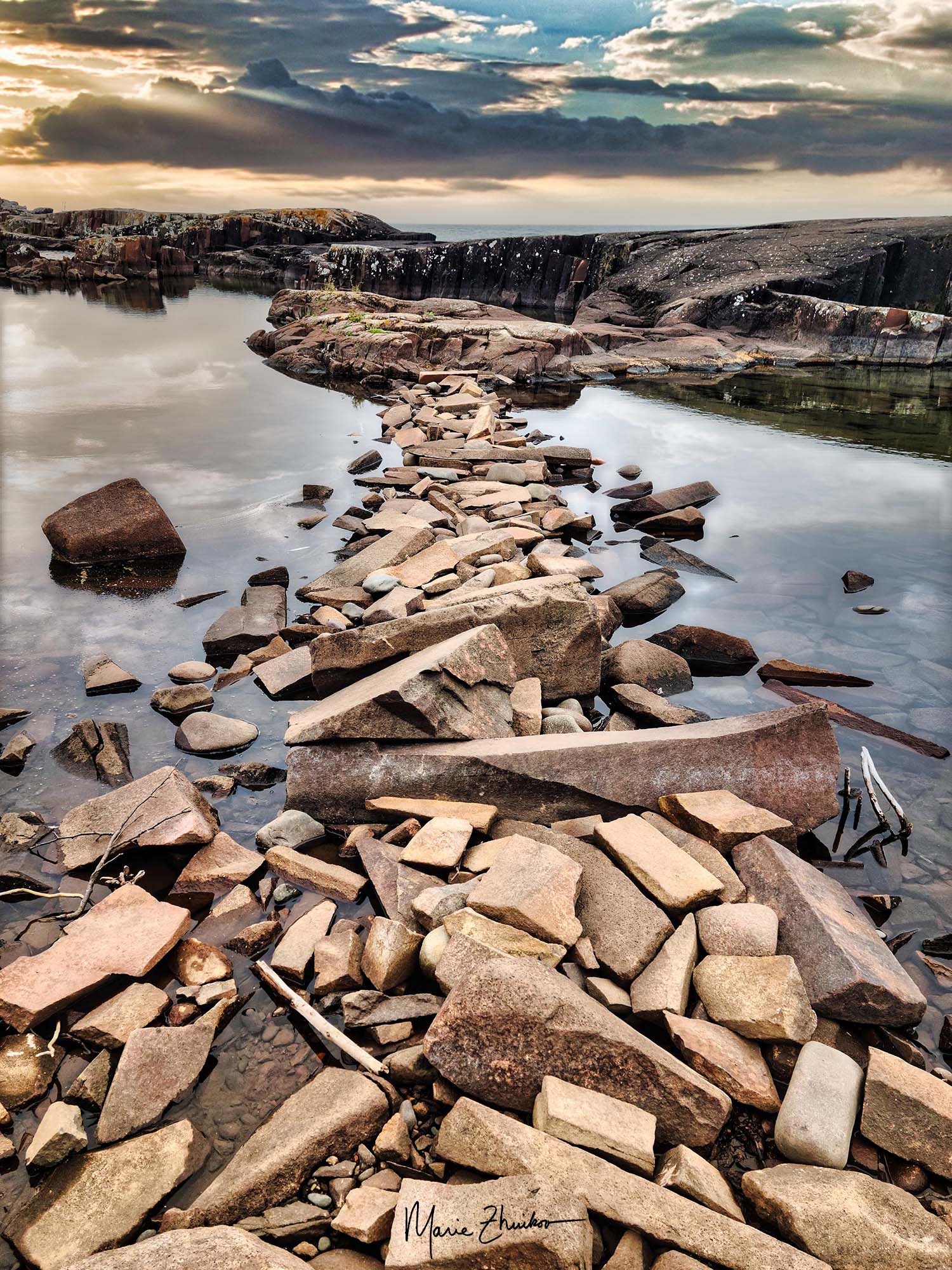
All the good art we saw must have rubbed off, because I took some pretty darn good photos. Here’s a show of the ones I haven’t already shared.

I hope everyone’s having a good fall. Stay safe, my friends.

Lawn Mower Races: Cutting-Edge Excitement

The grand marshal of the Thunder Valley Lawn Mower Races, Maine. Image credit: Mark Haskell, Courier-Gazette

Apologies for the bad pun in the title, but I wanted to let you know that you truly haven’t lived until you’ve witnessed this phenomenon. Lawn mower races happen all across America, from Idaho to Maine. I received my first taste in late summer when I meandered into Cotton, a small town in northern Minnesota.

Grown men (and in other places, women) clamber aboard riding lawn mowers that they have modified for racing. In Cotton, the circular racing track was an actual lawn situated behind what used to be the town’s high school but is now a community center.

The races are a cultural highlight of the season. Families gather to sit on the grass or on haybales to watch the festivities. Kids eat cotton candy. Some folks even back their jacked-up pickup trucks along the track. Sitting in folding lawn chairs in the cargo bed, they have a prime, elevated view.

Engines rev. The starting gun cracks, and they’re off! The machines tilt as they round the corners, wheels lifting off the ground. The drivers likewise tilt, leaning into the movement. Around and around they buzz, neck and neck. After a few turns around the track, one man’s mower putters out and he pulls into the center, defeated.

Cotton, MN, lawn mower racers lean into the turn.

According to the U.S. Lawn Mower Racing Association, this quirky form of racing began in the early 1970s – touted as a perfect way to use a machine that many people already have, and to let off steam. It became official when the makers of a fuel stabilizer came up with the idea of using a lawn mower race to promote their product on April Fools’ Day in 1992.

I had no idea this pastime had been around for so long! There’s even such a thing as lawn mower ice racing in winter.

With a wave of a checkered flag, the race ends. The crowd applauds. The winners strut over to claim their prizes and pose for the local newspaper photographer.

In Cotton, racers competed in two events, “modified” and “stock.” I felt culturally enriched for having watched these events. But it all seemed like such a waste. You see, the racing mowers don’t have their blades engaged. All that noise and hype, and in the end, the grass on the track is just as long as before. 🙂

William O’Brien State Park: A Feast for the Eyes

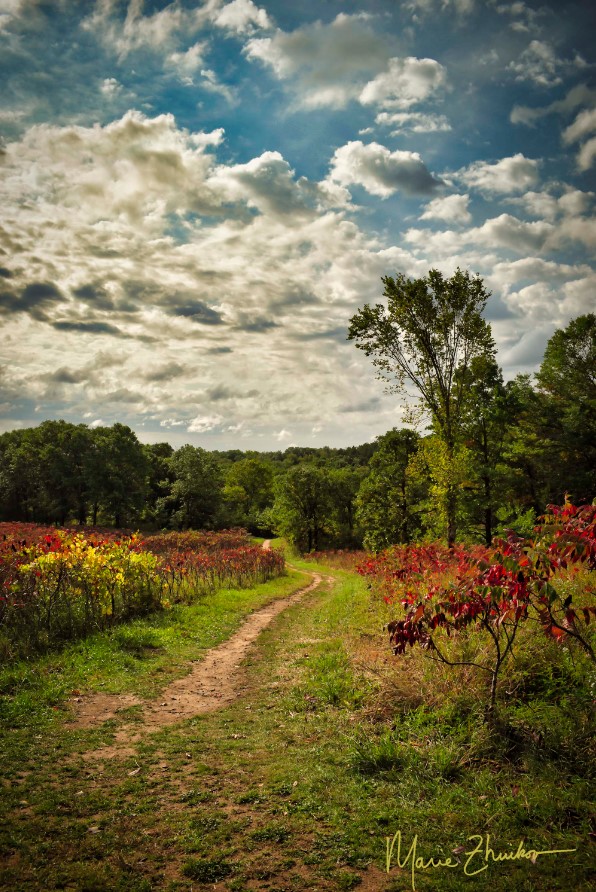
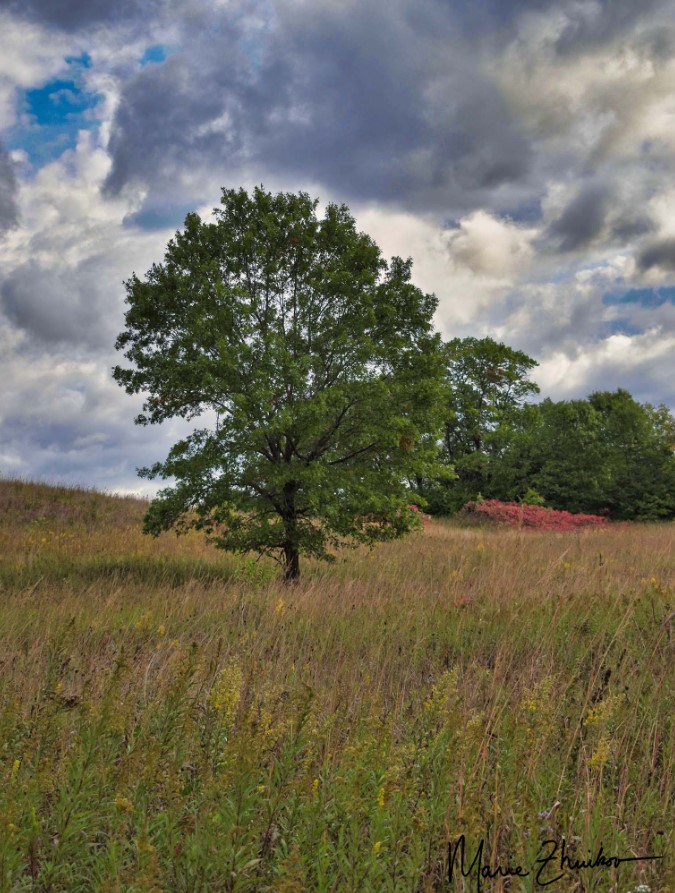
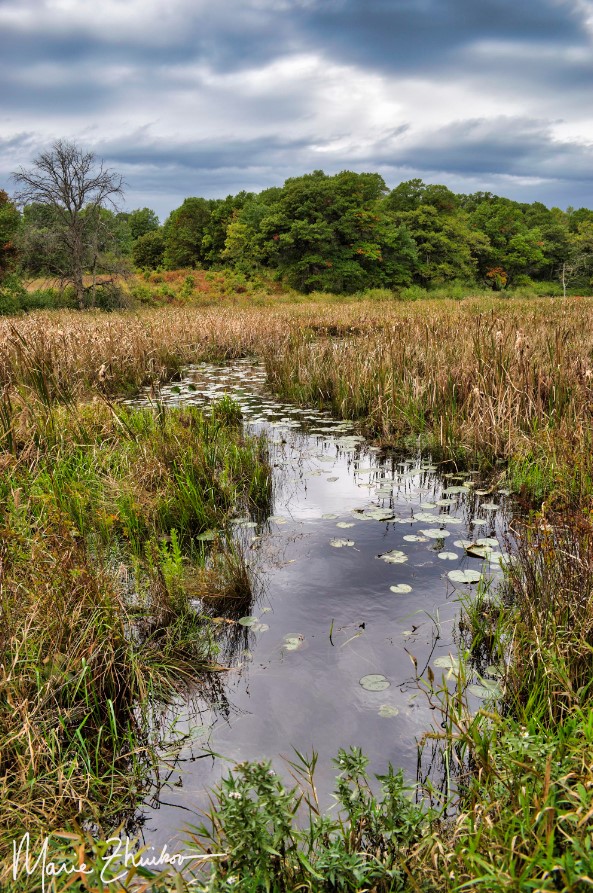
One of the tranquil views from the Prairie Overlook Trail in William O’Brien State Park.

Russ and I meandered south a couple of hours to camp along the St. Croix River in William O’Brien State Park. We chose the park mainly for the location – we wanted to visit the river towns of Stillwater and Afton, both of which are not far south – but we plan to return again someday because of the great accommodations and the views – oh, the views!

Visitor can choose from two campgrounds at the park. We chose the Riverway Campground because it was closest to the river, and we are water people. After setting up camp our first night, we visited Stillwater and took advantage of its foodie options. We ate at the Marx Fusion Bistro – excellent food and drinks – much better than camp food. That was a treat for us — who usually camp in the middle of nowhere.

Back at our trailer, we enjoyed a fire and a visit from three fat racoons who quickly checked our site for food. Finding none, they waddled off to the next site.

The next morning, we walked the 1.6-mile Riverside Loop Trail near the campground. The trail passes through old white pines along the river and then turns inland a bit, meandering by Lake Alice, which is named after the daughter of William O’Brien, a lumberman who used to own the land that’s now the park. Two bald eagles graced us with their presence, performing aerial acrobatics.

Later, we took a nine-mile (round-trip) bike ride to the small town of Marine on St. Croix. We explored its short main street and stopped to visit an old lumber mill site featuring a short trail and interpretive signs. The mercantile in town looked like it could accommodate any forgotten food needs, plus there’s a coffee shop that touts its cold-press coffee as “best in the valley.”

We sipped our coffee while sitting in the town’s gazebo/band stand in a small park just across the street from the shop. The town was so quaint and picturesque, I felt like I was in a gosh darn Hallmark Channel movie.

A view of the St. Croix River from the Riverside Trail. I call this one, “X Marks the Spot.”

After supper, we revisited the Riverside Trail and made good use of one of its benches to watch the moon rise above the clouds lining the river. Barred owls hooted their “who cooks for you?” calls and Canada geese honked as they flew to their nightly roosting waters.

As we fell asleep back inside our trailer, the quiet of the night was interrupted by a pack of coyotes who yipped to each other.

On our final morning in the park, we drove a few miles to hike the Prairie Overlook trail through a restored oak savanna. The trail loops around a small lake. As I hope my photos attest, everywhere we looked was a feast for the eye. Seas of sumac had turned red and lined the trail.

The day was overcast, and the rain conveniently waited until we reached our car to begin. The drops came down, steady and persistent, so once back at the campground, we packed up and headed home.

Canoeing “Old Blue” Down the Whiteface River

A story that began as a post on this very blog was recently published by “Northern Wilds” magazine. It details an adventure Russ and I had canoeing down the Whiteface River in northern Minnesota. As I began writing it, I quickly realized its magazine potential. So, I didn’t post it here.

The good news is, you can read it for free, just as if it were a blog post: https://northernwilds.com/canoeing-old-blue-down-the-whiteface-river/

Excerpt:

…I marveled that a trip that takes about five minutes by car could take three hours by canoe. But in a car, we would not have had the wonder of the white birds, a mermaid, and a lightning-blasted pine. Now, we have a mental map of the liquid emerald that flows beyond the screen of trees bordering the road.

Jeanette Lake Campground: Mini-Minnesota Vacation #4


Our water toys await launch into Jeanette Lake in the Superior National Forest.

If someone ever wanted to successfully torture me for information, all they would need to do is stick me in a dark room full of mosquitoes. Between the incessant buzzing and the blood-sucking, I would divulge anything anyone wanted to know. I’d even make up stuff if it would get me out of that hellhole faster.

I was reminded of effective torture methods during our inaugural night at Jeanette Lake Campground in northern Minnesota’s Superior National Forest. Russ and I arrive late on a Friday night with our Scamp trailer. The site we had reserved months before was the only one available in the government system for the dates we desired. It was situated in dense woods near a wetland along the lake. Mosquitoes love wetlands. They also love the dark. And, they apparently love my ankles.

We set up camp between mosquito slaps, amazed that so many bugs were still alive when our summer has been so dry. I’d expect swarms like this earlier in the season, not in mid-July, but I guess this year has been a good one for them.

Somebody (and I’m not naming names) left our camper door open too long. By the time we were ready to sleep, our trailer was filled with mosquitoes. We spent a good forty-five minutes trying to kill every last one before we went to bed.

But you know that ONE mosquito always survives. They will hunt you down during the night, buzzing insistently around your pillow as you try to sleep.

After a few belated kills, we were serenaded by the mosquitoes that had collected outside on our window screens. Such a lovely way to drift off into dream land!

In the morning, I was loath to leave the trailer. Still demoralized from the night, I envisioned cutting our weekend camping trip short due to the bugs. Russ was awake and out before me. I noticed he stayed outside for a long time. Wasn’t he getting eaten alive?

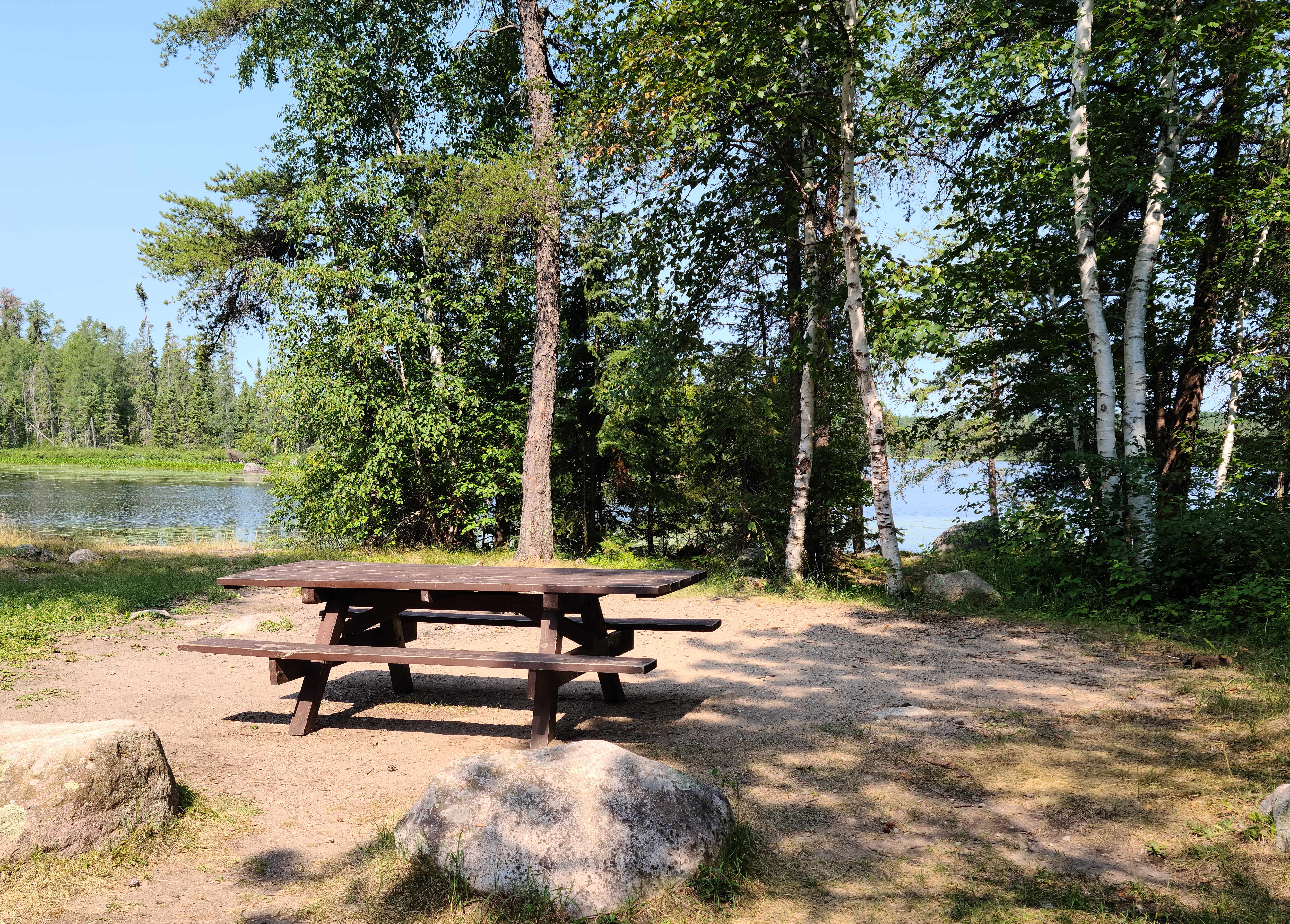
Thankfully, it turned out he wasn’t. As I took my first cautious steps outdoors, he sat, smiling, at the picnic table, coffee in hand. The mosquitoes were nowhere near as numerous as the night before. Maybe our camping trip wouldn’t be a bust, after all.

I first learned of Jeanette Lake over thirty years ago when I spent a summer as a photojournalist volunteer for the LaCroix Ranger District in the Superior National Forest. I’d driven past and through the campground a few times on my way to other places. With its islands and white pines, the glacier-carved lake looked like one that should be in the Boundary Waters Canoe Area Wilderness. The thought of being able to drive to it and camp appealed to me, but I never had the chance until now.

We ate our breakfasts and took a walking tour of the campground, which offers about a dozen sites. Two are walk-in. Backcountry sites are scattered around the lake and on the islands for those who want to work harder (by paddling or boating) for their camping experience.

A few of the non-reservable sites were empty, including a picturesque one right on the lakeshore. I noticed it had perfect access to the water for kayaks or paddleboards, both of which we brought with us. A nice breeze off the lake would keep mosquitoes at bay.

After we returned to our site and got talking, Russ said he had paid for our site at the pay station that morning while I was sleeping. My brain was beginning to work by that time, and I remembered that I had paid for our site when I made our reservation.

So, we had paid for two sites. Why not move to the better one? The Forest Service might frown upon such practices, but it seemed like a good idea to us, so we packed up and moved out of the wetlands and to the lakeshore. Later, we told several people who were looking for campsites about the free one they could have that was under our name, but nobody took us up on it. Gee, do you think that might have had something to do with MOSQUITOES?

Our non-mosquitoey campsite.

We spent our Saturday paddling the lake, resting on a tiny island covered in jack pines and blueberry bushes (the berries were ripe). We also hiked on the Astrid Lake Trail, which can be accessed from the campground near the walk-in sites. After the trail crosses the road (the Echo Trail), it wanders through a black spruce bog. If you look closely, you’ll see rare pitcher plants. Farther on, glacial erratic rocks — huge boulders dropped by glaciers as they retreated and melted 10,000 years ago — dot the sides of the trail in the forest.

We spent the evening around a campfire, admiring the red orb that served as a sunset in skies hazy from northern wildfires. As the sun disappeared, the mosquitoes reappeared, but in more manageable numbers.

Ferns growing on an ancient glacial erratic boulder along the Astrid Lake Trail.

Sunday morning, we mountain-biked on the Echo Trail, which is the gravel road that provides access to this part of the land. After a quick dip in the lake, it was time to pack up and head home. Along the way, we made a lunch stop at the Montana Café in Cook, Minnesota, the town where I was stationed during my volunteer stint. The café was another one of my old haunts and I was glad to see it was still in business. They have great malts and burgers.

Despite the best efforts of the mosquitoes, we were able to salvage this trip down memory lane. If you’re interested in a touch of wilderness with easy access, don’t be put off by all my whining about mosquitoes; put gorgeous Jeanette Lake on your list.

Two shed skins from a garter snake that lived near our site. We also had a camp chipmunk and cottontail rabbit.

Biking the Mesabi Trail from Hibbing to Chisholm

In our continuing quest to familiarize ourselves with the Mesabi Trail in northern Minnesota, Russ and I recently biked an 8.5-mile section right in the middle between the towns of Hibbing and Chisholm. This section runs by iron ore mine pits and a spur that leads to the Discovery Center, a cultural museum about the Iron Range.

The trail offers a good mix of ups and downs, shade and sun. In Hibbing, the trailhead parking lot is the same one that serves the Greyhound Bus Museum. We had time to visit the museum, which I’ll feature in my next post.

We rode out and back for a total of 17 miles. Not every bike trail offers sights like the Bruce Mine Headframe (pictured). A nearby sign said this structure was originally underground and it hoisted low-grade iron ore 300 feet to the surface. It’s the last standing headframe on the Mesabi Range.

The Bruce Mine Headframe — one of the sights along the Mesabi Trail between Hibbing and Chisholm.

The sign also goes onto to relate an incident that happened in the Bruce Mine. “In July 1927, Nick Bosanich was reported to have died in a rockslide in the mine. Forty-six hours later, he was found alive in a 10-foot-square room. His first request was for a cigarette.”

Ironic that upon his “resurrection” he probably shortened his life by resuming smoking!

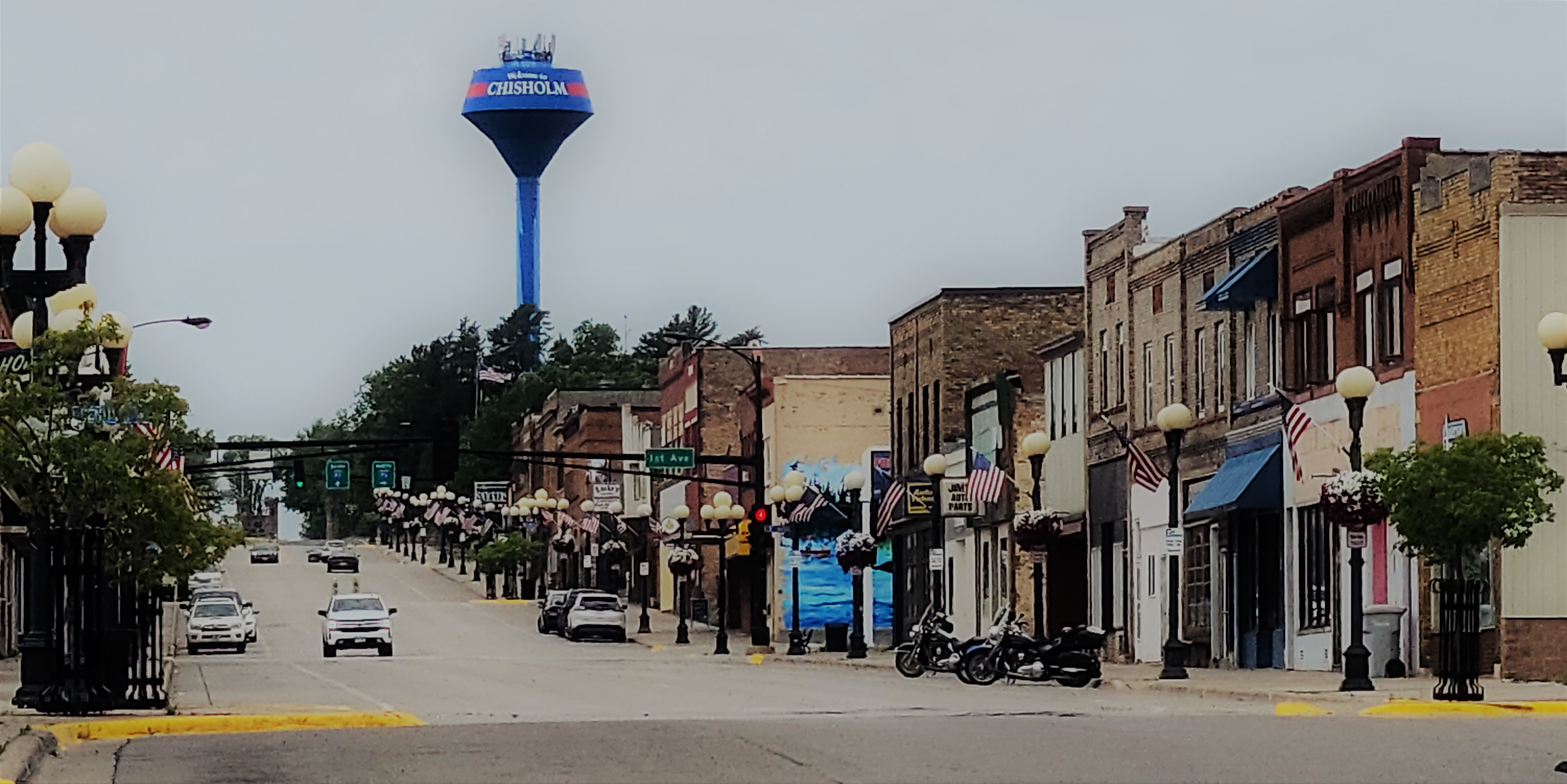
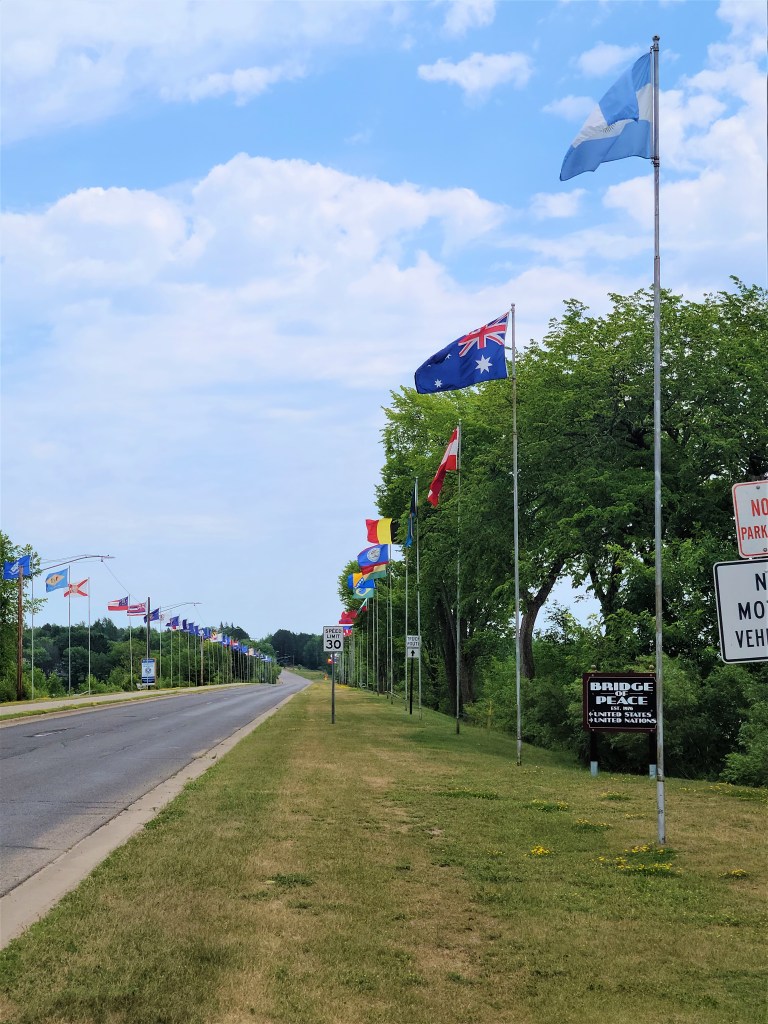
On the way into Chisholm, the trail follows a city park along a lake. At our turnaround point, we could view downtown one way and in the other direction, the “Bridge of Peace” causeway across the lake. The bridge showcases flags from all 50 states as well as flags from around the world, which gives this small town a touch of the cosmopolitan.

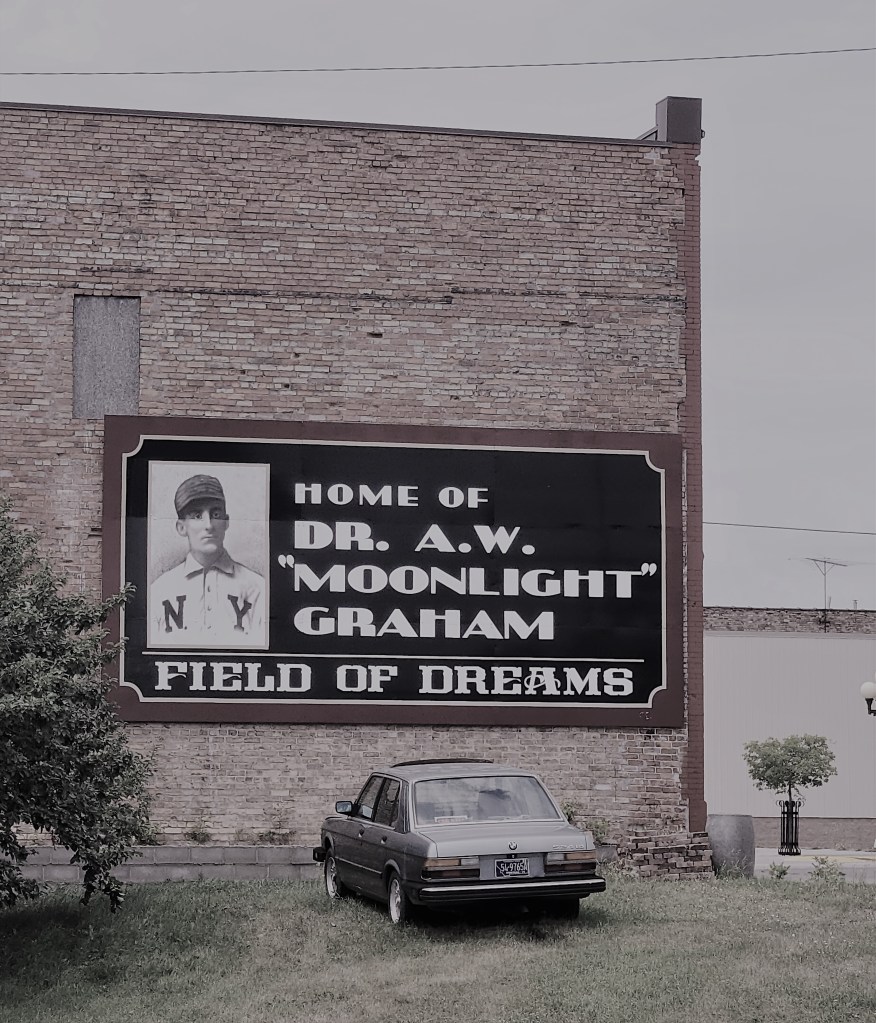
Ever watch “Field of Dreams?” (One of my faves.) Chisholm’s other claim to fame is as the home of the legendary baseball player, Doc “Moonlight” Graham, who is featured in the movie.

So, this section of the trail offers mines, museums, and movie heroes. If you want a good introduction to the Iron Range, this is the right section of trail for you!

Chateau de Mores, Medora


During our recent trip to North Dakota, Russ and I had the chance to tour the Chateau de Mores State Historic Site, the summer home of the French founders of Medora. The 26-room structure was built by Antoine de Vallombrosa, the Marquis de Mores, in 1883, so his wife and family could live there while he pursued building a meat-packing plant, among other ventures.

The Chateau de Mores

The home sits nestled into a hillside overlooking the town, which the Marquis named after his wife. He did not name his home “the chateau.” That title was conferred by the locals, since it was quite grand compared to homes lived in by most people of that time.

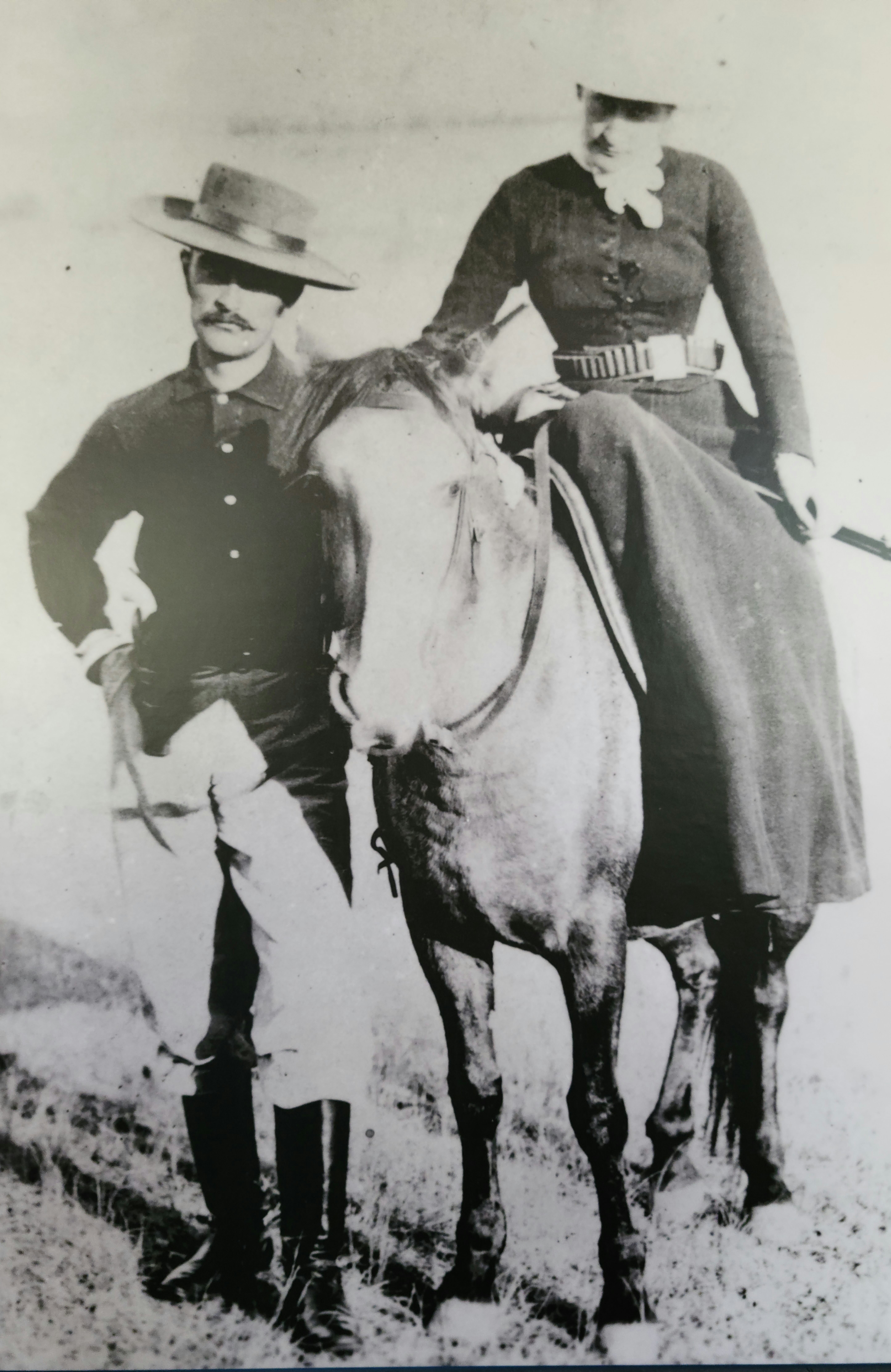
The Marquis and his wife, ready for a hunting expedition. Note that she’s riding sidesaddle. Image courtesy of the State Historical Society of North Dakota.

The couple adapted well to the rough life of North Dakota, compared to their winter home in Cannes, France. The Marquis was industrious and completed many building projects that still stand today in the community. Medora loved hunting and was apparently a crack shot, outperforming her husband and embarking on many hunting trips on her own when he was away for business.

The Hunting Room in the chateau.

Their dreams of a financial windfall were short-lived. The meat plant failed in 1886, plus issues with local hunters, who didn’t like fences the Marquis erected for his cattle, caused conflict, death, and charges against the Marquis. They didn’t abandon the town, however, and continued to support endeavors there and visit periodically.

If you’re ever in Medora, the site is worth a visit to learn more.

Theodore Roosevelt National Park


Russ and I spent three full days in North Dakota over Memorial Day Weekend. I’d passed through the park on my way West several times in the past and decided it was worth more time. I’m so glad we did it. Even though not many touristy things were open yet, we kept busy exploring the natural wonders of the park and area surrounding the town of Medora.

For my next few posts, I’ll be sharing photo stories as inspiration strikes. This first is about “concretions.” These were a highlight of our visit to the North Unit of the park.

These cannonball-shaped formations are made of sand grains from an ancient river that were cemented together by minerals dissolved in groundwater. That’s the official word. Unofficially, I’d say they remind me of Godzilla eggs.

Concretions and sky.
Godzilla egg in a nest.
An eroded clay/sediment deposit found near the concretions.