The Power of Spring

DSC05773

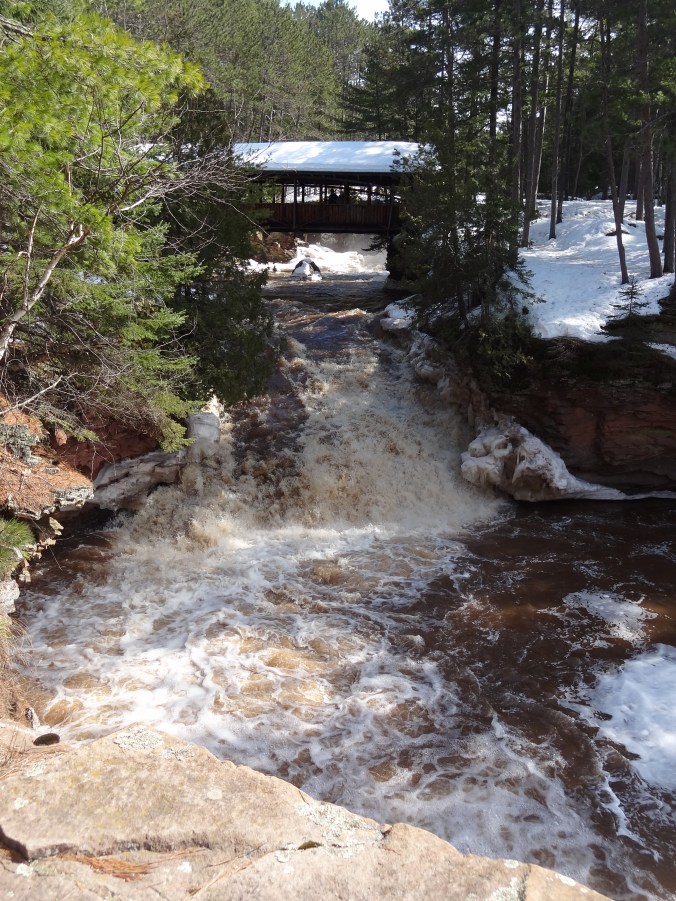
The Horton Covered Bridge over the Amnicon River lower falls in northern Wisconsin.

Lured by free entrance to Wisconsin State Parks during the pandemic and a sunny day, Russ, Buddy and I meandered down to Amnicon State Park to see the surging waters and feel the power of spring.

We weren’t the only ones. Many others had the same idea, and almost all of them brought their dogs, too! However, everyone was careful to keep the six-foot distance rule while hiking and enjoying the view.

The Amnicon River did not disappoint.  Standing so close to such power is a reminder of forces we have no control over, and that nature does just fine without us.

DSC05770

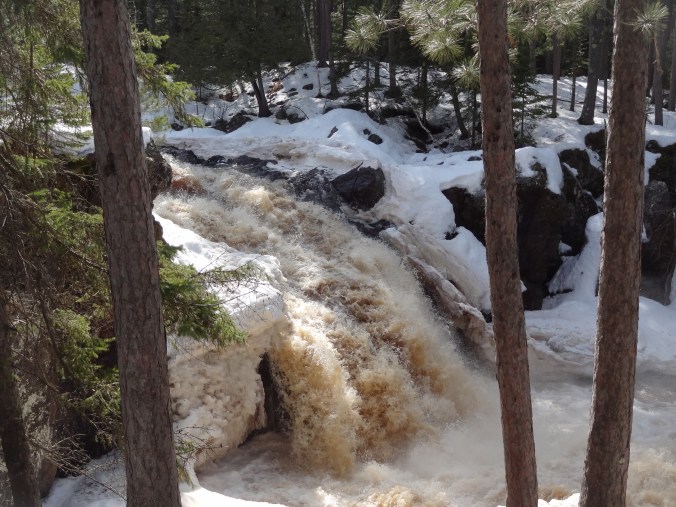
Upper Falls, Amnicon River State Park.

The river is thirty miles long, flowing from headwaters somewhere near Amnicon Lake, through eight counties and into Lake Superior.  Along its journey, the river’s elevation changes 640 feet, about a third of which happens in the park.

DSC05768

Huge ice chunks piled along shore of the Amnicon River. Each one is about half the size of a car.

The picturesque Horton Covered Bridge has graced many a calendar page and no doubt hosted many a wedding ceremony.

Happy spring, everyone, despite everything.

DSC05767

Biosphere 2, Revisited

20200222_133621I am here to report we finally made it inside Biosphere 2, the world-renowned, self-enclosed science station run by the University of Arizona near Tucson. You may recall that last year, my son and I saw the station, but only from the outside because we didn’t have time to wait for a tour. (We had to catch a plane home.)

On our recent trip, we allowed ourselves plenty of time and were able to buy tickets for a general tour. The day was rainy, so many others had the same idea, and the place was packed with other science-nerd people who wanted tours.

20200222_122345

Touring the rainforest.

We arrived too late for a tour of the “ocean,” however, which saddened my Sea Grant-y heart. By 10 a.m., only one ocean ticket remained, and there were three of us. I was tempted to mutiny and claim the last ticket, but I don’t think Russ and my son would have enjoyed that move on my part.

Several different biomes are featured in the station. Our tour first led us to the rainforest. When my son and I saw the rainforest building last year, plants were plastered against the windows, even several stories up – almost bursting the glass. Scientists must have been getting worried because they started a drought study on the rainforest. The plants now are much less dense, and a little sad and brown, but I suppose they had to do something to contain them.

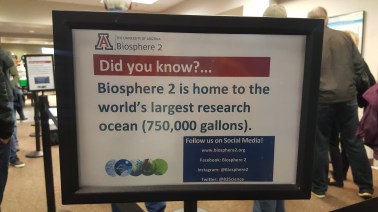
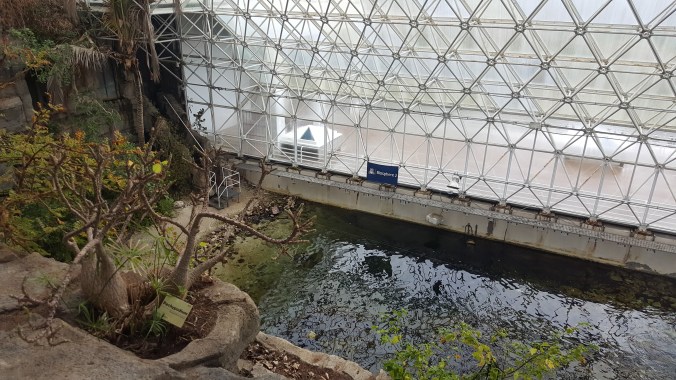
20200222_111209Although we weren’t able to get a tour of the ocean “beach,” we did see it from above. As the sign says, it’s one of the largest research oceans, although it’s in bad shape. Acidification has killed the coral in it, and last time we visited, algae were creating problems.


20200222_122925

The ocean.

I love nature, but the coolest part of the tour for me was seeing one of the building’s “lungs.” The station was built to see if it could be possible to construct a life-sustaining enclosed environment on Mars, or some other such planet. The station’s two lungs performed the function of equalizing air pressure between the inside and outside of the station. They worked so well that only one of the lungs was needed, not both.

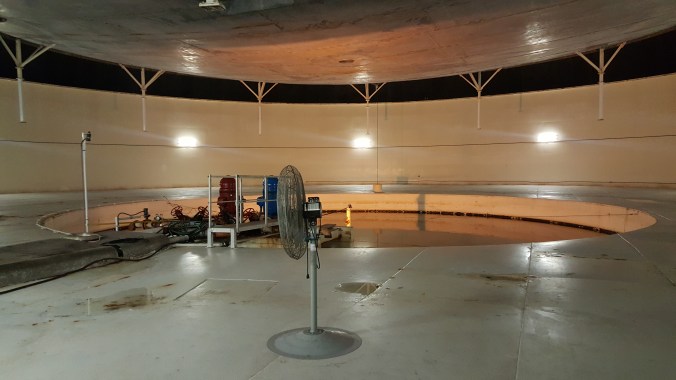
20200222_124653We ducked through some small openings and walked down long cement corridors to get to the center of the South Lung. A water reservoir stands in the middle of the lung, covered by a hugely heavy metal plate that’s attached to a rubber membrane from the ceiling, which our tour guide said is made from the same rubber as Zodiac boats. The plate falls or rises in response to pressure changes. Legs on the bottom of the plate keep it from crashing into the floor as pressure drops. The plate is reminiscent of a flying saucer. The lung looks like a great setting for a creepy fiction story. Hmmmmm.

The peek inside Biosphere 2 was fascinating and I recommend it.

20200222_124931

The lung and the reservoir.

A Touch of Wilderness Near the City: The Superior Municipal Forest

DSC05751Crop

Mike Anderson, Natalie Chin and Friends member Ruben enjoy a hike through the Superior Municipal Forest.

As we walked across the frozen bay, a dark shape appeared. Nearing, we could see a large chunk of deer hide lying wrinkled in the snow like a rich lady’s carelessly discarded fur coat.

Were we deep in the wilderness? No. We were just a 15-minute drive outside of Superior, Wisconsin.

My Sea Grant coworker, Natalie Chin, Russ, and I were treated to a tour of the Superior Municipal Forest last week, courtesy of the Friends of the Lake Superior Reserve group and naturalist Mike Anderson.

This green gem offers 4,400 acres of the best remaining example of a boreal forest in Wisconsin and it’s the third largest municipal forest in the country.

Although I’d driven through the forest several times, I’d never had time to actually walk out into it. So, I jumped at the opportunity for this outing, and invited Natalie, who is new to the area.

DSC05738Vignette

Coyote tracks on Kimball’s Bay.

We met in a parking lot for a motorized winter trail. With snowshoes and highwater boots on, we hiked with several other Friends members down the trail to a frozen bay, which Mike told us was Kimball’s Bay. All was quiet except for the crunching of snow under our boot. We found several old red pines on the shore that had fallen recently, their trunks snapped due to high water levels in the St. Louis River, which caused the shore to erode. The trees leaned and leaned until they could lean no further, and snapped from the extreme physical forces.

Along the way, Mike described the area’s history. Although the ends of many of the peninsulas that poke into the bay are developed with homes, the municipal forest is preserved from development. Anderson was active in efforts to protect the area. Only cross-county ski trails, hiking trails and a campsite point to human use of the forest.

DSC05747

Deer hide in snow.

We trekked across to the other shoreline, passing an ice angler and coyote tracks. Two deer bounded across the ice ahead of us. We clambered up and over another point onto Cedar Bay, which is a narrower inlet. A short walk led us to the dark shape of the slain deer in the snow.

Soon, it was time to return to our cars and the demands of urban life. Reluctantly, we headed back, savoring views of the slanting setting sun and a rising waxing moon.

The Friends of the Lake Superior Reserve hopes to organize more tours come spring. The group acts as ambassadors and supporters for the Lake Superior National Estuarine Research Reserve – the same folks in the building where our Sea Grant Lake Superior Field Office is located. They are a nonprofit group of volunteers who love the St. Louis River Estuary and work to highlight its importance to the community.  They even help with the reserve’s science projects sometimes. Find out more about what they do here. If all this sounds interesting to you, consider joining their group. It might give you a whole new perspective.

Besides being a great guide, Anderson is an accomplished nature and event photographer. You can view some of his municipal forest and St. Louis River images here:

Deep fall paddle https://singingcanoe.smugmug.com/Nature/Deep-Fall-Paddle-in-the-Forest/

St. Louis River https://singingcanoe.smugmug.com/Nature/Deep-Fall-Paddle-in-the-Forest/

DSC05748

Romero Pools Hike, Strenuous but Worth it

20200223_110657B

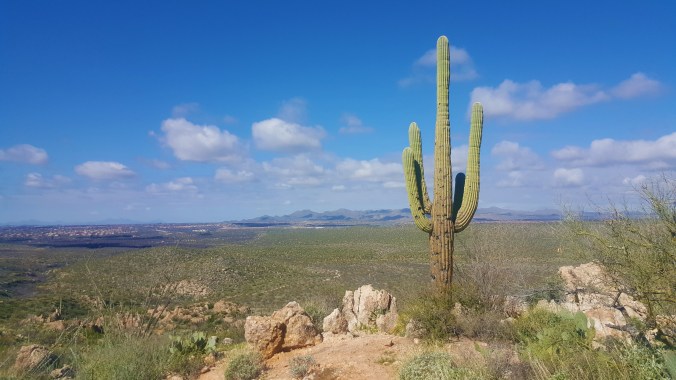
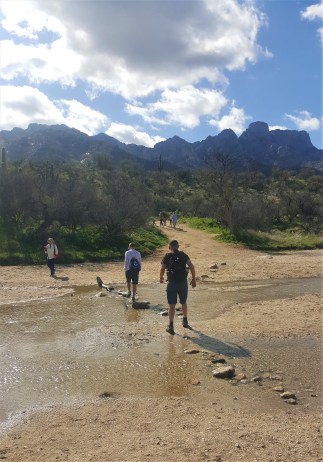
View from the trail to Romero Pools in Arizona.

Hikers can access several trails at the trailhead that leads to Romero Canyon in Catalina State Park near Tucson. While researching the 5.6-mile trail to Romero Pools, which is on the way to Romero Pass, I got confused by all the descriptions and thought the trail was described as “moderate.” Russ and I found out the hard way the hike is not moderate!

20200223_103337

Crossing Sutherland Wash at the beginning of the trail.

The first part of the hike is easy – it crosses the Sutherland Wash, an arroyo that’s filled with water seasonally. After a climb up the banks, the trail is flat and wide — used by humans, horses, and dogs.

Once the trail starts to ascend the saguaro-studded hills, however, it turns more difficult. (No dogs or horses allowed on this section.) I missed the part of the description that said, “The next 1.7 miles is a steep and rocky climb to Romero Pools. Poor trail conditions might be encountered as this is an unmaintained wilderness trail.”

We chose the trail on the advice of my 20-year-old son. Needless to say, a moderate hiking experience for a college student is not moderate for us oldsters, even if we are in shape.

But enough complaining! The views were magnificent. As the trail climbs 900 feet, we were able to look down steep ravines and over distant towns. We hiked in February and wildflowers were beginning to bloom. Temperatures were almost a bit chilly, even when we were in sunlight.

20200223_123243

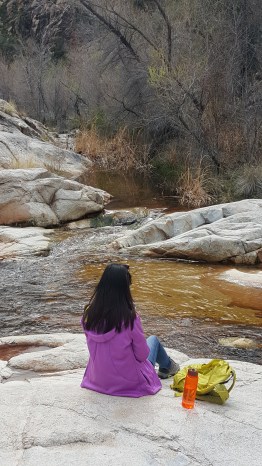
A hiker enjoys one of the Romero Pools.

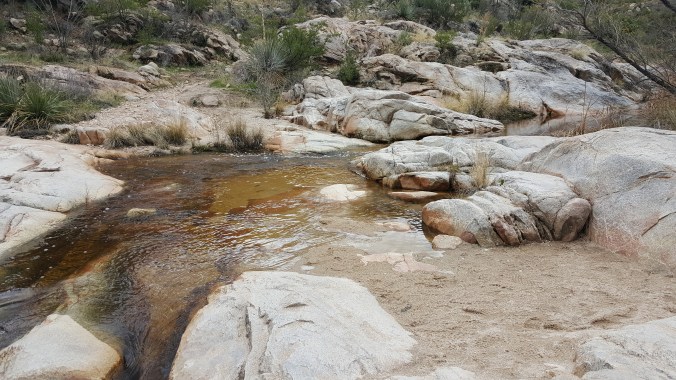
After about two hours, we reached the pools. (If you keep going on the trail, you’ll reach Romero Pass.) The pools were worth the climb! Following my son, we left the crowds at the pools near the trail and clambered around on slickrock, finding hidden watercourses. We rested and had a snack before heading back to the trailhead.

Going downhill was less strenuous, and quicker than the hike up, but my knees did not appreciate the additional stress. You don’t want to hear my sob story about past knee damage, so I won’t bore you. I was hobbling by the end of the hike, but recovered quickly on the car ride back to town and after some rest. With hobbling time included, it took us about 3 hrs and 45 minutes to complete the hike.

Don’t let my complaining put you off, just know that if you’re in your 50s or 60s, this scenic hike will give you a run for your money and that it’s helpful to have healthy knees. I’m glad we did it, but don’t foresee putting my knees through that again.

20200223_125108

The Best Place to Watch the Sunset in Tucson

20200224_182106

I meandered to Tucson, Arizona, last month to visit my son who is in college there. We wanted to watch the sunset one evening, and he took me to Windy Vista Point on Mount Lemmon, about an hour outside of the city.

We drove up the mountain, parked our car in the lot, and walked out to the point just in time for the main event.


20200224_181854

Once the sun went down, the cold settled in. We were glad we wore our warm jackets despite being in Arizona. A group of people who sounded like they could be from Ireland perched on a rock near us, taking selfies.

20200224_182356

What a great way to end the day!

20200224_182247

Snowshoeing Up North

20200120_134001Russ and I visited a northern Minnesota lake last weekend. Spent part of an afternoon snowshoeing on a frozen lake. The morning’s hoarfrost floated down from the trees, looking like snow magically falling from a clear blue sky.

Oh yeah, that’s the way to do winter!

Wowed by a Pow Wow

DSC05701I meandered just a bit south to Carlton, Minn., to attend an Ojibwe pow wow for work. More like I white-knuckled it on the drive due to a snowstorm.

I made it to the venue and ended up glad I endured the stressful drive. Why? Because pow wows are fascinating and fun! If you ever have the chance to attend one, you should.

I’ve been to a handful in various locations across the U.S. Every time, I come away impressed by their friendly vibe and the dose of a different culture.

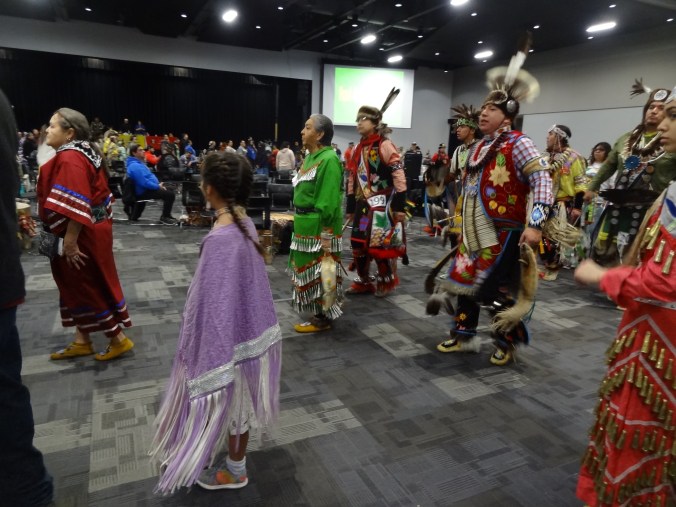
It’s also refreshing to be in the minority for once. Being outnumbered by Native Americans for a few hours administers a dose of empathy for what they must feel most of the time in larger society. And the regalia the dancers wear is so impressive. I could tell they spent a lot of time and effort to make and choose their dress.

I attended the pow wow as part of a teacher workshop I’m doing a story about for work. The workshop offered educators from Wisconsin and Minnesota the opportunity to learn more about Ojibwe culture and their relationship to water to bring into their classroom lessons. Attending the pow wow was part of the experience for the educators.

Before the pow wow, we were given an etiquette sheet so we could avoid making clueless-white-person faux pas.

20200118_134851 (2)I thought I’d share a few of the more interesting points with you. The first is that a pow wow dancer’s clothing is called “regalia,” not a costume. The info sheet says, “Costumes are worn to present yourself as something you are not.”

The sheet does not say what regalia is, but one could assume from the definition of costume that regalia is clothing that reflects a dancer’s true identity. Think of a queen. Her ceremonial clothing wouldn’t be called a costume (unless someone who was not a queen wore it.) It reflects her regal status.

The dictionary offers three definitions of regalia. One is, “the emblems, symbols, or paraphernalia indicative of royalty.” The other is, “decorations or insignia indicative of an office or membership.” The last is, “special dress (especially finery).”

I suspect the last two definitions are the most appropriate when thinking of pow wow clothing – the dancer’s clothes reflect their membership in the tribe(s), and they are clothes not worn every day.  But I also like the idea that their clothing shows their true identity, and that identity is royal.

Another interesting guideline is not to touch a dancer’s regalia. It’s considered rude. I can see how having someone else’s hands all over something so personal could be an invasion of personal space and privacy.

The last is not to pick up an eagle feather that has fallen off someone’s regalia, or take photos of it being retrieved. The etiquette sheet states: “If you see a feather or regalia on the ground, do not touch it but do inform one of the dancers. They will take care of it properly.”

Eagle feathers are sacred to Native Americans, as is their regalia, so it makes sense they don’t want just anyone’s grubby hands on them. I also assume some ceremonies must be associated with retrieving a fallen feather.

End of lesson. Now you know few rules. Go out and find yourself a pow wow! It will be good for you.
Mountie Art Memories

Russ and I meandered over to the Tweed Museum of Art on the University of Minnesota Duluth Campus last week. Russ had never been there, so we figured it was time for him to get some “cultcha,” even if it is only a Duluthy version of culture.

The museum currently features an exhibit of Russian art (Art in Conflict), which was interesting. You don’t often see Lenin in artwork displayed in America.

D81.x333

Image courtesy of the Tweed Museum of Art.

My favorite collection in the Tweed, however, is the Canadian Mountie illustrations. My father used to get calendars from a local paper company that showed red-suited Mounties in all sorts of exciting and helpful situations, fueling my childhood imagination. There were Mounties petting sled dogs, Mounties building a snowman with native children, Mounties tracking bad guys – you get the drift.

Something I didn’t realize back then was that more than one artist drew the illustrations. The most prolific was Arnold Friberg, noted for his religious and patriotic art. But fifteen others tried their hand at it, as well.

The Mountie art came about during the Depression when the Minnesota Paper Company chose it as their advertising theme because it evoked a strong and dependable product. It was an instant success and continues until this day, although the company’s name has changed several times over the years.

D81.x348

Image courtesy of the Tweed Museum of Art.

While I suspect that real Mounties have committed their fair share of atrocities like any arm of law enforcement, I don’t want to know about it. As a child, I was totally sold on their Dudley Do-Right goodness, and, as I looked at the paintings in the Tweed, I realized I want to keep my childlike innocence where Mountie art is concerned.

If you’re ever in Duluth and want some culture, try the Tweed! Admission is free, although donations are appreciated, and there’s a box for that by the door.

Unicorns in New York City!

20191103_123900

The unicorn in captivity tapestry.

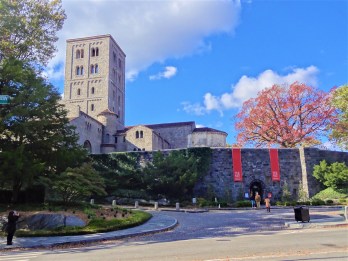
On our recent trip to NYC, Russ and I discovered there are unicorns in the city. Specifically, unicorns adorn tapestries in The Cloisters, a branch of The Metropolitan Museum of Art devoted to medieval European art.

DSC05648

The Met Cloisters

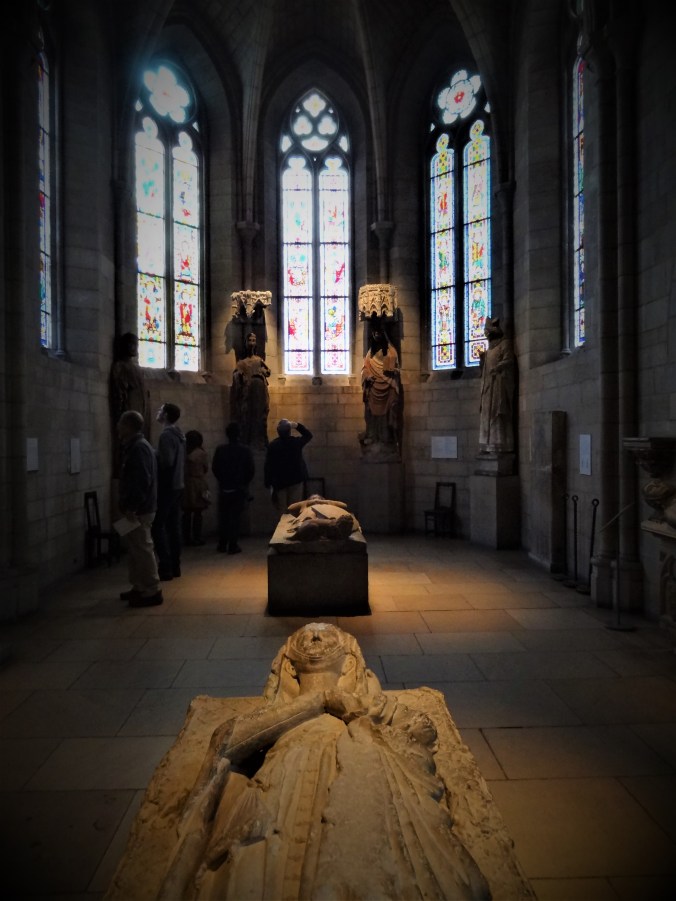
Atop its hill overlooking the Hudson River, The Cloisters takes visitors back to another era. Many of the buildings and chapels were transported over from Europe. They house sculptures, paintings, sarcophagi, stained glass and other master works from the 12th century to the 15th century. The halls are separated by courtyard gardens and outdoor gardens that will make you feel like you’re on the set of Romeo and Juliet or something.

One of our favorite rooms held the unicorn tapestries. These seven wall hangings were thought to be woven in the 1500s in Brussels. They depict the hunt and capture of a unicorn. The unicorn does not fare well with its encounter with humans. It’s held captive and killed. Or is it killed? Artistic scholars debate this, but what’s not debatable in the renderings is that people attack it. But I’m not going to show those tapestries here. They are just too mean! I will show a different one, instead.

20191103_124142

The unicorn purifies water and is discovered by the hunters.

Enjoy this mini tour of The Cloisters.

DSC05666

DSC05669

DSC05671

Oh, and this is a unicorn thing that does something. I don’t know what, but it looks cool.