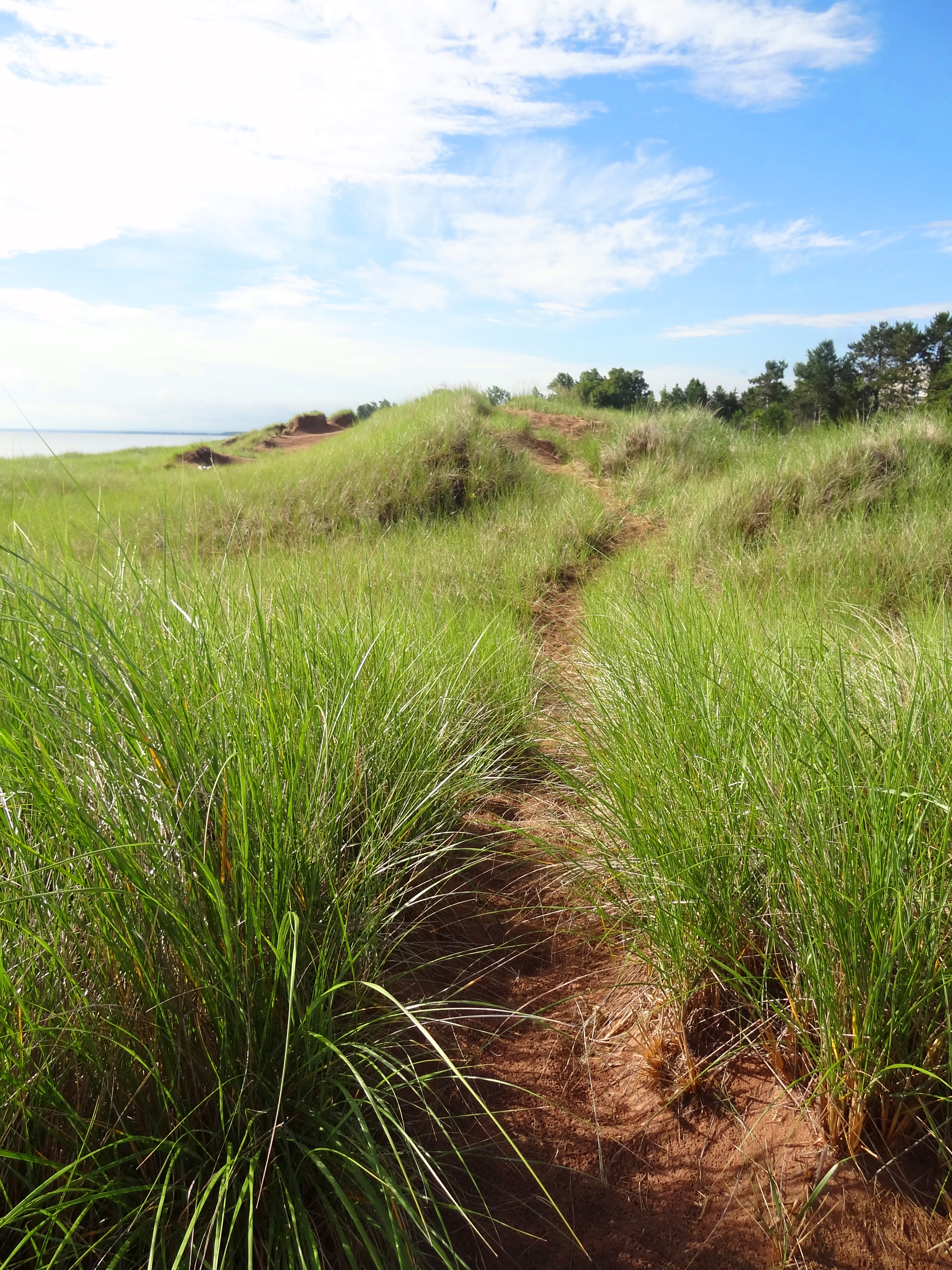
This is Park Point Beach on Lake Superior in Duluth. Hope your summer is filled with scenes like this!
This is Park Point Beach on Lake Superior in Duluth. Hope your summer is filled with scenes like this!

Loons dancing in the morning mist on Tuscarora Lake in the Boundary Waters Canoe Area Wilderness. (Photo taken by me in the mid-1980s.)
Strange things happen sometimes in the Northwoods – this land where humans and animals live so near each other. When I was young (8? 9?) my family went fishing on a lake north of Duluth. While casting our lines, we noticed a loon swimming nearby, calling in an unusual manner. As outdoorsy types, we had heard many loons before, but this one sounded more plaintive than normal, like it was in distress.
The loon kept circling — swimming near us, which was also odd for this rather stand-offish species. My dad said something like, “I think that loon needs help,” so we canoed toward it. Soon we saw the problem. A homemade fishing pole crafted from a large branch trailed about fifteen feet behind the bird. My dad grabbed the pole, thinking he could just pull the loon toward us and find where the fishing hook was lodged in it.
Ha! He underestimated the power of the loon. Upon feeling the tug of the line, the loon took off and dove underwater. My dad kept his grip on the pole, and the loon proceeded to pull our canoe (and the three or four of us in it) through the water at a good clip.
Now, a Nantucket sleigh ride is what used to happen to whalers after they harpooned a whale. The whale would take off, towing the whaling boat and its occupants through the sea until the whale tired and surfaced. That’s what was happening to us, only our whale was a loon.
Soon the loon tired and my dad was able to pull it close enough to capture in his gloved hands. This in itself was a feat of daring. Adult loons are about the size of a goose, and their bills are long and sharp.
After my dad wrestled it onto his lap, we discovered the hook embedded in the bird’s neck. Imagine — all that force from our lake sleigh ride concentrated on such a fragile body part. But that hadn’t stopped the loon.
My brother handed my dad the pliers and he was able to remove the hook. We released the loon back into its watery home. As the loon departed, its call was different. Happier.
Was it saying thank you? I’d like to think so.
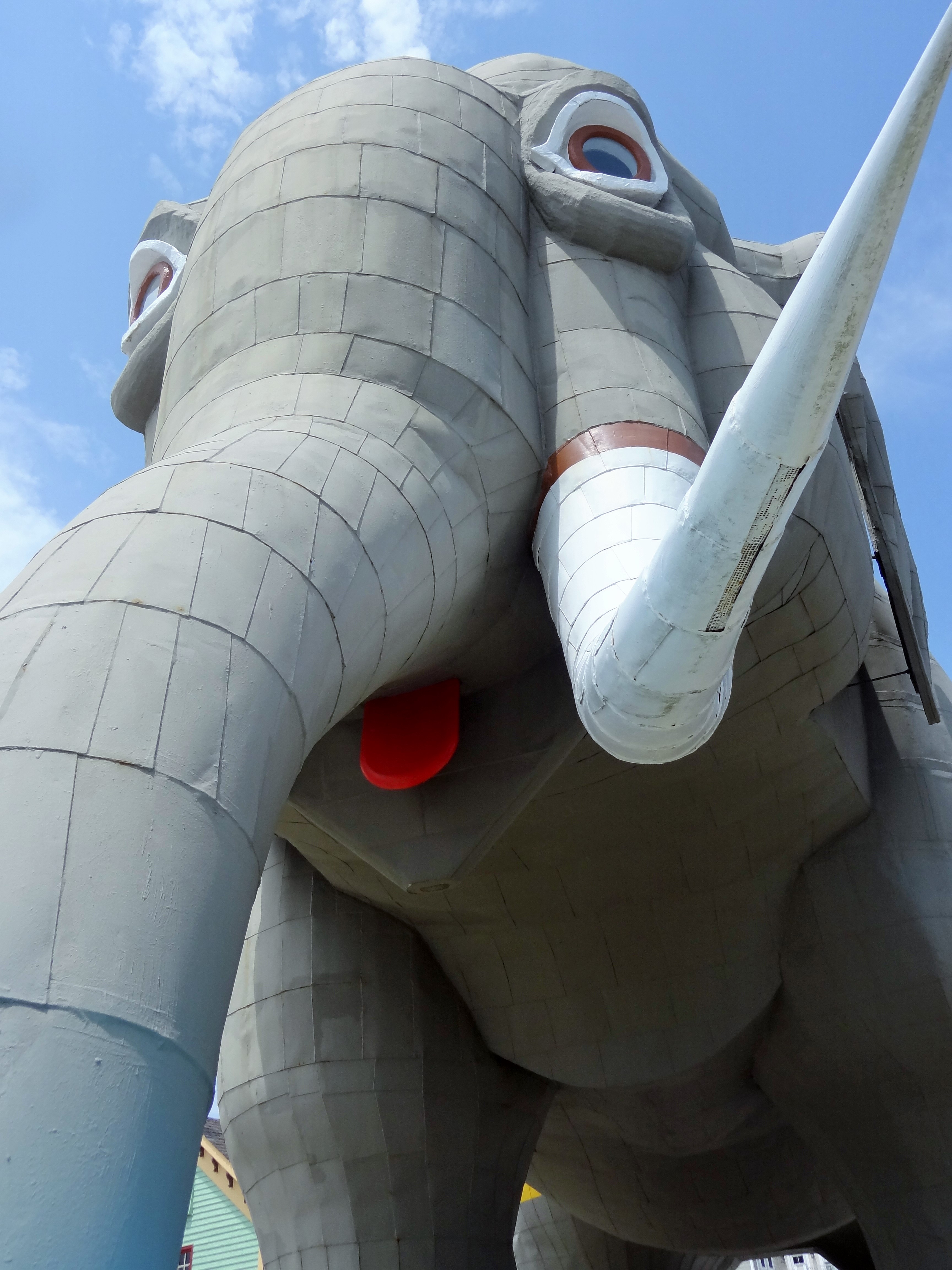
Did you know that the United States has a national historic elephant landmark? It’s in New Jersey, and her name is Lucy.
My impression of New Jersey turned inside out last week when I traveled there. Before that, my main experience with the state was gained through several extended stays in the Newark Airport (one overnight on a hard plastic chair) and from brief, accidental, distasteful viewings of the “Jersey Shore” TV show.
What I learned:
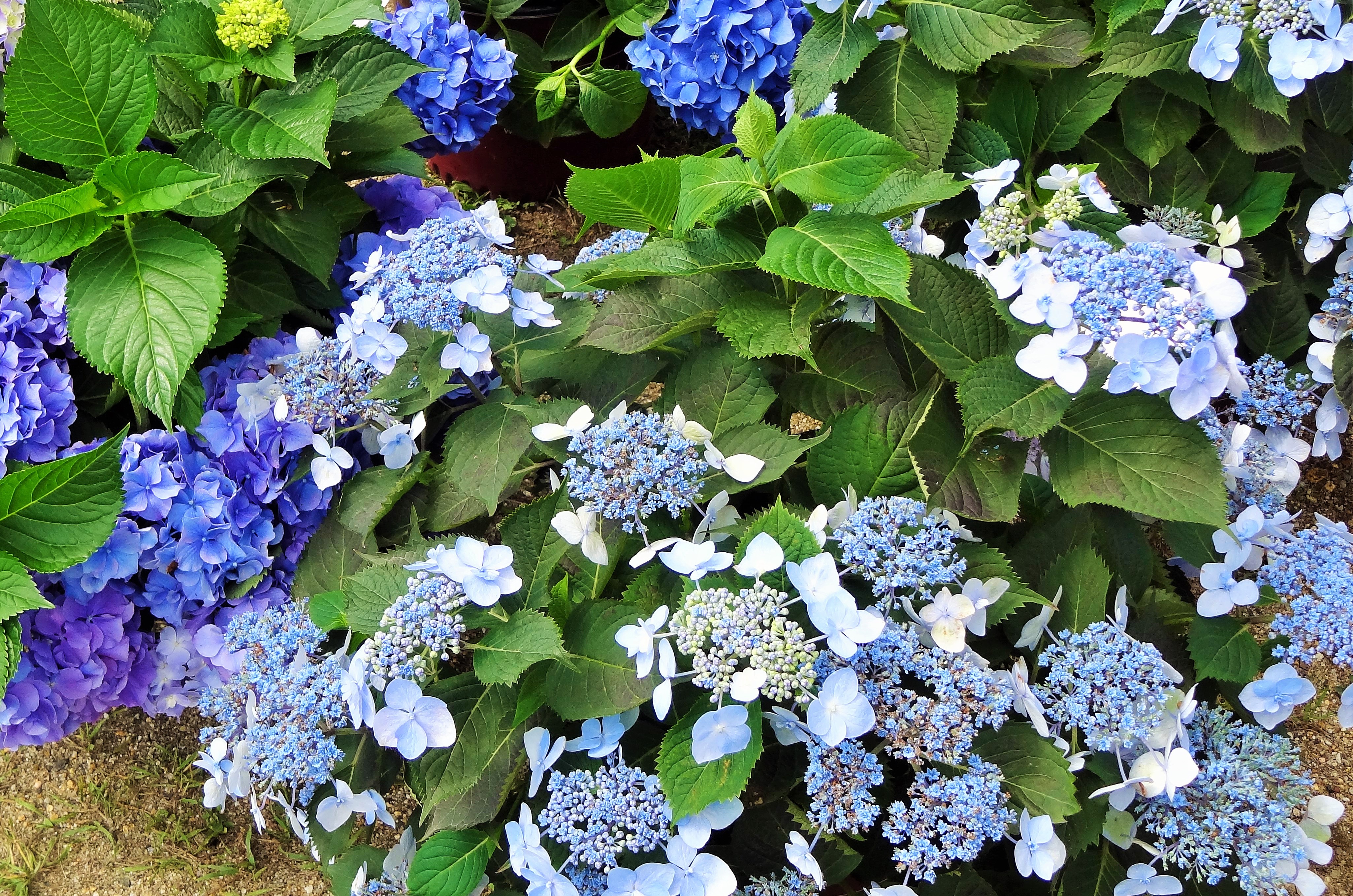
Hydrangeas are my new favorite flower. Two varieties are pictured here.
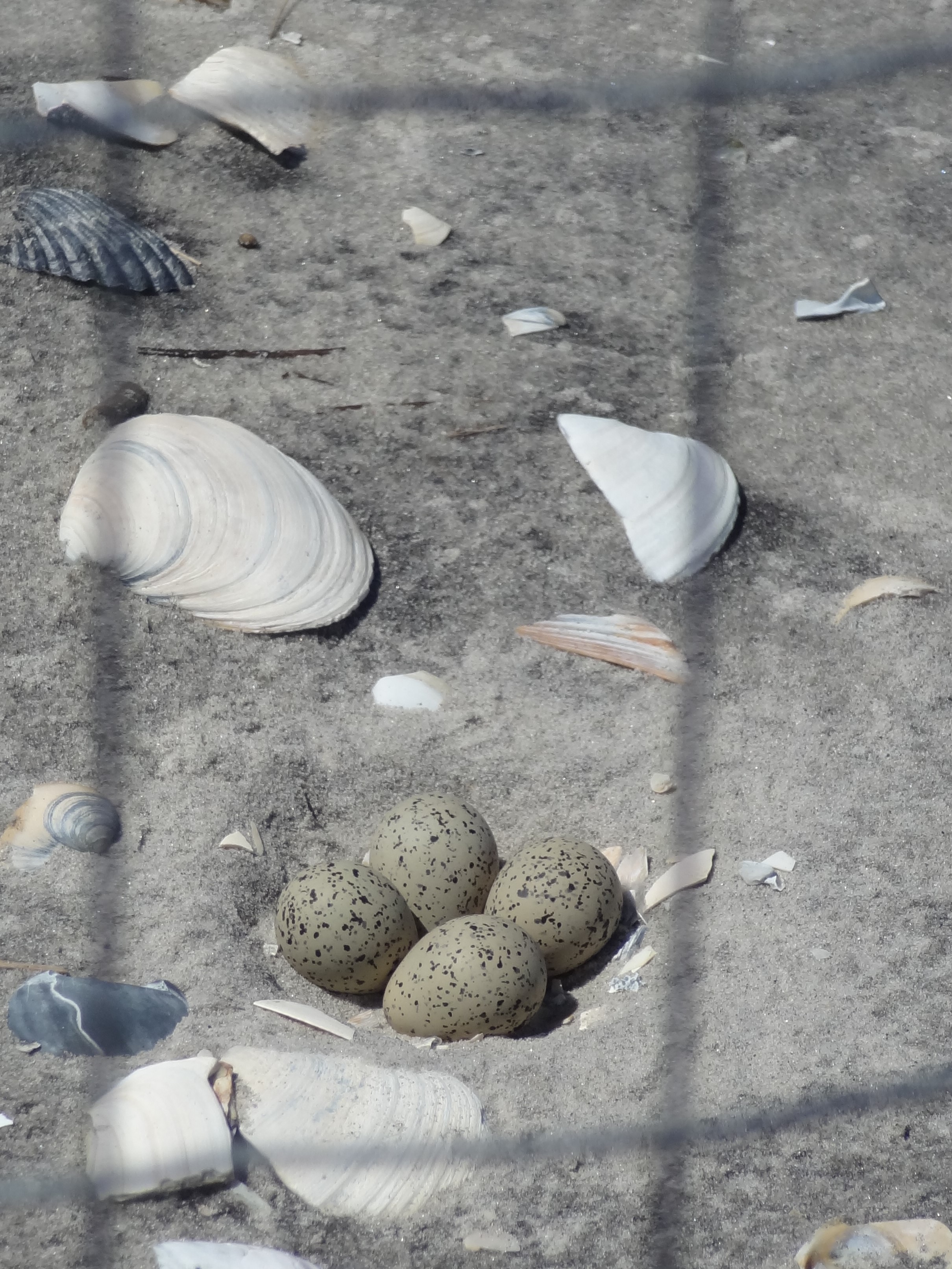
A clutch of four piping plover eggs seen through the fence that protects the nest.
The highlight of the trip for a piping plover novelist like myself, was seeing plover nests, chicks, and adults. While my home of northern Minnesota hardly has any, the beaches of New Jersey are home to about 100 pairs of breeding plovers. These endangered shorebirds (reminiscent in looks to a killdeer, but much cuter) are monitored and protected by the New Jersey Division of Fish and Wildlife and conservation groups like Conserve Wildlife Foundation of New Jersey.
I also saw frolicking dolphins, horseshoe crabs, diamondback terrapin turtles returning to the sea from laying eggs, and bunches of other birds unusual to me.
If you ever get a chance to visit the Jersey Shore, don’t be scared off by its television-show namesake!

Why did the terrapin cross the road? To lay its eggs, of course! Here’s one on her way back to sea.
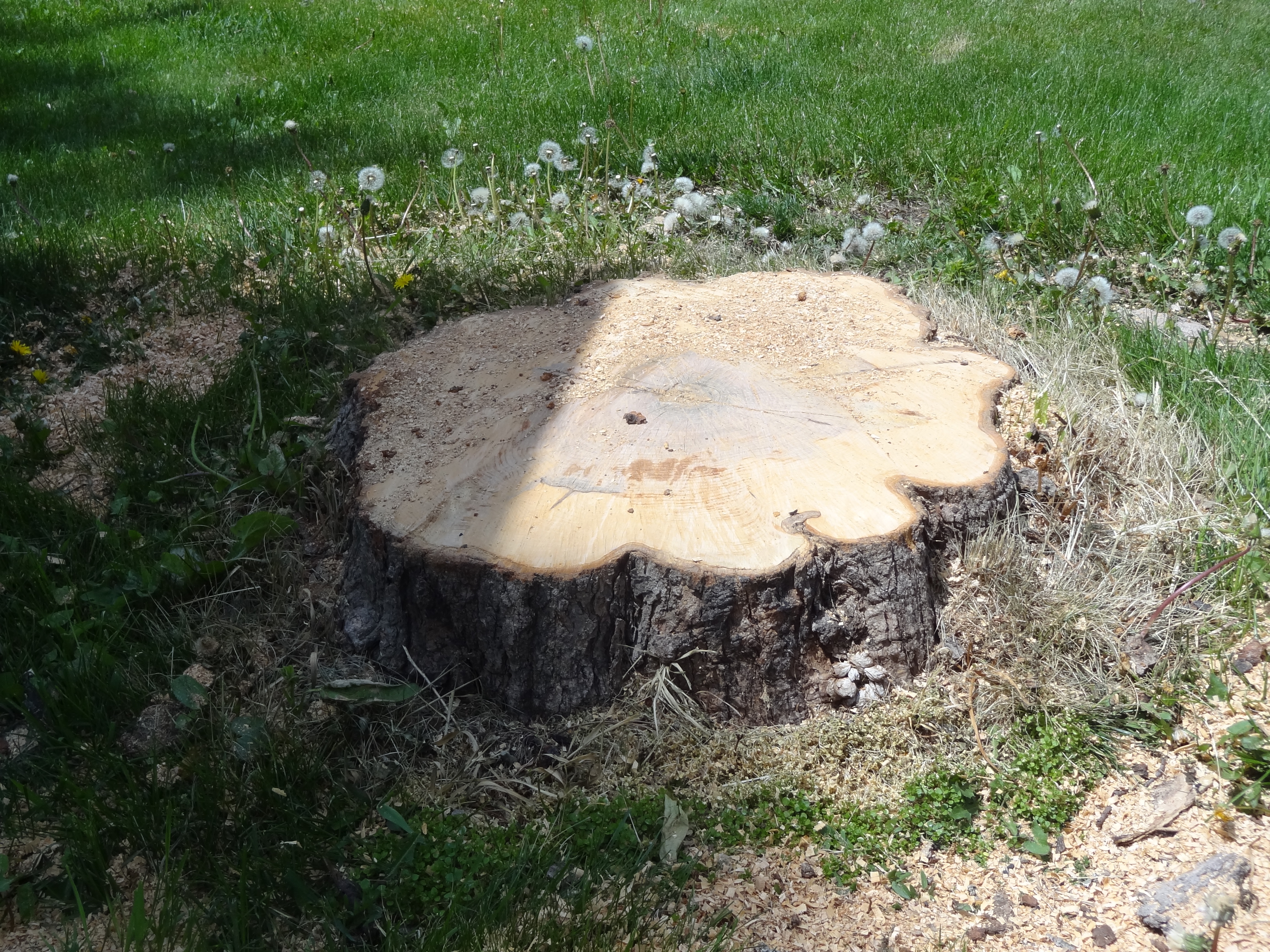
My favorite tree is now a stump.
It took a long time for me to come to terms with cutting down a maple tree in my yard that was dying (see “Tribute to a Tree” from 2013), but I did it. The pileated woodpeckers had continued their pounding until the branches sported several foot-high holes (which, by the way, were not used for nesting). This spring, its leaves were sparse.
My tree was suffering and it was time to go before a strong wind or ice storm broke its limbs and endangered my shed, garage, or house. After procuring several price quotes, I chose a local company, which came sooner than I expected. I arrived home one day for lunch to see chunks of it carted away on a flatbed truck, the core of it as brown and rotten as a criminal’s heart.
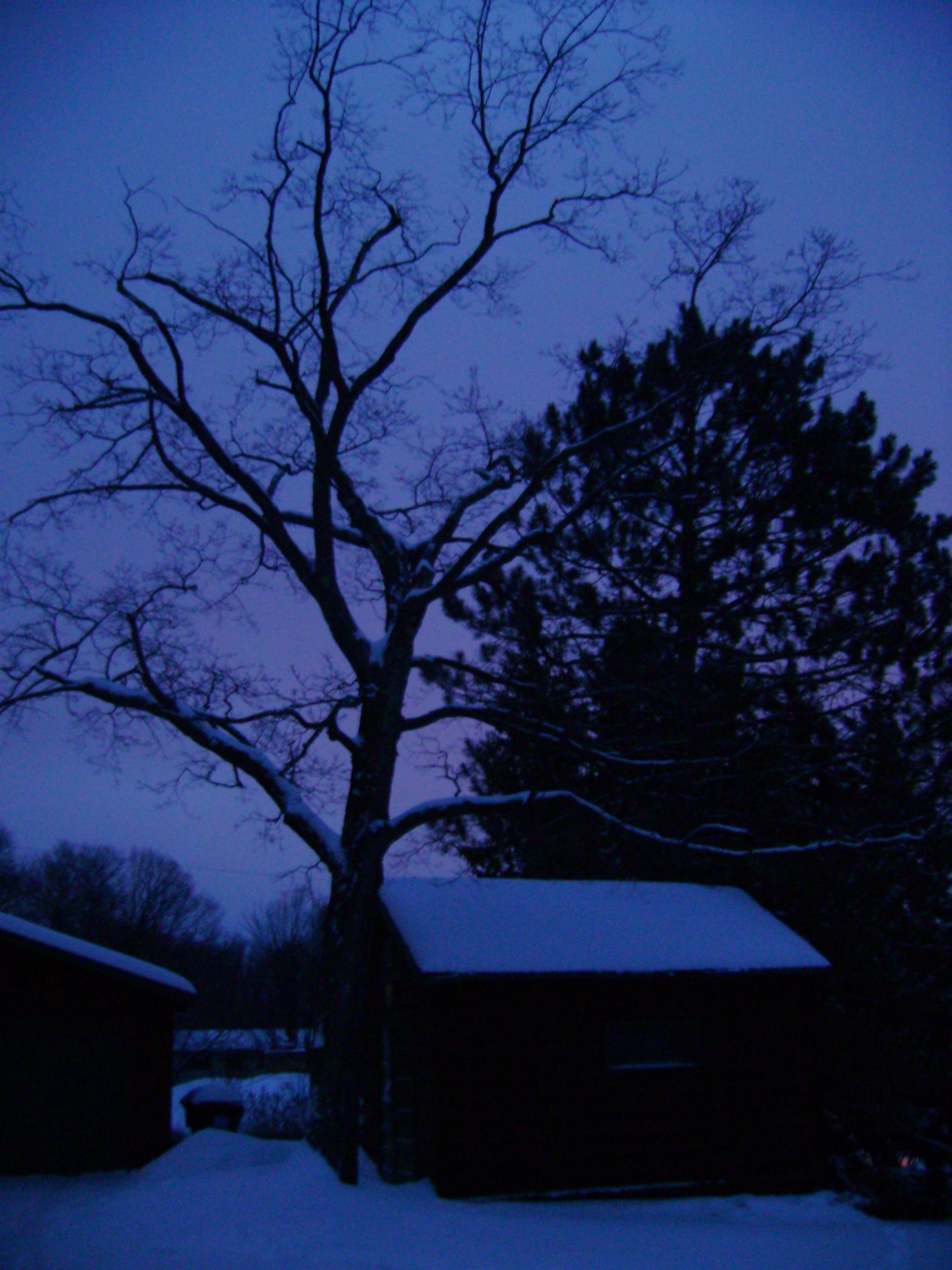
What my tree used to look like.
I thought about making the trunk into some sort of statue or using the wood for a memento, but just the disposal of the tree was so expensive, I couldn’t think of doing anything so fancy. Plus the wood was rotten, so whatever was made from it probably wouldn’t have lasted. I counted the rings on the stump before it was ground up. The tree was at least 90 years old. I said a few words over the stump in remembrance.
Good-bye, favorite tree. I’m going to plant two young trees in the yard in your honor.

Only three wolves are thought to remain on Isle Royale National Park. These are them. The deformed pup is easy to spot on the left. Photo by Michigan Technological University.
Every winter for the past 57 years, researchers have visited Isle Royale National Park – a remote island in Lake Superior – to study its wolf and moose populations. From a high of 50 wolves in 1980, the pack has dwindled from disease, inbreeding and accidents to a low of nine last year. This dwindling has caused much discussion among the scientists, park service, wildlife-lovers, and news media about what to do – should the wolves be saved or allowed to die out? In the meantime, the moose population (upon which the wolves prey) has increased to over a thousand animals, although it’s nowhere near its highest point.
I worked on Isle Royale as a waitress at the Rock Harbor Lodge in the mid-1980s when wolf numbers plummeted, and was privy to the arguments and discussions about the wolves back then. I paid attention because I am fascinated by wolves and I was minoring in biology in college at the time. The situation literally sparked a novel idea in me: what if the wolves knew they were in trouble and decided to do something to help themselves? To heck with management by the scientists. To heck with the park service. What would the wolves do?
I let the question ping around in my brain for a few years and I took some novel writing classes. Then, for 17 years as the wolf population slowly rebounded, I worked on writing the story and finding a publisher. I combined the real issue of the wolf population decline with Native American myths and a little steamy romance between the human and wolf characters.
My first novel, Eye of the Wolf, was published in 2011, just in time for the wolf population to take another dip and all the old arguments to return. Suddenly, I became a local wolf expert, giving talks on the issue and my book to local conservation groups and the news media. As the population rose slightly again, the issue died down. But the park service recognized they needed to develop a policy about the wolves. They held open houses to gather public input on what should be done.
I attended one of the open houses and provided my input, which was that the park service should let the wolf story play out on its own without interference. That’s what makes national parks special – they’re places where people don’t have their fingers into everything, messing it all up. I am a wolf-lover, but I feel like the wolves might have something to teach us in this situation, even if they die out. If they die out, then perhaps new wolves could be brought in, but I prefer a hands-off approach to this situation.
After all that effort, the park service announced a plan to develop a plan. (Don’t you just love the bureaucracy of that?!) They intended to convene a panel of experts to discuss the issue and to recommend the best course of long-term action. That hasn’t come to pass yet.
Well, guess what? The Isle Royale researchers just came back from their latest winter trip, and report that the wolves number only three now. They found two adults and a yearling. They are not sure if the adults are the pup’s parents, or even if they are different genders, but they are pretty sure the other is a young wolf.
Unfortunately, this new wolf is not a cause for rejoicing. It has problems – it’s small, with an arched back, pinched waist, and a hunched tail. Researchers don’t expect it to live much longer, and they despair that the chance for a genetic rescue of the wolves (introducing new wolves that can interbreed with the island population) is past. If this pup dies and the other wolves are a mated pair, there’s little chance for breeding with new wolves. With the lack of predation, the moose population has increased to 1,250, which is stressful for the moose (lack of food) and the island’s plants (because the moose eat the heck out of everything).
All this begs the question: what happened to the six wolves that have disappeared since last winter? The researchers know that one died. It had a radio collar on it, which started emitting a mortality signal. Did the five others die, did the researchers just not see them, or did they escape somehow? The researchers will learn more about whether they didn’t see the wolves by examining the DNA in the fresh wolf scat they collected this winter.
There is a good chance the five wolves escaped the island across an ice bridge to the mainland in Minnesota, which is 14 miles away. An ice bridge was in place for 20 days last winter, which would allow plenty of time. However, life is not easy for wolves on the mainland. One wolf did escape across the ice in 2014. Unfortunately she was killed by some #$%&@! person brandishing a BB gun who shot her in just the wrong place.
Then there’s the more literary possibility that the wolves knew they were in trouble and tried to get humans to help them escape. In my novel, a wolf pack tries to escape the island on a tour boat with the help of a boat pilot and his girlfriend. There were five wolves left in this pack. Hmmm. There are five wolves missing on the island now. Coincidence? You decide! (Smile.)
True to my novel, I hope the five missing wolves saved themselves instead of waiting for the park service or the researchers to do something. Let’s hope they genetically rescued themselves by escaping to Minnesota or Canada, and that they are happily romping with their new friends (if they haven’t been torn apart by them!)
The novelist in me also suspects the three remaining wolves are a family, and that the two adults stayed on the island because they knew their pup could not survive the journey across the ice. If their pup dies this summer, maybe the adults will have a chance to save themselves next winter unless it’s too warm for an ice bridge.
In any event, the Isle Royale wolf situation is a quiet long-term drama that’s been playing out for years. What we, as humans, decide to do about it will tell a lot about our relationship with nature and how we think about wolves.
Aaaaaaaroooow!

An ant receiving honeydew from an aphid. Image credit: Wikipedia.
I’ve been in a fifteen-year war against cockleburs and deadly nightshade in my back yard. After my latest experience today, I fear the weeds are winning.
At least once or twice each summer, I take to the terraced land in my back yard to rid it of the worst weeds. The area isn’t mowable, so I’ve just let it grow. It’s held together by rotting railroad ties that I intend to replace with brick walls someday when my ship comes in. My ship is far out to sea yet, so I just do what I can to control the weeds.
I can live with tansy, but because young children live in the neighborhood, I pay particular attention to the nightshade, which grows bright red poisonous berries alluring to small children. And because my dog Buddy has hair that attracts burs with an unnatural magnetism, I hack the heck out of the cockleburs. Being averse to herbicides, I do the work by hand — except for one summer when I was lazy and wanted to see if chemicals were more effective. They weren’t.
Last summer, something halted my rampage against one cocklebur plant. I was just about to cut the five-foot tall stem when I noticed black ants and green aphids all over it. I was transported back to fourth grade when my class watched a black-and-white science movie about how ants farm aphids on certain plants.
Here was an ant-aphid farming operation going on in my back yard! How could I destroy it? Yes, I know that aphids are also considered pests. But the ants milk the aphids and live off their nectar (also called honeydew). How could I obliterate such ingenuity? Such industriousness? I couldn’t. I let the plant stand, intending to chop it down in late fall once the ants went into hibernation or whatever ants do.
But I didn’t chop it down. I forgot about it, until I saw the plant today, standing tall and prickly in my back yard, burs just itching to reach Buddy. Guilt-free now that no ant farms were involved, I chopped it down, plus the remnants of a few neighboring plants that I missed last year. I disposed of them in my yard waste container and went into my house, feeling satisfied at a job well done. I had completed my war on noxious weeds and was ready for another round with the coming summer.
Any feelings of victory were short-lived, however. As I sat down to take off my shoes, something prickly and round was lodged under my butt. You guessed it, the cockleburs had the last say.
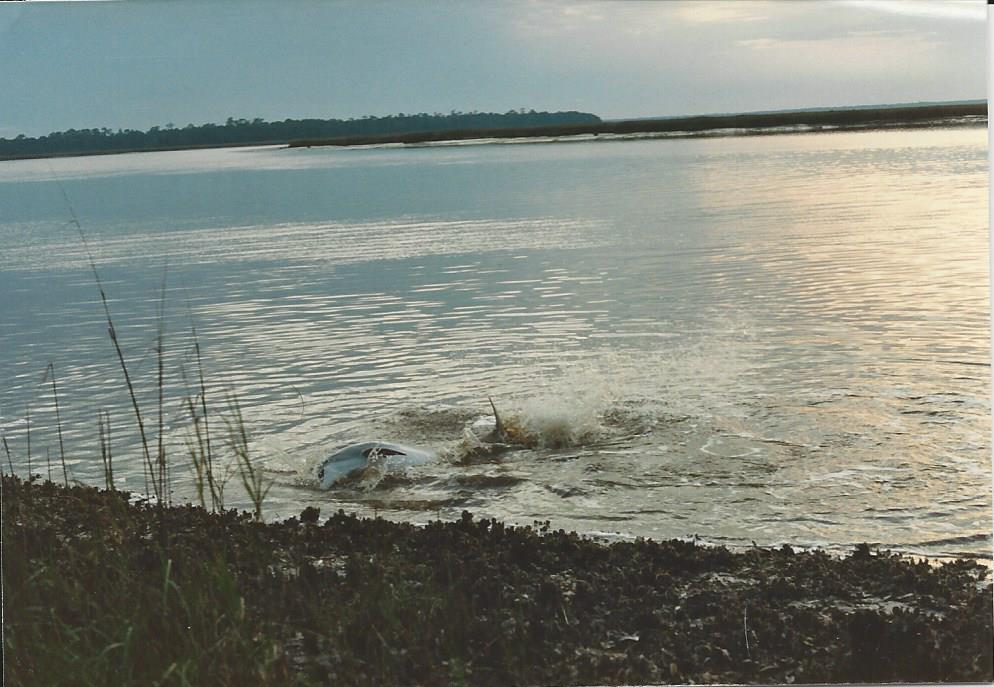
A dolphin beaching itself to catch fish it has pushed ashore. Cumberland Island, Georgia.
I once lived outside for nine months (September – May), traveling North America. The experience was through the Audubon Expedition Institute and I was working toward a graduate degree in environmental education.
While on the trip I learned I was not there for the academics but for the adventure. And there certainly was a lot of adventure. It was 1986-87 and we travelled from New York City up the East Coast to Maine and Nova Scotia, Canada. Then we took the ferry to Newfoundland. We went all the way to the northern tip (you can see Labrador and icebergs from there) and then headed back south, eventually reaching all the way to Key Largo, Fla. From there we headed West, making it to Canyonlands Utah before the yellow school bus that was our home had a fatal break down.
Along the way we tented and cooked our meals over campstoves. We sometimes lived for a week in a fishing village, or among Buddhist monks or uranium miners. We visited with local experts, learning about environmental issues and how the locals thought about the land and sea. We took hikes, canoe trips, and snorkeling excursions; swam with manatees; danced contra dances; joined pow wows and local organic fairs; and were privy to Native American ceremonies.
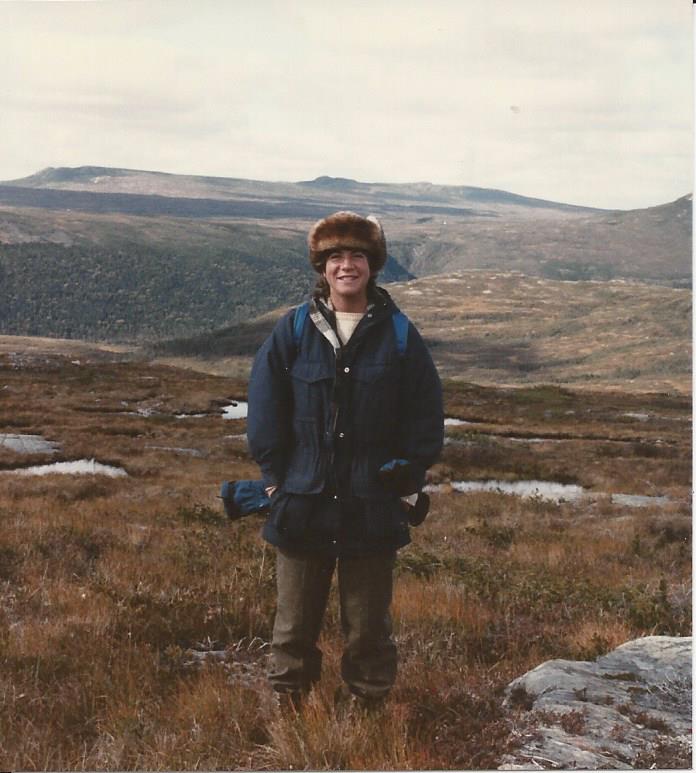
Me on the moors in Newfoundland, looking for caribou, circa 1986.
I got so acclimated to living outdoors that when I came home to my parents for breaks, I slept in the backyard, even when it was twenty below. My body was so used to revving up with heat at night, that I got too hot sleeping indoors. I also remember when we visited a medicine man in Boston (Slow Turtle). Twenty of us crowded into a skyscraper conference room to speak with him. That, combined with being in a heated space, made me feel faint. I had to go outside to cool off for a while.
The experience was like a combination of “Survivor” and one of those bachelor/bachelorette reality TV shows. We began with twenty-four people, but through a process of mostly self-elimination, ended up with twenty.
All this is a long preamble to what I really want to write about, which is an experience I had during the expedition with a dolphin on Cumberland Island National Seashore in Georgia. We spent several days on the island among wild horses and armadillos, hiking from one end to the other, mostly along the beach on the Atlantic side. On the other side of the island, a salt marsh and river separate it from the mainland. One evening, we camped on the mainland side. We had eaten dinner and several of us were hanging out by the water as the sun started to set.
Then the dolphins came. Two of them swam alongside the muddy banks of the river, peeling off into circles. We didn’t realize it until later, but the dolphins were corralling fish with their bodies. When enough were captured in their water circle, they rushed toward the bank. The fish were stranded on the bank, easy pickings for a dolphin who doesn’t mind a little air time itself. . I learned later that this behavior is indeed called strand feeding. Here’s what I wrote in my journal:
We run down to the Brickhill River like lunatics, insatiable for a rare glimpse into the workings of nature. We try not to get too close and scare the dolphin away, but it’s hard. We follow the dolphin as it swims along the shore, the deep mud sucking at our shoes.
The mammal tips on its side and looks at us with a dark gray eye – two, three times. It corrals the fish and rushes the bank, its whole body breaching again. We go mad. Paul jumps up and down, saying he’s seen God. I click photos like I’ve got a roll of thirty-six instead of only four photos left. Our oohs and ahhs echo across the sunset.
The dolphin wriggles its body back into the water comfortably. It swims back upriver and down. Its companion across the way breathes five times in quick succession, and with that signal, they depart.
Despite the shortage of film in my old-fashioned 35mm Olympus, I managed to snap a good picture of the dolphin doing its work. And it was just a few feet away from me – close enough for us to see eye-to-eye. It’s an experience I’ll never forget. It filled us with wonder and awe, and we felt a connection beyond time, beyond words to the place and each other.
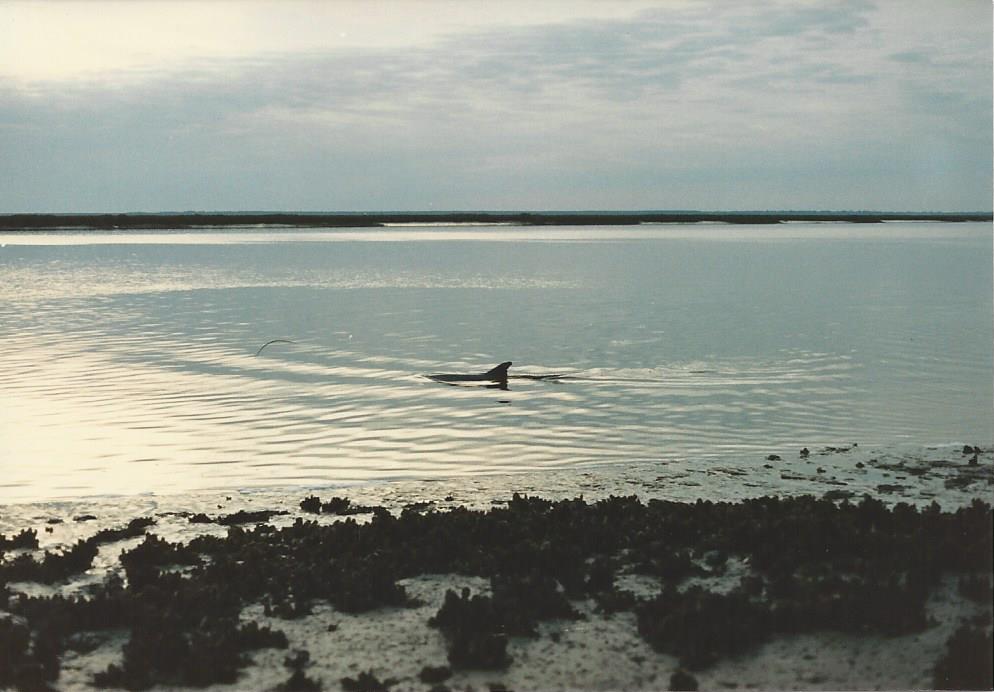
Bye bye dolphin!
When my co-worker and I were debating whether to save the listless gull that appeared outside our office last week, she said something like, “Usually, I like to let nature take its course . . .” and I interjected, “But it’s often not nature that causes things like this, it’s humans.” I was remembering a gull I rescued many years ago that had been hit by a car.
As it turns out, although the gull at our office was put in distress by a natural process, the cause probably was us. As you may recall, when I brought the gull to the wildlife rehabilitation group, they said they thought the cause was a Vitamin B deficiency. (To be exact, a Vitamin B1 or thiamine deficiency.) They weren’t sure what was causing it, but suspected it had something to do with the gulls eating dead fish.
Back at the office, that got us thinking, especially after we learned the Wildwoods group had received three other gulls with the same problem that week, and after learning that two other co-workers had seen other gulls exhibiting the same symptoms: wing droop, loss of the ability to fly, and loss of the ability to “speak.”
Being of a scientific bent, we started researching the problem and came up with a paper published in 2009 about herring gulls and other birds in Europe that were dying of a thiamine deficiency. The researchers named the affliction “thiamine deficiency syndrome.”
In the paper, the researchers described the exact symptoms we were seeing: “The general course of this disease in full-grown individuals is difficulty in keeping the wings folded along the side of the body, inability to fly, inability to walk, and death. Other symptoms are tremor and seizures.” They said that the length of time between when a gull loses its ability to fly and death is 10-20 days. Turns out, this was the same paper that the Wildwoods people had discovered last year in an attempt to help more than a dozen gulls with the syndrome.
The researchers attributed the syndrome to “a causative agent(s) acting directly on the affected individual, and/or by insufficient transfer of thiamine between the trophic levels in the food web.” They cited an urgent need for investigation into the cause since bird populations in Europe were declining rapidly.
Putting together what we knew got us thinking: what kind of fish-related problem could cause a thiamine deficiency in gulls? I recalled Minnesota Sea Grant research from years ago about Great Lakes fish being low in Vitamin B1 due to a diet of smelt and alewives. Almost at the same time, my co-worker discovered similar research. Both smelt and alewives contain an enzyme that breaks down thiamine in the fish that eat them, which has caused documented problems in the lake trout, steelhead trout, brown trout, and salmon populations in the Great Lakes.
It makes sense that birds eating fish low in thiamine would become low in thiamine themselves. We didn’t find any research describing this problem in birds the U.S., but we didn’t do an exhaustive search. However, it sure seems like an interesting research project for some enterprising biologist.
It’s ironic that although the gulls are eating what they are supposed to (fish) versus an unhealthy diet of French fries, they are suffering. Remember the debate in the first paragraph about whether the cause is natural vs. human-made? Alewives and smelt are both non-native species introduced by humans into the Great Lakes. So the problem most likely is us, I hate to say.
A local reporter even did a story about the issue, which appeared on the front page of the Sunday Duluth News Tribune. (This story will be available for a week to non-subscribers.)
How is our office gull doing? The wildlife rehab folks report that it perked up after a thiamine shot. It had recovered enough for release the very next day. I am amazed that the solution was so simple, and amazed by what we learned in the process of saving what most folks around here consider as sky vermin.

A Wildwoods worker inspects the “injured” gull.
When a co-worker mentioned she spotted a wounded gull near our office yesterday, I knew I was in trouble. I’m a sucker for wanting to save injured wildlife, even if it’s a “sky rat,” which are far too abundant. And besides, we both work for the National Oceanic and Atmospheric Administration, which has a gull as part of its logo. How could we just ignore it? Not to mention that I am the author of a novel about shorebirds. I could hardly be indifferent to its plight or my readers would revolt.
My co-worker (Mary) thought the gull’s wing might be broken and that it seemed listless. When we went outside to look for it, we couldn’t find it, but a short time later when I happened to look out my window, I saw the gull standing dejectedly on our office dock.
I alerted Mary, who in the meantime had called Wildwoods, a nonprofit local wildlife rehabilitation organization, to see if they would take the gull. They said they would, but that we would have to deliver it. They instructed Mary how to handle the gull, so that when it appeared again, she was ready.
Since I am squeamish about handling wild animals (I don’t even like unhooking the fish I catch), and since it was her “find,” I allowed Mary the honor of capturing the bird. She did so easily, and placed it in a box lined with newspaper. Upon this chance for close inspection, she identified it as a ring-billed gull.
Since Wildwoods was located on my way home, I volunteered to transport the bird. When the box was in the office, the bird was quiet. But once it got in my car, the gull started rustling around. I decided to try a classical radio station to soothe the savage beast. It worked!
I found the Wildwoods building and took the bird in. I was surprised at how weightless the box was. Upon inspecting the gull, the Wildwoods workers said they didn’t think it had any broken bones– instead, they suspected its listlessness might due to a Vitamin B deficiency. They said it’s a common problem due to their diets. Who knew birds could get vitamin deficiencies? They planned to give it a shot and to see if that helps.
If I receive any updates on the gull’s progress, I’ll let you know!
My boss commissioned me to write a poem about Lake Michigan for our biennial report. I hesitated a moment before saying yes, not because I have any qualms about getting paid to write poetry (grin), but because I have mixed feelings about Lake Michigan. I know Lake Superior much better — having lived there most of my life. Lake Michigan I’ve only visited about a dozen times. I am sad to say that the pollution and development around that lake depress me.
I agreed to write the poem. I tried to let my feelings come through but have some fun, too. It’s much easier to accept sorrowful topics if there’s humor mixed in. But enough explaining!
Dinner on Lake Michigan
Sitting at a table at the end of the world,
or the end of Door County,
whichever comes first,
I bite into the tender white flesh of the lake.
Before the net,
this fish swam in the shallows
over Petosky stones,
through waving green hair of algae,
above sharp striped shells of zebra mussels;
eating its fill of midges, minnows, shiners, snails,
fingernail clams.
Perhaps it fought rip currents,
avoided dead zones,
dodged ore boats,
resisted shiny lures,
mouthed and spat out cherry pits from across the lake
where you sit
at the end of the world,
or the end of the Old Mission Peninsula,
whichever comes first.
In the sunset, you watch gulls,
the souls of lost sailors, or sky rats — take your pick —
as they skim over lawns cropped like emerald felt to the shore’s edge
where wetlands used to grow in spiky abundance.
You listen to the whistle of the lighthouse,
cutting through the sooty tangerine sky,
across the lake,
over the ferries,
above the lakers,
past the power plant chimneys,
through the dunes,
into the restaurant,
to the table
where I sit
alone
at the end of the world.
©2014 Marie Zhuikov and the University of Wisconsin Sea Grant Institute
 Marie's Meanderings