The Savannah River spoke to me as I walked its banks at night. Stark white and neon purple lights reflected across its surface, and it whispered, “I’ve been widened, deepened, and dirtied. Cargo ships ply through me. Tourists in paddlewheel boats churn atop me. Factories have dumped their pollution in me. I am ancient, older than those who use me. Once you are gone, I will remain. I will become whole again.”
Painted turtle photo by Andrew Patrick on Pexels.com
I usually take two walks every day. Recently, on one of my walks, I saw a painted turtle crossing the gravel road. It was headed in the direction of a small lake and had already made it across most of the road. But was now it had stopped. I worried it might get run over by an inattentive driver. I was tempted to pick it up and move it in the direction it was traveling, yet didn’t want to overly disturb it.
Luckily, as I stood behind the turtle, pondering, it began to move closer to the road’s edge. I slowly stepped forward and kept encouraging it to move in this way until I was sure it would be safe.
I wondered whether it was a late hibernator emerging from an inland pond or if it had laid its eggs somewhere and was now making its way back to the lake. I often see multiple painted turtles hanging out on a log at the end of the lake or swimming with their noses just above the water on quiet evenings.
After I walked a few more yards, a drizzle began. Then the drizzle became a shower. I wasn’t wearing a raincoat, so I cut my walk short and began quick-stepping my way back home. About a hundred yards past the first turtle, I saw another one that was almost the entire way across the road. It was moving quickly, so I didn’t worry about it like I had the first turtle.
Curious at seeing the two turtles crossing the road at nearly the same time, once back inside, I searched online for a possible explanation. Google said: “Every year, in mid to late spring, turtles start to move. The males are looking for partners and the females are looking for a good place to make a nest for their eggs. Unfortunately, for a lot of them, this means crossing busy roads and many don’t make it.”
In addition, Mississippi State University said that in the South, a legend says that rain is on the way any time you see a turtle cross the road. They continue, “There’s very little truth to this myth, even though it does seem like rain is in the forecast after we see one of these creatures slowly making its way across the street.”
Given my experience that day, I’m inclined to believe this legend!
Then I looked up the spiritual meaning of a turtle crossing your path. Google said it’s a sign of good fortune to come. Turtles are also omens of good health and symbolize a long, prosperous life.
If that ends up true, I’ll let you know in about thirty years.
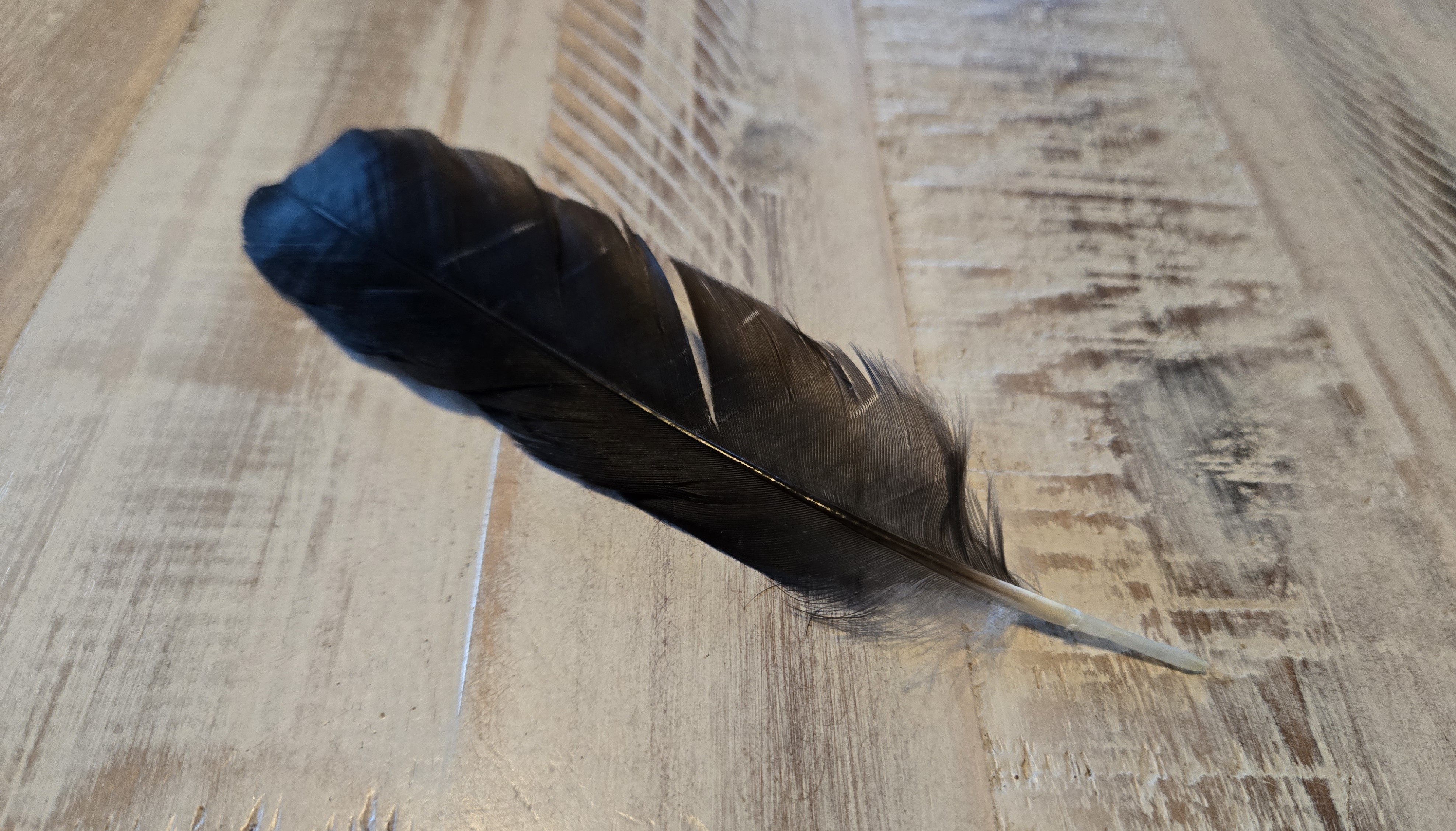
My second wildlife encounter happened the next day. The moment I stepped out the door for another walk, I felt something land in my hair. I thought it was a bug and tried to brush it away. Out fell a five-inch black feather!
I looked around but whatever bird had lost the feather was long gone. However, a crow sat in a tree not far away. The feather certainly looked like it could be a crow feather.
While I’ve come across feathers on the ground before, I’ve never had one actually fall on me. The event was rather surprising and noteworthy (thus this blog post).
The feather that fell on my head.
I seemed to be a roll with interesting animal encounters. Once again, I consulted the wise and wonderous internet for interpretation. I searched for “meaning of crow feather falling on your head.”
Nothing came up under that specific heading, but there were lots of entries about the “meaning of coming across a crow feather in your path.”
Apparently, like with the turtles, this is a good omen. A woo-woo yoga site said, “When a crow feather lands at your feet, it is a positive omen, meaning your calls have been heard and answered. If a feather comes to your path magically or surprisingly, it means a spirit is supporting or guiding you.”
Since the feather fell on my head, I must really be protected and supported!
Another site said it can also signify a visitation by a male loved one who has passed.
For several months, I have been working on a nonfiction story about a male relative. Although I was not born when he died (tragically and suddenly), I’ve found myself wondering if I haven’t conjured up his ghost with all my recent attention.
If he is watching over me, I’m okay with that. He was a good guy and I wish I would have had a chance to know him. Even if he’s not, these natural encounters have been interesting.
When I told Russ about the mysterious crow feather atop my head, he said, “At least it was a feather and not something else that birds usually let drop!” That’s my guy.
I think I’ll take another walk and see what happens next.
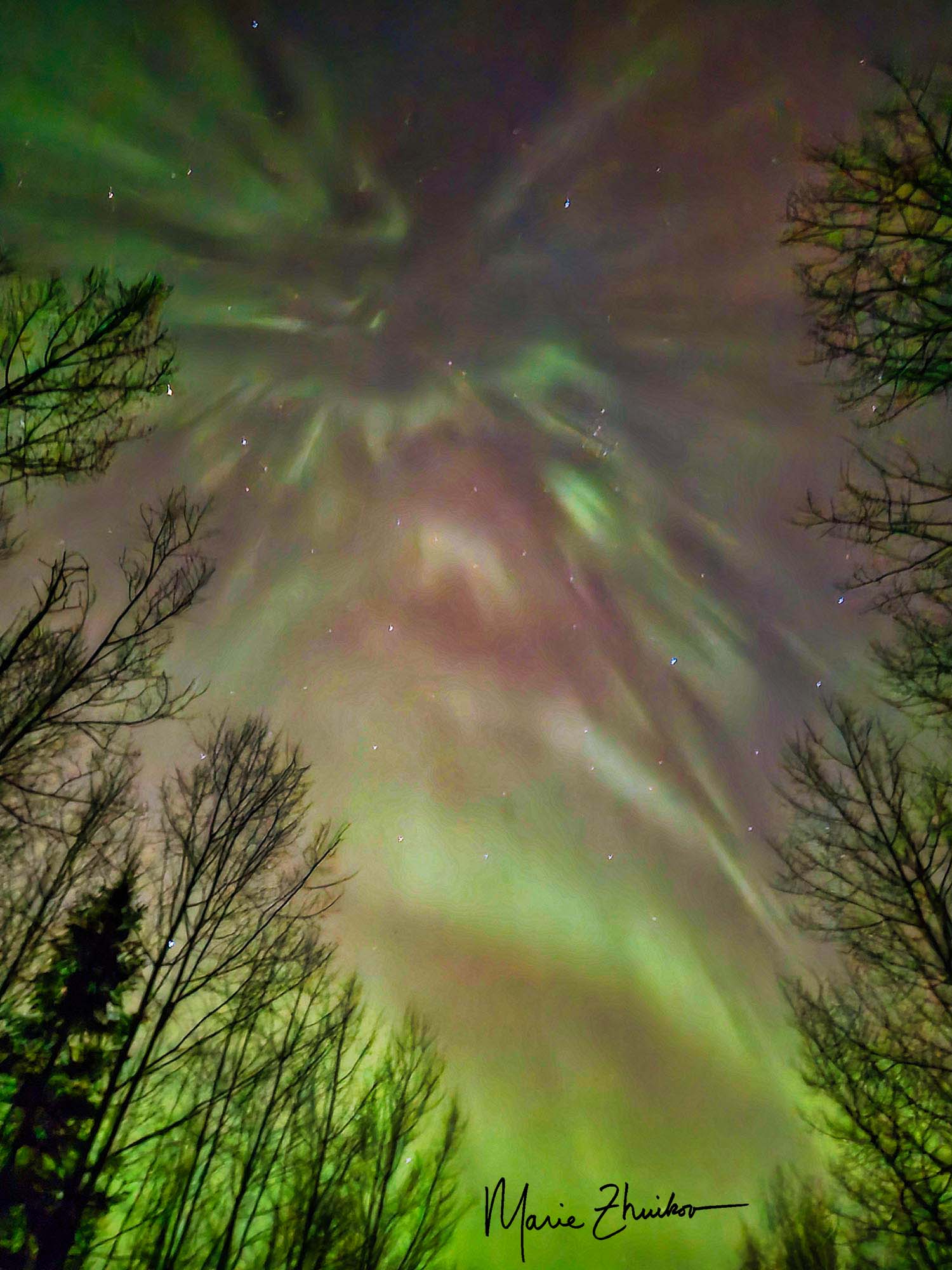
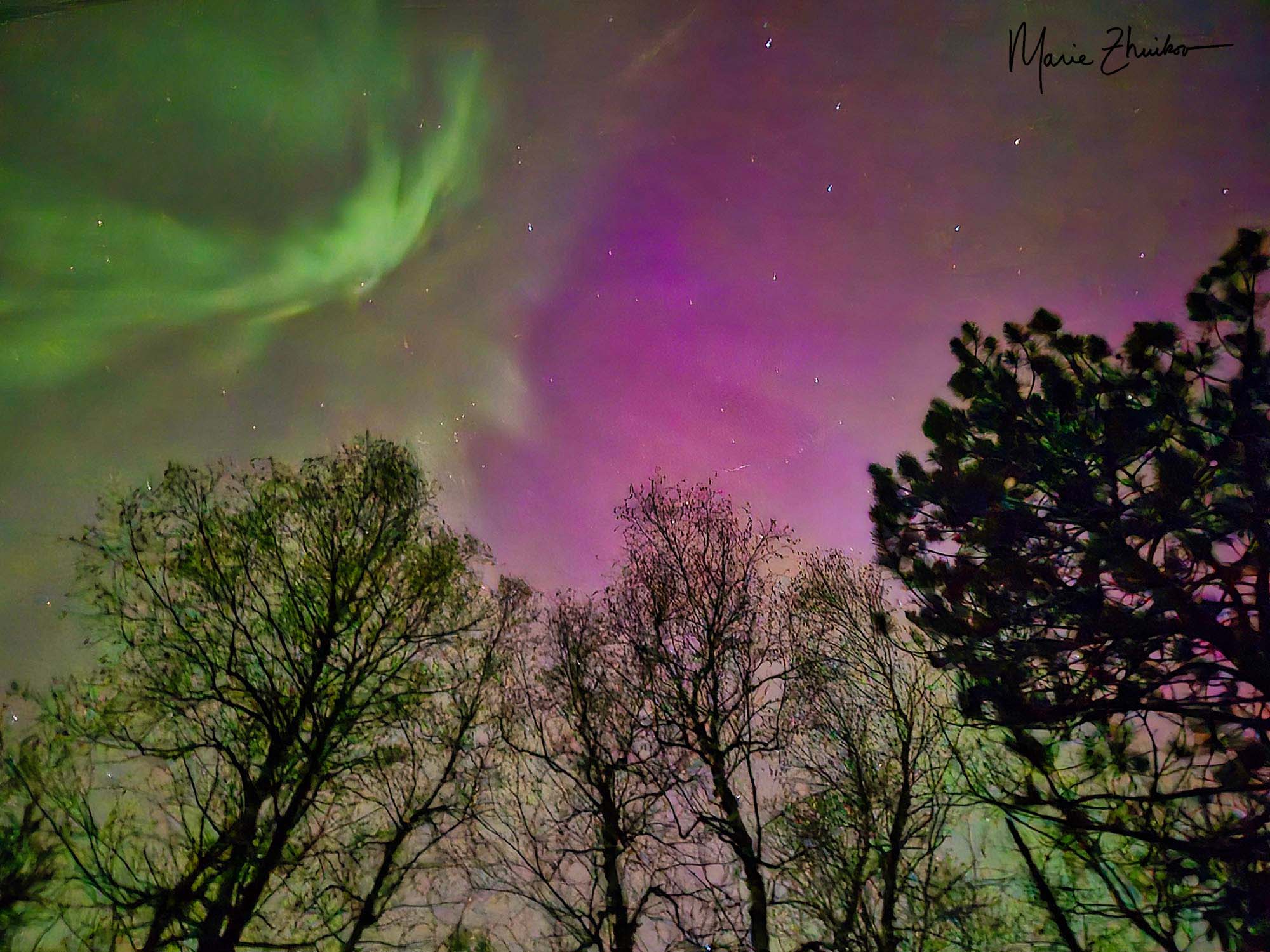
Thanks to a gargantuan sunspot group 15 times the size of Earth, we on Earth in northern climes were treated to a spectacular aurora borealis display last night.
The evening began with a thunder shower, which led to a picturesque sunset, which was capped off by the northern lights display.
I ran around with my camera, documenting everything at our cabin in northern Minnesota. I had tried before to photograph the sky at night with little luck. But this time, it worked! My camera captured even more colors than were visible to the “naked” eye.
As I wandered on gravel roads in the middle of nowhere with eyes raised to the eternal mystery of the dancing sky, our resident loons began to call. Spring peepers croaked and a distant train whistle blew. We are so fortunate to live in these times, in this place.
I traveled to Madison, Wisconsin, this week for a water symposium on the university campus. As I walked back to my hotel from the event, I passed the university’s botany garden. On a whim, I meandered off course a few steps and entered.
Although it was too early in the season for everything to be blooming, enough flowers were showing to keep me moving through. Sculptures with botany themes were scattered throughout the small but pretty garden.
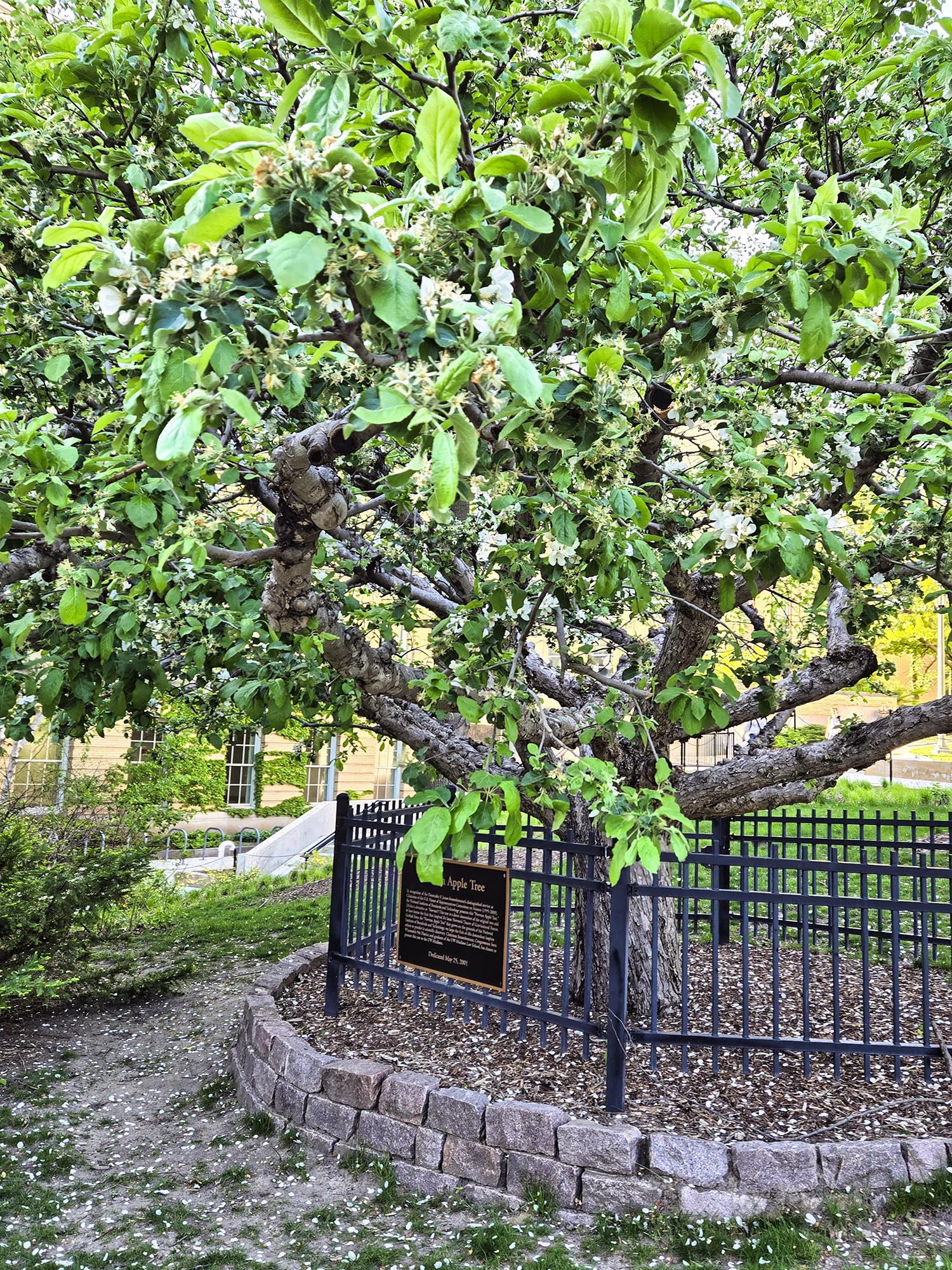
One plant and plaque stopped me in my tracks: a picturesque apple tree surrounded by a fence. The tree sported white blossoms and looked older than its 23 Years. Reading the sign, I learned that the tree, planted in 2001, is a direct descendant of the original tree that bore the fruit which inspired Sir Isaac Newton’s Theory of Gravitational Forces.
Huh. I always assumed that the whole apple falling on Newton’s head thing was a myth. But now here was living proof that the tree from which said apple fell not only could be identified, but its offspring was living in Madison!
The plaque said the original “Newton Apple Tree” grows on the grounds of the National Institute of Standards and Technology. But that institute is in the United States (in Maryland). I thought Newton made his discovery in England.
So, in writing this post, I did some digging. The institute tree the Madison tree is grafted from was a clone. Alas, the clone fell over and died about a year ago “due to unknown reasons” according to Wikipedia.
Tulips and a crabapple tree were in bloom in UW-Madison’s Botany Garden. The person in the image is taking a picture of the tulips from below.
The actual original Newton tree grew in the 1600s on the grounds of the English manor where Newton was raised. The Woolsthrope Manor tree has died, but its descendants and clones live on at the manor and many other places around the world.
The story of the apple inspiring Newton’s theory gained public visibility when Newton’s niece related it to Voltaire, who included it in an essay. The apple, however, did not fall on Newton’s head. That is a silly myth.
The Madison tree was planted in honor of F. James Sensenbrenner, chair of the U.S. House of Representatives Committee on Science (1995-2000). Sensenbrenner was a Republican congressman from Wisconsin and a graduate of UW-Madison. From the plaque text, it sounds like Sensenbrenner presented the tree to the university himself in hopes that “the fruit of this descendant inspires others to partake in scientific discovery.” This strikes me as rather self-aggrandizing, but it was a nice gesture, no doubt accompanied by some additional funds.
As if having a copy of the Newton tree isn’t enough, the UW-Madison Botany Garden was the first in the world to be based on the new Angiosperm Phylogeny Group system of molecular classification of plants. I don’t really know what that means but if you visit the garden’s webpage, there’s a chart about that.
As I continued my walk through the garden, I envied the Madisonians their warm breezes and blooms. In northern Minnesota, our daffodils are just beginning to show. It will take us about three weeks to catch up to the plants in Madison. Sigh. But this way, lucky me experiences two blooming seasons and that’s just fine.
I exited the garden, glad for my little educational and botanical detour and that I’d have something to share with you. And now you know more than you probably ever wanted about Newton’s apple tree!
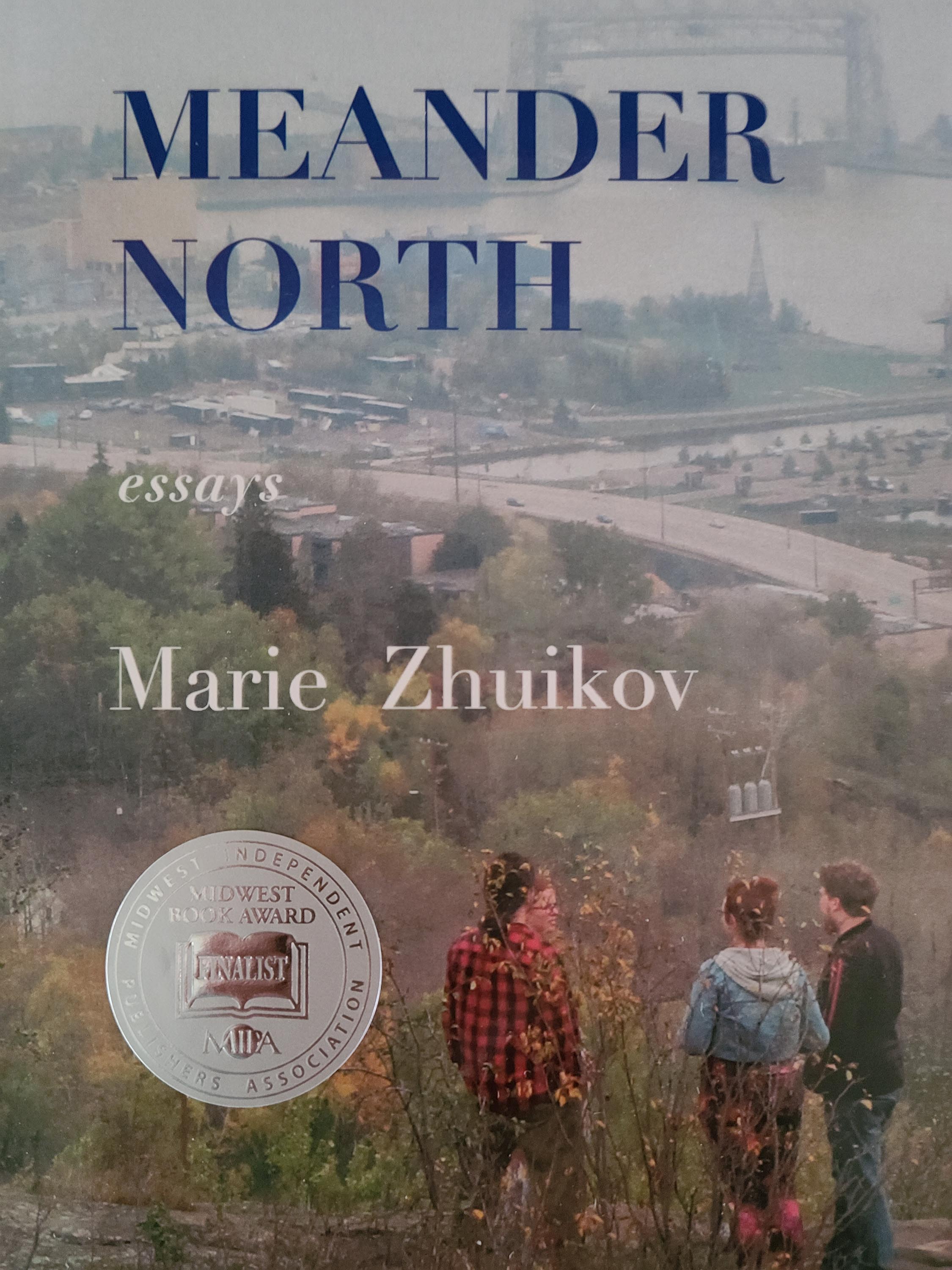
I made my Minnesota-themed blog-memoir, “Meander North,” which features essays from this very blog, into an e-book. My publisher didn’t offer that service, so I did it myself over holiday break. It took quite a while because of formatting issues. I grumbled, but I did it!
It’s now available on Kobo, Barnes and Noble, and Amazon. It sells for about half the price of the print version. But if you’re a fan of print books, that’s still available, too, through distributor Itasca Books.
If you like this blog, you’ll love the book. It earned a Midwest Independent Publishing Association book award last year for nature writing, so it’s not just me saying that it’s good. It’s all your favorite posts gathered into one place.
Thank you for reading and thanks for your support!
Me, happily ricing, unaware of what lies ahead. Image credit: Wisconsin Sea Grant
I had a chance to harvest wild rice in the St. Louis River near Duluth recently for work. It wasn’t the first time I’d been ricing, but it’s the most memorable.
You can read about my little adventure on the Wisconsin Sea Grant blog through this link. Enjoy, and happy meandering!

I had the chance to meander to Stockton Island, one of several islands in the Apostle Islands National Lakeshore in Lake Superior a couple of weeks ago. I was there to cover what the National Park Service is doing to make their facilities on the island more accessible to disabled people. I’ll be writing a story about that for work, but I also got a tour of the island by former park ranger, Neil Howk, who gave us (there were about 8 of us) the skinny on the history of black bears on the island.
Neil Howk imparts his knowledge about bears.
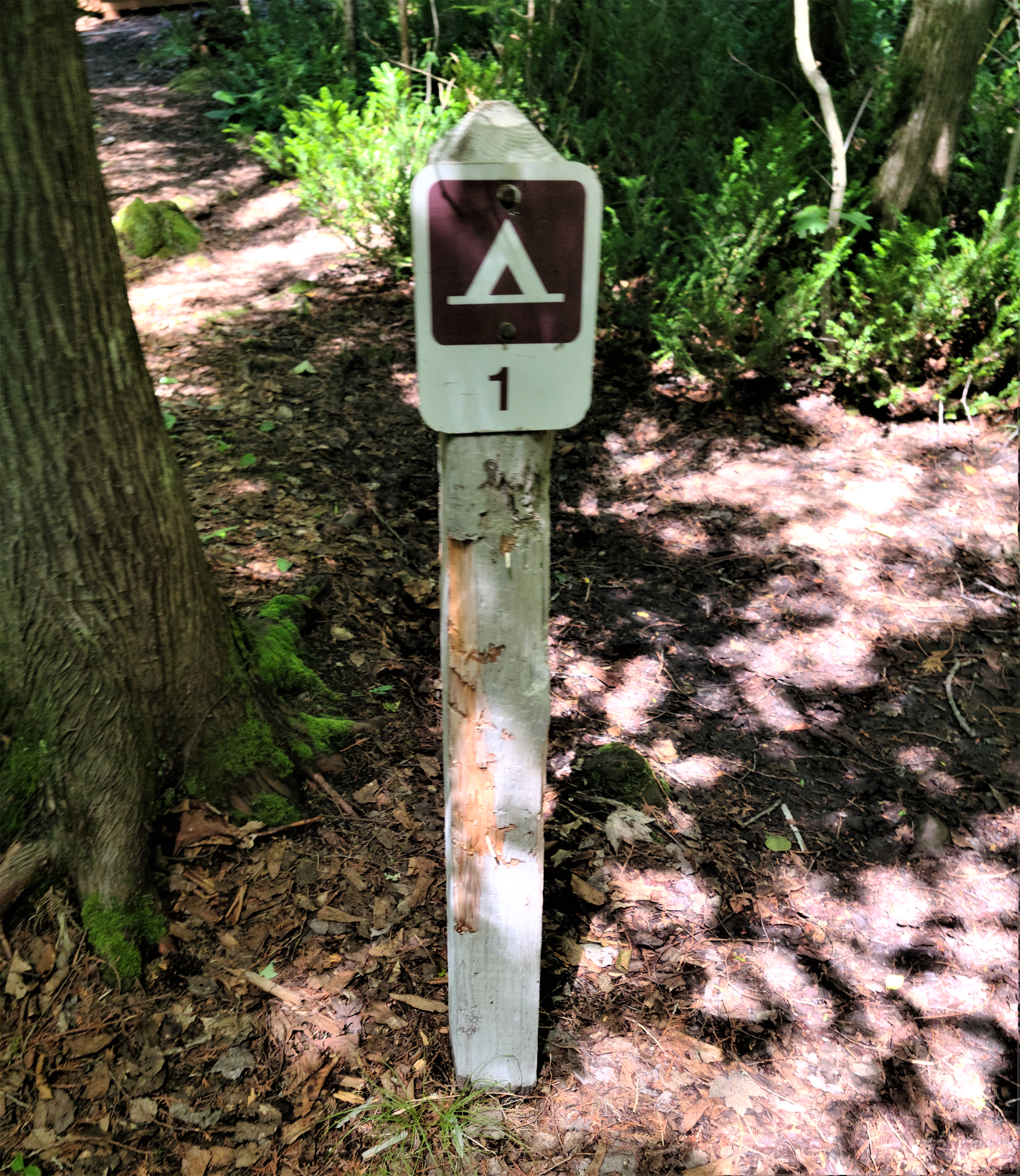
Neil worked for many years in the Lakeshore and is now on the board of the Friends of the Apostle Islands, which organized the tour on a sunny, breezy Friday. Neil took us on a short hike on the trail that leads through the campground on Stockton Island to the signpost for campsite number 4. We took a sharp right and began bushwhacking into the woods. Neil knew there was a bear den nearby.

After not too much whacking or getting whacked by tree branches, we came to a deadfall – a tree that had been blown over by wind. Neil said the bear had made its den among the tree roots, which provided a fairly snug place to spend the winter.
He felt okay taking us to this location because: 1) It’s not winter, so no bear will be actively hibernating there, and 2) Bears usually only use a hibernation site once, so disclosing its location should not endanger the privacy of any bears (except if another one ends up using it!)
Besides overwintering in dens in rocks or tree roots, black bears have also been known to hibernate inside hollow trees and even in eagle’s nests. I did not know the eagle’s nest thing. I also learned many other new bear trivia, such as: bears don’t poop all winter. Neil said they eat grass in spring to get their bowels going again.
The deadfall bear den that Neil Howk showed us on Stockton Island.
Also, cannibalism is normal for bears. Males will sometimes eat cubs – presumably ones that aren’t related to them, in order to bring females into estrus sooner so that they can procreate with them. And bears will also eat meat (besides the berries, ants, and other things that bears are known to consume). Neil said that deer fawns and chipmunks are among their favored meaty fare.
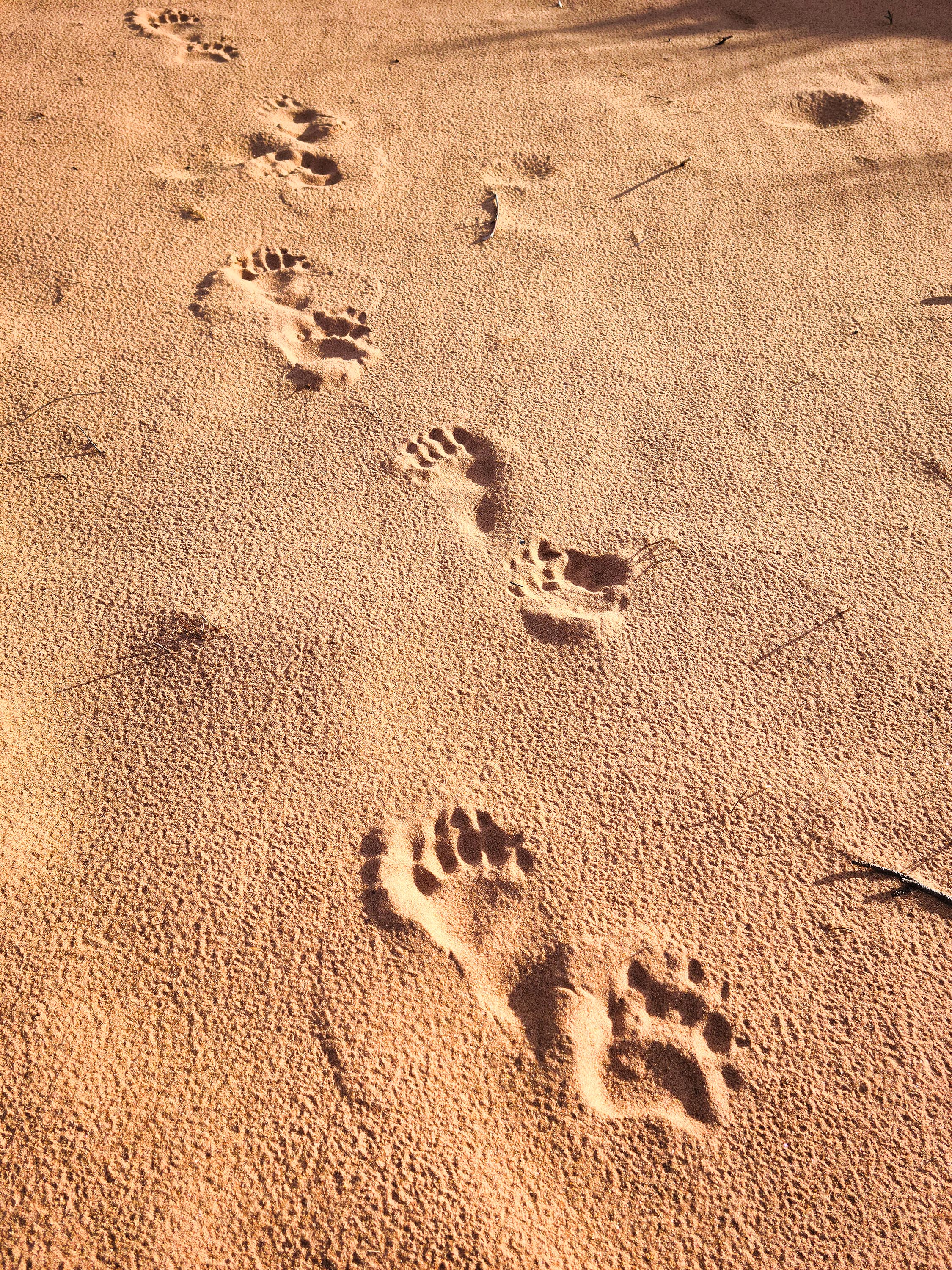
Another fact that Neil conveyed is that when bears were first counted on Stockton Island – sorry, I’m not sure when that began – there were only a couple. But now there are 20 known to live there. I can attest to their presence. On my several trips there, I’ve seen many bear tracks on the island’s beaches. (I’ll try to dig up some of my photos of those for this post.)
Black bears like to gnaw upon and otherwise dismember the wooden campsite markers on Stockton Island.
One memory that emerged during the tour came from a trip I made to Russia many years ago. One of my former husband’s relatives bragged about a bear he had shot. Granted, this relative liked his vodka and ended up chasing one of my young sons around the picnic table where we were eating – he was a rather scary, imposing figure, somewhat bearish. At some point, he showed us photos of his triumphant hunt. From the snow in the photo and the location, it became obvious that he had shot a hibernating bear. So much for sportsmanship, but I guess maybe they do things differently in Russia!
Anyway, I learned some things I didn’t know about bears from this tour, and I hope you did, too.
An Ice Age exhibit at the Bell Museum of Natural History, including a mammoth, giant beaver and musk ox.
I recently had the chance to meander through two very different natural history museums. One was public and the other not so much. Both impacted my psyche.
The public one was the Bell Museum of Natural History. This was one of my favorite hangouts during my college days when I was minoring in biology. (I won’t divulge how many decades ago that was!) Besides the obvious appeal to the science-minded, my poetry professor once took us to the museum for inspiration purposes.

The new Bell Museum.
The Bell Museum used to be on the Minneapolis Campus of the University of Minnesota in Minneapolis. Now, it has a “new” facility on the St. Paul Campus.
Russ indulged me (smart man) and tagged along as we visited the Bell’s planetarium where we learned about astrobiology, or the search for life on other planets. The planetarium has a domed Imax theater roof. We saw a movie that was narrated by an actual museum staffer (in real life). This was unexpected, but cool, because we could ask questions. Many children in the audience did, and I was impressed by their interest in the planets.
One thing I learned was that we’ve had unmanned spacecrafts land on Venus. Somehow, I missed that news. It was so interesting to learn about the inhospitable conditions there – the landing crafts only lasted a few hours before they were incinerated by Venus’s hot temperatures.
Antlers on the wall, Bell Museum of Natural History.
In the natural history part of the Bell Museum, I was heartened to see that the painted dioramas I so loved in the old museum had been moved into the new museum. There was the wolf pack on the North Shore of Lake Superior. There were the sandhill cranes of the Platte River. I can’t imagine what it must have taken to move those overland to the St. Paul Campus intact!
Plus, the museum has many new exhibits that deal with the evolution of life on this planet. I don’t think they knew that stuff when I was a college student.
The not-so-public museum was the Zoology Museum on the University of Wisconsin-Madison Campus. I meandered into it for work. Every year, my boss at Sea Grant organizes a field trip for us science communicators and this year, our focus was Madison. This is where most Wisconsin Sea Grant staff are located, but there are many staffers from other areas in the state (including me), so all this was new to me.
The UW Zoology Museum is mainly for researchers and it was formed by researchers. Many of the specimens were collected during science expeditions or they came from nearby zoos. To give you an idea of its layout, there’s a bone room, where bones of animals are stored in boxes. There’s a skin room where animal skins are stored in drawers (think about an entire polar bear fitting into a small drawer). There’s also a taxidermy room that features various birds and mammals.
A soulful lion greeted us in the taxidermy room of the Univ. of Wisconsin-Madison Zoology Museum.
As we entered the facility, we had to carefully close doors behind us so that bugs and other contamination couldn’t follow us and destroy the samples.
In the lower level of the building is a fish room where various species of fish are stored in ethanol in jars and pails. This is in case the jars ever break – that way they won’t flood the other floors. The various jars are on shelves that are moveable. These are called compacter shelves. As opposed to stationary shelves, these can be easily moved so that more can fit in a room than otherwise possible. Zooplankton are also preserved here. Various historic scientific instruments are scattered on nearby tables.

Another part of this basement room features preserved mammals, reptiles, and invertebrates in ethanol.
It was all kind of creepy and gave me some good ideas for a horror story. There were so many many samples! Something about all those dead animals in jars seemed wrong, even though it’s for the sake of science.
A polar bear in a drawer.
The piece de resistance, however, was a room we didn’t even get to see. It’s the room with the flesh-eating beetles. The museum staffer described the beetles as the best method to remove the “meat” from the bone samples that the museum staff wants. The beetles live up to their name, eating off the flesh from the bones. The dark room the beetles live in is down a concrete corridor that would give even Edgar Allan Poe pause. We did not get to see it, but our tour host’s description was good enough.
The beetles do a much better job of cleaning than any other method, so the university still uses them, even in the 21 Century.
Mice and bats in jars in the Zoology Museum.
I realize that science needs access to real animals for research purposes, but I must admit that this research museum creeped me out much more than the public museum. I guess that’s to be expected. I’m glad I was able to see both of them.
Look for the fruits of this field trip in my fiction some day! I just discovered that there’s a horror sub-genre called “dark academic.” The Harry Potter series fits into this – think gothic architecture, pleated skirts, melancholia, and leather satchels. This is opposed to “light academic.” “Pride and Prejudice” fits into this – think of the opening of the movie where Elizabeth Bennet Walks through a sunny field reading a book. It’s all about light and happiness. My story will be more along the dark academic vein.
My takeaway with this post? Visit a natural history museum near you sometime. It might spark something!










 Marie's Meanderings